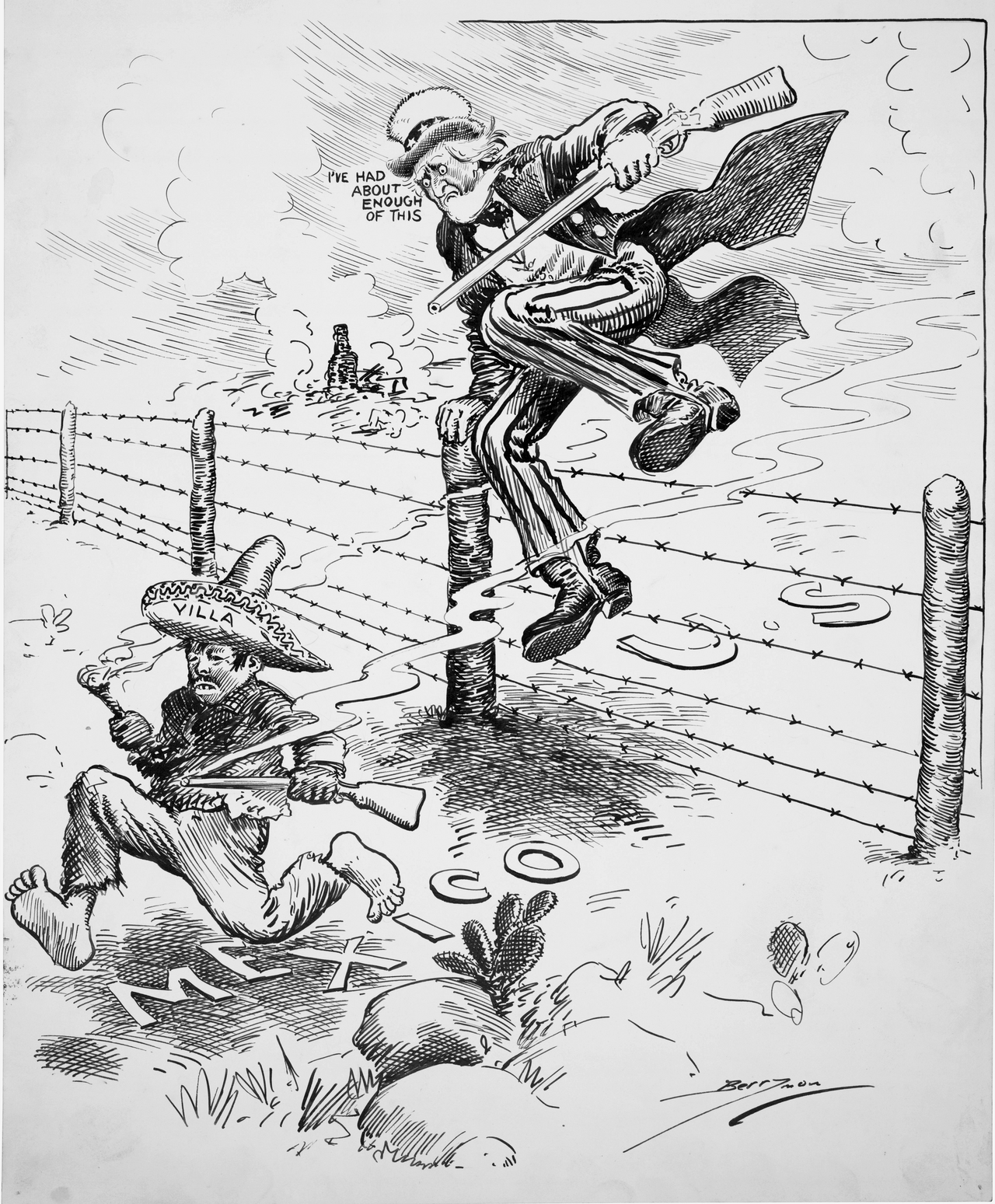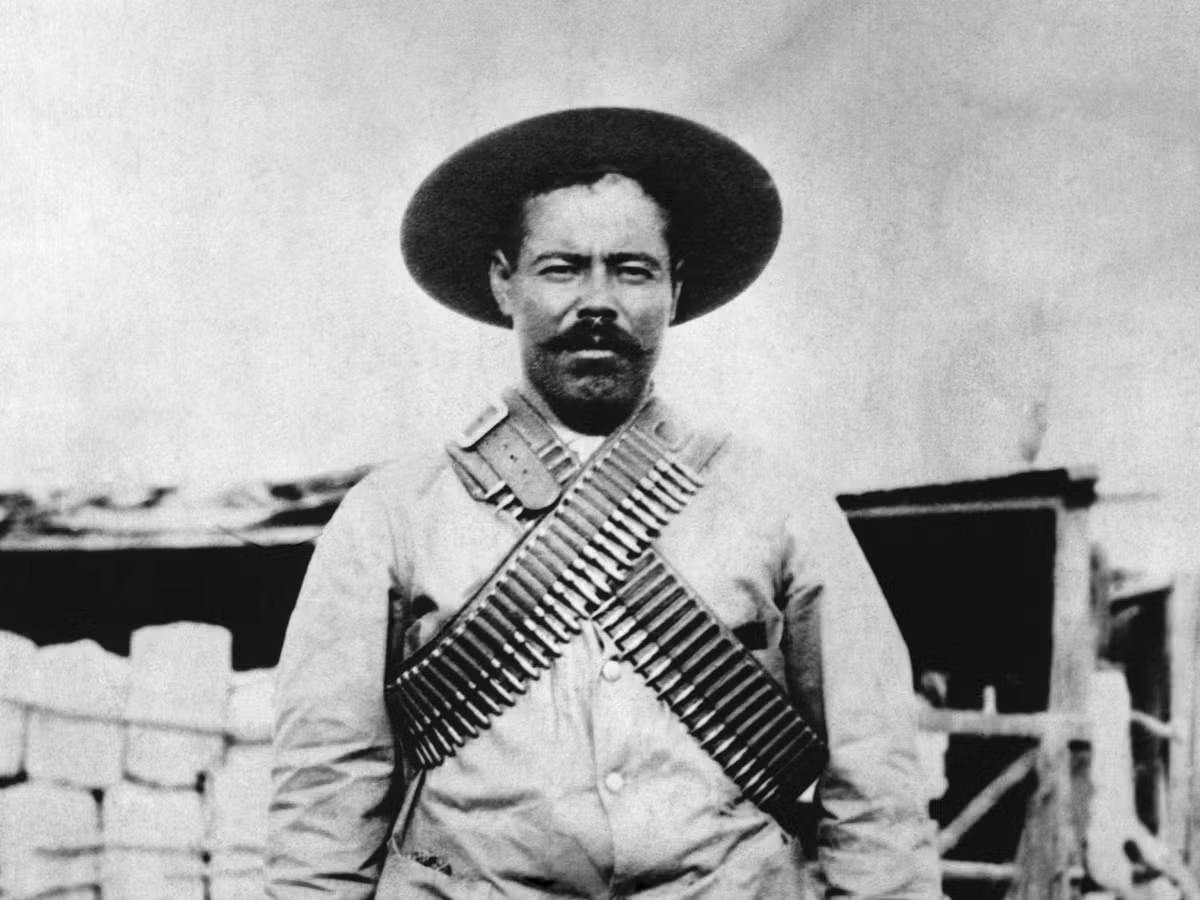
Hey! Whatever happened to U.S. determination to deal with THIS guy?
Last week, I referred to my recent lack of interest in the sort of news that used to fascinate me, and as an example mentioned my unsettling (to me) failure to keep up with what the U.S. was doing in and near Venezuela.
And then, BANG! My eldest granddaughter woke me on Saturday morning with a text that asked me to call her because “I don’t understand what happened in Venezuela.”
I took it something new had happened there overnight, and I was able to confirm that immediately. But if I was to explain it, I had to do a bit of scrambling. Knowing how good The New York Times is (or at least has been in the past) at providing overall perspective on events and the background behind them, I looked there. Unfortunately, I encountered one of those “live update” stories, which provide no easily accessible perspective at all.
So I turned to the editorial page, and found what I needed in this lengthy editorial the board had put together while I was sleeping. “Trump’s Attack on Venezuela Is Illegal and Unwise.”
It’s a pretty good piece, especially for something thrown together quickly. But it has its flaws. For instance, it asserts that “If there is an overriding lesson of American foreign affairs in the past century, however, it is that attempting to oust even the most deplorable regime can make matters worse.”
Well, yes, it can. But that doesn’t mean it must, as so many in our country — on the left and the right — now believe. Many of you believe it. So the NYT has used a convenient post-Vietnam lever here — We know intervention is always a bad idea! — as an easy device to persuade us that this foray into another country is a bad idea as well.
Which really doesn’t explain what’s wrong with this latest action. In making its easy point, the board of course mentions Afghanistan. As though it was a similar situation. It was not. As the Times and a huge proportion of America seem to have forgotten, we had an ironclad reason to go into Afghanistan — we needed to make sure it would never again be a haven for Al Qaeda. You know, that group that had just deliberately murdered almost three thousand Americans in their own country.
We’ll discuss later, if you wish, what happened later. The point here is that Venezuela does not in any way offer such a justification. Mumbling about “narcoterrorists” and the like does not constitute a viable explanation. Nor does mention of the Monroe Doctrine. I wonder who told him about the Monroe Doctrine? Well, no matter. The fact is, it doesn’t apply.
But on the whole, the NYT piece did a good job of explaining the situation, and condemning this unwarranted action by Mr. Look-at-me-now-I’m-suddenly-a-neocon.
To appreciate how good the piece was, you have only to look at the mad raving that was published in The Washington Post under the headline — and I’m not making this up — “Justice in Venezuela.”
The Post, which was once a great newspaper, seems unable to see past the happy fact that Nicolás Maduro is now out of power. And it is a happy fact, as the NYT acknowledges:
Few people will feel any sympathy for Mr. Maduro. He is undemocratic and repressive, and has destabilized the Western Hemisphere in recent years. The United Nations recently issued a report detailing more than a decade of killings, torture, sexual violence and arbitrary detention by henchmen against his political opponents. He stole Venezuela’s presidential election in 2024. He has fueled economic and political disruption throughout the region by instigating an exodus of nearly eight million migrants…
But that’s not the point. The thing is, if the man in the ruins of the White House is in a mood to pull on his big-boy pants and throw his nation’s weight around, there are more urgent needs in this world.
You want to take bold action? International priorities indicate the place to demonstrate your strength and determination would be Ukraine, or the Near East. But no, not the same kind of action. No, no, no, no, no.
Since the adversary in Ukraine possesses — you may have heard about this — nuclear weapons, a far more subtle approach is called for. Something like what we saw the Biden administration doing — exercising soft power where we could, and gradually beefing up Ukraine’s ability to defend itself. This was working,, before an off-and-on Putin admirer took over.
Or you could concentrate your efforts on trying to sort out the mess in the Mideast. Don’t expect overnight success, but we need to continue to try — as American leaders have tried since about 1967 — to keep the peace and realistically reassure our ally Israel of its survival. And if you’ve decided regime change is your new thing, try doing it the hard way — by convincing Israelis, via diplomatic means, that they can survive without Netanyahu.
But, you say, why can’t we get rid of Maduro and then do that more important, harder stuff?
Because… as I acknowledged in response to the NYT’s simplistic condemnation of interventionism, attempting to oust even the most deplorable regime can make matters worse. Every such venture is a risk, often in ways we’re unable to anticipate.
There can be far-reaching negative effects, even horrific effects, from this action in Venezuela. And I’m not just talking about the straightforward, housekeeping considerations such as answering the question, “So what happens now in Venezuela?”
Let me pull one such consequence out of left field: For more than thirty years, China has very effectively been buying friends all over the planet, particularly in the Third World. (I’ve occasionally written about this since my first week on the editorial board of The State in 1994. Here’s an update from the NYT.) Building airports and local economies, it has promoted an image of itself as poor countries’ kindly, helpful friend. This action in Venezuela can play right into China’s hands as it tries to become the next America (in hegemonic terms). We’re the Bully Boys; they’re the ones in the white hats. Maybe you don’t think that and I don’t think that, but we’re not the only people in this world.
For that reason (and many others), you don’t do things such as this unless you have an extremely good reason — as we did in Afghanistan, before we all forgot what it was.
Digression: Of course, we can’t do what China does because we are not run by leaders who spend money as they like in pursuit of their careful plans. Try spending a few extra bucks on a needy country, and the folks who currently run our democracy will holler, “America First!”
America First. Speaking of that… we could talk all day about Trump’s inconsistency in this instance, but what’s the point? What are we going to say — that he’s not following his own doctrine? The power he currently possesses is not the result of philosophy of any kind. How could it be? Philosophy means “love of wisdom.” It’s hard to imagine a word less at home in TrumpWorld.
Trump does what makes him, personally, feel good. And that may be the most dangerous thing about this venture in Venezuela — it has greatly expanded his own sense of what he can do, and get away with, and feel good about.
So going into Venezuela was a bad thing. But it wasn’t the worst thing Trump has ever done. It’s not even the worst thing he’s done this week.
I’ve written about 1,200 words so far on this, and I need to move on to some other things. So I’ll just mention in passing my nomination for worst thing of the week: Withdrawing the U.S. from 66 more international organizations, and making America more of a pariah in the world. That was not as noticed the way removing Maduro was, but it was way worse…