Category Archives: Israel

An occasion worth celebrating, while still mourning

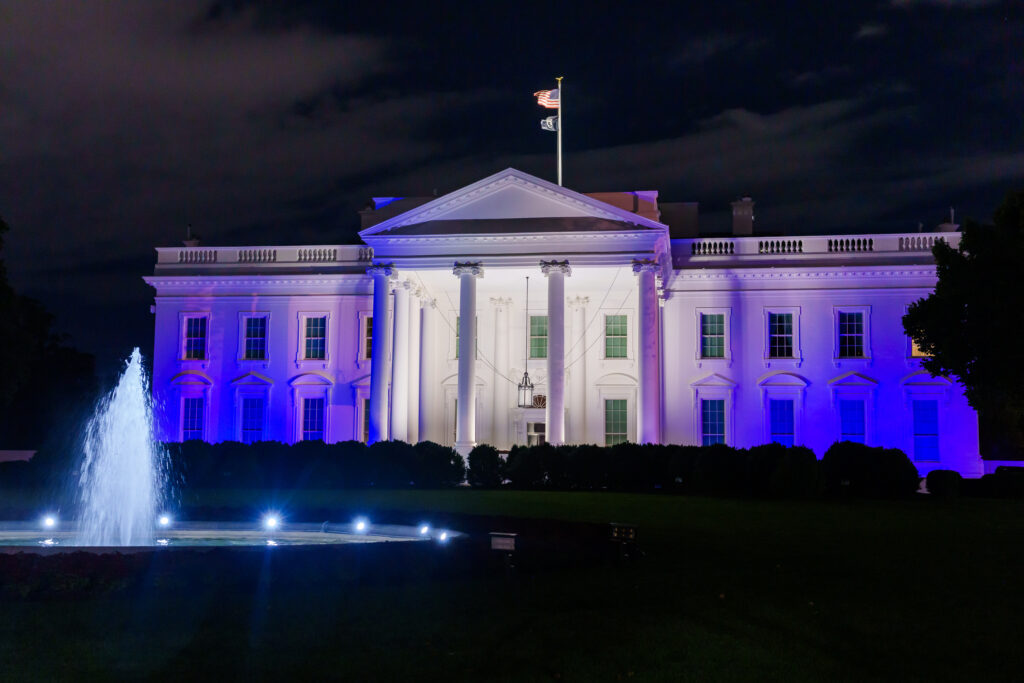
You can look upon the release of the Israeli hostages — that is, those still living after two years of unspeakable horror — with joy.

You can also note this moment grimly as you think of the dead, and the long recovery so many of the living hostages have ahead of them, if then even do return to any bearable form of future life. Trauma on this level tends to lead to lead to scars that never heal completely.

But here’s something of lesser note that at least celebrating without reservation, to some extent:

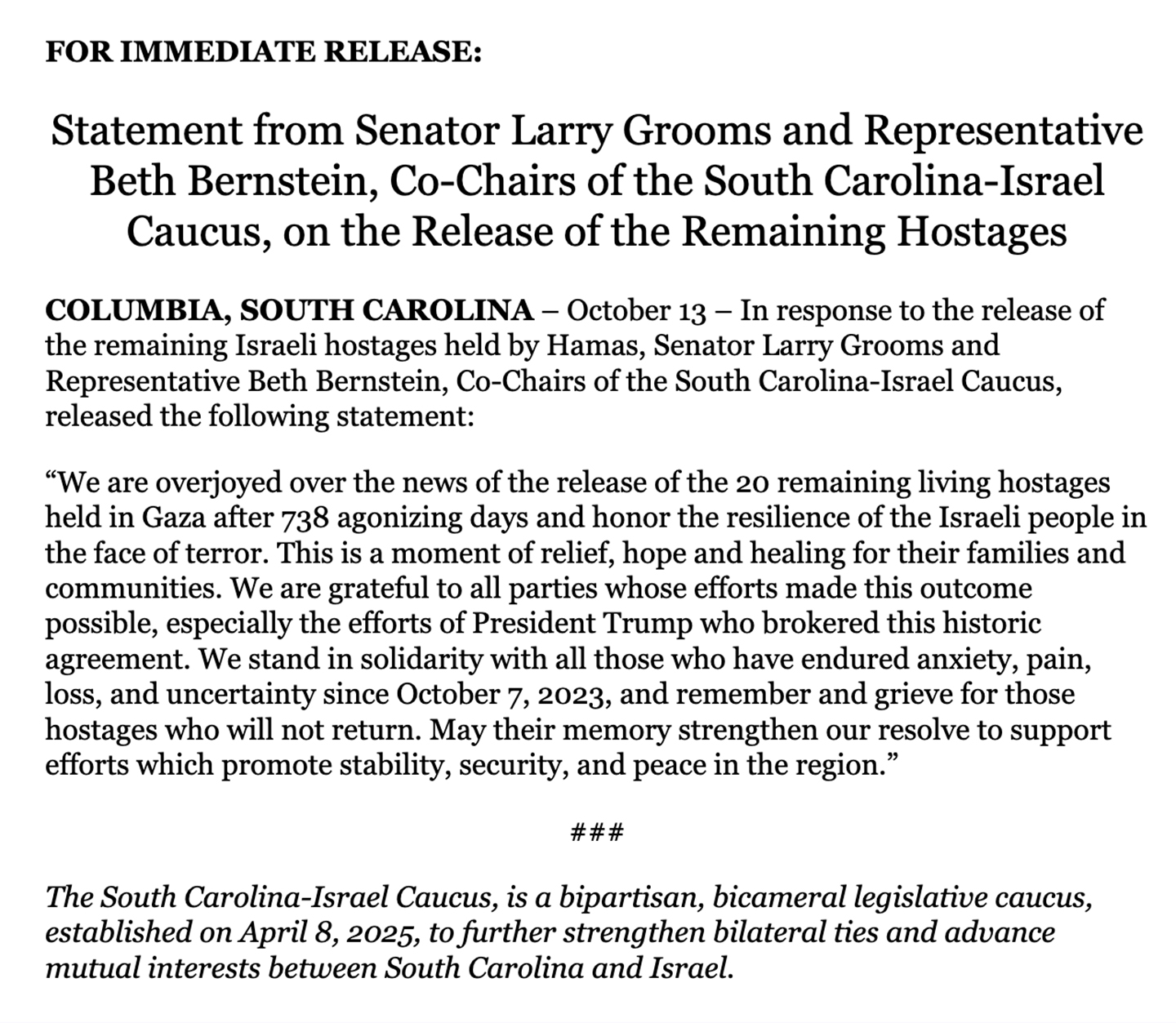
This bipartisan release isn’t at all surprising to me. It’s what I would expect. While there is a lot of partisan silliness to be sure (mostly, it seems, generated by the so-called “Freedom Caucus”), relations between Democrats and Republicans aren’t nearly so grossly dysfunctional in Columbia as they are in Washington.

But since bitterly divisive conflicts are what makes most of the political news that is thrown at you day after day, I thought I would share with you this note from two decent people who disagree about many things — one a Republican and Christian, one a Democrat and Jewish — but gladly come together over such things as this.

And look at that — I wrote a short post for once…

The U.S. strikes upon Iran targets

I haven’t posted much lately, but of course I feel compelled to say something about this.

But what should I say? I don’t feel qualified to express an opinion about it — yet. I might have in the past, but I’m hobbled by two things:

  1. Donald Trump is president of the United States. He and Pete Hegseth are the main sources available right now as to what just happened, and I can’t trust a word either one says about it. When I say “can’t trust,” I’m not so much talking about lying — although we all know Trump does that almost each time he takes a breath. The thing is, he and Hegseth could be tellling the absolute and complete truth. And from everything I’ve seen, neither one of them understands what’s going on — especially not Trump (I don’t know Hegseth nearly as well).
  2. Second, the way news is reported these days, it’s difficult to get a coherent picture of what has happened from major newspapers. A few years ago, those papers spent the hours before their daily deadline distilling all that was known into a single, coherent story arranged with all the key information in the first paragraph (the lede). You read the first few grafs of a story back then, and you had a pretty decent idea of what had happened. Now, whenever something big happens, you get these moment-to-moment update strings, such as this one and this one. You have to read every update from the last to the first (sometimes stretching over 24 hours) to get anything like a handle on the story, and even then it’s difficult. When something of moderate importance happens, you still get the one, coherent story — with new ledes added as necessary. With the big stories, such as this, newspapers are little help, because you get the “updates” string instead. They no longer focus on helping readers understand; they’re too busy making sure they throw out the latest factoid.

So… that means I turn to the journalists who still write in the old style — and that means opinion writers. Of course, since I know who they are, I look for the ones I know are trustworthy — again, not so much in terms of not being liars (although, of course, that’s a prerequisite), but because they have consistently displayed deep understanding of such matters in the past.

Unfortunately, not many have weighed in yet. For the moment, I recommend checking out Nicholas Kristof (“The Three Unknowns After the U.S. Strike on Iran“) and Max Boot (“Iran badly miscalculated. Now it’s paying the price.“). And while he’s not one of my trustee regular voices, you might want to read this piece (“Why Israel Had to Act“) by Amos Yadlin, a former chief of Israeli military intelligence. It was written before the U.S. joined in, but I still learned some things from it that help me understand Max Boot’s points.

That’s of course assuming you can read them. If you can’t and you want to, I can try to give you “gift” links. (I’ve tried in the past to share those with you, but I haven’t gotten enough feedback on them to be sure whether they even work when sent to more than one person.)

So I’m waiting to read a lot more, from smart people who’ve been following all this far, far more closely than I have.

But I should say something, right? But all I have now is random, chaotic, piecemeal reactions — which is probably what you’ve seen elsewhere at this point, whether those offering such reactions tell you that or not (especially if you’re someone who forms your impressions of such events by watching television, God help us).

So here you go:

  • I’m very, very worried. Smart leaders (pretty much everyone who’s been in relevant office before Trump was elected) have avoided war with Iran for very good reasons. One of the biggest is something Kristof mentions: By and large, the Iranian public is quite pro-U.S. What they need is new leaders, if they can manage to get them. And the fastest way to turn them against us is military action. That change in Iran public opinion would be disastrous.
  • That said, it is indeed essential to make sure that Iran, whose current leaders hate the U.S. almost as much as they do Israel, does not obtain nuclear weapons. If you look at that and only that, these U.S. strikes are good news — if they were effective, by which I mean they set Iranian nuclear efforts back many years without killing civilians. That’s a big “if.”
  • The one thing that makes me tentatively optimistic (and only slightly) on that last point is that Iran can’t hide facilities essential to its own Manhattan Project in tunnels under civilian dwellings, hospitals and schools — they way we know its ally Hamas does. At least, I don’t think so. But I don’t know that.
  • As much as I may search for reasons not to be terrified at this point, I know that even if all the steps taken up to this point by Trump and Netanyahu (and there’s a fragile liferaft to cling to), have been wise and correct, I know that Trump, at least, is capable of turning in another direction in a split-second, prompted by something as idiotic as a social media post he doesn’t like.
  • That’s the situation that a majority of U.S. voters put us in on Nov. 5, 2024. And the only recommendation I have for dealing with that is to pray. If you don’t know how to do that, it’s past time to learn…


Congratulations also to Joe Biden, Israel, and yes, Iran

EDITOR’S NOTE: I started writing this on Saturday, April 20, right after posting the item before it — hence the play off that headline. It was just supposed to be a reflection on three things I’d read — or rather two things I’d read, and one I’d heard– that day. That was awhile back (I’ve been busy), but I still want to share those things, so here goes…

The parties mentioned in the headline figured out a way to keep the entire region from erupting into total war — with nukes, maybe.

Things looked really dark a week earlier, when those missiles and drones were on the way to Israel.

(Of course, in that region, the relative calm between Israel and Iran could also turn very dark at any time. But we’ve had nine days since I started this post without that happening, and that’s more than I would have bet on before the parties involved handled the situation more deftly than I expected.)

Israel had bloodied Iran with that attack in Damascus. Iran certainly deserved the bloodying, and it was refreshing in a way to see Israel go after the strong people who are behind the monsters of Hamas, rather than trying to get at Hamas itself through that organization’s favorite shield — the innocents of Gaza.

But of course, it may not have been the best thing to do, because naturally Iran felt obliged to retaliate. And since such incisive strokes as the Damascus attack are evidently beyond its capabilities, it went with the worst kind of escalation — hundreds of drones and missiles went flying at Israel.

Amazingly, Israel fended off virtually all of them, averting thousands of casualties among its civilian population. (It did this thanks in large part to help from allies.) But, by the logic of the region, it then had to strike back at Iran for this unprecedented direct attack. The allies who had helped prevent disaster strongly urged Israel to “take the win” and do nothing further. The world (at least, those small parts of it that pay attention) held its collective breath.

And Israel, amazingly, just “attacked” Iran in a way that did little more than kick up dust — but made its point by hitting spots right next to strategic targets. Basically, it said, “See what we could have done?”

Far more amazingly, Iran was cool about it — essentially acting like it didn’t happen.

That’s a stunning success for all parties involved — and for the rest of the world.

Anyway, I thought I’d share three things I read and heard (a podcast) on Saturday. Some folks who understood what had happened commented, and after that (as far as what I’ve seen), little has been said. I’ve tried to use those “share as gift” links, so let me know if you’re not a subscriber and the link works for you:

Thomas Friedman on Iran, Israel and Preventing a ‘Forever War’ — This is the “Matter of Opinion” podcast from Friday the 19th. The shocking ending — Israel and Iran both restraining themselves — hadn’t happened yet when this was recorded, but it’s a very good discussion between people who know what they’re talking about, and it sets out the stakes very well.

The unspoken story of why Israel didn’t clobber Iran — This is David Ignatius’ column from AFTER the Israeli response. It began, “One rule for containing a crisis is to keep your mouth shut, and the United States, Israel and Iran were all doing a pretty good job at that Friday after Israeli strikes near the Iranian city of Isfahan. Maybe the silence was the real message — a desire on all sides to prevent escalation by word or deed.”

Biden’s ‘bear hug’ with Israel pays off with a minimal strike on Iran — By Max Boot. An excerpt: “We saw the payoff from Biden’s ‘bear hug’ of Israel when Israel launched a pinprick retaliation early Friday for Iran’s massive attack last Saturday night on Israel. The risk of a regional conflagration had risen dramatically when Iran, responding to an earlier Israeli attack that flattened the Iranian consulate in Damascus and killed three Iranian generals, launched more than 300 drones and missiles at Israel.”

This was a major diplomatic accomplishment, averting a disaster of global proportions. This had all been going in a phenomenally bad direction, and then it stopped.

I wanted to make sure to point it out, even after all these days, because you probably haven’t heard much about it since it happened. There aren’t all that many American journalists who understand these matters, so I wanted to raise the profile of these who do. Media have been filled with other things since then. Reporters write about what they think they understand, and after all, Taylor Swift just put out a surprise double album. And don’t forget the NFL draft!…


I stand with Israel

Why haven’t I posted in several days? Well, I’ve had a bunch of ideas, but they were all pretty lightweight, compared to what was happening in Israel. Pretty much everything we talk about in the political sphere seems pretty trivial… compared, again, to what’s happening in Israel.

So I’ve been reading, and listening. (As you know, I listen to a lot of podcasts and other items in audio form these days, mostly via NPR One and NYT Audio.) And I’ve been trying to decide what to say.

But with something this huge, there’s an awful lot to sort out. Only two things seem to be clear:

First, I know that from the moment the headline of this post is published, many friends on the left (not all, but many) will leap to correct me. They will shake their fingers and their heads at my simplistic failure to perceive the terrible injustices visited upon the Palestinian people. They don’t understand that I have heard, and I have perceived, and I have cared, and I have sympathized — over and over and over since the 1970s, and really since the Six-Day War, which happened when I was 13. Before that, you would have been on point to say that I really wasn’t aware. I remember thinking in 1967, “What is this ‘Mideast’ I keep hearing about?”

If you’ll allow me this small digression, probably the most eloquent evocation of the Palestinian cause I’ve ever encountered was in John le Carre’s The Little Drummer Girl. If you haven’t read that, you should — or at least see the 1984 film, or the 2018 TV series, both of which are excellent. The novel came out in 1983. I was pretty deeply impressed at the way le Carre’s Israeli intelligence officers recruited a young woman who had hung around the edges of the Palestinian movement to be their agent, to infiltrate a terrorist bomber’s cell. They wanted her passion for the cause. They wanted her to be believable to supremely suspicious people. They fed her indignation toward Israel. Of course, in the end she laid her life on the line to accomplish the Mossad mission, because she wasn’t too far gone to understand that no cause could justify what this bomber was doing.

Which brings me back to the first clear point I wanted to make: No grievance, no bitterness, no cause in the world justifies what Hamas did on Saturday morning.

The second point that is clear: Israel, so long distracted by its own stupid internal squabbles, must act to make its country and its people safer. It won’t be easy. They’re up against an enemy that will do anything and everything possible (if you don’t believe it, see what they did on Saturday) to make Israel come out of this in an even worse situation that it is in now — starting with executing the innocent men, women, children and babies they took as hostages.

The Washington Post summarized the situation, and the difficulty of it, fairly well in an editorial I read this morning:

That is much easier said than done, of course. Israel has a right to defend itself, which, in this context, also means a right to take the fight to Hamas in Gaza, as the United States had a right to go after al-Qaeda in Afghanistan after the terrorist attacks of Sept. 11, 2001. Support, solidarity and sympathy for Israel and its people, and condemnation of Hamas, expressed by everyone from President Biden to the European Union to the United Arab Emirates to Bono, U2’s frontman and international humanitarian activist, could be the Jewish state’s greatest assets. The Israel Defense Forces, embarrassed at being taken by surprise, has an opportunity not only to regain the military advantage but also — in limiting collateral damage — to demonstrate the moral difference between a terrorist group such as Hamas and a professional army…

Yes, that’s what we have here — a fight between a state of great military might that must deal with an enemy that is geographically intertwined with its own population, and do it while limiting collateral damage. Those last three words are in no way a handicap to the enemy, of course. As in so many attacks over these decades, on Saturday the innocent were the targets, and in no way collateral.

And that fact is as clarifying as anything. Israel must make it stunningly clear that Hamas has not gained from what it has done, and will see doing it again as madness. And yet still be the good guys. Which is very tough in the best of circumstances, against such an enemy.

If there is an upside to all this, it is that Israel’s internal turmoil seems to be on hold. Many members of the IDF and security services had increasingly and rightly signaled a diminishing willingness to serve a country that followed a leader who was determined to undermine liberal democracy. But they’ve come unquestioningly to their duty at this moment. This should shame the leader, and others, who have tried to pull the country down from within.

But that’s for later, as are the inevitable questions about how Israeli security failed to prevent this attack. There’s a bigger, and more urgent, matter before everyone now.

I’m going to stop now, and in the coming days I’ll probably post about more trivial things. So I’ll come back to my initial, simple point, which I expressed in a retweet of something Beth Bernstein tweeted:

What it’s like for a South Carolinian in Israel now

Editor’s note: To our family, Marina is much more than just “a South Carolinian.” She’s one of my youngest daughter’s oldest and best friends. Her family still lives in our neighborhood, just a few houses away. Several years ago, she met an Israeli while she and my daughter and another girl were traveling around Europe together. She later moved to Israel and married him, and they have a little boy named Yahm. This is something she posted on Facebook a couple of days ago. I asked her if I could post it here, and I’m grateful that she agreed. I haven’t edited it at all.

By Marina Druseikis Guttman

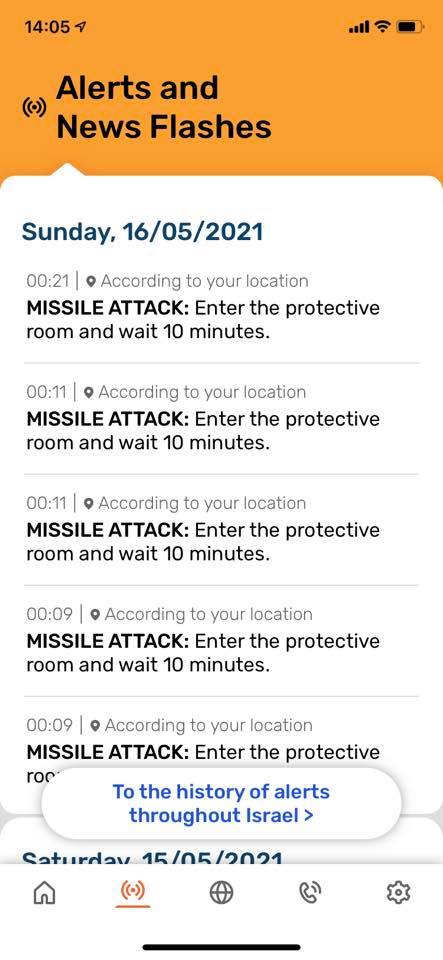
Tuesday night the rocket sirens went off as I was putting Yahm to sleep. We entered the stairwell with the other neighbours. We heard explosions, one after the other and uncomfortably close. Someone suggested we move to the basement and we did, where we stayed for at least 30 minutes as the sirens and explosions continued. I didn’t try to count the number of booms, and even though I smiled with the neighbours at Yahm’s cuteness, I had images of worst-case scenarios running through my head. I didn’t sleep well but still managed to go to the lab the next day to get some data for an experiment that I’ve been really looking forward to.alerts

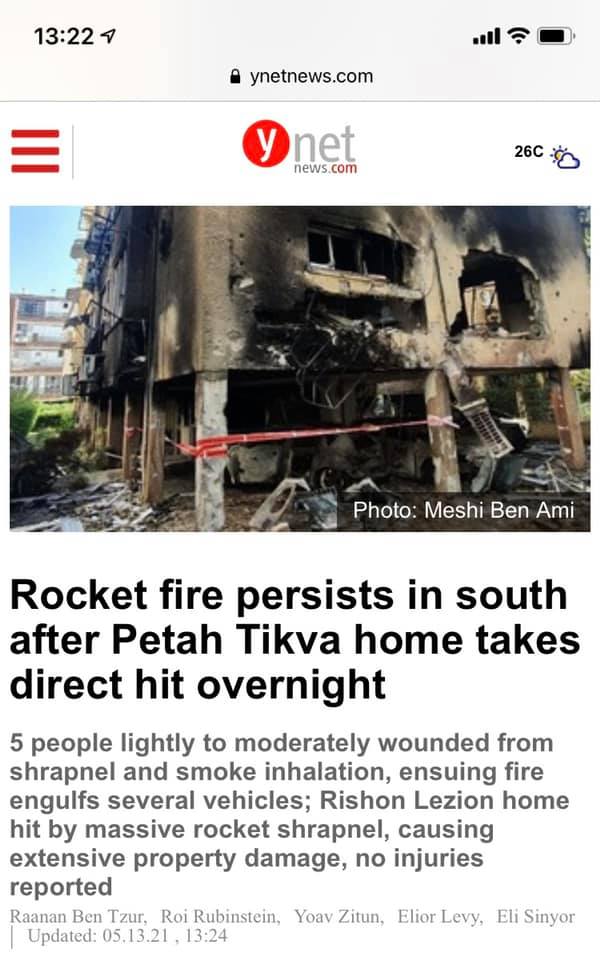
I moved to Tel Aviv in 2013, so I’d already experienced sirens, running to a safe room, rockets and the iron dome from the 2014 conflict. But this time felt different. On Tuesday some 130 rockets went over central Israel in an hour timespan. The iron dome is an amazing technological achievement, but it’s not perfect and with the increase in simultaneous rockets, it’s not possible to intercept all of them. There were direct hits to an apartment in Givatayim and a parked (empty) bus in Holon.

We had almost 2 days of quiet in Tel Aviv.

Then Saturday afternoon there was a siren at exactly the time Matan and Yahm were supposed to be biking home from down the street. Thankfully they hadn’t left yet. I sat in the stairwell with the neighbours and heard the explosions. Again I didn’t try to count the booms, but there were three blasts in particular that really got to me, one right after the other with each one seeming to get louder, closer, and again the worst-case scenarios ran through my head. During this barrage there was another direct hit in Ramat Gan, about 5 km from us, with one man dead as he was disabled and didn’t make it to a protected space in time. We had another barrage that night, shortly after midnight, as Hamas made good on their promise to “bring hell to Tel Aviv at midnight”, or something like that, as retaliation for the IDF taking down the tower housing international news organisations (the IDF say it was targeted because it was also a Hamas headquarter. I’ll just say the optics are terrible either way).

I don’t write this for sympathy or to detract from the Palestinian’s suffering or Israel’s wrongdoing. I choose to live here knowing what comes with it. But civilians – Israeli, Palestinian, Jewish, Arab, and those of us who fit none of those categories – are suffering and nobody wins.
I guess I feel the need to give my firsthand account because the media usually portrays the situation as David vs Goliath (though David wins so really that’s a poor analogy for the point they’re trying to make), and I’ve heard reporters say “it’s Palestinians throwing rocks versus a modern military.” But it’s not rocks. If there was no iron dome, Tel Aviv would be in rubble right now after just Tuesday night, not to mention the four other attacks since then. People who obviously don’t live here claim these are homemade pipe bombs and therefore not a threat (??), but that’s not the reality. I’m writing from the relative safety of Tel Aviv, but people living less than an hour south of here have had non-stop rockets for a week and are living in bomb shelters.rockets

For lack of a better word, I’m impressed by Hamas’ military advancements since 2014. It’s not like Israel played patty cakes then – no, the IDF destroyed many buildings housing weapons, and got a lot of international backlash for it. But in 6 years time Hamas has built and stockpiled thousands of rockets, and apparently missiles as well as drones that can carry explosives.
The events leading up to this were totally avoidable and the government’s actions, led by Bibi, are horrendous and inexcusable. And of course I don’t think Hamas’ retaliation on Israeli civilians can be justified, although I admit I’m biased because they are literally targeting my city. But that’s what it is. And now every little noise sounds like the start of the siren or a bomb exploding in the distance. It’s nerve wracking.

Perhaps the scariest part of all of this is the civil unrest. Jews and Arabs are attacking each other in mixed cities that have lived together peacefully for years (Arabs make up 20% of Israel’s population – these are Israeli citizens, not Palestinians from Gaza or the West Bank). It’s both heartbreaking and disgusting.

It’s important to separate the people from their governing bodies. I learned this many years ago as an American who was horrified by our actions in the Middle East and South and Central America, to name a few. But it’s still hard to read comments online that say anyone defending Israel or even showing sympathy for Israel is a promoter of ethnic cleansing, apartheid, genocide, etc. Hamas is purposefully bombarding civilians with rockets but no one claims the Palestinians are trying to commit ethnic cleansing or genocide – and they shouldn’t make that claim. Because Hamas doesn’t represent all Palestinians, just like Bibi doesn’t represent all Israelis.

Nothing is black and white. Everything is nuanced. I hope and pray for peace and an end to this cyclical violence.

Here’s Yahm and I trying to enjoy the sunshine after a difficult night and some snapshots of what it’s like to live in central Israel right now.

Marina and Yahm

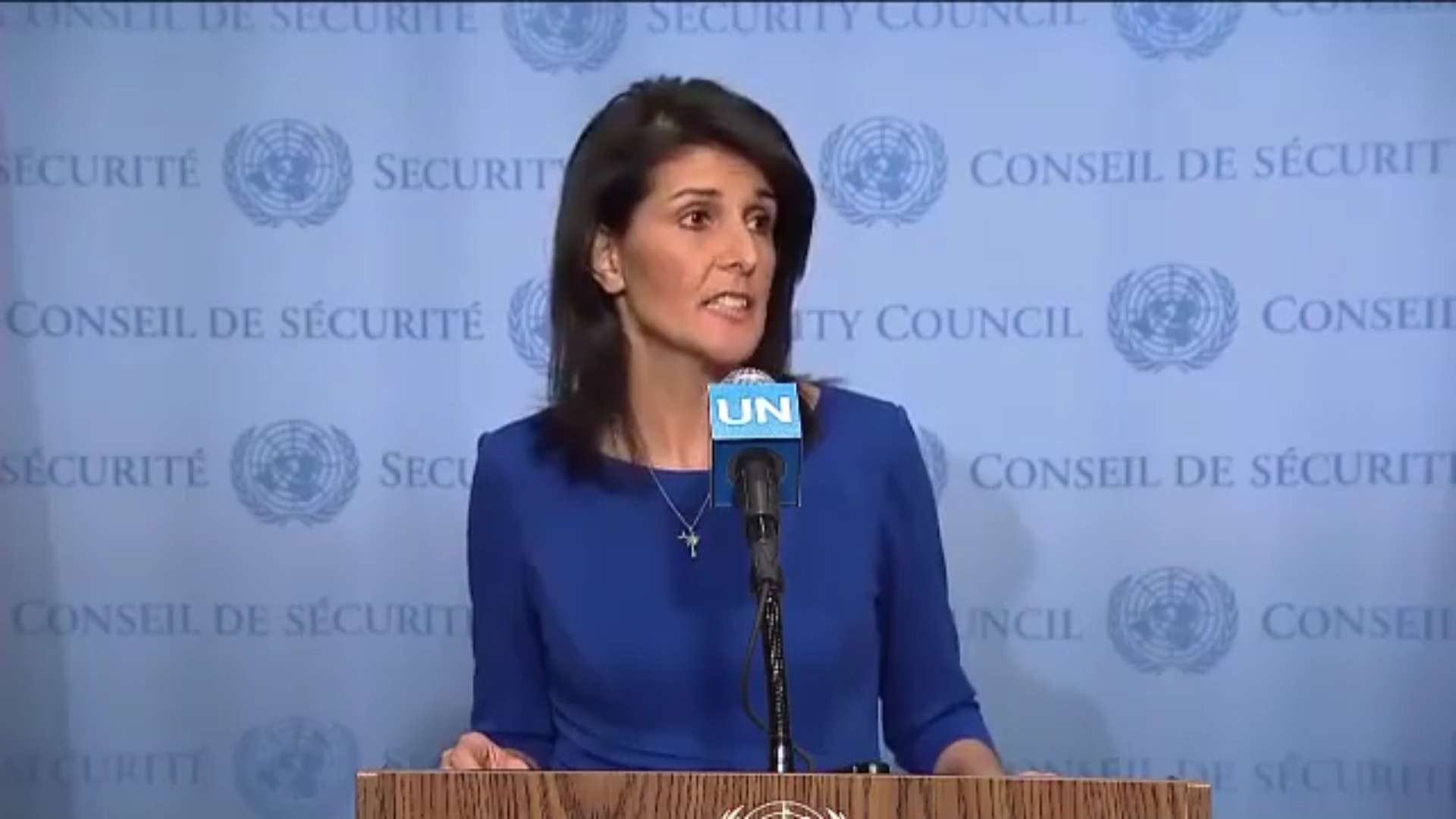
Nikki shows Trump how to address anti-Semitism

I call your attention to Jennifer Rubin’s column praising Nikki Haley for showing the correct way to address anti-Semitism, a lesson her boss would do well to learn.

Of course, you might say Nikki evidently had help from people who know more about the Mideast and global antipathy toward Israel than she does, to which I’ll say, I certainly hope so. And bless her for having the wisdom to listen to them. And when she spoke them, the words became hers.

Here’s the pertinent part of the column, which quotes freely from Ambassador Haley’s remarks:

Her remarks are worth watching or reading in full, but this was especially effective:

The Security Council is supposed to discuss how to maintain international peace and security. But at our meeting on the Middle East, the discussion was not about Hizballah’s illegal build-up of rockets in Lebanon. It was not about the money and weapons Iran provides to terrorists. It was not about how we defeat ISIS. It was not about how we hold Bashar al-Assad accountable for the slaughter of hundreds and thousands of civilians. No, instead, the meeting focused on criticizing Israel, the one true democracy in the Middle East. I am new around here, but I understand that’s how the Council has operated, month after month, for decades. …

Incredibly, the UN Department of Political Affairs has an entire division devoted to Palestinian affairs. Imagine that. There is no division devoted to illegal missile launches from North Korea. There is no division devoted to the world’s number one state-sponsor of terror, Iran. The prejudiced approach to Israeli-Palestinian issues does the peace process no favors. And it bears no relationship to the reality of the world around us.

She further observed, “The double standards are breathtaking. Just a few days ago, the United States sought unsuccessfully to have the Security Council condemn a terrorist attack to Israel, where the terrorist opened fire on people waiting for a bus and then stabbed others. … The statement was blocked. And that’s downright shameful.”

She added, “Israel exists in a region where others call for its complete destruction and in a world where anti-Semitism is on the rise. These are threats that we should discuss at the United Nations as we continue working toward a comprehensive agreement that would end the Israeli-Palestinian conflict.” (Emphasis added.)

Nikki at UN