The Ecuadorean Guayas, named for the river that was the home of the city where I lived in the early ’60s. Nice to see them celebrating, even though this isn’t the Nueve de Octubre.
And I mean really random. So have my thoughts been in the big buildup to this day — random, confused and even conflicted at times.
I didn’t feel a bit that way 50 years ago today. The Bicentennial was pure, unadultered celebration of the country I loved then, and have loved all my life, including now. Proceeding with subheds, as a demonstration of just how random my thoughts have been this time…
The Bicentennial
I got up late this morning after going with my younger son and my grandson to see “The Mandalorian and Grogu.” I may review that later, but I mention it here only to note that I didn’t get up until after 10, because the show was at 8:55, and what with all those previews and such, I didn’t get home until well after midnight.
Celebrations were under way as I broke my fast. One of my wife’s classmates from high school — there were 37 girls in the St. Agnes Academy class of ’71, and they’ve stayed close — texted her to say she was watching the “tall ships” parade in New York Harbor. So my wife tuned it in, and we watched for awhile. It was enjoyable, just as it was 50 years ago. Other members of the Class of ”71 joined in, and one sent a picture of my wife standing with her dear late mother, both smiling hugely, on the Bicentennial Day. My wife was four months away from giving birth to our first child, and all was happy and beautiful.
And I don’t mean just for us on a personal level, but for the country as well. To me and to so many others, there was nothing but pride as I watched those ships on the small, low-res screen, and otherwise observed the occasion. To me, the American experiment was a tremendous success at 200. My love of country hadn’t been warped, as it was for so many, by Vietnam. And to my mind, Watergate had simply proved that our system — carefully devised more than a decade after 1776 — still worked. Then, we had a prominent Republican who asked, “What did the president know and when did he know it?,” and proceeded, along with his colleages, as the facts warranted And when it was plain that Nixon would be impeached, he resigned to spare the nation and himself that shame (for which I honor him still). Today, there is no shame, and no working system to protect our country. We have a president who was convicted of 34 felonies in the summer of 2024, and he was subsequently elected rather than serving a sentence or paying any penalty. So he tears a significant portion of the White House down, messes with the nearby Reflecting Pool, and holds a UFC event on the ground to celebrate his own birth, and continues on his merry way, unmolested. (And we thought Andrew Jackson’s raucus inauguration party was an embarrassment.)
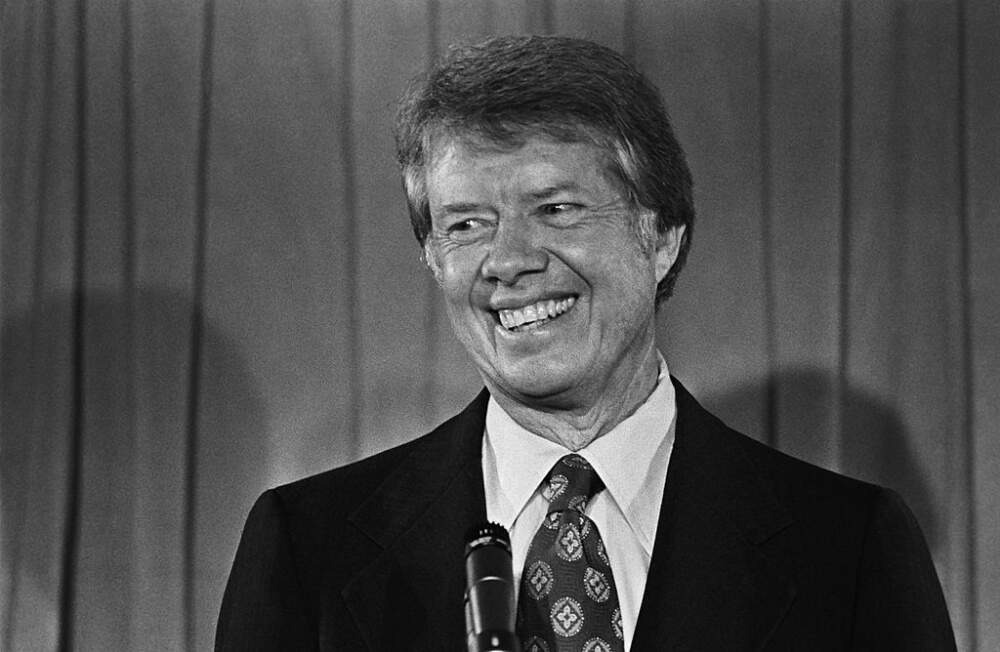
Back then, Gerald Ford was our president, and that was fine. He was a good man. I would soon be overjoyed that Jimmy Carter would replace him — things were just getting better and better. We had 40 good years ahead of us. We could reflect on the triumph of 200 years of America taking giant steps to make its union more perfect for all, and its leadership of the Free World since 1945.
A Linguistic Question
I was thinking this morning a thought identical to one I wondered about in 1976: Why were we calling them “tall ships?” At the time of our revolution, wouldn’t they just have been “ships?” Although some — compared, say, to a frigate — did seem to have unusually tall masts. What do you call sails that fly even higher than the royals? Because I think I saw some of those.
Speaking of frigates… I wished the USS Constitution could have been there, as the U.S. Navy’s only still-commissioned square-rigged warship. I mean, I think I saw the Blue Angels, so why not Old Ironsides? I guess because although she occasionally gets under way, the old girl never leaves Boston Harbor anymore. Of course, despite being fabulously old, she’s still young enough to be slightly anachronistic. She wasn’t launched until 1797. But she was much, much closer to the period than anything else I saw sailing today.
We can still celebrate, but we do it 2 days late
I’ve mentioned before the live history lectures I help the Relic Room stage twice a month. Yesterday’s was a triumph — we drew a crowd of 80 (our previous record was 62), and we ran out of both chairs and space in the museum’s small Education Room. The speaker was award-winning high school history teacher Michael Burgess, and his topic was “We Hold These Truths to be Self-evident – the Declaration of Independence at 250.”
He was excellent as always, and the crowd enjoyed it. But as good as Mike’s words and delivery always are, perhaps the best part for me was the clip he played from HBO’s “John Adams,” which celebrates my favorite Founding Father (and fave Founding Mother, Abigail). It was this part, when the Continental Congress actually votes to declare independence:
After the clip, Mike encouraged us all to notice how quiet all those men were once it was announced that “the motion carries.” Everyone, including the nervous, foppish young Edward Rutledge from South Carolina (seen in the still on the video link above), was overwhelmed, struck to silence, at the enormity of what they’d just done, breaking away from the world’s greatest superpower. No fireworks. No “shot heard ’round the world.” Just thoughtful sobriety.
Quiet. I was wishing for some of that when I watched the “tall ships” this morning. My hearing aids distort loud sounds of certain pitches, to a painful degree. So I turned them off, and then turned off the volume so I could enjoy the spectacle without listening, say, to the overexcited, bombastic, stentorian announcers. One of the wonderful things about sailing ships is that when you’re sailing, you hear little more than the wind. And if you’re sailing before the wind, you don’t even hear that.
Oh, one last point on this part (and one I’ve mentioned before, many times) — that vote depicted in the video clip was on July 2, which John Adams always thought would be celebrated as our Independence Day — instead of the day of the signing of the document that the Committee of Five had drafted, with Jefferson doing much of the work at Adams’ behest. Jefferson hadn’t said a word during the debate, when Adams was browbeating those guys into voting “yes.” But Adams knew Jefferson was handy with a pen, and was also way more popular than Adams himself was. A situation that sadly exists to this day.
The Tax Revolt
Y’all know how I enjoy listening to Tom and Dominic on “The Rest Is History.” And of course their often mocking, wiseacre delivery helps make it enjoyable, particularly when they speaking of, say, the French. They’re English of course, and it’s sort of refreshing to listen to their somewhat exaggerated (for entertainment effect) John Bull patriotism in a time when there’s so much sad turmoil in Britain.
But it can be a tad uncomfortable to listen to them dismiss our revolution as a petulant “Tax Revolt,” and air the same views common to most Britons at the time, which can be summarized as “Why can’t those whiny colonists pay the taxes necessary to protecting their homes (such as in the Seven Years War), and shut up about it?”
Still… they have a point.
Make no mistake. I think the fact that the United States came into being as one of the best things that ever happened in human history. And as Mike Burgess stressed, our example (that is, our example prior to 2016) is still an inspiration to so much of the world. As you know, I’ll argue vehemently with cynics who run our country down.
But I’ve never felt good about the original excuses we offered for our revolt. The great thing about the Declaration, which we celebrate today, was the fact that we were legitimizing the war that had started more than a year earlier. At the point of July 1776, we had more legitimate grounds for a group of serious, sober men to gather and declare our split. After that, there was a legal justification to continue fighting. At Lexington and Concord the year before, there was not. Nor were many of the acts of resistance committed before that. The Stamp Act, for instance, was not a valid reason to take up a gun (many stages later in the escalation of hostility) and shoot at the only legally consituted authority our county had at the time.
‘No Kings’
Therefore, I have somewhat tempered views of some of the things that many of my fellow Americans think our independence is all about.
Do you get those texts urging you to participate in (or contribute money for) an upcoming “No Kings Rally?” I kind of wince at those. The problem today isn’t that we have a president who thinks he’s a “king.” The problem is that we have a president — a democratically elected president, elected after he had demonstrated previously just what he was — who is Donald John Trump. And that means our real problem is the American electorate, which has gone seriously mad. This would never, ever have happened before 2016. We had our problems, but we weren’t this crazy and depraved in those first 240 years. The great mass of American voters laughed anyone like Trump right off the stage back then.
We all quote Churchill saying “Democracy is the worst form of Government except for all those other forms that have been tried.” We do that because both parts of his statement were correct. Although I would have said “representative democracy” or “liberal, constitutional democracy” rather than just that one word, which can be highly problematic by itself.
The word certainly made our Framers nervous, which is why they set up our federal system so that pure democracy came into play only in one half of one of the three branches — the House of Representatives. And even that, thank God, was representative, not direct, democracy.
But a lot of Americans have not been nearly as wise as the Framers, and while our country has done many wonderful things over the centuries — such as ending slavery, whipping the Nazis and freeing Western Europe, and the Civil Rights Act of 1964 — we’ve also steadily eaten away at the safeguards against the most dangerous elements of democracy. Probably the worst change in terms of our present problem was demolishing the party convention system to guarantee that the candidate who won the most votes in primaries and caucuses would win his party’s nomination, and therefore have at least an even chance of becoming president.
A lot of Democrats warned that Trump was a “threat to democracy,” reflecting our national habit of inadequately summing up the virtues in a single word — which doesn’t hold up upon examination. So I was encouraged, back during the 2024 election, when I was having breakfast at a local restaurant with a couple of friends, and one of them — a committed Democrat — said he didn’t think that was the problem. I eagerly agreed with him. Trump wasn’t a threat to democracy, he was an example of the harm that democracy itself can wreak in a time when our electorate has gone mad and lost its way.
Democracy’s great when you have serious voters who want the best possible leaders for our country — which is what we experienced for most of our history. But what do you do when a majority actually wants the worst candidate ever to step forward and ask for the job?
Time to celebrate
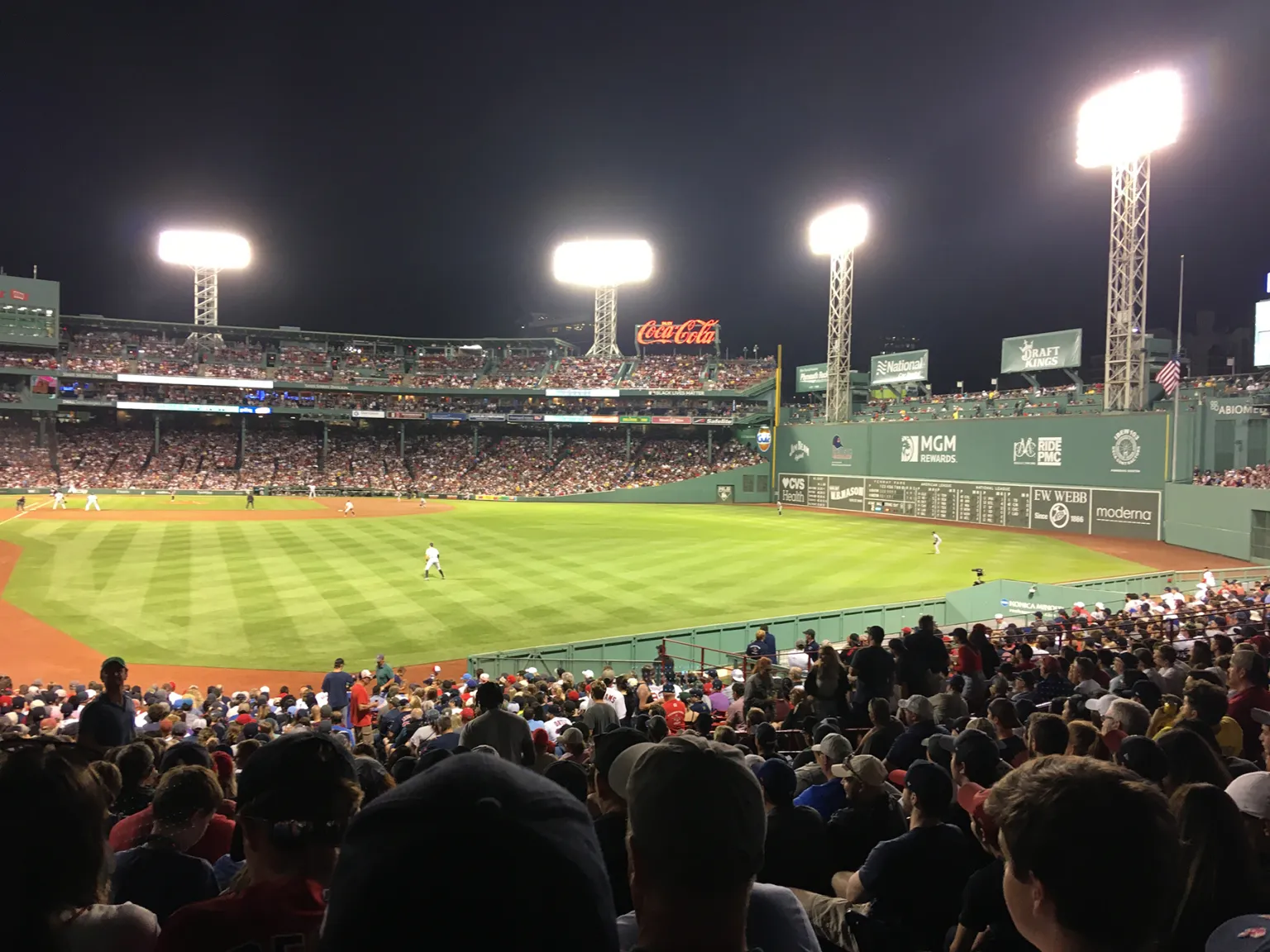
As concerned as I am in these times, I’ll still celebrate the promise of America today. We’re going to a cookout, and looking forward to it. And while I lightly disparaged noisy celebration and praised sober contemplation above, I took my grandchildren to the ballpark last weekend to hear the South Carolina Philharmonic play stirring music ranging from John Philip Sousa to John Williams. And it was perfect when, after dark, the fireworks started precisely as the “cannonfire” part of Tschaikovsky’s “1812 Overture.” It was wonderful, as always (especially when you can turn off hearing aids during the banging, and still hear the music quite well).
God Bless America. And in our troubled times, God Save America, because what those sober men started 250 years ago is eminently worth saving.

The Peruvians showed up, too. I hope they didn’t get too close to the Guayas. Last time I was down that way, some Ecuadoreans were still pretty sore about the War of ’41. Nautical footnote: What was going on in that harbor, in terms of wind conditions? The Ecuadorians had all their squaresails aloft, and the Peruvians had nothing flying but staysails…