
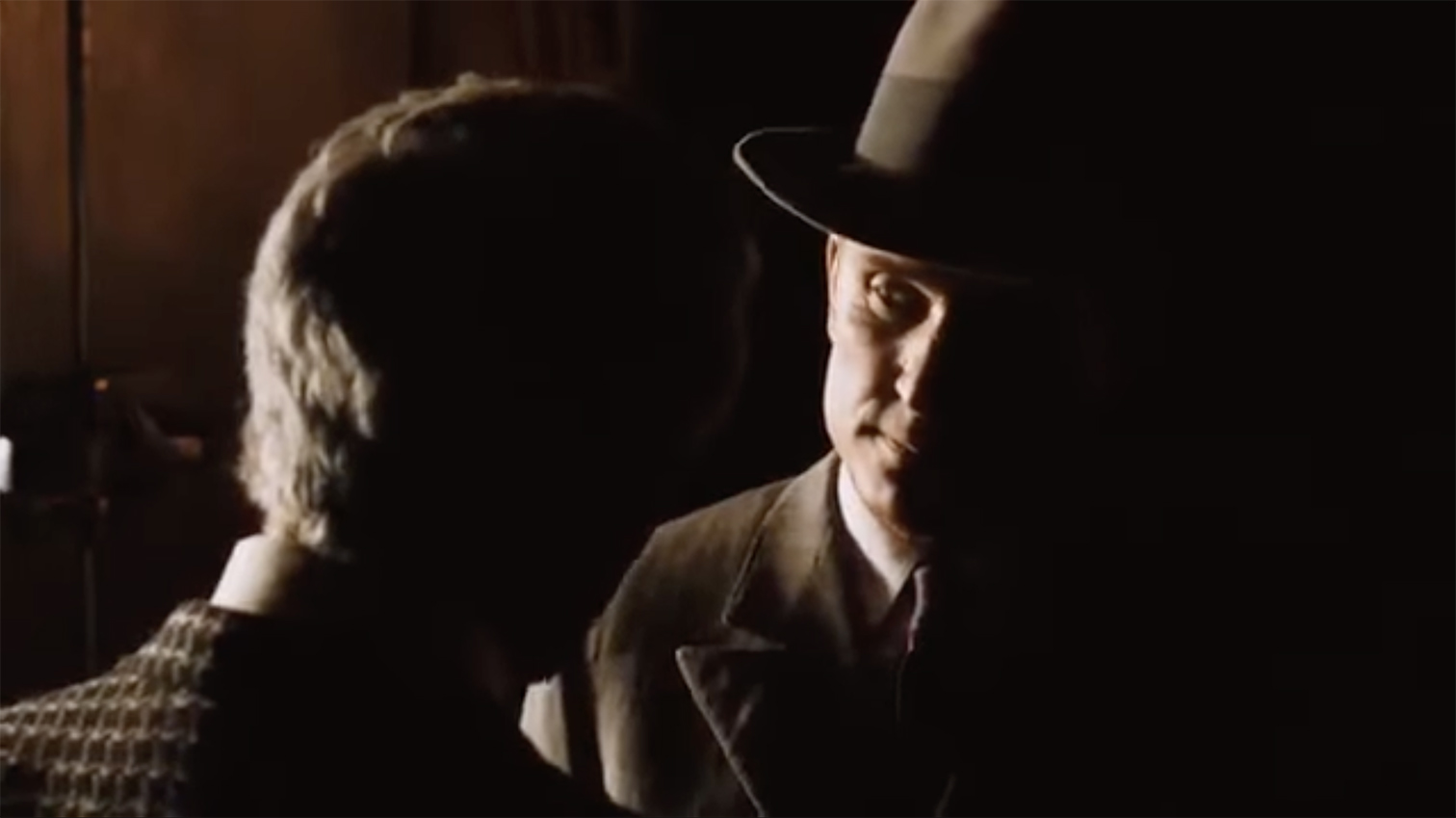
Tom Hagen dealing oh-so-patiently with the blowhard Jack Woltz in “The Godfather.”
Sadly, this is a week for obituaries. In fact, we received word of the passing of both Jesse Jackson and Robert Duvall in the same news cycle. It’s just taken me a few days to get to both of them.
The loss of Duvall is hard to take because he projects (still, in his films) a depth of humanity that is too often missing, or hidden, today. Not just in film and other arts, but in other aspects of modern life — especially politics. Fortunately, we still have those films. Tragically, he won’t be making more of them.
The best way I can sum him up is that as soon as I learned that would play a part in a “coming attraction,” I would think this is going to be good, and start looking forward to it. (Of course, directors and fellow performers had their own good or bad effects on the production, but having Duvall on board gave the picture a running start.)
My favorite Duvall roles are not always the most popular ones. He was celebrated for his role in “Apocalypse Now,” and loads of fans who thought they were unique could come up to him and say that they loved the smell of napalm in the morning. But while his performance in that was bright and gripping and entertaining — he occupied the screen fully in every frame in which he appeared, eclipsing the other actors — that’s not my favorite. It’s too cartoonish, and I found it distracting in a film that, after all, was a modernized retelling of Conrad’s Heart of Darkness. At that stage of his career, Marlon Brando wasn’t nearly the actor Duvall was. But his character was far more meaningful to the story overall, and more in keeping with the tone.
What was his most impressive performance? I might think of something else the minute after I post this, but off the top of my head, it would be Tom Hagen in “The Godfather.” He creates a supremely self-controlled man. If you read the book, you know why Hagen was this way. He had learned it from his foster father Vito Corleone. Always keep your cool. Never issue a threat. Never let your enemy see what you’re feeling or thinking. Project yourself as the very model of reasonableness.
That screenshot at the top of this post is from his best scene — when he goes to Hollywood to ask a cartoonish blowhard of a producer to give a movie role to the Don’s godson Johnny Fontane. See that calm, deferential look on his face. That’s all Jack Woltz — the very model of weak man who thinks he’s something special — would ever see of him, until he woke up with a horse’s head in his bed.
It’s hard to project that quality, even when you’re paid to and you’re not personally feeling what the character would feel. Sure, he was a bad guy, but at least a bad guy with admirable qualities.
I also liked his fading country music star in “Tender Mercies,” a beautiful film about redemption. My favorite scene is this one: A woman comes up to him on the street and asks, “Were you really Mac Sledge?” He sort of half-laughs (as I remember; I haven’t seen it in a while), and admits, “Yes ma’am, I guess I was.”
I was never in my life nearly as famous as his character was supposed to be, but I still experience that sort of thing when people recognize me or my name from my newspaper days. I’m no star, but it happens. It last happened just over a week ago. I still haven’t fully figured out how to handle it, beyond saying thanks, but I like the way he did it. (At least the lady didn’t say, “I love the smell of napalm…”)
Duvall traveled around East Texas with a friend preparing for that role. Finally, the friend asked what they were doing and he explained, “We’re looking for accents.”
Again, though I wasn’t a professional actor, I had enough in common with Duvall to identify. Reports The New York Times:
Across a film career that took flight in the early 1960s, he stood out for an intense studiousness that shaped his every role. Even as a boy, in a Navy family that moved around the country, he had an ear for people’s speech patterns and an eye for their mannerisms. “I hang around a guy’s memories,” he once said. Insights that he gleaned were routinely tucked away in his head for potential future use…
I did the same, growing up. I was never fully a part of the communities in which I lived, but I grew up observing them closely and with interest. I suspect that’s a reason why so many military brats become journalists. As for accents — they are a lifelong source of fascination (and imitation, although I’m not as good at them as when I was young). I’ve been meaning to write one of my too-long-to-get-around-to posts on that subject for years. Maybe I’ll get to it soon.
I look at Duvall on the screen, and I see another guy like that.
I’ll close with a mention in that NYT article of his first film role, which foreshadowed the unique power he would bring to the screen:
That Mr. Duvall could become practically whomever he chose was foreshadowed in his first film, “To Kill a Mockingbird,” a 1962 classic based on Harper Lee’s novel about racial prejudice in a Southern town. He played Boo Radley, the reclusive, hollow-eyed neighbor who fascinates and ultimately rescues the two small children of the defense lawyer Atticus Finch (Gregory Peck).
As Mr. Duvall’s career flourished in the 1970s and ’80s, it surprised many of his fans, on looking back, to discover him in that film. One person apparently not surprised was Harper Lee. When Mr. Duvall landed the part, she sent him a congratulatory telegram. “Hey, Boo,” she wrote. It was, he said later, his only contact with her.
I love that story. That was a very cool thing for “Scout” to have done. And it’s a congratulatory telegram I would certainly frame and put on the wall…
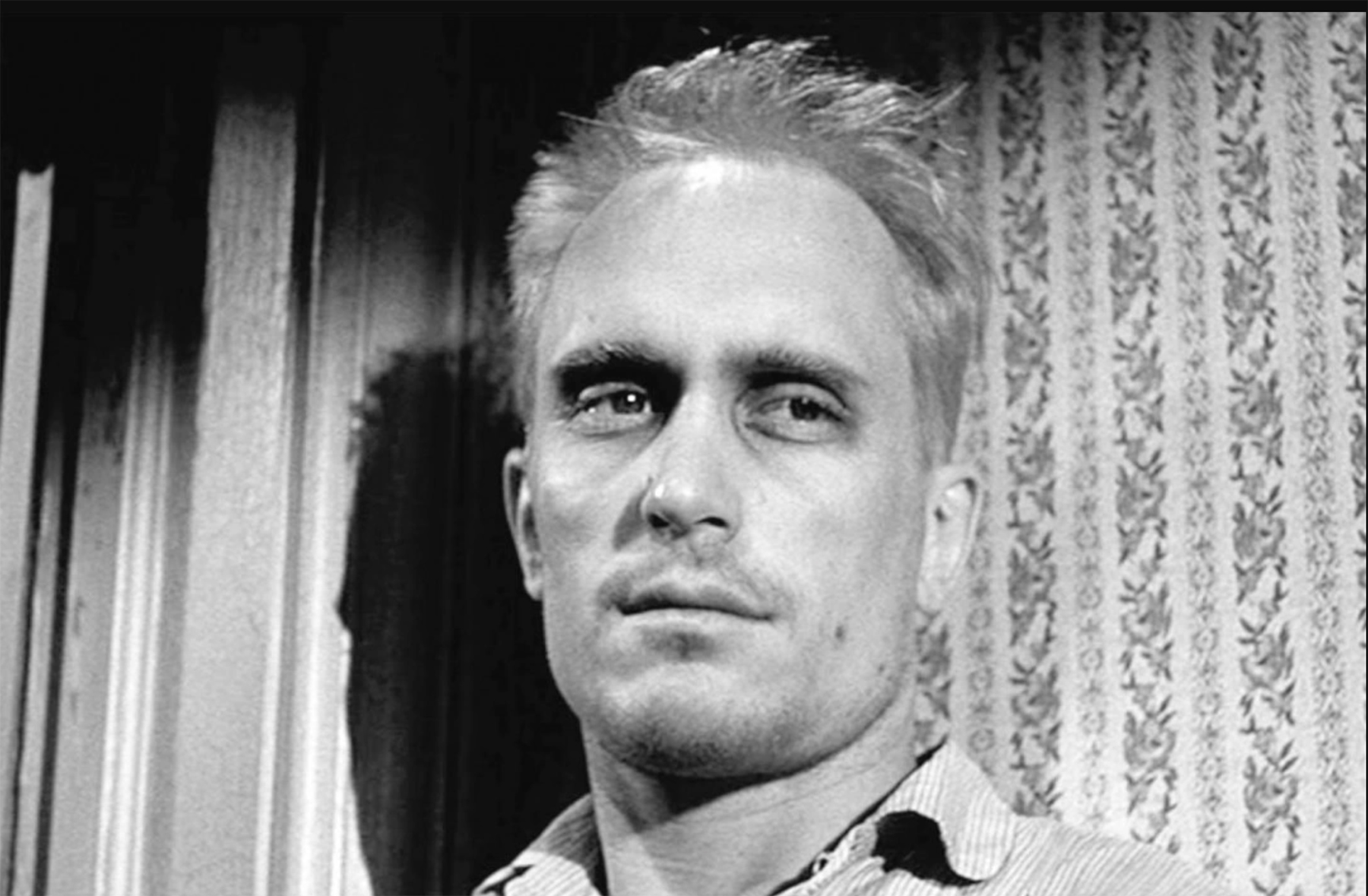
“Boo” Radley at the moment Scout first sees him…