Category Archives: Movies

Top Five Actresses ever in film history

Listen for the family whistle… and don’t take drugs!

OK, I hurried up a little too much on the Top Five Actors post — so much that I left off Gene Hackman! — but I confess I’m going to hurry even more on this one, because it’s already been a couple of days…

I limited the men’s list to the last 60 years because I was doing it in the context of thinking about Duvall. I’m going all-time on this one. Well, all-out regarding the history of film (and TV), which is not all that much longer. But I have no means of making an informed judgment of the acting skills of, say, Lillie Langtry. (Although she appeared on film once, in 1913, I never saw “His Neighbor’s Wife.” And even if I saw it, I couldn’t hear her voice — which is kind of key in assessing acting skill.)

Finally, I’m doing my best to make sure this is about acting ability, and not about how attractive these women were or are. Which is not easy to do. Hollywood undermines such a merit-based goal at every step, and has done so since the beginning. It does the same to men — think Clark Gable, Cary Grant, Robert Redford, Brad Pitt. But that’s nothing compared to how the principle (or lack of principle) is applied in the case of women.

Why does this happen? Butts in the seats. The casting directors look for people the slobs out here will pay to look at. American casting directors take it to ridiculous levels. You want to see at least some normal-looking people? Check out British film and TV.

Anyway, I promise you won’t find Marilyn Monroe on the list. But whatever I do, a lot of these women will be more attractive than average.

Back to the subject of actual acting…

Top Five

  1. Frances McDormand — Every time I see her, I think, “Greatest actress,” or at least “Greatest American actress.” My favorite role? The mom in “Almost Famous.” See photo above. But let’s not forget “Fargo.”
  2. Marisa Tomei — Great in everything. Who doesn’t love her in “My Cousin Vinny?” Of course, I think my fave might be her leading role in “The Perez Family.”
  3. Rosalind Russell — I’m sort of breaking my rule here of not basing my judgment on a single movie. I’m putting her here purely for her performance in my favorite comedy, “His Girl Friday.” Anyone who’s as good as good as she was in that is simply that good.
  4. Emma Thompson — Good in everything, of course, but I think my favorite three are the wife who is wronged by that scrub Alan Rickman in “Love Actually;” the lead in “Sense and Sensibility,” as my own 15th-great grandmother in “Henry V.” (Yeah, I’m still that crazy about genealogy.)
  5. Olivia Coleman — I’ve really come to appreciate her over the past decade or so. I could pick almost any of her roles as an example, but I’ll go with an unusual bit of casting. She was cast as the case officer of the title character in Le Carre’s “The Night Manager.” The character in the book was a man. But while there were some bad changes from the book in that show, this one improved the story. Oh, and remember — recently, she was the Queen! (I thought about the other Olivia — de Havilland — but I like this one better.)
  6. Jean Arthur — I’m just always so glad to see her pop up in any of those flicks from the 30s and 40s. If you wonder why, go watch “Mr. Smith Goes to Washington.”

OK, I’m running out of time (gotta go to school today), so I’m going to have to really hurry through the…

Honorable Mentions

  1. Katharine Hepburn — Can you believe I left her out of the Top Five? Hey, I’m a rebel. But I place her here with all respect. Certainly go watch “The African Queen” again. But then be sure to check out “Bringing Up Baby.” Very silly, and nowhere near as good as Rosalind Russell’s masterpiece, but I like an occasional screwball comedy.
  2. Jennifer Ehle — Another based on a single role (she was born to star in “Pride and Prejudice“), although I enjoy her in every role — I just don’t see her enough. And before you gripe about too many Brit actresses, remember that this one was actually born in North Carolina.
  3. Emma Stone — In recent years, she’s become an A-lister who can do anything. But I especially like her first big film role, in “Superbad.” Who can blame Jonah Hill for obsessing about her? (And no, that’s not just a beauty thing; it was the kind of kid she came across as…)
  4. Sigourney Weaver — Sure, I liked her in “Alien” and “Alien 2, (speaking of which, guess who I saw at the comic-con at the Fairgrounds last month — Michael Biehn!)” but her all-time best was “The Year of Living Dangerously.” That was also Mel Gibson’s best, and Linda Hunt’s.
  5. Ingrid Bergman — I could say “It’s not because she was beautiful!,” but who would believe me? Seriously, “Casablana” is No. 3 on my all-time films list, and she was perfect in it. So there.

So there you go. I did that too fast, and I’m sure I left out somebody as great as Gene Hackman on the other list, but I’m sure y’all will let me know. (And no, I don’t mean Meryl Streep. She’s good but didn’t make my list. Nor did Cate Blanchett, but I thought about it.)

A single role earned Jennifer Ehle an Honorable Mention.

The best actor of his generation, or since

Tom Hagen dealing oh-so-patiently with the blowhard Jack Woltz in “The Godfather.”

Sadly, this is a week for obituaries. In fact, we received word of the passing of both Jesse Jackson and Robert Duvall in the same news cycle. It’s just taken me a few days to get to both of them.

The loss of Duvall is hard to take because he projects (still, in his films) a depth of humanity that is too often missing, or hidden, today. Not just in film and other arts, but in other aspects of modern life — especially politics. Fortunately, we still have those films. Tragically, he won’t be making more of them.

The best way I can sum him up is that as soon as I learned that would play a part in a “coming attraction,” I would think this is going to be good, and start looking forward to it. (Of course, directors and fellow performers had their own good or bad effects on the production, but having Duvall on board gave the picture a running start.)

My favorite Duvall roles are not always the most popular ones. He was celebrated for his role in “Apocalypse Now,” and loads of fans who thought they were unique could come up to him and say that they loved the smell of napalm in the morning. But while his performance in that was bright and gripping and entertaining — he occupied the screen fully in every frame in which he appeared, eclipsing the other actors — that’s not my favorite. It’s too cartoonish, and I found it distracting in a film that, after all, was a modernized retelling of Conrad’s Heart of Darkness. At that stage of his career, Marlon Brando wasn’t nearly the actor Duvall was. But his character was far more meaningful to the story overall, and more in keeping with the tone.

What was his most impressive performance? I might think of something else the minute after I post this, but off the top of my head, it would be Tom Hagen in “The Godfather.” He creates a supremely self-controlled man. If you read the book, you know why Hagen was this way. He had learned it from his foster father Vito Corleone. Always keep your cool. Never issue a threat. Never let your enemy see what you’re feeling or thinking. Project yourself as the very model of reasonableness.

That screenshot at the top of this post is from his best scene — when he goes to Hollywood to ask a cartoonish blowhard of a producer to give a movie role to the Don’s godson Johnny Fontane. See that calm, deferential look on his face. That’s all Jack Woltz — the very model of weak man who thinks he’s something special — would ever see of him, until he woke up with a horse’s head in his bed.

It’s hard to project that quality, even when you’re paid to and you’re not personally feeling what the character would feel. Sure, he was a bad guy, but at least a bad guy with admirable qualities.

I also liked his fading country music star in “Tender Mercies,” a beautiful film about redemption. My favorite scene is this one: A woman comes up to him on the street and asks, “Were you really Mac Sledge?” He sort of half-laughs (as I remember; I haven’t seen it in a while), and admits, “Yes ma’am, I guess I was.”

I was never in my life nearly as famous as his character was supposed to be, but I still experience that sort of thing when people recognize me or my name from my newspaper days. I’m no star, but it happens. It last happened just over a week ago. I still haven’t fully figured out how to handle it, beyond saying thanks, but I like the way he did it. (At least the lady didn’t say, “I love the smell of napalm…”)

Duvall traveled around East Texas with a friend preparing for that role. Finally, the friend asked what they were doing and he explained, “We’re looking for accents.”

Again, though I wasn’t a professional actor, I had enough in common with Duvall to identify. Reports The New York Times:

Across a film career that took flight in the early 1960s, he stood out for an intense studiousness that shaped his every role. Even as a boy, in a Navy family that moved around the country, he had an ear for people’s speech patterns and an eye for their mannerisms. “I hang around a guy’s memories,” he once said. Insights that he gleaned were routinely tucked away in his head for potential future use…

I did the same, growing up. I was never fully a part of the communities in which I lived, but I grew up observing them closely and with interest. I suspect that’s a reason why so many military brats become journalists. As for accents — they are a lifelong source of fascination (and imitation, although I’m not as good at them as when I was young). I’ve been meaning to write one of my too-long-to-get-around-to posts on that subject for years. Maybe I’ll get to it soon.

I look at Duvall on the screen, and I see another guy like that.

I’ll close with a mention in that NYT article of his first film role, which foreshadowed the unique power he would bring to the screen:

That Mr. Duvall could become practically whomever he chose was foreshadowed in his first film, “To Kill a Mockingbird,” a 1962 classic based on Harper Lee’s novel about racial prejudice in a Southern town. He played Boo Radley, the reclusive, hollow-eyed neighbor who fascinates and ultimately rescues the two small children of the defense lawyer Atticus Finch (Gregory Peck).

As Mr. Duvall’s career flourished in the 1970s and ’80s, it surprised many of his fans, on looking back, to discover him in that film. One person apparently not surprised was Harper Lee. When Mr. Duvall landed the part, she sent him a congratulatory telegram. “Hey, Boo,” she wrote. It was, he said later, his only contact with her.

I love that story. That was a very cool thing for “Scout” to have done. And it’s a congratulatory telegram I would certainly frame and put on the wall…

“Boo” Radley at the moment Scout first sees him…

Separated at birth? No, way BEFORE birth…

As a Superman fan from the Silver Age, I’ve always been kind of frustrated with the casting of some of the key characters in the movies. Especially Superman’s Pal, Jimmy Olsen.

The one on the TV show wasn’t TOO bad, but he could have been better. At least he had the costume right, and the attitude as well.

But the makers of the first movie got it all wrong. He acted the part OK, but he didn’t look right, and worse, FAR worse, they took the world’s most famous cub reporter and turned him into a photographer. Inexcusable. Nothing against photogs, mind you, but that not what Jimmy Olsen WAS!

From then on, things got no better. I can’t even remember the subsequent ones I’ve seen. I guess I’ve blocked them out.

But the long nightmare is over, if Hollywood would reach out NOW to New Zealand. In fact, now might be too late, since I’m seeing this guy on a show filmed in 2016. But check him out, anyway.

I’m talking about Nic Sampson, who played D.C. Sam Breen on the cop show “The Brokenwood Mysteries,” currently available on the PBS app. If he hasn’t aged too much since the third season I’m now watching, he’s perfect. Take a look:

So we’re all set, once we ditch the tie and suit, and put him in a bow-tie and sweater vest. And he can play the part. He’s the junior member of the detective (which the Kiwis pronounce “diTEECtive”) team, and his character has a definite cub-reporter feel about him. The other two main characters are sort of Clark (or a cross between Clark and Perry White) and Lois. (But alas, they don’t really look much like them.)

You doubt me? Then I refer you to the one, true version of Jimmy, that is, the Silver Age version:

Admittedly, according to the text on the cover, that’s not actually Jimmy himself, but his evil double. The real Jimmy is apparently trapped in a plastic box or something. I dunno, but a double’s a double, and Nic Sampson is definitely one of those. (Oops! I just read the cover again, and apparently the double is the one in the box, and the apparent bad guy is the REAL Jimmy. Oh, well, whatever. You get my point.)

It’s like the artist used him as a model for this cover. But that’s impossible, because this cover was published in 1965, and Nic Sampson wasn’t born yet until 1986!

Which is impressive. Maybe his mom read a lot of D.C. comics.

So that’s done and dusted. Anything else I can help you with, Hollywood?

No, it’s not the funniest. It’s No. 7

Just a very quick note to correct something I ran across on YouTube while looking for something else.

It claimed that Woody Allen’s “Love and Death” is “the funniest film of all time,” which it is not.

It’s Woody Allen’s funniest film, (“Bananas” is second, followed by “Play it Again, Sam”). It’s also, to stretch a point, the funniest comedy ever to lampoon uberserious Russian novels of the 19th century. But that’s all that can be said, except that in the larger category of best comic films of all time, it comes in at a respectable No. 7.

I won’t elaborate. I’ll just copy and paste what I wrote three years back (in a post in which I regretted having failed to put Howard Hawkes’ masterpiece “His Girl Friday” on my overall movie Top Five, although it made my Top Ten), and then we’ll move on:

  1. His Girl Friday — Yay, it’s at the top of the list! And deserves it.
  2. Young Frankenstein — Some would choose “Blazing Saddles.” I would not. Have you seen that one in the last few decades? It doesn’t hold up. This does.
  3. Ferris Bueller’s Day Off — I was looking at the AFI list of the supposed top 100 funniest movies in American cinema, and at No. 79 they had “The Freshman,” from 1925. Which I’ve never seen, but I did see “The Freshman” from 1990, and it was awesome. I mean, come on, Brando playing a guy who just happens to look like the Godfather? Still, it was not star Matthew Broderick’s best. Ferris was. And it didn’t even make this stupid list. Which is lame.
  4. This Is Spinal Tap — You can talk mockumentaries all day, but this is the granddaddy of them all, and the best ever. Because it goes to 11.
  5. Office Space — In a category by itself.
  6. My Man Godfrey — Another screwball comedy, but I think there’s room for this one and Friday both. It’s certainly different enough.
  7. Love and Death — Say what you will about Woody Allen (and there’s a good bit of creepy stuff to say), but I’ll paraphrase the fan from “Stardust Memories:” I really liked his early, funny ones. And the best of all was “Love and Death.” That’s what Tolstoy and Dostoevsky really needed — a few laughs.
  8. The Graduate — Yeah, this one is on my Top Five best ever. But it’s the only one of those to make this list. Yet I’m not sure it should be here. Was it really a comedy exactly? It’s the most category-defying of the truly great films.
  9. Groundhog Day — I had to get a Bill Murray in here, and I chose this one.
  10. The Paper — Initially, I had American Graffiti here. Or maybe Trading Places, which so brilliantly combined two Mark Twain stories, and two of his best. But I decided to end up where I started — with a film about newspapering that I could really identify with. Funny thing is, some serious journalists hated this film for some of the same factors that might cause someone to reject “Friday” — they were afraid it made us scribes look bad. But again, it was brutally dead-on caricature. Sure, we were more serious and principled that this. But I really, really identified with the Michael Keaton character, who at least had this going for him: He wasn’t as bad as Walter Burns, not by a long shot. Not as funny either, though…

I remain comfortable with those choices, although I hate that “Minions” didn’t make the list (I’m always torn on the last movie I pick). Maybe I should do a Top Five Animated Movies list…

Top Five Favorite Robert Redford Movies

Note that this is not “Top Five Best…”

If it were that, the unquestioned winner would be “All the President’s Men.” I just watched it again recently, on Criterion. Every few years, I go back and watch it again, and every time, I’m more amazed at how much great it is. It’s the verisimilitude. Nobody’s trying to be cute, or sexy, or fun. It’s deadly realistic. The interviews conducted with people who really, really don’t want to be talking to these two reporters — the awkwardness of both the sources and the reporters themselves, polished stars that they were — is astounding. Other people like slick. I’m impressed by real.

But on this sad day, I thought I’d go with fun. What were the Redford flicks I enjoyed the most? Here they are:

  1. The Natural — It’s only my third-fave sports flick, but it’s my favorite baseball movie (with “Major League” a close runner-up, I think), and you can’t say fairer than that.
  2. All The President’s Men — OK, so Roy Hobbs only knocked it down a notch, but that’s because my appreciation grows each time I see it. I gave it a very favorable review in my first job at a newspaper. But I like it even better now. It’s just not, you know, baseball.
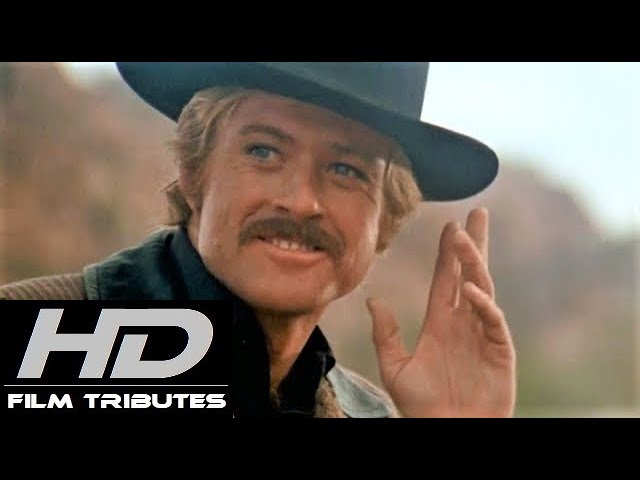
  3. Butch Cassidy and The Sundance Kid — When it came out, I loved it so much that I couldn’t imagine these actors doing anything to top it (and “The Sting” didn’t even match it, despite the obvious effort). So good. Of course, it was sort of a neo-Western, with that Burt Bacharach music. Something special.
  4. Three Days of the Condor — Generally, I’m not a huge fan of paranoia movies (“The CIA’s out to get me!”) But this one really worked. Part of that was Max von Sydow as the freelance assassin.
  5. The Candidate — This one’s less-known, but it was great. The story of a candidate who didn’t want to win — and how difficult it is to maintain such insouciance in the all-enveloping atmosphere of a campaign. And it had Peter Boyle in it, as the guy who enticed him into running.

Anyway, I think those are my faves. How about you?

Goodbye to the Kid

Robert Redford at (almost) 40.

This is the way time passes.

I had a shock glancing at the magazines at a store checkout back when I lived in New Orleans (OK, technically across the river in Algiers) when I was in junior high.

I saw a headline that said something like “PAUL NEWMAN TURNS 40!” I couldn’t believe it. This was 1965, and he had played Billy the Kid in 1958! He had been the young up-and-comer in “The Hustler” in 1961! So how could he be an old man now?

But sure enough, he was almost four years older than my Dad, so that’s getting on up there.

While I was still in high school, he portrayed Butch Cassidy alongside a guy young enough to pass as the Sundance Kid. Appropriately, Robert Redford was almost a dozen years younger. He’d been around for a bit, but playing Sundance was his big break, immediately making him a major star.

Which is interesting, looking back. Think of all the characters he played later in his huge career — Gatsby (which came out the year I got married, which is why I wore a three-piece white linen suit that day), Bob Woodward, Bill McKay (“The Candidate“), Jeremiah Johnson, Condor, Major Julian Cook (“A Bridge Too Far“), and Roy Hobbs.

He was always the straight man. So serious, hardly smiling. Kind of grim. I’m-just-hear-to-do-a-job- ma’am. When he reassures a source that he’s a Republican in “All the President’s Men,” Dustin Hoffman is suprised, but nobody else is — he looks the part. And would you ever call Jeremiah Johnson a fun guy?

By contrast the Kid was the coolest guy in the Hole-In-The-Wall Gang. Everybody was afraid of him, even Harvey. If it had been present-day, he’d have been the one in a leather jacket. He’s the one who got Katharine Ross!

Anyway, I’m sorry he’s gone, and shocked that he was 89. But I’ve noticed that a lot of people around me are getting old. Plenty of them are over 40 now.

It’s sobering.

As a senior in high school, I had this poster on my wall.

So much for the legendary hero of McNairy County

The Wikipedia page for Adamsville, TN, features this pic of local boy Buford Pusser’s house.

It’s been so long since Buford Pusser was a household name that this didn’t make all that much of a splash, near as I could tell (maybe it was bigger on TV, which I don’t see). Fifty years ago, it would have been as big nationally as Alex Murdaugh’s crimes — maybe bigger.

Certainly bigger. Alex Murdaugh was a prominent small-town Southern lawyer who murdered his wife and son, among a host of less-shocking crimes. Pusser was a rural Southern sheriff who impressively wielded a big stick in fighting rampant crime in his county, to the point that the bad guys ambushed him and murdered his wife, and Hollywood made him a hero — several times, if you count the two sequels and the made-for-TV movie. Apparently, a TV series as well.

Pauline Mullins Pusser

And now, the authorities say Buford himself killed his wife. This at least has made The New York Times take notice. One wonders how Hollywood will react to the news.

Pauline Mullins Pusser was killed in 1967, and her husband died seven years later. There will be no killer to prosecute, but authorities are pursuing an indictment in the cause of “giving dignity and closure to Pauline and her family and ensuring that the truth is not buried with time.” A good call, I’d say. Called for in this case, if not in others.

“Walking Tall” was something of a national hit in 1973. The NYT cites Variety in saying that it “was made for about $500,000 and earned more than $40 million worldwide.” Not one of the top-grossing films of the year, but impressive nevertheless, given the tiny investment. It reminds me in that regard of “Billy Jack” a couple of years earlier.

It’s hard for me to recall accurately how big a hit is was nationally, because I was living at the time in small-town West Tennessee, where it was a sensation. Of course, my small town was nothing like McNairy County. Millington was just a few miles north of Memphis, and was the home of NAS Memphis (now known as Naval Support Activity Mid-South). I lived on the base. I was a sophomore at Memphis State, but I knew some of the high school kids on base, who attended the local public school. And they were absolutely nuts about “Walking Tall.” Kind of the way kids my age had been about “Billy Jack” in 1971.

This one girl who lived around the corner from us on the base was certainly impressed. I didn’t really know her and don’t recall her name, but I did fall into conversation with her one day in front of her house. I say “conversation,” but I think it was mostly her talking about how wonderful the movie was. So I asked her if she’d like to see it again. She said yes, and I took her to the Millington drive-in that night.

You can forget any sordid imaginings that may conjur — the college kid taking the high school girl to a drive-in. It just seemed a natural thing to do since she was so enthusiastic about the film, and the drive-in was where it was showing.

I sat on my side of the car and she sat way over on hers, with her eyes glued on the screen, rapt. I had felt a bit awkward thinking she might be nervous about this older (like two years, I guess) guy she hardly knew taking her to the drive-in, but that didn’t seem to be a problem. I was not in her thoughts. She was just digging Joe Don Baker up there and all the awesome things he was doing. I’m trying to remember whether her lips moved along with the dialog as she saw it, because it certainly seems likely given she was so fascinated and had seen it before.

I don’t remember interacting with her in any way after that night. There didn’t seem any ground for the establishment of even a platonic friendship. She was only interested in one thing, and it did not lie within my universe of interests.

No matter. I met my wife a couple of months later. The night we met we had a long talk about Jack Kerouac and On The Road. This was a good start, and things got better from there. Did I tell y’all about our big 50th-anniversary celebration with our children and grandchildren last year?

I wonder, though, whether that girl has heard this latest news. I hope she’s not too shaken by it.

Above, I sort of wondered idly how Hollywood would react. Of course, if there is ever a new movie, it won’t be in the same vein at all. It won’t inspire folks across the nation to idolize the ex-professional wrestler who becomes sheriff in a corrupt corner of the countryside and lets no one stop him while he addresses crime by whupping bad guys with his big stick. Or to idolize anyone else.

It will instead be painfully sad. I don’t think I want to see that flick, either…

Joe Don Baker as Pusser in ‘Walking Tall.’

All the Way with LBJ

Here’s another movie that should have been on somebody’s list of the best since the turn of the century. I had forgotten about it, then ran across it on HBO and watched it again last night. I was more impressed this time than the first time.

It’s “All the Way,” starring Bryan Cranston as Lyndon Baines Johnson. It covers his first year as president, from the moment JFK was pronounced dead in the hospital in Dallas to LBJ’s stunning victory over Barry Goldwater.

It was technically amazing. Cranston’s embodiment of Johnson, aided by remarkable makeup, made me feel constantly that I was watching and hearing the original man. If anything, Melissa Leo was even more impressive as Lady Bird, although she didn’t have nearly as much screen time.

Also noteworthy: Bradley Whitford as HHH, Stephen Root as J. Edgar Hoover, and Aisha Hinds as Fannie Lou Hamer. Towering above those was Frank Langella’s deft, nuanced portrayal of Senator Richard Russell. (I was less impressed with the portrayals of MLK and, in a bit part, our own Strom Thurmond. Sadly, I’ve yet to see any actor come close to recreating the power of Dr. King’s presence.)

Beyond the technical stuff, since I was out of the country during that year, I learned a lot watching it. Sure, I knew about (or learned later about) the events that were portrayed — the extraordinary exertions to pass the Civil Rights Act, the destruction of the Democratic Party’s Solid South, the deaths of the three civil rights workers in Mississippi, the Gulf of Tonkin incident, and much more — I hadn’t fully had the sense that they all happened in that year, when Johnson was trying to establish his legitimacy in the office while also winning an election. With hindsight, I’ve tended to think Goldwater was easy to beat. But not from LBJ’s perspective, with all those other things going on.

I enjoyed “Breaking Bad,” but maybe the best thing about it was that it gave Cranston the celebrity to do something like this. It was made in 2016, and it’s amazing to me that it didn’t make more of a splash (as in, the kind that gets you on a “Top 100” list.) Perhaps because it’s wasn’t available to anyone but subscribers.

If you have access to Max, or whatever you call HBO, watch this right away…

100 best of the century? Let’s cut that down to a Top Five

The New York Times tried to sneak a “best movies list” by me last month, and almost got away with it — until “The Daily” hipped me to it a few days ago on the NYT Audio app.

They billed it rather grandly as “THE 100 BEST MOVIES OF THE 21st CENTURY.”

Seems they’re pushing things a bit, don’t you think? I mean this century just got started, right? This is 2025, not 2100, or even 2099. Don’t ya think Hollywood might slip in one or two good flicks sometime over the next 75 years? I certainly hope so.

But humans are impatient. Anyway, some of us might not be around in 2099 (maybe even you, or that old guy over there). So they just went ahead.

I would not have been tempted to do that. I mean, if this first 25-year period had contained a 1939, or even a 1967 — a year that just put all others to shame — I would have. But while there a few good pictures here and there, you have to lower your standards a good bit to come up with. It hasn’t been what you’d call a creatively inspired period. It’s not just with regard to movies; look at all the sad pop music since about 1993. The recent films are a bit more inspired than that, but not by much.

A top 25 would have been more doable without lowering your aim. I’m stretching the point by going full Nick Hornby — get it down to five! But you’ll see from my Honorable Mentions list that I could easily have settled on 25.

Especially if I’d seen all the pictures.

A big disclaimer: In this quarter-century of COVID, streaming to big HD screens at home, and ridiculous ticket prices, I don’t go to a lot of movies — whereas in the last century, I made a point of seeing everything that might have made such a list. Not anymore. Here are a few that are on this NYT list that I very much wanted to see, and hope to see soon — provided they come to one of my streaming services and I don’t have to pay extra. (Actually, a couple of those have done that, and I started to watch but lost interest for the moment. I’ll probably try again, though.) Here they are:

  • “Parasite” This tops practically any list you see — if compiled by people who saw it, of course. So I need to make the effort.
  • “Get Out” I love Key and Peele, and people went wild over Jordan Peele directorial debut, but I haven’t seen it yet. I haven’t tried hard partly because it seems to kinda fit in a horror-movie slot, and I mostly don’t like those, but there’s more going on than that. Has to be, given who’s involved.
  • Y tu mamá también I’ve wanted to see that, but it has a sort of sexploitation vibe that makes me feel like it’s not quite the thing, especially with that disturbing title. But hey, it’s in Spanish! So that’s good, right? It’s educational — brush up a bit on my vocabulary!
  • “Lost in Translation” Bill Murray! How have I missed it?
  • “Whiplash” The one about the young drummer with the nightmare teacher.

There are others like that. For, instance, I watched a few minutes of both “Everything Everywhere All at Once” and The Zone of Interest.” I didn’t get far with either. I was tired, late at night, and didn’t have the energy for “Everything.” On the other, I just didn’t feel up to dealing with such moral horror mixed with the banality that so often comes up in dealing with Nazis. I need to try again on both.

OK, here’s my Top Five:

  1. “The Departed” No question here. I go back and forth on whether “Goodfellas” or “Mean Streets” is Scorcese’s best ever, but there’s no question that this one is his best of the new century.
  2. “Almost Famous” Lots of fun, extremely engaging, very polished, and a fantastic evocation of an era. Definitely the best thing Cameron Crowe’s ever done. And the cast! Kate Hudson and Patrick Fugit were the soul of it, but look at the performances of Frances McDormand, Billy Crudup and the intriguing Philip Seymour Hoffman as Lester Bangs! And let’s not forget (I won’t), this was the first time I ever saw Zooey Deschanel…
  3. “The Lives of Others” The best German film I’ve seen this century, even as good at “Downfall” was. All you libertarians on the left and right who think government is such a big, intrusive meanie need to watch this. (Of course, we could get there ourselves, with another year or two of Trump.)
  4. “Eternal Sunshine of the Spotless Mind” So good, and so hard to compare to anything else. What category do you put it in? Well, you don’t.
  5. “Little Miss Sunshine” I’d heard this was good, but was blown away beyond expectation when I saw it. What a cast! Another great job by Alan Arkin, of course, but you can say the same for Toni Collette and Greg Kinnear, plus the little girl at the center of it, pursuing her dream. This was the first time I ever saw Paul Dano, and he made a great impression.

Honorable Mention, in no particular order:

  • “Superbad” Excellent, often too-true, story about high school boys. Don’t watch it with your parents, though.
  • “Moneyball” This was almost in the Top Five, but got squeezed. It’s the best sports movie yet, though. Favorite scene? When Billy’s sitting around with his staff deciding what players to go after, and nobody wants to go for Billy’s plan. They all seemed very real. Also, another great performance by Philip Seymour Hoffman.
  • “No Country for Old Men” Not a favorite, but I was super impressed by Javier Bardem, as perhaps the creepiest killer I’ve ever seen on film.
  • “Borat” I laughed way harder at “The Dictator,” but this was the one that broke new ground. At the same time, a lot of things I didn’t like about it.
  • “Spotlight” Excellent newspaper movie. Who knows whether we’ll ever see another, except as a “period” story.
  • “Gravity” Excellent space movie. Not as great as “Apollo 13” or “The Right Stuff,” but good enough for this century. I like the contrast between the feminism (female astronaut), and the old school ultimate-hero role of her male crewmate.
  • “Gladiator” Love it. Watched it lots of times. Great story, well told. But a bit too far from historical realism.
  • “Michael Clayton” Saw this years ago and was impressed, but don’t remember the details for why.
  • “Minority Report” Great promise as a premise, largely fulfilled.
  • “The Lord of the Rings: The Fellowship of the Ring” I’m not a huge Tolkien fan (he’s good, but perhaps I read this too late in life to become a devotee the way some kids do), but I thought this did a good job with the admittedly rich content.
  • “Melancholia” A real oddball of a film, in tone as well as concept. How would you live if the Earth was about to be wiped out, and you knew exactly when?
  • “O Brother, Where Art Thou?” A lot of creative fun with a great cast and excellent dialogue, ranging from Holly Hunter’s persistent mispronunciation of “bona fide” to the KKK guy saying “They ain’t even old-timey!” Best acting: Stephen Root as the blind radio station manager, who pays the boys to sing into a can.
  • “A Serious Man” I remember being very impressed by this. But it’s been awhile, and I forget the details. Might have to watch it again.
  • “Wall-E” Another brilliant work of animation.
  • “Anchorman: The Legend of Ron Burgundy” I was a bit shocked to see this on the list, but hey, it was funny. I didn’t realize that the first time I saw it, because I hadn’t yet learned to appreciate Will Ferrell. Later, it was hilarious.
  • “Memento” Yeah, the backwards story. I definitely need to see that again, and not just to see “Trinity” from “The Matrix” again. I’m watching a show on Britbox in which Guy Pearce brilliantly portrays Kim Philby, and I want to go back and see all his stuff.
  • “The Hurt Locker” Speaking of Guy Pearce, who throws the audience a major curveball at the beginning… A great depiction of a man addicted to danger that most of us would want to avoid. Best performance? David Morse as the disturbingly enthusiastic colonel. Of course, he’s always great.
  • “Ocean’s 11” Way, way better than the Rat Pack original. Best evocation of cool: George Clooney, fresh out of prison, riding up the escalator in Vegas in his new duds.

Missing. I compiled my lists from the ones the NYT published (the main one from movie people, and a second one from readers). But there were some that did not appear on those lists, and should have. Not that they were all great, but they were better than quite a few that did make the lists. Here are a few that come to mind… oh, dang! I can’t find where I put my notes on that. OK, off the top of my head:

  • “Minions” I don’t care at all for its predecessors in the series, or the sequel. But this origin story may be the funniest, most engaging animated movie I’ve ever seen.
  • “Zero Dark Thirty” How can you have “Hurt Locker” and not this?
  • “High Fidelity” The film based on the novel that got me started on “Top Five” lists! I hated that they moved it from London to Chicago, but it worked, brilliantly! Since our wonderful country is falling apart anyway, maybe Congress should pass a law forbidding anyone from compiling any kind of “best of” list and leaving this out.
  • “Shanghai Noon” The best by Jackie Chan. Owen Wilson, too. If you don’t love it, your “winging it” privileges should be revoked.
  • “Unbreakable” Best superhero movie ever, largely because it never mentions superheroes. The ordinary protagonist just slowly realizes there’s something exceptional about him.
  • “Black Hawk Down” The “Saving Private Ryan” of the new century, which does a good job of relating recent history.
  • “A Knight’s Tale” Just a lot of pure fun. Best bits: When a medieval scene suddenly breaks out with a modern pop song.
  • “The Bourne Identity” A lot of people praise the novel. I’ve read it, and this was way better.
  • “American Splendor” Just to throw in something relatively obscure, and to celebrate Paul Giamatti.
  • “Runaway Jury” Possibly the best of the John Grisham flicks. Alas, one of the last really good performances by John Cusack. (He was OK in “Love and Mercy,” but Paul Dano was better.) Why doesn’t he get better roles?

OK, I’ll stop. I cheated a bit. After typing the first two, I started glancing over lists of movies by year to pad out my list. I only got as far as 2003.

So maybe my whole premise was wrong. Perhaps it is time to do a “Best 100 of the Century” list.

I’ve gotta stop now before I go back and start amending my Top Five list, after being reminded of the missing films. I’ve spent enough time on this.

Well, NOW I’m Happy!…

I thought I had a terrible dilemma coming up.

I don’t go see many movies in theaters. There was a time when I went to pretty much all of them, back when I was a copyeditor in Tennessee and was the paper’s film critic on the side. I wasn’t paid to do that additional work, but it wasn’t really work to me. Besides, the paper made it more than worthwhile by reimbursing me for the tickets. Not that the tickets cost much then. Fact is, I probably would have done it without the reimbursement. If, in my continuing project of cleaning out the garage, I run across a copy of my 1977 review of “Star Wars,” I’ll show to you. But I’ve promised to show it to my kids first.

Now, when I do go to a movie theater — once a year or so — I feel the need to take out a mortgage, to spread the payments out in easy installments. First, there’s the cost to get in. Of course, I can get the senior discount, but that discount is so inconsequential that the difference between that and full price is no more than the cost of a ticket in my youth. But hey, that’s just inflation over time, right? If you go to the CPI calculator, you’ll see that that the cost is about the same. Bu if you want to experience highway robbery, try to get some popcorn and a drink.

And no, the fancy recliner seats with the gigantic cupholders, arranged stadium-style, aren’t worth all that extra cost. I find myself wondering why, after the trauma of COVID and the ongoing existential threat posed by streaming and gigantic 4K screens at home, theaters didn’t go the other way — rock-bottom prices to sit on wooden benches or something. My buddy Tony and I used to go to a theater like that in Ecuador when we were about 10 to see Italian Hercules movies and “The Three Musketeers” in French (with Spanish subtitles, in case we wanted to follow the dialogue). It cost us 40 centavos to get in, which in those days amounted to about 2 cents American. And we loved it. A Coke — in a bottle — cost another 2 cents.

About now, I should start getting to my point, which is that my son who is an avid collector of Marvel comics and I were planning to see the new Fantastic Four when it comes out this Friday. (Or a few days later. You’re kind of crazy to go on opening night.) Even though we had just been to see the new Superman a couple of weeks back!

But then I found that “Happy Gilmore 2” was coming out on the same day — July 25! So what was I going to do?

OK, a word about “Happy Gilmore.” Of course, the original flick was overwhelmingly silly. But it worked! I’ve got this thing about movies (and books and other things) that work. They might be the stupidest plots acted out by actors I would never go to see under normal circumstances. But if, somehow, everthing clicks, I will watch it again and again. “Happy Gilmore” is a perfect example. “Old School” is another. They sound so stupid that you’re put off just hearing about them. But the actors — and director — take that stupid idea and make it brilliant. At least, that’s the way I reacted to it. I don’t think I’ve ever done a “Top Five Sports Comedies” list yet, but “Happy” would definitely be on it. In fact, it would be competing with “Major League” for the top spot.

And yeah, I know about sequels made 30 years after the original. They’re often sad — like that made-for-TV reunion movie for “The Beverly Hillbillies” in 1981. Buddy Ebsen had forgotten how to be Jed Clampett! But I’m not expecting brilliance — just a little bit of fun nostalgia. And I know for a fact that “Shooter” McGavin will appear!

But shell out money for a third theater visit in a year?

So imagine my joy when I got an email today from Netflix telling me it will be streaming “Happy Gilmore 2” starting Friday! I was already thinking I might wait for it to be streamed for free at home, and now I don’t have to wait! (Oh, and it had better be “free” to subscribers! They’d better not use this occasion to usher in a new class of premium “world premieres” or some such thieving gimmick!)

Well, I’m happy, and looking forward to Happy 2.

I wonder — how much longer will actual movie theaters continue to exist? The business model seems almost entirely unworkable now…

But did the KIDS get the jokes in ‘Unfrosted’?

Running across that Jeannie Gaffigan column reminded me of a hilarious movie I rewatched part of while on the elliptical this morning.

I’m talking about “Unfrosted,” in which her husband co-starred with Jerry Seinfeld. Both were great, as were the rest of the ensemble cast. So was the film itself, which you might find surprising if you just saw or heard a description of the premise when it came out last year. It’s “Loosely based on the true story of the creation of Pop-Tarts toaster pastries.”

For that reason, I had ignored it on Netflix for some time before giving in and checking it out. But you know, sometimes the things that sound the dumbest when you first hear about them turn out to be the greatest discoveries. (I’m thinking, apparently irrelevantly, of the 1992 alternative-history novel The Guns of the South, which Wikipedia summarizes thusly: “The story deals with a group of time traveling members of the Afrikaner Weerstandsbeweging (AWB) from an imagined 21st-century South Africa, who supply Robert E. Lee‘s Army of Northern Virginia with AK-47s and other advanced technology, medicine and intelligence.” See what I mean? But it’s awesome.)

So I enjoyed every one of those 10 minutes on the elliptical (I’ll walk some more later, I promise!).

But, as I did the time or two that I saw it before, I couldn’t help wondering: Could anyone but a Baby Boomer get it? So much of the comedy comes from lampooning cultural touchstones of the early-to-mid ’60s, or shortly thereafter (such as the “Godfather” references). Some examples:

Milkmen. Actually this is less a thing we all experienced in the ’60s — of all the places I lived growing up as a Navy brat, I think there was only one place where milk was delivered to our doorstep. But it was still an standard cultural reference that everyone still recognized. And we could understand how they might have resisted the milkless Pop-Tart.

The Schwinn Stingray bike. They had to reach to pull this into a comedy about breakfast cereal, but they made it work.

Artificial sweeteners. My most vivid memory regarding this phenomenon comes from 1965. I’ve written about that period when we had just returned from Ecuador and I was happily mainlining television every second of the day, and I just had to have everything touted in a commercial. The Diet Pepsi ads were particularly successful in convincing me the product actually tasted better than regular cola that I begged my Mom to buy a six-pack, and she did, and I’ve regretted it ever since.

The ‘Leave it to Beaver’ lifestyle. I mean Jerry Seinfeld as an executive stepping out of his front door each morning in his suit and tie, after a bowl of Kelloggs, and smugly taking a kiss on the cheek from his lovely wife before setting out with his briefcase to win the Wonder bread for his fam. Sure, my Dad was in the Navy and was often at sea for months at a time, but I was pretty sure that civilians lived just like that. Because, you know, TV doesn’t lie. Except about Diet Pepsi.

Jack Lalanne. Yes, I also faithfully watched his show during that period of addiction, and was convinced I, too, could be that fit. Of course, that didn’t work out much better than the Diet Pepsi.

The Space Program. Most specifically, the satirical restaging of the famous press conference in which the original Seven Mercury Astronauts were unveiled to an admiring, applauding public. Actually, it was a restaging of a previous satirical restaging in “The Right Stuff,” which was a great scene. But Wolfeian overstatement aside, the Right Stuff version wasn’t that far from the original event. And it inspired a warm-but-sad nostalgia for me. It evoked a time when we all knew that if Americans worked together, we could do anything. And none of us were embarrassed about applauding heroes.

So lots of chuckles — some rueful, but all quite warm. For me, and for people my age.

But did kids get it at all? I dunno. That just hit me this morning when I mentioned it to my daughter, but stopped myself and admitted that she might not find it nearly as funny.

Of course, kids do like to laugh at anything that regards Boomers. And they might have had these cultural references crammed down their throats enough to see the jokes. But they can’t possibly appreciate them fully…

‘Abby Someone… I’m almost sure that was the name…”

Screenshot

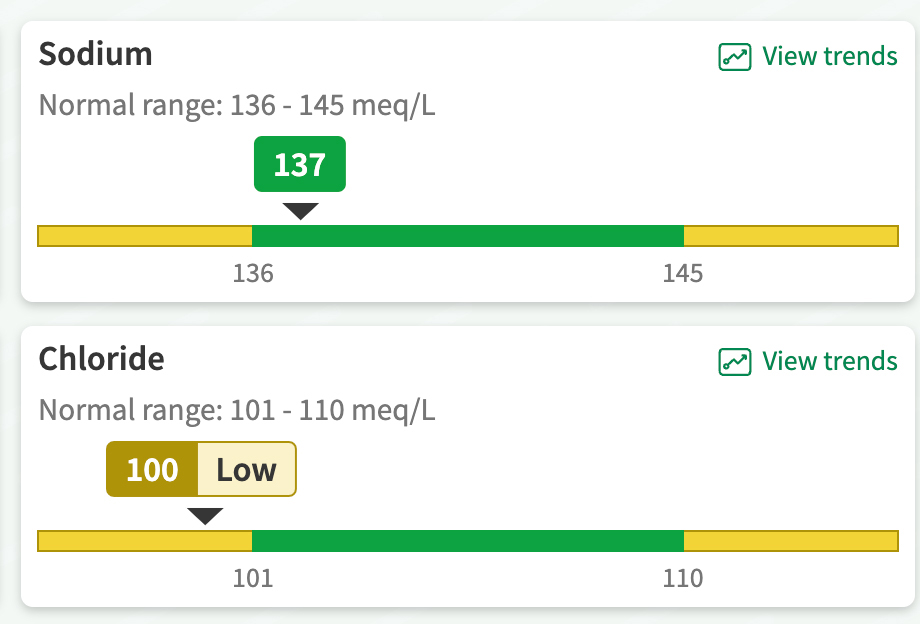
I’m having my annual physical next Monday, so yesterday I went in to have blood drawn. You know, the standard “fasting lab.”

The fun thing about having medical tests done these days is that you don’t have to wait to learn the results. You can diagnose yourself, and make bets whether it will turn out you were right when you see the medico. I could have seen them last night, but I forgot to look until I was eating lunch today.

I like the way they inform you if any of the results are just a bit off. Off course, it would seize my attention even more effectively if the “ABNORMAL” were in a red box rather than plain buff, and it flashed, and was accompanied by a loud klaxon sound.

It would cause one to respond, “I say: What’s all this then?” And you might even click and look at the results. In my case, I’d have opened it without the warning sign, because I’m always curious about a couple of the data points. And yes, it turns out I am still low on both sodium and choride (“abnormally” so on the chloride), so I can keep having all the salt I want. In fact, I’d best get right to it.

As for the “ABNORMAL” bits, well, they’re kinda dull when you look at them. Oh, maybe one day one of them will be something bad, but you can’t tell by looking at them. Or I can’t.

Anyway, the point of this post was that it gave me an excuse to share one of my favorite clips from one of my favorite movies.

Enjoy.

Do you like David Lynch’s work? No offense, but why?

By that “no offense,” I mainly mean, “no disrespect to the recently departed.” But I also mean, “no offense to you if you like his stuff.”

People I know and respect and even love like his work. My daughter is a “Twin Peaks” fan, and she’s smart and creative and I love her with all my heart.

But I just don’t get the appeal. I’ve tried, in these recent days with streaming services going out of their way to offer me Lynch works (that’s Max that you see above), to give him one more chance — you know, outta respect.

But I never get farther in than a few minutes, before I make a firm decision not to spend any more of time I have left in life at the age of 71 on this.

What’s the problem? Take your pick. There’s the acting — if you want to call that “acting.” There’s the direction — which I think consists mostly of telling actors to “be as bad as you can possibly be, like you’re doing a comedy skit about bad acting, only without the humor.” There’s the editing, the weird pacing, the odd lighting, the special efforts made to make sure people think, “something’s not right here.”

Yeah, I get that he’s trying to make us uncomfortable. But isn’t there enough of that in real life? And if he’s trying to comment on all the awkwardness in real life, couldn’t he represent the real awkwardness more recognizably? This is like the diet Pepsi of awkwardness — something of a cola flavoring, but with a terrible artificial aftertaste.

I’ll admit that a lot of my dislike arises from his having shafted a generation of sci-fi fans by getting their hopes up, and presenting them with the worst major motion picture in history, his “Dune.” Yes, I’ve mentioned that before, but I’ll add a new twist: It is so bad that it makes a new “Dune” look great, despite it starring Timothée Chalamet as Paul Atreides. I mean, weirding modules? Where the hell did that come from?

Not to mention those pustules on Baron Harkonnen’s face. Why are we looking at those? Do you really think we wouldn’t get the idea that the Baron is a really gross guy whom you would cross a galaxy to avoid without lingering on those pustules?

Of course, I’ve learned something — or been reminded of something — by those films Max has offered. In watching a bit of “Fire Walk With Me,” and even less of “Blue Velvet,” I realized that’s a trademark move of his — finding something gross to zoom in on, sometimes microscopically, and linger upon, for no particular reason.

(I had never seen “Blue Velvet,” but had always meant to, thinking anything with Isabella Rosselini and Dennis Hopper’s got to be good. Well, no it doesn’t, it turns out. I had probably forgotten that Kyle McLachlan’s in it, too.)

Hey, I can take looking at gross things. I watch a lot of murder mysteries, and sometimes those bodies have had some pretty nasty things done to them, and the camera doesn’t shy away (how could they, after the expense of creating the effect?). I consider “Saving Private Ryan” to be a masterpiece, and the first 20 minutes of that can really test your ability to stomach blood and guts. But there’s a reason for it. This is one film that refuses to shy away from the horrors of war.

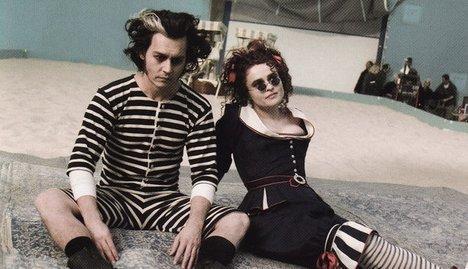
Lynch’s grossness seems to be there just because he wants it there, just as Tim Burton wants to see a lot of prison stripes on the screen. (And no, I don’t like him much, either.)

And yet… a lot of folks like it. Or they like something that’s eluding me. In a way, it feels a lot like the way I reacted to Harold Pinter’s “The Homecoming.” I saw it as part of the American Film Theatre series back in the ’70s (my wife and I had season tickets to that, largely because they were really cheap for college students), and thought it one of the most offputtingly pointless things I’d ever seen. I mentioned that to my good friend, the late Dan Henderson, who was very much the aesthete. Dan said, “You just don’t get absurdism.” I allowed as how he was probably right about that, given all I’ve seen and read of the Theater of the Absurd.

Because of that similar feeling, I considered Lynch as an absurdist. No, it’s not that. Pinter is that, but Lynch isn’t quite. And even if it he was, it wouldn’t make me feel better. Tagging a label on somebody doesn’t really ring my bell.

But enough of my rant. Some of you like this stuff, and I want to ask you, why?

Also, how about giving me your list of Top Five Movies (or TV shows) by David Lynch.

Maybe there’ll be something there I will like. After all, I have a faint memory of having mildly enjoyed “Wild at Heart.” But that was a long time ago now, and I can’t be sure…

And the meme goes on…

The first time I saw this gag was 15 years ago, when I shared it here on the blog. (Sorry, but YouTube has taken down the link to the video, but you’ve probably seen it. Here’s a spoof of the spoof.)

My friend Burl Burlingame had brought it to my attention, so I experience some sadness thinking of it now, but mostly laughs. I think that was the first time I mentioned Burl here — he and I had just recently established contact through our blogs. I hadn’t seen or spoken to him for 38 years at that point.

Anyway, it’s amusing to see that people are still having fun with that epically serious scene from “Downfall.” (It’s a sort of mini-industry itself.) By the way, if you’ve never seen that film, go do so right away. (It’s streaming on Amazon Prime, Tubi and Peacock.) It’s pretty awesome. If you don’t speak German, that’s cool. The subtitles — the real subtitles, I mean — will carry you through. It’s about Hitler’s last days in the bunker, through the perspective of a young woman who had recently become his secretary. But don’t expect any laughs.

Anyway, this one is funny, although not as clever as the Star Trek one. There’s a little too much 8th-grade humor (he seems to say things like “my dick” a lot). Actually, the funniest thing about it — and the thing that drew me to watch it — is the premise: “Trump Learns About Taylor Swift’s Endorsement.”


Could Trump beat President Camacho? Could anybody?

President Dwayne Elizondo Mountain Dew Camacho, doing his thing…

Did you see this headline? “Trump Leads in 5 Key States.”

Polls continue to plumb the depths of American idiocy. Which makes me wonder about something. I’m offering this as a serious question, really…

Given the current state of the electorate, would Trump be leading anywhere in the country against President Dwayne Elizondo Mountain Dew Camacho? You know, the guy from “Idiocracy“…

It’s worth asking ourselves. My own answer is no, I don’t think he could. Mr. Camacho outdoes Trump on pretty much every quality it takes to win votes in an idiocracy, and the thing is, Camacho has actual muscles in reality, instead of them being an absurdly imagined fantasy like in the flag you see below. I’ve seen those flags at flea markets in recent years. I suppose people buy them to laugh at. That’s the only thing you could do when you regard that fat old man slumbering in the courtroom, and then look at the flag…

But arguments can be made for Trump in this contest. His hair is much weirder, but Camacho’s is fairly wild. And in Camacho’s defense, he is actually firing that automatic weapon, we are to believe. Trump is more an enabler — he wants to free up Putin to machine-gun people. On the other hand, Trump is less articulate, which is a winning quality with the constituency in question. But Camacho…

We could go on.

Like so many things in our current Identity-obsessed culture, the race would likely come down to a matter of race. There are people who would never support Trump who might support Camacho because he’s black. On the other hand, many Trump supporters would rather vote for — excuse my language — a Democrat before they’d support a black man. Not all of them are that way, of course, but a good many are. Remember those people marching in Charlottesville? That incident is what made Joe Biden — remember Joe Biden, that boringly sane man? — decide to run for president before 2020.

Of course, some Trump supporters have been training themselves to accept black people, as long as they kowtow with sufficient humility to all that is evil. They look at Tim Scott, and they tell themselves, “You know, there are some good ones.”

But I’m getting off on an Identity tangent here. I suppose that makes me “modern.”

Back to the original question: Could Trump beat President Camacho? Could anyone? In other words, to what level have we sunk, overall, in every category — intellectual, cultural, and so forth?

If you haven’t seen one of these, you probably haven’t been to a flea market lately.

Which five movies SHOULD be Best Picture nominees?

The stars of my fave.

I see that the Academy Awards are being broadcast as I type this. So, let me go ahead and get to my point before the Oscars do. Which should be easy.

As y’all know, I don’t follow this stuff, at least not in this century. I’m not going to bore you yet again with why. But I do have a new thing to say — new to me, anyway.

Because I haven’t followed this nonsense since the late 1990s, I didn’t know that nominations for Best Picture had been expanded from five to 10, back in 2009. I ran across this fact when reading about something else, and since it was new to me, I was shocked and appalled.

Oh, I’m not one of these people who goes around griping and moaning because all the kids in Little League get a trophy. They’re kids. They should get a trophy just for showing up at the games.

But with the Oscars, we’re talking about grownups. Rich and powerful (within their own little world) grownups. You don’t have to give them all a trophy. And you don’t have to pretend that ten films — more new movies than I’m likely to see in a year, now that I don’t worry about seeing all the nominees before the Oscars show — are worthy of serious consideration for the highest honor (to the extent that the Academy is capable of confering honor).

And yes, I know that there were 10 back before 1945. But that was during the Golden Age. Ten nominees made sense in 1939. Not so much now.

Anyway, as it happens, I’ve actually seen four of the Best Picture nominees. My wife and I watched the fourth of them just last night, on Peacock. I haven’t seen the rest, because from everything I read and heard about them, I was content to wait until they became available for free, which they haven’t yet. Nothing I’d seen about them in any way suggested “must see.” So, in presenting the five I’m about to list, I’m giving a gift to those who wish to disagree with me. You get to yell, “He hasn’t even see the others!” That’s fine. You go ahead. I’m pretty sure I chose the right ones to spend my time on — mainly, the ones acclaimed on all sides as Best Picture material since the moment they came out.

But I know I can be wrong, and I look forward to seeing your alternative lists. I was wrong abtou this sort of thing once before, back in 1998. That was when I dismissed the idea that “Life if Beautiful” could be Best Picture material. I was appalled by the idea of a comedy about the Holocaust. But it worked, and it was wonderful. I would have been happy to see it win in that highest of categories. It’s made me more open to films that fit more or less into that category. Before I learned that lesson, I might have avoided “Jojo Rabbit.” MIssing that would have been a sad loss.

So maybe you, too, will give me a gift, and turn me on to something I had overlooked. Please do, if you possess such a gift to share.

But for now, here are my five:

  1. The Holdovers — This is the one I saw last night. Yeah, it’s a little small and quiet to be the winner, but at least at this moment, it’s my fave.
  2. Oppenheimer — The most impressive film I’ve seen this year, so the one I would choose if “impressive” were my only criterion. I meant to write a detailed post about it, but haven’t gotten to it.
  3. Maestro — Also a very impressive biopic, about an impressive guy. Hard to watch sometimes, but then so was Oppenheimer. That’s not a disqualifier for a Best Picture.
  4. Barbie — Lots of creative fun.
  5. Killers of the Flower Moon — The only one I haven’t seen, and only because it was on Apple TV+, and I cancelled that service (once I finished the most recent seasons of “Slow Horses”) before getting to it. I still intend to see it, but… I love Scorcese, and I was SO disappointed by “The Irishman.” I don’t want to go through that again…

That’s it for me right now. I’m going to go get some dinner now…

The one I’d have gone with, had impressiveness been my one criterion.

Top Five Best Horror Films (or TV Shows)?

The big ‘jump scare’ in the best on the list.

Why a question mark on the headline? After all, aren’t Brad’s Top Five lists final and authoritative?

Well, not this one. Because I am not a horror fan. This may be an oversimplification — because there some films in this genre I do like — but in general, I feel like we have enough stress and disgust and shocks in real life. I feel the same way about scary rides at the fair. I’m not paying somebody good money to make me unhappy.

In some ways this is odd, I suppose, because when I was a kid — starting when I was 9 or 10 — I was a huge fan of Edgar Allan Poe’s stories. When I lived in Ecuador in the fifth and sixth grades, I had an hour ride on the bus either way. My friend Tony and I would sit in the back and tell each other the Poe stories we’d read, to while away the time.

Which reminds me. The creepiest of all Poe’s stories was “The Fall of the House of Usher.” I was very, very disappointed to see that Netflix was presenting a TV series with that title. The very straightforward story — the meat of the narrative takes place over a single evening, as I recall, although what goes before is creepy enough — lends itself in no way to a TV series. The only way you can do that is to hire some writers who are not Poe and have them cram a bunch of excess stuff into it. Worse, it appears to be one of those execrable “updates.” Enough said.

There are so many works in literature — such as my faves of recent years, O’Brien’s Aubrey/Maturin series of novels — that call for that kind of treatment, that beg for it. The world would be such a better place if Hollywood would address that need. But no, it’s considered more profitable to ruin Poe.

You might say I’d change my mind if I watched it. That is possible, but extremely unlikely. And not worth wasting time on. I watch a lot of TV (and movies on TV), but I am selective, because I do have a life. If it looks extremely unlikely that I’ll like it, or learn anything from it, I spend the time instead on something that I’m pretty sure will be rewarding — there are enough things out there fitting that description to fill 100 lifetimes.

For that reason, I have never seen, for instance, “The Exorcist,” the anniversary of which is being so overcelebrated at the moment. I paid attention to the marketing at the time — the head-spinning, the floating above the bed, the especially gross vomiting — and moved on to other things.

So my body of experience producing this list is woefully inadequate. But I often find that I enjoy seeing what items y’all will name, and all of you are probably more knowledgeable about this than I am. So, to start a discussion, here goes:

  1. Psycho — You don’t get more classic than this, or more perfect. It might be Hitchcock’s best film, in addition to being the best horror film. Every touch is just right. Anthony Perkins is astounding, but of course the key scene is Janet Leigh naked in the shower. Doesn’t show much, but it’s pretty titillating for 1960. And it’s such a brilliant stroke to pull the viewers (the males anyway, especially the young ones) in with such a stunning woman in the altogether, and utterly shatter it with possibly the greatest “jump scare” in film history. By the way, I was inspired to write this post by a piece in the Post today assessing movies by the number of such “jump scares.” The writers seemed to think more is better. There are only three in this one — that I recall thinking back — and that’s just the right number: the shower scene, Martin Balsam climbing the stairs, and the final reveal about Norman’s mother. More than that would have ruined it.
  2. Dracula (1931) — Yep, I trend toward classics, and this, to me, is the very best of the great ones of the ’30s. It’s not about the blood, folks. It’s about the amazing creation and maintenance of a mood of dread and horror. Think of Dracula’s “brides” gliding across the room. That epitomizes what I’m talking about. That’s the essence.
  3. The Sixth Sense — This one would utterly fail that “jump scares” test I mentioned before. There’s really just one, at the end, and you build to it over the course of the film. And I’m not sure the intellectual realization of what’s been going on qualifies as such a “scare.” Probably not. Although at times it just feels like a Bruce Willis movie, only a bit darker, the kid who sees dead people keeps it in the horror genre throughout. Anyway, the director has been trying so hard for so long to be scary — even changing his middle name to “Night” when he was in college — that I feel like we should throw him a bone here.
  4. Alien — This was a great, ground-breaking sci-fi film, realistically depicting what extended life in space might conceivably be like, if it ever proves to be truly feasible. But in terms of plot, it was basically a haunted house story, and maybe the best ever. Also, it gave us Sigourney Weaver. Top that.
  5. The Walking Dead — This is why I added “TV shows,” parenthetically, to the headline. I felt obliged to include this as an illustration of when I was wrong for refusing to watch it for the longest time. I finally gave in and started, and was hooked — for six seasons. After watching the last episode of the sixth, I decided the writers had run out of ideas, and stopped. But there’s still a lot I love about it in those first seasons. Favorite character? Daryl Dixon, who adapted to post-apocalyptic life more smoothly than anyone. Least favorite character? Andrea, who never missed a chance to do the wrong thing and put her companions in danger. Finally, aside from this being a TV series, I debated most over including it because, is it really a horror movie? That whole genre seems a bit more like dystopian science fiction. But for awhile, I liked it. One reason why: Nobody says “zombie.” (I vaguely recall someone saying it and getting corrected once. Am I remembering that right?)

There are some honorable mentions in my limited repertoire, such as “An American Werewolf In London.” And if I had insisted on keeping the list to movies, the best of the zombie apocalypse genre was “28 Days Later,” which of course starts the same as “The Walking Dead.” And the same as the last great music video, “Party Rock Anthem.”

Some lists included “Young Frankenstein.” That is a great pick for any list — the best Mel Brooks movie by far — and if I included it in the five above, it would probably top the list. I love it. But I’m gonna be pedantic here, and admit it’s not a horror movie. It’s a brilliant comedy that mocks horror movies. That suggests another sort of list, which would include “The Rocky Horror Picture Show” and “Little Shop of Horrors.” (Or should those two be on a sub-sub-list, “musical horror comedies?” It’s difficult to say.)

Anyway, ideas?

‘Alien’ gave us Sigourney Weaver. Top that.

Some quick observations about ‘The Flash’

I mentioned in a previous post that I might go see “Oppenheimer” or “The Flash.” I ended up taking my younger son and my grandson to “The Flash.” I’ll see Oppenheimer soon. Bryan says he saw “Oppenheimer” today, and maybe he’ll post here about it. I hope he does. If not, I will when I see it.

But now, some quick observations about “The Flash.”

It was fun. We enjoyed it. One would hope so, when that much money and that many people are involved. More about the many people in a moment. Here are some bullets:

  • Since seeing it, I’ve answered each person who’s asked me about it that it was “weird, but we enjoyed it.” To elaborate on the weird… As much as I enjoy watching a movie, that, among its other attractions, features pretty much everybody who has ever played Batman on the big screen, the overly bizarre twists — such as multiverse realities colliding with all sorts of dazzling visual effects, and similar people in those other universes having very different lives and relationships — gets a bit wearying. You eventually wonder what your eye should be following, and whether there’s really ONE version of a character seen multiple times that you should care about. Why so much baffling complexity? Isn’t normal life complicated enough? I think the answer is fairly simple: When you keep investing your huge production budgets in the SAME stories about the SAME characters over and over — including multiple renditions of the “origin story” — you have to go to extremes to keep pulling people in.
  • I mentioned Batman. You think, Batman? I thought this was The Flash. Well, another way Marvel has found to deal with the repetition of telling the same story over and over about one guy — say, Spider-Man — is to mix superheroes together, say through such devices as the Avengers. This makes the simple stories about single characters more complicated by having them interact with each other. It also brings, say, Thor fans in to see a movie about Iron Man. And sure, it’s fun to see these familiar characters interact. (My favorite example? Watching the Avengers sit around exhausted eating shawarma after the credits of the first “Avengers” movie.) Anyway, it’s worked for Marvel, so DC has adopted this practice with a vengeance. Their vehicle for this is the Justice League. There’s not just Batman, there are multiple Batmen, and Supermen. And the treat of the stunning Gal Gadot appearing in a cameo — there are lots of cameos — as Wonder Woman. She makes Flash tongue-tied, quite understandably.
  • I mentioned a lot of people being involved. I also mentioned the nice bits that occur AFTER the credits, in Marvel movies at least — meaning that even people who are not habitual credits-readers stay until they’re over. Last night, as with other such CGI spectaculars, I watched as oceans of names of people washed across the screen, most of them working on effects. And something occurred to me last night as I watched… One of the great advantages of CGI, I’ve heard, is that you don’t have to hire hundreds of extras to be an army or a crowd at a football game or whatever — you can just fake them. But here I was watching all these names of people hired to work on the movie, and it occurred to me that with this many people on the payroll, you could stage just about any kind of crowd scene you wanted. And then, you wouldn’t need CGI — for that purpose, anyway. Which is ironic. And doesn’t it cost more to hire people who can write code than to hire extras to stand around? So tell me again how the studios are saving money by not hiring extras…
  • A lot of those tech people — a surprising number of them, it occurred to me — had Indian names. I don’t mean like Geronimo. I mean like Rajesh “Raj” Koothrappali, the character on “The Big Bang Theory.” This small trigger made me think of something totally irrelevant — that if you DID put all these guys in the credits in a crowd scene, they’d look kind of homogenous. Not that they’d all look Indian, but that they’d all little like all the main characters — Indian, caucasian, Jewish, and occasionally (but not often) a woman, such as Amy Farrah Fowler. (Or like the Geek Squad at Best Buy.) But not Penny. The Pennys are all in the acting credits, and wear spandex.
  • A side note about aging. Flash is played by a young actor I’ve never seen before. Which is probably why he was surrounded by stars who have played Batman, etc. The studios can’t take chances on people staying away because there are no stars! Among the supporting characters were his parents. And you know who played his Dad? Ron Livingston. You know — the jaded young hero of “Office Space!” And a leading figure among the legion of young actors featured in “Band of Brothers!” But those guys worked at Initek 24 years ago. And “Band of Brothers” first appeared on HBO in 2001. So now he’s the Dad of the hero. This is disconcerting. It was almost as big a shock as when Marisa Tomei appeared as Aunt May in one of the Spider-Man movies. I mean, come on! This is Marisa Tomei. And this is Aunt May. How can this be? (Of course, they worked it out by having Aunt May look like this, which I suppose was a very Hollywood thing to do.) Anyway, I want all these people to stop getting old, right now.
  • Of all the name actors who appear, the biggest is Michael Keaton, who appears of course as one of the Batmen — the best one, the one you paid to see. This was a tremendous gimmick that the makers came up with, and it delivered. It does not disappoint. I’d tell you why, but I’m holding myself back from spoilers.
  • Oh, I mentioned the young actor who plays the Flash. Looking up details about the movie today, I ran across a rather appalling recent record, which apparently caused great concern among the makers of the movie, although they proceeded anyway. Look at the list of incidents and allegations on Wikipedia, which you find when you click on “controversies surrounding Miller” in the main story about the movie. Wow. I don’t see how one person could have been involved in this many kinds of alleged misdeeds. I don’t think Keith Moon could have kept up with such a record, even when he was at his most destructively energetic. And it’s a shame. I mentioned recently that with AI, we may face a future in which no new, young actor makes it big, because all the movies can star Harrison Ford and Clark Gable and Ingrid Bergman. But this kid gets a break like this, and yet seems to be self-destructing. Assuming any significant percentage of the allegations are true.

I guess that’s enough. Back when I reviewed movies, I never wrote on this long.

Again, I enjoyed it. (The best part? Michael Keaton, of course.) When something else like it comes out, I’ll probably see that too, if the young guys let me come along. But there is a good bit of weirdness…

Of course, the reason to go is to see Michael Keaton. He does not disappoint.

When did THESE guys get so old?

I was reading something in The Washington Post this morning, and I saw dese two mooks in a picture, and they looked familiar.

My next thought was, When did THEY get so old? I mean, Marty looks like he could be Joe Biden’s dad! Johnny Boy’s not quite as bad, but can you believe he’s the guy on the left down below?

The one below is from 1973, and I realize that was a couple of years ago, maybe a little more, but this is ridiculous! The dames aren’t gonna go for the guy in the picture above, no matter how many Seven and Sevens he buys them! On the upside, maybe Johnny Boy’s calmed down a bit, and Charlie won’t have to worry about him so much.

But come ahhhn

Scorsese (center) directing De Niro and Keitel in ‘Mean Streets’…

Oh, wait. With “Mean Streets” in the air, I shouldn’t end this with a still. Here’s a clip, the one with the mooks:

Remember Orison Whipple Hungerford Jr.?

This is how time gets wasted. And consequently, why I post so seldom, among other derelictions of duty.

The other day I had an earworm, and I was trying to figure out what it was. You know how those torment me. Rather than a pop song, it was an instrumental piece, of the grandiose sort. I decided it was the theme music from one of those blockbuster war movies from the 1960s or ’70s, with every actor from the A list, but apparently no writers, and no directors capable of demanding decent acting. You know, like “The Longest Day.”

But it wasn’t that one. No play on Beethoven’s 5th. For a moment, I reached into the ’70s, deciding it might be “A Bridge Too Far.” I went to YouTube to check the theory, but before the first notes sounded, I stopped the video. I had realized it was from “The Battle of the Bulge.” And, as I clicked around trying to confirm, I became unsure it was actually the theme. It was an instrumental version of the “Panzerlied” — which does crop up in the theme, briefly (go to the 29-second mark in this), and is the only memorable tune that emerges. It’s the song those young officers sing while stamping their feet to prove to Robert Shaw vat gut little Nazis zey all vere.

That made me start thinking about what an abominably disappointing film it was. It wasn’t quite the greatest insult Hollywood has ever flung at my late father-in-law’s war service. That distinction belongs to “Hogan’s Heroes.” (My father-in-law was captured in the Ardennes, and spent the rest of the war in a German POW camp. A real one. There was nothing cute or amusing about it.)

But it was pretty bad. I got to pondering what made it so bad. Was it Henry Fonda? Of course not. How could I be critical of Mister Roberts (although don’t get me started on how he was more than 20 years too old for that role)? Although the prig colonel played by Dana Andrews, whose job it was to scoff at Henry’s premonitions, was pretty insufferable. Telly Savalas? Well, the cuteness of the black marketeer’s relationship with the impossibly pretty Belgian girl (yeah, like she’d go for Kojak) was utterly absurd. Both he and Robert Ryan were more fun in “The Dirty Dozen” (of course, as much as I loved that one as a kid, I assure you it didn’t hold up well over the years, either).

As I ran through the cast, trying to thing of the scene or role or actor that best exemplified how little the filmmakers cared, I settled on the guy who played the leader of one of Otto Skorzeny’s units of German soldiers disguised as Americans during the battle. The guy who looked like he’d be equally at home playing one of the non-speaking surfers standing behind Frankie Avalon and Annette Funicello in one of those beach movies with Eric Von Zipper. I seemed to recall the same guy appearing in “P.T. 109,” with his hair dyed blond, as JFK’s XO Leonard Thom.

Yep. Ty Hardin. He had also starred in one of the less-well-remembered Warner Brothers TV westerns. To check this (as I do everything, all day long), I looked to Wikipedia. Yep, he starred in “Bronco.”

But that’s not the good part of what I read in Wikipedia. The good part was that his real name (you already realize it wasn’t really “Ty Hardin,” of course) was Orison Whipple Hungerford Jr.

No, not making it up.

I’ve always taken something of a dim view of people changing their names, which I see as sort of disrespectful to their parents — especially if they are “juniors.”

But I think I might give ol’ Ty a pass on this one. He had a career to think of, such as it was.

OK, I’ll go do some work now…