Category Archives: Business

No, you don’t need a little watermelon right now

I was at Walmart last night to pick up a couple of things, and noticed this as I got into the self-serve line.

I thought I would share it as a public service. To save you a trip.

You might think you want one of those nice, seedless watermelons right now, but trust me — you can wait a few months. In June, the price should be close to that of the cantelopes in the background…

Just tell me how much, OK?

I’ve complained here a couple of times about the obscene current practice on news sites of teasing readers rather than informing them.

Now I’ll deliver a swift kick to folks attempting to do business online.

You’re familiar with the practice. You see something on, say, social media about some product that stirs your curiosity. I say, “stirs your curiosity” because you don’t have enough information to know whether you would ever consider buying it.

What’s the one thing you want and need to know? The price, of course.

So you click on the offered link, and what’s the ONE piece of information that they NEVER provide on the landing page?

You’ve got it. Or rather, you don’t…

Oh, the price is usually just another click away, although I find that, often as not, you have to scroll to the bottom of an unnaturally long landing page to get to that link.

Yeah, I know why they do it — to give themselves a chance of holding onto your attention just a BIT longer before scaring you away with the price. Maybe, they think, you’ll be charmed just enough by what you see on that landing page that you won’t mind the price.

Maybe it will work. But in the meantime, you’re royally ticking me off. I don’t like being stiff-armed…

By the way, here’s the page with the prices on this one…

All Good Books: the best-named business in town

On the previous post, Paul DeMarco mentions All Good Books in Five Points. I wish to elaborate on that topic a bit.

My relationship with that store began before it existed. Several years back, my daughter gave my wife and me some gift cards to Odd Bird Books, which existed in the tiny Arcade Mall downtown. When we heard it was about to close, and we still hadn’t used our gift cards, we made a point of visiting that shop for the first and last time.

We picked up several books that day. I believe one of them was the third book in Edmund Morris’ trilogy, Colonel Roosevelt. But the main thing I remember about that visit was how very impressed I was by what was being offered in that diminutive space.

The shop was only about the size of my home office — maybe smaller. So there were not that many books. But the place possessed a virtue I’d never encountered in any bookstore, whether independent or chain — more or less every single book was one that I would like to read, if my life should last so long. It was like Ben Adams, the proprietor, had been asked to collect every book he wanted to have with him on the proverbial desert island — and he happened to have excellent taste.

In other words, all good books. No junk at all. There wasn’t room.

So when Ben teamed up with Clint and Jenna Wallace to open a new store, naturally it bore that name (although they didn’t get it from me — see the Hemingway quote in the picture below).

And it lives up to that name. Of course, since it’s bigger and there are many more books, they’re not all books that I particularly want to read. But we should consider that I’m not the only reader in the world (or even here in Columbia), and different strokes and all that.

Still, I’m deeply impressed by the selections. And if I happen to want something that’s not on the shelves (an astoundingly high percentage of what I seek is on the shelves), the folks behind the counter will quickly get it for me. And I’d certainly rather do that than order it from Amazon.

Oh, and there’s always coffee and other refreshments. And you may think this is odd to mention (you’ll understand if you’ve spent huge amounts of time in bookstores), but a very nice restroom. That’s  essential, don’t you know.

I hope to see you at All Good Books sometime. It’s located at 734 Harden St. Now that Yesterday’s is gone, it’s my one motivation to visit Five Points.

DeMarco: Why Independent Bookstores Shouldn’t Go the Way of Blockbuster

The Op-Ed Page

By Paul V. DeMarco
Guest Columnist

One could argue that independent bookstores are a luxury. You can summon books to your doorstep with a few clicks, sometimes the same day. Or, if you have an E-reader, in seconds. So why do bookstores continue to survive?

As Blockbuster faded in the 2000s, I worried that bookstores might suffer the same fate. But here they are still, and they seem to be making a resurgence. According to the American Booksellers Association, more that 200 new indie bookstores opened in 2024. We are seeing a similar renaissance locally. Since 2023, three new bookstores have opened in the Pee Dee – Jack’s Books in Florence, Foxes Tales in Marion, and Our Next Chapter in Conway. It’s worth considering why.

First, I think, are the owners. Their identities are palpable within the walls. You feel as if you are walking into an extension of their homes. I can tell you the name of the owners of almost every independent bookstore that I have frequented more than once: Gwen at Foxes Tales, Jack (Ok, that’s a gimme), Wendy and her daughter Olivia at Litchfield Books, and Clint at All Good Books in Columbia. I fondly remember Rhett and Betty Jackson who founded the Happy Bookseller in Columbia which closed in 2008. And I look forward to meeting Bob and Lisa Martire at Our Next Chapter, whom I called for this column.

Second is the product itself. There is just something about books: their personalities on a shelf, their weight in your hands, the curve of the pages, the smell of the bindings. We connect with books in a different way from the way we do with VHS tapes or DVDs. Is an E-reader more economical and practical? Undoubtedly. But after a day full of screens, can you find repose and escape in another screen? Many of us cannot.

Third is the community bookstores create. If you are new in town, where would you go to meet people? Church used to be the answer, but less so now, particularly for young people. Bars and clubs, of course. If I were young, I would head to the local coffee shop first, and the bookstore next. Shopping for books is different from shopping for groceries. You don’t always have a plan, and you aren’t focused on getting home to cook dinner. People relax in a bookstore; their minds are open. Children peruse, curious and wide-eyed.

In the past month I have had the following conversations in a bookstore: As I was entering Litchfield Books, a woman I had never met engaged me in a five-minute conversation after I bent down to greet her dog. Inside, I had a long chat with Wendy and Olivia about books, bookstore dogs, bookstore swag (I love a good bookstore T-shirt and baseball cap) and the possibility of adding a coffee bar (I voted a loud “Yes!” to coffee). In another bookstore mentioned above, the name of which I shall not reveal, I was speaking to the owner about the new pope. The owner is a bit older than I and said, “I‘ve always thought of popes as very old men… but I just realized… I’m older than the pope!”

I met a new bookstore friend recently during a trip with my wife, Debbie, to Decatur, Georgia, for a wedding. Debbie is a nurse but could have been a librarian. She was always ready with a fun, age-appropriate bedtime story for me to read to our children. That was precious time, with a little head against each shoulder.

When she saw that the wedding venue was near a children’s bookshop called Little Shop of Stories, we knew we had to visit. Which brings us to the last reason why we can’t let bookstores go. Every one has a vibe, an ambience, much like a restaurant. At Little Shop, soft Saturday afternoon sunlight flooded though the glass façade into a welcoming space that was filled with perhaps a dozen patrons milling and talking. A father and daughter sat in a chair as he read to her.

When it came time to pay, the young woman at the counter mistakenly input my transaction as a credit rather than a charge. When I discovered the error on Monday, I called and spoke with my new friend, Heather, at Little Shop, who straightened it out. She was lovely; she was kind; we laughed. It was the best customer service call I suspect I will ever have. A few days later, a care package arrived with a Little Shop mug, a tote bag, and a half dozen books.

Take that, Amazon! Yes, you will pay slightly more at an independent bookstore. But we have already made this bargain with coffee shops. We understand that we are paying too much for the liquid in the cup. But that’s not all we are buying. We are renting a small portion of the shop, that favorite table where we like to sit. We are maintaining a relationship with the shop owner (Hi Liz at Groundout and Mel at Bear Bar) or our favorite barista that would end if the shop closed.

We have a choice. We can pay the minimum and have the lonely convenience of books at our doorstep or on our screen. Or we can choose a better way. We can support a small business that provides livelihoods for its staff and weaves a beautiful thread into the fabric of a neighborhood. Find an independent bookstore, and you’ve found a place that cares about its future.

A version of this column appeared in the June 18th edition of the Post and Courier-Pee Dee.

Well, NOW I’m Happy!…

I thought I had a terrible dilemma coming up.

I don’t go see many movies in theaters. There was a time when I went to pretty much all of them, back when I was a copyeditor in Tennessee and was the paper’s film critic on the side. I wasn’t paid to do that additional work, but it wasn’t really work to me. Besides, the paper made it more than worthwhile by reimbursing me for the tickets. Not that the tickets cost much then. Fact is, I probably would have done it without the reimbursement. If, in my continuing project of cleaning out the garage, I run across a copy of my 1977 review of “Star Wars,” I’ll show to you. But I’ve promised to show it to my kids first.

Now, when I do go to a movie theater — once a year or so — I feel the need to take out a mortgage, to spread the payments out in easy installments. First, there’s the cost to get in. Of course, I can get the senior discount, but that discount is so inconsequential that the difference between that and full price is no more than the cost of a ticket in my youth. But hey, that’s just inflation over time, right? If you go to the CPI calculator, you’ll see that that the cost is about the same. Bu if you want to experience highway robbery, try to get some popcorn and a drink.

And no, the fancy recliner seats with the gigantic cupholders, arranged stadium-style, aren’t worth all that extra cost. I find myself wondering why, after the trauma of COVID and the ongoing existential threat posed by streaming and gigantic 4K screens at home, theaters didn’t go the other way — rock-bottom prices to sit on wooden benches or something. My buddy Tony and I used to go to a theater like that in Ecuador when we were about 10 to see Italian Hercules movies and “The Three Musketeers” in French (with Spanish subtitles, in case we wanted to follow the dialogue). It cost us 40 centavos to get in, which in those days amounted to about 2 cents American. And we loved it. A Coke — in a bottle — cost another 2 cents.

About now, I should start getting to my point, which is that my son who is an avid collector of Marvel comics and I were planning to see the new Fantastic Four when it comes out this Friday. (Or a few days later. You’re kind of crazy to go on opening night.) Even though we had just been to see the new Superman a couple of weeks back!

But then I found that “Happy Gilmore 2” was coming out on the same day — July 25! So what was I going to do?

OK, a word about “Happy Gilmore.” Of course, the original flick was overwhelmingly silly. But it worked! I’ve got this thing about movies (and books and other things) that work. They might be the stupidest plots acted out by actors I would never go to see under normal circumstances. But if, somehow, everthing clicks, I will watch it again and again. “Happy Gilmore” is a perfect example. “Old School” is another. They sound so stupid that you’re put off just hearing about them. But the actors — and director — take that stupid idea and make it brilliant. At least, that’s the way I reacted to it. I don’t think I’ve ever done a “Top Five Sports Comedies” list yet, but “Happy” would definitely be on it. In fact, it would be competing with “Major League” for the top spot.

And yeah, I know about sequels made 30 years after the original. They’re often sad — like that made-for-TV reunion movie for “The Beverly Hillbillies” in 1981. Buddy Ebsen had forgotten how to be Jed Clampett! But I’m not expecting brilliance — just a little bit of fun nostalgia. And I know for a fact that “Shooter” McGavin will appear!

But shell out money for a third theater visit in a year?

So imagine my joy when I got an email today from Netflix telling me it will be streaming “Happy Gilmore 2” starting Friday! I was already thinking I might wait for it to be streamed for free at home, and now I don’t have to wait! (Oh, and it had better be “free” to subscribers! They’d better not use this occasion to usher in a new class of premium “world premieres” or some such thieving gimmick!)

Well, I’m happy, and looking forward to Happy 2.

I wonder — how much longer will actual movie theaters continue to exist? The business model seems almost entirely unworkable now…

The good news: I can see baseball again, LOTS of it!

Baseball wasn’t just always there for me, it was always there for my family. That’s my grandfather squatting to the right in this picture. He had been the captain of the team at Washington and Lee, and after college he was always playing on multiple teams in the Maryland suburbs of Washington. He only worked for the Post Office so he could play on this team. You’ll notice that others on the team played for other teams as well — they wore the wrong uniforms on picture day, without the Post Office ‘P.O.’

When I was a kid, baseball was always there.

It didn’t matter my age or where I was. As a preschooler, I always had one of those skinny little wooden bats that were later outlawed by the worrywarts. I think it came with those old solid rubber balls that didn’t bounce much, but since my Dad was a tennis champion, there were always cans full of balls around the house that really traveled when you hit them. I loved that, although Ring Lardner, the enemy of the “lively ball,” would likely have harrumphed.

When we lived in Ecuador from the time I was 9 until I was 11 and a half, I missed out on a lot of critical time for developing basketball and American football skills (which I regretted when I started 7th grade back in this country, in New Orleans), but I didn’t lose ground on baseball. We played it — or at least softball, at recess — whenever were weren’t playing fútbol (which is what we used the school’s concrete basketball court for).

My one regret was that I didn’t get to play Little League (on account of my family always traveling during baseball season) until I was 15, my last year of eligibility for Senior Little League (in Tampa). And by that time, I just hadn’t had the practice trying to hit a ball that someone was deliberately trying to throw past me. The point of “pitching” in sandlot play had always been to let somebody hit the ball, and put it in play. I did manage on one occasion that year to break up a no-hitter in the fifth inning, with a solid base hit to the opposite field. I couldn’t have hit it to left or center, because the red-headed southpaw I was up against had the sort of fastball that nightmares are made of. But I got my single, and they took that pitcher out of the game. It was my one, brief moment of baseball glory.

After that, I stuck to slow-pitch softball — in college intramurals, with the Knights of Columbus team in Jackson, Tenn., and with the Cosmic Ha-Has, a self-deprecating name for the loosely organized team of journos from The State (mostly), sponsored by the now-defunct Mousetrap restaurant and bar. That was more my speed, in the literal sense.

Now, I’m at an age when I’m finally ready to enjoy my sport vicariously. I’m ready to watch the games on TV, the way my elders did when I was a kid. Back then, even though we seldom lived in a place with the three basic channels (and sometimes only one, and that barely visible), baseball was always on the tube. And it was free. But at that age, I considered it boring to watch other people play a game — I wanted to go out and play it myself. Oh, I watched it sometimes, but I wasted a lot of time not watching it, back when it was so easy to find. My parent, grandparents, uncles and such got full enjoyment from it, but I was probably out in the heat whacking at a tennis ball — or inside reading a book. I was a mixed-up kid, right?

And then I grew older, and started wanting to watch it all the time, and it was gone. Especially if you’re like me and long ago cut the cord to cable. (Not being a consumer of TV ‘news,” I had little use for live broadcasting, other than baseball, which was too seldom on offer). Suddenly, even if you still consider it the national pasttime (the pasttime of the country that I love, anyway) you could find no evidence of it by turning on the tube.

You’ve heard me complain about this multiple times on the blog, but not lately. Because now, I have access to more baseball that my elders ever dreamed of, and on a 4k color flat screen rather than a snowy black-and-white that only worked if someone (often me) stood outside turning the antenna atop the house back and forth.

It started late last August, when I saw a promo from MLB.TV offering to let me watch the rest of the season — meaning 10 or twelve Big League games a day, for $29. It seemed worth it, and it was, even though “season” didn’t include the playoffs and World Series — which was OK, because those actually get shown on other platforms that were free to me.

A few months later, I thought a couple of times whether I ought to go in and quit that subscription to keep from being charged for the following season, which I figured would be a LOT more than $29. But I sorta kinda forgot to do it, accidentally on purpose, and next thing I knew, I was informed that $149.99 had already been taken from my account by MLB. Which was bad news. But they also told me I now had access to the whole MLB 2025 season, which was great news. I then confessed to my wife, who is responsible for handling money in this house (on account of being married to a doofus who does things like that), about my failure to prevent it from happening. But as I hoped, she didn’t make me go demand the money back, probably because she knows how much I’ve missed baseball.

I also pointed out that $150 was a lot less than it cost us to see one game at Fenway in 2022. Two seats in the right-field bleachers for about $200. That was just to get in; I paid extra for the peanuts and Crackerjack, and the Polish sausage I had for dinner. But we got to watch the Sox beat the Yankees that night, and beat them soundly! And we had either Jackie Bradley Jr. or Aaron Judge playing right field right in front of us! So it was worth it. But not something we could do every day, or perhaps ever again. Whereas with the MLB deal, I see baseball every day. So, you know, we’re saving money. You see why I don’t handle the accounts?

Anyway, it was and is really great news.

It’s been wonderful. It really has. I’ve loved it, and there’s far more there than I can ever hope to watch. I feel blessed by that. So I just watch a few teams, as I can — the Red Sox, the Phillies, the Dodgers and the Yankees, mostly. What I don’t watch is the Braves, which a few years ago I would have said was my favorite. I don’t say that now because I’m so out of touch with them that I’m not sure that I can name or picture any current players.

Why, you wonder, have I turned away from the Braves? I haven’t. They’ve turned away from me. Or rather, the MLB has separated us. All of their games are blacked out. I thought that at first they were doing that because I live so close to the ballpark. It’s only an 80-hour walk from my house, after all, according to Google Maps. But it’s more complicated than that. MLB also blacks out other games occasionally, ones that I might really, really want to watch — like the Sox playing the Yankees.

But I’m still having a great time. Alas, this is the first of a pair of posts on the subject of baseball, and the other will be less cheery, with the headline beginning “The bad news…”

That’s partly because of a piece I read in the NYT  by Joon Lee, headlined “$4,785. That’s How Much It Costs to Be a Sports Fan Now.” It’s not just about the money, or the blackouts. It’s also about how the new business model of professional sports has destroyed the sense of community across the country. In other words, Mr. Lee takes a communitarian approach, as I would. More on that in a day or so…

A picture from our expensive bleacher seats in right field at Fenway. We had a great time.

The new Steel Hands uptown location

I guess I should have taken a shot of the area where the customers sit. It’s very nice. But all this shiny new gear impressed me more…

Well, here’s a local business that appears to be doing well.

I just share this because I ran across the new, downtown Steel Hands brewpub on Gervais Street in the Vista. I had no idea it was there — I just thought of it as that place a bit hidden away off Frink Street.

According to the barkeep, it’s been there since October, but I don’t walk up and down that street as much as I used to. I would have stopped for a pint in addition to satisfying my curiosity, but it was around lunchtime yesterday and I needed to get home.

It’s nice to see something born in a less visible part of Cayce going all uptown like that.

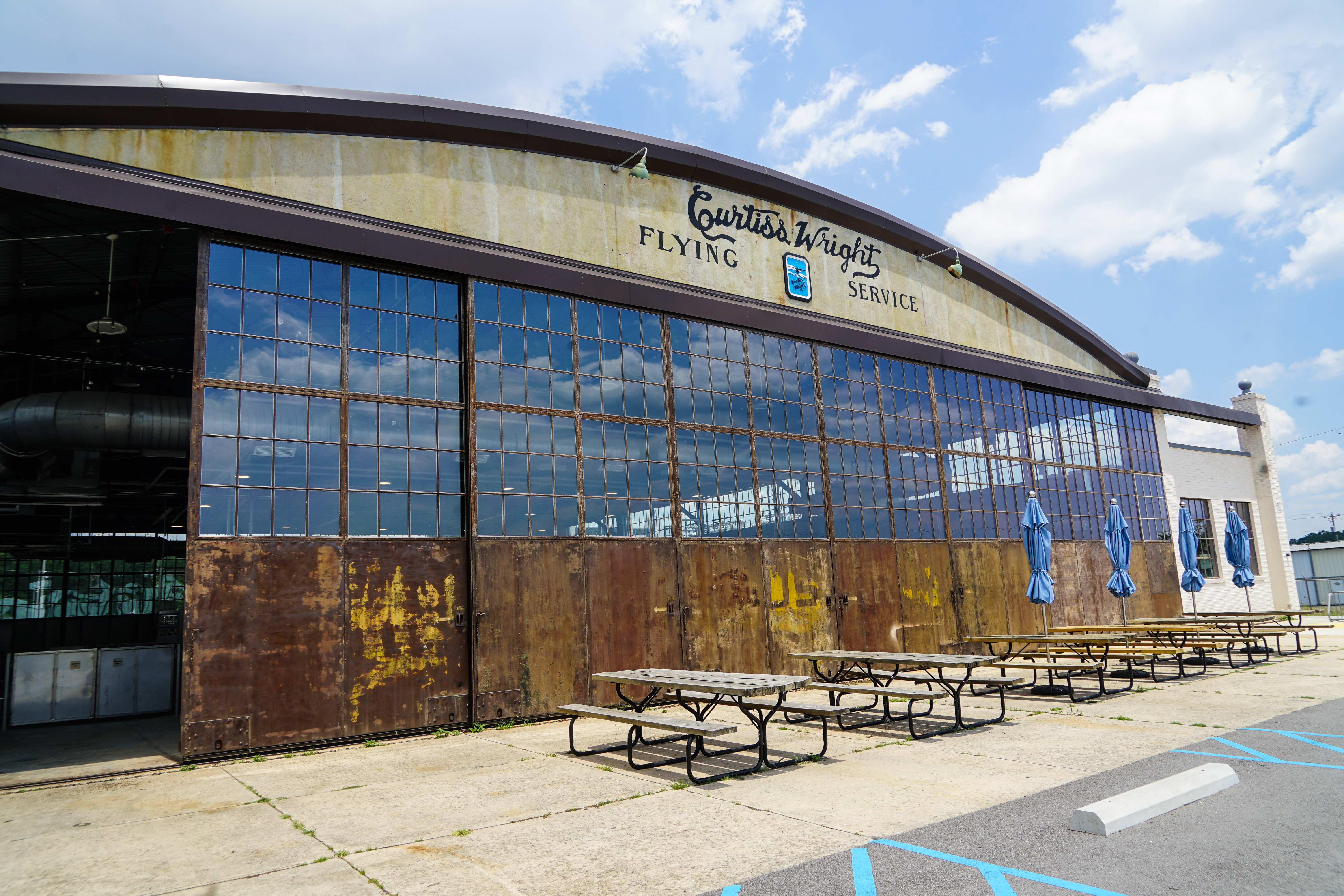
I wish Hunter-Gatherer would do that; I miss the loss of it from the dowtown area. Don’t get me wrong — I love the historic hangar location out at Owens Field. Bryan Caskey and I met there a few weeks back to share some pints and talk baseball. I had the ESB, which I think is the best beer brewed in Columbia.

Of course, pubs can’t make business decisions based on what I want. I’m not what most would call a regular customer. I hadn’t been out to the hangar since Election Eve in 2018, It was the way we ended our odyssey on The Bus. I didn’t even spend any money there then, but other folks brought me a couple of ESBs that night as I stepped off the bus. Which was nice after that long haul…

Say buh-bye to those Google ads

Screenshot

For years I tolerated those Google Adsense ads on the blog. Even though they were not a very rewarding proposition for me. Every few months, whenever their Scroogish algorithm things added what they owed me up to more than $100, they would send that amount to my checking account.
Yeah, $100. For every few months. I would not sell a solitary ad here for anything close to that rock-bottom price for one month, much less for several, and this was a bunch of random ads, not merely one.

But… it cost me no effort at all — I didn’t have to sell the ad, post it on the blog, send out invoices or anything, really. So, as another blogger persuaded me, why say no to, say, another buck every couple of days if it cost no sweat on my part?

So I allowed the ads in, and they were no trouble. I even sort of enjoyed watching the way the AI worked, posting ads that the algorithm imagined were related to something I had put on the blog. Occasionally, the stuff was tacky or even offensive (to me; I didn’t like seeing an ad favoring some political movement or politician I disapproved of appear here, just because I had recently mentioned said movement or pol). But it was more often amusing. Here are some of the comments I’ve made here about them in the past.

But then, Adsense started going overboard. First, the banner ads got bigger, so that you couldn’t even see my top headline on the first screen. Then, a year or so ago, they started with the pop-ups:

Screenshot

I almost ended the relationship right then. But I thought it would be trouble to figure out how, and decided to wait awhile.

Then, the finally went too far: They started putting multiple ads in the main body copy, as opposed to just one, as they used to do. Often, multiple copies of the same ad. You’ve seen this on plenty of other sites — which has increasingly destroyed any enjoyment I get out of reading those sites. And they seemed to have a special mad, destructive genius for placing these nuisances right in the middle of an important transition in the text, not only making it ugly but ruining the flow of the argument. Like, you know, why did I even try?

So I’ve had it. I closed my account today. They said the ads would be gone within 24 hours:

Screenshot

They’d better be. Because I don’t want to waste time trying again to do something that ought to be easy, although they do their best to make it look complicated.

In the meantime, though I have carefully placed my own relevant images where they needed to be in the text to explain my points, they will likely be interspersed with rude, random ads that make the whole post look like visual gibberish. When I saw them place one between the last words of my last post and the image of the late Chris Carrizales that the words went with, that really was the last straw. That’s what made me act today…

Screenshot

Anybody get any valuable messages via LinkedIn?

I tried asking this on LinkedIn, and I was just about to post it when I decided to check one point, and in trying to get to that information, I lost what I’d written.

So I’ll ask it here, to the best of my memory…

Have you ever gotten a direct message — or pretty much, any message — via LinkedIn that was relevant to you? I mean, one from someone you know, or need to know, about something that you have any sort of interest in?

Pretty much all I get is “cold-call” attempts to sell me some unsought service or other, sent to me by strangers. Usually the strangers are attractive young women, but they’re not like the random, unknown attractive young women who reach out to me via Twitter. These have their clothes on and everything — businesslike clothes —  which commands a bit more respect.

And I’d like to help them. I have enormous sympathy for people forced to engage in such painful, thankless labor. Also, they’re often from troubled places in the word. I got a couple recently from a lovely young lady in Ukraine, and y’all know I’m all about helping Ukraine. But I just wasn’t in the market for whatever she was trying to sell. I forget what it was. That was the bit of information I was seeking when I lost my message earlier, so I’m not going to go hunting for it now. It was some kind of business thingamabob, I’m assuming.

And since she was a stranger, I had no way of knowing whether she was legit. She said she was in Kyiv, but how was I to know? She could have been with the Russians, too. (Her first name, or the one she was using, was “Svetlana.”)

Anyway, that’s essentially what I was trying to ask, and I particularly wanted to hear from actual LinkedIn users. Maybe some of y’all are among those.

I’ll ask an additional question beyond that one, and I think I’ve asked this one before: Do you ever find LinkedIn useful? I doubt you have, unless it’s helped you get a job, or helped you hire someone else for a job.

To me, its one useful function is to be a sort of online complement to your C.V. And it’s only useful for that if the user keeps the page updated, which too few do…

Hey, UAW and Big Three — how about us consumers?

Yep, these are USED. Note that I blocked out the dealer’s name, because it would be unfair to suggest this dealer is the problem. These are quite typical.

You know — the hundreds of millions of people who will be affected by what y’all come up with…

I’m being a little facetious here, but it’s in service of a larger point. So bear with me. Let’s start with the news. And in keeping with my new resolution to link, as often as possible, to things you don’t have to subscription to read or hear, I’ll refer you to NPR:

With less than 24 hours left before current strikes expire, the United Auto Workers’ union and the Detroit Big 3 automakers have not yet reached a deal.

The companies say it’s still possible to work out a viable compromise before 11:59 p.m. on Thursday. The union, meanwhile, has started laying out its strike plan – an unusual one, at that….

Follow the link for the rest.

I’ve been watching this in recent days, while I’ve also been doing something else. My youngest daughter has just moved home from Dominica, and started a new job a week ago. She’s been driving to work in our 1998 Volvo, which, let’s say, is not in what you’d call tip-top condition. So she’s been trying to buy a decent, reliable used vehicle that she can afford. And I’ve been trying — so far unsuccessfully — to help her, which is what made me think to post this about these labor negotiations:

OK, I was kidding there — a little. I’m not asking that the interests of the companies and the workers — be subordinated to Brad’s interests. Anyway, no matter what they do, I expect decent used cars will continue to cost more than I paid the last time I bought a new car. (After all, I’ve only bought used ones since 1986.)

But I was thinking that there’s ONE way for the union and the companies to get everything they want — to jack up prices even further, and by a LOT. And I was thinking there are a LOT more consumers who would be paying for that than there are auto workers or corporate executives combined.

Consider this just another blow struck for thinking about issues in something other than binary, one-and-zeroes terms.

As for the two parties we’re all focusing on… For my part, I’d like to see both sides get what they want, to the extent possible. This country needs a thriving auto industry, and the workers deserve a square deal.

What we don’t need, in my view, is CEO’s making $29 million a year. Nor do we need workers to continue to be paid, for decades, to show up at a plant that’s been shut down, and sit around playing checkers. This is called a “jobs bank,” and after wisely giving them up to keep the industry in business the UAW has recently talked about wanting this arrangement back.

Maybe somewhere in there, y’all can find a way to get what you both actually deserve, and maybe give the rest of us a break, too. Or at least not make the price situation worse.

Anyway, good luck with your confrontation, folks. Here’s hoping that after all the rhetoric and posturing — and probably suffering before it’s all over — you work out something fair to all…

I’d forgotten Adolf Hitler was ‘woke’

McMaster et al applauding the Scout deal. Photo from Henry’s Twitter feed.

If I ever knew it, that is. Guess I need to go back and read my history some more, after reading this this morning:

Gov. Henry McMaster on Monday defended South Carolina’s $1.3 billion incentive deal with Volkswagen subsidiary Scout Motors after a group of conservative lawmakers this month criticized the company as “woke.”

Woke? Scout Motors? The subsidiary of the Volkswagen Group? Here’s how that company got started:

Volkswagen (meaning ‘People’s car’ in German) was founded in Berlin as the Gesellschaft zur Vorbereitung des Deutschen Volkswagens mbH (‘Limited Liability Company for the preparation of the German People’s Car’, abbreviated to Gezuvor) by the National Socialist Deutsche Arbeitsfront (German Labour Front) and incorporated on 28 May 1937.[14][15][16] The purpose of the company was to manufacture the Volkswagen car, originally referred to as the Porsche Type 60, then the Volkswagen Type 1, and commonly called the Volkswagen Beetle.[17] This vehicle was designed by Ferdinand Porsche‘s consulting firm, and the company was backed by the support of Adolf Hitler.[18]

Whatever der Führer‘s role (and see the photo below), if you say a company got started in Berlin in 1937, the last word I think of is “woke.” Although there was, to be sure, an element of populism in the production of an affordable “People’s Car.” But as we all know, populism is a persistent feature of both the left and the right.

Folks, I can think of reasons to oppose this Scout deal, if you press me. But I can also think of a number of reasons to support it, and I suppose those win out.

But this “woke” business?

You learn something new every day. Or at least  I do…

1938: Hitler lays the foundation stone of the first Volkswagen plant…

Cool it on trying to start a run on banks, people

Like most days lately, I don’t foresee a lot of time today for blogging. So I’m just going to offer this, which I tweeted yesterday, as a topic for discussion:

About the time I posted that, I was somewhat comforted by the fact that the hourly NPR news summary started with this, far more consequential, story. Of course, the second story was further yammering about the banks.

Then, this morning, I was really dismayed to see the first screen of my Washington Post app covered with additional headlines about the banks.

We’re not having a general run and a national economic collapse yet, but keep pushing, everybody. Maybe if you keep trying, you can make the average person nervous enough…

Has Ford sped past Tesla? This writer thinks so…

Admittedly, only 15,617 of these have sold, but that’s 15,617 more than the Cybertruck.

One of the greatest challenges I have on this blog is that I’ve largely lost interest in writing about the things that tout le monde is yammering about — the front-page stuff, which I usually find unbelievably repetitive and boring. But the world is still full of interesting things, things I’d like to discuss.

Unfortunately, the interesting ideas are usually here or there and coming from a single source. Which would have been fine back before newspapers figured out that their business was now online and that had to put up paywalls. (When I started blogging 18 years ago, that was not the case, except maybe for The Wall Street Journal.)

So when I see something I want to talk about, it tends to be in something I subscribe to, and others don’t.

That’s true of today’s topic, but I think I can summarize it easily enough to give everybody the idea. And I’ll try to quote from it within the vague Fair Use standard.

It was a “guest essay” in the Opinion section of The New York Times over the weekend, and it was headlined, “A 120-Year-Old Company Is Leaving Tesla in the Dust.” It’s written by Ezra Dyer, a columnist for Car and Driver magazine.

His point is that while everyone remains dazzled by Tesla, and while Elon Musk is making a spectacle of himself with his efforts to destroy Twitter, Ford has quietly sped past Tesla by such critical measurements as driverless and electric vehicles.

He starts off admitting that he once thought Tesla was the cool company, not only because it sold the only EVs you could drive for a reasonable distance without recharging, but also apparently because of the razzle-dazzle:

It made cars that performed animatronic holiday shows using their lights and power-operated doors. It came up with dog mode (a climate control system that stays running for dogs in a parked car), a GPS-linked air suspension that remembers where the speed bumps are and raises the car automatically, and “fart mode” (where the car makes fart sounds)….

But then, as a journalist covering the company, he started noticing that the people who worked there, his sources, were terrified to talk to him, being as evasive as spokesmen for a totalitarian government.

If you want to work for a flexible, modern company, you don’t apply to Tesla. You apply to 120-year-old Ford.

Tesla’s veneer of irreverence conceals an inflexible core, an old-fashioned corporate autocracy. Consider Tesla’s remote work policy, or lack thereof. Last year, Mr. Musk issued a decree that Tesla employees log 40 hours per week in an office — and not a home office — if they expected to keep their jobs. On Indeed.com, the question, “Can you work remotely at Tesla?” includes answers like, “No,” and “Absolutely not, they won’t let it happen under any circumstances,” and “No, Tesla will work you until you lose everything.”

But on the other hand, the cars make fart noises. What a zany and carefree company!…

More substantially, he noticed how Tesla lagged on the actual product front. He says Ford’s self-driving equipment is actually farther along than Tesla’s — and Tesla charges $15,000 for its feature that doesn’t fully work (he says the National Highway Traffic Safety Administration has referred to it with the charming words, “Full Self-Driving Software May Cause Crash“), on the premise that it may work sometime in the future. As for EVs:

Tesla’s long-promised new vehicles, like the Cybertruck and a new version of its Roadster, also keep getting delayed. The Cybertruck was unveiled in 2019, and on Tesla’s most recent earnings call Mr. Musk admitted that it won’t be in production this year, which is becoming an annual refrain. Sure, Ford sold only 15,617 electric F-150 Lightning pickups in 2022, but that beats the Cybertruck’s sales by, let’s see, 15,617…

Anyway, I thought all that was interesting. I don’t know that Tesla is slipping, but I’m impressed at what I read about boring ol’ Ford. I guess it helps not to have a, shall we say, problematic eccentric in charge. Although, of course, Ford once had that problem, too.

Personally, I drive neither a Tesla nor an F-150. But by way of full disclosure, I do drive a 2000 Ranger. It doesn’t do anything fancy. It’s a four-cylinder straight shift, and it doesn’t even have power windows. But it keeps running, and I hope it does so for years to come…

Meanwhile, I gather from the column, this model can make fart noises!

Yet another way baseball could save America

One of my grandfather’s baseball teams. That’s him squatting on the right. Note that some guys wear jerseys that say “P.O,” while others don’t.

My wife brought this story to my attention this morning, knowing I would like it: “Companies worried about worker turnover could try baseball.”

It’s about how measures that employers instituted at workplaces a century ago might help with today’s Great Resignation problems. A number of things were done to make workplaces more pleasant, but this was my (and the headline writer’s) favorite step:

Goodyear President F.A. Seiberling … embraced employee welfarism with a wide-reaching program in Akron, Ohio, that included an improved working environment, a thrice-a-week employee newspaper, a housing development and even a company baseball team to make workers feel like part of the “Goodyear family.” Confronted with the same problems, his crosstown competitor Harvey Firestone followed suit.

These companies met others on baseball fields in a league they organized that spanned at least two other states. The brick stadium where the Firestone Non-Skids played (named for the company’s first treaded tires, “non-skids”) seated 4,500 cheering workers, and it still stands in front of the old company headquarters. The idea was that when employees sat in the stands and cheered for the company, they’d be more loyal, and as a result, they were encouraged to do so. Goodyear told workers in 1920, for example, that attending the games alone wasn’t enough; “moral support, organized cheering, [and] boosting 24 hours a day” were critical as well.

The quality of baseball had to be good enough to attract these fans, though. In rising industrial cities like Akron and Michigan’s Flint and Grand Rapids, where there were no professional teams, fans typically watched amateur clubs compete. Industrial teams played as part of that environment, and so increasingly, companies hired men who were good baseball players. During World War I, Frank Stefko remembered hearing from a fellow soldier, Glenn “Speed” Bosworth, that Goodyear was hiring ballplayers in Akron, so after the war, he traveled to the Rubber City from Scranton, Pa. The personnel office said the company didn’t have openings until he mentioned Bosworth’s message. “Oh, you’re the ballplayer!” They hired him on the spot….

It worked. Employee morale and longevity improved, as did productivity. Employers did this not just to be nice guys, but because it was good for business. It also helped stem union efforts — until the Depression led to cutbacks in such expenditures, so the great heyday of unions arrived in the 1930s.

My wife knew I would like the story because of my grandfather. She never met him — he died of lung cancer when I was four — but he found some time to teach me some basics of baseball before we lost him.

And playing baseball on the workplace team is a big part of his legend. I’ve told you all this before, but I’ll tell you again, because I love these kinds of stories from the days when this was a baseball-loving country. Here’s something I wrote about it before, with a picture of the house where my grandmother lived with her family before her marriage:

Here’s how she met my grandfather — she would see him walking past her house on the way to the train station each day in a suit and straw boater, carrying a bag. She thought he was a salesman, and the bag contained his wares. Actually, he was a ballplayer, and bag contained his uniform and glove. He worked for the Post Office, but he only worked there so that he could play ball for its team. He was a pitcher. Gerald “Whitey” Warthen would eventually be offered a contract with the Senators, which he turned down to work in his father’s business.

A couple of minor corrections: He worked, I think, for the Railway Post Office, which I take it was some subset of the P.O. we all know. More importantly, he wasn’t just a pitcher, as I have learned since reading about him in recent years in old copies of The Washington Post and other local papers. He was also an infielder. Basically, he played anything as long as it was baseball. Oh, and before he launched on this working-for-baseball period, he had been captain of the team at Washington and Lee.

Anyway, I guess I am genetically predisposed to see baseball as a great way to attract employees. Unfortunately, the end of that story in the Post sounds a discouraging note:

Today, companies are also experimenting with ways to boost worker welfare in the context of the Great Resignation. Baseball spectatorship has been replaced by team-building activities that include workplace climbing walls, wine-tasting events, table tennis, family picnics, free lunches and special doughnut days. At the turn of the last century, employers experimented to identify which perks resonated with workers. While the jury is still out on whether such programs will be successful today, companies are following in the footsteps of NCR, Goodyear and Kellogg’s in experimenting with programs that employees find meaningful and useful — enough so to stay in their jobs.

You see that? No baseball. That’s the sad state of America today. Baseball is no longer seen as a way of pleasing the masses. Is there any hope for us?

The Rolling Stones love me so much, they’re going to let me buy something!

Don’t you love these kinds of come-ons?

I just got an email — and y’all know how much I love having people send me email — from Spotify headlined, “The Rolling Stones made you something special.”

Below that was a pic of the lads — the unbelievably ancient-looking lads, but as we all know, they’ve looked that way since they were very young — looking at me oh, so fondly. You know, because we’re such mates and all. (Except that Ron Wood. He’s looking off to the side for some reason. Oh, well. We were never that close. I still think of him as that guy from Rod Stewart’s band.)

And then below that was this message:

Thanks for being a fan

To celebrate their 60th anniversary, The Rolling Stones have designed an exclusive t-shirt and mug for their top fans on Spotify.

A limited quantity is available for this offer – until August 7th or while supplies last – so act quickly!

And below that, the critical button that said “BUY MERCH.” Here’s where it leads, although you may not be able to call it up, if you’re not as tight with Mick and the guys as I am. Sorry. You should make an effort to be cooler in the future.

Anyway, clicking the button offers me the chance to buy both a T shirt and a coffee mug for only $48! This is amazing because the T shirt costs $40 alone, while the price of the mug alone is $20!

I’m overwhelmed. But sorry, guys — I’ve been buying a bunch of stuff lately. Also, I already have a lot of T shirts. And a lot of coffee mugs — more than I need, if you can believe it.

But thanks for thinking of me. It really touches me to think of y’all putting down your guitars and such and making these things for me with your own hands and all. Get back to me when your 70th anniversary rolls around. Or maybe your 75th, OK?…

Roy Rogers and Wonder Woman! You can’t beat that…

OK, I was kinda ragging on Google Adsense the other day for the “older women” ad they put on my blog, but here’s one I actually like.

Not enough to click on it, mind you — that’s against the rules. I just like it as a visual enhancement of the blog.

My childhood hero Roy Rogers, with the best Wonder Woman! (No offense to Gal Gadot, but this one was pretty special.)

Can’t say I appreciate the slight suggestion that there’s something salacious going on (“opens up about his life”), this being Roy and all. I mean, he’s just being polite posing for a picture. The photographer probably said, “Pretend she’s Trigger!” and Roy obliged.

Of course, she’s not Trigger, but I don’t hold that against her. Not her fault at all. She’s doing her best, and her best is pretty good…

My favorite Google AdSense ad this week

AdSense doesn’t allow me to click on the ads it posts on my blog, but this one made me so curious I had to resort to a workaround: I right-clicked, copied the link to the site, and called it up on a different browser.

It was disappointing. The chainsaw being advertised isn’t really that small. Dang. Although it looks like it could be useful for certain tasks, and the tiny one doesn’t seem too handy. Just cool. Or hilarious. Or something. In any case, it made me look.

In any case, gimme more of these kinds of ads, Google. I like them better than, say, the one I’ve been seeing all week tying critical race theory to Marxism. It was getting kind of tedious…

How are y’all doing with the supply chain these days?

Kind of moody and overly dramatic, don’t you think? But it was the only horizontal image I could find that I figured I’d be allowed to use.

This is an update to my July post on the supply chain problem. Then, I was celebrating the fact that my shoes I had waited for for months had finally come.

Now, this issue is fresh in my mind because I’m waiting for my new iPhone. It’s supposed to arrive today.

My “old” phone is an iPhone 8 that I got on my birthday in 2018, during the campaign. In fact, I think James and Mandy were the first people I spoke to on it, sitting in the parking lot in front of the Verizon store. I remember thinking there was something wrong with it because I wasn’t hearing as clearly as usual. That’s because I didn’t have the center of the phone over my ear, because I was used to the narrower iPhone 5. It was fine.

But not any more. Among other problems, the camera has been acting up. Sometimes, when I touch the virtual shutter release button, the camera app shuts down, and no image is recorded. Which is bad. We grandfathers have to have a fully functioning camera at all times. And I also frequently use the camera for work.

But HARK — the UPS man was just here, and the phone has arrived!

So I’ll get back to you later, beyond making my point: Which is that when I went to Verizon on Oct. 12, they told me I’d have to wait until possibly Oct. 29.

Oh, sure, if I’d wanted to spend almost two Gs on an iPhone 13 — for which they had displays all over the store — I’d have probably been OK. But since I’m a sensible guy who thinks the most insane thing Apple has ever done was get rid of the home button, I was getting an SE 2020. So I had to wait.

But apparently the chain wasn’t quite as stressed as they thought, since it just arrived.

So y’all go away and let me play with my new toy. In the meantime, how’s the supply chain acting for y’all now, beyond driving up prices and such?…

Enough with the threats, OK? I’ve got enough going on…

If this blog disappears, it will be because TSOHOST got fed up waiting for me to pay them, and shut it down.

Which will be amazing, since:

Despite all that, on Columbus Day (the real one, not the Monday), I received the first of not one, not two, but six emails telling me that an invoice for £10.99 was due on “14/10/2021.” Perhaps I should have written back to inform those folks that there are only 12 months in the year, but I wasn’t in the mood for facetiousness. I’ve been very busy dealing with a lot of stuff in recent days.

The last few messages were threatening. In an understated, British sort of way. No active statements such as “We will shut you down.” No, they said “suspension is imminent,” as though they were observing that the weather looked dodgy.

I logged into their site this morning and sent a “ticket response” to the earlier message from the guy who had acknowledged that I had cancelled, asking him to inform his colleagues and get them off my back. We’ll see if that produces action.

Barring that…

If they somehow succeed in carrying out the threat, well, goodbye. Otherwise, I’ll be seeing you later…