Category Archives: Baseball

OK, I’m tired — but quite happy with the result

At some point during the extra innings last night — or perhaps it was after midnight this morning — I thought about sending out a Tweet about the tense, exciting, protracted 7th game of the World Series. With everything in doubt, I would have said something like:

Whoever loses this game is going to be far more disappointed than they would be losing any Series I’ve seen up to now…

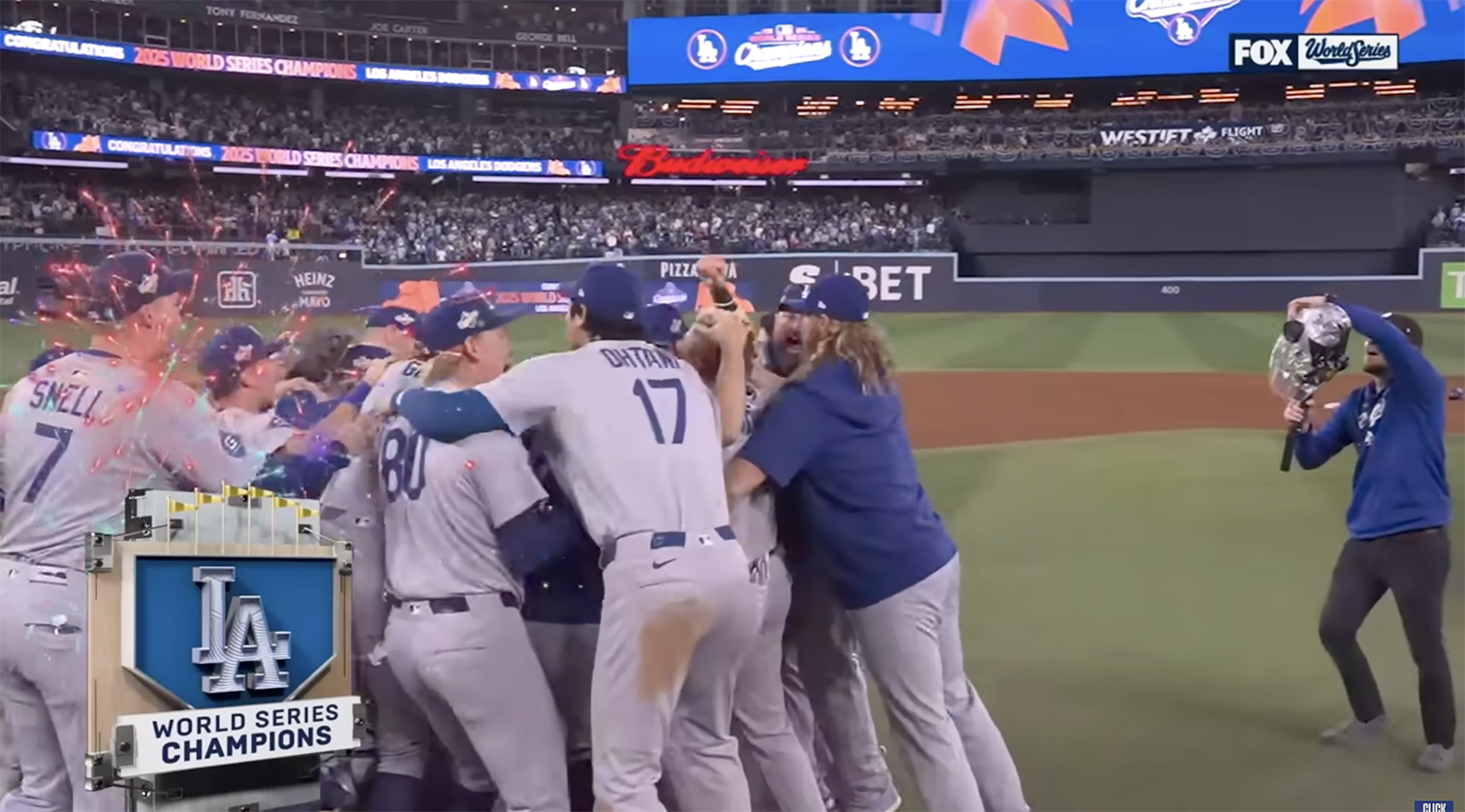
I didn’t post it because I didn’t want to recognize that my Dodgers might lose. But really, truly, anything could have happened until that very last second when Alejandro Kirk’s bat broke, and my favorite Dodger Mookie Betts scooped it up, hustled to second then threw over to Freddie Freeman for the double play, ending it all. (Here’s a great picture of that moment, with Freddie towering over the Blue Jays’ catcher, leaping with joy while Kirk seems to do a sort of dance of sadness on first base.)

Both teams deserved to win. And those Toronto fans, as well as the players, seemed to want it more. So I felt bad for them. Too bad the last game wasn’t in L.A.

On the other hand, my sympathy had been somewhat tempered because I was sick of the announcers going on and on about how the poor things hadn’t seen their team win a championship for 32 years. They kept saying it. At one point, there was this montage as they cut from one anxious, longing face in the crowd, while yammering again about those 32 years.

You know what happened 32 years ago? I do. So does John Smoltz. At my age, that’s like 18 months ago. They had won the year before that, too! I had been there in Atlanta for the first game of that previous Series, and I’ve always thought it was cool to have been present to hear a foreign anthem played at a World Series — even though they ended up beating my Braves. But come on, guys! You win your first Series ever, and then you win again the next year, and what — you expect to win them all now?

But still, I sympathized. So when I spoke afterward with my brother-in-law, who had rooted for Toronto, I was able to offer my condolences sincerely, and tell him that his guys had deserved to win. But of course, so had the Dodgers. One thing we agreed on — if everybody in America had watched this whole amazing Series, baseball might once again approach something like its former popularity. And America could return to its former greatness.

I’ll just toss out a few things that made this Series wonderful:

  • Yoshinobu Yamamoto. The pitcher who is made of iron. As Chelsea Janes wrote, “Yamamoto threw 2⅔ innings of scoreless relief to close out the 5-4 win a day after he threw six innings in Game 6, a performance that combined with his complete game in Game 2 made him the World Series MVP.” Oh, and you know that complete game? He went all nine innings in the game in his last game before that.
  • Guys who showed they appreciated getting a chance. I’m thinking about Miguel Rojas, whom I hadn’t seen (or at least hadn’t noticed) in the series before Game 6, who was falling down when he through the ball to Will Smith (because the bases were loaded) to barely, just barely saving the game and the Series, and the season — one of many such moments in Game 7. Also, he hit a rare (for him) home run tying the game. I’m also thinking of Andy Pages, who had just been put in at center field, jumping on top of Kiké Hernández to catch the ball on the wall and… again, saving the game, etc. He was so happy, but he seemed a little worried when he looked back and saw Kiké lying there possibly dead. But he was OK.
  • Shohei Ohtani, of course. By this time, his amazing performances in previous days were overshadowed, but hey, he did pitch again — if not as wonderfully as before. And he did have two hits. Which ain’t nothing.
  • Will Smith. There’s nothing harder in baseball than catching, and he did it every inning of every game in the Series, including the 11-inning final game and the 18-inning nightmare several days earlier. Try doing that in a squatting position without committing a Series-losing fumble of a wild pitch. He caught 73 innings, “the most by any catcher in World Series history.” Never mind such shining moments as, you know, hitting the homer that put the Dodgers in the lead.

I could, as usual, go on and on. But let me mention some of the other guys for a moment:

  • Vladimir Guerrero Jr. — That surname means “Warrior,” by the way. Nobody wanted it more than this guy, who underlined his yearning by writing the name of Diós in the dirt each time he came to bat, and hit as though the Lord was definitely taking his side. And he played some tenacious D, such as his diving catch on the first-base line, and that ball he fielded and threw to second in time to have it thrown back to him for a key double play. No one was more passionate, more celebratory about his own achievements and those of his compadres. And the saddest moment came when the camera caught him apparently weaping in the dugout when it was over.
  • Addison Barger — That guy was a terror (from a Dodgers perspective). The internet claims he’s NOT related to Sonny Barger of Hell’s Angels infamy, but think about it — can’t you get “Sonny” as a nickname if you’re called “AddiSON?” Did you notice how several times, Dodgers baserunners decided NOT to try to take an extra base for the simple fact that the hit had gone to right field? That’s because Barger has a cannon for an arm, as he demonstrated to L.A.’s woe a couple of times with throws to home and third base.
  • George Springer. The guy was really racked up. He had a bad arm, a bad leg and a bad haircut. But he stood there at the plate and tried, although quite a few swings looked like they could be his last. Yet he managed to hit with very good effect (from a Toronto perspective) a couple of times, and once for an RBI.
  • Alejandro Kirk. First, he’s not as short as he looks. He’s 5’8″, but looks shorter because he weighs 245 pounds. I think it’s all muscle, the way he hits. At first he looks clumsy, swinging so hard that he sometimes falls down. But thing his next swing sends the ball over the wall…

OK, that’s enough. I know I’m getting a little like Shooter when he was in rehab, raving so about the game that they had to put the straitjacket on him. Like Shooter, I love “the greatest game ever invented.” He’s just confused about which game that is.

And now it’s over. We have the long, empty winter ahead of us. But this Series gave me enough to tide me through those months — even though the Red Sox weren’t in it.

If there’s another baseball fan out there somewhere, perhaps you’d like to add some words…

A tale of three caps

It occurred to me that some of you might have thought the other day, “Why is this Red Sox fan so excited about a Dodgers game?”

I’m sure this has worried you. It’s no doubt keeping you awake at night.

So I’ll explain, as I try to do everything. I don’t like having ambiguities linger on my blog.

I’ll explain it with the hats. My father had a huge collection of hats in his later years — most of them related either to the Navy or golf tournaments he played in. I’ve adopted a similar practice (which you are certainly not to assume is a sign of advanced age). About half or more of my hats have to do with baseball.

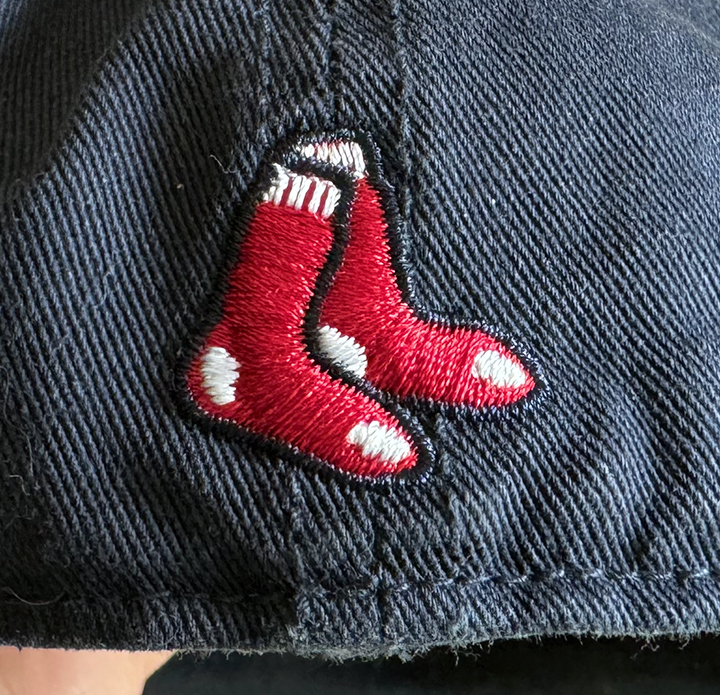
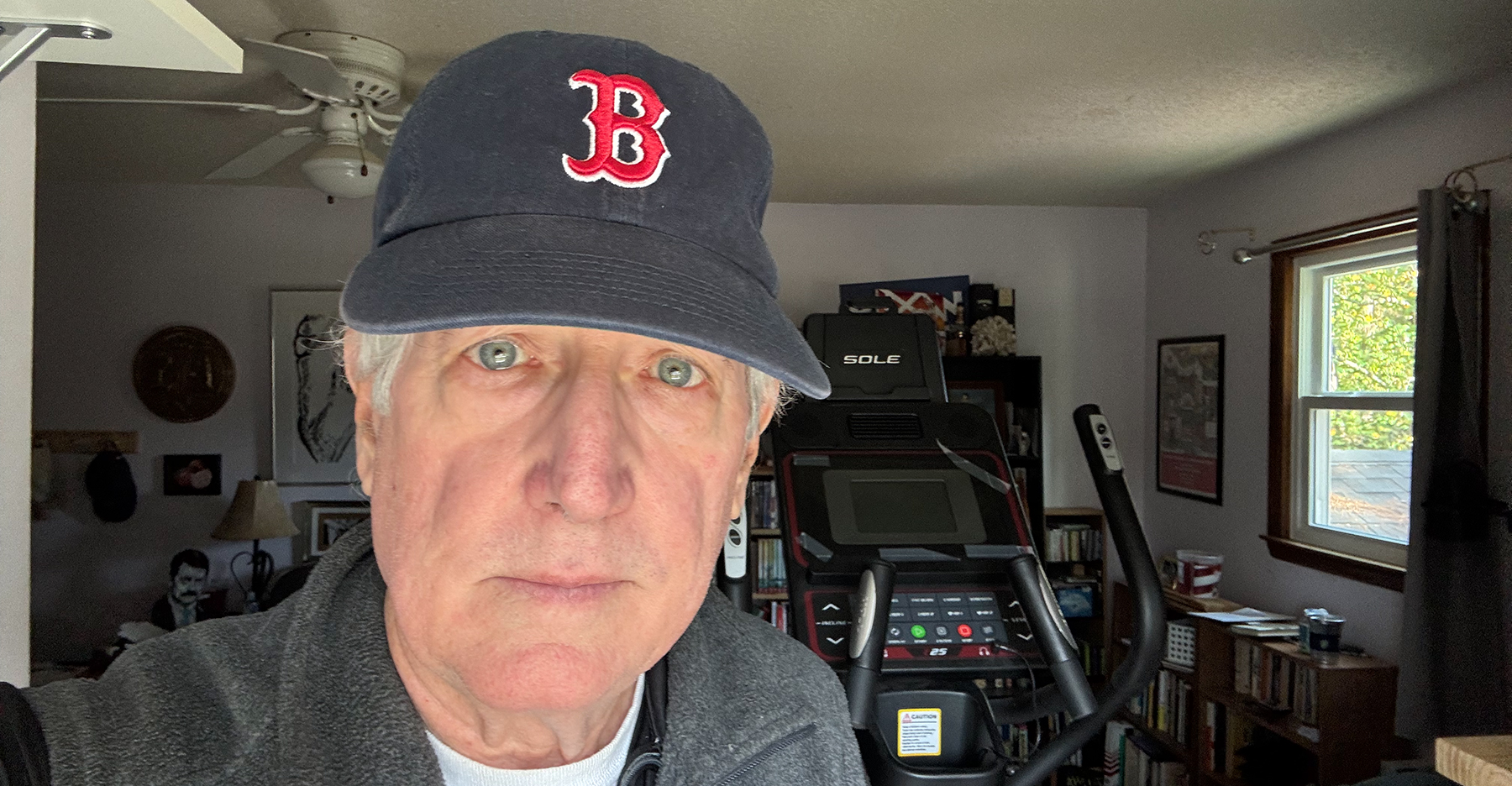
My favorites have to do with the Red Sox. I have three I currently wear. That’s my best, special-occasion Red Sox hat above. Unlike my other baseball lids, this is a REAL cap — not one of those cheap, one-size-fits-all jobs. I had to go to Lansdowne Street, in the shadow of Fenway itself, and try them on until one fit perfectly.

Where other hats have a strap at the very back that can be adjusted to various sizes, this one has a tiny Red Sox logo, blown up slightly at right, which my wife and daughters think is cute, and I find to be quite tasteful.

I loved the Red Sox long before I was specifically a fan of the team. I have loved their hats more or less ever since I learned that my name started with a B — so, a while. I felt early on that any hat with a B on it was pretty much meant for me.

Add to that the matter of aesthetics. I think it’s a beautiful hat. Dark blue — whether indigo or Navy or whatever the specific nomenclature — is my favorite color. It goes best with either white or a deep, rich red — both of which are present in the B.

Then there’s the fact that over the years, I’ve been aware of and impressed by various Red Sox stars — Babe Ruth (before the Curse), Ted Williams, Dom DiMaggio, Carl Yastrzemski, Wade Boggs, Roger Clemens, Pudge Fisk, Mookie Betts, Big Papi Ortiz, and our own Jackie Bradley Jr. Oh, wait — I forgot Cy Young.

I was also aware of it as a real baseball team with long-term history, dating back more than half a century before my birth. That matters to me. History confers legitimacy.

Then I went to visit Boston for a few days, and loved it — especially the perfect night when we sat there in the Fenway bleachers, right behind Jackie Bradley Jr., and literally ate peanuts and Cracker Jack while we watched the Sox thump the Yankees. I’m not going to blaspheme and call it a religious experience, but as plain old secular ones go, it was pretty special.

Finally, when I shelled out all that money this year to watch Major League Baseball constantly the whole season, my love grew stronger. I watched other teams, but mainly enjoyed and worried over the Sox — my favorites Ceddane Rafaela, Alex Bregman, Jarren Duran, Trevor Story, Garrett Crochet, Aroldis Chapman — well, and all the rest.

They had a good run this year, but it was not to be, as they lost to… oh, let’s not name them — in the Wild Card series.

You might think I’d stop watching at that point, but I actually love baseball, and not just one team. That means enjoying all MLB (and sometimes less glorious) teams. But I do have a hierarchy of preferences, which usually keeps me watching a team I like, if only a little bit in a bad year, all the way through the World Series.

My second fave club is the Phillies.
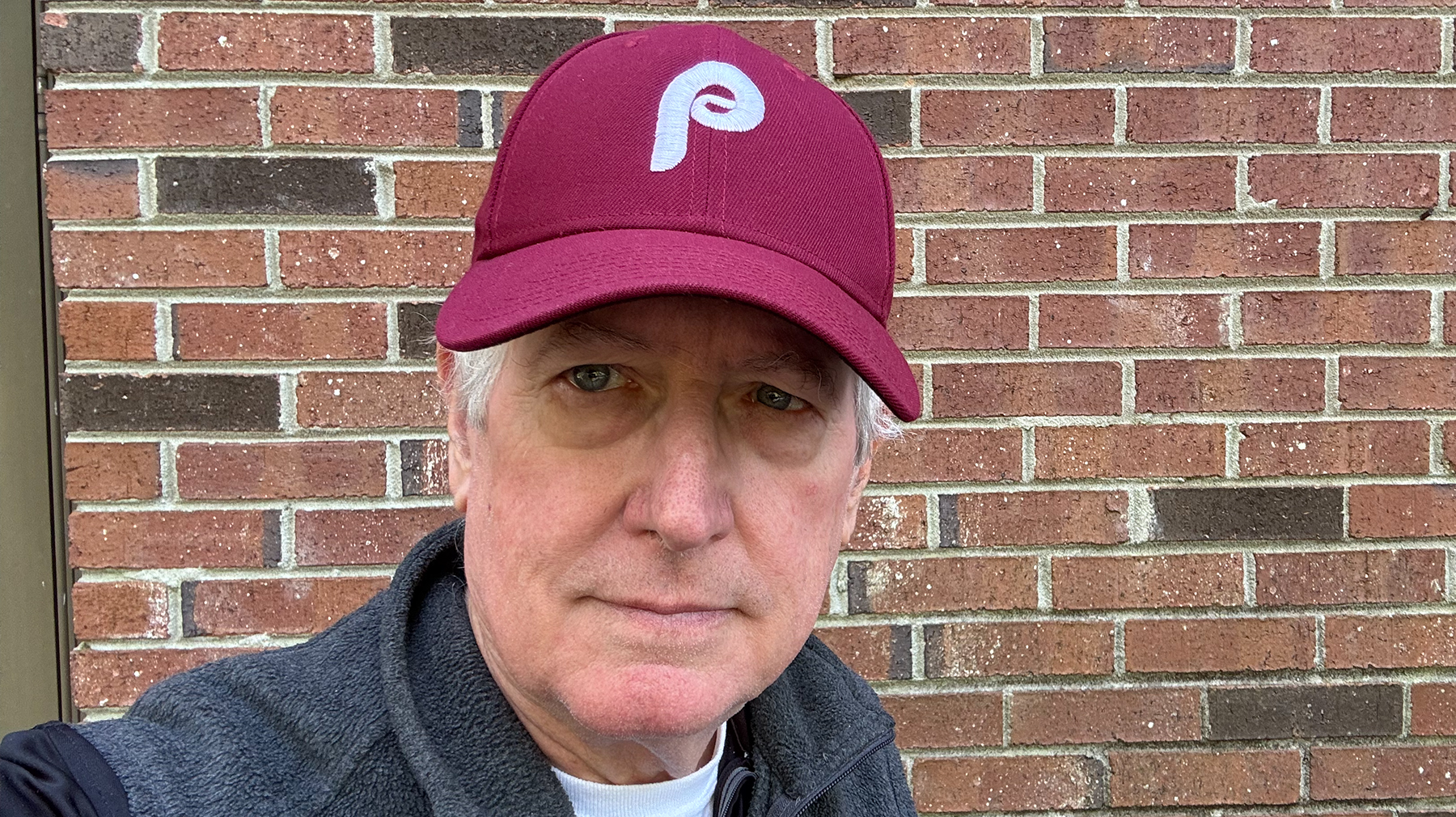
It’s not the P or the hats or the uniforms in particular, although the one you see above is my fave among the ones they wear. It’s more about a family connection, combined with the way the post-seasons have broken the last few years.

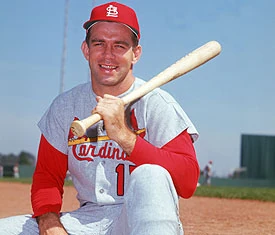
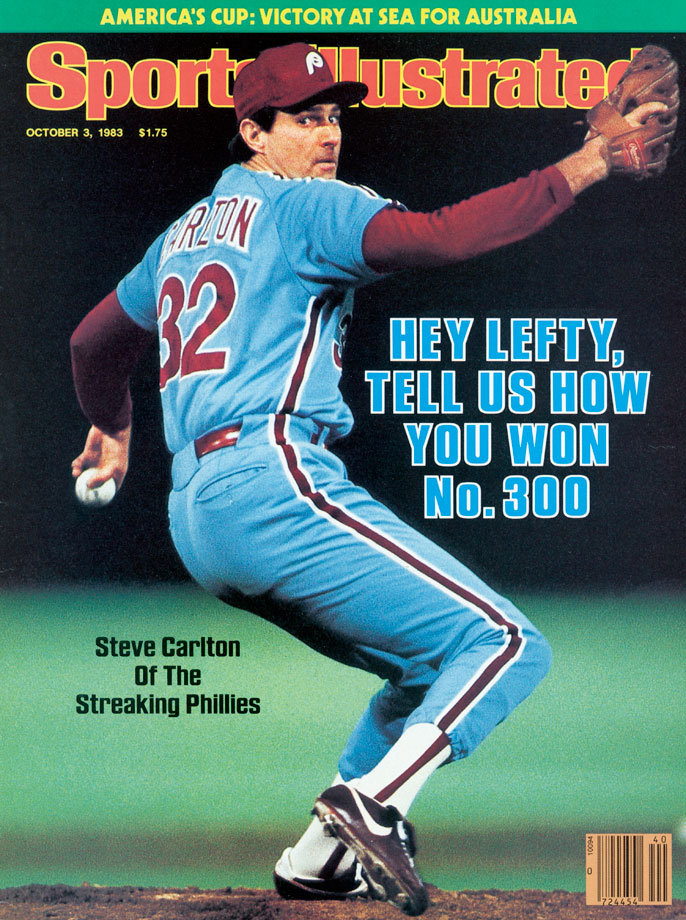
My wife’s first cousin Tim McCarver played the last few years of his career with the Phils. Sure, you might associate him with the Cardinals, and so did I. I was a fan of his when he played for St. Louis in those early glory years — long before I became a bigger fan of his cousin. But by the time he stopped playing ball and started his new career in broadcasting, he had been with the Phillies long enough for a strong identification to develop, in my mind anyway. Besides, he had Steve Carlton — also a former fellow Card — with him (I met Carlton the first time I even saw Tim play in person, down in St. Pete in 1969). It just seemed natural to cheer for their team.

Also, in these recent dark years when baseball disappeared on free broadcast TV, I only got to see ANY baseball by watching the post-season games, which TV deigned to carry still. And the Phillies made regular appearances on that stage the last few years. Thus, I became a fan of the surly Bryce Harper, plus Kyle Schwarber, Brandon Marsh, Alex Bohm, and J.T. Realmuto.

That continued and deepened this season, when MLB.TV finally gave me generous access to baseball every day and night of the season.

But alas, the Phillies fell to my third-favorite team. And they’re still in it (despite the shock of the playoffs, in which they got mistreated by a team I NEVER follow).

My attachment to the Dodgers is a tad more complicated.

First of all, note the B. I of course have no interest in wearing LA on my hat, when I can wear a B. Besides, it goes to my belief in history conferring legitimacy. I think of them as the Brooklyn team that just recently moved (when I was three years old) to another city. Enriching that history we have Jackie Robinson, not to mention Pee Wee Reese, Sandy Koufax, Roy Campanella, and, if you’ll allow one remembered as an owner more than a player, Branch Rickey. Also, they were my Dad’s favorite team.

Today, in that less-reputable West Coast location, they’re still a great team, with Mookie Betts (who should still be in Boston), Freddy Freeman (the only memorable Brave I still get to see, now that MLB.TV lets me watch anything but the Braves), Kike and Teoscar Hernandez and the gentleman I referred to earlier, who is today’s nearest approximation to Babe Ruth… Shohei Ohtani.

Here’s hoping they do better tonight against those strangers from the Great White North…

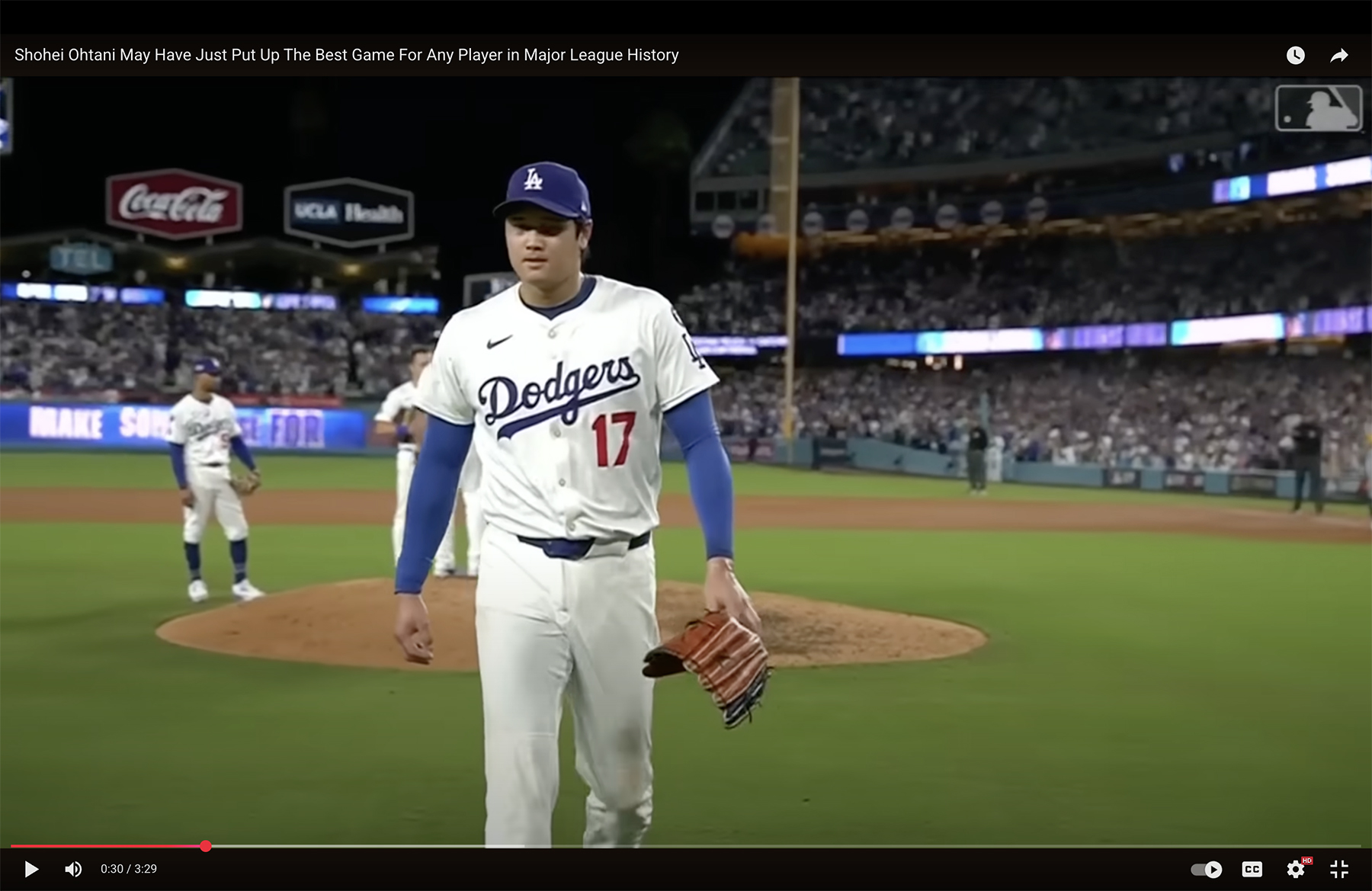
Shohei Ohtani is every good thing they say he is, and more


I would have posted this Friday night when it happened, but the item in the Post was only brought to my attention yesterday.

It says things I might have said if I were more confident in my ability to comment on baseball. But on Friday night, I was just saying “Wow,” and not going much beyond that.

Now, I find it being said by an actual professional sportswriter, and said in these words: “Shohei Ohtani just played the greatest game in baseball history.” Sure, Chelsea Janes isn’t Ring Lardner, and she’s young, but she’s The Washington Post‘s “national baseball writer,” and Ring Lardner’s dead. So I’m going with what she said, since the same idea was kinda roaming around in my gut when it happened.

Hers was a daring statement. Journalists don’t usually go out on a limb this far, because they know other journalists will snicker and give them the business. But I think that in this case, what that headline says may well be right on the mark. And that fact alone is pretty exciting.

Here, in part, is how she supports her claim:

LOS ANGELES — This is Beethoven at a piano. This is Shakespeare with a quill. This is Michael Jordan in the Finals. This is Tiger Woods in Sunday red.

This is too good to be true with no reason to doubt it. This is the beginning of every baseball conversation and the end of the debate: Shohei Ohtani is the best baseball player who has ever played the game, the most talented hitter and pitcher of an era in which data and nutrition have made an everyman’s sport a game for superhumans. And Friday night, when he helped his Los Angeles Dodgers win the pennant with a 5-1 victory over the Milwaukee Brewers in Game 4 of the National League Championship Series, was his Mona Lisa.

It’s hard to say when the possibility of exaggeration around Ohtani evaporated. Maybe it was when he struck out the side in the top of the first, then hit a leadoff home run in the bottom of the inning, though that is almost banal by his standards.

Maybe it was when his second homer sailed over the pavilion in right-center field at Dodger Stadium and landed 469 feet away, at which point Ohtani had more hits in four innings than he had allowed to the Brewers — and scored as many runs in those four innings as Milwaukee had in Games 1 and 2 combined.

Certainly, by the time he hit his third homer in the seventh inning and sent many of his teammates’ heads into their hands in disbelief, everyone in the ballpark knew they were watching the greatest game any player had ever played: Ohtani pitched six-plus scoreless innings and struck out 10. He also had the 13th three-homer game in postseason history — the first, it goes without saying, that included walking off the pitcher’s mound to a standing ovation….

Convinced? If you’re not, you probably missed the game…

Putting last night’s joyful win into perspective…

The celebration in the dugout when Yoshida brought in those two runs.

I’m still feeling the glow of last night, when the Boston Red Sox beat the New York Yankees in possibly the most intense game I’ve seen in my life between these ultimate rivals (I can’t compare it to the Summer of ’49, since I wasn’t around yet).

I was glad to have recently renewed my Boston Globe subscription (having dropped it back in August as a cost-saving measure, and immediately signed back on when they reached out to me with an offer that couldn’t been refused — they’re good at that). That meant that this morning I could relive it not only through an indepth main story about the game, but a sidebar about the man (Masataka Yoshida) who hit the single that pulled the Sox ahead after six innings of the Yankees leading, and a Dan Shaughnessy column about how the Sox’s left-handed ace (Garrett Crochet) dominated the Bronx titans for almost eight full innings.

That’s not counting that one homer Anthony Volpe hit off him in the second, which is what put the Yankees ahead for most of the game. This caused me to mull dark thoughts for several innings, fantasizing about banning home runs. I hate the things, anyway. They completely sidestep the game of baseball. Defenders have no chance to deal with them in any way, once the ball has left the bat. Baseball is about carefully balanced skills between players, not about standing there watching the ball go bye-bye. From now on, I almost tweeted (but was too engrossed in the game to bother), anything that goes over the fence should be no more than a ground-rule double — and the hitter should pay for the ball. (Yeah, I know the cost of one ball is nothing to these millionaires — and no one makes more than the big home-run hitters), but there’s a principle here.

Then, I forgot it all when Yoshida hit that beautiful single in the 7th and drove in Ceddanne Rafaela (my favorite player) and Nick Sogard — putting the Sox in the lead. Where they stayed. Note that, while they sometimes hit them, the Sox don’t need taters to win ball games — because they’re real baseball players.

Note that this happened in New York — where the second game of the series will be played tonight. And if the Sox don’t put it away tonight (and I worry about them doing it without Crochet), they’ll have to win again tomorrow. And all three games are played in New York, not in beloved Fenway.

Whoever wins the series goes on to face the Toronto Blue Jays in the AL East division championship.

But let’s not look ahead yet. Let’s look back, at Shaughnessy’s column yesterday morning, before the Sox won the first game. I almost posted it yesterday, but it’s just as good now. It’s important to share because — well, you know about how I love history, and mourn the fact that ignorance of history is destroying the country I love? Well, history is key to fully appreciating baseball. Here’s the column:

Red Sox-Yankees in the playoffs. Does it get any better than this?

Of course, the Globe needs subscribers to survive (which is why they keep offering me those deals), so they might not let you read it for free.

So I will provide you with enough of an excerpt for you to get the idea of why this thing happening in New York right now (and not in Fenway, in case I haven’t mentioned that) is so important:

Red Sox-Yankees. Again.

Do we need to educate the young’uns and remind everyone what this means?

Red Sox-Yankees is an all-timer. It’s Harvard vs. Yale, Kennedy vs. Nixon, Athens vs. Sparta.

It’s Ohio State-Michigan, Army-NavyTrump-Comey.

It is the ultimate American sports rivalry and we are getting it in the first round of baseball’s ever-expanding playoffs….

The relationship between these franchises goes back to Creation. The Boston Americans (hello, Red Sox) were part of the upstart American League in 1901 and the New York Highlanders (now the Yankees) joined them in the “Junior Circuit” two years later. Since that time, the two have walked hand-in-hand with history, usually at the painful expense of the Boston franchise.

The Red Sox won five of the first 15 World Series, then sold their soul in a Yankee swap when New York owner Jacob Ruppert swindled Boston owner Harry Frazee (a New Yorker with designs on Broadway shows), acquiring pitcher/outfielder George Herman “Babe” Ruth for $100,000 and a mortgage on Fenway Park.

The fallout from that hideous deal lasted 86 years. In that stretch, the Yankees won 26 World Series while the Red Sox won zero. Making matters worse, many of New York’s rings came at the expense of Boston. A three-time champ with the Red Sox, young Babe became the greatest player in baseball history, won four championships with the Yankees, then handed the Bronx baton to Lou Gehrig, who passed it on to Joe DiMaggio, Mickey Mantle, Derek Jeter, and today’s Ruthian Aaron Judge — 53 home runs, American League batting champ in 2025….

It goes on like that. You get the idea. It’s great, and educational.

I love baseball so much…

You know what? That was a blurry screenshot above. You should watch the full inning when it all turned around last night…

A beautiful echo of The Slide

As a reborn sports fan — well, baseball fan — I’m now making like a color commentator, thinking back to the time that so-and-so did a similar thing decades ago. OK, so I do that on all subjects. But now I’m doing it with sports, or A sport, which indicates it’s really become a part of me.

It happened last night. Did you see the Red Sox game last night? Well, you should have. If you missed it, you can read about it in The Boston Globe this morning. They based their main game story on this one play that sparked the memory for me.

(By the way, yes: You can actually read this story about something that happened last night in the actual paper this morning. Like in the legendary days of newspapers. This is one of the things I love about The Globe. It’s why, after ending my subscription recently under various pecuniary pressures, I signed back up almost immediately when they offered me another sweet deal, bless them. I can now return to watching the game before I go to bed at night, and reading excellent analysis of it at breakfast when I get up. What a fascinating modern age we live in.)

What happened is this: I had been watching the game some time before dinner, and things were looking good. I think the Sox were ahead of Cleveland something like 4-1. When my iPad informed me at the table that the score was now 7-7 in the eighth, I got right up and went back to the game. I saw an inning and a half of excellent baseball.

But the main thing was this one play in the bottom of the eighth. Not a homerun, but a true baseball play, the kind worth remembering.

Here’s what happened:

There were 2 outs. The go-ahead run, Curaçaoan outfielder Ceddanne Rafaela, was on third. This was the Sox’s chance to go ahead and chalk up a win. But obviously a sacrifice fly wouldn’t bring in that run, with two outs. Alex Bregman, 31, steps up and hits with “the worst swing I took all night,” but pulls a grounder down the line. The Cleveland third-baseman has to lunge toward the line and snag it just as it’s getting by him, then somehow overcome his momentum to turn back for a long throw to first.

Meanwhile, Bregman is chugging. He knows he’s not exactly pinch-runner material at any time, and especially since his quad injury that put him out for a while in the last couple of months. Manager Alex Cora is quite frank with him about his lack of speed. But he knows the stakes, and he pushes with all he’s got, risking that quad.

And he makes it, and Rafaela goes home, and it’s 8-7. Before the inning ends, three more runs are scored, which might minimize the moment in your mind if you’re just looking at the final score. But those extra runs wouldn’t have come if Bregman had not beat out the throw to first. (Here’s video, although I couldn’t find an embed code.)

So of course, I immediately thought of The Slide — slowpoke 1st-baseman Sid Bream’s miraculous run home, just barely beating out Barry Bonds’ throw to the plate, in that instant winning the 1992 pennant for the Braves (you know, that team the MLB won’t let me watch any more). That night, Bream was a year older than Bregman is now.

OK, the stakes weren’t quite as high, but it felt a lot the same to me last night. And don’t dismiss it. It’s September, and that sprint to 1st kept the Sox a hair’s fraction behind the Yankees. They’re both 2.5 games from catching Toronto and leading the AL East (New York is a statistically behind Boston because while the Sox have won one more game, they’ve also lost one more; I don’t know what the Yankees have been doing instead of playing ball games). This is no time to be dropping one to Cleveland just because the usually infallible Garrett Crochet is having a bad night.

So that’s why Bregman ran so fast…

The good news: I can see baseball again, LOTS of it!

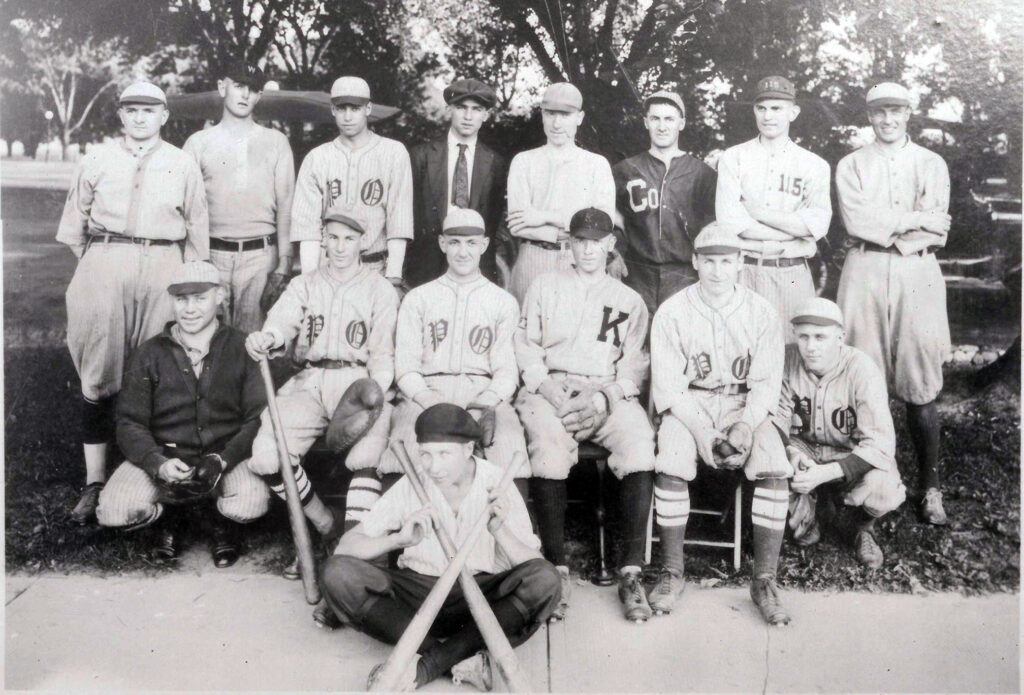
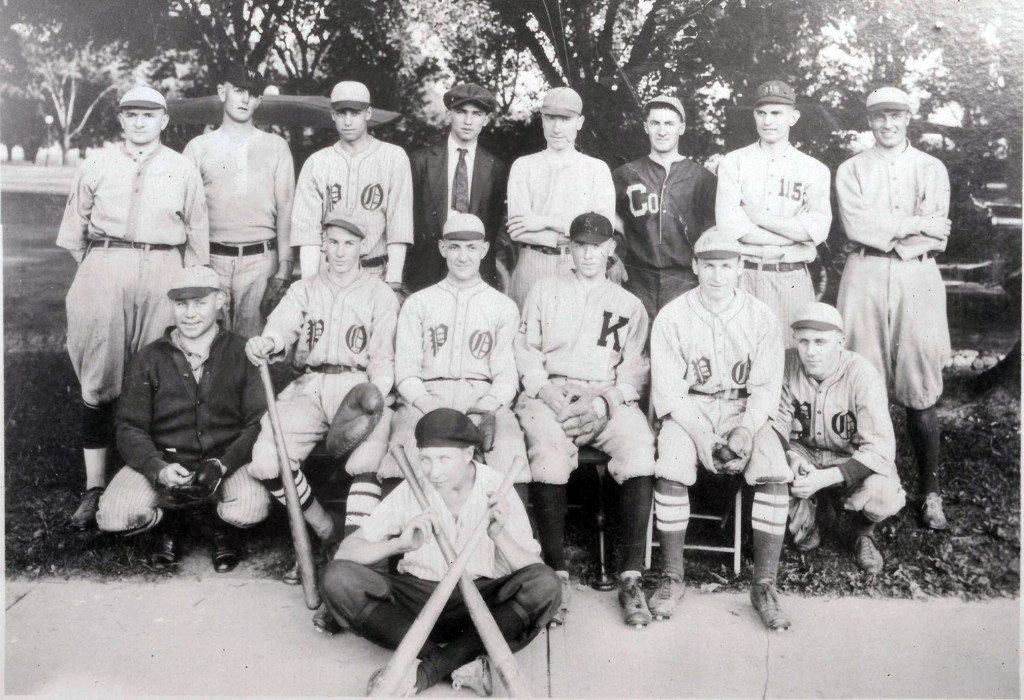
Baseball wasn’t just always there for me, it was always there for my family. That’s my grandfather squatting to the right in this picture. He had been the captain of the team at Washington and Lee, and after college he was always playing on multiple teams in the Maryland suburbs of Washington. He only worked for the Post Office so he could play on this team. You’ll notice that others on the team played for other teams as well — they wore the wrong uniforms on picture day, without the Post Office ‘P.O.’

When I was a kid, baseball was always there.

It didn’t matter my age or where I was. As a preschooler, I always had one of those skinny little wooden bats that were later outlawed by the worrywarts. I think it came with those old solid rubber balls that didn’t bounce much, but since my Dad was a tennis champion, there were always cans full of balls around the house that really traveled when you hit them. I loved that, although Ring Lardner, the enemy of the “lively ball,” would likely have harrumphed.

When we lived in Ecuador from the time I was 9 until I was 11 and a half, I missed out on a lot of critical time for developing basketball and American football skills (which I regretted when I started 7th grade back in this country, in New Orleans), but I didn’t lose ground on baseball. We played it — or at least softball, at recess — whenever were weren’t playing fútbol (which is what we used the school’s concrete basketball court for).

My one regret was that I didn’t get to play Little League (on account of my family always traveling during baseball season) until I was 15, my last year of eligibility for Senior Little League (in Tampa). And by that time, I just hadn’t had the practice trying to hit a ball that someone was deliberately trying to throw past me. The point of “pitching” in sandlot play had always been to let somebody hit the ball, and put it in play. I did manage on one occasion that year to break up a no-hitter in the fifth inning, with a solid base hit to the opposite field. I couldn’t have hit it to left or center, because the red-headed southpaw I was up against had the sort of fastball that nightmares are made of. But I got my single, and they took that pitcher out of the game. It was my one, brief moment of baseball glory.

After that, I stuck to slow-pitch softball — in college intramurals, with the Knights of Columbus team in Jackson, Tenn., and with the Cosmic Ha-Has, a self-deprecating name for the loosely organized team of journos from The State (mostly), sponsored by the now-defunct Mousetrap restaurant and bar. That was more my speed, in the literal sense.

Now, I’m at an age when I’m finally ready to enjoy my sport vicariously. I’m ready to watch the games on TV, the way my elders did when I was a kid. Back then, even though we seldom lived in a place with the three basic channels (and sometimes only one, and that barely visible), baseball was always on the tube. And it was free. But at that age, I considered it boring to watch other people play a game — I wanted to go out and play it myself. Oh, I watched it sometimes, but I wasted a lot of time not watching it, back when it was so easy to find. My parent, grandparents, uncles and such got full enjoyment from it, but I was probably out in the heat whacking at a tennis ball — or inside reading a book. I was a mixed-up kid, right?

And then I grew older, and started wanting to watch it all the time, and it was gone. Especially if you’re like me and long ago cut the cord to cable. (Not being a consumer of TV ‘news,” I had little use for live broadcasting, other than baseball, which was too seldom on offer). Suddenly, even if you still consider it the national pasttime (the pasttime of the country that I love, anyway) you could find no evidence of it by turning on the tube.

You’ve heard me complain about this multiple times on the blog, but not lately. Because now, I have access to more baseball that my elders ever dreamed of, and on a 4k color flat screen rather than a snowy black-and-white that only worked if someone (often me) stood outside turning the antenna atop the house back and forth.

It started late last August, when I saw a promo from MLB.TV offering to let me watch the rest of the season — meaning 10 or twelve Big League games a day, for $29. It seemed worth it, and it was, even though “season” didn’t include the playoffs and World Series — which was OK, because those actually get shown on other platforms that were free to me.

A few months later, I thought a couple of times whether I ought to go in and quit that subscription to keep from being charged for the following season, which I figured would be a LOT more than $29. But I sorta kinda forgot to do it, accidentally on purpose, and next thing I knew, I was informed that $149.99 had already been taken from my account by MLB. Which was bad news. But they also told me I now had access to the whole MLB 2025 season, which was great news. I then confessed to my wife, who is responsible for handling money in this house (on account of being married to a doofus who does things like that), about my failure to prevent it from happening. But as I hoped, she didn’t make me go demand the money back, probably because she knows how much I’ve missed baseball.

I also pointed out that $150 was a lot less than it cost us to see one game at Fenway in 2022. Two seats in the right-field bleachers for about $200. That was just to get in; I paid extra for the peanuts and Crackerjack, and the Polish sausage I had for dinner. But we got to watch the Sox beat the Yankees that night, and beat them soundly! And we had either Jackie Bradley Jr. or Aaron Judge playing right field right in front of us! So it was worth it. But not something we could do every day, or perhaps ever again. Whereas with the MLB deal, I see baseball every day. So, you know, we’re saving money. You see why I don’t handle the accounts?

Anyway, it was and is really great news.

It’s been wonderful. It really has. I’ve loved it, and there’s far more there than I can ever hope to watch. I feel blessed by that. So I just watch a few teams, as I can — the Red Sox, the Phillies, the Dodgers and the Yankees, mostly. What I don’t watch is the Braves, which a few years ago I would have said was my favorite. I don’t say that now because I’m so out of touch with them that I’m not sure that I can name or picture any current players.

Why, you wonder, have I turned away from the Braves? I haven’t. They’ve turned away from me. Or rather, the MLB has separated us. All of their games are blacked out. I thought that at first they were doing that because I live so close to the ballpark. It’s only an 80-hour walk from my house, after all, according to Google Maps. But it’s more complicated than that. MLB also blacks out other games occasionally, ones that I might really, really want to watch — like the Sox playing the Yankees.

But I’m still having a great time. Alas, this is the first of a pair of posts on the subject of baseball, and the other will be less cheery, with the headline beginning “The bad news…”

That’s partly because of a piece I read in the NYT  by Joon Lee, headlined “$4,785. That’s How Much It Costs to Be a Sports Fan Now.” It’s not just about the money, or the blackouts. It’s also about how the new business model of professional sports has destroyed the sense of community across the country. In other words, Mr. Lee takes a communitarian approach, as I would. More on that in a day or so…

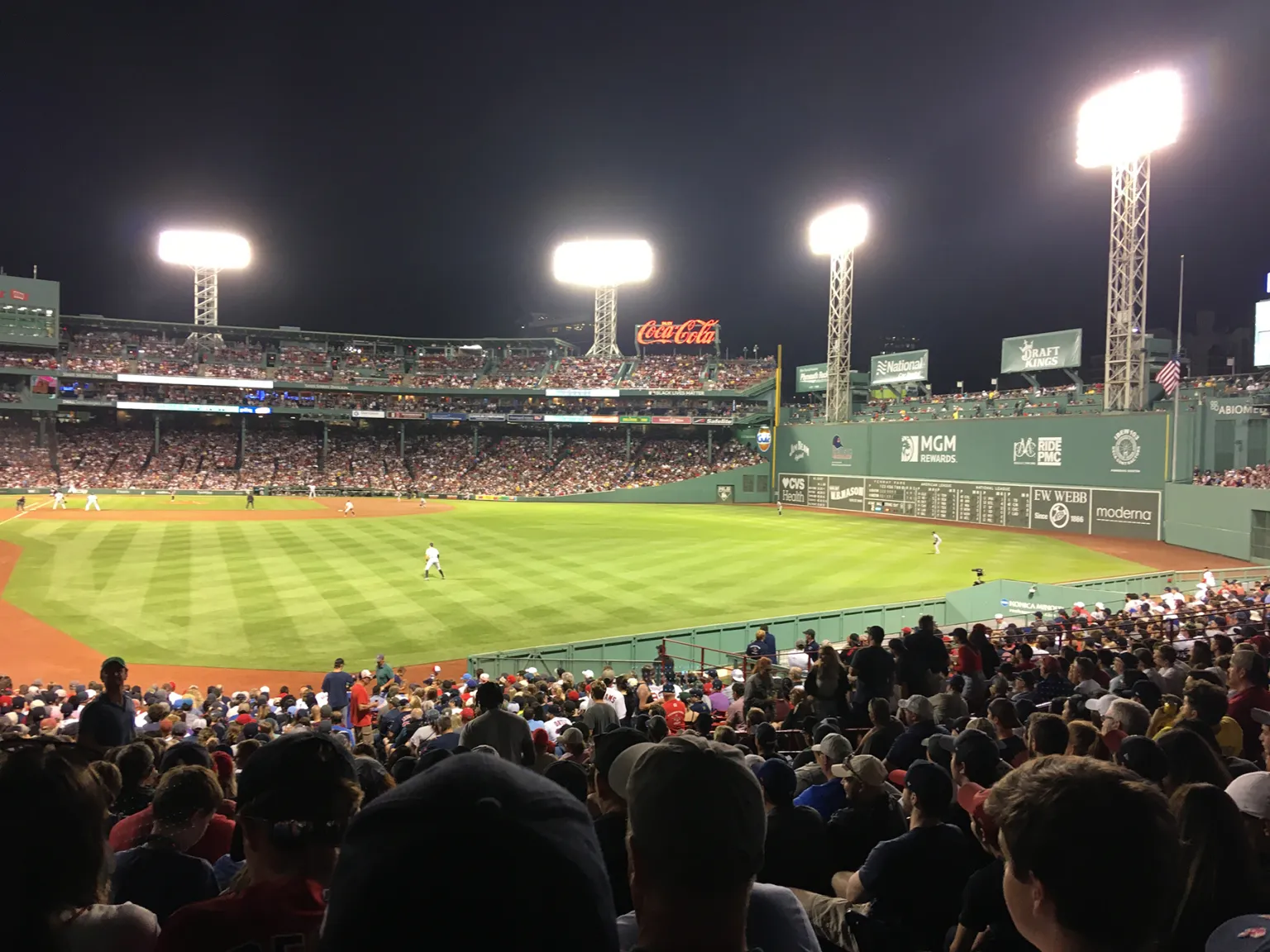
A picture from our expensive bleacher seats in right field at Fenway. We had a great time.

‘Historic?’ More of a footnote, but pretty interesting…

Screenshot

From the bottom of page one of The Boston Globe today.

I dunno if it’s “historic,” though. That’s one of the more overused words we see in headlines these days, although not as overused as “iconic,” of course.

But it’s pretty fascinating. And nice work by the photog. Makes it looks like he’s magically changing uniforms in the middle of the same swing. Cool.

As history — well, it’s one for the record books, all right. But as history, it’s only maybe slightly bigger than Moonlight Graham’s major league career consisting of a brief appearance in one game in 1905. Which was interesting enough to appear in Ray Kinella’s book, and the movie based on it.

And I found today’s picture interesting enough to share…

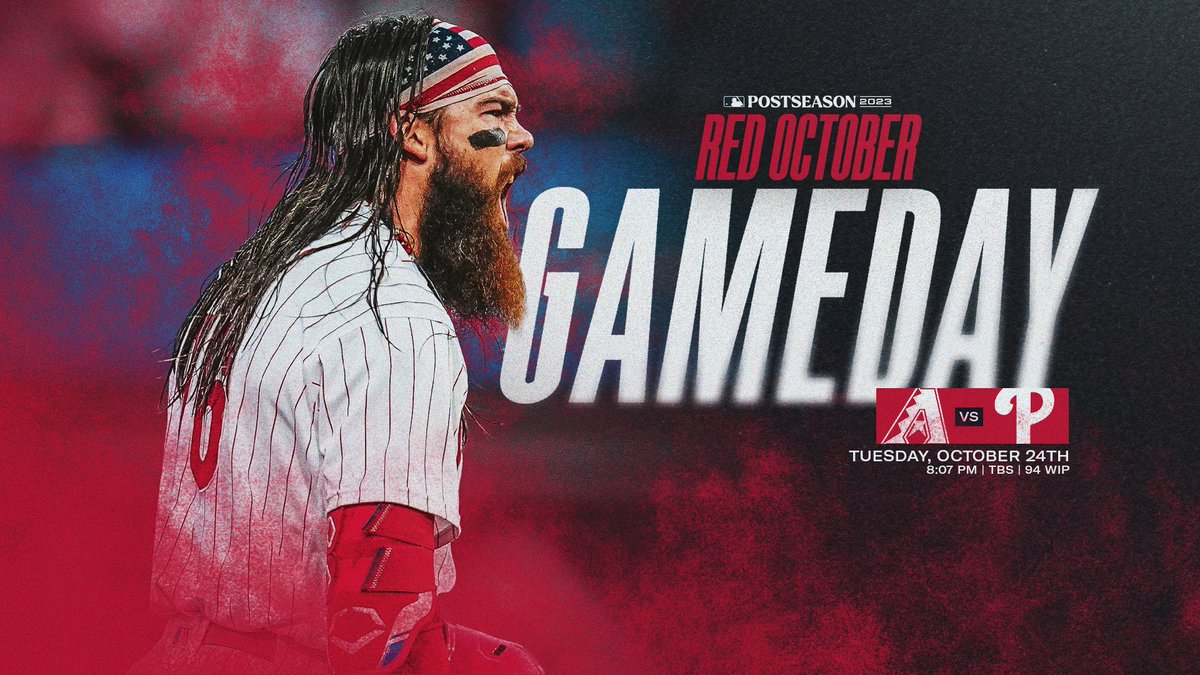
Baseball needs the Phillies to win tonight!

Wet down your hair and WIN this thing!

Or at least, you know, I do.

As y’all may know, this is the only time of the year that I care about sports, so it’s pretty essential. And who could possibly care about a World Series between… the Texas Rangers (and not the Texas Rangers we used to cheer for in the old Westerns) and… I dunno, some team named for a type of rattlesnake?

Whereas the Phillies — well, they’re like, maybe, my third or fourth favorite team in baseball. When I was a kid I used to cheer for the St. Louis Cardinals, featuring Lou Brock, Curt Flood, Joe Torre, Bob Gibson and Tim McCarver, who — unknown to me at the time — would later be my cousin-in-law. But then, after I married his first cousin, Tim played for the Phillies. So, you know, they’re right up there.

Aside from that, they’ve been around since 1883. They’re a real professional baseball team. If anything in our troubled country is about tradition, it’s baseball. It really brings out my Tory sensibilities. I mean, when you’re talking baseball, I’m practically a Jacobite.

Of course, if you want to get all philosophical, in a fair and just universe, the Phillies wouldn’t be in it, either. In fact, there would be no “it” to be in. It’s obvious that the Braves are the rightful owners of the National League pennant (and the Orioles of the AL’s). I mean, consult the standings. There should BE no playoffs, unless two teams have tied records in the regular season. And nobody was even close to the Braves.

But there are playoffs. And now, since in a degraded America there is no baseball on any station I get on my TV until October, I confess that I’m a bit invested in them.

And the Phillies need to be in the World Series.

Hey, don’t listen to me. Check this piece from The Washington Post this morning: “The Phillies are what makes October baseball great. Can they win Game 7?

Consider some wisdom from that piece:

Here’s the thing: the 84-win Diamondbacks may be a nice team with some nice players. That’s cute. The Phillies? They have stars. They have thump. They make noise…

And therefore, the Phillies must not miss this opportunity:

It’s an opportunity that is important for Major League Baseball. Officials there can’t and won’t and shouldn’t say this, but that doesn’t mean it’s not true: It’s better for baseball if the Phillies win Tuesday. It’s better for baseball if the Phillies are in the World Series.

This is nothing against these Diamondbacks. “That’s a good team across the way,” Schwarber was quick to acknowledge. Corbin Carroll is the presumptive NL rookie of the year. Merrill Kelly, who shook off a shaky two-walk first inning to allow only one run in five frames, forms a nice tandem with Zac Gallen atop the rotation. Marte, who followed his triple off Nola with an RBI single in the seventh, is a dangerous switch hitter with, as Nola said, “lightning-fast hands.” They’re not bad….

This is about these Phillies and this time for their sport. The Phillies have Bryce Harper. The Phillies have Schwarber. Those two alone have combined for 10 bombs this postseason, several of the you’re-kidding-me variety. They did next to nothing Monday night. Their at-bats are must-watch….

For a sport that spends too much time having to prove or justify its popularity — or stave off the overblown narrative that it is “dying,” something that supposedly has been happening most of this century — it would be best served by having the best, most recognizable players playing the games deepest in October. In the National League, that’s unquestionably the Phillies….

I’d quote more, but the Post‘s lawyers are probably pounding on my door as you read this, crying out “Intellectual property! Intellectual property!”

Well, I’ve got your intellectual property right here… and I’m trying to share it with my readers. (Who knows? Maybe they’ll become subscribers.)

They, too, need to know what is at stake. They need to understand that the Phillies must win tonight. For the game. For baseball. For tradition. For America…

Got it?

Can we still let Shoeless Joe into the Hall of Fame? If so, let’s.

Soon, I need to write the post I’ve been meaning to about how I’ve been enjoying The Boston Globe since they let me subscribe for six months for next to nothing.

I need to do it soon, because the deal’s about to run out, and I’m pretty sure I can’t handle paying for yet another newspaper at full price.

In the meantime, though, I think I’ve said before how much I appreciate that at least their sports department acknowledges that baseball is worthy of attention and respect. I want to say it again.

Whatever the time of year, you can usually see something about the Red Sox on the front of the section — if only a little teaser to content inside. Of course, this is a town that actually has a storied major-league team (and possibly the best ballpark in baseball). But they have teams in those other sports, too, and they still don’t slight baseball at any time of year. Meanwhile, how did the National Pastime fare in my own hometown paper? Today’s Sports front has football… and football… and basketball… and football. As per usual.

Yesterday, I got an email from The Globe calling me to read this story, about how sportswriters have voted this year for entrants to the Baseball Hall of Fame. The piece complains about the writers being stingy by only naming one entrant. Of course, I don’t know what Boston has to complain about — the last one was Big Papi.

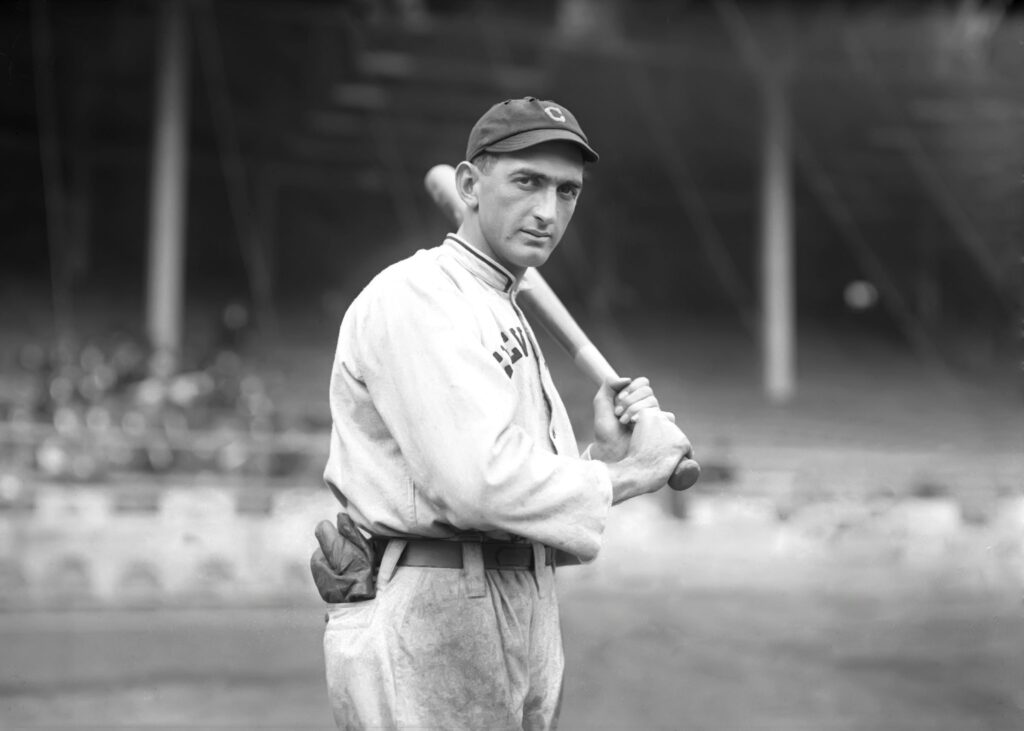
But being a South Carolinian, bereft of baseball, I have my own complaint, and I know it’s a bit of a trite one around here: They should forgive Joe Jackson and let him in. I’m no expert on either him or the Hall, but everything I’ve seen indicates Shoeless Joe was at worst a reluctant dupe in the Black Sox deal. I mean, the guy batted .375 in the series. How is that trying to throw it?

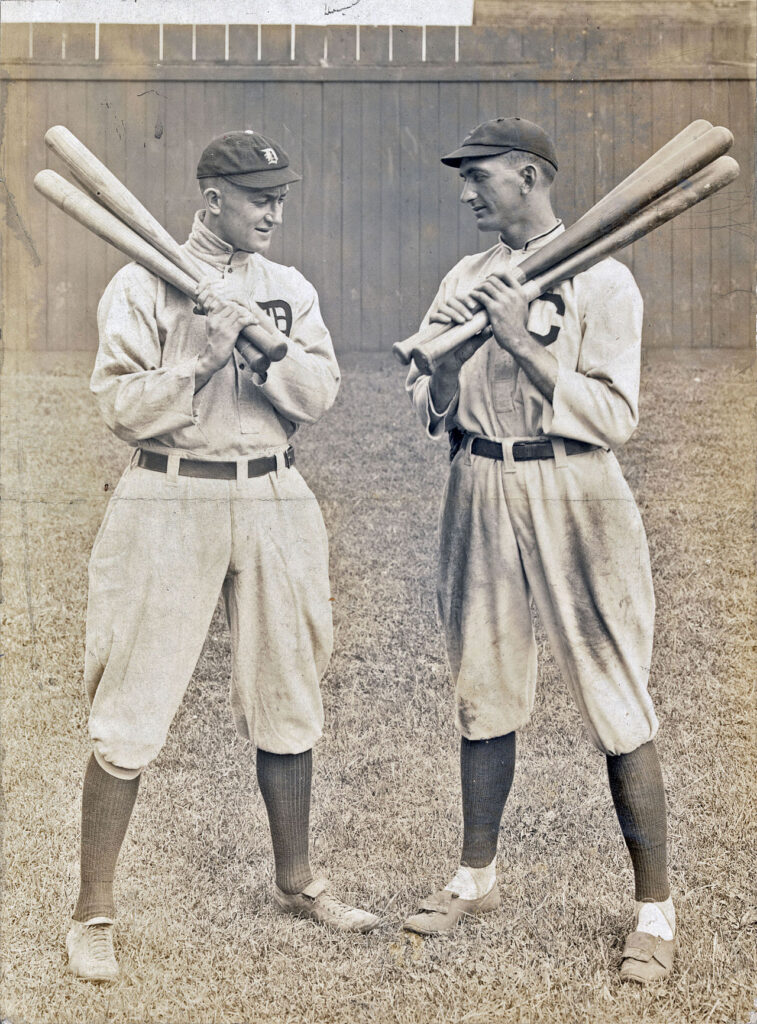
As for his worthiness for admission to the Hall, Joe had the fourth-highest career batting average in history — .3558. (And mind you, this was all before the scandal of the lively ball.) Ty Cobb had the best, and he got in — and Cobb was a major a-hole. But boy, could he play.

Yeah, it’s been said a thousand times. I just thought I’d say it again…

There might be some kind of statute of limitations keeping players from being admitted so long after their careers ended. I tried looking it up, but didn’t find it. But maybe there is. Still, I’d change the rule just to let Joe in…

Cobb and Jackson.

Nothing like a good ballgame to lighten things up

Third-baseman Alec Bohm hits the second of the Phillies’ five homers. Click for video…

It’s not just having voted and gotten all that behind me that makes me more cheerful today.

There’s baseball. Good baseball, breaking the way I want it to go. Almost as good as going to Fenway Park and watching the Red Sox pound the Yankees.

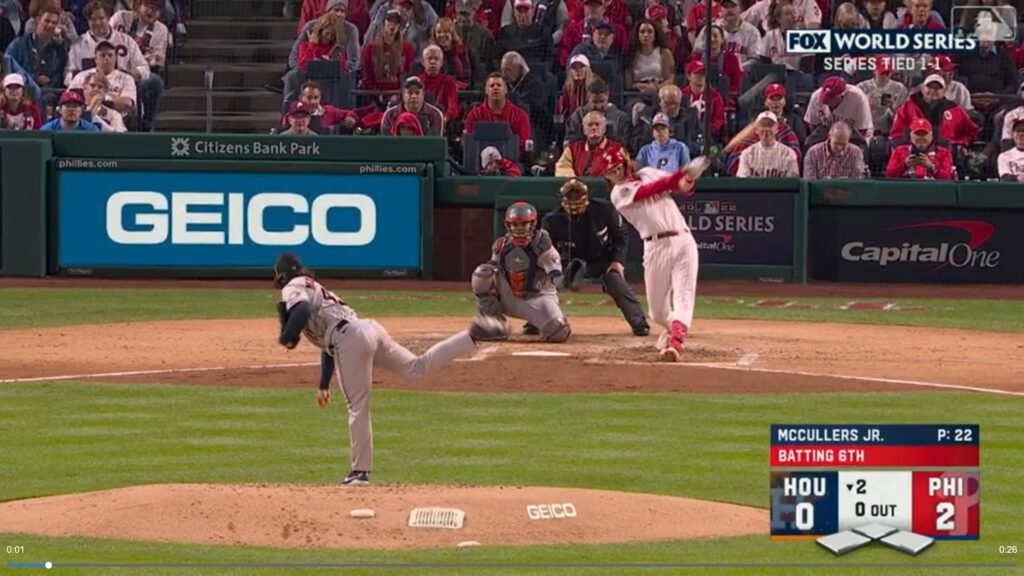
Of course, the better game was Game 1, Friday night. I even had a blasphemous thought, in the last moments of the game, when a single ill-fated swing of the bat still could have given it to the Astros… I thought, “This is a great game, even if the Phillies lose.” And it would have been. Fortunately, they won it, 6-5, after having come back from 5-0.

Then there was Game 2, which doesn’t bear talking about, so let’s move on.

Then we moved to the East Coast, which is where the game is best played (even though they still didn’t move the time up to a more reasonable hour). And there was a delay of a day due to rain.

But Game 3 was worth waiting to see. Sure, it was kind of lacking in suspense, but that was fine. I’d like to see a similar game tonight. Then, we can have a close, suspenseful Game 5, with the Phillies winning the way they did in Game 1, and we can all celebrate, and not have to go back to Houston and be subjected to all that loud orange waving around.

Anyway, I enjoyed reading about the game this morning in The Boston Globe. I think I’ve mentioned how much I like that paper now since I started subscribing while I was up there, partly because their sports department actually seems to still understand that baseball is our national pastime.

The Globe, and other accounts I glanced at, focused on the same thing I did in my only two tweets during the game. First, I was shaking my head in admiration for the Phillies’ starter when I wrote:

Then, it occurred to me to follow that up with something on his counterpart:

Which was also impressive, in its own way. He tied a World Series record allowing those five homers in only 4⅓ innings.

I hope to see the Astros distinguish themselves similarly tonight. But much more than that, I want to see the Phillies win…

Yet another way baseball could save America

One of my grandfather’s baseball teams. That’s him squatting on the right. Note that some guys wear jerseys that say “P.O,” while others don’t.

My wife brought this story to my attention this morning, knowing I would like it: “Companies worried about worker turnover could try baseball.”

It’s about how measures that employers instituted at workplaces a century ago might help with today’s Great Resignation problems. A number of things were done to make workplaces more pleasant, but this was my (and the headline writer’s) favorite step:

Goodyear President F.A. Seiberling … embraced employee welfarism with a wide-reaching program in Akron, Ohio, that included an improved working environment, a thrice-a-week employee newspaper, a housing development and even a company baseball team to make workers feel like part of the “Goodyear family.” Confronted with the same problems, his crosstown competitor Harvey Firestone followed suit.

These companies met others on baseball fields in a league they organized that spanned at least two other states. The brick stadium where the Firestone Non-Skids played (named for the company’s first treaded tires, “non-skids”) seated 4,500 cheering workers, and it still stands in front of the old company headquarters. The idea was that when employees sat in the stands and cheered for the company, they’d be more loyal, and as a result, they were encouraged to do so. Goodyear told workers in 1920, for example, that attending the games alone wasn’t enough; “moral support, organized cheering, [and] boosting 24 hours a day” were critical as well.

The quality of baseball had to be good enough to attract these fans, though. In rising industrial cities like Akron and Michigan’s Flint and Grand Rapids, where there were no professional teams, fans typically watched amateur clubs compete. Industrial teams played as part of that environment, and so increasingly, companies hired men who were good baseball players. During World War I, Frank Stefko remembered hearing from a fellow soldier, Glenn “Speed” Bosworth, that Goodyear was hiring ballplayers in Akron, so after the war, he traveled to the Rubber City from Scranton, Pa. The personnel office said the company didn’t have openings until he mentioned Bosworth’s message. “Oh, you’re the ballplayer!” They hired him on the spot….

It worked. Employee morale and longevity improved, as did productivity. Employers did this not just to be nice guys, but because it was good for business. It also helped stem union efforts — until the Depression led to cutbacks in such expenditures, so the great heyday of unions arrived in the 1930s.

My wife knew I would like the story because of my grandfather. She never met him — he died of lung cancer when I was four — but he found some time to teach me some basics of baseball before we lost him.

And playing baseball on the workplace team is a big part of his legend. I’ve told you all this before, but I’ll tell you again, because I love these kinds of stories from the days when this was a baseball-loving country. Here’s something I wrote about it before, with a picture of the house where my grandmother lived with her family before her marriage:

Here’s how she met my grandfather — she would see him walking past her house on the way to the train station each day in a suit and straw boater, carrying a bag. She thought he was a salesman, and the bag contained his wares. Actually, he was a ballplayer, and bag contained his uniform and glove. He worked for the Post Office, but he only worked there so that he could play ball for its team. He was a pitcher. Gerald “Whitey” Warthen would eventually be offered a contract with the Senators, which he turned down to work in his father’s business.

A couple of minor corrections: He worked, I think, for the Railway Post Office, which I take it was some subset of the P.O. we all know. More importantly, he wasn’t just a pitcher, as I have learned since reading about him in recent years in old copies of The Washington Post and other local papers. He was also an infielder. Basically, he played anything as long as it was baseball. Oh, and before he launched on this working-for-baseball period, he had been captain of the team at Washington and Lee.

Anyway, I guess I am genetically predisposed to see baseball as a great way to attract employees. Unfortunately, the end of that story in the Post sounds a discouraging note:

Today, companies are also experimenting with ways to boost worker welfare in the context of the Great Resignation. Baseball spectatorship has been replaced by team-building activities that include workplace climbing walls, wine-tasting events, table tennis, family picnics, free lunches and special doughnut days. At the turn of the last century, employers experimented to identify which perks resonated with workers. While the jury is still out on whether such programs will be successful today, companies are following in the footsteps of NCR, Goodyear and Kellogg’s in experimenting with programs that employees find meaningful and useful — enough so to stay in their jobs.

You see that? No baseball. That’s the sad state of America today. Baseball is no longer seen as a way of pleasing the masses. Is there any hope for us?

Centrifugal bumble-puppy, and other games

My grandfather’s team, circa 1910. That’s him squatting at the far right of the seated row. Notice that in those days, they didn’t even bother to go out and buy matching uniforms. They just came and played ball.

Over the weekend, I was out running errands after a long day of working in the yard, and I decided it would be a good day for us to have a takeout dinner. So once that plan was approved by headquarters, I called La Fogata and placed the order. I was told it would take 20 minutes.

I was easily within five minutes of the restaurant, so I drove in the other direction, looking for a way to kill time. I decided to visit the park behind North Side Middle School, and see what was going on there — I figured that this time of year, there’d be some action on one or more of the ballfields.

I was right. I drove through the parking lot, and had to pick my way slowly and carefully because of all the boys, who were generally within a couple of years of 12 I’d guess, and parents who were apparently returning to their cars after a game that had just ended.

And then I noticed something: Their progress back to their cars, and my progress through them, were both impeded by the gear they were hauling. And by the elaborate gear for hauling that gear.

The most cumbersome were the wheeled contraptions that held bags, coolers, bats and such. They looked like people preparing to sell things from a barrow. Those were the most noticeable, but everyone had an unusual amount of gear. The lightest were elaborate, specialized backpacks many of the players were wearing. The packs seemed full, and each had two bats sticking up from the pack, one on each side.

Back in the day, when I played ball, you brought yourself and your mitt to the game, and that was it. (Unless, of course, you were the catcher.) The coach would have a duffel bag full of bats and balls, and sometimes conscientious players (who were perhaps eager for more playing time) would help the coach by carrying that bag from coach’s car to the dugout.

But now, every player or player’s parent I saw was hauling at least as much as the coach would once have, and often more. I don’t even know what some of that stuff they were carrying and pulling was. But there was a very great deal of it.

Of course, all this brought to mind one of the books I’ve been rereading lately instead of the books I was supposed to read this year: Huxley’s Brave New World. If you’ll recall, in this super hyped-up extrapolation of Western consumer culture, all the games — like centrifugal bumple-puppy, and electromagnetic golf — require elaborate, expensive, easily-broken equipment to play. Everyone is conditioned from birth to want to play these games at every opportunity. Not to keep themselves in shape or exercise sportsmanship, but to keep them buying the stuff.

And I got to thinking about the various social influences that must have been at work over recent decades to convince these kids, and parents, that they had to have all this stuff to play baseball. Huxley had sleep-conditioning to bring about this effect. I don’t know what happened with these folks.

We used to have this wonderful, simple, pastoral game called baseball. Originally, there weren’t even gloves. Just a ball and a stick for everyone to share. And even after the gloves came along, for a long time players would leave them out in the field while batting rather than carry them back and forth to the dugout.

No more. Now there’s all this junk, and all this hauling back and forth. And don’t even get me started on the designated hitter…

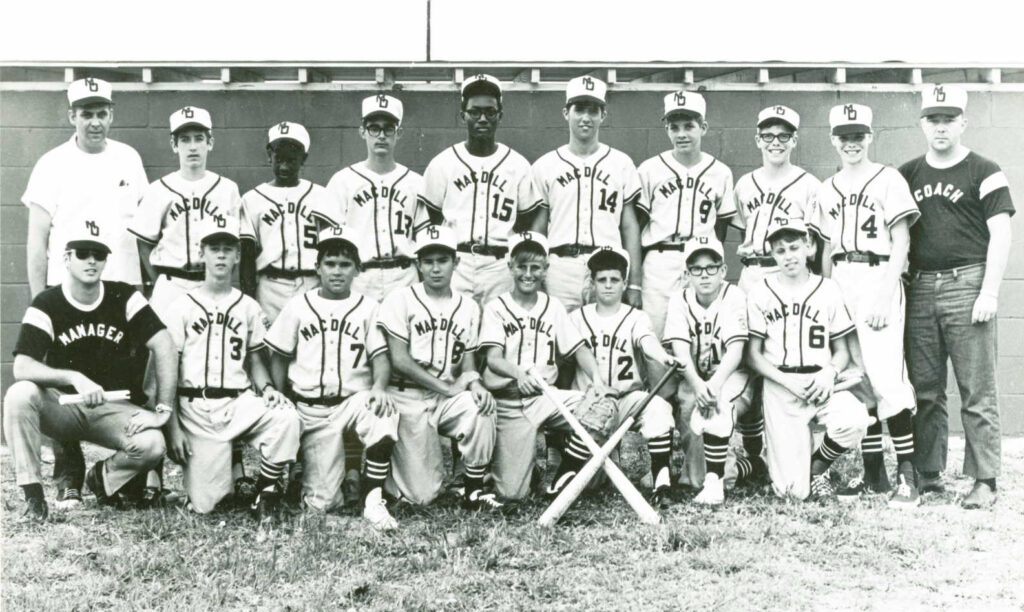
Two generations later — about 1969. That’s me in the back, standing next to the coach on the far left. By this time the uniforms matched, but we mostly only brought those and our gloves.

It’s not boring. It’s baseball. And it’s perfect…

still baseball

Bryan started off his excellent “summer beach movie songs” post with a dismissive aside about “debating a replacement song for the national anthem.” I thought:

If America is decadent and unlikely to recover, which of these two phenomena would be more likely either the cause, or perhaps I should say the most stark effect?

  1. We are now a country in which people can mention “debating a replacement song for the national anthem,” and not be entirely joking.
  2. We are now a country, and have for some time been a country, in which football is more popular than baseball.

Both thoughts are depressing, evidence of a great nation losing its way. Those two are enough to cause concern, without even mentioning the disaster of Trumpism. And the distressing nature of Phenomenon 2 was driven home by a couple of tweets Saturday morning…

First, this one at 9:47 a.m.:

Arghh. Here I am still looking desperately, and usually unsuccessfully, for some affordable ways of seeing some live MLB on my TV without having cable, and this guy has to remind me — gleefully, I infer — that very soon I won’t be able to turn on the blasted contraption without seeing football everywhere.

And just a few moments later, this one from my friend and former campaign comrade Ashleigh Lancaster.

Let’s concentrate on Ashleigh’s since, although it has sad elements, it is at least about baseball.

Since for some reason I was unable to embed Ashleigh’s (maybe because it was her retweet of somebody else’s), I’ll at least share my response to it:

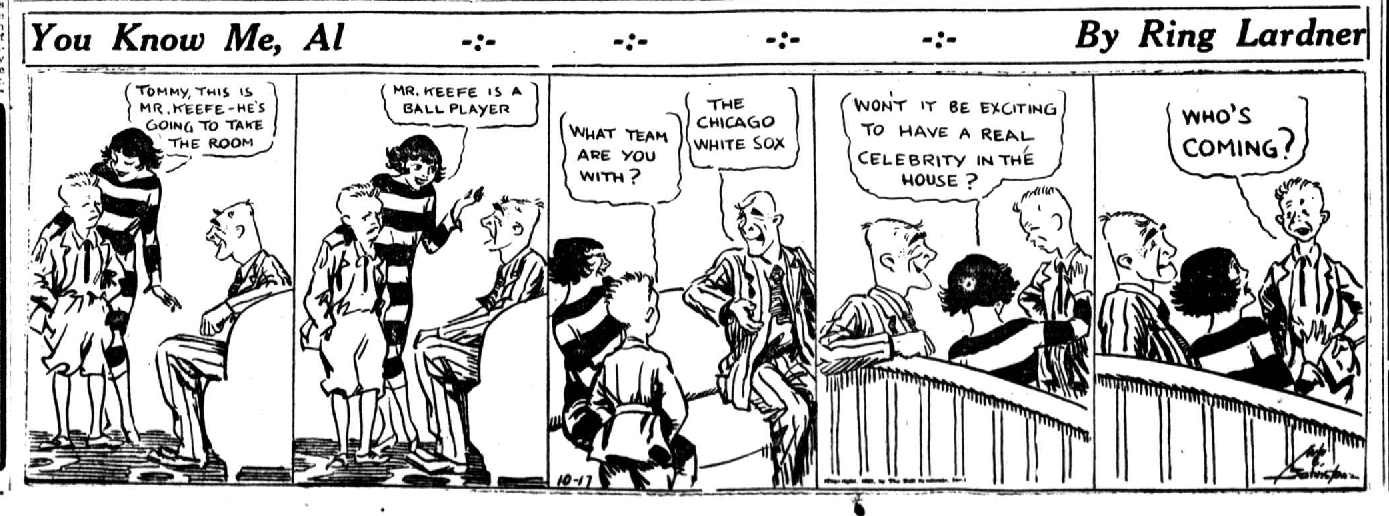
I’m a fan of Ring Lardner, especially of his work on “You Know Me, Al,” but let’s face it: The lively ball didn’t kill baseball. Nevertheless, I respect his points about it — and it certainly helped lead to the unhealthy obsession with home runs on the part of many less-discriminating fans — and respect the debate itself as one of the things I enjoy about the game. It’s right up there with debates we can have about other abominations that have tried to destroy the game within my lifetime, such as the playoff system (we all know that in an orderly universe, the team with the most wins during the season wins the pennant, right?) and the designated hitter.

No, baseball has never been boring, and excellent pitching isn’t making it more boring. It’s not intended to be an unending stream of hits (most of them home runs, if the aforementioned less-thoughtful “fans” have their way). If it were, I wouldn’t be trying to watch it.

It’s a contest, a contest that batters are meant to lose most of the time — which makes it that much more exciting when they don’t. Of course, the best part of the excitement is watching the fantastic defensive feats of the players on the field reacting to the ball being put into play. (Something that you miss out on entirely when the ball is hit out of the park, by the way. Everybody just stands there. Now that’s boring…)

The pitchers are constantly trying to keep the guys from hitting, and the batters are all constantly trying to overcome the pitchers’ and catchers’ craftsmanship. And from time to time, everything explodes into action involving everyone else. But not too often. Just enough.

And it’s not boring. It’s perfect…

You_know_me_al_comic_strip

Something off-putting about those ‘patriotic’ uniforms

unis 1

I thought about posting this on Memorial Day itself, but decided to wait.

For me — a guy who’s all about some patriotism and support for the military (and if there’s a spectator sport I love, it’s baseball) — there’s something off-putting about those special uniforms MLB players donned over the holiday weekend.

It’s not just that it’s so contrived, such a cheesy, sterile form of tribute to men who died in the blood and noise and fury and filth and noise of battle. They did not wear clean, white uniforms with camouflage numbers. They did not wear caps that look as much like what a deer hunter would wear as anything you’d see on a soldier.

But there’s also something… decadent, something last-days-of-Rome about it.

Of course, I’m guilty of romanticizing baseball. I think of it in very anachronistic terms as a humble, pastoral game played by plain men who did it for the love of the sport, guys who maybe had one uniform to their names, and that uniform made of wool that caused them to roast in the summer sun. (And they liked it, as Dana Carvey’s Grumpy Old Man would say.)

I just can’t help thinking of all the money spent on these uniforms that these players will probably wear only once. Which makes me think about how much — way too much — money there is in professional sports today, so much that vast sums can be thrown away on PR gestures that, as I said above, seem inadequate to the kind of tribute our war dead deserve.

I’m not blaming MLB here. This occurs in a context in which the fans, the entire society, seem to have lost all sense of materialistic restraint.

You, too, can have a genuine copy of the jersey your hero wore for one game for only $119.99. Or, if you’ve really lost your marbles and have more money than anyone needs, you can have the actual jersey that a player wore, for $2,125! Unless someone with priorities even further out of whack outbids you!

It just all seems kind of nuts to me. And vaguely offensive. Does this make any sense to anyone?

distasteful

The Kid Who Batted 1.000 (almost)

My MLB At Bat app brought the above video to my attention today.

The brief description:

Jaime Barria and Brandon Belt face off in a 21-pitch duel to set the record for the most pitches in an MLB at-bat in the modern era

Here’s the NYT’s report on what happened: “21 Pitches, 16 Fouls, 12 Minutes: Brandon Belt’s Marathon At-Bat.”

Now that’s what I call some baseball — not these towering home runs the app usually tells me about.s-l225

It reminds me of one of my favorite books from my youth, The Kid Who Batted 1.000, by Bob Allison and Frank Ernest Hill.

I read it over and over when I was a kid, checking it out from the school library multiple times to do so. Then I went years without seeing a copy, and had thought it was something I’d never see again, until my wife found a dog-eared copy that had belonged to one of her brothers. So I got to read it as an adult, and enjoyed it just as much.

If you’re not familiar with it, it’s the story of Dave King, a farmboy who is discovered to have a weird talent: He can foul off any pitch thrown by any pitcher. He gets signed to a Major League team and leads it out of the cellar because he always draws walks — usually after wearing down and shattering the nerves of the opposing pitcher.

Finally, in the last game of the World Series, he hits a home run, thereby earning a batting average of 1.000 — albeit only in postseason play.

It’s great. If you can find a copy, I do recommend picking one up…

By the way, the real-life batter, Brandon Belt, didn’t quite equal Dave King’s achievement. After those 21 pitches, the Giants first-basemen flies out to right field…

‘Is that politics? There’s no politics in baseball!’

1200px-2017-World-Series.svg

Dragging this morning, because of last night’s ball game.

I’m going to confess that I did not stay up until the end, which is why the Dodgers lost. I’m 100 percent on this so far: If I watch until the end, the Dodgers win. If I give up and go to bed, the Astros win. Happens every time.

Nevertheless, I did stay up past 12:30 — I think the 7th inning had just ended, although I was so sleepy my memory is unclear — so I’m dragging. The Astros had just pulled ahead, 11-8.

This is something we need to do something about. I have some thoughts on how:

  • That game should have started at about 5 p.m., not 8. What? Those people in California couldn’t start watching their team in the World Series at 2 p.m. on a Sunday?
  • We could change the rules of baseball to bar teams from West of the Mississippi from the Series, or from post-season play altogether. That wouldn’t shut out any teams I’ve ever cared about, except the Cardinals, and I haven’t really liked them all that much since my wife’s cousin, Tim McCarver, left. (That was a team — Tim and Bob Gibson and Joe Torre and Lou Brock and Curt Flood and Steve Carlton and Orlando Cepeda…). Why do we need to have Americans living out West anyway? Manifest Destiny? Call that an excuse?
  • If any of those Westerners squawk about it, point out that if the game’s so late that I go to bed, their team is going to lose anyway. It’s proven. It’s science.

Changing the subject, I thought I’d point out to you football people that there’s no politics in baseball. The players line up — standing — and put their hats over their hearts and sometimes even sing along during the National Anthem.

I’m not talking about the merits or the lack thereof of all those football players dramatizing their politics during the anthem. I’m just saying that there’s none of that in the World Series this year, and it’s kind of a relief from all that divisive stuff coming at you from every direction. Just baseball.

Yeah, there was that “chinito” face that Gurriel pulled in the dugout the other night, and that wasn’t his best moment, and next year he’ll be suspended five games. But for now, everybody — including Yu Darvish — just wants to play ball.

That raises another issue. Anybody besides me think that maybe technology has gotten too intrusive when you can see everything that goes on in the dugout, in HD? Should players be held to the same standard in the dugout as out on the field? Put another way, shouldn’t a guy be able to rearrange his cojones, for instance, without the world watching? When he’s not out under the lights, I mean. All scratching and spitting out on the actual field would remain fair game…

Libertarians, help me out here…

Of course, there’s politics here if you want to look for it — if only Ring Lardner were here to help settle the latest “lively ball” controversy — but who wants to, while watching baseball into the wee hours?

It’s my birthday, so… more baseball pictures!

Baseball

I want to thank all those dozens of folks for wishing me joy of my birthday on Facebook.

I like the picture one of my cousins posted to mark the occasion. That’s it below at left. That’s me with my grandfather, Gerald Harvey Warthen, when I was about 4.22195386_482392475480410_9175248831617986939_n

This shot is meaningful to me because my grandfather was a serious baseball player. As a young man in Kensington, Md., that’s what he was all about. He had a job with the Postal Service at one point, just so he could pitch for their baseball team. He was offered a contract by (I think) the Senators’ organization, but ended up working in his father’s construction business instead.

But his legend endured in Kensington. My Dad grew up there being known as “Whitey” Warthen’s kid. That was his baseball name — like Ford and Herzog.

I did not, I regret to say, get to grow up with my grandfather, as he died of lung cancer within a year of the photo being taken.

Above, you see him as a young man with one of the teams he played for. He’s squatting at the right of the photo, with a steely gaze that says to me, “Enough of this stuff! Let’s play ball!”

Looking much less intimidating, you see me below with the only organized team I ever played on, the MacDill AFB senior Little League team. I guess I was about 14. I’m on the left end of the back row, standing next to the white-shirted coach. The only thing I seem to have in common with my grandfather here is that I, too, look like I’m ready to have the picture-taking over with. Or maybe it’s just that I’d removed my glasses for the picture, and couldn’t see anything.

I hadn’t played organized ball before that because we moved almost every summer. This was late to start, and while I’d been a good hitter in sandlots (where the idea was usually to put the ball across the plate and put it in play), I had a terrible time adjusting to people trying to throw the ball past me. I tended to swing late.

So it is that I’m particularly proud of my one highlight of that undistinguished year: I broke up a no-hitter in the fifth inning (of seven). This redheaded pitcher on the opposite nine was just overpowering everybody, but I got an opposite-field (still swinging late) line drive off him for a single. So they took him out of the game. That’s it — my one story of baseball glory.

Needless to say, no Major League team ever offered me a contract…

MacDill senior little league team

All-Time, Desert-Island Top 5 Baseball Movies

All right, let’s lighten things up a bit.

Our conversation about “Moneyball” yesterday was starting to turn in this direction, and I see the movie has inspired others to compile such lists — such as here and here and here — so here are my All-Time Top Five Baseball Movies:

  1. The Natural — American myth-making on the grand scale. If you wanted to put a movie on a spacecraft to explain to aliens what the game means, you’d choose this one. It’s perfect.
  2. Major League — Silly, yes, but a good complement to the reverential seriousness of “The Natural.” Hits all the buttons in explaining why the game is fun.
  3. The Sandlot — Maybe because it’s set in the days when I was a kid, and also spending hours on a sandlot — without uniforms, without adult supervision, just being kids — this really resonates as a depiction of the ball-playing experience of those of us who will never play in the majors.
  4. Eight Men Out — A masterly, credible evocation of how the game’s blackest scandal came about, told in a way that you can understand motives. Say it ain’t so, Joe.
  5. A League of their Own — This one’s about a lot of stuff other than baseball, but a great period piece with great characters. It would make the list if there were nothing in it but “There’s no crying in baseball!”


Actually, to be honest, I would have been happier with a Top Three list. There’s a drop-off for me after the first three. (But in keeping with the Hornby principle, I disciplined myself to come up with five.)

“Field of Dreams” almost edged out “A League of their Own.” But while it is emotionally affecting, and certainly invokes the love of baseball well, I find it hard to ignore its flaws. I’d read the book, and while it was awfully weird for the writer character to be J.D. Salinger, it was jarring when it was changed in the movie. And Ray Liotta as Shoeless Joe (the title character of the book) was really disappointing, particularly as I’m such a fan of Liotta. It’s like he phoned it in, and it’s hard to believe the director let that happen. D.B. Sweeney’s characterization in “Eight Men Out” was much more persuasive. You actually believed in him as a conflicted illiterate from South Carolina.

As for the other Kevin Costner baseball movies — I never liked “Bull Durham.” It had a moment or two — a conference on the mound, the bit about “The rose goes in the front, big guy” — but beyond that it left me cold. Then, far less noticeable, there’s “For the Love of the Game.” All that has to recommend it is a pretty good evocation of what it’s like for a pitcher who realizes late that he’s pitching a perfect game. The rest of it I could do without.

There’s wonderful acting in it, but I never really got into “Bang the Drum Slowly.” And I should like “Pride of the Yankees” more than I do. Perhaps I should see if I can get it on Netflix, and try again.