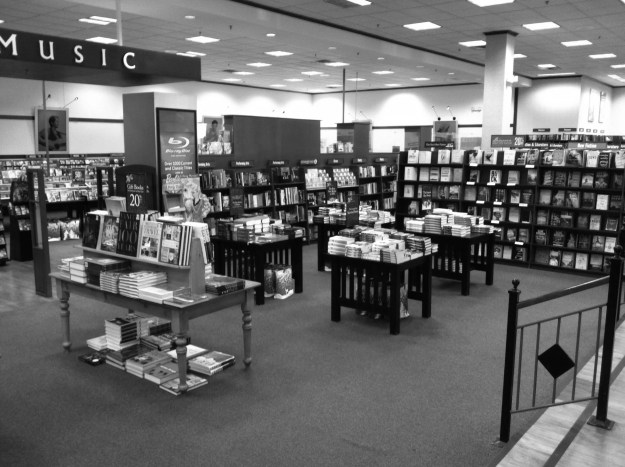
If written before 1931, it’s yours for free, anytime.
There is no longer any excuse for any of us not to have read the books we’ve always known we should read.
Of course, there have been free libraries since generations before I was born. But that still left me with an excuse. Not an excuse that most people would stoop to, but it worked for me: If the book is good, I don’t want to read it unless I can keep it. First, I like to read things over and over if I like them. Second, I like to quote from them when I write, which means I want them handy — and I want the very same editions that I first read, because I can usually — or at least, I could usually, when I was younger — go straight to the passage I want within a moment. I’d flip back and forth a few times, realizing it was before this or after that. Then, I’d have a rough picture in my mind of what the page where the passage was looked like, and pretty much precisely where it was on the page.
So it had to be the same edition of the book, and preferably the same, physical book, because books awaken acquisitiveness in me.
But over time, I’ve been reading more and more on my iPad, so that excuse doesn’t work as well.
Most of the books on my list — the things I’ve always known I should read — are now in the public domain, and completely, immediately free to anyone with a computer, a tablet or a smartphone. No trek to the library or a bookstore. Not even a wait of a couple of days while Amazon delivers.
Just tap the button, and bingo! The literary treasures of all time are in your hands, and belong to you permanently.
So what haven’t I read? There are too many even to sort through my mind and recite a reliable Top Five. If you choose to share your own list, I might even replace my list with yours. Even without your suggestion, I might give you a different five on another day. This is just to gig myself to act, and stimulate some discussion, if you’re interested. And I’m limiting myself to a Top Five just to force myself to keep it brief, because I have other things to do.
So here’s my list of Top Five… well, not books in the broad sense. Here are the Top Five books of fiction I should have read by now:

Ran into Joyce in Dublin. Couldn’t admit to him I hadn’t read Ulysses.
Ulysses, by James Joyce. Big embarrassment here. I downloaded it a few weeks before we left for Ireland in 2019. But it turns out that the word on the streets about this book is accurate. It was interesting, but just too dense for me to get very far into it. I’ve read and enjoyed Portrait of the Artist, and of course Dubliners. To make myself feel better, I downloaded Dubliners and read it again on the plane to Dublin. The best story in the book, as I’ve said before, is the longest and last one: “The Dead.” It was as good as ever, and we spent a good part of a day in Dublin looking for the house where most of the story plays out. I had intended to do the same with sites in Ulysses, but it was not to be.
The Grapes of Wrath, by John Steinbeck. I really feel obligated to finish this sometime, and maybe I will. But it hasn’t happened yet. Several years ago, I got maybe halfway through. But there’s so much misery, and, well, I know how it ends. I know what becomes of the slim hopes these poor folks manage to cling to for most of the book. For me, that makes for a high wall to climb. I sort of have to be in a mood for being slapped down to finish this.
The Iliad, Homer. I’ve touched on this before. Until about a millennium ago in the Western world, there was one story that gripped the imagination of the literate, and probably a lot of the illiterate crowd as well. Think you’re tired of Hollywood’s lack of imagination, and repetition of the same stories over and over? Hey, at least they offer some variety (comic book heroes, Tolkien, George RR Martin, Dune, Harry Potter, etc.). Imagine being a Greek or a Roman in ancient times. They had the Trojan War, and that was about it. Sure, there was the classical mythology, but even that gets mixed up into the sage of Troy. As for the Romans, they were so lacking in originality that they based their own mythological founding on the children of a Trojan War veteran. So, you know, I feel like I ought to read the Iliad. Really, I should read it in the original Greek, but that’s not going to happen. Because I lack a basic skill of any educated person a couple of centuries ago.
The Odyssey, Homer. The sequel. I’m actually more familiar with this, thanks in large part to an Italian movie with Spanish subtitles that I saw at the Variedades theater in Guayaquil, Ecuador when I was about 10. I’d kind of like to see that movie again. But I also should read a good translation of the poem. Untill I do that, all I’ve got is my favorite Cream song. And yeah, I’m pretty sure that’s what Spinal Tap was mocking with the ridiculous “Stonehenge.” But I kinda love “Stonehenge,” too.
Moby Dick, Herman Melville. Ultimate embarrassment. Trouble is, it starts out so well — I love the first chapters. But the middle part is horrible. Why couldn’t Melville just stick to the story, instead of wandering off on chapters that read like an encyclopedia entry about whales? I swear I’m going to finish it, and dive in, and after two or three of those tedious distractions I quit again. Call me whatever you like. Call me Ishmael. Just know that I am deeply ashamed, although it’s hard to avoid the temptation to blame Melville.
As I say, I could give you a different five on another day. Don Quixote, anyone? Robinson Crusoe? But I think that before I go, I should give you a separate list of nonfiction.
When I was young, I wasn’t a big fan of nonfiction. “Good book” meant, to me, a novel — or a collection of short stories. But over the years my tastes have grown up enough that I’ve developed more patience, particularly in the realm of history. But if anything, I’m much more sadly behind in that category than in fiction.
Just a very quick list:
The Second World War, Churchill. The author certainly knew the subject, and the subject is possibly THE historical period that has fascinated me more than any other — after all, it put the finishing touches on the world I grew up in. But talk about an intimidating work.
Summa Theologiae, Thomas Aquinas. How can I be Catholic and not have read any work by Aquinas, ever?
Decline and Fall of the Roman Empire, Edward Gibbon. Another one of my favorite historical periods. Seems like this would be the best one that I haven’t read on the subject. Either that, or Suetonius’ greatest hit.
The Diary of a Young Girl, by Anne Frank. I know the story. My wife and I spent our last evening in Amsterdam a couple of years ago visiting the house where she and her family hid from the Nazis. I believe I’ve absorbed the lessons to be learned from the book, and can apply them going forward. But I haven’t been able to force myself to witness the horror of it, page after page, knowing that there’s nothing I can do to stop it from happening to this girl, in that time. It’s just too painful. But I still don’t excuse myself.
The Holy Bible (and those of you who think this is all fiction, including the New Testament — just go make your own list). To paraphrase myself, how can I be a Christian and not have read this through? Maybe on some subconscious level, this is another reason why I converted to Catholicism (the main reason is suggested within that Joyce story, “The Dead”). Baptists are expected to have read it all the way through. Catholics have long been content with those three years of mass readings, repeated over and over. I mean, I’ve read and read the Bible, and read it and read it, but not straight through all the way. Maybe it’s unnecessary, since it’s not one book — it’s a bunch of books. But it’s one of those things to a Christian, like crossing the English channel to a swimmer. I feel the need to accomplish the feat.
That’s it for now.

Inside the Anne Frank House. I really have to read this one.


 In late 1941, Harry Niles owns a bar for American and European expatriates, journalists, and diplomats, in Tokyo’s entertainment district, called the “Happy Paris”. With only 24 hours until Japanese fighters and bombers attack