Category Archives: The Nation

‘We Shall Overcome (But We Shall Be Miserable Doing It)’

I’ve seen this a couple of times today. Chris Cillizza of The Fix claims it’s the “Best. Vine. Ever.”

Well, I dunno. But boy, is it painful to watch.

Somebody apparently thought it would just be inspiring as all get out for Democratic and Republican leaders to link arms and invoke Freedom Summer by singing “We Shall Overcome” together.

At least the Democrats knew the words, but none of them look like they’re on the happy side of miserable.

Frankly, though, the Vine version doesn’t do the incident justice. To see enough of it to understand just how awkward it was, complete with sound, you have to watch this clip from C-SPAN (the awkwardness starts at 21:00, and continues for a little over two minutes):

Unusual split between McCain, Graham on Iran, Iraq

This WashPost headline (“Wait, John McCain and Lindsey Graham are at odds? Yes — on Iran and Iraq“) grabbed my attention this morning:

Pick your favorite foreign policy debate and odds are hawkish Republican Sens. John McCain (Ariz.) and Lindsey Graham (S.C.) will be on the same side. Not so when it comes to the escalating situation in Iraq.

McCain on Monday warned sharply against the idea of collaborating with Iran to help the Iraqi government push back against radical Islamist fighters…

“It would be the height of folly to believe that the Iranian regime can be our partner in managing the deteriorating security situation in Iraq,” said McCain in a statement….

Appearing on the Sunday news shows, Graham cautiously endorsed the idea, provided certain conditions are met.

“Well, we’re going to probably need their help to hold Baghdad,” he said on CBS News’s “Face The Nation.”

On the same program, Graham said, “We need to all make sure Baghdad doesn’t fall

It’s not really a huge split, except that McCain’s language (“height of folly”)  is so emphatic. But worth making note.

Frankly, I’m intrigued by the implications of working with Iran for other issues. No, I don’t expect us to become big buddies and see them immediately drop their nuclear program for their new pals, but crises breed opportunity, and there could be one here — aside from the immediate tactical situation, which sees Iran in a better position to act than the U.S.

It’s going to be tough to work with the mullahs while simultaneously pressing Maliki to be less of a Shi’ite chauvinist (thereby making his regime one more worth saving), but it’s worth exploring.

So I think Graham’s being the more pragmatic and flexible here…

Editor’s note: The above video clip — one of my most popular ever — is NOT from this week. It’s from May 15, 2007.

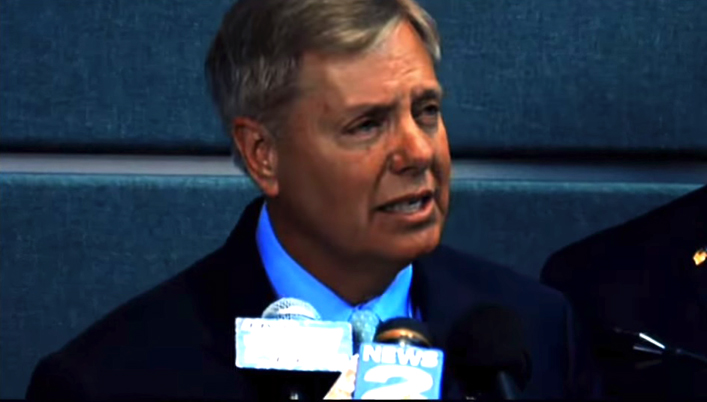
The most significant, positive thing you can do as a voter today is make sure Lindsey Graham wins outright

A still from a campaign video.

A still from a campaign video.

Where I live, I normally take a Republican primary ballot, because that’s the only way I get any choices, especially on local races.

But four years ago, I broke with that pattern because of one race: I wanted to vote for Vincent Sheheen. I was so disappointed by the whole Republican field for governor (even Henry McMaster, whom I had expected to like for the job, but hated the campaign he ran), and I wanted to have the positive experience of voting for somebody for governor, rather than trying to pick the least of evils on the GOP side. I did this even though it meant I was disenfranchised, unable to state a choice as a voter in several races in which the GOP primary was the election (and again, it is SO wrong that a voter has to make a choice like that — we should get a say on everyone who represents us).

Today, I went back to the GOP, so I didn’t have that problem. But still, as in 2010, my mind was on one race and one race only. Even if there had been compelling contests on the Democratic side that I wanted to weigh in on (there weren’t), I would have taken a GOP ballot simply to vote for Lindsey Graham. On this day, that was the best and highest use of my right and responsibility as a voter.

Totally apart from the fact that he deserves re-election and is a far better candidate than his challengers, the contest for his seat has much broader implications for our state.

The worst thing that can happen to South Carolina in today’s primaries would be for Graham to lose, and the second worst would be for him to get into a runoff.

If he loses (and a runoff makes it more likely that he might actually lose, if all the Graham haters unite behind one candidate), don’t ever expect to see a South Carolina Republican take a political risk in order to do the right thing for a long, long time. He would be the cautionary example of what happens if you think for yourself and stick your neck out.

Conversely, if he wins decisively today, it affirms the kind of thoughtful, principled representation of which we all know he, unlike his opponents, is capable.

The crowd of people running against him all smell blood in the water. Some are just dangerous extremists (Lee Bright) and others are opportunists willing to benefit from his vulnerability — and willing to cater to that same extremism in order to conquer. That must not be rewarded.

All sensible, moderate South Carolinians, regardless of party, should be asking for a GOP primary ballot today, and voting for Graham. And yet I know so many will find excuses not to.

One of my best friends, who for several years constituted the “liberal” wing of The State‘s editorial board (as he would tell you, though, more of a New Republic liberal than a Mother Jones liberal), wrote for a lot of Democrats and independents yesterday when he said:

“If those things happen, don’t EVER expect to see a South Carolina Republican take a political risk in order to do the right thing for a long, LONG time.”

When was the last time that actually happened? Has Lindsey Graham done anything in public during his current term that I actually am thankful for? I’d like to be wrong about this, but I can’t think of one thing in the last six years that I actually approve of. Anything?

It only took me a moment to come up with three good answers to that question:

1. He was the only Republican from SC to vote to reopen the government last fall — even as he was bracing himself for the current onslaught from the right.

2. Voting to confirm Kagan.

3. Voting to confirm Sotomayor.

The list of things that please me would be longer, but I was looking at it from Mike’s perspective. (The second and third points are particularly important, because they illustrate Graham living up to the principle he so often states — that elections have consequences, and unless a president’s nominees are simply unqualified, they should be confirmed. This is an incredibly important principle to the healthy functioning of our system of republican government, and all too rare today — it’s something that the ideologues of the left and right can’t even wrap their heads around. It’s the kind of thing that separates a statesman from a hack.)

It is SO easy for moderates (and the very few liberals in SC) to be turned off by Graham’s recent emphasis on messages that appeal to the hard right — opposition to Obamacare, going on and on about Benghazi, etc.

And of course, some of our friends — Bud and Doug come to mind — find that two-faced and deceptive. They’re wrong. And moderates (or liberals) who see only the things they don’t like, forgetting the things that they do like, are wrong as well.

There is absolutely nothing wrong, or deceptive, or duplicitous about stressing positions that you honestly hold that appeal to people who might vote for your opponents. An honest politician has not only a right, but an obligation to let voters who might be heavily critical of him know that he actually agrees with them on issues that are important to them. Graham has been a vocal opponent of Obamacare from the start; he and John McCain have been the main critics of the administration on Benghazi. And he is, just as he claims, a social conservative.

And moderates and those few liberals who may be turned off by this kind of campaign need to stop and think — this is the only way a guy like Lindsey Graham gets re-elected in this state. Your alternative is not Elizabeth Warren (God help us), or whoever you like out there. Your alternative is Lee Bright, or someone who in office would act like Lee Bright.

The kind of courage and thoughtfulness and sense of responsibility that Graham exhibits, at great political risk, on issues such as judicial confirmation, foreign aid, fiscal issues, immigration and energy are rare qualities. And no one else running for this office exhibits them.

For someone as high-profile as Graham to be brought low by the extreme Lilliputians of the Tea Party would be a tragedy for South Carolina, because nothing could be more guaranteed to make sure we don’t see his kind of courage in the future.

We can’t afford to lose this one guy who puts his country before party doctrine. We can’t afford to lose Lindsey Graham.

Another still from the same campaign video.


Another still from the same campaign video.
The Bergdahl scandal — and ‘scandal’ is what it’s becoming — seems about to burst into full flower

At this hour, The Washington Post is touting an “exclusive” in which Afghan villagers give their eyewitness accounts of the day Bowe Bergdahl walked away from his post. They say he appeared, inexplicably, to be deliberately seeking out the Taliban:

To them, it’s clear something was wrong with the American. And he seemed to be deliberately heading for Taliban strongholds, they say.

“It was very confusing to us. Why would he leave the base?” said Jamal, an elder in the village of Yusef Khel, about a half-mile from the American military installation. (Like many Afghans, he goes by only one name). “The people thought it was a covert agenda – maybe he was sent to the village by the U.S.”

Locals remember Bergdahl walking through the village in a haze. They later told Afghan investigators that they had warned the American that he was heading into a dangerous area.

“They tried to tell him not to go there, that it is dangerous. But he kept going over the mountain. The villagers tried to give him water and bread, but he didn’t take it,” said Ibrahim Manikhel, the district’s intelligence chief.

“We think he probably was high after smoking hashish,” Manikhel said. “Why would an American want to find the Taliban?”…

This comes out as the Taliban releases video footage of the handover of Bergdahl to U.S. special forces. In the video, the sergeant looks highly stressed, even terrified. Of course, there could be many interpretations of that. Even if everything about his “capture” were kosher and he was thrilled to be handed over, he could have been afraid they’d shoot him at the last minute.

But that is secondary to the Post story. The newspaper’s political blog, The Fix, declares that “Bergdahl is the new Benghazi.” Indeed. Only this is one that people other than dog whistle-attuned Republicans can understand.

No wonder, as The Guardian reports, “US military promises ‘complete review’ into Bowe Bergdahl capture.” The whole happy-welcome-home scenario seems increasingly untenable.

Graham decries Palestinian political merger

This came in this afternoon from Lindsey Graham:

Graham Statement on Palestinian Authority-Hamas Unity Government


WASHINGTON
 – U.S. Senator Lindsey Graham (R-South Carolina) today made this statement on the Palestinian Authority-Hamas unity government.
“I’m extremely disappointed to hear that President Abbas, the leader of the Palestinian Authority, has decided to form a unity government with Hamas, a violent terrorist organization. This decision undercuts any hope of a viable peace process.
“I do not believe it is in our national security interest to begin a dialogue with a government that includes a terrorist organization committed to the destruction of the state of Israel.
“Secretary Kerry’s statement that the Obama Administration will continue to work with this new government is very disturbing and inappropriate. I will be joining Democrats and Republicans in efforts to suspend all aid to the Palestinian Authority as long as they continue this unity government or until Hamas recognizes the state of Israel and rejects terrorism.
“For our country to be supporting this new unity government sends the worst possible signal to terrorist organizations and is incredibly insensitive to the people of Israel.”
####

I share the senator’s concern, although I don’t know whether I think it’s “inappropriate” for the U.S. to deal with this disturbing new entity. I sort of want to know what the alternatives are.

The Palestinian Authority was our one and only Palestinian entity to talk peace with, while Hamas was the terrorists. What are we supposed to do now?

Sheheen releases plan for veterans, with footnotes

This just in today from Vincent Sheheen:

Sheheen Releases Plan of Action for SC Veterans

Gubernatorial candidate lays out plan to address delays and obstacles for veterans in-state given severe problems with national VA

Camden, SC. – Today, Sen. Vincent Sheheen released his plan of action for veterans in South Carolina to address the crisis at the Department of Veterans Affairs at the state level while Washington works out its problems. The plan lays out a course of action to be taken at the state level to get veterans the care and benefits that they need and have earned.

Sen. Sheheen’s plan for veterans includes immediate steps that he will begin work on in the legislature, and actions he would take as Governor of South Carolina.

This week, he will work with veteran and State Rep. James Smith to introduce budget provisos in the House to open DHEC clinics to veterans after-hours and on the weekend, provide no-interest loans to wounded warriors who are delayed their pensions due to DC’s backlog, and make specific requests of state agencies to take action at the state level and do right by South Carolina’s veterans.

View Sen. Sheheen’s plan of action for veterans as well as his other ideas for how to improve leadership and accountability in South Carolina at www.vincentsheheen.com. His book, “The Right Way: Getting the Palmetto State Back on Track” is free and also available online, here.


Honest Leadership for South Carolina’s Veterans


Our nation’s veterans put their lives on the line to protect and serve our country. The very least that the government should do is provide the care and the service those veterans were promised and have more than earned.

The major problems and delays that have been ongoing with the VA for decades, problems that are now amplified with the increase in veterans from Iraq and Afghanistan, have brought us to a crisis point. The extreme dysfunction in the Department of Veterans Affairs that’s putting veterans at a terrible risk is unacceptable and requires urgent and appropriate action.

Washington has created this crisis, yet the leaders in Washington seem more interested in pointing fingers than taking the urgent action needed to properly address the crisis.  Therefore, South Carolina leaders have no choice but to take immediate and aggressive steps to protect the health and lives of our veterans here in the Palmetto State.

To that end, Senator Vincent Sheheen has proposed an urgent plan of action for South Carolina’s 420,968 veterans, and is working with veteran and State Rep James Smith to get it done.

PROVIDE IN-STATE ALTERANTIVES FOR VETERANS TO ACCESS CARE

There have been six veterans’ deaths at Columbia’s Dorn VA Hospital that may have been caused by on-going delays in appointments.[1]Reports show 10,500 veterans have waited longer than 125 days for an appointment at Dorn.[2] And memos show that the VA knew of the delays here in South Carolina as far back as December 2011.[3] Clearly the problem is systematic, and we must take action to provide veterans with alternate ways to access care at the state level.

Open SC Public Health Facilities to Serve our Veterans

  • Direct all DHEC Public Health Clinics to open after hours during the week and on Saturdays to provide appointments for veterans waiting for care through the VA.
  • Create a Veterans Care Triage System within DHEC, in coordination with Dept. Mental Health, SCHHS and the SC National Guard, to work with VA-qualified veterans in need of healthcare.
  • Expand outreach and resources to SC Department of Mental Health for veterans suffering from PTSD.
  • Appoint a point-person to work with all state agencies, to:

o   Help veterans wade through Federal red-tape and identify possible state solutions or alternatives for care;

o   Hear from veterans being negatively affected by the VA’s national backlog to ensure no more veterans die while on a wait-list;

o   Connect veterans with non-profit and other in-state organizations to ensure they get the medical care they need.

  • Coordinate with rural hospitals, federally qualified health centers (FQHCs) in rural areas and free medical clinics – as well as any other501 c#3 funded by Medicaid – to find alternate ways of providing access to care for veterans


Accept Our Federal Tax Dollars to Expand Medicaid for Veterans in SC

  • Expand Medicaid to provide health care to more than 13,000 veterans in the Palmetto State that earn at or below 138% of the poverty level, according to The Pew Institute.[4]
  • Direct the Inspector General to conduct an audit of existing state programs and identify additional Federal or state-based funding sources currently not being used, that could help provide local veterans with access to care.


ENSURE DISABLED VETERANS GET THE PENSIONS THEY ARE DUE

There is currently a backlog of more than 340,000 veterans waiting for the VA to process their disability claims, and South Carolina should provide some level of financial security for these wounded warriors.[5]

Provide No-Interest Loans to Bridge the Gap

  • Immediately provide no interest loans, through the S.C. Office of Veterans’ Affairs, for up to 80% of the claim filed, to disabled veterans waiting for their claims to be processed.
  • Allow South Carolina’s veterans to repay those no-interest loans when the Federal government finally approves their claims.
  • If a claim was denied, allow that veteran repay the loan with no penalty, so long as there was no finding of fraud.

Improve Public-Private Partnerships to Assist SC Veterans

  • Increase funding for existing non-profits and faith-based organizations within South Carolina already helping veterans get access to the care they need.


[1] WIS-TV: Thousands of veterans wait months for appointments at Dorn VA, 5/28/14

[2] Center for Investigative Reporting: Where is the veterans’ backlog the worst?, 8/29/12

[3] WIS-TV: Thousands of veterans wait months for appointments at Dorn VA, 5/28/14

[4] Pew Charitable Trusts State & Consumer Initiatives: A Quarter-Million Vets will miss out on Medicaid Expansion, 5/27/13

[5] VA Press Release: Disability Claims Backlog reduced by 44 Percent Since Peaking One Year Ago, 4/1/14

Interesting choice of an issue for a gubernatorial candidate…

Brad Hutto’s new TV ad

Here’s the TV ad Democratic SC Sen. Brad Hutto just released. Two quick thoughts:

  1. From start to finish, it’s nothing but empty populist sentiments of the “Them ol’ politicians don’t know nothin’, and should stay out of Washington and spend their time settin’ ’round the kitchen table listenin’ to regular folks” variety. The thrust is to complain that we have a smart, energetic senator whose opinions are sought out and respected in Washington. What a terrible state of affairs, eh?
  2. I’d like to hear the thoughts of people contributing to this campaign, in terms of what they think they’re buying, and what they hope to accomplish. Is this nothing more than a throw of the dice based on the belief that Thomas Ravenel, running as an independent, could create a situation in which the math works for a Democrat?


The resignation of Gen. Shinseki

In better days: Gen. Shinseki congratulates Strom Thurmond on his 100th birthday.

In better days: Gen. Shinseki congratulates Strom Thurmond on his 100th birthday.

Well, we certainly knew this was coming this morning, didn’t we?

It was reported that Eric Shinseki had issued an apology for the mess in the V.A., after which he was headed for a meeting at the White House. You just sort of knew he’d be coming out of there without a job.

Which is what happened.

It’s a shame for Gen. Shinseki’s distinguished career to end this way. Or rather, his second career. He had risen to the top of his profession by being good at his job. He was the guy who was right about Iraq when Donald Rumsfeld and President Bush were wrong. He, like Leroy Inabinet, is a man of honor who deserves to be remembered that way.

But today, he felt compelled to do something men of honor have done since ancient times: He dutifully fell on his sword.

For his part, the president implied that he didn’t think the V.A. scandal was Gen. Shinseki’s fault:

Obama paid tribute to Shinseki, telling reporters that he arrived at his decision to accept the VA chief’s resignation because of Shinseki’s “belief that he would be a distraction from the task at hand.”

“He is a very good man,” Obama said. “He’s a good person who’s done exemplary work on our behalf.” He said Shinseki concluded that “he could not carry out the next stages of reform without being a distraction himself.”

“I think he’s deeply disappointed in the fact that bad news did not get to him,” Obama said. “His priority now is to make sure that happens, and he felt like the new leadership would serve our veterans better, and I agreed with him.”…

It’s interesting to contrast this with the way things played out with Kathleen Sebelius. She presided over a major systemic failure, probably the greatest embarrassment this administration has faced, considering how large health reform loomed in its legend. Yet she was allowed to stay until it was obvious that things had gotten better, and then quit.

The WashPost yesterday demonstrated the difference between the two cases in a graph, showing a statistical difference in terms of calls for each secretary’s resignation. The dam burst on Wednesday. And there was a qualitative as well as a quantitative difference. This time, Democrats were saying he had to go.

Graham, McCain, et al., on Afghanistan drawdown

I missed this release yesterday, but it still seems to me worth sharing:

Graham, Ayotte, McCain on Afghanistan Troop Withdrawal Announcement


WASHINGTON ­– U.S. Senators Lindsey Graham (R-South Carolina), Kelly Ayotte (R-New Hampshire) and John McCain (R-Arizona) released the following statement on President Obama’s announcement on Afghanistan today, which includes withdrawing all U.S. troops from the country by the end of 2016:


“The President’s decision to set an arbitrary date for the full withdrawal of U.S. troops in Afghanistan is a monumental mistake and a triumph of politics over strategy. This is a short-sighted decision that will make it harder to end the war in Afghanistan responsibly.


“The President came into office wanting to end the wars he inherited. But wars do not end just because politicians say so. The President appears to have learned nothing from the damage done by his previous withdrawal announcements in Afghanistan and his disastrous decision to withdraw all U.S. forces from Iraq. Today’s announcement will embolden our enemies and discourage our partners in Afghanistan and the region. And regardless of anything the President says tomorrow at West Point, his decision on Afghanistan will fuel the growing perception worldwide that America is unreliable, distracted, and unwilling to lead.


“The alternative was not war without end. It was a limited assistance mission to help the Afghan Security Forces preserve momentum on the battlefield and create conditions for a negotiated end to the conflict. The achievement of this goal, and the withdrawal of U.S. troops in Afghanistan, should be determined by conditions on the ground, not by the President’s concern for his legacy.


“All wars end. The question is how they end. The war in Iraq has ended in tragedy. And it is difficult to see how we can succeed in Afghanistan when the President tells our enemies that our troops will leave by a date certain whether they have achieved our goals or not.”


###

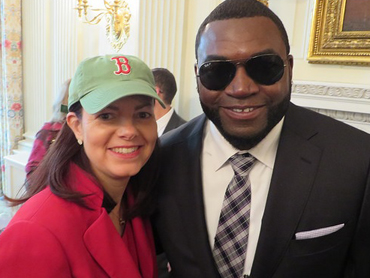
On a side note… I’ve pretty much gotten Kelly Ayotte playing Shemp to Joe Lieberman’s Curly, but I still miss the old Three Amigos. By the way, I went looking at her website to remind myself what Sen. Ayotte looks like, and as my old softball teammate Dave Moniz would have said, key lid

Ayotte

And yeah, that’s David “Big Papi” Ortiz with her.

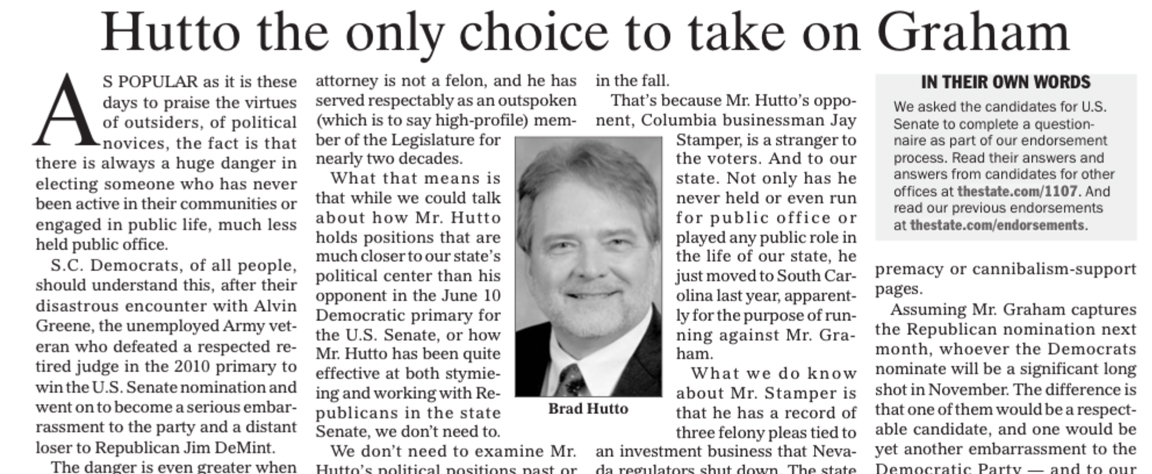
Endorsing Brad Hutto because ‘he’s not a felon’

Hutto

Knowing the editorial board as I do, I had to do a double-take this morning when I saw Sen. Brad Hutto’s picture on an endorsement editorial in The State.

Not that Sen. Hutto is a bad sort of fellow or associated with other bad sorts — his mother, a longtime devoted reader of the paper with whom I corresponded regularly when I was the EPE, is a lovely lady, and she is the first association that comes to mind when I see his name — but my general impression is that he is at odds with positions taken by the board more often than he is in agreement. Or at least when he is at odds, he’s very visibly so. Also, he’s very much a Democratic Party happy warrior, gleefully engaging in the sort of partisan behavior that tended to set our teeth on edge.

Cindi (I assume) dutifully sets out arguments as to why he should carry the Democratic standard against Lindsey Graham, including one of our default reasons for slightly preferring incumbents, as long as they haven’t misbehaved:

AS POPULAR as it is these days to praise the virtues of outsiders, of political novices, the fact is that there is always a huge danger in electing someone who has never been active in their communities or engaged in public life, much less held public office.

S.C. Democrats, of all people, should understand this, after their disastrous encounter with Alvin Greene, the unemployed Army veteran who defeated a respected retired judge in the 2010 primary to win the U.S. Senate nomination and went on to become a serious embarrassment to the party and a distant loser to Republican Jim DeMint….

But the next sentence spoke more directly to the reason Sen. Hutto got The State‘s nod:

The danger is even greater when the unknown outsider has a criminal record.

State Sen. Brad Hutto has neither of these problems. The Orangeburg attorney is not a felon, and he has served respectably as an outspoken (which is to say high-profile) member of the Legislature for nearly two decades….

“He’s not a felon” may seem to be faint praise, one likely to lead us to lament that the standard should fall so low. But as a bottom-line standard, it’s hard to argue with…

Reparations and ‘the monster in the closet’

Doug Ross suggests that there would be great interest in a discussion of Ta-Nehisi Coates’ piece in The Atlantic on the subject of reparations.

OK, so I’ll raise the subject. I can’t really comment this morning because I don’t have time to read the rather lengthy piece myself. I did, however, skim over the synopsis that Doug provided.

It tells me that what Coates suggests is not so much reparations in the sense of dollars. Rather, he wants to authorize a commission that would cause us to talk about the subject:

Calling the essay the “case” for reparation is equally misleading. Coates produces plenty of facts and figures that would be used to argue the case for reparations, his role though, is less that of the prosecuting attorney than that of the Grand Jury. He’s merely presenting enough evidence to make it clear that there ought to be a trial.

The “trial,” in this case, would be a study conducted by a congressionally appointed committee under the Commission to Study Reparation Proposals for African Americans Act, a bill that has been submitted by Rep. John Conyers (D-MI) in every Congress for the past 25 years, but has never been brought to the floor.

The purpose of the bill is “To acknowledge the fundamental injustice, cruelty, brutality, and inhumanity of slavery in the United States and the 13 American colonies between 1619 and 1865 and to establish a commission to examine the institution of slavery, subsequently de jure and de facto racial and economic discrimination against African-Americans, and the impact of these forces on living African-Americans, to make recommendations to the Congress on appropriate remedies, and for other purposes.”

The Commission would have no authority beyond the ability to compel testimony and gather information, and would be authorized to spend $8 million–a sum utterly trivial in the grand scheme of the U.S. budget. Its conclusions would not have the force of law, and could not require the U.S. government to take any action whatsoever.

This brings us to the monster in the closet. Coates believes that the United States, as a people, has never been fully honest with itself about the extent to which black Americans were subjected to institutionalized discrimination. Further, to the extent that we have acknowledged discrimination, the U.S., as a country, has never made an honest effort to assess what it cost the country’s black citizens.

That’s what we’ve locked away in the closet, he argues, and the Conyers committee’s charge would be to open the door and find a way for the United States, as a people, to kill the monster. It’s that effort itself, Coates writes, done under the imprimatur of the federal government itself, which would be the true act of making reparations.

“Reparations—by which I mean the full acceptance of our collective biography and its consequences—is the price we must pay to see ourselves squarely,” he writes.

“What is needed is an airing of family secrets, a settling with old ghosts. What is needed is a healing of the American psyche and the banishment of white guilt….

The only reaction I have is, “More talk?” Perhaps because of what I have done for a living for so many years, every time someone says we haven’t talked enough about the subject of race in America, or some aspect of the subject of race in America, I wonder where they’ve been.

But hey, I’m a talker. Let’s talk away. I just don’t know where yet another talk can realistically be expected to take us…

Aw. Maybe you should have added “Mom,” “Apple Pie,” and “George Washington” to the bill’s name

Why not throw in George Washington?

Why not throw in George Washington?

This happened in Washington this morning:

The House passed a bill Thursday aimed at reforming the National Security Agency’s bulk collection of phone records, a policy that came to light due to documents leaked by former NSA contractor Edward Snowden.

The bill, known as the USA Freedom Act, would shift responsibility for retaining telephonic metadata from the government to telephone companies. Providers like AT&T and Verizon would be required to maintain the records for 18 months and let the NSA search them in terrorism investigations when the agency obtains a judicial order or in certain emergency situations. The bill passed on an 303 to 121 vote.

But privacy advocates, technology companies and lawmakers warned that the version of the bill passed by the House was watered down to the point where they could no longer support it.

“This is not the bill that was reported out of the judiciary bill unanimously,” said Rep. Zoe Lofgren (D-Calif.), a member of the House Judiciary Committee who was a co-sponsor of the initial version of the bill. “The result is a bill that will actually not end bulk collection, regrettably.”…

Aw. Gee. Too bad. Although not really, since there was never anything wrong with bulk collection to begin with.

Maybe the problem is with the way you framed the bill, starting with the name. Maybe “USA” and “Freedom” didn’t give it enough oomph. Maybe you should have added “Mom” or “Apple Pie.” Or “George Washington,” or “Fourth of July.”

Do people have no shame whatsoever in naming these things? In what way is “USA” or “Freedom” descriptive of this bill? Yeah, I know the privacy worrywarts consider mining metadata to be a threat to their liberties, yadda-yadda. But a bill designed to do the opposite could make just as good a case that they are the ones defending liberty.

Of course, their “just as good a case” would still be lame and wrong. When we talk about national security or defense, we often say it’s in the service of “freedom,” as a sort of catchall term for “something in the service of the country.” But often, these things that we justify in the name of “freedom” are perfectly justifiable in the names of other completely legitimate, and actually descriptive, aims. Such as, you know, security. And defense.

Take the “Patriot Act.” It was a counterterrorism bill. You could have called it a lot of things, including an anti-compartmentalization bill, as it scrapped some traditional security measures limiting the flow of information in the name of avoiding another 9/11. But that wouldn’t have been very catchy.

But why not come up with something catchy that actually has something to do with the bill? Like the “Remember 9/11 Act.” And if you’re one of the privacy advocates who favors this more recent legislation, why not call it the “Big Brother Act?” Or, I suppose, “Anti-Big Brother Act.” Since you hold to the ridiculous, hyperbolic notion that this program goes beyond 1984 levels of intrusion. Or name it the “Snowden Act,” since that’s whose wishes and worldview you’re kowtowing to.

Or simply, the “Privacy Act.” That should be a big seller.

As for “USA” — every act that comes out of the Congress is a “USA” act, sort of by definition. How generic can you get?

Anyway, I’d have more respect for some of these bills if they showed more respect for the language…

Where does the SECOND largest number of immigrants to SC come from?

Blatt_Immigrant_2.jpg.CROP.original-original

The intuitive answer — Mexico — is correct as the answer to the question, “Where do most immigrants (or rather, a plurality of them) in South Carolina come from?” Nationally, about 15 percent of new immigrants come from our neighbor to the south, and that’s enough to put Mexico out ahead in most states.

That’s according to a map Slate put together based on Department of Homeland Security figures.

But what country comes in second? It may surprise you — it did me. It’s India. Where Nikki Haley’s people are from. Throughout the Deep South, Mexico is first and India is second. And in Virginia, Pennsylvania, New Jersey, Delaware and Maryland, India comes in first.

The maps offer some interesting groupings. In the very center of the country — Oklahoma, Kansas, Nebraska and Iowa — the second-largest immigrant group is from Myanmar. And in Tennessee and Idaho, it’s Iraq. I don’t know why.

Anyway, fun facts to know and tell…

USC dean sends out memo re academic freedom

This was sent out to faculty by USC Arts and Sciences Dean Mary Anne Fitzpatrick this morning:

PLEASE DISTRIBUTE TO ALL YOUR FACULTY

TO: Faculty in the College of Arts and Sciences

Dear Colleagues:

In the past few months, academic freedom has become a hotly debated issue in our state. I need not rehearse all of the controversies that have erupted over certain reading assignments and performance events, as you are no doubt aware of them.

These controversies provide us with a valuable opportunity to affirm our most fundamental and profound principles. First, as university faculty, we can and we must be dedicated to the pursuit of knowledge and truth in our disciplines, and second, it is our right and our responsibility as faculty to determine the curriculum of our academic programs.

It is not often that academic freedom is the subject of numerous media reports and broad discussion among citizens. We should therefore welcome this chance to explain who we are as an intellectual community, our purpose and aspirations, and our vision “to transform the lives of our students and improve the world they will inhabit by creating and sharing knowledge at the frontiers of inquiry.”

I proudly invite you to read one such explanation written by Professor Ed Madden, a faculty member in the Department of English and the director of our Women’s and Gender Studies Program. Published in The State as a guest column on May 1, 2014, his explanation is both eloquent and moving.

http://www.thestate.com/2014/05/01/3419090/madden-is-this-a-pornographic.html

As your dean, I am deeply grateful for your commitment to our vision and for all that you do for our students.

Cordially,

Mary Anne

At first glance, I thought the memo was going to be about the national debate going on now about intellectual freedom on campus — the one sparked by all the student protests of invited graduation speakers. The WSJ had yet another op-ed piece about it this morning, this one headlined “Bonfire of the Humanities.”

And having made that mistake, now I have an appetite to read what academic leaders in this state might have to say about that national trend. Has anyone seen anything like that?

In the meantime, I suppose y’all could discuss this memo…

For you space buffs, a nice shot of Manhattan

Bm_TFbECUAIEyaX

This sort of image is fairly unremarkable in these days of Google Earth, but I thought it was worth reTweeting when I saw it yesterday.

A Japanese astronaut (I’m still adjusting to there being such things) shot this picture and Tweeted it with the simple observation, “Nice pass over New York City.

Yes, it was. Very clear. It would be cooler if the resolution were higher, but still nice.

And yes, in these days when Americans no longer have a means to get into space and have to hitch rides, there are still people up there, still grooving on the view…

Google Maps version

Google Maps version

Maybe Gowdy can help me understand the ‘why’ on Benghazi

Alternate headline: “Benghazi! Benghazi! Benghazi! Benghazi! Benghazi!”

You’ve no doubt seen the news by now that 4th District Congressman Trey Gowdy (you know him — he’s the guy who defeated Bob Inglis because Inglis, of all people, wasn’t “conservative” enough in the Tea Party year) will pitch for the GOP in the big game — that is, he’ll chair the select committee to investigate Benghazi, which a former White House staffer characterized recently with the immortal words, “Dude, this was like two years ago.”

As this was all breaking, I happened to watch the third season episode of “The West Wing,” “Ways and Means,” in which C.J. said:

Leo, we need to be investigated by someone who wants to kill us just to watch us die. We need someone perceived by the American people to be irresponsible, untrustworthy, partisan, ambitious, and thirsty for the limelight. Am I crazy, or is this not a job for the U.S. House of Representatives?

I don’t know what about this situation made me mention that. Unless the White House deliberately manipulated the House into doing this by releasing those emails.

Anyway, now that this is back before us, we ask the eternal question: Why?

Rep. Gowdy puts it this way:

“Twenty months after the Benghazi attacks, there remain unresolved questions about why the security was inadequate, our response during the siege itself, and our government’s interaction with the public after the attack. All of those lines of inquiry are legitimate and should be apolitical. Facts are neither red nor blue.

“While people are free to draw different conclusions from the facts, there should be no debate over whether the American public is entitled to have all of the facts. In a courtroom, juries are free to believe one witness over a hundred witnesses. But you cannot make that or any other credibility determination if you do not have access to all relevant witnesses, documents and other tangible evidence.

“Four of our fellow citizens were murdered, and a facility emblematic and representative of our country was attacked and burned on the anniversary of 9-11. Our fellow citizens are full well capable of processing the truth about the attacks and aftermath, and most assuredly entitled to hear it.”…

OK. If the hearings are going to focus on “why the security was inadequate” and “our response during the siege itself,” so that we might avoid such tragedies in the future, and make our embassies and consulates secure, let’s get started.

But where Republicans lose me is on the third thing, the thing they go on and on and on about: “our government’s interaction with the public after the attack.”

Frankly, I decided a long time ago that Susan Rice wasn’t the sharpest knife in the Obama administration’s cutlery drawer (although she looks awesome next to the kid who made the “Dude” crack). I was relieved when she didn’t become secretary of state, and disappointed when she became National Security Advisor. (As Sonny Corleone would say, “Nixon had Kissinger; look what I got.“)

I decided even longer ago than that that I had no interest in watching the Sunday morning political talk shows, and not just because I was busy going to Mass then. I figured out that if they made news, it would be on the wires (the Sunday shift has to write about something).

So what Susan Rice said on Sunday political talk shows doesn’t exactly rock my world.

Earlier in the week, I had seen reports that the administration had amended its initial assessment that the attacks were just about that horrendous anti-Muslim video. (Scout, I lost my link to that story, and you helped me find it, but I lost it again, so help!) I heard that within 24 hours of learning of the attack in Benghazi itself. I was satisfied.

If Susan Rice said something else, I’m not terribly surprised. But I’m not up in arms.

I find myself asking, “so what?” So Susan Rice tried to make the administration look good (if what Republicans keep saying is true). That seems to be pretty much in character for her.

I also find myself wondering why Republicans get so offended at the idea that the Muslim video triggered these attacks. It was causing demonstrations elsewhere. It just wasn’t crazy to think at first, however erroneously, it might have had something to do with Benghazi.

We know that expressions of disrespect toward the prophet on the part of private parties in the West had triggered violence in the Muslim world before. Why not now?

There’s some kind of dog whistle this issue blows on the right that is just inaudible to me.

But anyway, let’s collect those facts that are neither red nor blue, and figure out how to avoid this kind of deadly debacle in the future. But let’s not go on and on about irrelevancies that happen to scratch the itch of one end or the other of the partisan spectrum.

Statements regarding the passing of Butler Derrick

Members of the SC congressional delegation react to the passing of former 3rd District Congressman Butler Derrick

Congressman Clyburn Mourns the Passing of Butler Derrick

(Columbia, SC) – House Assistant Democratic Leader and South Carolina Congressman James E. Clyburn released the following statement on the passing of Butler Derrick, former South Carolina Congressman from the Third Congressional District, today:

“Butler and I got to know each other when I worked for Governor West and he was serving in the South Carolina legislature.  He was a kind man with a desire to better South Carolina and help those who called it home.  He loved this state and devoted his life to making it a better place for its citizens.  Our friendship grew when I was elected to Congress and he was serving as Chief Deputy Whip.  His leadership and dedication to South Carolina will surely be missed.

###

Wilson Statement on former Congressman Butler Derrick

(Washington, DC) – Congressman Joe Wilson (SC-02) issued the following statement on the death of former Congressman Butler Derrick (SC-03).

“South Carolina has lost a great statesman. Former Congressman Butler Derrick served the people of the Third Congressional District for twenty years with true distinction.  I am very appreciative of his willingness to cross the political aisle and work with the late Congressman Floyd Spence to promote new missions at the Savannah River Site.  Roxanne and I extend our heartfelt sympathies to all of the Derrick family during this difficult time.”

On the Passing of Butler Derrick

WASHINGTON – U.S. Senator Lindsey Graham (R-South Carolina) made this statement on the passing of former Congressman Butler Derrick.

“In Washington, Butler Derrick rose through the ranks of Democratic politics to become a strong voice for his party in the U.S. House of Representatives.  Closer to home, he was known for a very caring and effective constituent service operation which put the needs of his constituents first. 

“Butler was a good man and I will always be grateful for the assistance he provided to me in my transition to the U.S. House of Representatives. 

“Our thoughts and prayers are with his family during this time.”

#####

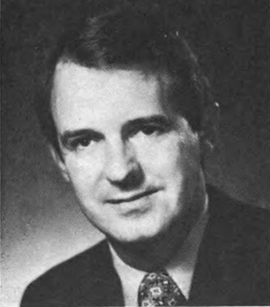
Here’s hoping Sen. Graham doesn’t get even more grief from his primary opponents for saying nice things about a Democrat. Even when he has the excuse that this was the man he succeeded in Congress.270px-Butler_Derrick

And how about Joe Wilson, expressing appreciation for Derrick’s willingness to work across the aisle — anathema to a significant portion of the GOP today.

The name “Butler Derrick” hearkens back to when Democrats and Republicans managed to disagree while dealing with each other as mature human beings. There was such a time, boys and girls…

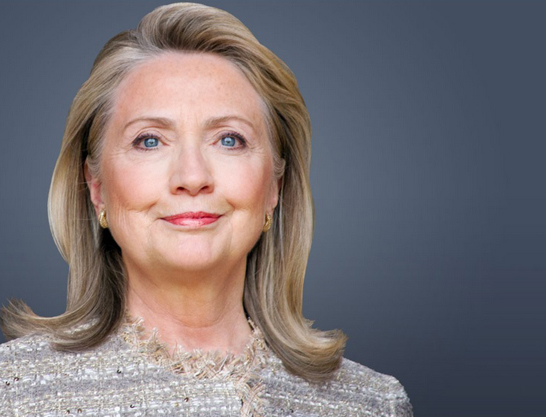
Revisiting an intriguing proposition: Hillary Clinton as LBJ (rather than MLK or JFK)

194467_135028753233137_123816441021035_185820_2517547_o - editted

I was interested to read, in today’s excerpt of Jim Clyburn’s book in The State, the congressman’s account of his disagreement with the Clintons just before the 2008 SC presidential primary:

That charge went back to an earlier disagreement we had about Sen. Hillary Clinton’s suggesting that, while Dr. Martin Luther King Jr. had done an excellent job promoting the issues of civil and voting rights for black people, it took a sensitive president such as Lyndon Baines Johnson to have the resolution of those issues enacted into law. In a New York Times article referencing an interview Mrs. Clinton had with Fox News on Monday, Jan. 5, 2008, she was quoted as saying “Dr. King’s dream began to be realized when President Lyndon Johnson passed the Civil Rights Act of 1964.”

The article went on to say that Mrs. Clinton thought her experience should mean more to voters than uplifting words by Mr. Obama. “It took a president to get it done,” Mrs. Clinton said.

It was an argument I had heard before while growing up in the South, even from white leaders who supported civil rights reform. It took black leaders to identify problems, but it took white leaders to solve them, they said. I had accepted that argument for a long time; but in 2008 it seemed long outdated, and it was frankly disappointing to hear it from a presidential candidate. When the reporter called to ask my reaction, I did not hold back…

Actually, Clyburn is misrepresenting what Hillary Clinton had said. I don’t think he’s doing so intentionally. I believe he truly remembers it that way, in those black-and-white terms.

But then-Sen. Clinton didn’t really put it in terms of black leader vs. white leader. Basically, she put both Martin Luther King Jr. and John F. Kennedy in one category — that of the inspirational figure — and Lyndon Baines Johnson in the contrasting role of the less-inspirational leader who nevertheless follows through and gets things done.

I found her proposition intriguing at the time. She was posing the question, What do you want — inspiration or results? I wrote a column about it at the time, which ran on Jan. 20, 2008, just six days before Barack Obama won the SC primary.

Now that we’ve had several years in which to evaluate the kinds of results that Mr. Obama has produced as president, and as we look forward to a 2016 election in which the Democratic nomination is Mrs. Clinton’s for the taking, I think it’s interesting to revisit that column. So here it is:

By BRAD WARTHEN
EDITORIAL PAGE EDITOR
BARACK OBAMA and Hillary Clinton decided last week to put their spat over MLK, JFK and LBJ behind them. That’s nice for them, but the rest of us shouldn’t drop the subject so quickly.
Intentionally or not, the statement that started all the trouble points to the main difference between the two front-runners.
And that difference has nothing to do with race.
Now you’re thinking, “Only a Clueless White Guy could say that had nothing to do with race,” and you’d have a point. When it comes to judging whether a statement or an issue is about race, there is a profound and tragic cognitive divide between black and white in this country.
But hear me out. It started when the senator from New York said the following, with reference to the Rev. Martin Luther King Jr.:
“Dr. King’s dream began to be realized when President Lyndon Johnson passed the Civil Rights Act of 1964. It took a president to get it done.”
The white woman running against a black man for the Democratic Party nomination could only get herself into trouble mentioning Dr. King in anything other than laudatory terms, particularly as she headed for a state where half of the voters likely to decide her fate are black.
You have to suppose she knew that. And yet, she dug her hole even deeper by saying:
“Senator Obama used President John F. Kennedy and Dr. Martin Luther King Jr. to criticize me. Basically compared himself to two of our greatest heroes. He basically said that President Kennedy and Dr. King had made great speeches and that speeches were important. Well, no one denies that. But if all there is (is) a speech, then it doesn’t change anything.”
She wasn’t insulting black Americans — intentionally — any more than she was trying to dis Irish Catholics.
To bring what I’m saying into focus, set aside Dr. King for the moment — we’ll honor him tomorrow. The very real contrast between the two Democratic front-runners shows in the other comparison she offered.
She was saying that, given a choice between John F. Kennedy and his successor, she was more like the latter. This was stark honesty — who on Earth would cast herself that way who didn’t believe it was true? — and it was instructive.
Lyndon Baines Johnson was the Master of the Senate when he sought the Democratic nomination in 1960. If he wanted the Senate to do something, it generally happened, however many heads had to be cracked.
LBJ was not made for the television era that was dawning. With features like a hound dog (and one of the most enduring images of him remains the one in which he is holding an actual hound dog up by its ears), and a lugubrious Texas drawl, he preferred to git ’er done behind the scenes, and no one did it better.
Sen. Johnson lost the nomination to that inexperienced young pup Jack Kennedy, but brought himself to accept the No. 2 spot. After an assassin put him into the Oval Office, he managed to win election overwhelmingly in 1964, when the Republicans gave him the gift of Barry Goldwater. But Vietnam brought him down hard. He gave up even trying to get his party’s nomination in 1968.
But he was a masterful lawmaker. And he did indeed push the Civil Rights Act and Voting Rights Act into law, knowing as he did so that he was sacrificing his party’s hold on the South.
He brought into being a stunning array of social programs — Medicare, federal aid to education, urban renewal, and the War on Poverty.
So, on the one hand, not a popular guy — wouldn’t want to be him. On the other hand, President Kennedy never approached his level of achievement during his tragically short tenure.
You might say that if Sen. Obama is to be compared to President Kennedy — and he is, his call to public service enchanting young voters, and drawing the endorsement of JFK’s closest adviser, Ted Sorensen — Sen. Clinton flatters herself in a different way by invoking President Johnson.
They are different kinds of smart, offering a choice between the kid you’d want on your debating team and the one you’d want helping you do your homework.
Sen. Obama offers himself as a refreshing antidote to the vicious partisanship of the Bush and Clinton dynasties. That sounds wonderful. But Sen. Clinton has, somewhat less dramatically, formed practical coalitions with Republican colleagues to address issues of mutual concern — such as with Lindsey Graham on military health care.
Sen. Clinton, whose effort to follow up the Great Society with a comprehensive health care solution fell flat in the last decade, has yet to live up to the Johnson standard of achievement. For that matter, Sen. Obama has yet to bring Camelot back into being.
As The Washington Post’s David Broder pointed out, in their debate in Las Vegas last week, the pair offered very different concepts of the proper role of the president. Sen. Obama said it wasn’t about seeing that “the paperwork is being shuffled effectively,” but rather about setting goals, uniting people to pursue them, building public support — in other words, about inspiration.
Sen. Clinton talked about managing the bureaucracy and demanding accountability.
Sen. Obama offers a leader, while Sen. Clinton offers a manager. It would be nice to have both. But six days from now, South Carolinians will have to choose one or the other.

Hillary

U.S. isolationism rising. Meanwhile, the world doesn’t cooperate and go away

aria140430_cmyk.eax3yvaysxwtoogo888kkc040.6uwurhykn3a1q8w88k040cs08.th

Here’s an ominous juxtaposition of stories from today’s news. First, this poll:

A near-majority of Americans say the United States should become less active in world affairs, a dramatic change from the post-9/11 national environment and one that comes as President Barack Obama tries to juggle crises in the Middle East and the Ukraine.

In a new NBC News/ Wall Street Journal poll, 47 percent of respondents said the U.S. should dial down its activity in foreign affairs, versus 19 percent who said the country should be more active around the globe. Three in ten respondents said the current level is correct.

That represents a major flip in how Americans view world affairs since the aftermath of the September 11, 2001 attacks. At that time, nearly 4 in ten Americans said they wanted to see more engagement around the world, and just 14 percent said the nation should be less active.

Comparable studies in the mid-1990s found that about a third of Americans believed the U.S. should reduce its foreign policy footprint….

Hmmm… I wonder… Could that be the same 47 percent Mitt Romney was on about?

Meanwhile, we have this item from The Guardian, which no one could mistake for a pro-interventionist newspaper:

The biggest geopolitical risk of our times is not a conflict between Israel and Iran over nuclear proliferation. Nor is it the risk of chronic disorder in an arc of instability that now runs from the Maghreb all the way to the Hindu Kush. It is not even the risk of Cold War II between Russia and the West over Ukraine.

All of these are serious risks, of course; but none is as serious as the challenge of sustaining the peaceful character of China‘s rise. That is why it is particularly disturbing to hear Japanese and Chinese officials and analysts compare the countries’ bilateral relationship to that between Britain and Germany on the eve of the first world war.

The disputes between China and several of its neighbours over disputed islands and maritime claims (starting with the conflict with Japan) are just the tip of the iceberg. As China becomes an even greater economic power, it will become increasingly dependent on shipping routes for its imports of energy, other inputs, and goods. This implies the need to develop a blue-water navy to ensure that China’s economy cannot be strangled by a maritime blockade.

But what China considers a defensive imperative could be perceived as aggressive and expansionist by its neighbours and the United States. And what looks like a defensive imperative to the US and its Asian allies – building further military capacity in the region to manage China’s rise – could be perceived by China as an aggressive attempt to contain it….

It’s no accident that we see Americans gazing into their isolationist navels, anxiously taking their own temperatures, while a British publication gazes out at the world as it is. Even as it ceased to rule half the world, Britain has remained at least interested in what happens around the globe. Whereas the average American on the street will always default to isolationism, barring catastrophic events that temporarily turn his attention abroad.

Which, in a world that has relied since 1945, and especially since 1991, on American engagement — economic, diplomatic, humanitarian and yes, military — as a stabilizing force, is not a good thing.

For a generation, China has steadily been engaging more closely with the world, including nations in our own Monroe-Doctrine backyard. One of the first editorials I wrote for The State in 1994 was on the subject of Chinese diplomatic and trade initiatives in the Western Hemisphere. They have been so successful that, according to Stratfor, a Chinese economic slowdown has a deleterious effect on the region:

A looming slowdown in the Chinese economy promises trouble for China’s economic partners in Latin America, especially commodity exporters. The growing relationship between China and Latin America is on display this week as Chinese Foreign Minister Wang Yi tours the region in a trip that will wrap up April 26. Wang is visiting Cuba, Venezuela, Brazil and Argentina to discuss bilateral financing and trade deals.

China’s slowing economy and potential for domestic economic instability threatens to sharply lower demand for key commodities exported by Latin American countries. Particularly vulnerable are countries such as Brazil, Peru and Chile that have seen China rise in importance as an export destination…

My relativist friends will say that’s fine. We had our time; maybe it’s China’s turn. All nations are alike — there’s nothing exceptional about our own; any perception to the contrary is pure, narrow chauvinism — and a world in which China is the dominant influencer is no worse than one that turns to America.

As you know, I believe they couldn’t be more wrong.

Fortunately, everyone who has held the White House in my lifetime agrees with me — or at the very least says he agrees with me, whatever his actions may say. Our serious political discussions tend to be about ways and means, not ultimate aims. In fact, while he was defending a foreign policy based on the assumption that intervening in Iraq was the worst foreign policy mistake of our time (with which I’m bound to disagree, at least somewhat), I rather like the president’s invocation of a doctrine based on singles and doubles rather than home runs:

MANILA — At a news conference in the Philippines on Monday afternoon, President Obama initially scoffed when a reporter asked him to explain the “Obama doctrine” in light of his handling of recent world events.

But then he seemed to embrace the idea. Surveying hot spots from Syria to Ukraine, Obama laid out an incremental, dogged approach to foreign relations that relies on the United States deploying every possible economic and institutional lever before resorting to armed force.

“That may not always be sexy. That may not always attract a lot of attention, and it doesn’t make for good argument on Sunday morning shows,” said Obama, who is nearing the end of a week-long, four-nation tour of Asia. “But it avoids errors. You hit singles, you hit doubles; every once in a while we may be able to hit a home run. But we steadily advance the interests of the American people and our partnership with folks around the world.”…

The problem with isolationists is that they don’t even want us to get up to bat. They don’t even want to show up for the game. Which is not good for the country, and even worse for the rest of the world.

The president in the Philippines -- reaching out, engaging with the world.

The president in the Philippines — reaching out, engaging with the world.