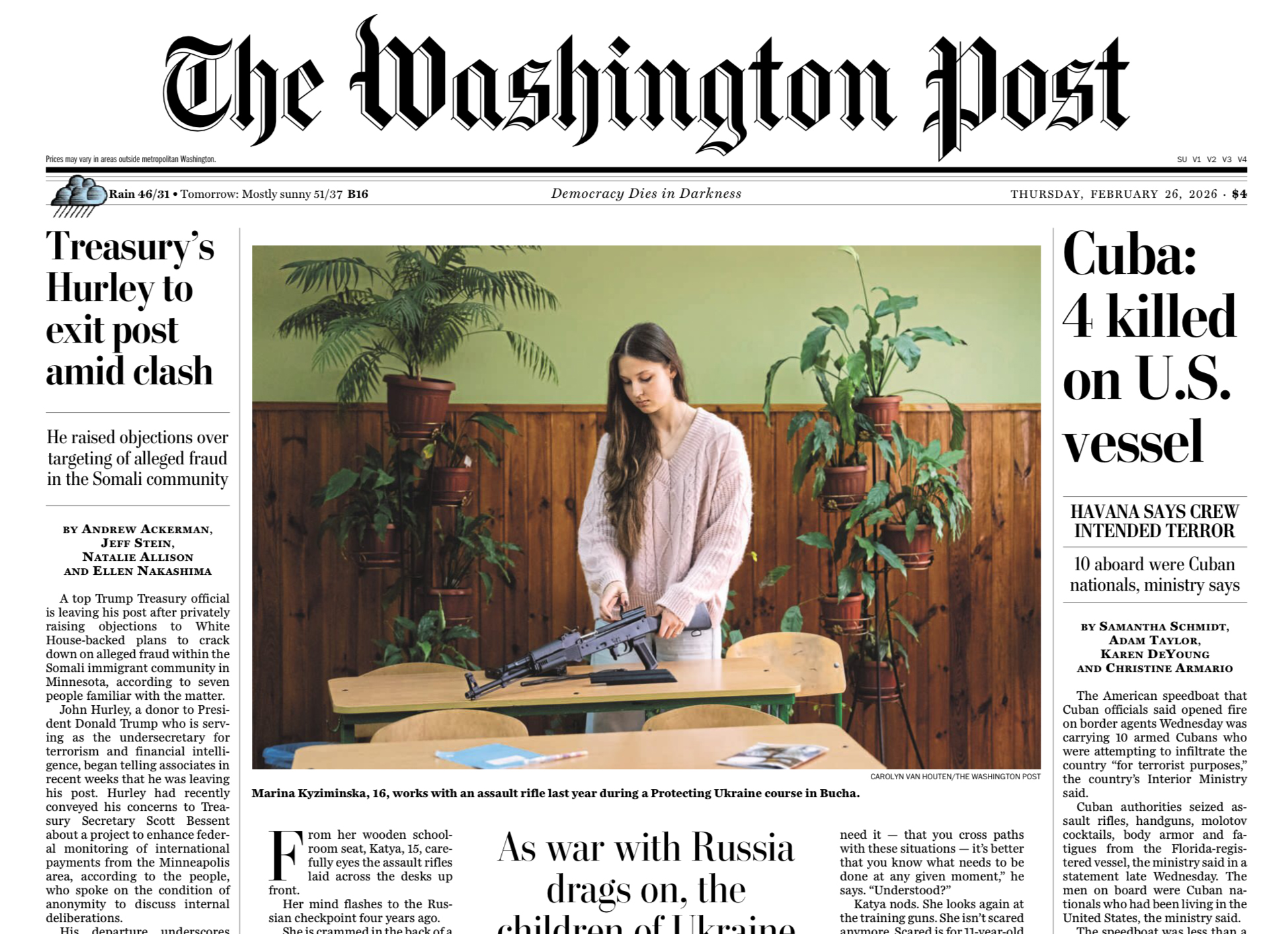
As of Friday, I will no longer be a subscriber to The Washington Post.
For me, that’s a big deal. I can’t say the Post caused me to become a journalist — I was already a copy boy at The Commercial Appeal when Woodward and Bernstein came out with All the President’s Men — but it certainly encouraged me at a key point in my development, and I’ve admired the paper ever since.
That is, I admired it until quite recently.
At first, I thought it was a good thing that Jeff Bezos had bought the paper — just as long as he stayed out of news and editorial decisions. That was the proper role of ownership back in the Newspaper Age — certainly at the papers where I worked. Of course, the problem with ownership that knows nothing about newspapers is they don’t know the rules.
I became very concerned when, with the country on the line, the paper didn’t endorse in the critical 2024 presidential election. That was a bad shock. But don’t take it from me. Check out what Marty Baron (former executive editor of the paper, and the guy who was running The Boston Globe when it won its “Spotlight” Pulitzer) said about it at the time. A key quote: “This is cowardice, with democracy as its casualty.” Another one: “Spineless.”
That wasn’t quite enough to make me drop the Post, although it should have been. I have a long history of calling newspapers spineless for failing to endorse in far less important elections than that one. But I wasn’t ready to pull the plug.
I’d just been reading, and enjoying, the paper for so many years before that. So I held back.
Then, there was the abominable editorial reaction to our incursion into Venezuela. I mentioned that before. That’s when I started thinking about cancelling. At the time, I wrote to longtime Post op-ed columnist E.J. Dionne to get his thoughts. He indicated that that was further evidence of the problems that caused him to “switch papers.”
Well, that was embarrassing for me. I didn’t realize he had done that, because I had been reading the Post (and all my papers) less over the last year or two. But sure enough, he writes regularly for The New York Times now. You know, the paper that had a far more rational response to the Venezuela thing.
But here’s kind of the last straw…
Not long after that Venezuela editorial, the Post laid off 300 people from the newsroom. Or, as the NYT‘s The Daily podcast put it, “Bezos Guts The Washington Post.”
This particularly trashed such areas as local news, international coverage (at a time when Trump has decided he’s not an isolationist anymore, and is sending troops out to threaten adversaries and allies alike), and the sports department.
While I’m not the greatest sports fan you’re likely to meet, that last category includes two people who I see as some of the best sportswriters in the country.
Remember when I wrote about Kent Babb, my former colleague at The State who’s been doing such a great job at the Post since 2012? He’s gone. Here’s what Kent had to say about that. I haven’t spoke to Kent about it yet, but I’ve finally started reading his excellent book about a school I attended in the mid-60s in New Orleans. I’m sorry it took this to make me pick it up from my shelves of books I fully mean to read, but I’m glad I’m reading it.
Remember back in the fall when I praised a story by Chelsea Janes headlined, “Shohei Ohtani just played the greatest game in baseball history?” She was the paper’s national baseball writer — the kind of title you’d expect in front of a name like Ring Lardner or Red Smith. And she’s good enough for that.
But they dumped her, too. Fortunately, she got a new job right away. But she’s no longer national baseball writer of what was once one of the best papers in the country.
Normally, while I’d be sorry to hear about this monumental development, it wouldn’t make me turn away. After all, I didn’t drop my subscription to The State when it laid me off. Sometimes things can’t be helped.
But this is a special case. The only good thing about Bezos owning the paper was that he has an income flow that seemed likely to be able to prop up the paper for the foreseeable future without causing him to have to cut back on his grocery bill a bit.
Obviously, he’s decided he doesn’t want to do play that role anymore, so I suppose that makes the Post, for the first time since he purchased it, vulnerable to the economic forces that have wiped out newspapers across the country over the past couple of decades.
So… there were, all along, obvious serious drawbacks to having him at the helm. And now the one good thing about his ownership — his willingness to throw money at the paper to prop it up — has disappeared.
So I’m following E.J. I’m out…
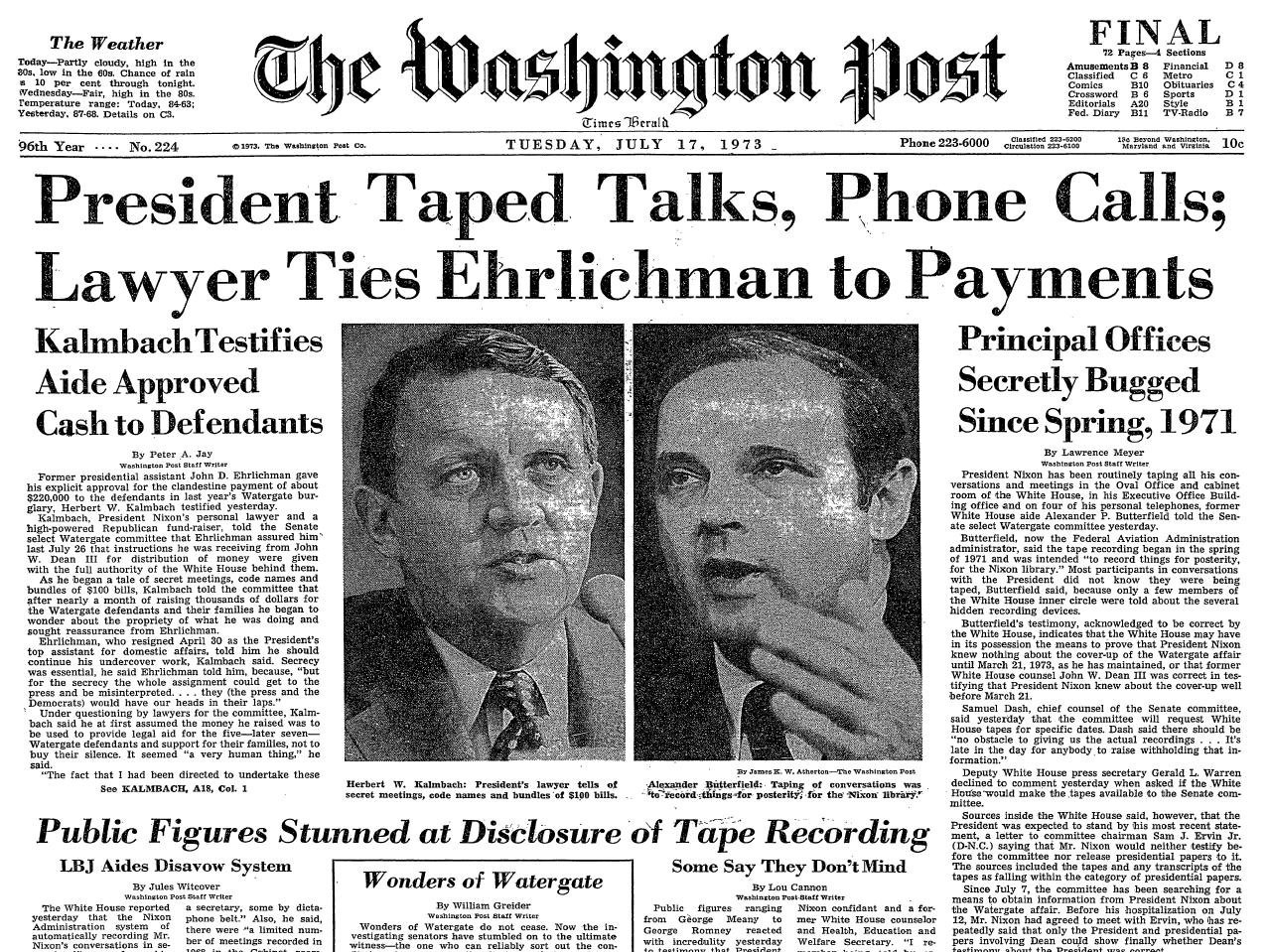
As you may recall, it was a great paper when Katharine Graham had it.