Category Archives: The Nation

Pouring oil on the waters: Obama’s statement on verdict

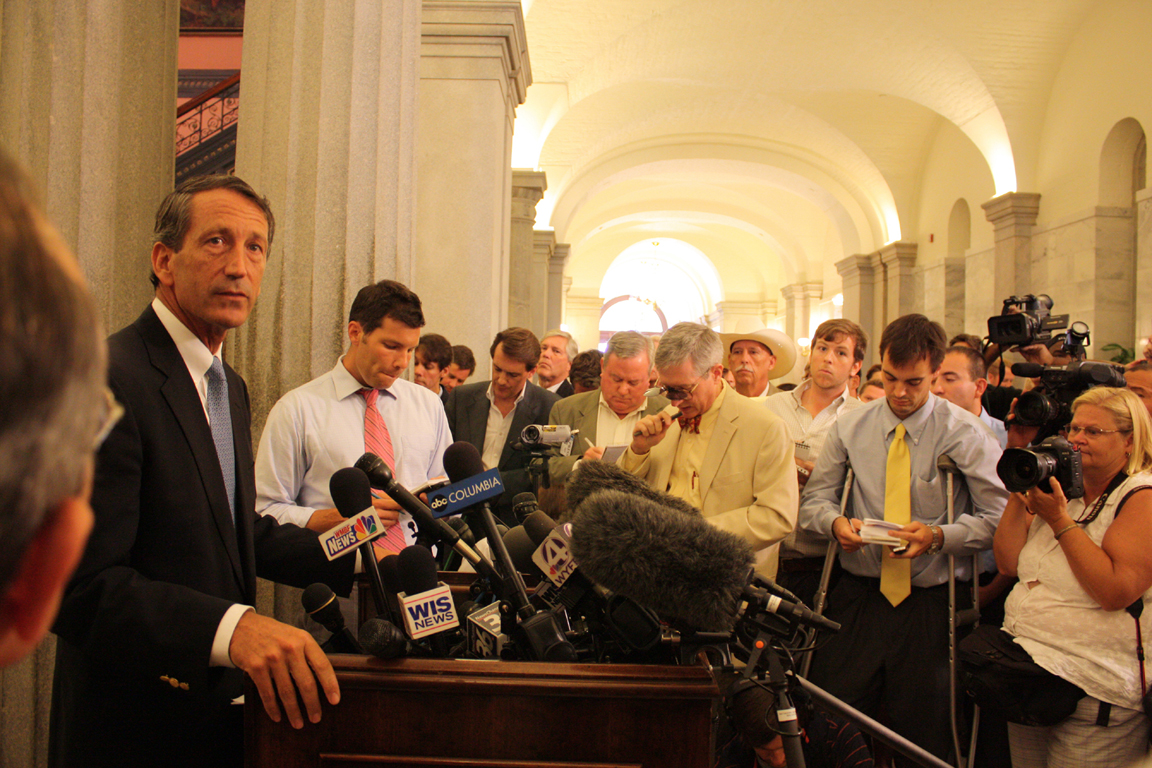
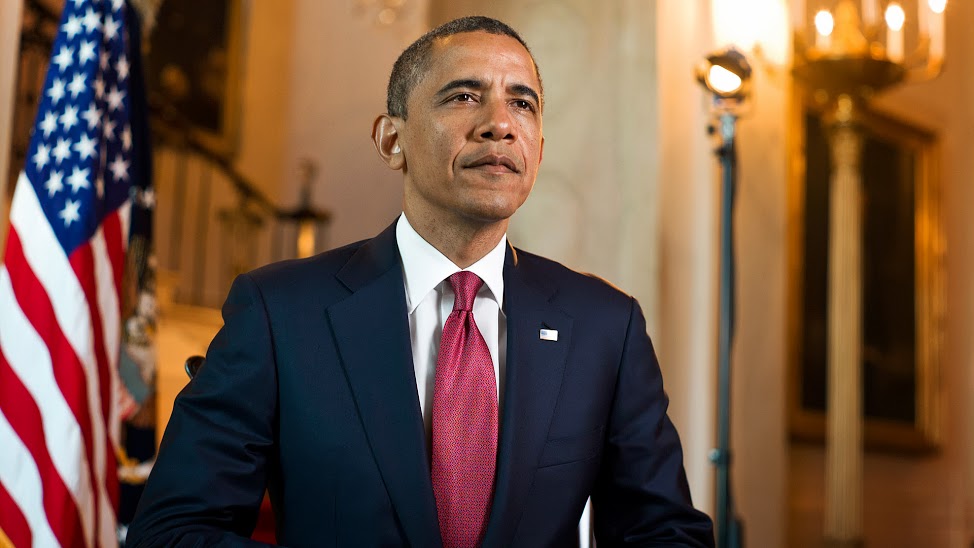
The proper expression, to go with the proper statement striking the proper emotional tone.

The proper expression, to go with the proper statement, striking the proper emotional tone.

First, let’s set aside the fact that I don’t hold with the morphing of the job of president of the United States into Emoter-in-Chief. The idea that the president is supposed to comment, strike the proper emotion, on every news development that engages people’s morbid curiosity at a given moment — whether it has the slightest thing to do with his duties and responsibilities or not — is a discomfiting sign of a republic in decline.

But that’s where we are today, and if the White House didn’t put out a statement on the latest sensation, meaning would be read into the lack of it, so a president who cares about the dignity of his office is really in a spot.

The best he can do is put out as dispassionate a statement as possible, and move on.

That said, I think President Obama did a pretty good job with this statement yesterday:

“The death of Trayvon Martin was a tragedy. Not just for his family, or for any one community, but for America. I know this case has elicited strong passions. And in the wake of the verdict, I know those passions may be running even higher. But we are a nation of laws, and a jury has spoken. I now ask every American to respect the call for calm reflection from two parents who lost their young son. And as we do, we should ask ourselves if we’re doing all we can to widen the circle of compassion and understanding in our own communities. We should ask ourselves if we’re doing all we can to stem the tide of gun violence that claims too many lives across this country on a daily basis. We should ask ourselves, as individuals and as a society, how we can prevent future tragedies like this. As citizens, that’s a job for all of us. That’s the way to honor Trayvon Martin.”

I could have done without the bit at the end, which mentions “honoring” Trayvon Martin. Those aren’t words I would have chosen. Nothing against the victim of this horrid mess — it’s just that that is what he is, a victim. He’s not a hero, he isn’t a martyr to a cause. He didn’t set out to make a statement. He just had a late-night yen for Skittles (possibly the expression of a case of the munchies), and it got him killed.

I don’t know him, and I think “honoring” him is best left to those who did.

But I know why the president used those words. He used them to head off people who would react inappropriately to this verdict under the guise of “honoring Trayvon.”

Anyway, beyond that, I thought the piece just right. There are two main messages here. The first is neatly contained in this statement: “But we are a nation of laws, and a jury has spoken.”

Absolutely.

But for those who feel that’s not enough, that something must be done, are challenged with the second message, which is a corollary to the first: That, this being a nation of laws, if you didn’t like the way this turned out, engage the system and change the society in which you live, from changing the laws down to “being the change” in your own interactions with fellow citizens.

And I think that if the president had to say something, those were pretty much the right things to say.
Profumo showed what Sanford, Weiner, Spitzer should have done

995401_343502635780906_108551644_n

Peggy Noonan’s column this week is a good one.

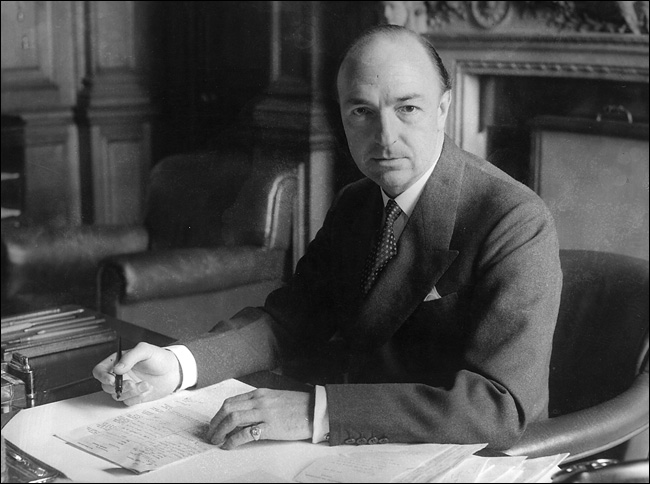
After recounting the Profumo Affair that rocked Britain (and broke a government) 50 years ago, she draws a clear contrast between what a man of honor — which is what John Profumo proved in the end to be — does, and what the likes of Mark Sanford, Anthony Weiner and Eliot Spitzer do.

In case you’re confused — in case you are thinking, “Well, a man of honor wouldn’t get himself into such a situation” — let me remind you that we’re all sinners, in one way or another, some more spectacularly than others. What this is about is whether you do the honorable thing after you’ve done something terribly wrong.

Here’s the best part of the column:

Everyone hoped he’d disappear. He did. Then, three years later, he… announced he’d deepened and matured and was standing for Parliament “to serve the public.” Of course, he said, “It all depends on the voters, whether they can be forgiving. It’s all in their hands. I throw my candidacy on their mercy.”

Well, people didn’t want to think they were unmerciful. Profumo won in a landslide, worked his way up to party chief, and 12 years later ran for prime minister, his past quite forgotten, expunged, by his mounting triumphs.

***

Wait—that’s not what happened. Nothing like that happened! It’s the opposite of what happened.

Because Profumo believed in remorse of conscience—because he actually had a conscience—he could absorb what happened and let it change him however it would. In a way what he believed in was reality. He’d done something terrible—to his country, to his friends, to strangers who had to explain the headlines about him to their children.

He never knew political power again. He never asked for it. He did something altogether more confounding.

He did the hardest thing for a political figure. He really went away. He went to a place that helped the poor, a rundown settlement house called Toynbee Hall in the East End of London. There he did social work—actually the scut work of social work, washing dishes and cleaning toilets. He visited prisons for the criminally insane, helped with housing for the poor and worker education.

And it wasn’t for show, wasn’t a step on the way to political redemption. He worked at Toynbee for 40 years…

What Profumo did addresses what I’ve written about in the past, about actual remorse and penitence.

He did the right thing under the terrible circumstances that he himself had brought about. Sanford, Weiner and Spitzer have not. Shame on them for that. And shame on voters willing to let them get away with it.

John Profumo

John Profumo

No, those House Republicans did NOT lose in 2012

It’s probably not fair to pick on this Andres Oppenheimer guy, because he’s just doing what political writers across the country do. But I’m going to anyway. He leads a recent column thusly:

Judging from Republican House leaders’ latest objections to an immigration bill that would legalize up to 11 million undocumented immigrants, it looks like the Republican Party has not learned the lesson from its 2012 electoral defeat — and that it won’t win a presidential election anytime soon.

Just as I forecast in this column early last year that Republicans would get clobbered in the November elections because of their anti-immigration, Hispanic-allergic rhetoric, it’s safe to predict that — once again — Republicans will kill their chances for the 2016 elections by continuing to sound like the “anti-Hispanic” party…

Yeah, OK — if you’re talking about the presidential election, failing to get on board with comprehensive immigration reform could hurt in 2016. Maybe.

What I object to, because it speaks with the central flaw in political coverage in this country, is when he asserts that “the Republican Party has not learned the lesson from its 2012 electoral defeat.”

To which I have to say, “What defeat?” We’re talking about House Republicans. Current House Republicans. Not people who used to be in the House, but were defeated, and therefore aren’t there anymore. Every current member of the House Republican Caucus is someone won election or re-election in 2012. I’m going to go out on a limb here (not knowing the details of each and every House member’s electoral strategy) and say that lots of them ran as the kind of guy (or gal) who would be against a path to citizenship for illegals. And I’ll go further and say that as they look forward to running for re-election from their gerrymandered districts (with minorities, including Hispanic minorities, carefully drawn out of them), their biggest worry is having a primary opponent who would come across as more against a path to citizenship than they are.

Who gets elected president in 2016 is not their problem. Who gets elected to their congressional seats in 2014 is. The Framers designed it this way — the House is set up to be concerned with narrower time frames and narrower constituencies, which of course have become even narrower as lines have been drawn according to ethnic and ideological considerations.

Too much political coverage and commentary is written as though each political party is some amorphous mass which the entire country is either for or against at a given moment. But the world isn’t that way. Each candidate may get some help from his party, perhaps a lot of help, but each race — whether it’s a House election or for the presidency — is decided based upon factors specific to the candidates, what happens during the time in which they are running, the way the district is drawn (in the case of district elections), who can raise the most money, who gets his message across most forcefully, and a lot of silly things such as who has the most name recognition, or who says the stupidest thing that gets reported on.

It would be nice if those House Republicans did look at a bigger picture. It would actually be good for the country. But if they don’t, don’t say they failed to learn the lesson from their 2012 defeat, because they did just fine in 2012.

New York has SC’s 1st District to blame for Spitzer return

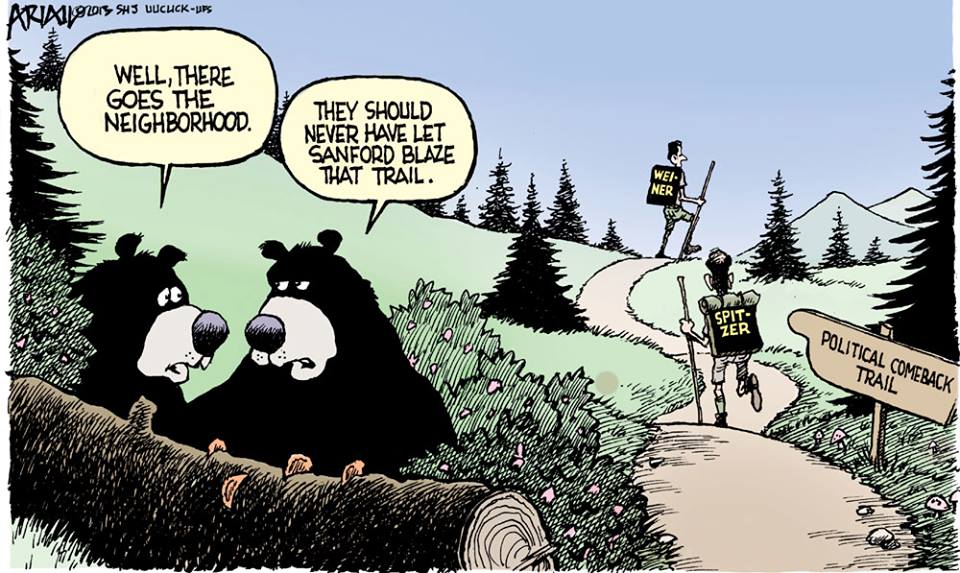
Sanford, having his Spitzer moment. Now Spitzer wants to have a Sanford moment.

Sanford, having his Spitzer moment. Now Spitzer wants to have a Sanford moment.

“The Fix” over at The Washington Post mentioned it in the lede of their Spitzer story:

It’s officially the year of the political comeback, with Mark Sanford winning a congressional seat and Anthony Weiner and Eliot Spitzer attempting their own second acts in New York City…

The New York Times was discreet enough to save it until the 3rd graf:

…His re-emergence comes in an era when politicians — like Representative Mark Sanford of South Carolina and the New York mayoral contender Anthony D. Weiner — have shown that public disapproval, especially over sexual misconduct, can be fleeting, and that voters seem receptive to those who seek forgiveness and redemption….

“It,” of course, is the embarrassing decision by the voters of South Carolina’s 1st District to send Mark Sanford to Congress again.

It’s apparently just given all sorts of bad actors bad ideas.

It shouldn’t. Just because voters in one state elected one guy who couldn’t keep his pants zipped (or even stay in this country when he was supposed to be on duty as governor of SC) doesn’t mean a whole other set of voters will vote for a whole other guy who also spectacularly engaged in misdeeds of a sexual nature. Particularly when the two men are so different politically, and their respective electorates are so different. It’s not like they’re all running on the “adultery” ticket, and that’s the political flavor of the month or something.

But national media too often act as though there is a real connection, and I fear that the backers and political consultants and hangers-on who talk these guys into making these comeback attempts do take such absurd, superficial, incidental correlations into consideration.

These things have been inextricably joined by national media since the start. The day that Mark Sanford did his super-painful (to watch, anyway) confessional presser, I was walking over to the State House for it, not exactly knowing what to expect, when an editor from The New York Post (in whose behalf I was on the way to cover the thing), called me on my old Blackberry to ask what I knew. Not much, I had to tell him. He asked, “Is he going to have a Spitzer moment?” I said again I didn’t know, although yeah, it was possible. I had been hearing things the last couple of days, but what I had heard was so sketchy and dubious that I didn’t want to embarrass myself promising such wild stuff when I had insufficient reason to believe any of it. (The only thing I had to go on was the governor’s bizarre disappearance, and his showing up that morning on a flight from Argentina.)

Then, when Sanford finally came out and started talking, I kept thinking, Wow, it was all actually true.

So now, they’re all like, Spitzer’s gonna try to do a Sanford.

Thanks, 1st District. Thanks so much.

Edward Snowden, the sniveling ‘hero’

This piece over at Slate

On the merits, Snowden’s claim for asylum would not count for much in any country. Applicants for asylum typically must prove they are the victims of persecution on account of their race, ethnicity, religion, or membership in a social or political group. Frequently, these are political dissidents who are fleeing government oppression, or members of the wrong group in a civil war or ethnic conflict. They have been tortured, their families have been massacred. Snowden could be regarded as a political dissenter, but the United States is attempting to arrest him not because he holds dissenting views, but because he violated the law by disclosing information that he had sworn to keep secret. All countries have such laws; they could hardly grant asylum to an American for committing acts that they themselves would regard as crimes if committed by their own nationals…

… reminded me of the statement Edward Snowden put out a day or two ago, through his friends at Wikileaks. After complaining that President Obama is employing “the old, bad tools of political aggression” against him, he went on:

The Obama administration has now adopted the strategy of using citizenship as a weapon. Although I am convicted of nothing, it has unilaterally revoked my passport, leaving me a stateless person. Without any judicial order, the administration now seeks to stop me exercising a basic right. A right that belongs to everybody. The right to seek asylum…

Well, first, young Edward, you have been “convicted of nothing” because you have not been tried, which is because you have not been apprehended, which is because you’ve been running like a scalded dog ever since you revealed your identity to the world.

And I thought Slate, above, explained pretty well why most nations would be unwilling to grant you the asylum that you wrongly regard as your “right.”

The whiny tone of Snowden’s statement this week sort of stands in contrast, in my mind, to the tone of self-righteous martyrdom that he struck at the outset, from Hong Kong:

I understand that I will be made to suffer for my actions, and that the return of this information to the public marks my end… There’s no saving me…

In other words, it’s a far, far better thing I do, yadda-yadda. Back then, he wasn’t concerned for himself, only for others:

“My primary fear is that they will come after my family, my friends, my partner. Anyone I have a relationship with,” he said. “I will have to live with that for the rest of my life. I am not going to be able to communicate with them. They (the authorities) will act aggressively against anyone who has known me. That keeps me up at night.”…

In other words, he was worried only about those whom HE had deliberately and unilaterally betrayed, along with his employer, his own oaths, and his country. He’s right — anyone associated with him, particularly anyone who worked with him, will be under suspicion, as our counterintelligence people will naturally wonder how one guy, working alone, had access to so much compartmentalized information.

But have you noticed something about those people he supposedly was so worried about? They’re still here, in this country. They are not hiding in an airport in Russia, desperately trying to find a country that will protect them from the legal consequences for their own actions. Only Edward Snowden, “hero” in the cause of transparency, is doing that.

If Snowden really wants a national conversation about the issues he raises, there would be no better stage for him than his own trial. The one he’s unwilling to face.

Have the ‘Obama scandals’ indeed gone ‘up in smoke?’

I meant to post this over the weekend, but the question still bears examining, I think.

Late last week, Andrew Sullivan wrote the following, under the headline, “The ‘Scandals’ Go Up In Smoke:”

There was always something desperate about them: an attempt somehow, after five years of remarkably scandal-free governance, to try once again and prove Michelle Malkin’s fantasies (and Peggy Noonan’s feelings) correct. Darrell Issa was the perfect charlatan for the purpose; and Roger Ailes desperately needed a new narrative in the post-election doldrums. But there really was no there there … and you can feel the air escaping from the hysteria balloons…

Here’s an excerpt from the Jonathan Chait piece that inspired him:

Do you remember how all-consuming the “Obama scandals” once were? This was a turn of events so dramatic it defined Obama’s entire second term — he was “waylaid by controversies,” or at least “seriously off track,” “beset by scandals,” enduring a “second-term curse,” the prospect of “endless scandals,” Republicans “beginning to write his legislative obituary,” and Washington had “turned on Obama.” A ritualistic media grilling of Jay Carney, featuring the ritualistic comparisons of him to Nixon press secretary Ron Ziegler, sanctified the impression of guilt.

It has come and gone, having left barely a trace. To be sure, the Obama scandals live on in the conservative world, where the evidence of deep corruption and venality grows stronger and stronger. But that is merely the confirmation of suspicions of “Chicago politics,” ACORN and so on, that predate recent events and don’t require any particular facts to survive…

Not one to sit still for that, Peggy Noonan responded:

‘Documents Show Liberals in I.R.S. Dragnet,” read the New York Times headline. “Dem: ‘Progressive’ Groups Were Also Targeted by IRS,” said U.S. News. The scandal has “evaporated into thin air,” bayed the excitable Andrew Sullivan. A breathlessly exonerative narrative swept the news media this week: that liberal groups had been singled out and, by implication, abused by the IRS, just as conservative groups had been. Therefore, the scandal wasn’t a scandal but a mere bungle—a nonpolitical series of unhelpful but innocent mistakes.

The problem with this story is that liberals were not caught in the IRS dragnet. Progressive groups were not targeted.

The claim that they had been rested mostly on an unclear, undated, highly redacted and not at all dispositive few pages from a “historical” BOLO (“be on the lookout”) list that apparently wasn’t even in use between May 2010 and May 2012, when most of the IRS harassment of conservative groups occurred.

The case isn’t closed, no matter how many people try to slam it shut….

But the truth is, I haven’t heard much lately about the IRS thing, or Benghazi. And the “scandal” that Edward Snowden supposedly revealed never was a scandal, and his own saga has become the kind of farce that reminds us of Father Drobney, who has been hiding in an embassy for years in Woody Allen’s play, “Don’t Drink the Water.”

But according to Ms. Noonan, this is all a matter of the liberal media trying to wish the scandals away. She gets particularly indignant about the IRS one:

No one has gotten near the bottom of this scandal. Journalists shouldn’t be trying to make the story disappear. The revenue-gathering arm of the federal government appears to be politically biased, corrupt in its actions, and unable to reform itself.

The only way to make that story go away is to get to the bottom of it and fully reveal it. It’s not a bungle, it’s a scandal.

What do y’all think?

Rewriting the rules of war, Obama-style

The New Republic this week is devoting itself to suggestions for how Barack Obama might have a more successful second term. I was sort of intrigued by this suggestion, “REWRITE THE LAWS OF WAR,” to wit:

One of the most persistent criticisms of President Barack Obama’s counterterrorism policy is that he has not definitively broken with the troubled legacy of George W. Bush. But he could put that judgment largely to rest by pushing to modernize the laws of war.

The Geneva Conventions and other similar instruments were designed to deal with traditional armies—not groups with no ties to state sponsors or that operate in failed states. Obama should organize an international conference to establish new standards and agreed-upon interpretations for such subjects as the definition of enemy combatants, the treatment of detainees, and the rendition of suspected terrorists. Drones could also be considered—especially standards to minimize civilian casualties and to establish whether targets pose an imminent threat…

Things have changed, so maybe we should convene a new gathering in Geneva. Or somewhere. If we do, here are some ideas of new rules that the president might want to suggest, but which might not go over well with other potential signatories:

  1. If you make my personal list, I get to take you out with a drone, like Zeus hurling thunderbolts from Mt. Olympus. And if you don’t like that, you just made the list, buddy.
  2. If you make our special short list, we will send in the bully-boys to give you a triple-tap in the forehead in your boudoir in the middle of the night, no matter where in the world your boudoir happens to be. As for countries who object to our doing this within their borders, you, too have a special right under this agreement: You get to try to stop us. Heh, heh.
  3. All battles must take place at night. In the event that night-vision equipment becomes sufficiently ubiquitous that all of our potential enemies have it, this rule will be revisited.
  4. Guantanamo will close when I damn’ well get around to it.

And so forth. You get the idea. I’m sort of kidding, sort of not, given the way this president has continued to conduct the War on Terror. Not only has he “not definitively broken with the troubled legacy of George W. Bush,” as TNR so daintily puts it, he has in some ways been more aggressive than his predecessor in employing the Bush Doctrine.

Basically, the way I just worded all that is probably pretty close to the way folks in some other nations out there see the current U.S. policy. And they’d probably want to address these perceptions at a convention.

So maybe POTUS would like to convene such a gathering, and maybe he wouldn’t…

Happy side-effect of SCOTUS ruling on Prop 8 — undermining government by plebiscite

I thought this was an interesting sidelight on the U.S. Supreme Court’s ruling that advocates of Proposition 8 had no standing to defend the law made by referendum:

SACRAMENTO — Activists on both sides of the bitter fight over same-sex marriage managed to agree on one thing in the wake of Wednesday’s U.S. Supreme Court decision.

The justices, they said, set a worrisome precedent by giving elected officials undue power over ballot initiatives.

The court essentially voided Proposition 8, a measure placed on the state ballot by foes of gay marriage and passed by voters in 2008. The justices said supporters of the initiative had no standing to defend the measure after state leaders — who opposed the law — had refused to do so.

Their reasoning drew a testy dissent from Justice Anthony M. Kennedy, a Sacramento native, who wrote that the decision “disrespects and disparages” California’s political process — a staple of which is the ballot initiative.

The court, Kennedy wrote, did “not take into account the fundamental principles or the practical dynamics of the initiative system in California.”…

I read that, and I think, “Good.” Nothing worrisome about it. Anything that undermines California’s chaotic government-by-plebiscite process is a good thing for representative democracy (a.k.a., “The American Way”).

Everybody’s writing about this now. I first saw the subject raised in the WSJ, this morning, and here’s the Washington Times take on it:

DENVER — The Supreme Court’s decision Wednesday on Proposition 8 unlocked the door for same-sex marriage in California but also may have stifled the voices of the state’s voters…

No, it didn’t stifle anything. They still get to elect their representatives, and that’s how things are supposed to work in a republic.

Whether it’s the definition of marriage in California, or the Confederate flag flying on the State House grounds in Columbia, or more routine, everyday laws, they are far better made through the deliberative process of representative democracy, as imperfect as that is.

There is almost no issue that is best defined as an option between “yes” and “no,” which is all you get in a referendum. True, as our politics have become more and more polarized, far too many issues get defined as “yes” or “no” even in our supposedly deliberative bodies. And that’s a tragedy.

But the cure for that is not to dumb things down further by reducing them to “yes” or “no” on a ballot voted on by people who haven’t even had the opportunity to interact with each other through ordered debate.

So anything we can do to move away from that trend, in California and the rest of the country, is a plus.

Who wants ANY kind of watch in 2013, much less a Rolex?

This news item is a real head-scratcher for me:

A prominent political donor purchased a Rolex watch for Virginia Gov. Robert F. McDonnell, according to two people with knowledge of the gift, and the governor did not disclose it in his annual financial filings.

The $6,500 luxury watch was provided by wealthy businessman Jonnie R. Williams Sr., the people said. He is the chief executive of dietary supplement manufacturer Star Scientific and the person who paid for catering at the wedding of the governor’s daughter. The people spoke on the condition of anonymity because of an ongoing federal investigation into the relationship between Williams and the McDonnell family…

It raises all sorts of questions:

Who needs a watch in 2013? Cell phones (and computers, and tablets, and other devices that surround us) do everything a watch does and so much more, and are perfectly set to Naval Observatory accuracy.

If you were so atavistic as to feel the need for a watch in this century, why would you ever shell out more than $10 for one? As I recall, back when I was still aware of the price of watches (back in the day when, as Douglas Adams would say, we were so amazingly primitive that we still thought digital watches were a pretty neat idea), that’s more than what a little LCD digital from the grocery checkout line would cost, and it would get the job done.

Assuming you received a watch as a gift, and it was an ostentatiously expensive watch, why on Earth would you keep it, if you were in politics? Your natural reaction, if you had half a brain, would have been to quote Bo Diddley in “Trading Places,” saying, “Man, that watch is so hot, it’s smokin’.”

It’s just astounding.

Part of my problem is that I really don’t get the appeal of jewelry. Jewelry for men, that is. I mean, honestly, I don’t understand jewelry for women, either, but I’m willing to accept that women like the stuff based on the fact that men and women are just different, and vive la différence.

I don’t get it at all. I see these professional ballplayers with gold chains around their necks, and I think, “Did they just run out of stuff to spend all that money on?”

And it seems to me that the only way to explain wearing a watch in 2013 is to say that it just appeals to some people as jewelry.

I just know that, if someone gave me a Rolex, and it was ethical and legal for me to accept the gift, I would immediately run out and sell it and spend the money on something practical, something either I or someone else could actually use.

But not everybody is like me, I’ve noticed. More’s the pity…

Left and right both wrong about Voting Rights Act

The left and the right are both wrong about the Voting Rights Act.

I agree with the right, and disagree with the president and other Democrats, that it’s a good thing that the Supreme Court has struck down the provision requiring South Carolina and other pariah states get preclearance of any change in voting procedures.

That requirement was fundamentally unjust. It assumed a guilt on the part of these states, and required them to prove their innocence before they could conduct their own voting business in ways other states were free to do without undergoing such procedures.

This was wrong. It condemned people who had absolutely nothing to do with past discrimination — all those who were guilty have long, long ago left office, and most are dead. Everyone in public office, appointive or elective, today has spent his or her entire career, if not entire life, in a world shaped by the provisions of the Voting Rights Act. It is completely unjust to require that some people, and not others, labor under the burden of greater suspicion because of the accident of where they happen to live.

If someone did enact new voting lines or procedures, and they in some way violated the Act, then they were subject to being accused of doing so, and having to answer for it. That will still be the case without preclearance. And that is the way it should be. Individuals, and governments, should have to answer for what they do wrong, and not be automatically punished with suspicion over everything they do.

So… preclearance has been an unjust burden, as conservatives say. And it’s particularly hard to justify such an injustice in a time when, for instance, minority voter participation is better in Mississippi than in Massachusetts.

However… where the right is wrong is when it says that the Voting Rights Act is a huge success, particularly for minorities, and that it has moved us racial discrimination in our politics.

On the contrary, under the Voting Rights Act, we have a new kind of racial tension in our politics. Conservatives rail at Democrats, saying the liberals only want to keep the thumbscrews on the South so they can draw more minority-majority districts. And perhaps they do, if they are fools. For in fact, the drawing of such districts has been a tremendous boon to white Republicans.

White Republicans in South Carolina seized power in the early ’90s by giving the Legislative Black Caucus more districts that were likely to elect black legislators. The way this was done was by putting as many black voters as possible into a few districts, and given the racial patterns common to both black and white voters, those districts had a greater tendency to elect black candidates.

But the truth, which for some reason is not painfully obvious to everyone, is that you can’t make some districts super-black without making surrounding districts super-white. What this meant was that for each new “black” district, you created several districts far, far more likely to elect white Republicans. Not only that, but a certain kind of white Republican — one far less likely to give a damn about the concerns of the black citizens who live in other districts.

So, you get two kinds of people — those from majority-minority districts, and those from ethnically cleansed white districts — who are elected BECAUSE of racial considerations, and who know that.

And the way they start to engage issues starts to reflect that. You can see it in debates over public health, education, and all sorts of things that we desperately need to be considered with regard to the good of all the public. Instead, what we get is a few lawmakers elected from districts with a high poverty rate (which tends to correlate to race, although it’s certainly not a one-to-one relationship). They tend to see the value in, say, expanding Medicaid (especially when the federal government is picking up the tab).

But they are outvoted by people from suburbs who can honestly say that their constituents don’t care about such things, and who can afford to treat the whole thing as an abstract, ideological issue. They can dismiss health care reform designed to provide care for the uninsured for something as frivolous as the fact that the name “Obama” is attached. Their constituents are largely fine with that. That is to say, enough of them are to keep electing the same kinds of representatives.

And so we don’t get policies designed for the benefit of the whole state. Because neither kind of gerrymandered district “looks like South Carolina.” Neither represents whole communities, but rather subsets of communities, defined by race. So relatively few legislators see themselves as there to serve a broad range of people in different circumstances, with different viewpoints.

It’s great that we don’t have poll taxes. It’s great that minorities who were marginalized are now so engaged with the political process. In those respects, the Voting Rights Act is a great success.

And we have seen success stories that give us hope for a future without elections that are predetermined by the skin color of the electors. Barack Obama’s two election victories offer that kind of hope.

But on the district level, our politics are still largely defined by race. And there, the Act has not been such a boon.

If only Gaddafi and Saddam were still alive, Snowden would have two more friends in the world

Let’s see…

First, that bastion on transparency and respect for privacy China protects Edward Snowden in Hong Kong, and lets him leave.

Then, Vladimir Putin insists it has no control over who comes and goes there. I liked the way the WSJ’s Bret Stephens underlined the absurdity of that claim: “When the Russian government wants someone off Russian soil, it either removes him from it or puts him under it.”

Of course, at each stage of his picaresque journey, Snowden’s had is being held by Julian Assange’s organization. Julian Assange, who makes it his business to shut down communications among U.S. security organizations, taking us back to the pre-9/11 condition in which information was kept in silos and not shared to prevent terror attacks.

So where might he go next? The late Hugo Chavez’ Venezuela has been mentioned. Rafael Correa of Ecuador, already happy to be harboring Assange in London, would be delighted to cock another public snook at the United States and its allies.

I’m sort of feeling bad for Evo Morales in Bolivia. You know he’d love some of this kind of action, but I haven’t heard that he’s on Snowden’s potential itinerary. Snowden and Assange should at least throw the guy a mention, just to keep peace in the anti-Yanqui clubhouse.

If only Moammar Gaddafi and Saddam Hussein were still around. Snowden would have two more friends in this cold, cruel world…

Krauthammer: Syria as the Spanish Civil War

PicassoGuernica

What with all the travelling I’ve been doing the last few days (I was working on the coast Wednesday and Thursday, drove to Memphis Friday, drove back yesterday), I’m just now getting to Charles Krauthammer’s column from late last week.

I liked his analogy:

The war in Syria, started by locals, is now a regional conflict, the meeting ground of two warring blocs. On one side, the radical Shiite bloc led by Iran, which overflies Iraq to supply Bashar al-Assad and sends Hezbollah to fight for him. Behind them lies Russia, which has stationed ships offshore, provided the regime with tons of weaponry and essentially claimed Syria as a Russian protectorate.

And on the other side are the Sunni Gulf states terrified of Iranian hegemony (territorial and soon nuclear); non-Arab Turkey, now convulsed by an internal uprising; and fragile Jordan, dragged in by geography.

And behind them? No one. It’s the Spanish Civil War except that only one side — the fascists — showed up. The natural ally of what began as a spontaneous, secular, liberationist uprising in Syria was the United States. For two years, it did nothing….

As will not surprise you, he is not satisfied with President Obama’s belated decision to help the rebels with nothing more than small arms and ammo.

He gets way harsh on the pres with regard to Iraq:

The tragedy is that we once had a counterweight and Obama threw it away. Obama still thinks the total evacuation of Iraq is a foreign policy triumph. In fact, his inability — unwillingness? — to negotiate a Status of Forces Agreement that would have left behind a small but powerful residual force in Iraq is precisely what compels him today to re-create in Jordan a pale facsimile of that regional presence…

We had a golden opportunity to reap the rewards of this too-bloody war by establishing a strategic relationship with an Iraq that was still under American sway. Iraqi airspace, for example, was under U.S. control as we prepared to advise and rebuild Iraq’s nonexistent air force.

With our evacuation, however, Iraqi airspace today effectively belongs to Iran — over which it is flying weapons, troops and advisers to turn the tide in Syria. The U.S. air bases, the vast military equipment, the intelligence sources available in Iraq were all abandoned. Gratis…

David Brooks’ piece on Snowden the best column I’ve seen in years

David Brooks’ Monday column in The New York Times (which The State ran today) is the best column of any kind, by anyone, that I have read in years. (People whose thoughtfulness I respect keep bringing it to my attention, and I say, yes, thanks; I saw it — and intend to say something about it.)

Basically, you need to go read the whole thing. And then read it again. I can’t quote everything in it that is awesome without stomping all over the Fair Use standard, but let me describe briefly what the piece does.

It explains exactly what is wrong with Edward Snowden and what he did. Brooks accomplishes this in spite of the fact that we lack the common vocabulary in this country to express such things in a manner that everyone can understand. People who sort of get that what Snowden did is wrong, and that his actions reflect something fundamentally wrong with Snowden himself, don’t know how to explain that wrongness. So they either clam up, ceding the floor to the more simple-minded cheerleaders for Snowden’s brand of “transparency,” or they use a word that gets them dismissed, as John Boehner did when he resorted to “traitor.”

In explaining what is wrong with Snowden, Brooks explained something fundamentally wrong with our society and our politics today — something that is eating away at our ability to be a society governed by representative democracy, because it’s eating away at basic civil. social assumptions that make it possible for free people to live together.

The piece is headlined “The Solitary Leaker.” An excerpt:

Though thoughtful, morally engaged and deeply committed to his beliefs, he appears to be a product of one of the more unfortunate trends of the age: the atomization of society, the loosening of social bonds, the apparently growing share of young men in their 20s who are living technological existences in the fuzzy land between their childhood institutions and adult family commitments.Brooks_New-popup-v2

If you live a life unshaped by the mediating institutions of civil society, perhaps it makes sense to see the world a certain way: Life is not embedded in a series of gently gradated authoritative structures: family, neighborhood, religious group, state, nation and world. Instead, it’s just the solitary naked individual and the gigantic and menacing state.

This lens makes you more likely to share the distinct strands of libertarianism that are blossoming in this fragmenting age: the deep suspicion of authority, the strong belief that hierarchies and organizations are suspect, the fervent devotion to transparency, the assumption that individual preference should be supreme. You’re more likely to donate to the Ron Paul for president campaign, as Snowden did….

After acknowledging that the procedures Snowden has revealed (or rather, revealed in greater detail than what we knew previously) could be abused at some future time, Brooks continues:

But Big Brother is not the only danger facing the country. Another is the rising tide of distrust, the corrosive spread of cynicism, the fraying of the social fabric and the rise of people who are so individualistic in their outlook that they have no real understanding of how to knit others together and look after the common good.

This is not a danger Snowden is addressing. In fact, he is making everything worse.

For society to function well, there have to be basic levels of trust and cooperation, a respect for institutions and deference to common procedures. By deciding to unilaterally leak secret N.S.A. documents, Snowden has betrayed all of these things…

OK, that’s as much as I dare quote. But Brooks goes on to catalog the various personal, social and institutional betrayals of Edward Snowden, and the ways that such betrayals unravel the social fabric that allows a healthy civilization to exist.

It is a very, very good piece. Please go read the whole thing.

JFK also posed with life-sized Nancy Pelosi

9e92d72fd40889ce58_t8m6ibhvx

It turns out that Mark Sanford got his posing-next-to-Nancy-Pelosi shtick from a Democrat — JFK, to be precise.

Who knew?

I didn’t, until the DCCC sent out a fundraising appeal with the following text:

Brad —

I’m not sure if you were alive when President Kennedy signed the Equal Pay Act 50 years ago today.

I was a recent Trinity College graduate (here’s a picture of me with President Kennedy from just a couple years before to prove it):

President Kennedy called the Equal Pay Act “a first step” to ending the widespread practice of paying women less than men for the same amount of work. And that’s exactly what it was: a first step.

50 years later, we’re still fighting this fight, and women STILL make 23 cents less on the dollar. House Democrats have proposed a solution — the Paycheck Fairness Act — but Republicans voted to block this legislation from even coming to a vote. That’s unacceptable…

And so forth and so on. I’m happy to say that she restrained herself from saying “War on Women” this time, so let’s be grateful.

Basically, I just wanted to share the picture…

Aw, Jeez, Edith — here we go with the ACLU again

Consider that headline my tribute to Jean Stapleton.

There are some things that bring out the Archie Bunker in me, and the ACLU suing the government for doing its job is one of them:

 WASHINGTON — The American Civil Liberties Union on Tuesday filed a lawsuit against the Obama administration over its “dragnet” collection of logs of domestic phone calls, contending that the once-secret program — whose existence was exposed by a former National Security Agency contractor last week — is illegal and asking a judge to both stop it and order the records purged…

Oh, and for those who don’t think the government is “doing its job” in this case — well, yes it is, by definition.

On a previous thread, Mark Stewart wrote:

The issue is not whether bureaurocrats’ believe that data mining Americans’ communications is the most appropriate way to “protect” our country; rather it is whether Americans have decided that such “protection” is in the best interests of our society.

And we have not…

On the contrary, Mark — we have.

We’ve decided it through our elected representatives, which is how it works in a representative democracy. This is not a direct democracy; nor should it be.

We’ve had years and years to decide whether we want to elect people other than the ones who decided to follow this course, and we’ll have more such opportunities in the future.

Again, I stress that the fact that the government was doing these things is not new information. We’ve had this discussion before. It’s just that some new details have brought it back into headlines, and a lot of people who weren’t paying attention before are startled.

Rand Paul believes in Big Brother, but does not love him

The most popular item on the Wall Street Journal’s website at the moment is this morning’s op-ed headlined “Big Brother Really Is Watching Us” by — who else? — Rand Paul. As usual, Sen. Paul is dead serious. An excerpt:

Official PortraitThese activities violate the Fourth Amendment, which says warrants must be specific—”particularly describing the place to be searched, and the persons or things to be seized.” And what is the government doing with these records? The president assures us that the government is simply monitoring the origin and length of phone calls, not eavesdropping on their contents. Is this administration seriously asking us to trust the same government that admittedly targets political dissidents through the Internal Revenue Service and journalists through the Justice Department?…

OK, first, there is no evidence that the “government… targets political dissidents through” the IRS. That suggests an actual policy on the part of the whole government. Whereas all that has been granted, or proven by anyone, is that some underlings exercised some lousy judgment. Second, there is a logical fallacy here. If the government “admittedly” does the things you mention, why should you distrust it when it says it’s not doing something else? Make up your mind. If the government is such a big, fat liar, maybe it’s lying to you when it admits the IRS and Justice Department things…

Another excerpt:

What is objectionable is a system in which government has unlimited and privileged access to the details of our private affairs, and citizens are simply supposed to trust that there won’t be any abuse of power. This is an absurd expectation. Americans should trust the National Security Agency as much as they do the IRS and Justice Department….

First, I’ve seen no indication that the government has access to the “details” of my “private affairs.” That’s not the way I read what’s been reported. Second, I do trust the NSA as much as I do the IRS and the Justice Department. They are institutions that do the jobs we assign them to do, and when they do something wrong, that’s anomalous. I know that’s going to sound weird to someone who believes the collection of taxes is inherently evil, but there it is…

NSA data-mining vs. actual invasion of privacy

I thought the WSJ made an interesting point in an editorial this morning:

The NSA is collecting “metadata”—logs of calls received and sent, and other types of data about data for credit card transactions and online communications. Americans now generate a staggering amount of such information—about 161 exabytes per year, equal to the information stored in 37,000 Libraries of Congress. Organizing and making sense of this raw material is now possible given advances in information technology, high-performance computing and storage capacity. The field known as “big data” is revolutionizing everything from retail to traffic patterns to epidemiology.

Mr. Obama waved off fears of “Big Brother” but he might have mentioned that the paradox of data-mining is that the more such information the government collects the less of an intrusion it is. These data sets are so large that only algorithms can understand them. The search is for trends, patterns, associations, networks. They are not in that sense invasions of individual privacy at all.

If the NSA isn’t scrubbing vast amounts of data, then it can’t discover who is potentially a threat. The alternative to automated sweeps is more pervasive use of lower-tech methods like wiretaps, tracking and searches—in a word, invasions of persons rather than statistical probabilities. The political attack on data-mining could increase rather than alleviate the risk to individual rights.

Open Thread for Saturday, June 8, 2013

Hey, y’all, I’ve been sort of out of pocket the last couple of days — looking at comments, but not sitting at a keyboard, so no posts.

Maybe, to start things off, I offer this interesting piece from the WashPost:

SAN JOSE — As a junior senator with presidential aspirations, Barack Obama built his persona in large part around opposition to Bush administration counterterrorism policies, and he sponsored a bill in 2005 that would have sharply limited the government’s ability to spy on U.S. citizens.

That younger Obama bears little resemblance to the commander in chief who stood on a stage here Friday, justifying broad programs targeting phone records and Internet activities as vital tools to prevent terrorist attacks and protect innocent Americans.

The former constitutional law professor — who rose to prominence in part by attacking what he called the government’s post-Sept. 11 encroachment on civil liberties — has undergone a philosophical evolution, arriving at what he now considers the right balance between national security prerogatives and personal privacy.

“I came in with a healthy skepticism about these programs,” Obama said in San Jose on Friday. “My team evaluated them. We scrubbed them thoroughly. We actually expanded some of the oversight, increased some of safeguards. But my assessment and my team’s assessment was that they help us prevent terrorist attacks.”

“On net,” the president added, “it was worth us doing.”…

I agree, from what I know.


I had no idea Boehner was such a jerk

There was an interesting piece yesterday in The Washington Post about how divided the House Republicans are these days, headlined, “House Republicans broken into fighting factions.”

It provided an in-the-room perspective of recent battles within the caucus, such as the meeting on New Year’s Day in which Speaker Boehner told the caucus he was going to vote for the tax deal with the Democrats, and his two top lieutenants said they would vote against it, and a representative from Tennessee shouted, “If you’re for this and they’re against, we’ve got problems.”

As I said, interesting piece. I’ve felt a good bit of sympathy for Mr. Boehner over the last couple of years as he has tried to lead the House despite the open opposition of the Tea Party faction. But I lost all sympathy when I got to this part of the story:

On a recent Wednesday afternoon, House Republicans filed into the same Capitol basement room, HC5, where they fought on New Year’s Day. They filtered past clearly marked NO SMOKING signs — which, as always, the Camel-smoking Boehner ignored — and settled into the same hard plastic chairs that have served as Washington’s toughest ideological fault line of the past 30 months.

OK, maybe I’m the last person in America to know this about Boehner, but I find that shocking.

I would think any member of the Congress who so blatantly ignored a rule in place for the health of other people to be beyond the pale. But for a leader to do it — for someone in chargeto demonstrate that he is entitled to indulge his own noxious habit to the detriment of the health of everyone around him, even though others have to follow the rules…

That’s just breathtaking. So to speak. I’m stunned.

No wonder nobody wants to follow that guy.

Why is Obama so high on Susan Rice?

You know, I felt like the nation sort of dodged a bullet when Susan Rice fell out of contention for secretary of state.

Not because of the Benghazi thing, but because of all the other stuff we learned about her while she was in the news. Just one foreign policy mess in her background after another.

And now, this:

WASHINGTON — President Obama announced on Wednesday afternoon that Susan E. Rice, the American ambassador to the United Nations, would replace Tom Donilon, who is resigning, as national security adviser in a major shakeup of his foreign-policy inner circle.Susan_Rice,_official_State_Dept_photo_portrait,_2009

 The appointment, which Mr. Obama made in a Rose Garden ceremony, puts Ms. Rice, 48, an outspoken diplomat and a close political ally, at the heart of the administration’s foreign-policy apparatus.

It is also a defiant gesture to Republicans who harshly criticized Ms. Rice for presenting an erroneous account of the deadly attacks on the American mission in Benghazi, Libya. The post of national security adviser, while powerful, does not require Senate confirmation.

In his announcement, Mr. Obama referred to Ms. Rice’s role as an adviser during his 2008 presidential campaign and praised her work as a key diplomat during his first term…

So… she was advising him back when, for instance, he was against the Colombian Free Trade Agreement, before he was (happily) for it?

Why is the president so high on having this woman in the front ranks of his foreign policy team? The NYT excerpt above makes it sound almost like petulance on his part. I haven’t figured out what it is that recommends her, or at least, what there is that outweighs all the negative