Category Archives: The Nation

Obama powerfully makes case for action in Syria — then passes the buck

POTUS delivered an impressive speech in the Rose Garden today, strongly and ably making the case for why we need to act in Syria, then noting that he is fully empowered to act without anyone’s permission… and then saying he won’t decide, but will leave it to Congress.

You know, the body that can’t pass a budget. The gang that can’t raise the debt limit to keep the government functioning without a major, credit-rating-damaging meltdown. That’s who he’s asking to decide.

First, let’s quote some of the stronger passages in which the president makes the case for action:

This attack is an assault on human dignity. It also presents a serious danger to our national security. It risks making a mockery of the global prohibition on the use of chemical weapons. It endangers our friends and our partners along Syria’s borders, including Israel, Jordan, Turkey, Lebanon and Iraq. It could lead to escalating use of chemical weapons, or their proliferation to terrorist groups who would do our people harm.

In a world with many dangers, this menace must be confronted.

Now, after careful deliberation, I have decided that the United States should take military action against Syrian regime targets…

I’m prepared to give that order…

I’m confident in the case our government has made without waiting for U.N. inspectors. I’m comfortable going forward without the approval of a United Nations Security Council that, so far, has been completely paralyzed and unwilling to hold Assad accountable….

What message will we send if a dictator can gas hundreds of children to death in plain sight and pay no price? What’s the purpose of the international system that we’ve built if a prohibition on the use of chemical weapons that has been agreed to by the governments of 98 percent of the world’s people and approved overwhelmingly by the Congress of the United States is not enforced?

Make no mistake — this has implications beyond chemical warfare. If we won’t enforce accountability in the face of this heinous act, what does it say about our resolve to stand up to others who flout fundamental international rules? To governments who would choose to build nuclear arms? To terrorist who would spread biological weapons? To armies who carry out genocide?

We cannot raise our children in a world where we will not follow through on the things we say, the accords we sign, the values that define us….

I will also deliver this message to the world. While the U.N. investigation has some time to report on its findings, we will insist that an atrocity committed with chemical weapons is not simply investigated, it must be confronted….

I don’t expect every nation to agree with the decision we have made. Privately we’ve heard many expressions of support from our friends. But I will ask those who care about the writ of the international community to stand publicly behind our action….

But we are the United States of America, and we cannot and must not turn a blind eye to what happened in Damascus. Out of the ashes of world war, we built an international order and enforced the rules that gave it meaning. And we did so because we believe that the rights of individuals to live in peace and dignity depends on the responsibilities of nations. We aren’t perfect, but this nation more than any other has been willing to meet those responsibilities…

Ultimately, this is not about who occupies this office at any given time; it’s about who we are as a country…. and now is the time to show the world that America keeps our commitments. We do what we say. And we lead with the belief that right makes might — not the other way around.

We all know there are no easy options. But I wasn’t elected to avoid hard decisions….

I’m ready to act in the face of this outrage….

That’s the speech, without all the “buts” and “howevers” removed. Wow. Pretty powerful, huh? What a call to arms. Note the repeated use of the word, “must:” this menace must be confronted… it must be confronted…

Except, in the end, it isn’t. The president said, “I wasn’t elected to avoid hard decisions,” even as he was avoiding this hard decision. Actually, it’s weirder than that. He’s made up his mind, and one of the things he’s made up his mind about is that we really don’t have a choice. We must act. And yet, he won’t.

If the world were a debating society, this wouldn’t matter. Act today, next month, next year, it would all be the same. The important thing would be to let everyone fully have their say, and make sure everybody feels great about the ultimate decision (which ain’t gonna happen, but that seems to be the idea here).

But in the real world, it may already be too late to act with any effectiveness, in terms of degrading Assad’s air assets, or ability to launch future chemical attacks on his people — or having any other effect that would actually be helpful.

As the president says, “The Chairman of the Joint Chiefs has informed me that we are prepared to strike whenever we choose.” So, if we’re going to do so, the time to do it is now. Or rather, yesterday. Or several months ago, when the president’s red line had already been crossed, and those 1,429 people were still alive, when those 400 children still had futures.

In short, I am most disappointed in the president’s abdication of responsibility — especially after he so ably made the case for immediate action.
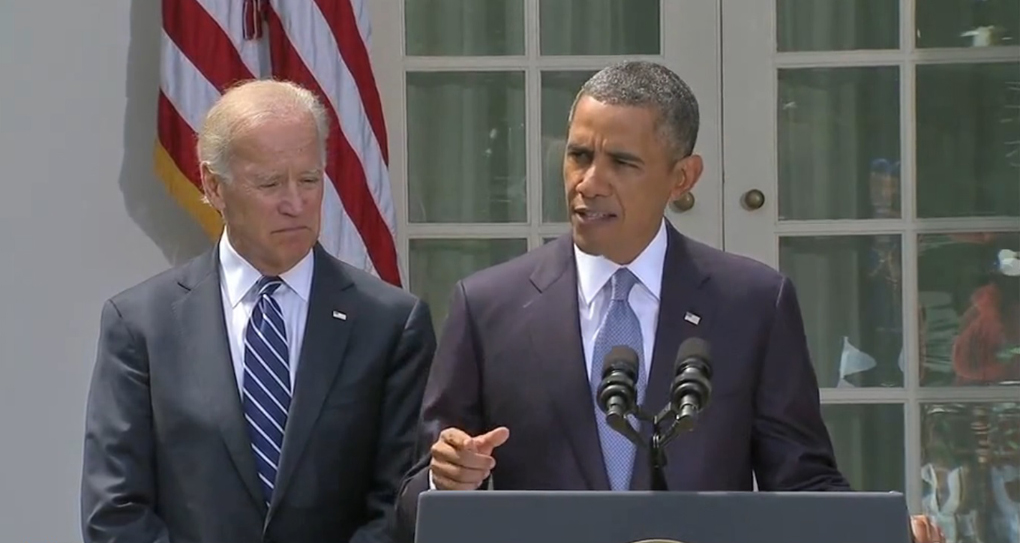
rose garden

How was that not a campaign trip? And why the secrecy?

Still scratching my head over the state Ethics Commission fixin’ to slap Nikki Haley’s wrist, then changing its mind:

Gov. Nikki Haley’s campaign will not have to repay the state for the cost of a SLED security detail that accompanied her on a trip to North Carolina in June, the State Ethics Commission’s executive director said Wednesday.

Haley attended a late-June N.C. event sponsored by the Renew North Carolina Foundation, a 501(c)4 that supports Republican N.C. Gov. Pat McCrory. Tuesday, reports surfaced the state-owned vehicle Haley was riding in on that trip was involved in a minor car accident June 27. Haley, along with her political adviser and a campaign fundraiser, were passengers in that vehicle, according to a public incident report.

Cathy Hazelwood, the attorney for the state Ethics Commission, said Wednesday morning she had sent a letter to Haley’s campaign asking it to reimburse the state for providing the Republican governor with a security detail on a campaign fundraising trip. “I can’t fathom why you have campaign people in your car and that’s not a campaign event,” Hazelwood said…

But then, the director of the agency said never mind, once he got “the whole story” from one of the governor’s attorneys.

So… what IS the whole story? I mean, what’s with the governor of our state getting in a wreck in another state, and we hear about it months later?

And how was that not a campaign trip?

50 years on: Is MLK’s work done, or not?

That would seem to be the question separating left and right today as they look back on the March on Washington 50 years ago.

For some days now, writers in The Wall Street Journal have been trying to head off what they expected Barack Obama and other Democrats to say today. For instance, John McWhorter wrote this morning:

On the 50th anniversary of the March on Washington, we will hear a good deal about how life in this country for black Americans has not changed as much as Martin Luther King Jr. might have wished….

It is easy to forget what an awesome moral landmark it was for an oppressed group to force the larger society to outlaw barriers to its success. But the victory of the 1964 and 1965 laws had an even greater impact than prohibiting segregation and racial discrimination in voter registration: It changed the culture. Personal racist sentiment rapidly became socially proscribed. The Norman Lear sitcoms of the early 1970s, in which bigoted whites were regularly held up to ridicule, would have been unthinkable just 10 years before….

(I)n recent years, the black middle class has flourished. Housing segregation for blacks is the lowest it has been since the 1920s. And a black president has been elected twice. Yet the fury persists, since what actually rankles these critics is the threat to what they feel is their very identity: underdogs with a bone to pick.

This is not where the March on Washington was pointing us. There is work left, but we are free at last. No, we aren’t living in a “post-racial” America, but that fantasy will never be realized. What we black Americans are free to do, in a permanently imperfect world, is shape our own destiny together.

As folks on the right predicted, the president today spoke of how far we have yet to go:

Taking the lectern, the nation’s first African American president paid homage to King’s legacy, saying that “because they kept marching, America changed.” But Obama warned that the struggle for equality is not yet complete, adding that “the arc of the moral universe may bend toward justice, but it doesn’t bend on its own.”

“To secure the gains this country has made requires constant vigilance, not complacency,” Obama said. He cited as setbacks the Supreme Court’s decision in June to strike key provisions of the 1965 Voting Rights Act and the high rates of African American incarceration…

There is justice on both sides of the argument.

A couple of days ago, in his “Best of the Web” feature at WSJ.com, James Taranto mocked Bloomberg’s Margaret Carlson for writing, after she saw “The Butler:”

“I wish Chief Justice John Roberts and four of his Supreme Court colleagues would see [‘The Butler’], too. Maybe it will help them understand how wrong they got it when they recently decided that we are so far past Jim Crow that we can dispense with a central provision of the 1965 Voting Rights Act.”

As Taranto notes, that is a bogus statement on several levels, the greatest of which being that depictions of life on a cotton farm in the 1930s are hardly a guide to the racial landscape of the country today. Another is that doing away with pre-clearance requirement applying to parts of the country that today have greater minority voter participation than parts that are not subject to such requirements somehow dispenses with “a central provision” of the Voting Rights Act.

Every “central provision” in the act is still in force. Complaints of violations of the Act can still be brought. All that goes away is the assumption, codified into law, that people who live in certain geographic locations — this county, but not the one next to it — are guilty of discrimination until proven innocent.

It’s bogus when she says it, and it was bogus when the president cited it as evidence that we have not come far enough. On the contrary, the justices did away with the requirement precisely because we have come so far.

I particularly like Mr. McWhorter’s assertion that the victories of the civil rights movement “changed the culture.” About 20 years ago, historian Walter Edgar and I went out to lunch together, and while standing in line, we witnessed a fairly routine, friendly exchange between a white cashier and a black customer. After we left, Walter started talking about how we took such interactions for granted, when they would have been almost unimaginable at a time within living memory.

I thought back to that just the other day, when I witnessed a white man giving way, in a courtly manner, to a couple of black ladies in a public place. There was nothing unusual about it, and that’s the miracle. Within my lifetime, that likely would not have happened.

Now, on the other hand…

The president rightly cites such disturbing vital signs as the high rates of black incarceration, the high black unemployment rate, and other signs of a demographic group lagging behind, even as legal barriers have disappeared and everyday cultural habits have changed radically.

That is the bitter legacy of the century between the Emancipation Proclamation and Dr. King’s speech.

The huge, continuing argument in our politics will continue to be over what we should do about it.

First, Vincent, you need a huge SC flag

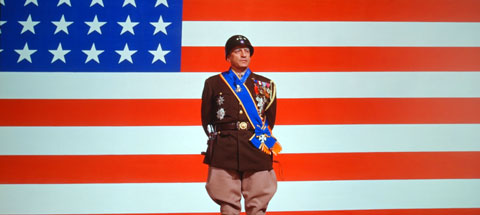
patton-flag

Normally, I don’t go in for the big stage props in politics. I still recall the time, in a barn at the agricultural experiment station outside Jackson, TN, in the late ’70s (or was it early ’80s?), when some national political figure stood to make a speech in front of two symmetrically-stacked ziggurats of hay and a tractor. I also remember how hot it was, and how the runnels of sweat rolled off the beautiful young network camerawoman standing on a platform just above me, her thin garments saturated and clinging to her…

But that’s beside the point. The point is that I don’t usually go in for the big, fakey stage props in politics. I thought the hay and the tractor were kinda cheesy. It was the first of many experiences I would have with such cheesiness.

That said, Vincent Sheheen has little choice now. He must find a really, really big South Carolina state flag and launch his campaign standing in front of it. The opening handed him by his opponent is just too inviting.

With her announcement yesterday, Nikki Haley made it clear that if you thought she was running a cookie-cutter, national, ideological campaign with no bearing upon South Carolina at all back in 2010, you ain’t seen nothing yet.

First, she stands in front of a U.S. flag that must have been bought second-hand from the people who filmed “Patton.” (The State said it was “tennis court-sized.” I think maybe they were playing doubles.) Then, she stood not with South Carolinians, not with people who have anything at all to say about South Carolina or who care a fig about South Carolina, but with Bobby Jindal of Louisiana, Rick Perry of Texas and Scott Walker of Wisconsin (which the New York Daily News calls her “blue-shirted band of merry men.”)

Oh, wait, Tim Scott was there — you know, the guy she elevated to the Senate, and who therefore owes her big-time.

The other governors were there to back her up as she said things such as this:

“When it came to Obamacare, we didn’t just say ‘no.’ We said ‘never.’ We are not expanding Medicaid just because President Obama thinks we should.”

Because, you know, that’s what it’s all about — fighting the big, national ideological fight. By the way, to fully understand that second sentence, you put a comma after Medicaid. Because the reason she’s saying “no” to expanding Medicaid is, of course, “just because President Obama thinks we should.”

Maybe the governor should talk with her former employers over at Lexington Medical Center about the jobs that will be lost there because of her standing in the way of Medicaid expansion. Not to mention the impact on South Carolinians’ health. But she’s not going to do that, and not only because she didn’t leave her old job under the best of terms. She’s not going to do that because she doesn’t care about the impact on South Carolina. It’s all about the national, ideological fight.

Which is something that Vincent Sheheen should seize on as a way to contrast himself to the current governor. He’s done that already, of course. He just needs to drive the point home a bit more firmly.

The big SC flag would be a good start. Not necessarily tennis court-sized. Just big enough to make the point — tastefully, which would be a nice change in and of itself.

Flag_of_South_Carolina.svg

Democrats react to Haley announcement with both barrels

Locally, and nationally, Democrats rushed to heap scorn upon Gov. Nikki Haley as she announced her re-election campaign today. From the Vincent Sheheen campaign:

Dear Brad, Today in Greenville Nikki Haley will take the stage with governors from three other states as she officially announces her re-election campaign.  She’s bringing in people from outside of South Carolina because it’s hard to find three people who actually live and work in the Palmetto State who think she deserves a second term.

But those three governors are bringing with them thousands of dollars from out-of-state interests for Haley’s campaign….

And from the Democratic National Committee:

Later today, Governors Bobby Jindal, Scott Walker, and Rick Perry will descend on South Carolina in an effort to boost the reelection chances of their embattled colleague, Governor Nikki Haley. In the wake of their 2012 electoral losses, Republicans have looked to their Governors for leadership, calling them in their Autopsy Report “America’s reformers in chief” and claiming they “point the way forward” for the party. Nothing could be further from the truth.

When you look at the records of Haley, Jindal, Walker and Perry you can see that not only are these Republican Governors failing to “point the way forward,” they’re taking their states backward, pursuing the same far-right policies that cost Republicans the White House in 2012.

Gov. Haley’s policies have failed hardworking families over and over; during her tenure as Governor, South Carolina is one of the hardest states in the country to earn a living in, is one of the hardest places in the country to live the American dream of economic mobility, and has an unemployment rate higher than 36 other states.

And the colleagues that Haley is bringing in on her behalf are doing no better for their states. Bobby Jindal is currently the least popular Republican Governor in the country. Under Scott Walker, job growth in Wisconsin has lagged behind the nation. And over Rick Perry’s three terms as Governor the unemployment rate has gone up….

Something I wondered about was her decision to launch in the Upstate — rather than, say, in her home county of Lexington. Maybe she felt the need to go someplace where a) people don’t know her as well, and b) they’ll vote for a Republican no matter who it is.

How much WMD is ‘a whole bunch?’

Those who wondered why the Obama administration had been slow, at least before the last few days, to acknowledge that Syria had crossed its red line — or to act (you know, by actually giving rebels those promised arms) when it did own up to it — must not have paid close attention to the specific words that the president used when he drew the line:

We have been very clear to the Assad regime … that a red line for us is we start seeing a whole bunch of chemical weapons moving around or being utilized. That would change my calculus…

How much WMD is “a whole bunch?” I don’t know. But I think maybe we’ve finally gotten to that point…

More poor SC kids than ever are obese

Remember that good-news story that I included in a recent Virtual Front Page, about how fewer poor kids are obese than previously?

Well, that doesn’t apply to SC, as you probably saw already:

The CDC study released in early August drew a lot of attention because it found childhood obesity rates were decreasing in 19 states and rising in only three. The study didn’t include data from 10 states.

South Carolina was omitted because a CDC request for data in 2011 went to an inactive email account at the S.C. Department of Health and Environmental Control, according to agency spokesman Mark Plowden. Because South Carolina didn’t send in timely data that year, it wasn’t included in the study of four-year trends.

The percent of obese children ages 2-4 years in the WIC in South Carolina has grown from 13.3 percent in fiscal year 2009 to 14.1 percent in 2010, 14.7 in 2011 and 15.6 in 2012, Plowden said…

This, to me, is another argument for restricting the kinds of foods that can be obtained with “food stamps” — with caveats for availability, considering “food deserts,” etc. I see the problems with such a move. But I also think we should work to overcome the problems, because kids are killing themselves with food that we’re buying for them.

Whatever we’re doing now to ensure proper nutrition for the poor obviously isn’t accomplishing everything that it should..

Bradley Manning escapes, having been replaced in his cell by someone named ‘Chelsea’

Are any of y’all watching “Orange is the New Black” on Netflix? No, wait, that’s an archaic question in the age of binge-watching, and of series being released all at once. It should be more like “Have any of y’all watched all or part of ‘Orange is the New Black’?”

Well, we have been, and we’ve seen it through the third episode, which centers around a transsexual — a former fireman named Burset, now living as a woman, specifically as the inmate hairdresser — in the women’s prison in which the series is set. It’s a sympathetic portrayal in the fullest sense — sympathetic to him as a him (in flashbacks) and her as a her, as well as to Burset’s wife and child and the pain they’ve dealt with through the process. I also found myself feeling a bit for the criminal justice system and prison authorities, because of the questions they have to deal with: Do you put Burset in a women’s prison? If so, is the state obligated to provide continued hormone treatments? If the state withdraws such treatments (which it does, allegedly for medical reasons), should Burset still be kept in a facility for women? If Burset commits suicide because all that personal and family sacrifice was for nothing, is the state liable?

But at least in that case, Burset came to the system having already made the big change, and having paid $80,000 for it. (We are given to gather that the imprisonment has something to do with how that money was acquired.) Everybody knew what they were dealing with.

Now, we have the real-life case of Bradley Manning, a young man who served in the U.S. Army as a man, and was convicted and sentenced as a man, and now wants to become a woman. Or is a woman, as his missive on the subject states.

Wow. This has to be frustrating for the Army. Here they went to all this trouble to try and convict and sentence this guy named Bradley, and now there’s some dame in his cell instead.

That’s one of the slicker escapes I’ve ever heard of.

We’re No. 1! We’re number one! (In incarceration rate)

CIubsq7

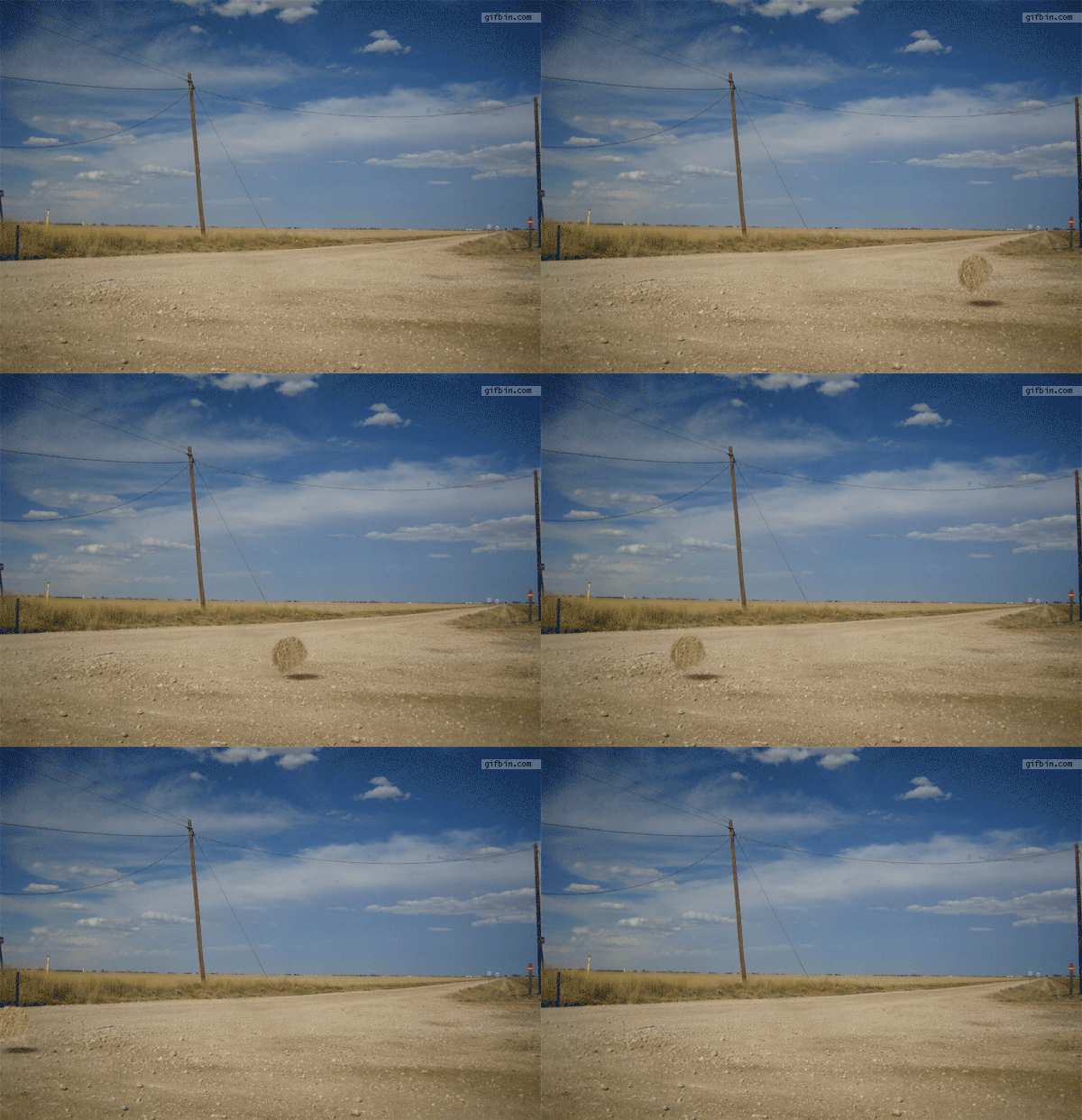
Let’s see if I can get this gif to work. There’s supposed to be a tumbleweed blowing across the barren crossroad. It’s meant to illustrate this point: “this is what it looks like when you take all of the countries that jail more people than we do and put them into one GIF.”

In other words, nobody exceeds the US of A in this important statistic. And among your more-or-less advanced sort of nations, the OECD nations, No. 2 Israel is way, way behind us.

A list like this is totally unfair to us, of course. It ignores the special problems we have. For instance these other countries don’t have as many poor, black males as… Oh, wait. That doesn’t make us sound any better, does it?

On a brighter note, it seems that among the United Prisons of America, South Carolina is only at No. 9, way behind Louisiana, which has more than triple our rate.

Of course, last time I heard, we had the dubious distinction of spending less per prisoner than any other state — meaning less on security, less on rehabilitation, etc. I was unable to determine in a quick search whether that was still true…

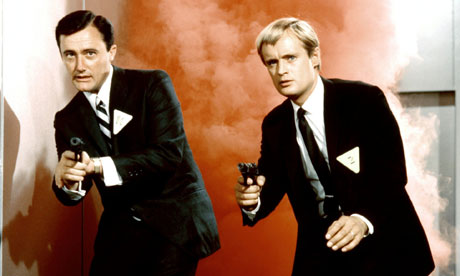
What if I’d come back in 2013? Would I have been impressed? I think not…

The-Man-from-UNCLE-007

Some seemed to doubt the premise of the preceding post about how static and dull and lifeless popular culture has become (or at least, to discount the importance of it). But to someone who was young in the ’60s, there’s something very weird about living in a time when a photograph of people 20 years ago would look no different from a photo today (assuming you could get them to look up from their smartphones for a second during the “today” picture).

As I said in a comment on that post

I’ve written in the past about how enormously exciting I found American pop culture when I returned here in 1965 after two-and-a-half years in South America without television. My words in describing it are probably inadequate. It was so amazingly stimulating, as though all my neurons were on fire. It was like mainlining some drug that is so far unknown to pharmacology, one that fully engages all of your brain.

If I had returned at that same age in 2013 rather than ’65 — meaning I had left the country in March 2011 — I doubt it would have been such a huge rush. It would be like, “Oh, look: The latest iPhone does some minor stuff that the old one didn’t. And now we have 4G instead of 3G. Whoopee.”

Most of the big movies would be sequels of the big movies when I left — or “reimaginings” of Superman or Spiderman. The best things on TV would still be “Mad Men” and “Breaking Bad.” “Firefly” would still be canceled. I’d be disappointed that “Rubicon” had only lasted one season. And I’d marvel at the fact that, with hundreds of channels out there, everything good was on one: AMC. (HBO hasn’t impressed me since “The Sopranos,” and that would have been over years before I left the country.) “The Walking Dead” would be new to me. Again, whoopee.

I just can’t imagine what I’d grab hold of and say, “Wow, THIS is different and exciting…”

But consider this list of things that I saw and heard for the first time in 1965, either immediately when I got back into the country, or over the next few months:

  • James Bond – who was enormously important to my friends and me, and who did a lot toward defining the decade (just ask Austin Powers), and who embodied much of what “Mad Men” recaptures about the decade. Yes, Bond had been around earlier, but I had never heard of him before the film “Dr. No,” which I actually saw on the ship on my way down to Ecuador. Which I did not enjoy. I didn’t really get Bond, as something that interested me, until “Goldfinger.”
  • Really exciting new cars that changed dramatically from model year to model year. I had seen ONE Mustang, parked outside the Tennis Club in Guayaquil, and I thought it was awesome. I’d never seen a Sting Ray, and the ’65 model was particularly cool…
  • Not just the Beatles, but the entire British Invasion – the Stones, Herman’s Hermits, The Dave Clark Five, Freddie and the Dreamers, the Animals, Tom Jones, Petula Clark. Just those few names illustrate the tremendous diversity of styles just within that one category we describe as the “Invasion.”
  • Folk rock – The Byrds, Chad & Jeremy, Simon and Garfunkel, and so on.
  • Beach music, West coast – The Beach Boys, Jan & Dean, the Surfaris
  • Gimmick bands – Paul Revere and the Raiders, Sam the Sham and the Pharoahs, etc.
  • One-hit wonders – Much of the vitality of the era was personified by such groups as ? and the Mysterians, the Standells and the Troggs (OK, all three of their hits were technically in ’66. But consider such one-time hits of 1964 and 65 as “The Girl from Ipanema,” “Eve of Destruction,” “Keep on Dancing,” “Land of 1,000 Dances”…)
  • Ordinary guys wearing (relatively) long hair. Yes, we’d heard of The Beatles by this time in South America, but the fashion had not caught on.
  • Beach music, East coast – Yeah, this music had been around, and white kids had been listening to this “black” music, but it didn’t have the kind of profile where I could hear it until this point. I think Wikipedia rightly cites the heyday as being “mid-1960s to early 1970s.”
  • Color TV – It had existed, but I hadn’t seen it.

OK, taking off on that last one, let’s just take a quick run-through of the TV shows, icons of the era, that were either new in 1965, or new to me because I’d been out of the country:

  • Gilligan’s Island
  • Green Acres
  • I Spy
  • Hogan’s Heroes
  • The Wild, Wild West
  • The Smothers Brothers Show
  • Lost in Space
  • Bewitched
  • Daniel Boone
  • The Man from U.N.C.L.E.
  • Get Smart
  • The Munsters/The Addams Family
  • Shindig!

I want you to especially note the variety in those shows — they weren’t all manifestations of the same cultural phenomenon, the way, say, “reality TV” shows are today. (A phenomenon that would not be new to me at all from a two-year absence.)

I’d like to include “The Beverly Hillbillies,” but it actually premiered shortly before I left the country, and I’d seen it once or twice. And I won’t cite the ground-breaking “Batman” because it premiered in January of 1966 – which was still within my first year back in the country. Also, I never saw “The Andy Griffith Show” before my return, but that was my fault — it had been out there for a year or so before I left.

This may all seem silly and superficial to y’all, but I think it’s actually significant that our popular culture is so static and unchanging today. Someone, trying to dismiss this, said on the previous post that I was ignoring the fact that the dynamism of popular culture in previous decades was just a First World, affluent-society phenomenon.

No, I wasn’t. In fact, that is sort of my point. I had come from an unchanging, static culture in the Third World into one of the most exciting cultural moments in the life of the most affluent country in human history. I would even go so far as to suggest that the dynamism of the popular culture is related somehow to economic dynamism.

And maybe the economic stagnation that is the New Normal today is related to cultural stagnation. We could feel our economic horizons expanding in past decades. No longer…


The Rolling Stones – Live in Shindig! (1965) by Vilosophe

I couldn’t watch Werner Herzog’s anti-texting-and-driving video; it made my heart hurt too much

At the behest of AT&T, German filmmaker Werner Herzog made a half-hour video that shows the real-life human tragedies that texting while driving causes.

I couldn’t get through the very first story. It made my heart hurt too much. From the very first second that I saw that young woman holding her fingers out to her side, I knew that there was supposed to be a small child clinging to them, and that the child was gone.

It’s brutal. But as an updated, higher-quality film of the sort they made driver’s-ed students watch back in my day, it’s got to be effective. I hope.

In case you weren’t entirely convinced that Weiner is a jerk

… watch this video, in which he mocks a British reporter for being British (likening talking to her to a Monty Python sketch), and then mocks England for being a “rainy, cloudy and grey” place.

But it’s not so much what he does as how he does it, with everything from his tone of voice to his body language to his constant demonstrations that he’d rather pay attention to anything but the reporter.

Yes, Anthony, there is an absurdist feel to the questions reporters ask you — to the entire existence of your campaign, for that matter. But whom do you have to blame for that?

SC GOP chairman doing what party chairmen do

IMG_1767

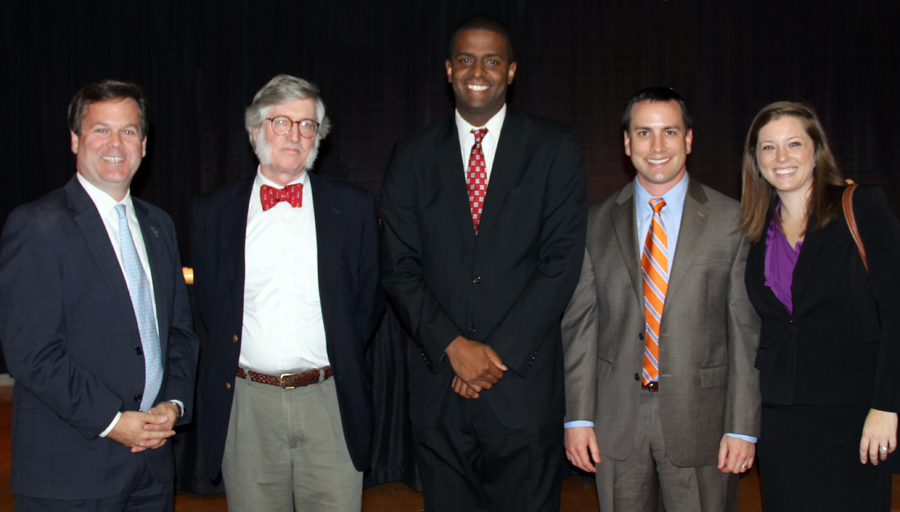
That’s Matt Moore, second from right, with some other modern SC politicos and some fugitive from the early 19th century, at a political forum last fall.

You’ve probably seen this silliness:

COLUMBIA, SC — The chairman of South Carolina’s Republican Party says he will not allow CNN or NBC to broadcast debates of Republican presidential candidates in South Carolina unless the networks refuse to air a documentary on Hilary Clinton, a possible Democratic nominee for president.

NBC plans to broadcast a miniseries starring Diane Lane as Clinton, the former First Lady, U.S. Senator and Secretary of State. CNN has also announced plans for a feature-length documentary on Clinton’s career.

Monday, Reince Priebus, chairman of the Republican National Committee, sent letters to NBC and CNN telling them he would ask the RNC to ban any Republican candidates from participating in presidential debates hosted by NBC or CNN unless the two networks agree to not air the programs.

Matt Moore, South Carolina’s newly elected Republican Party chairman, said he agreed with Priebus…

Matt Moore is doing what party chairmen do — inspiring ire toward the opposition (and, if you’re a Republican, toward media, which is perceived by the most ardent loyalists as the opposition), inspire the constituency to say “hell, yeah!,” and keep them giving money.

Making sense is not a job requirement.

It is extremely unlikely that I will watch either of those programs, mainly because the chief reason I have a TV is to have something to watch movies on. These programs do not seem to fit into the category of things I deem worth spending time on.

But it seems to me that given the far less interesting and compelling figures who have inspired docudramas in the past, Hillary Clinton certainly qualifies as legitimate fodder. I found it interesting to see what Emma Thompson did with the Hillary-inspired character in “Primary Colors” — a movie that, by the way, was far from laudatory.

People make too much of such things. And they ignore the fact that these things can do as much harm as good to candidates. I’m mindful of the how media overexposure (much of it on her terms) eliminated Sarah Palin from consideration for the presidential nomination in 2012, despite her popularity for a year or so after the 2008 contest.

People have always made too much of such things. I vividly recall the way full release of “The Right Stuff” was delayed to avoid charges that the filmmakers were boosting John Glenn’s chances in the 1984 Democratic nomination process.

If only they had been able to do so. If that awesome film (which never got the attention it should have, due in large part to its on-again, off-again release) could have gotten him elected or even nominated, I would have been much happier than I was with the choice available to us that November.

Russia has committed a deliberate, hostile act against U.S.

Lindsey Graham took little time in reacting to the news that Edward Snowden has been allowed to enter Russia technically and officially, and will be granted asylum for a year:

WASHINGTON – U.S. Senator Lindsey Graham (R-South Carolina) made this statement today on the reports that Russia has granted Edward Snowden temporary asylum.


“If these reports are accurate, Americans in Washington should consider this a game changer in our relationship with Russia.  Mr. Snowden has been charged with serious crimes and has put American lives at risk at home and abroad.


“Today’s action by the Russian government could not be more provocative and is a sign of Vladimir Putin’s clear lack of respect for President Obama. It is now time for Congress, hopefully in conjunction with the Administration, to make it clear to the Russian government that this provocative step in granting Snowden asylum will be met with a firm response.”


#####

Basically, Putin has just flipped a gigantic bird at the United States. He has shown a gross disrespect for the United States and its laws, protecting Snowden from prosecution on charges of doing things for which — and here’s the ironic part — were a Russian citizen to do them to his country, Putin would put him under Lubyanka Square.

So, what do we do about it? For his part, Sen. Graham has suggested that we consider boycotting the winter Olympics to show our displeasure. Some have reacted as though that were crazy talk. I don’t know why. Jimmy Carter kept us out of the real Olympics in 1980 to protest the Soviet incursion into Afghanistan.

But it doesn’t seem to me the best response to this situation. Right off, it would seem to accept the fact that we’re not getting this mutt back before February 2014, because that’s when the games are. On the other hand, if we got him back before then, we could then go ahead to the Olympics.

There must be a better approach, but I don’t know what it is. What does Putin want that we could deny him without hurting our own interests further? Someone must know.

GOP accuses Democrats of waging ‘war on women’

OK, I sort of got a kick out of this:

In 2012, Democrats’ constant refrain that the Republican party was in the midst of a “war on women” left the GOP — all the way up to presidential nominee Mitt Romney — exasperated at what they called a gross mischaracterization. Now Republicans are embracing the term as a way of reminding voters of Democratic men who have cheated, sexted, and harassed.

In e-mails, press releases and tweets, the Republican National Committee, National Republican Senatorial Committee and National Republican Congressional Committee are highlighting a “war on women” waged by San Diego Mayor Bob Filner (harassment), New York mayoral candidate Anthony Weiner (sexting), and former New York governor Eliot Spitzer (prostitutes).

Mentioned less often but still on the list: New York State Assemblyman Vito Lopez (harassment) and Tennessee Rep. Steve Cohen (mistakenly thinking he had a daughter, calling a reporter “very attractive”) among others.

“The best tools we have as Republicans to recruit women candidates this cycle are three Democrats named Bob Filner, Eliot Spitzer, and Anthony Weiner,” said NRCC spokeswoman Andrea Bozek…

Yes, it’s ridiculous to accuse an entire party of a “war on women” because of the personal misdeeds of a few. But it’s no more ridiculous than the Democrats using the hyperbolic term the way they did in last year’s election.

I hope he resigned by tweeting Weiner a picture of his middle finger

I just wanted to write that headline about this item, which I just read on Slate:

New York mayoral hopeful Anthony Weiner lost a key member of his already tiny staff when his campaign manager quit Saturday. The New York Times was first to report news that 31-year-old Danny Kedem decided to pack his bags following a week of embarrassing revelations that Weiner continued to exchange racy messages and photos with women after he resigned from Congress in 2011. Weiner confirmed the news Sunday morning: “Danny has left the campaign,” Weiner said. “He did a remarkable job.”

At lunch today, I happened to ask Samuel Tenenbaum how things were going, and he said he was depressed from following the news. Specifically, he cited the Weiner mess as further evidence that things are going down the tubes. He said something about his being yet another obnoxious narcissist.

I said the worst part is that these days, people will actually vote for someone like that.

But the fact that this guy quit gives me hope. Of course, maybe there’s something he knew that we don’t. Slate also noted today that Weiner hasn’t answered the question of whether he is still sexting

Once a sailor, always a sailor: McCain hopes bill to eliminate bills will help enrich strippers

OK, to be fair, he was set up. But he rose to the bait, and had fun with it:

(CNN) – If Congress passes the COINS Act replacing the $1 paper bill for a coin, the U.S. government may be able to save billions in printing costs at the expense of a little more jangle in the average consumers’ pockets. But what about the strippers?

That’s what The Hill newspaper asked one of the bill’s co-sponsors, Sen. John McCain, in a piece published Thursday. The question came from a separate 2011 story where the publication suggested strippers could suffer in a bill-less economy, with G-strings and garter belts far less accommodating of cold metal.

For his part, the Arizona Republican responded in stride in a Capitol Hill hallway.

“Then I hope that they could obtain larger denominations,” McCain reportedly told The Hill.

According to The Hill, the 76 year-old McCain started answering questions from another reporter before a smile spread across his face and he shouted down the hallway to The Hill, “Fives, tens, one hundreds!”…

Hundreds? Bada-Bing!

You know, if this bill passes, and the senator wants to determine whether it’s having the desired, um, stimulative effect on the economy, I’ll be glad to help him with the research. But only if he’s buying; I hear the drinks are pretty pricey in those dives.

But seriously, I like the idea of this bill. When I was in England, I thought it was great that I could make small purchases — postcards, newspapers, a cuppa, or a bottle of beer from an off-license — with pound and two-pound coins. They were very handy.

But dollar coins have never caught on in my lifetime. And you know why? Because we haven’t produced a dollar coin that anyone could respect, much less love. Not since the old silver dollars, which by the time I came along were already collector’s items that your grandma gave you for your birthday and you stashed them safely in a dresser drawer where they still reside to this day.

I’m not going to get into the politics of choosing Susan B. Anthony and Sacajawea as the “heads” side of these coins; that’s neither here nor there. People would use dollar coins with Alfred E. Newman on them, if the coins themselves were substantial and respectable.

TwoPoundCoinBackInstead, our mints have produced these light, cheesy things that look and feel like they’re inherently worth less than a copper penny. They look and feel like something you’d get out of one of those old machines in arcades that squished a penny and stamped your name on it. And you can’t distinguish them from quarters in your pocket.

By contrast, the pound coin has heft, and thickness, and a good tactile feel to its surfaces. You can immediately distinguish it when you reach for one. As for the two-pound coins — they’re amazing. They are so distinctive, so substantial, you’d think they were crafted by the dwarves in Middle Earth in time out of mind. It even appears to have Elvish inscriptions on it.2pd02r

Craft something like that, and America won’t miss the dollar bill.

Maybe we could use some of the money saved by eliminating the paper ones to make these coins something Americans would actually want to use. For a change.

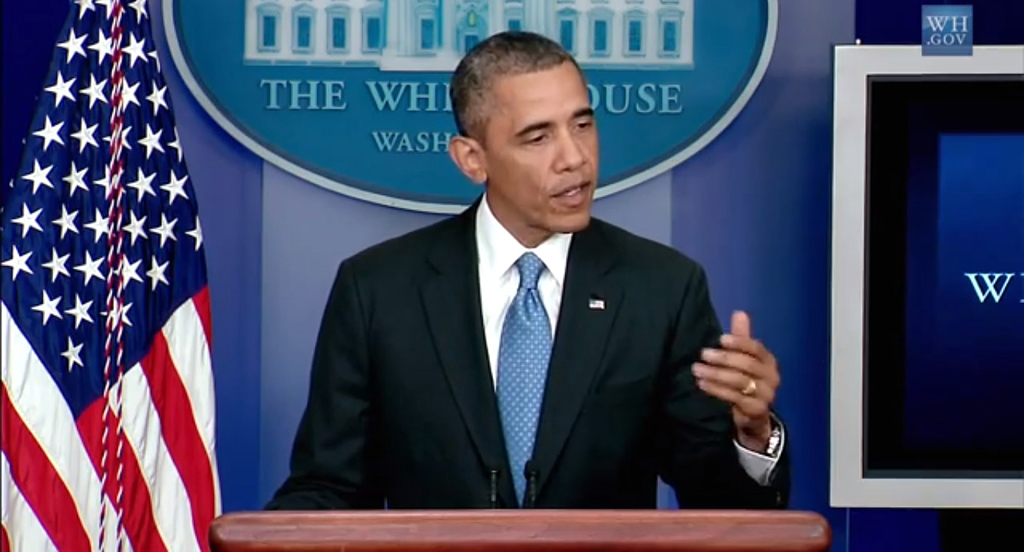
In speaking about race and justice in America, Obama makes good use of bully pulpit, only without the ‘bully’ part

This story about the speech in the WSJ this morning summed up the challenge:

The remarks, delivered without a teleprompter, were a striking example of America’s first black president seeking to guide the country’s thinking on race without inflaming racial tensions or undermining the judicial system.

He managed to do that, and he did it just right. While the topic was a sensitive as all get-out, the president didn’t make a big deal of it. He wasn’t making a pronouncement, or proposing policy. He wasn’t speechifying at all. He started out by lowering the temperature, reducing expectations, making the whole thing as casual as possible without making light of it. It came across this way:

This isn’t really a press conference — we’ll have one of those later. Today, I’m just this guy, talking to you, sharing a few thoughts that I hope will help help black and white people understand each other a little. Not that I’m some oracle or something, I just have some life experiences — just as we all have life experiences — that might be relevant to share…

It was the president using the bully pulpit, only without the bully part. No-drama Obama. Just talking, not speechifying. Thought, not emotion, even though some of the thoughts were about deep, visceral feelings, and the way people act as a result of them. Just, “I thought it might be useful for me to expand on my thoughts a little bit…”

He had said earlier, on the dispassionate level — what needed to be said: The jury has spoken, and that’s that. He repeated that (read the whole speech here):

The judge conducted the trial in a professional manner. The prosecution and the defense made their arguments. The juries were properly instructed that in a — in a case such as this, reasonable doubt was relevant, and they rendered a verdict. And once the jury’s spoken, that’s how our system works.

Going beyond that, he downplayed any expectations that his administration would somehow take up the cudgels against Zimmerman as a way of undoing that verdict:

I know that Eric Holder is reviewing what happened down there, but I think it’s important for people to have some clear expectations here. Traditionally, these are issues of state and local government — the criminal code. And law enforcement has traditionally done it at the state and local levels, not at the federal levels…

This speech Friday was about trying to explore, just as calmly, the emotional reaction that causes such dissatisfaction with the verdict, appropriate as it may have been given the case:

But I did want to just talk a little bit about context and how people have responded to it and how people are feeling. You know, when Trayvon Martin was first shot, I said that this could have been my son. Another way of saying that is Trayvon Martin could have been me 35 years ago. And when you think about why, in the African-American community at least, there’s a lot of pain around what happened here, I think it’s important to recognize that the African-American community is looking at this issue through a set of experiences and a history that — that doesn’t go away.

In other words, look, a lot of white folks don’t understand why a lot of black folks react to this thing the way they do, and here’s my take on that:

There are very few African-American men in this country who haven’t had the experience of being followed when they were shopping in a department store. That includes me.

And there are very few African-American men who haven’t had the experience of walking across the street and hearing the locks click on the doors of cars. That happens to me, at least before I was a senator. There are very few African-Americans who haven’t had the experience of getting on an elevator and a woman clutching her purse nervously and holding her breath until she had a chance to get off. That happens often.

And you know, I don’t want to exaggerate this, but those sets of experiences inform how the African-American community interprets what happened one night in Florida. And it’s inescapable for people to bring those experiences to bear.

Furthermore, a lot of whites may be laboring under the impression that black folks are blind to the fact that young, black men are statistically more liable to be dangerous, especially to each other:

Now, this isn’t to say that the African-American community is naïve about the fact that African-American young men are disproportionately involved in the criminal justice system, that they are disproportionately both victims and perpetrators of violence. It’s not to make excuses for that fact, although black folks do interpret the reasons for that in a historical context…

I think the African-American community is also not naïve in understanding that statistically somebody like Trayvon Martin was probably statistically more likely to be shot by a peer than he was by somebody else.

So — so folks understand the challenges that exist for African-American boys, but they get frustrated, I think, if they feel that there’s no context for it or — and that context is being denied. And — and that all contributes, I think, to a sense that if a white male teen was involved in the same kind of scenario, that, from top to bottom, both the outcome and the aftermath might have been different…

Oh, and in case you think he had some pompous, trite notion of launching something so grand as a “national conversation on race,” he deflated that:

You know, there have been talk about should we convene a conversation on race. I haven’t seen that be particularly productive when politicians try to organize conversations. They end up being stilted and politicized, and folks are locked into the positions they already have.

On the other hand, in families and churches and workplaces, there’s a possibility that people are a little bit more honest, and at least you ask yourself your own questions about, am I wringing as much bias out of myself as I can; am I judging people, as much as I can, based on not the color of their skin but the content of their character? That would, I think, be an appropriate exercise in the wake of this tragedy.

Again, and again, his manner, his verbal cues, kept the intensity on the down-low: “watching the debate over the course of the last week I thought it might be useful for me to expand on my thoughts a little bit… And you know, I don’t want to exaggerate this, but…” Throughout, he interjected the phrase “I think,” to make sure you knew he was just this guy talking, and not The Man, speaking ex cathedra.

Another thing that a lot of whites say about blacks is that they “talk about race all the time.” Well, Barack Obama certainly has not. He’s been the president, not the black president. But it’s a fine thing for America that when he does, on rare occasion, decide that OK, in this situation, maybe he should say something about the topic, he does it so deftly, so thoughtfully, so well.

Barack Obama, like any other presidents, has his strengths as well as weaknesses. Some of his strengths were on display Friday.

obamaspeak

Big Brother doesn’t need NSA to know where you’ve been

Several of the most amazing things I’ve seen technology do in recent years are associated with Google Maps.

Such as the traffic feature.

Look at Google Maps on your phone, and you’ll see how well traffic is moving — or whether it’s moving at all — on the road ahead of you.

Google does this by — Edward Snowden and the ACLU should brace themselves at this point — keeping track of all the Maps-equipped phones traveling on the road. Not only that road, of course, but all roads, all of the time. In real time.

Now, we see that law enforcement can do, and does, something similar by tracking license plates:

The spread of cheap, powerful cameras capable of reading license plates has allowed police to build databases on the movements of millions of Americans over months or even years, according to an American Civil Liberties Union report released Wednesday.

The license-plate readers, which authorities typically mount along major roadways or on the backs of cruisers and government vehicles, can identify cars almost instantly and compare them against “hot lists” of vehicles that have been stolen or involved in crimes.

But the systems collect records on every license plate they encounter — whether or not they are on hot lists — meaning that time and location data are gathered in databases that can be searched by police. Some departments purge information after a few weeks, some after a few months and some never, said the report, which warns that such data could be abused by authorities and chill freedom of speech and association…

You have to pity the ACLU, Rand Paul, et al. They are doomed to worry themselves to death. Because this toothpaste is not going back into the tube.

I liked the way it was put in an explainer of the Google traffic function:

So how does Google know what traffic is like on the roads, nearly all the time? From our smartphones, of course. Whether you like it or not, “telephone companies have always known where your phone is,” Dobson says, because cell phone companies need to use location to appropriately charge customers for calls. That means the companies are constantly monitoring location based on the strength of signal to a cell tower, which allows the phone to switch towers as it travels. Since 2011, the Federal Communications Commission has also required that phones come with GPS, so between the triangulation with cell towers and the GPS requirement, your phone is a marked man….

Now, this has stirred up some controversy about whether the process is an invasion of privacy. But both Dobson and Zhan Guo, a transportation policy professor at New York University, nearly laughed when asked about privacy concerns. That ship has already sailed….

Indeed. One might as well laugh.

Some will say that a private company keeping tabs on your every move, for its own greater profit (and utility, of course) is preferable to the gummint doing so.

I don’t think either is necessarily preferable, just different. And either way, ultimately inevitable.

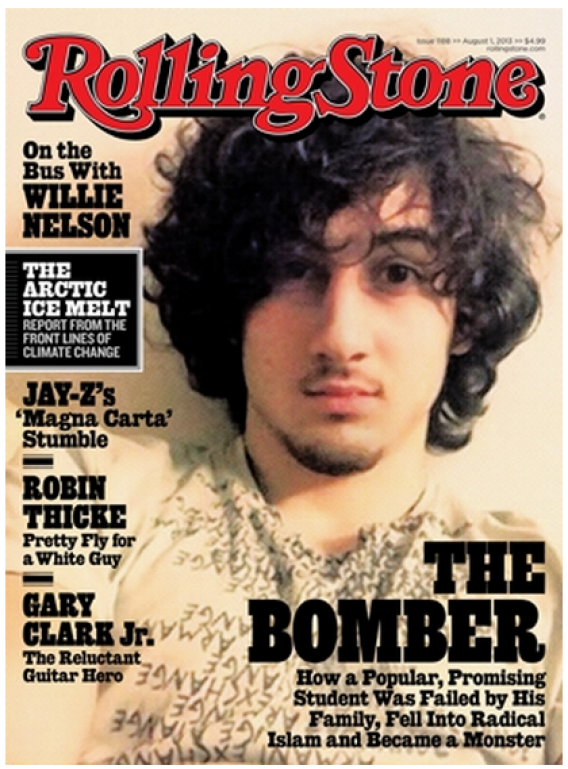
Thoughts on the Tsarnaev ‘Rolling Stone’ cover?

RSAugust.png.CROP.article568-large

Slate brought my attention to this item:

This is the cover of the August issue of Rolling Stone, set to hit newsstands soon. I’m going to go out on a limb and say the Internet will likely have a few thoughts on the editorial decision to give the “Free Jahar” crowd something to pin up on their bedroom walls. (As a man who’s had to art an untold number of Tsarnaev-related posts with only a handful of images to choose from, I’ll grant the editors didn’t have a whole lot of options to accompany Janet Reitman’s report on the “life and times of Boston bomber Jahar Tsarnaev.” That said, it’s pretty clear the masthead knew what they were doing when they settled on this one.)

They had to do that, because it’s been awhile since I found anything interesting in Rolling Stone. (The last thing was probably the book, Generation Kill, by one of their writers. It was a good, unblinking look at the experience of a group of Marines in the Iraq invasion in 2003. But I didn’t read that in the magazine.)

This is the first I’d heard of their being a “Free Jahar” movement among young females, which is apparently a sort of squealing, latter-day Apple Scruffs sort of thing. Disturbing. Apparently, some people are still in need of consciousness-raising (do feminists still use that term?)…