On a previous post, our own Phillip Bush said he’s concerned about the Trump administration being “Bush/Cheney redux.”
We’re not going to be so lucky. There’s little chance of having an administration that is anything like Bush’s — or Obama’s, or Clinton’s, or Reagan’s, or Carter’s, or Nixon’s, or Johnson’s, or Kennedy’s, or Eisenhower’s, or Truman’s.
Yeah, I get why Phillip said that — John Bolton is a hard case, and some call him a “neocon,” although he really doesn’t fit the description. Neocons are liberals who deserted the left after Vietnam. Bolton has always been a conservative — he backed Goldwater in 1964.
But forget Bolton — in fact, I am little interested in who will hold this or that position. None of these appointments are as bad, or as consequential, as what has already happened — the election of Donald Trump, a man who just by being president will diminish the influence of the United States in the world.
You’ve probably read that most world leaders — particularly our friends — are deeply dismayed by what happened last week, and very worried about what happens next. They’re perhaps as upset as I am, and for some of the same reasons — my greatest worry about a Trump victory was its effect on international relations. You probably also know that this is exactly what Russia and China wanted — a clueless goofball at the helm of the United States, leaving the vacuum that they are eager to fill.
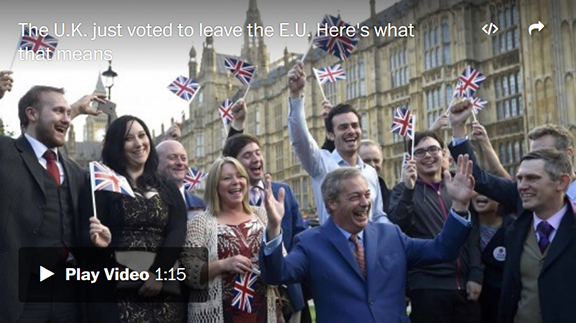
But others were cheering last week, too. And still are. The Guardian bothered to chronicle some of the reactions from a rogue’s gallery of extremists — mostly right-wing, populist nationalists: Marine Le Pen’s far-right Front National in France; Viktor Orbán, the hardline nationalist leader of Hungary; Frauke Petry, the lead of Germany’s rightwing populist Alternative für Deutschland; Greece’s Golden Dawn, the party seen as Europe’s most virulent far-right force; Heinz-Christian Strache, the leader of Austria’s rightwing populist Freedom party; the Dutch far-right leader and MP Geert Wilders; Beppe Grillo, the former comedian and the leader of the anti-establishment Five Star Movement in Italy; and of course Nigel Farage in Britain.
Fareed Zakaria looked beyond Europe, at some of the other bullies, tyrants and loonies who are happy that a man who neither understands or believes in America’s role in the postwar order will be in charge:
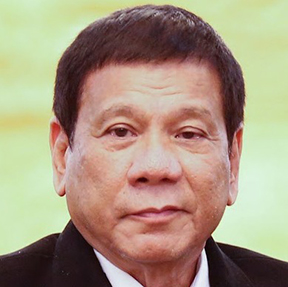
Duterte
Syrian dictator Bashar al-Assad called Trump a “natural ally.” Rodrigo Duterte, the authoritarian leader of the Philippines, said of him, “We both like to swear . . . we’re the same.” Duterte has been hostile to the United States because Washington has criticized the extrajudicial killings and human rights abuses that have marked his tenure. Robert Mugabe, who has clung to power in Zimbabwe for 36 years while destroying that nation’s economy and liberties, has been similarly hopeful. A full-page editorial in a state-run paper there hailed the election of “the mighty Trump,” and the 92-year-old dictator has reportedly described Trump as a “friend.” No doubt Duterte and Mugabe hope that a Trump administration will go easy on them….
All over the world, separatists and nationalists, thugs and bullies of all stripes are ecstatic over Trump’s victory. Why? Because they see this as the end of the internationalist consensus that we’ve had since Truman, an unprecedented era of peace among major powers, largely led and guaranteed by an engaged United States.
Zakaria explains what’s at stake, in a simple, Geopolitics 101 manner:
But what is this globalism to which these people are so opposed? After 1945, after the Great Depression and two world wars, Western nations established an international system characterized by rules that honored national sovereignty, allowed for the flourishing of global commerce, and encouraged respect for human rights and liberties. This order resulted in the longest period of peace among the world’s major powers, marked by broad-based economic growth that created large middle classes in the West, the revival of Europe, growth in poor countries that lifted hundreds of millions of people out of poverty and the spread of freedom across the globe.
The U.S. role in all this was pivotal. It set the agenda and provided security, which was about more than just deterring the Soviet Union and other aggressive powers. Radek Sikorski, Poland’s former foreign minister, said, “America’s influence and its commitments have been our security blanket. They have allowed Europe’s national rivalries to stay dormant. If you take away those guarantees, Europe could get very unstable.” And remember, the European Union is the world’s biggest market and the United States’ largest trading partner.
For the United States, “globalism” has produced enormous advantages. With 5 percent of the world’s population, the United States dominates the global economy, in technology, education, finance and clean energy. One in five U.S. jobsis a result of trade, and that number is growing fast. The United States maintains the world’s reserve currency, giving it a huge economic advantage.
The benefits of growth and globalization have not been shared equally, and the pace of change causes anxiety everywhere. But these are reasons to invest in people, upgrade their skills and better integrate communities. They are not reasons to destroy the most peaceful and productive international system ever devised in human history….
Of course, some of my friends — Doug and others — would like to see the United States be a smaller, humbler country confined to its own borders. But my libertarian and my post-Vietnam liberal friends will find themselves in some ugly company in cheering a diminished United States.
This is a very bad moment for liberal democracy around the world.