Category Archives: Faith

The ELITES are the ones who should be sorry! (And the crowd roars…)

E. J. Dionne sent me a note this morning (yep, I’m name-dropping; I value his friendship) in which he shared a link to his post-SC column, which you can read here. I was particularly struck by this passage:

Then came the rebuke to CNN’s John King, who asked about the claim from Gingrich’s second wife that her former husband had requested an “open marriage.” By exploding at King and the contemporary journalism, Gingrich turned a dangerous allegation into a rallying point. Past sexual conduct mattered far less to conservatives than a chance to admonish the supposedly liberal media. Gingrich won evangelicals by 2-1, suggesting, perhaps, a rather elastic definition of “family values” — or a touching faith in Gingrich’s repentance.

E.J. was very generous to admit even the possibility that the evangelicals’ choice reflected their simple belief that Newt is repentant.

I saw how the forgiven man behaved when reminded of his sin. And if there is anything we all know about Newt Gingrich, it is that he does not walk, talk or comport himself like a penitent. Sure, he’s new to being Catholic, but he forcefully projects the image of a man who is “hardly sorry” rather than “heartily.”

And that is what seems to appeal to his supporters. That he’s not sorry. For anything. That rather than donning sackcloth and ashes, he stands up, throws out his chest and demands that those people out there, those elites, and those worthless shufflers who want to live off his tax money, be sorry instead.

And the crowd roars, more like 1st century pagans in the Colosseum than like Christians.

No, I’m in no position to judge. I am certainly not Newt’s confessor, and I have no idea what’s in his heart. Nor do I know what’s in those hearts in the crowd. But I know how he chooses to act outwardly. And I know how the crowd reacts — outwardly.

And that’s probably all I can know. So I share it.

Basically, I think the evangelicals who voted for him didn’t have their evangelical hats on at the moment. People are complex, and have layers. And just because an individual answers to one sort of identification doesn’t mean he is expressing that in everything he does.

So E.J. made me think today. And he made me nod in the paragraph before that one:

There was also the matter of race. Gingrich is no racist, but neither is he naive about the meaning of words. When Fox News’ Juan Williams, an African-American journalist, directly challenged Gingrich about the racial overtones of Gingrich’s staple reference to Obama as “the food-stamp president,” the former House speaker verbally pummeled him, to raucous cheers. As if to remind everyone of the power of coded language, a supporter later praised Gingrich for putting Williams “in his place.”

Yep, that’s what was happening.
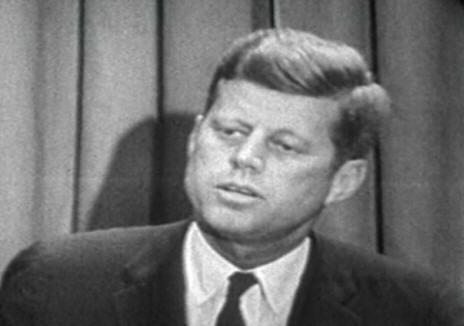
With a Mormon and a Catholic leading the pack, let’s pause for a few words from John F. Kennedy

On the morning after the photo-finish in Iowa, The New Yorker is waxing deeply philosophical:

What will be more telling, perhaps, is how the Republican candidates, in the primaries and caucuses to come, address the ideals and most personal beliefs of others. A party whose base has increasingly been oriented around the interests of politicized evangelism finds itself with a tie between a Mormon and a Catholic. (The “entrance polls” in Iowa, like many others so far, showed one set of numbers for those identifying themselves as “evangelical or born again,” and one set for those who do not.) One has been left to wonder how much of a factor Romney’s religion has been in his troubles with Republican voters. (They have so many non-sectarian reasons to suspect him that it’s hard to tease out.) In the 2008 election, as Hendrik Hertzberg noted at the time, Romney attempted to ingratiate himself by drawing a circle around the followers of organized religions generally, while casting aspersions on those who led a secular life. Santorum, meanwhile, has made religious beliefs about matters such as family planning and romantic relationships cornerstones of his political program.

We are more than a half century removed from John F. Kennedy’s campaign to be the first Catholic President. In a speech that he felt he needed to give, at the Greater Houston Ministerial Association, he said,

For while this year it may be a Catholic against whom the finger of suspicion is pointed, in other years it has been, and may someday be again, a Jew—or a Quaker or a Unitarian or a Baptist.

Watching his speech on the subject now, one is struck not only by his words but by the expressions on the faces of the people who are listening—really listening, it appears, to words thoughtfully spoken…

This has not been the spirit of the speakers or the audience in the dozen or so debates so far. What will we see in the six scheduled for January alone, not to mention the ads that will air in the weeks and months ahead? What will the candidates, and their surrogates, have to say about each others’ religions? Or about people who have no religion at all, and—one hopes this won’t need to be said—are no less faithful citizens for it? (Kennedy, in a crucial phrase, spoke of the right to attend “or not attend” the church of one’s choice.)…

Got a nice note from E.J. Dionne this morning


I appreciated E.J. taking the time to point something out to me...

So we’re entering the stage at which national media are about to start paying attention to what is said in South Carolina. So it is that I got a note from E.J. Dionne this morning. After praising this “poetic” passage in my blog earlier: “What fools the calendar doth make of us, even when we know better.”

… he went on to say,

OK, but still, does it have any impact? Huck wouldn’t have come within 3 points of McCain without Iowa — and Fred Thompson probably made the difference.
But you are right about our being fools. Original sin and all that.
Warmest EJ

He’s got a point. Especially about the Original Sin thing. But then, E.J.’s a smart guy. And a Catholic.

Yes, if Santorum wins Iowa, this is fertile territory for him. Being a values guy and all.

As for Iowa… My dismissive statements may be based in what I wish were true. As in, “Iowa shouldn’t matter, so I’ll say it doesn’t.” I wrote a column urging everyone to ignore Iowa four years ago. Then, when Obama won there, I started hoping it DID mean something — only to see him get body-slammed in N.H.

As I’ve mentioned here before, my baptism in national politics came when I covered Howard Baker in Iowa in 1980, for my Tennessee newspaper. Since I was covering it, Iowa took on  disproportionate importance in my mind. When Reagan lost there, I was eager to pronounce his candidacy over. We know how that turned out. My prejudice also arises from the fact that, as a voter, I am barred from participating in a caucus. I’d have the same problem, of course, in a primary state with party registration. Fortunately, we don’t have that here in SC, and our primaries are open.

There’s still time left to get your greens ground

We didn’t wait for the liturgically correct date, but went ahead and got rid of our Christmas tree on the 8th day, because we had the time for the chore then.

And at least we did the environmentally correct thing and took it to Saxe Gotha Presbyterian Church, which is one of the locations in the Midlands for the Grinding of the Greens project.

You can still drop off your tree, wreaths and what have you by Jan. 13, after which:

Free mulch from the recycled Christmas trees will be available to the public on Saturday, Jan. 14, 2012 at Seven Oaks Park and the Clemson Institute for Economic & Community Development from 9 a.m. until the mulch runs out.

Which is cool, I think.

That's mine on the left, with the hole in the base. Goodbye, tree...

Let nothing you dismay

My Memphis cartoonist friend William Day shared this with me last week, and it seemed like a good thing to share with y’all today.

Here’s the Scripture reference:

6The wolf also shall dwell with the lamb, and the leopard shall lie down with the kid; and the calf and the young lion and the fatling together; and a little child shall lead them.

7And the cow and the bear shall feed; their young ones shall lie down together: and the lion shall eat straw like the ox.

8And the sucking child shall play on the hole of the asp, and the weaned child shall put his hand on the cockatrice’ den.

Requiescat in pace, Christopher Hitchens — if you’ll forgive the seeming contradiction

I’m sad to see that Christopher Hitchens is no longer among us. On a trivial level, I’m sorry because reading him was such a guilty pleasure, as he sliced and diced viewpoints — and people — with whom he disagreed.

On a deeper level, I have the traditional regret, as a Catholic, for the loss of an unshriven soul. Not that I wanted to see Hitchens make a deathbed conversion. That would have seemed cheap theatrics, and it would have sent the wrong message — that our relationship with God should be based on existential terror. I just wish he’d changed his mind at some point, before now.

It was always impressive to see the way his mind worked, fairly crackling through any subject you may like, and totally unapologetic for opinions that were unpopular. And I don’t just say that because he agreed with me on Iraq, which probably distressed a lot of his free-thinking friends.

But I mourn the fact that his incisive, energetic mind always came up with the wrong answer when it ran the God equation. He would have been a good one to have on the other side. You know, the side of the angels, as they say.

As a believer, then, it falls to me to say, May God have mercy upon his soul. And I mean it. I wish him the best in the life he did not expect.

In the spirit of the season, a little Hanukkah music

In an earlier comment, Phillip Bush posted a link to a rabbi’s spoof of the Perry ad that got me so outraged yesterday. It was… OK. I give it points for quick turnaround, but as comedy goes, it was lacking.

Kathryn responded with a link to an old Stephen Colbert/Jon Stewart skit, which I said wasn’t nearly as good as SNL’s classic “Hanukkah Harry” bit.

And now, continuing the meme, Stan Dubinsky brings to my attention the latest Hanukkah video by the Maccabeats. It’s a cover of a Matisyahu number. (Watch to the end — Barack Obama makes an appearance! No sign of Rick Perry, though…)

You may or may not remember the Maccabeats  for their breakout hit, “Candlelight.” Also about Hanukkah. And also very light-hearted.

The Maccabeats — yet another a cappella hip-hop bubble-gum Yeshiva group. When is the recording industry going to come up with something original, I ask you?

On a president asking God to bless America

Sooner or later, we’ll turn to more profane matters, but to follow up on a question from Bud:

Does anyone besides me find it offputting when the POTUS says “God Bless America”? Who started this practice? I never noticed it before George W. used it at every opportunity. Now Obama is getting carried away with it.

My first reaction was that every president in my memory had done it. But I thought I’d check, however cursorily. My quick search turned up this piece from TIME magazine. Apparently, no president from FDR through LBJ had ended speeches that way. But then…

On the evening of April 30, 1973, Richard Nixon addressed the nation live from the Oval Office in an attempt to manage the growing Watergate scandal. It was a difficult speech for Nixon: He announced the resignations of three Administration officials, including Attorney General Richard Kleindienst — but Nixon nonetheless tried to sound optimistic. As he approached the end of his speech, Nixon noted that he had “exactly 1,361 days remaining” in his term and wanted them “to be the best days in America’s history.” “Tonight,” he continued, “I ask for your prayers to help me in everything that I do throughout the days of my presidency.” Then came the magic words: “God bless America and God bless each and every one of you.”

Not an auspicious beginning, give the extent to which Nixon was given to self-pitying self-interest.

According to this source, neither Gerald Ford nor Jimmy Carter (surprised?) used the phrase to end speeches. But Ronald Reagan did, big-time. And every president since.

Of course, this account is rather nitpicking. Presidents before Nixon DID invoke the Deity’s blessing, just in different words:

Presidents from Roosevelt to Carter did sometimes conclude their addresses by seeking God’s blessing, often using language such as “May God give us wisdom” or “With God’s help.” But they didn’t make a habit of it.

As for whether presidents should do this or not (and Bud thinks not), I think it’s fine either way.  As I said in response to Bud earlier, I generally like it. No matter how pompous the speaker, those words end the speech on a note of humility. It’s a nod to that which is greater than the speaker and all the power he commands.

It is an invocation. OK, technically, since it’s at the end, it’s a benediction. But basically, it’s a plea sent aloft — Please bless this nation which I have been elected to serve. It’s impossible to imagine anything more benign, or more appropriate, for an elected leader to say.

AT THE SAME TIME…

I respect that some presidents have generally avoided such an invocation. Declining to do so is another way of demonstrating humility, and proper respect toward a deity. A serious, thoughtful politician might well consider it crass to invoke God in connection with a political speech, as the rest of the speech is necessarily tied to petty temporal concerns and usually designed to advance the position of the speaker.

I excuse the practice to the extent that it is a sort of departure from the rest of the speech. I tend to hear it as the speaker saying, “Whether you go along with what I said just now or not, whether I continue to serve you or not, whether I and my party prevail or be consigned to the dustbin of history, I ask that God bless our country.”

It at least gives me one thing I can always agree with.

A little wiseacre reflects on the nature of Hades

Bart shared this, which I gather is one of those things going around on the Internet:

HELL EXPLAINED
BY A CHEMISTRY STUDENT
The following is an actual question given on a University of Arizona chemistry midterm, and an actual answer turned in by a student.
The answer by one student was so ‘profound’ that the professor shared it with colleagues, via the Internet, which is, of course, why we now have the pleasure of enjoying it as well :
Bonus Question: Is Hell exothermic (gives off heat) or endothermic (absorbs heat)?
Most of the students wrote proofs of their beliefs using Boyle’s Law (gas cools when it expands and heats when it is compressed) or some variant.
One student, however, wrote the following:
First, we need to know how the mass of Hell is changing in time. So we need to know the rate at which souls are moving into Hell and the rate at which they are leaving, which is unlikely… I think that we can safely assume that once a soul gets to Hell, it will not leave.
Therefore, no souls are leaving. As for how many souls are entering Hell, let’s look at the different religions that exist in the world today.
Most of these religions state that if you are not a member of their religion, you will go to Hell. Since there is more than one of these religions and since people do not belong to more than one religion, we can project that all souls go to Hell. With birth and death rates as they are, we can expect the number of souls in Hell to increase exponentially. Now, we look at the rate of change of the volume in Hell because Boyle’s Law states that in order for the temperature and pressure in Hell to stay the same, the volume of Hell has to expand proportionately as souls are added.
This gives two possibilities:
1. If Hell is expanding at a slower rate than the rate at which souls enter Hell, then the temperature and pressure in Hell will increase until all Hell breaks loose.
2. If Hell is expanding at a rate faster than the increase of souls in Hell, then the temperature and pressure will drop until Hell freezes over.
So which is it?
If we accept the postulate given to me by Teresa during my Freshman year that, ‘It will be a cold day in Hell before I sleep with you,’ and take into account the fact that I slept with her last night, then number two must be true, and thus I am sure that Hell is exothermic and has already frozen over. The corollary of this theory is that since Hell has frozen
over, it follows that it is not accepting any more souls and is therefore, extinct….. …leaving only Heaven, thereby proving the existence of a divine being which explains why, last night, Teresa kept shouting ‘Oh my God.’
THIS STUDENT RECEIVED AN A+.

I confess that it made me smile, in spite of the blasphemy. But then I feel bad for smiling a humor that derives its force from mocking, however gently, all religion. If you think about it, this is just the sort of thing that one of Satan’s lesser devils may have written, were he a chemistry student. If he were feeling particularly cocky after having gotten lucky with Teresa.

Oh, and the answer was not “profound.” Being a little wiseacre is not profound.

He’s not the kind you have to wind up on Sundays

Just to cleanse the spiritual palate, brethren, I invoke Brother Tull to share with us a musical interlude.

This song has been running through my head a good bit lately. (Seeing “all the bishops” — or at least, all the Anglican clergy — lined up and harmonizing at Jason’s ordination the other day was but one instance in which it has come to mind.) You may find that interesting, in connection with my outrage at the tawdry way Rick Perry is trying to wind God up and make him toddle across the room, beating a toy drum that says “Perry for President.”

Perry’s message, considered most charitably, is after all that God has a place in the public square. He’s not supposed to be kept in a steepled ghetto. God is for every day, not an hour on Sunday.

I agree with that with all my heart and soul. God, properly considered, is for every day, every moment. (For that matter, it’s not for us to say what God’s for; it’s up to us to figure out what WE’RE intended for.) That’s one reason I like this song.

But I would submit that that includes the moments in which you try to exploit God to your own ends. You don’t wind him up then, either. Rather, you endeavor to alter yourself to fit His expectations.

This is a tough thing to talk about because we’re not supposed to judge, either — are we? So people get away with some really horrific stuff, because who are we to say? If another man testifies that this is how he experiences God, who are we to condemn?

And so people get away with all sorts of stuff, and if we protest, we are painted as being one of those who wants to keep God in a box.

And there are such people. Good, well-meaning people, quite often — although they are confused. They confuse the First Amendment with Jefferson’s views (when he wasn’t involved with it), and then go the further step of assuming that a ban on establishment of religion by Congress implies that we individual citizens (and that includes officeholders) are not supposed to talk about religion in the public sphere.

They are wrong. And their wrongness is all the more wrong because they create a space in which someone like Perry can construct a lie about a “war on religion.” And everything just gets worse. They are wrong, and he is wrong, and I suppose I’m wrong, too, for judging both.

But I feel better when I listen to the music. Don’t think you have to turn up your speakers when it starts out so soft. It builds.

The nuclear escalation of Rick Perry’s unholy war

Wow. I inadvertently backed into that last post.

I had looked at  the CNN report (the text, anyway), and the Perry “holiday greeting” from last year that made it look hypocritical. But I had failed to look at the ad that prompted the CNN report to begin with.

I thought I had seen Rick Perry take riding God like a hobby horse about as far as he could, in the ad I showed you last week.

But if that was Perry trying to be a holy warrior, in the latest ad, that war goes nuclear.

There is no way that I could ever support for president a man who tries so nakedly to bend God to his own ends. And that is a hard thing to explain to the sort of people Perry is trying to appeal to. And that just divides our country more and more (and leaves me feeling more and more alienated, since I can neither identify with secularists nor those who could actually believe the POTUS is engaged in a “war on religion”). And it’s so unnecessary.

How can a man think it’s SO important for him to be elected that he would do this? This is stomach-turning stuff.

And so this is Advent, and what have we done?

And so that time has rolled around again, a time when some of our avowedly “conservative” brethren start griping that no one will let them say “Merry Christmas.”

This has always struck me as one of the non-ier nonissues of the world, not least because it always comes up during Advent, not during Christmas, so why do they want to say “Merry Christmas” anyway, and doesn’t “Happy Holidays” cover it… but I’m not writing this to get all liturgical on you.

Anyway, Rick Perry, who seems to have decided that an evangelical offense is his best chance to get back into the game in Iowa, is now taking a big stand for Christmas. And he’s doing it with such apocryphal assertions as this, on CNN’s Situation Room:

What we’re seeing from the left, of which I would suggest to you, President Obama is a member of the left and substantial left-of-center beliefs, that you can’t even have a Christmas party. You can’t say a prayer at school.

Say what?, you’re thinking. But he’s counting on people who are not thinking to be impressed.

And I hate to put it that way, because I sound like one of those very godless secularists Perry’s trying to demonize. There are indeed people who see people of faith as simple fools.

But that means they see ME as a simple fool, so I’m not one of them.

By saying he’s trying to appeal to people who are not thinking, I’m saying that Perry himself is the one insulting the intelligence of people of faith. Particularly when those people can look back at Gov. Perry’s own official “holiday” greeting of last Dec. 22:

Gov. Perry: Keep Veterans, First Responders in Your Thoughts and Prayers this Holiday Season

Wednesday, December 22, 2010  •  Austin, Texas  •  Press Release

The holidays are a special time of year to pause and take stock of the many blessings we enjoy, not just as human beings, but as Americans and Texans. Of all those blessings, I’d offer that the most precious is our freedom.

There are thousands of Texans serving the cause of freedom all over the world, in dangerous places like Afghanistan and Iraq. Driven by a dedication to our country and communities, they’ll spend the holidays thousands of miles from parents, friends, spouses and children.

I encourage you to keep our fighting men and women in your thoughts and prayers, along with their families who anxiously await their return. At the same time, I hope you’ll remember the folks who keep our neighborhoods safe: our state’s first responders.

While we enjoy the comforts of home with loved ones, these brave men and women are on the job, providing care in the back of an ambulance, preparing to respond to a fire call or patrolling our international border.
We should never take them for granted and we should definitely keep them in our prayers as they sacrifice for our safety.

So, during this holiday season, remember to thank a first responder or salute a veteran for their service and pray for God’s protection on them and their families.

May God bless you and, through you, may He continue to bless the Great State of Texas.

Did you see any Jesus in that greeting? Neither did I. And there’s nothing wrong with that. It’s fine. It’s just that you wouldn’t know that to hear Perry now.

Mainly what Perry has done is amuse the godless secularists mightily with his hypocrisy, which is why this inconsistency is flying around the Internet, which is why I knew about it to share it with you.

Nothing like a quiet, holy, contemplative Advent, huh?

Cousin Jason becomes Father Jason

Bishop Mark Lawrence leads the congregation in applauding the new priest. Jason may be wary of pride, but that's all right -- we'll be proud for him.

Normally, I wouldn’t share something this personal, except it made news.

I spent Saturday driving with my mother and her older brother to Conway and back, where her younger brother’s son, Jason Collins, was being ordained as an Episcopal priest.

Here’s where I could say all sorts of things about this not being the same as a real priest, because real priests don’t have a wife and children and Jason does, but let’s not get all technical. I’m proud and happy for him, and pleased to call him “Father” even though he wasn’t born until I was almost 18.

The reason I post about it here is that it was news in those parts. In fact, it made the front page of The Sun News, on account of Jason’s prominence in the community:

CONWAY — Jason Collins wasn’t sure he wanted to be interviewed for this story.

He didn’t want readers to think it was his prideful narrative of a journey from the secular world to the faith-based world. He was afraid people would think he was boasting, that he was telling a story of how remarkable he is for having done what he’s done.

But the story is his journey, as Collins knows well. And he hopes readers will finish it with the knowledge that everyone’s life can be transformed through God and Jesus Christ.

Collins, a former Conway city planner, is being ordained today into the Sacred Order of Priests at a 3 p.m. ceremony at St. Paul’s Episcopal Church in Conway…

It was a wonderful ceremony, very moving. The bishop was there (of course; else there’d be no ordination) as well as a whole mess of priests, friends and relations. Jason’s wife and two children were involved integrally involved in the proceedings, and all of us felt privileged to be there. Even though I was tempted, as a Roman, to erupt in a loud “ahem!” when the bishop charged him with words attributed to St. Thomas More in “A Man for All Seasons.”

But Jason is now officially a priest in the one holy catholic and apostolic church, and none may say nay to that. Not around me, anyway.

But verily, yon Richard be a godly man, withal…

No sooner had I posted the earlier Perry video than this one came in, and it truly boggles the mind in its simplicity. In case you have trouble watching it, here’s the script:

Gov. Perry: “When you run for president, you get a bunch of questions about your faith.”


Text: Rick Perry


“People want to know what drives you, how you make decisions.”


“Now some liberals say that faith is a sign of weakness. Well they’re wrong. I think we all need God’s help.”


“America’s greatest leaders have been people of strong faith, strong values. That makes for a strong America.”


“I’m Rick Perry, I’m not ashamed to talk about my faith, and I approve this message.”

Really? That’s it? You spend who knows how many thousands of dollars producing this and getting it aired, you have this golden opportunity to address the entire nation on the subject of God, the universe and everything, the ultimate questions, and that’s what you say? I’m one a them good folks whut believes in the Lord, and not one a them heathen lib’ruls.

That’s it?!?!?

And this is supposed to work for you?

Tell you what, Rick. Go read Matthew 6:5. In fact, read the whole chapter. Run along, now, there’s a good lad…

Thanks, E.J., for giving us a piece of your mind

Before another day passes, I want to express my appreciation to E.J. Dionne of the Washington Post Writers Group and the Brookings Institution, for delivering the 2011 Cardinal Bernardin lecture at USC last night.

Perhaps because he’s from my world, he spoke to me as no previous speaker has in the 12 years of the series — of faith and public life, particularly in the sense of how the Cardinal’s life and work relate to our existence today. So I thank him for that. I also thank all those who contributed to bringing about this event — the Department of Religious Studies, the College of Mass Communications and Information Studies, President Harris Pastides’ Civil Discourse Initiative, and Samuel Tenenbaum and the Tenenbaum Lectureship Fund.

For those of you who don’t know, Joseph Bernardin was a son of Italian immigrants who grew up here in Columbia, as a parishioner at my church, St. Peter’s. He would become the leading light of the U.S. Conference of Catholic Bishops, the force behind such remarkable documents as “The Challenge of Peace: God’s Promise and Our Response.” He fostered the Church’s Common Ground Initiative, and his greatest legacy (to me) is placing the Church’s pro-life ethic within the compelling — and necessary — framework of the Seamless Garment — a legacy that, inexplicably to me, remains controversial, even anathema, among some. After becoming Archbishop of Chicago, he was widely regarded as a likely first American pope before his death of cancer in 1996 at the age of 68.

E.J. is that rare bird in the higher reaches of journalism who writes regularly of matters that bear upon ultimate questions (see, for instance, “The Vatican meets the Wall Street occupiers” from last week), and does so with an intellectual vigor that not only reflects credit upon his and my faith tradition, but shows what journalism is still capable of achieving at this late date. He knew the cardinal, and has long admired him.

Here’s a rough draft of his remarks. There are typos, and it is incomplete (entire anecdotes are missing), but it gives you an idea of what he had to say. An excerpt:

I want to close with something I have been pondering ever since the Spriritan fathers of Duquesne University asked me to give a talk about immigration. I was struck when I was preparing the talk how much both the Old and New Testament had to say about our obligations to strangers. Not to brothers or sisters or neighbors, but the strangers. And it made me think that perhaps our calling is really to create a world without strangers. Yes, that’s utopian and impractical and all sorts of other things. But it is a useful objective to ponder, a useful goal to keep in front of us. It is a world in which there is no “other,” no “them” or “those people,” just fellow citizens or fellow children of God or fellow human beings. It is a world in which we share each other’s joys and sorrows, each other’s benefits and burdens. It is a world in which the fortunate realize that their affluence depends not just on their own hard work and skill, but also on luck and providence. Often, simply, the good fortune of having been born in a particular place, to a particular family. We all owe so much of who we are to our parents and what they did for us. And not a single one of us can claim to have been wise or farsighted in our choice of parents. That truly was God’s choice, or for those who don’t believe, fate’s. And the same applies to the country in which we are born. We cannot praise ourselves for being really smart to have been born in the United States of America. A world without strangers would be a better world because all of us, everywhere, would feel at home all the time. In a world without strangers, we approach the new people we meet, anticipating the joys of friendship, not the anxieties of enmity. And yes, a world without strangers would be a world more likely to heed the injunction of the prophet Isaiah, to undo the heavy burdens and let the oppressed go free. It would be a world more likely to resemble the place imagined by the prophet Amos, who, as Dr. King taught us in his “I Have a Dream” speech, imagined that justice would roll down like waters, and righteousness like a mighty stream. I believe that Cardinal Bernardin spent his life trying to create a world without strangers. His mission to honor the dignity of every person was not just political but also personal. He provided us a model.  So let us live by his words: “Yesterday is gone. Tomorrow has not yet come. We have only today. Let us begin.”

OK, that’s heavy, I know. Hey, it was the ending. Perhaps I can show you better the spirit of the way E.J. speaks with this ice-breaker from the beginning:

Whenever someone gives me an introduction that is far too generous, I like to note what it’s like to give talks about politics and be introduced with the words: “And now, for the latest dope from Washington, here’s E. J. Dionne.”

That’s E.J. He doesn’t take himself too seriously, but he approaches the most important issues with all the respect and reverence they deserve and demand.

I hope Kathryn Fenner and “Abba,” who were both there, will weigh in with their thoughts about the lecture. I had the impression that they found it meaningful as well.

Sorry, boys, but I’m with the feds on this one

This just in from our friend Wesley Donehue on behalf of the SC Senate Republicans:

SENATE PRESIDENT PRO TEMPORE AND SENATE MAJORITY LEADER ISSUE JOINT STATEMENT ON U.S. JUSTICE DEPARTMENT’S INJUNCTION AGAINST S.C. IMMIGRATION LAW

MCCONNELL AND PEELER: FEDERAL GOVERNMENT FORCES THE STATES TO ACT ON IMMIGRATION BUT SHOOT THEM DOWN WHEN THEY DO

Columbia, SC – November 2, 2011 – This week, the United States Justice Department challenged South Carolina’s new immigration law, preventing it from going into effect. The Justice Department argues that the new law preempts the federal government’s overview of immigration. Both Senator Glenn McConnell and Senator Harvey Peeler believe that the federal government would be the perfect governing body in the country to initiate immigration policy, but for years it has been failing to act.

Senator McConnell said, “I wish that the federal government was as vigilant in protecting the country’s borders and enforcing our nation’s immigration laws as they are in attacking states like South Carolina that try to step up to the plate and act because the federal government refuses to do so. South Carolina has a duty to protect our citizens and our budgets from the problems caused by unfettered illegal immigration and I believe that we have done so in a lawful manner. But if the federal government wants us to quit acting in this area, the solution is simple – do your job.”

“The federal government’s inaction on this issue has forced states across the nation to react to the growing problem of illegal immigration. However, when the states pass laws that address this problem, the federal government rushes in to stop them. It’s time for Washington to stop focusing their energies on those trying to solve the problem and start addressing the real problem of illegal immigration on a national level,” Senator Peeler said.

It has been over half a decade since the United States passed a broad immigration law. Since then, immigration has continued to be a problem for states. In response, states across the nation have enacted immigration laws to help combat this problem in our country. These laws vary, but the federal government has thus far seemed intent on removing key enforcement provisions through federal court cases, rendering the laws ineffective.

Senator McConnell and Senator Peeler have always been strong supporters of legal immigration. They believe illegal immigration cheapens the value for all immigrants who come to the United States through legal means. South Carolina’s immigration law will help provide one more disincentive for those looking to illegally immigrate to the U.S.

“Immigration has been part of our nation’s heritage from the beginning. However, the federal government’s inaction is tarnishing this national tradition. If those in Washington are unwilling to act, they must support states in their efforts to do what is best for their citizens,” Peeler continued.

###

Sorry, boys, but I’m with the federales on this one.

Chalk it up to my Catholicism. Last night, after E.J. Dionne’s lecture, a few of us went to Yesterday’s to talk religion and politics and other stuff polite folks don’t talk about.

At one point E.J. invoked our Mass readings from Sunday before last:

“You shall not molest or oppress an alien,
for you were once aliens yourselves in the land of Egypt.
You shall not wrong any widow or orphan.
If ever you wrong them and they cry out to me,
I will surely hear their cry…”

Note that it doesn’t say, “… as long as they have the proper documentation.”

Now, before Doug gets on his high horse about legality… Folks, I want immigration laws enforced, too — but I also want just immigration laws that recognize economic realities and that are consistent with our being a nation of immigrants, a nation of people who welcome the stranger.

And the popular pressure for South Carolina to usurp federal powers on this issue arises from a very different impulse.

E.J.’s here — y’all come on out and hear him

Just to let you know — I collected E.J. Dionne from the airport earlier this afternoon, and left him in the custody of Charles Bierbauer.

So he made it to town. Now, y’all do your part. Come on out to hear him at 6 p.m. over at Capstone at USC.

Here’s the info again.

Come hear E.J. Dionne tomorrow night

Hey, y’all — anyone interested in hearing E.J. Dionne speak at USC tomorrow evening on the intersection of faith and public life should come over to Capstone on the USC campus at 6 p.m.

Dionne, for those of you not familiar (which you should be) is a senior fellow at the Brookings Institution, but you probably know him better as a syndicated columnist for The Washington Post. He’s also a professor in the Foundations of Democracy and Culture at Georgetown University. And you may have seen him on the tube now and again.

E.J.’s topic is,”Reweaving the Seamless Garment: Cardinal Bernardin’s Living Legacy to American Public Life.” This is the 2011 Joseph Cardinal Bernardin Lecture. I’ve been on that committee for a decade or so. He’s brought to you by The Department of Religious Studies, the College of Mass Communications and Information Studies, President Pastides’ Civil Discourse Initiative, and Samuel Tenenbaum and the Tenenbaum Lectureship Fund.

I had the honor of making the initial contact, early this year, asking E.J. to come speak to us. He was happy to do so, not only because he’s a fellow Catholic, but because Chapter Five of his recent book was entitled, “What Happened to the Seamless Garment? The Agony of Liberal Catholicism.”

I look forward to hearing him. Assuming I get him here on time — I’m supposed to pick him up at the airport.

I first met E.J. at an API seminar. Our class had lunch with some of the WashPost opinion writers, including (as I recall) Charles Krauthammer and Robert Samuelson, and E.J. was kind enough to give me a tour of the Post. He later visited me in my office at The State when he was here covering… oh, I forget what. The 2004 Democratic primary, perhaps.

I appreciate his arranging his schedule to come speak to us. And I hope some of y’all will come hear him.

I agree with Bachmann: God is definitely trying to send us a message

Just read this a few minutes ago:

Bachmann Says Irene, Earthquake Were Messages From God

“I don’t know how much God has to do to get the attention of politicians,” the GOP presidential hopeful said over the weekend at a campaign event in Florida, the St. Petersburg Times reports. “We’ve had an earthquake; we’ve had a hurricane. He said, ‘Are you going to start listening to me here?’ Listen to the American people because the American people are roaring right now. They know government is on a morbid obesity diet and we’ve got to rein in the spending.”

I agree completely. God IS wondering what it will take. He’s all like,

Yo! Down there! What’ve I gotta do to convince you people that you’re totally screwing up the Earth here? Can you say, “global warming”? Can you say “hurricane hitting New York, of all places?” Can you say anything? More to the point, can you hear anything? I gave you ears! Or is it just that you don’t want to? I’m starting to have second thoughts about the Free Will thing…

And we’re all like,

Wha…? Did you hear somethin’?

The nod and the wink? Deconstructing Perry’s comments about Bernanke

I didn’t really notice Phil Noble’s release earlier about Rick Perry and Ben Bernanke (I’m drowning in email), until it was also forwarded to me by Samuel Tenenbaum today. Here’s the full release, and here’s an excerpt:

Noble Calls on Perry to Apologize for ‘Unacceptable’ Attack on South Carolina Native Son Bernanke

Gov. Rick PerryIn response to Texas Governor Rick Perry’s continuing suggestions that South Carolina born-and-bred Federal Reserve Board Chairman Ben Bernanke is not acting with America’s best interests at heart, SC New Democrats president Phil Noble is calling on the GOP front-runner to apologize.

“In the last few days,” Noble said, “Rick Perry has called our native son Ben Bernanke ‘treacherous’ and ‘treasonous’ and has questioned what his ‘true goal is for the United States.’ Somebody needs to tell Mr. Perry that we don’t talk that way about central bankers here in the South Carolina, and we certainly don’t talk that way about central bankers who happen to be Jewish.”

Noble continued, “The stereotype of the ‘treacherous” or ‘treasonous’ Jewish banker is one of the most poisonous slurs in all of recent Western history. And whether Rick Perry is exploiting this anti-Semitic stereotype today out of true malice or simple ignorance of that long and tragic history doesn’t really matter. Either way, it’s completely unacceptable, and he needs to apologize to Mr. Bernanke and all the people of our state for this grossly inappropriate attack on one of our most distinguished native sons before his Texas boot heel touches South Carolina soil again.

“Or, to put this in terms that even the Governor should understand: Gov. Perry, don’t mess with South Carolina.”

Samuel offered his own observation, which I’ve heard him make before in different contexts:

Remember Campbell and his political anti-Semitism [a reference to the campaign against Max Heller]? It is the old nod and wink game here. Call it the “nink.” Those who have the correct receptors get his message and those who do not, never would associate anti-Semitism with his statement.

True, as a goy, I did not at first associate what Perry said with Bernanke’s Jewishness. But then, I had not initially heard that one bit of comment from Perry, “… I think there will continue to be questions about their activity and what their true goal is for the United States.” To a Catholic, that sounds familiar. But still…

Samuel and I have a lot of discussions about stuff like this. We went to see “The Passion of Jesus Christ” together, along with Moss Blachman, on Saturday in 2004, and then we all went to lunch and debated it. We did not see it the same. But we agreed about one thing: We didn’t like the movie.

Bottom line, I don’t think Perry is going after Bernanke because he’s Jewish any more than because he’s from South Carolina. I think Perry is going after him because a section of the electorate he’s trying to woo deeply dislikes the Federal Reserve, and Bernanke just happens to be its current chairman. The Fed chair could have been a gentile from Oregon, and for that matter could be pursuing policies completely different from Bernanke’s, and Perry would still be on his case.

That’s what I think.