Mark Sanford’s new ad begins, “Washington’s math doesn’t add up.”
Well, neither does his. It goes like this: He spent six years representing the 1st District before. And his accomplishments added up to zero. And yet he blithely tells people that they should send him to Washington because he’s “fought to do something about it.” Yeah, I guess so, if ineffectual posturing counts. Which it doesn’t, in my book.
Change Washington? Really? You? You never made the slightest dent on Washington.
Then, he gets to talking about mistakes.
Really? You sure that’s the work you want to use? Mistakes? So… you accidentally slipped away from your SLED detail and went to Argentina, only admitting what you had done after you were caught dead to rights?
I truly don’t want to be the guy who casts the first stone. But I will note the line that everyone seems to forget in recounting that great story of forgiveness: Go, and sin no more.
In this ad, with regard to mistakes, Sanford piously intones, “In their wake, we can learn a lot about grace, a God of second chances, and be the better for it.”
Here’s the thing: When did our former governor repent of anything, so that he might clear the way for second chances? After the sins that we are all prone to, we only become “better for it” when we sincerely believe what we did was wrong, and repent.
After his rambling confession that day in June 2009, what was his penance? How did he live his life differently going forward? I’m not at all clear on that. Of course, that’s between him and God — unless, of course, he spends money buying ads that pull us into the equation.
I’ve heard a lot from this guy about how we are supposed to forgive him. He places that burden on us. Well, what’s his part of the deal?
I’ve got a great idea for a penance that would demonstrate that he’s truly sorry: If he would stop inflicting himself on the electorate. That would be better, in his case, than a thousand Hail Marys.
But no. There he is again, saying the same stuff. And we’re supposed to take him back. That’s the way he sees it, anyway.
As the world received the surprising news that Pope Benedict will be the first pope in just under 600 years to retire rather than die in office, the commentariat struggled to produce instant analysis. A typical facile effort (particularly typical for Slate), was this Tweet linking to a piece by the late Christopher Hitchens asserting that this pope’s “whole career has the stench of evil.” Not that they wanted to be critical or hostile or dismissive or anything. (Of course, as always, the Hitchens piece is powerfully written. If atheists had a Congregation for the Doctrine of the Faith, Hitchens would have been the perfect guy to head it up. Whatever he had to say, I almost always admired how well he said it.)
One thing is clear: Benedict has made a conscious choice not to be John Paul II, who turned his own wrenching, illness-filled last days into something like a parable. It could be hard to watch John Paul wave at a crowd with a hand that trembled, and he knew it, and sought consciously to use that time to emphasize his community with anyone who hurt, and with his God. Say what one will about John Paul II, but one couldn’t honestly read his biography without being moved—he worked in a limestone quarry during the German occupation of Poland, studying at a secret seminary—and one can’t quite blame Benedict for not matching that, or for lacking John Paul’s Popemobile charisma or the manner that made his faith seem so manifest. But then it was John Paul II’s conservatism, particularly in the selection of cardinals, that assured Ratzinger’s succession. And which way is really better? Should pain—not only of the ill, but of the poor—simply be borne? One can argue that Benedict is far more honest—and by providing a valuable example of his own about knowing when one is done, perhaps he is doing the Church a six-century-overdue favor. But it is inescapable that Joseph Ratzinger has not lived, and will not die, as Karol Wojtyla did.
That’s an interesting thing to contemplate. There is an object lesson, and particularly a spiritual one, for the world in how a man perceived as so powerful deals with the powerlessness of age and sickness. Like John Paul II, Cardinal Joseph Bernardin (Columbia’s homeboy) did what he could to be an exemplar of how to face a terminal illness, showing solidarity with the weak and suffering of the world. In other words, they imitated Christ.
On the other hand, does not the head of any major organization, including the church, have a stewardship responsibility to make sure there’s someone in the job who’s up to it?
I thought it an intriguing question to raise, particularly since I’m not entirely sure how to answer it. The Pope’s made his decision, though, and as is his habit, he didn’t check to see what I thought first…
(WASHINGTON, D.C., 1/3/13) — The Council on American-Islamic Relations (CAIR) today distributed a commentary urging media outlets to drop the term “Islamist” because it is “currently used in an almost exclusively pejorative context.”…
In this connection, the group offered an op-ed from Ibrahim Hooper, CAIR’s national communications director. Here are the first few grafs:
As many people make promises to themselves to improve their lives or their societies in the coming year, here is a suggested New Year’s resolution for media outlets in America and worldwide: Drop the term “Islamist.”
Hooper
The Associated Press (AP) added the term to its influential Stylebook in 2012. That entry reads: “Islamist — Supporter of government in accord with the laws of Islam. Those who view the Quran as a political model encompass a wide range of Muslims, from mainstream politicians to militants known as jihadi.”
The AP says it sought input from Arabic-speaking experts and hoped to provide a neutral perspective by emphasizing the “wide range” of religious views encompassed in the term.
Many Muslims who wish to serve the public good are influenced by the principles of their faith. Islam teaches Muslims to work for the welfare of humanity and to be honest and just. If this inspiration came from the Bible, such a person might well be called a Good Samaritan. But when the source is the Quran, the person is an “Islamist.”
Unfortunately, the term “Islamist” has become shorthand for “Muslims we don’t like.” It is currently used in an almost exclusively pejorative context and is often coupled with the term “extremist,” giving it an even more negative slant…
Look, I sympathize with people who feel like their group is marginalized or misunderstood. But I’m sorry, “Islamist” has a clear meaning in newswriting, one that the AP set out quite well. It most assuredly does not mean “Muslims we don’t like.”
What it does mean, and what professional journalists are careful to use it to refer to, is someone or something based in a worldview that holds “the Quran as a political model.” It’s about theistic government (which is not the same as being influenced by the principles of one’s faith in seeking to serve the public good, although of course the two things can coincide). If that comes across as pejorative, that’s because in the West, we believe in pluralistic government that neither dominates, nor is dominated by, a particular faith. So yeah, even when we’re not talking about an Islamist extremist (another very useful word, which by its employment lets anyone who understands English know that not all Islamists are extremists), we’re talking about someone whose political views are fairly inimical to values we hold as fundamental.
“Islamist” is also useful from an American context (since we do distinguish between the political and the religious) because it allows us to separate the political viewpoint from Islam itself. It’s important to most of us to respect the faith, even as we disagree with the idea of its being used as a basis for government.
Distinctions are important. “Islamist” allows us to make distinctions. I’d be surprised, and disappointed, if any news organizations respond as CAIR asks here.
A hypothetical Martian with a deep interest in America’s political and cultural history would be surprised and perhaps amused at the religious composition of those running in the current presidential campaign.
The incumbent president is an adult convert to Christianity after being raised by a mother he has described as agnostic but interested in many faiths. His opponent is a Mormon, a faith tradition entirely indigenous to America and less than two centuries old. As for the two vice-presidential candidates, both are Catholic. This is the first presidential election in American history in which neither of the two presidential candidates or vice-presidential candidates was brought up as a Protestant…
I sort of knew all that, of course, but hadn’t put it together that way. And so it is that Protestant hegemony in American politics passes away, almost unnoticed.
After a review of times, especially the 19th century, when such would have been unthinkable, and some discussion of our growing secularism, the author concludes:
The eyes of all are still upon America, but it is a markedly different place. As the secularization of that city upon a hill continues, it is not hard to imagine a presidential race one day that involves candidates who practice no religion at all.
I’m not sure how to put this in a morally defensible way, since there is no way I can truly know the content or quality of another man’s soul, but… I’m wondering just how big a departure from the past that would be.
Let me just put it in generalities… Generally, I seldom believe that national politicians are as interested in religion as they let on to be. They are after all men, and occasionally, women of the world, not given to extended periods of contemplation. The world is so much with them that their pieties have a sort of formalism about them. Not that they’re lying or being hypocritical, just that… they’re more like, “Going to church is something you do, so I go to church.”
There are exceptions. Jimmy Carter was serious about his faith. I think Paul Ryan is, even though I think he’s really confused as to what “subsidiarity” means (which isn’t something most Catholics sit up nights thinking about, frankly). Rick Santorum is. I suppose, just on the basis of the time he’s put in, that Mitt Romney is, although I confess to such a lack of understanding of Mormonism that I’m not qualified to tell.
I think Joe Biden is sincerely Catholic, in the way of cultural, cradle Catholicism. It goes well with his hail-fellow-well-met manner, reminding me for some reason of the Belloc quote, “Wherever the Catholic sun doth shine, There’s always laughter and good red wine.” It sets him apart from gray-faced Calvinists, I think. And I think he truly cares, in a Catholic way, about the common folk from which he keeps telling us he springs, which speaks to the warm, human side of theology.
Barack Obama? I don’t know what to think, except to take him at his word about his faith. His adoption of Christianity as an adult is so tied in with his deliberate self-invention from being an unrooted child of uncertain identity that it’s hard to grab hold of (in one way — in another, I sort of identify with his journey). But I’ll put it this way, meaning no judgment of anything I have no right to judge: If asked to describe him, “religious” would not be one of the first words I mentioned — whereas with Jimmy Carter, and maybe Rick Santorum, it would be.
The president’s relationship with religion is of a sort that the more aggressively secular legions of his party can be more comfortable with, whereas one gathers that Jimmy Carter’s piety sort of gave them the willies.
Don’t know where I’m going with this; I just thought I’d toss those thoughts out there…
The AP is getting credit for achieving what so many others have been striving to do the last couple of days — which is to sorta, kinda get some details on who seems to be responsible for the anti-Islam video that has sparked multiple anti-American protests:
WASHINGTON (AP) — Federal authorities have identified a Coptic Christian in southern California who is on probation after his conviction for financial crimes as the key figure behind the anti-Muslim film that ignited mob violence against U.S. embassies across the Mideast, a U.S. law enforcement official told The Associated Press on Thursday.
The official said authorities had concluded that Nakoula Basseley Nakoula, 55, was behind “Innocence of Muslims,” a film that denigrated Islam and the prophet Muhammad and sparked protests earlier this week in Egypt, Libya and most recently in Yemen. It was not immediately clear whether Nakoula was the target of a criminal investigation or part of the broader investigation into the deaths of U.S. Ambassador Chris Stevens and three other Americans in Libya during a terrorist attack…
Now a reasonable person would assume that at this point, some of those rioters would go, Ummm… It took America two days to even begin to get a clue about who produced this video, and it turns out he says he’s from Egypt. Maybe it’s just a TAD illogical for us to be blaming anyone who happens to be an American for this.
But no such luck, because logic has nothing to do with this.
My favorite moment in either convention came late last night, when one of the commentators on PBS used the word “exegesis” in describing what he’d just heard.
He was referring to Cardinal Timothy Dolan’s benediction right after President Obama’s speech. I had not heard it, whether because PBS didn’t show it or I was out of the room, I can’t recall. But C-SPAN had it, as you see above.
The commenter — I think it was Ray Suarez — was saying that the Cardinal had delivered “a riff” on something. Then he corrected himself, saying perhaps the word “exegesis” was more appropriate. His colleagues were impressed.
I very much appreciate that the Democrats gave the cardinal this forum, only about an hour after ostensible Catholic Joe Biden had roared out his approval of the party’s embrace of abortion. The cardinal said, among other things:
Thus do we praise you for the gift of life. Grant us to defend it. Life, without which no other rights are secure. We ask your benediction on those waiting to be born, that they may be welcomed and protected…
At the end of his prayer, the assembled Democrats responded with a strong “amen,” which was a settler for all those Republicans who think they’re just a bunch of heathens. To what extent all had been listening carefully, I don’t know. But the fact is that as with most public prayers, most of the words were ones they would most likely have agreed with.
The cardinal was the one person who spoke at both conventions, by the way.
Oh, what did I mean by my headline above? Well, this morning I saw a Tweet from the Charleston paper that said, “Bishop England beats Porter-Gaud. Story:http://bit.ly/NYyg6j .” So I couldn’t resist responding, “… And Cardinal Dolan thrashes the Democrats. Big night for the Catholics…”
Mackerel-snappers had a big one the night before, too. Among the non-headliners, I thought the speech by Sister Simone of “Nuns on the Bus” probably the most uplifting, least off-putting of the two weeks. Her delivery was beatific, but pulled no punches: After taking apart the budget of another dubious Catholic, Paul Ryan, she said to fervent cheers, “This is part of my pro-life stance, and the right thing to do.”
Both of them expressed what I believe. Which is a big reason why I’m so uncomfortable with both parties.
So I noticed on Facebook that a blogger with the Christian Broadcasting Network is making a bit of an issue of the fact that a plank in the proposed Democratic platform that mentioned God four years ago no longer does:
Guess what? God’s name has been removed from the Democratic National Committee platform.
This is the paragraph that was in the 2008 platform:
“We need a government that stands up for the hopes, values, and interests of working people, and gives everyone willing to work hard the chance to make the most of their God-given potential.”
Now the words “God-given” have been removed. The paragraph has been restructured to say this:
“We gather to reclaim the basic bargain that built the largest middle class and the most prosperous nation on Earth – the simple principle that in America, hard work should pay off, responsibility should be rewarded, and each one of us should be able to go as far as our talent and drive take us.”
Yes, that could have been the work of an overzealous secularizer, but it could also have been inadvertent. After all, “God-given” (something a Deist could well have said, by the way, not exactly a Bible-thumping sort of mention) wasn’t just deleted, as such; the whole sentence was recast.
I was more interested in what the blogger went on to cite as the platform’s only remaining mention of “faith:”
“Faith has always been a central part of the American story, and it has been a driving force of progress and justice throughout our history. We know that our nation, our communities, and our lives are made vastly stronger and richer by faith and the countless acts of justice and mercy it inspires. Faith-based organizations will always be critical allies in meeting the challenges that face our nation and our world – from domestic and global poverty, to climate change and human trafficking. People of faith and religious organizations do amazing work in communities across this country and the world, and we believe in lifting up and valuing that good work, and finding ways to support it where possible. We believe in constitutionally sound, evidence-based partnerships with faith-based and other non-profit organizations to serve those in need and advance our shared interests. There is no conflict between supporting faith-based institutions and respecting our Constitution, and a full commitment to both principles is essential for the continued flourishing of both faith and country.”
Anything strike you about that? Here’s what struck me: that the value of faith is set entirely in terms of how it furthers the political and social agenda of those writing the words. “a driving force of progress and justice… critical allies in meeting the challenges that face our nation and our world… We believe in constitutionally sound, evidence-based partnerships…” In other words, there is no particular inherent value; religion is only useful insofar as it is, well, useful.
Which isn’t exactly the way most people of faith would look at it. In fact, they’d be more apt to evaluate a party in terms of the degree to which it further’s God’s, or Allah’s, will. This seems the other way around, more like, God is good, but only when he votes our way.
I in no way malign the Democrats by interpreting the paragraph this way, though. Does anyone doubt that Republicans try to use the Almighty in the same manner? The Dems are just being franker about it. The main difference is that Democrats feel that they have to go through all kinds of explanations as to why it is, too, constitutional for them to be talking about faith.
A columnist in The Wall Street Journal (“Social Justice and Ryan the Heretic“) this morning took on liberal Catholics’ criticisms of Paul Ryan. For a moment, my heart leapt at the prospect of a discussion of the meaning of “subsidiarity” (hey, some people get excited that football season is coming; go figure) but it was not to be. This piece existed on a more modest intellectual plane. It was more in the line of, “Oh, yeah! Well, so’s yer mother!”
That is to say, the writer was accusing the left of adopting such a position.
Here’s how the piece concluded:
Unfortunately, suggesting that Mr. Ryan is a bad Catholic is the entire case. Stuck with the fact of Mr. Biden, who has long since made his peace with the party’s absolutism on abortion, progressive Catholics know that it would be laughable to try to present Mr. Biden as faithful to church teaching. They know too that clarity about church teaching does not work to their advantage. The only way to take on Mr. Ryan is to tear him down.
In the past, the liberal Catholic vision sought to inspire. Today, in the pages of the venerable lay Catholic magazine Commonweal, a blogger tries to diminish Paul Ryan by saying, “like the rest of us, he is a Cafeteria Catholic.” Surely it says something about a movement when its most powerful argument against an opponent is this: You are just as lousy as we are.
Think about that. In another age, Catholic progressives would have laughed at the suggestion that people were corrupted by reading certain works; now they believe Paul Ryan’s soul is in peril for his having read Ayn Rand. Before, they would not have feared science; now they insist that a program such as food stamps ought to continue ad infinitum without consideration of its effects. And while they believe that the pope and bishops have nothing of value to offer about the sanctity of marriage or the duty of protecting unborn life, when it comes to federal spending, suddenly a miter means infallibility.
But while columnist McGurn accurately pegs the liberals, he comes up with little substantive defense of Mr. Ryan’s rather odd interpretation of Catholic social teaching, beyond quoting a column by Ryan’s own bishop saying that unlike on abortion, Catholics might legitimately disagree “on issues such as how best to create jobs or help the poor.” I think the bishop has a point. But I’d still like to see a serious discussion of how well Mr. Ryan applies Catholic principles.
Lacking such a ringing endorsement, we are left to conclude, if this is all the evidence we go by, that there is no “good Catholic” to be found on either ticket.
But let’s be optimistic. Let’s say that Mr. Ryan and Mr. Biden reflect different sides of the faith. Put them together, and pare away their objectionable positions, and you have one pretty good Catholic.
Well, nothing, strictly speaking. There’s no direct connection, anyway. But bear with me…
Some time ago, as you’ll recall, I expressed my pleasure when Rep. Ryan used the word “subsidiarity,” a favorite concept of mine arising from Catholic social teaching, coupled with my dismay at the odd way he used it. The word (to me) refers to the principle that in any system — governmental, economic, what have you — functions should be left to the smallest, most local unit that can competently perform them, with larger entities only performing the functions that can’t be carried out by the smaller units. Applied to government, that means the federal government should only perform those functions that can’t be effectively carried out at the state or local level, and so forth. It’s sort of related to what was for a time popularly called “devolution,” but with differences.
But fellow Catholic Ryan startled me by interpreting the principle as meaning functions should be performed by private entities other than public ones — which is convenient for him politically, but not the way I’ve understood it.
I’m not the only one who sees Ryan’s use of the term as misleading, if not outright wrong. I ran across this a couple of days back. Carrying it further, here’s a piece further explaining the problems with “small-government” libertarians trying to claim subsidiarity as their own. For one thing, it points out, “Subsidiarity is a communitarian philosophy.” Well, yeah.
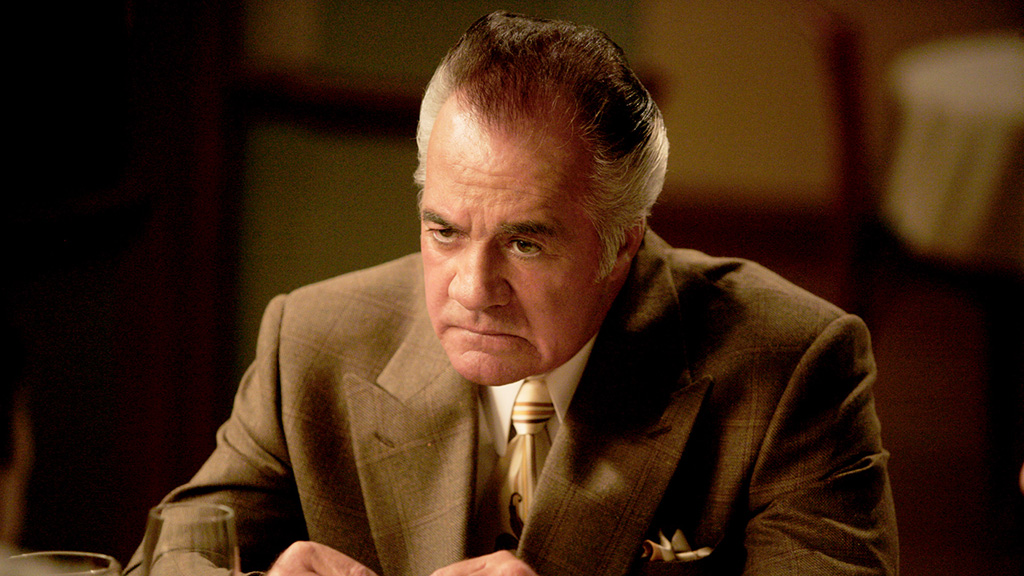
But there there are those, including some Catholic clergy, who would defend the Ryan interpretation of subsidiarity. I was led to this knowledge by Paulie Walnuts.
I’m a big fan of the Internet Movie Database. I have the app on my iPhone, and can’t watch a movie on television without constantly turning to it to answer such questions as “Who’s that actress?” or “What else has she been in?” or “Was this directed by…?” Sometimes I go from there to Wikipedia for elaboration.
I read on, and was told that there’s a very interesting reason why he is so convincing as this sort of character:
Before turning to acting, Sirico was reportedly a fast-rising mob associate of the Colombo crime family, serving under Carmine “Junior” Persico, and had been arrested 28 times. There is a Sopranos reference to this fact when Paulie says, “I lived through the seventies by the skin of my nuts when the Colombos were goin’ at it.”[3] In 1967, he was sent to prison for robbing a Brooklyn after-hours club, but was released after serving thirteen months. In 1971, he pled guilty to felonyweaponspossession and was sentenced to an “indeterminate” prison term of up to four years, of which Sirico ended up serving 20 months. In an interview in Cigar Aficionado magazine, Sirico said that during his imprisonment, he was visited by an acting troupe composed of ex-cons, which inspired him to give acting a try.[4] According to a court transcript, at the time of his sentencing, he also had pending charges for drug possession.[5] Sirico appeared in a 1989 documentary about life, The Big Bang by James Toback, in which he discussed his earlier life.
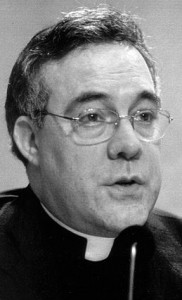
Father Sirico
Interesting, but what does it have to do with the definition of “subsidiarity?” Well, continuing to read the “Background and Career” section, we see that “His brother, Robert Sirico, is a Catholic priest and co-founder of the free-market Acton Institute.”
Rule of Law and the Subsidiary Role of Government – The government’s primary responsibility is to promote the common good, that is, to maintain the rule of law, and to preserve basic duties and rights. The government’s role is not to usurp free actions, but to minimize those conflicts that may arise when the free actions of persons and social institutions result in competing interests. The state should exercise this responsibility according to the principle of subsidiarity. This principle has two components. First, jurisdictionally broader institutions must refrain from usurping the proper functions that should be performed by the person and institutions more immediate to him. Second, jurisdictionally broader institutions should assist individual persons and institutions more immediate to the person only when the latter cannot fulfill their proper functions.
On their face, I wouldn’t argue with those assertions, although it’s odd that subsidiarity is being described in terms of an individual’s relationship to the state, rather than between larger and smaller governmental entities. Quite Ryanesque. Here’s how subsidiarity is further interpreted by a writer on that site:
One of the key principles of Catholic social thought is known as the principle of subsidiarity. This tenet holds that nothing should be done by a larger and more complex organization which can be done as well by a smaller and simpler organization. In other words, any activity which can be performed by a more decentralized entity should be. This principle is a bulwark of limited government and personal freedom. It conflicts with the passion for centralization and bureaucracy characteristic of the Welfare State.
This is why Pope John Paul II took the “social assistance state” to task in his 1991 encyclical Centesimus Annus. The Pontiff wrote that the Welfare State was contradicting the principle of subsidiarity by intervening directly and depriving society of its responsibility. This “leads to a loss of human energies and an inordinate increase of public agencies which are dominated more by bureaucratic ways of thinking than by concern for serving their clients and which are accompanied by an enormous increase in spending.”
In spite of this clear warning, the United States Catholic Bishops remain staunch defenders of a statist approach to social problems. They have publicly criticized recent congressional efforts to reform the welfare system by decentralizing it and removing its perverse incentives. Their opposition to the Clinton Administration’s health care plan was based solely upon its inclusion of abortion funding. They had no fundamental objection to a takeover of the health care industry by the federal government…
So I read that, and I thought, “Where have I seen subsidiarity used that way?” Which brought me to the man of the hour. Paul Ryan would no doubt feel very comfortable with the ideas espoused by “Paulie’s” brother, or at least by the organization he heads. But that’s the only thing they have in common, that I know of. If you were hoping for something more, I’m sorry.
Every national MSM site is currently leading with this story:
PHILADELPHIA — Msgr. William J. Lynn, a former archbishop’s aide, was found guilty Friday of endangering children, becoming the first senior official of the Roman Catholic Church in the United States to be convicted of covering up child sexual abuses by priests under his supervision.
The 12-member jury acquitted Monsignor Lynn, of the Archdiocese of Philadelphia, on a conspiracy charge and a second count of endangerment after a three-month trial that prosecutors and victims rights groups called a milestone in the sexual abuse scandals that have shaken the Catholic church….
There’s a good reason for that, and it’s not that the MSM is picking on the Church.
A lot of people think the problem is that Catholic priests tend to sexually abuse kids. That’s not the case. They are, if anything, less likely to do so than men in the aggregate.
The problem is that, in the rare (but not nearly rare enough) cases when it does happen, the Church on the whole has not — or at least, did not for far too long — respond effectively to prevent abusers from committing their horrific crimes again.
And that’s what this case addresses. That’s what makes it a “milestone,” as the NYT put it.
Once when I was the news editor in Wichita, Dave Barry came to visit. Since he was Knight Ridder’s biggest star, an opportunity was set up for him to meet and bat the breeze with some folks from the newsroom.
It was a light, banter-filled session. At one point, newsroom comedian Dennis Boone challenged Dave by asking, with mock indignation, why he and the rest of us, who worked for the same company, had to sweat away at hard work for long hours while Dave got paid to crack jokes. Barry smiled a satisfied smile and answered with one word: “Talent.”
I had a question I wanted to ask, too, but it felt out of place. It’s one I’ve thought of a lot over the years with regard to humor. It would have gone like this: “Do you ever feel guilty about cracking jokes to a mass audience? Do you ever wonder, when you make a real killer joke about, say, cancer, how many people reading it just lost a loved one to cancer, thereby making your bon mot like a knife to the heart?”
But I decided the question was too dark for the venue — downright weird, really — so I didn’t ask it that day. Nor did I when I ran into Dave again in Atlanta in 1988, where he and I were both covering the Democratic National Convention. We were in the makeshift KR work area in the World Trade Center, and he was telling me about some practical joke that he and others were pulling on Mike Royko over in the next press encampment (I forget what form the gag took). Again, not the right time.
I like a joke as much as the next guy, and probably more than most. I’m generally the guy most likely to go off on a facetious digression in a serious meeting, if only to keep myself interested. I’m guilty of a great deal of the kind of gallows humor that people in newsrooms use to distance themselves from the unpleasantness they report on. (I have my limits, though. I’ve never participated, for instance, in a death pool.) And sometimes I’d forget myself and act that way outside the newsroom. Early in my career, when I’d hardly had time to be jaded (the youngest, least-experienced journalists are often the worst, anxious to show how hardened they are), I was playing tennis one evening with another guy while my wife watched us. There was suddenly a loud, horrible screeching sound followed by a tremendous crash on the nearby busy street that was just out of sight. I said with a grin, “Let’s play that point over; that noise distracted me.” My wife was horrified, and when she pointed out that someone may have just been killed, I felt the appropriate regret, or at least I like to think so. But I knew that we said things that cold all the time at work, about all sorts of human tragedies. We might even dignify it by relating it to professional detachment.
Over time, that sort of humor became less and less the special province of journalists, cops and others who dealt routinely with the uglier sides of life. Starting about the time that “Saturday Night Live” started its long run, society as a whole started accepting an ironic approach to terrible things. A landmark might have been Dan Akroyd’s hilarious sketch in which Julia Child is bleeding to death from a wound inflicted while preparing a meal. Over the years we devolved from that down to laughing at “South Park” and “Family Guy.” We got hipper and hipper and more and more ironic.
Now, with the Web, the lines between professional and audience are largely erased, and everyone competes to be the biggest wiseacre on the Twitter feed. But I was struck today by a gag among professionals that I felt crossed the line — to the extent that there still is a line:
Was he on a plane? RT @TheFix: Man who handles poisonous snakes dies from….wait for it…a poisonous snake bite. http://ow.ly/bf0HQ
To interpret for those not familiar with the Twitter syntax, @TheFix (the feed of the blog written by Chris Cillizza of The Washington Post) said “Man who handles poisonous snakes dies from….wait for it…a poisonous snake bite.” He also provided the link to this story, “Serpent-handling pastor profiled earlier in Washington Post dies from rattlesnake bite.” Then, Celeste Headlee, the co-host of The Takeaway, which I regularly enjoy on public radio), added “Was he on a plane?”
Keeping the ball rolling, Steve Skinner — him I don’t know — added “….and was Samuel Jackson on said plane?” (Such overexplication is, of course, a joke-killer, but hey, nobody’s perfect.)
At this point I decided to play wet blanket — the Harry Hairshirt, the Captain Buzzkill, the Church Lady — and replied:
This was a human being who suffered an untimely and painful death, folks.
No one answered, and that was merciful of them. I had committed such a gaffe, slathering on the self-righteousness like that.
But come on, people.
By the way, if you read the story at the link, it’s appropriately and sensitively done. After all, it’s written by someone who actually got to know the victim in the course of profiling him. That’s an interesting thing about journalistic facetiousness — the reporter out in the field who gets to know sources as human beings is almost never as cynical as the desk types who never leave the newsroom. To the reporter, this wasn’t just some redneck yahoo who took his Bible too literally — which these days is a stock character tout le monde is encouraged to laugh at. He’s a human being who believed in something, rightly or wrongly, and died for it.
Died horribly, in case you don’t know anything about snakebite (and if you don’t, the story sets you straight).
Yeah, I know I was acting like a prig, and that’s no way to get followers on Twitter. But there it is.
I read with interest this piece in The Wall Street Journal today by Mary Ann Glendon, headlined “Why the Bishops Are Suing the U.S. Government,” partly because she is someone I’ve suggested in the past as a potential speaker in the Cardinal Bernardin lecture series (remember, last year we brought E.J. Dionne).
I first became interested in her a couple of decades back, when I was reading a lot of communitarian literature. I was interested in her study of how nations in Europe had found it easier to come to accommodations over abortion, because unlike Americans, they didn’t frame the issue as a clash between absolute “rights.”
This week Catholic bishops are heading to federal courts across the country to defend religious liberty. On Monday they filed 12 lawsuits on behalf of a diverse group of 43 Catholic entities that are challenging the Department of Health and Human Services’ (HHS) sterilization, abortifacient and birth-control insurance mandate.
Like most Americans, the bishops have long taken for granted the religious freedom that has enabled this nation’s diverse religions to flourish in relative harmony. But over the past year they have become increasingly concerned about the erosion of conscience protections for church-related individuals and institutions. Their top-rated program for assistance to human trafficking victims was denied funding for refusing to provide “the full range of reproductive services,” including abortion. For a time, Catholic Relief Services faced a similar threat to its international relief programs. The bishops fear religious liberty is becoming a second-class right…
The main goal of the mandate is not, as HHS claimed, to protect women’s health. It is rather a move to conscript religious organizations into a political agenda, forcing them to facilitate and fund services that violate their beliefs, within their own institutions.
The media have implied all along that the dispute is mainly of concern to a Catholic minority with peculiar views about human sexuality. But religious leaders of all faiths have been quick to see that what is involved is a flagrant violation of religious freedom. That’s why former Arkansas Gov. Mike Huckabee, a Baptist minister, declared, “We’re all Catholics now.”…
Religious freedom is subject to necessary limitations in the interests of public health and safety. The HHS regulations do not fall into that category. The world has gotten along fine without this mandate—the services in question are widely and cheaply available, and most employers will provide coverage for them.
But if the regulations are not reversed, they threaten to demote religious liberty from its prominent place among this country’s most cherished freedoms. That is why Cardinal Dolan told CBS’s “Face the Nation” on April 8: “We didn’t ask for this fight, but we won’t back away from it.”
Perhaps some of y’all will want to discuss this. For that purpose, I give you this post.
Basically, in a fairly transparent series of steps designed to test the waters, two people in the administration stepped out and said they now support same-sex marriage. From the time they did so, it seemed highly likely that they were doing so to see if the world exploded in their faces, ahead of the president making this statement. (Excuse the mixed metaphors; I’m having a busy and harried day.)
But it was artful the way they did it. By having Joe Biden, the famous loose cannon, be the first one to step out, it was possible to disown the statement completely if there was too much of a negative reaction. There wasn’t — at least, not particularly (something that reflects the fact that most people, whether they are pro- or anti-, simply don’t care as much about this as the portion of Obama’s base that cares deeply) — and that made it safe for the next soldier to step into the minefield (sorry! sorry! there’s another metaphor). And when Arne Duncan didn’t get blown up, that made everyone go, Arne Duncan — he’s no loose cannon. And he’s Obama’s longtime basketball buddy!
The next step was for the president himself to say the words that would calm down a significant portion of his fund-raising base. And to do it early enough in the campaign that most of us will have mostly forgotten it by November, since there are so many other things we care so much more about.
The calculated nature of this move was reflected in the language used by one “LGBT advocate” quoted by the WashPost: “The conversation is, what can and should we do to quiet the uproar and to get donors back on board.”
Well, that’s done, and now the Obama campaign will be ready to move on, having brought this up and dispensed with it during the dead time in the campaign between the effective end of the GOP contest and the party conventions just before Labor Day. There was no other time that the president could have done this that would have made less of a political splash.
As I say, deftly done. If there was anything about it unartful, it was perhaps this part:
And he said he wanted to be “sensitive” to the fact that for many Americans, the word “marriage” evokes “very powerful positions, religious beliefs and so forth.”
That somewhat bemused characterization of religious traditionalists is somewhat reminiscent of his “God and guns” misstep of four years ago, making people with traditional values sound a bit like critters in the zoo or something — as something out there that one understands only with great effort. But it wasn’t nearly as bad as that earlier faux pas. And after all, how is he supposed to characterize people whose entire worldview he is rejecting?
So the thing was done about as skillfully as it could be done. If one is determined to do it.
Christians Debate: Was Jesus For Small Government?
What would Jesus do with the U.S. economy?
That’s a matter of fierce debate among Christians — with conservatives promoting a small-government Jesus and liberals seeing Jesus as an advocate for the poor.
After the House passed its budget last month, liberal religious leaders said the Republican plan, which lowered taxes and cut services to the poor, was an affront to the Gospel — and particularly Jesus’ command to care for the poor.
Not so, says Wisconsin Republican Rep. Paul Ryan, who chairs the House Budget Committee. He told Christian Broadcasting Network last week that it was his Catholic faith that helped shape the budget plan. In his view, the Catholic principle of subsidiarity suggests the government should have little role in helping the poor.
“Through our civic organizations, through our churches, through our charities — through all of our different groups where we interact with people as a community — that’s how we advance the common good,” Ryan said.
The best thing that government can do, he said, is get out of the way.
But Stephen Schneck, a political scientist at Catholic University, says he thinks Ryan is “completely missing the boat and not understanding the real heart, the real core, of Catholic social teaching.”…
At the time, I zeroed in on Ryan’s (rather restrictive and misleading) use of “subsidiarity.” What I didn’t get into was the bigger subject: What would Jesus do politically? What sort of government would he advocate?
In a sense, it’s a stupid question, in that it really can’t be answered authoritatively.
We are hobbled by the fact that Jesus wasn’t into politics. In his day, that simply wasn’t in the hands of the people, and therefore there could be no moral imperative to shape one’s society. He taught people how they should live their lives in the world as they found it.
Such issues as “the size of government” (which has always seemed like a ridiculous thing to talk about, as though there could be an objectively ideal “size” — of course, that’s me talking, not Jesus) simply were not anything an average person had any control over. That was up to Caesar. Or the Senate. Or on the more local level, the Tetrarch or Pilate. Or the Sanhedrin. In His day, government actually was what libertarians imagine it to be today. It was “they,” something outside of and apart from the individual.
One of the tough things about applying moral teachings from the Bible to our own time and place is that our relationship to government today is so radically different. For the first time in human history most people (in Western countries, at least) now have a moral responsibility for the world around them, because they have a say in it. They elect the leaders who make the laws. That was unthinkable in Jesus’ day.
Jesus had a live-and-let-live attitude toward government. Unlike his apostle the Zealot, he wasn’t interested in revolution. And if you tried to engage him discussing the morality of taxation, he said render unto Caesar — that was Caesar’s business, not his.
The challenge that Christians have today is what to in in a world in which they have a say in the government. But they don’t get all that much guidance from the Bible, which is why Christians run the gamut from left to right on the political spectrum.
There’s no question, for instance, that we are called upon to care for the poor. But both left and right can make cases for their positions. The left will insist that government must do that job; the right will insist that it must be done by private entities.
The weakness in the left’s argument is that, in this country at least, what the government does is by definition done outside the Christian framework. Government can’t say, “What would Jesus do?” and act accordingly, on account of the way we currently interpret the First Amendment.
The weakness in the right’s argument is that since a Christian today does have responsibility for his government, he should advocate that his government act in accord with his beliefs. If we are enjoined to minister to the poor, than we should vote accordingly. Our vote should be an instrument of Christian charity just as our tithe at Church is.
Ironically, it is so often people on the left who object to anyone trying to make the government an agent of any sort of religious agenda. (I point you to liberals’ horror at what they perceived Rick Santorum as being about.)
In the end, Christians on the left and on the right will tend to imagine what a “Citizen Jesus” would do if he lived in a modern liberal democracy in terms of what they themselves believe politically.
When, of course, we know he would have voted UnParty…
I owe him a debt of gratitude because, while I had heard of the “Greatest NASCAR prayer ever,” I had never bothered to listen to it. It’s… remarkable. That is to say, it’s remarkable to me as a Catholic. Maybe you protestants pray like this all the time. But I doubt it. I went to my cousin Jason’s church for Easter Vigil this year, and there was nothing like this.
The original prayer was actually like this. The version above has been “songified” by The Gregory Brothers. I don’t know who they are, but they definitely rendered the pastor’s effort more awesome.
Here is some bare-bones explanation of the prayer, posted on HuffPost last July:
Prior to Saturday night’s Nascar Nationwide Series race in Nashville, Tenn., Pastor Joe Nelms was tasked with delivering the invocation. What happened next plays like a scene straight out of Will Ferrell’s “Talladega Nights.”
A Tennessee pastor claims he was emulating the apostle Paul when he was called on to deliver the opening prayer at a NASCAR event in which he thanked God for his “smokin’ hot wife,” among other things. Some fans have called it the “best prayer ever” while critics are calling it disrespectful and possibly blasphemous.
Joe Nelms, pastor of Family Baptist Church in Lebanon, Tenn., insists that he was just trying to be like the first-century apostle, but some wonder how far Paul would go in his effort to become “all things to all men.”…
Although the prayer might have offended some people, Nelms said the prayer was not really for Christian audiences. He was more trying to reach out to the unsaved or those turned off by church.
“Our whole goal was to open doors that would not otherwise be open. There are a lot of folks who think churches are all [full of] serious people who never enjoy life and [who have] just a list of rules.”
His invocation was all about showing the world what Christian joy looks like, he said, sharing a bit of his testimony. “We who have been saved by Christ, we know that living has just begun. When I accepted Christ, that’s when I really learned what joy was.”
Despite criticism, Nelms’ evangelism effort has apparently paid off; several people have contacted him expressing a desire to give church a try.
I read something that surprised me this morning, in a book review in The Wall Street Journal. As is fairly typical in opinion pieces in the Journal, the reviewer repeatedly expressed disdain for the author of a book about Irish politics in Boston whenever he failed to be insufficiently conservative (praising him for not dwelling on the Kennedys, castigating him for insufficiently respecting the Southies who fought busing for integration). But I was startled by this revelation:
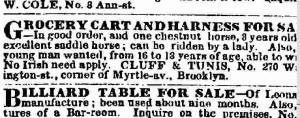
Unfortunately, Mr. O’Neill has produced a rather straightforward recapitulation of Irish politics in the Hub, sticking to the well-established narrative of mustache-twisting Brahmins (or “Yankee overlords,” in Mr. O’Neill’s phrasing) doing battle against spirited, rascally Irish politicians. Indeed, “Rogues and Redeemers” doesn’t so much upend myths as reinforce them. In Irish America, tales of rampant employment discrimination by Yankee businessmen, who posted signs warning “No Irish need apply” are accepted as gospel. Such anti-Irish bias, writes Mr. O’Neill, was “commonly found in newspapers” and became “so commonplace that it soon had an acronym: NINA.”
But according to historian Richard Jensen, there is almost no proof to support the claim that NINA was a common hiring policy in America. Mr. Jensen reported in the Journal of Social History in 2002 that “the overwhelming evidence is that such signs never existed” and “evidence from the job market shows no significant discrimination against the Irish.” The tale has been so thoroughly discredited that, in 2010, the humor magazine Cracked ranked it No. 2 on a list of “6 Ridiculous History Myths (You Probably Think Are True).” Mr. O’Neill doesn’t inspire confidence by faithfully accepting NINA as fact…
I spent a few moments just now checking to see to what extent it is true that the NINA phenomenon is a “myth” of victimization. What I found kept directing me to the aforementioned Mr. Jensen, whose article on the subject is much cited.
But even Jensen documents that some (although not many) ads saying “No Irish Need Apply” appeared in American newspapers during the period. And no one disputes that such prejudice against the Irish was common in Britain; the only debate has to do with the extent of the practice in this country.
The NINA slogan seems to have originated in England, probably after the 1798 Irish rebellion. Throughout the 19th and 20th centuries it was used by English to indicate their distrust of the Irish, both Catholic and Protestant. For example the Anglican bishop of London used the phrase to say he did not want any Irish Anglican ministers in his diocese. By the 1820s it was a cliché in upper and upper middle class London that some fussy housewives refused to hire Irish and had even posted NINA signs in their windows. It is possible that handwritten NINA signs regarding maids did appear in a few American windows, though no one ever reported one. We DO have actual newspaper want ads for women workers that specifies Irish are not wanted; they will be discussed below. In the entire file of the New York Times from 1851 to 1923, there are two NINA ads for men, one of which is for a teenager. Computer searches of classified help wanted ads in the daily editions of other online newspapers before 1923 such as the Booklyn Eagle, the Washington Post and the Chicago Tribune show that NINA ads for men were extremely rare–fewer than two per decade. The complete absence of evidence suggests that probably zero such signs were seen at commercial establishments, shops, factories, stores, hotels, railroads, union halls, hiring halls, personnel offices, labor recruiters etc. anywhere in America, at any time. NINA signs and newspaper ads for apartments to let did exist in England and Northern Ireland, but historians have not discovered reports of any in the United States, Canada or Australia. The myth focuses on public NINA signs which deliberately marginalized and humiliated Irish male job applicants. The overwhelming evidence is that such signs never existed.
Irish Americans all have heard about them—and remember elderly relatives insisting they existed. The myth had “legs”: people still believe it, even scholars. The late Tip O’Neill remembered the signs from his youth in Boston in 1920s; Senator Ted Kennedy reported the most recent sighting, telling the Senate during a civil rights debate that he saw them when growing up 5 Historically, physical NINA signs could have flourished only in intensely anti-Catholic or anti-Irish eras, especially the 1830—1870 period. Thus reports of sightings in the 1920s or 1930s suggest the myth had become so deeply rooted in Irish-American folk mythology that it was impervious to evidence…
Make of this what you will.
Personally, I think it unlikely that NO such signs existed. Given what we can see even today of nativist sentiment, and knowing the nation’s history of suspicion and even hostility toward Catholics, it seems almost certain that back in a day when the “n-word” invited no social ostracism, such alienation toward an outside group would have been expressed quite openly and without embarrassment. But I’m just extrapolating from known facts here. Jensen is right — neither I nor anyone else can produce physical evidence of such signs at worksites.
I suspect that the truth lies somewhere between the utter dismissal of the reviewer, and the deep resentment of alleged widespread practices that runs through the history of Southie politics.
To say that people of faith have no role in the public square? You bet that makes you throw up. What kind of country do we live in that says only people of non-faith can come into the public square and make their case? That makes me throw up…
— Rick Santorum
But since Bud mentioned it today on a previous post, and I read it again in The New Yorker while eating my lunch today, I thought I’d go ahead and say something that’s occurred to me several times in the last few days.
This sort of thing keeps happening. Someone running for president says something that I wouldn’t say, but I understand what he means, and what he means isn’t that awful — and the Chattersphere goes nuts over it, day after day, as though it were the most outrageous thing said in the history of the world.
It happened with Mitt Romney saying he wasn’t concerned about the poor. Obviously, he meant that there were mechanisms in place to help the poor, and that people like him didn’t need any help, but he was worried about the middle class. Not the best way to say it — and if he thinks the safety net makes it OK to be poor, he’s as wrong as he can be. But he was right to express worry about the state of the middle class, whatever he may imagine the remedies to be.
As for Santorum and the “throw-up” line. Well, to start with, I would recommend that no one running for president ever say that something someone else says or believes makes him want “to throw up.” It makes him seem… overwrought. Not at all cool. How can we trust him with that 3 a.m. phone call, with having his finger on the button, when he keeps running to the john to, in a memorable phrase I heard several years ago, “call Roark on the Big White Phone?”
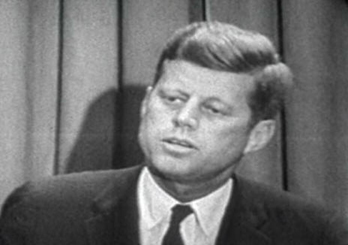
That said, I get what he’s trying to say about the JFK speech to the Greater Houston Ministerial Association. I used to have a similar response to it, although I was never in danger of losing my lunch. Matter of degree, I suppose. In any case, it put me off. Because, far from being an assertion of the legitimate difference between church and state, I had taken it as an assertion that JFK would not bring his deepest values into the public sphere. I further saw it as a sop to bigotry. If offended me to think of a Catholic giving the time of day to anyone so small-minded as to suppose that a mackerel-snapper couldn’t be a good president, much less trying to tell them what they wanted to hear. Altogether a shameful instance of a candidate putting winning ahead of everything. Or so I thought.
My reaction was somewhat like that of Santorum when he addressed the subject a couple of years ago:
Let me quote from the beginning of Kennedy’s speech: ‘I believe in an America where the separation of church and state is absolute.’
The idea of strict or absolute separation of church and state is not and never was the American model. …
That’s correct. There is no such “absolute” separation, and none was intended, except perhaps by Thomas Jefferson (who was not one of the Framers of our Constitution, FYI). Kennedy’s choice of the word “absolute” was unfortunate. Santorum went on:
Kennedy continued: ‘I believe in an America … where no Catholic prelate would tell the president — should he be Catholic — how to act … where no public official either requests or accepts instructions on public policy from the pope, the National Council of Churches or any other ecclesiastical source; where no religious body seeks to impose its will directly or indirectly upon the general populace or the public acts of its officials.’
Of course no religious body should ‘impose its will’ on the public or public officials, but that was not the issue then or now. The issue is one that every diverse civilization like America has to deal with — how do we best live with our differences.
There, I can really identify with what he’s saying. The paranoia toward the Church that Kennedy was addressing is so idiotic, so offensive, that one hates even to see it dignified with an answer.
As for the overall point — was JFK’s performance offensive or not? I once thought it was, although as I say, it didn’t make me physically ill. But that’s because I had never read the speech in its entirety, or heard it. I had simply relied on characterizations of it by others, and the way they presented it made it sound as though Kennedy were kowtowing to anti-Catholic prejudice in a way that bothered me. Worse, there was this suggestion that he was pushing his faith away from him, suggesting that he would conduct himself in office as though he had no beliefs.
Implicit in all of it was the suggestion that faith had no place in the public sphere, which, like Santorum, I reject.
The speech itself is so well-rounded, so erudite, so articulate, so thoughtful about the relationship between faith and political power in this country, that I find myself won over to a candidate who could give such a speech…
I then quoted an excerpt:
Finally, I believe in an America where religious intolerance will someday end, where all men and all churches are treated as equals, where every man has the same right to attend or not to attend the church of his choice, where there is no Catholic vote, no anti-Catholic vote, no bloc voting of any kind, and where Catholics, Protestants, and Jews, at both the lay and the pastoral levels, will refrain from those attitudes of disdain and division which have so often marred their works in the past, and promote instead the American ideal of brotherhood.
That is the kind of America in which I believe. And it represents the kind of Presidency in which I believe, a great office that must be neither humbled by making it the instrument of any religious group nor tarnished by arbitrarily withholding it — its occupancy from the members of any one religious group. I believe in a President whose views on religion are his own private affair, neither imposed upon him by the nation, nor imposed by the nation upon him¹ as a condition to holding that office.
I would not look with favor upon a President working to subvert the first amendment’s guarantees of religious liberty; nor would our system of checks and balances permit him to do so. And neither do I look with favor upon those who would work to subvert Article VI of the Constitution by requiring a religious test, even by indirection. For if they disagree with that safeguard, they should be openly working to repeal it.
I want a Chief Executive whose public acts are responsible to all and obligated to none, who can attend any ceremony, service, or dinner his office may appropriately require of him to fulfill; and whose fulfillment of his Presidential office is not limited or conditioned by any religious oath, ritual, or obligation.
I went on to wax nostalgic for a time when political candidates had the respect for the American people to speak to them that way. This was far, far from the simple “separation of church and state” speech that I had heard about.
Even before I read the speech, there was never a time that mention of it made me want to throw up. The worst thing I said about it was that “I don’t much like the way Kennedy did it.” But I did, like Santorum, have a negative conception of it.
The thing was, I didn’t know what I was talking about.
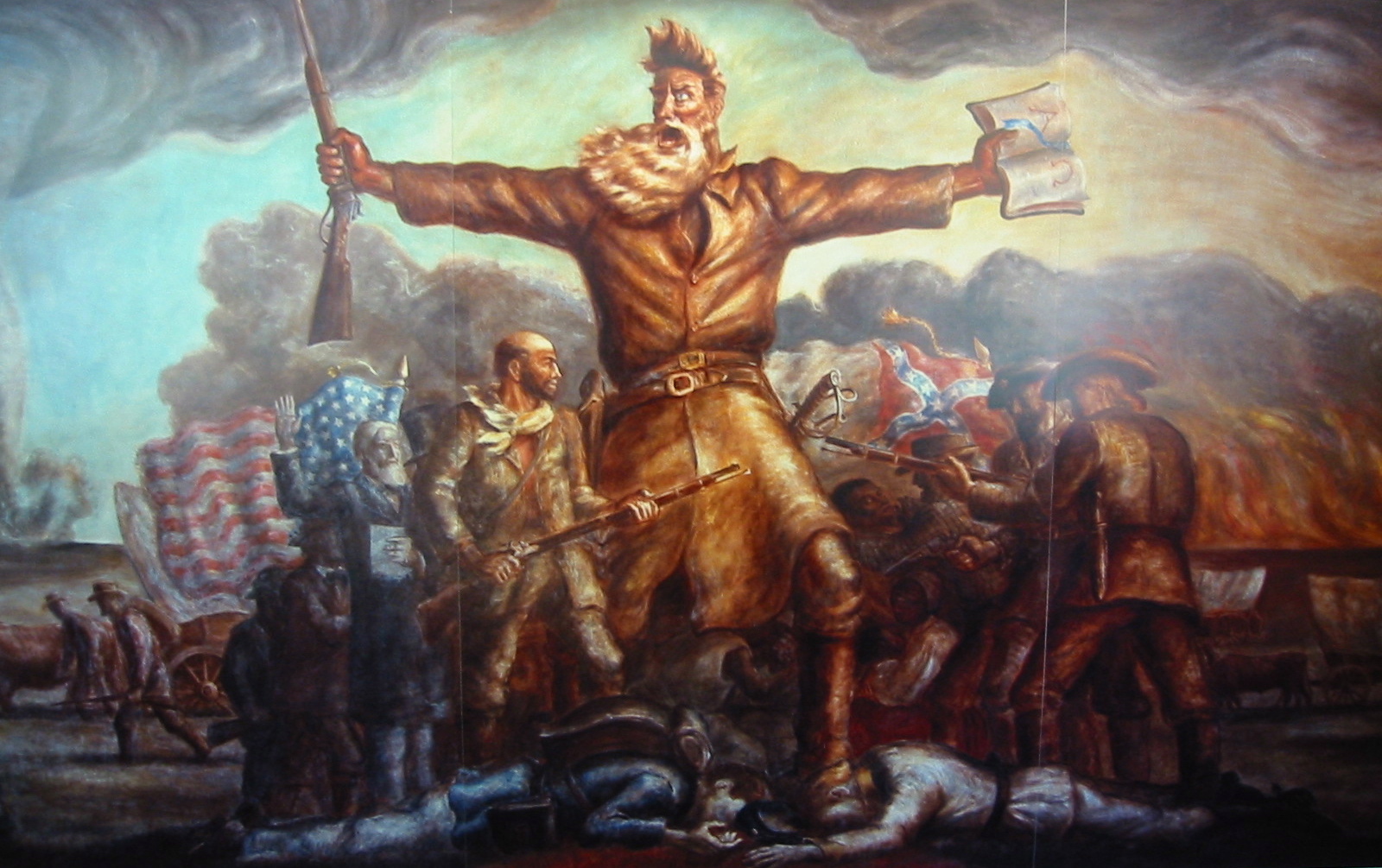
When I started reading the story on the front page of The State this morning about a proposal to change the name of the denomination from “Southern Baptist,” I assumed that the reason would be the convention’s roots in the pro-slavery cause.
So I was taken aback when the reason given in the AP story was concerns “that their name is too regional and impedes the evangelistic faith’s efforts to spread the Gospel worldwide.” That seemed an awfully vanilla way to put it.
I read on, expecting to find the part that dealt with the convention’s founding in 1845… and it wasn’t there at all. No mention of why Southern Baptists had split from other Baptists.
Then, when I went to find the story online to link to it in this post, I found the missing passage:
The Southern Baptist Convention formed in 1845 when it split with northern Baptists over the question of whether slave owners could be missionaries. Draper said that history has left some people to have negative associations with the name.
Well, yeah.
AP stories are generally written in the “inverted pyramid” style, to make it easy for copy editors to cut from the bottom in making a story fit on a print page. But sometimes that doesn’t work. Sometimes a copy editor needs to read the whole story and think about what parts the reader can’t do without if he or she is to understand what’s going on. This is one of those cases.
The omission is more startling since someone thought to add a paragraph at the end telling how many Southern Baptists there are in South Carolina.
Of course, the blame doesn’t accrue entirely to the editor or page designer. This was a badly written AP story. The origins of the “Southern” identity should have been up top, rather than in the 14th graf. It was essential to understanding what the story was about.
Now, let me add that I don’t say any of this to condemn the convention, or the independent churches that belong to it. I do not mean to besmirch today’s Southern Baptists. My parents are Southern Baptists; I was baptized in Thomas Memorial Baptist Church.
But to fail to mention where the convention’s name came from in a story about a discussion of changing the name is like writing a history of Spanish Catholicism without mentioning the Inquisition, or the persecution of Jews and Muslims under Their Most Catholic Majesties Ferdinand and Isabela. Actually, you could even say it’s worse than that in terms of relevance, since the story was specifically about the name.
Given The State‘s usual interest in the history of slavery and Jim Crow (particularly during Black History Month), I was surprised by this omission.
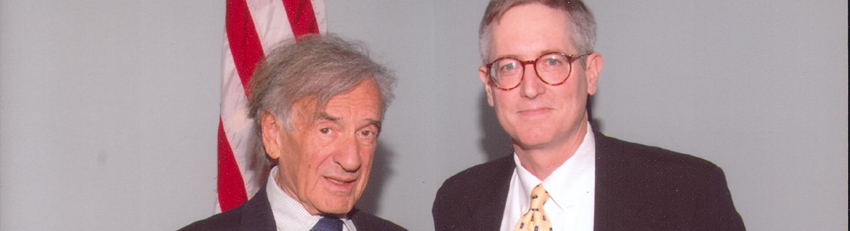
Elie Wiesel, the Holocaust survivor who has devoted his life to combating intolerance, says Republican presidential candidate Mitt Romney “should speak to his own church and say they should stop” performing posthumous proxy baptisms on Jews.
The Nobel Peace Prize winner spoke to The Huffington Post Tuesday soon after HuffPost reported that according to a formerly-Mormon researcher, Helen Radkey, some members of the Church of Jesus Christ of Latter-day Saints had submitted Wiesel’s name to a restricted genealogy website as “ready” for posthumous proxy baptism. Radkey found that the name of Wiesel had been submitted to the database for the deceased, from which a separate process for proxy baptism could be initiated. Radkey also said that the names of Wiesel’s deceased father and maternal grandfather had been submitted to the site…
To which I can only say, Proxy baptism? Really? That doesn’t sound kosher to me, somehow.
Anyway, the Mormons are saying they didn’t really “baptize” Wiesel, even though his name pops up in their records. Nor did they intend to sorta, kinda baptize Simon Wiesenthal’s parents:
SALT LAKE CITY — Mormon church leaders apologized to the family of Holocaust survivor and Jewish rights advocate Simon Wiesenthal after his parents were posthumously baptized, a controversial ritual that Mormons believe allows deceased people a way to the afterlife but offends members of many other religions.
Wiesenthal died in 2005 after surviving the Nazi death camps and spending his life documenting Holocaust crimes and hunting down perpetrators who remained at large. Jews are particularly offended by an attempt to alter the religion of Holocaust victims, who were murdered because of their religion, and the baptism of Holocaust survivors was supposed to have been barred by a 1995 agreement…
The church immediately apologized, saying it was the actions of an individual member of church — whom they did not name — that led to the submission of Wiesenthal’s name…
Hey, it could happen to anybody, right? Right?
I don’t want to cast any aspersions, but this seems kind of… out there. I mean, we baptize babies who don’t know what’s going on, but dead people? Dead people who are not of your persuasion?
I don’t often get releases like this one, so I thought I’d share it:
11 Trinity Youth Transform $1,100 into More Than $60,000
In Just 90 Days, through the Kingdom Assignment, Students Raise Money to Further the Kingdom of God
Thursday, February 9, 2012, Columbia, SC Trinity Cathedral’s Episcopal Youth Community (EYC) is making a big impact in their parish and in our community. In November of 2011, Canon Brian Silldorff challenged 11 members of EYC to participate in the Kingdom Assignment. The result? More than $60,000 to fund an array of projects, both sacred and secular.
The Kingdom Assignment is an international project dedicated to stewardship of God’s Kingdom that started some ten years ago in Lake City, California. You can read more about the Kingdom Assignment on their website, www.kingdomassignment.org.
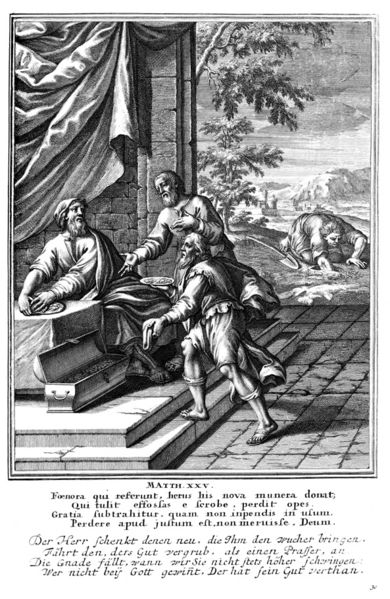
After teaching a Sunday school lesson about the Parable of the Talents, Silldorff challenged eleven youth to participate in the Kingdom Assignment and entrusted them with $1,100 and offered just three rules: 1. The money belongs to God and is entrusted to you. 2. You have 90 days to further the kingdom of God with your talent and treasure. 3. You must report back in 90 days about your project and its success.
It’s now 90 days later and the Kingdom Assignment project will culminate during Youth Sunday School on Sunday, February 12, 2012 at 10:15am in the Workshop. Students, adults, and those impacted by the project will be present along with parishioners and the media to celebrate the impact and reach of more than $60,000.
You are invited to join in the celebration and share in the success. Please email Brian Silldorff if you plan to attend as space is the Workshop is limited. The Worskshop is located on the ground floor of the Trinity Center for Mission and Ministry located at 1123 Marion Street, Columbia, SC 29201.
Way to go, kids! I’m proud of you. Even though you’re not Roman. At least you’re catholic. You know, my cousin is one of y’all’s priests.
This reminds me of the best sermon I ever heard from my own pastor, Msgr. Lehocky. It was so long ago, he probably doesn’t remember it, but I do — the main points, anyway.
14`The kingdom of heaven will be like the time a man went to a country far away. He called his servants and put them in charge of his money.
15He gave five bags of money to one servant. He gave two bags of money to another servant. He gave one bag of money to another servant. He gave to each one what he was able to be in charge of. Then he went away.
16`Right away the servant who had five bags of money began to buy and sell things with it. He made five bags of money more than he had at first.
17`The servant who had two bags of money did the same thing as the one who had five bags. He also made two bags of money more than he had at first.
18But the man who had only one bag of money dug a hole in the ground. And he hid his master’s money in the ground.
19`After a long time, the master of those servants came home. He asked what they had done with his money.
20The servant who had been given five bags of money brought five bags more to his master. He said, “Sir, you gave me five bags of money. See, I have made five bags more money.”
21`His master said, “You have done well. You are a good servant. I can trust you. You have taken good care of a few things. I will put you in charge of many things. Come, have a good time with your master.”
22`The servant who had been given two bags of money came and said to his master, “Sir, you gave me two bags of money. I have made two bags more money.”
23His master said, “You have done well. You are a good servant. I can trust you. You have taken good care of a few things. I will put you in charge of many things. Come, have a good time with your master.”
24`The servant who had been given one bag of money came and said, “Sir, I knew that you were a hard man. You cut grain where you did not plant. You pick fruit where you put nothing in.
25I was afraid. So I went and hid your money in the ground. Here is your money.”
26`His master answered him, “You are a bad and lazy servant. You knew that I cut grain where I did not plant. You knew that I pick fruit where I put nothing in.
27You should have put my money in the bank. Then when I came home, I would have had my money with interest on it.
28So take the money away from him. Give it to the one who has ten bags.
29Anyone who has some will get more, and he will have plenty. But he who does not get anything, even the little that he has will be taken away from him.
30Take this good-for-nothing servant! Put him out in the dark place outside. People there will cry and make a noise with their teeth.” ‘
Not that I have anything against capitalism; I don’t. I just didn’t like it that Jesus was suggesting that the third servant had done something wrong. I mean, if someone else asks you to hold his property, shouldn’t you take every precaution to preserve it and have it ready to give back to him? Doesn’t basic honesty require that? Capitalism is a fine thing, with your own money. But do you have the right to take a risk with someone else’s, without specific (preferably written) authorization?
The risk part was what got me; that’s what seemed wrong. It was too easy to fail.
Father Lehocky urged us to look at it in a whole new way. He said people who play it safe are wasting the talents or other gifts they are entrusted with. OK, I sort of got that, but what if they fail? What if they do?, he said. Failing is part of life. You can fail big-time, and by doing so advance the cause of God. Look at Jesus himself. Was there ever a bigger failure? Look at the way he died. Charged as a criminal, whipped nearly to death, stripped naked and nailed up on a gibbet like an animal for the unfeeling community to watch his death-agonies. Abandoned by his friends, who ran like scalded dogs before the bully boys and denied even knowing him. Not a word he’d said had ever even been written down. All over, all done with, all for nothing. He’d taken a risk, and failed spectacularly, by every standard the world had for judging such things.
Except that he hadn’t, as it turned out. He’d really started something. The risk he’d taken had paid off in a way no ordinary mortal would have predicted.
That sermon made me think differently about my life and how it should be lived. It made me look at failure in a new way. Not that I’ve always lived up to that new way of looking at life. But it made me think. And now that I’m writing this, I’m thinking about it again…



 Celeste Headlee
 Irish Americans all have heard about them—and remember elderly relatives insisting they existed. The myth had “legs”: people still believe it, even scholars. The late Tip O’Neill remembered the signs from his youth in Boston in 1920s; Senator Ted Kennedy reported the most recent sighting, telling the Senate during a civil rights debate that he saw them when growing up