
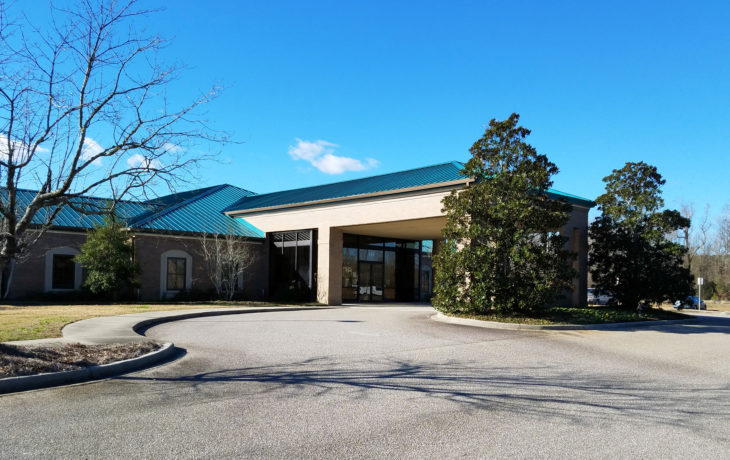
This is where Paul’s HH practice is located, at Francis Marion University.
By Paul V. DeMarco
Guest Columnist
My tens and tens of readers out there might remember how I ended my last column, about the pros and cons of concierge medicine. My bottom line was, though concierge medicine is a benefit to the physicians who choose it and to the patients that can afford it, it is ultimately corrosive, ignoring patients with limited means whom physicians have historically had a strong ethical imperative to serve. I ended with a mild teaser: “If you think community health centers (CHCs) are just safety net clinics for those who have no other option, stay tuned.”
Spoiler alert: they are not. Certainly not in Florence County, which is served by HopeHealth (HH), one of the finest CHCs in the state. Again, I will admit my bias – I work for HH. But let me try to convince you that CHCs are the best primary care delivery system.
CHCs are the most accessible, affordable model. We see everyone, we take almost every insurance, and we have a sliding scale for those without it. If you have ever approached the front desk of a medical office other than a CHC without insurance, you know the anxiety that can produce. Some practices refuse to see you unless you pay a certain amount up front. Others immediately put you on a payment plan. At CHCs, you are not treated as unworthy because you don’t have insurance. We say, “No problem, let’s get some financial information so we can place you on our sliding scale. Your co-pay may be as low as $20 a visit.” We also make it our business to help patients obtain the medications they need. HH operates a pharmacy with a team of pharmacists who are well versed in low-cost options for patients.
Although HH is clearly a great place for uninsured and Medicaid patients, it is also an outstanding option for patients who have Medicare or private insurance. Nationwide, of all patients seen at CHCs, roughly 20 percent of CHC patients have private insurance and 11 percent have Medicare. At HH, those numbers are significantly higher – roughly 37 percent of our patients have private insurance and 30 percent have Medicare. That’s a testament to our leadership and the care that we provide. Many patients that can choose any provider they want choose us.
That’s why I work at HH. It aligns with what I thought I was signing up for when I was in medical training. During those days, powered by sense of idealism, I had dreams of how to make a difference in the world. I regularly have medical students in my office now, and I watch them make the same kinds of calculations I was making 40 years ago. I tell them that my idealism has been tempered but remains intact, and that if I had to do it all over again, I would again choose to work at HH.
One of my core principles when I was in their shoes was that I wanted to work in a practice that saw everyone, regardless of their ability to pay. Once you crossed my threshold, your treatment came first, and how we were getting paid would come later. The community health center movement has exemplified that ethic since CHCs were founded in the mid-1960s as part of the War on Poverty. My guess is that without the CHC system, I would not have been able to uphold my principles. I doubt, without an MBA, that I would have been willing to take on the challenge of opening and running a practice that would take all comers.
It is important to acknowledge the federal government’s role in supporting CHCs, which are also called Federally Qualified Health Centers (FQHCs). Federal grants (Section 330) provide 10-25 percent of most center’s budgets. FQHCs receive a higher Medicaid rate than other providers. Those with pharmacies are eligible for the federal 340B Drug Pricing Program that allows us to reduce costs for those who struggle to pay for medications. In return for this support, CHCs are obligated to care for any uninsured patient who seeks care with them.
CHCs offer a wise and effective approach – a partnership between taxpayers and health care organizations dedicated to serving everyone. Anyone can walk into a CHC and be treated, without compromising on quality. CHCs, including HH, deliver high-quality care that compares favorably with other primary care models.
It’s astonishing that in the 15 years I have worked for HH, we have grown from a staff or about a dozen providers when I started to more than 100 providers serving more than 85,000 patients in 2026.
CHCs in general, and HH, in particular, are not perfect. There are ways we can and should improve. But in a health care system that is fraught with fragmented care, perverse financial incentives, and profit-over-patient mentality, it provides a welcome respite, a place where the mission is still clear and the patient remains at the center.
I’m not a big fan of corporate mission statements – they are often empty words. But I like HH’s, especially the part that says we try to “exemplify love for people and passion for their well-being.” Those are not empty words, and could apply to any CHC. They have allowed me and more than 300,000 others across the country – physicians, APPs, nurses, mental health professionals, dental providers, pharmacists, and support staff – to care for patients in a way that has kept our ideals about what medical care could be untrampled.
Paul DeMarco is a physician who resides in Marion, SC. Reach him at pvdemarco@bellsouth.net.
