Category Archives: The Nation

Kasich to put his boots on the ground in South Carolina

Got this today:

February 18, 2015

KASICH HEADED TO SOUTH CAROLINA AND WEST VIRGINIA TO TOUT NEED FOR FEDERAL BALANCED BUDGET AMENDMENT

COLUMBUS – Ohio Governor John R. Kasich will visit South Carolina and West Virginia on February 18-19 after being invited by state lawmakers to help strategize on how to pass a resolution calling for an Article V Convention to write a federal balanced budget amendment.Kasich,John

Kasich’s visits to South Carolina and West Virginia follow trips to seven western states over the past few months, including Arizona, South Dakota, North Dakota, Montana, Wyoming, Utah and Idaho.  Many of those states are now moving forward with legislative consideration of a resolution, with Wyoming and South Dakota having already won passage in their respective House of Representatives.

“Getting our nation’s fiscal house in order is one of the single biggest issues facing our country,” said Kasich.  “The threat that an $18 trillion debt poses to our children is becoming clearer to legislators in state capitols across America and it’s encouraging that more and more of them want to take action.  Fortunately, our U.S. Constitution provides a solution and that is why a growing number of states are considering resolutions calling for a federal balanced budget amendment.  If we succeed, we’ll finally be able to hold the federal government to the same standards as virtually all states, businesses and families and this fiscal stability will provide real benefits to future generations in my state and others across the country.”

EVENT SCHEDULE: (Note: all event details are subject to change; updates will be provided as necessary)

Wednesday, February 18: Columbia, South Carolina

Who: Governor John R. Kasich

What: Kasich to deliver remarks at South Carolina House Republican Caucus Reception

Where: Hilton – 924 Senate Street, Columbia, SC

When: Wednesday, February 18, 2015 – 5:30 PM …..

And so forth. He also has a press availability the next morning at the State House.

If you’d like all that translated into plain English, here’s what it’s about:

Ohio Gov. John Kasich will address nearly 200 Republican activists, local politicians and potential donors in Columbia, S.C., on Wednesday, in an early foray into a key 2016 primary state.

In his first major political trip to the Palmetto State, Mr. Kasich, a potential 2016 Republican candidate, will be hosted by the South Carolina House Republican Caucus.

South Carolina Lt. Gov. Henry McMaster, as well as more than 100 local activists, conservative donors, state politicos, and Republican members of the state House are expected to attend.

The February stop in South Carolina gives Mr. Kasich a chance for some face time with donors and power brokers in the key primary state, which traditionally votes after the nominating contests in Iowa and New Hampshire.

The Ohio Republican has sounded increasingly interested in mounting a presidential bid in recent months, touting his political strengthen in his home state — a perennial swing state in general elections….

So now you know.

S.C. lawmakers discuss U.S. Constitutional convention

When I saw this this morning:


I had nothing to go on, so I facetiously responded, “Here we go again. Tell the boys at The Citadel to break out the red flag…”

But based on the reporter’s subsequent Tweets, I’m guessing this is what it’s about:

Amending the U.S. Constitution to make marriage between only a man and woman. (Main sponsor: Larry Grooms, R-Berkeley)

That one kinda snuck up on me. I missed that story when it ran. Or maybe I saw it, and missed the thing about Grooms wanting a U.S. con-con, which was only mentioned in a bulleted sidebar, not the main story.

I’ll let you know if it turns out I’m wrong and its about something else.

A U.S. Constitutional convention, eh? If we do that, can we straighten out the language in the 2nd Amendment this time, do something about that oddly placed comma? Not this one, the first one.

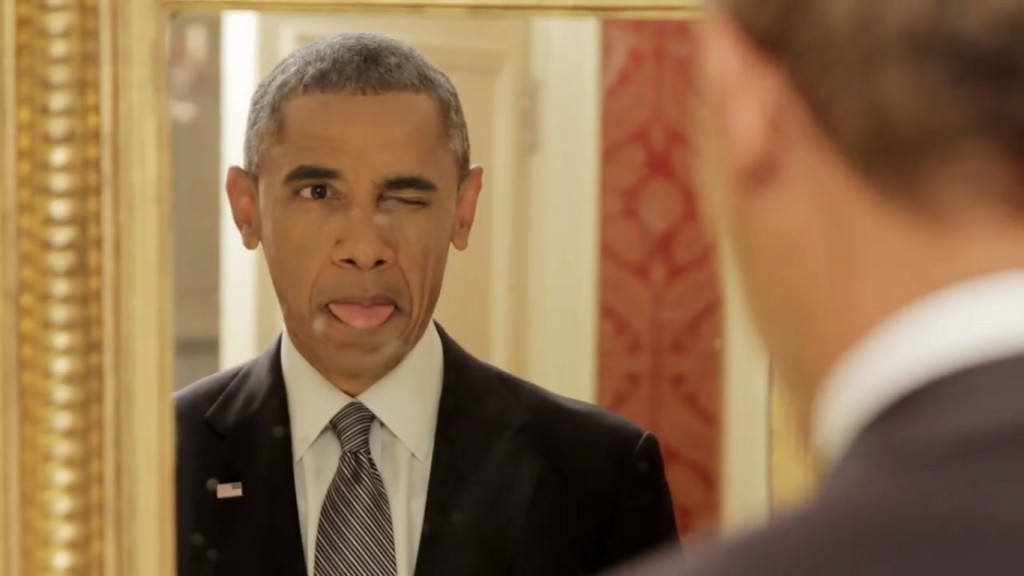
Did Obama undermine the dignity of the office on Buzzfeed?

Obama face

And, if so, is that a bad thing?

To see what I’m talking about, you’ll have to follow the link; I couldn’t find an embed code.

I thought about posting about this over the weekend, but didn’t. My mind was brought back to it by this piece in The Wall Street Journal this morning.

Bret Stephens harrumphed as follows:

George Washington did not shake hands as president and would grip the hilt of his sword to avoid having his flesh pressed. The founding father understood that leadership in a republic demanded a careful balance between low populism and aristocratic lordliness. Personal comportment, the choice of clothes and carriage, modes of address: these things mattered. And so we have “Mr. President” as opposed to “His Highness.” Or “George.”

With Barack Obama —you won’t mind, Señor Presidente, if we call you Barry?—it’s another story. Dignity of office? How quaint. In this most self-infatuated of presidencies, the D-word is at best an accessory and more often an impediment to everything Barry has ever wanted to be: Cool. Chill. Connected.

So it was that, hours after the U.S. confirmed the murder of Kayla Jean Mueller at the hands of Islamic State, Mr. Obama filmed a short video for BuzzFeed, striking poses in a mirror, donning aviator shades, filming himself with a selfie stick and otherwise inhabiting a role that a chaster version of Miley Cyrus might have played had Hannah Montana been stuck in the White House after a sleepover with the Obama girls.

Ostensibly, the point of the video was to alert BuzzFeed’s audience to the Feb. 15 deadline for ObamaCare enrollment. If communicating with 20-somethings as if they are 11-year-olds is a way to get them to behave like grown-ups, then maybe the White House has at last found a way to make good on its make-believe enrollment numbers….

Now, you know, I’m normally not one to be out-harrumphed. I can be as stuffy as the next guy; probably more so if he’s not quite the thing. Today at the board of governors meeting at my club we had a stimulating conversation about the dress code, and while I didn’t actually join in, it’s because I was too busy holding myself back from saying “Quite right!” and “Capital!” at all the more Tory comments from others.

But I don’t know about this. While I quite take Mr. Stephens’ point that it’s absurd to communicate “with 20-somethings as if they are 11-year-olds,” I also applaud pragmatism in a leader. And if this is the way you have to communicate with them — well, one does what one must.

Thoughts?

selfie stick

Apocalyptic language from the HBCU press

In light of the discussions we’re having about S.C. State, I was intrigued when Kevin Gray posted on Facebook a link to a piece from HBCUDigest.com headlined, “On HBCUs, White House Moves From Disregard to Dismantling.”

The piece takes the Obama administration to task for not sending enough federal dollars in the direction of historically black institutions, and ends painting the picture this way:

But the president couldn’t hide his coolness towards HBCUs for long. Before his first term could end, his Department of Education orchestrated and authorized the great Pell Grant/PLUS Loan debacle of 2011. Two years later, he announced plans to tie federal aid funding to a new rating system, one which will punish schools for low graduation rates, student loan defaults, alumni employment rates, and other measures which fly in the face of the HBCU mission and profile.

And here is the latest sign that the highest offices in the nation do not want HBCUs around – millions of dollars going out in an effort to stimulate innovation and opportunities to every type of school except those where the funding is needed most, and, according to data, where the dollars would be best spent.

The other side of this equation has been the easy out given to the Obama Administration with the growing movement towards support for Minority Serving Institutions, or, MSIs. Three little letters are overtaking the Big Four in the attention and support from federal and state resources, with eager legislators quick to find a way out of funding Black colleges but not taking support away from minority students.

The ironies of this movement? The hub for the research and talking points on MSI support is based at a northern, highly selective white institution, with most of its work centering on the outcomes and examples of excellence based at Black colleges. And yet, these same colleges, which totally fit the MSI billing, have found no traction from the center to advance the national HBCU narrative, or secure transformative funding for a historically Black campus from federal sources.

In the end, there aren’t enough HBCU students to boycott or march for long enough to reverse this trend. There isn’t enough wealth among HBCU graduates to stand in the gaps opened wide by federal and state neglect. And HBCU leaders have yet to figure out how to plead their own cases for existence through Black media.

At all levels, we’re all screwed up. And the people at the very top of political and financial food chains who know well our own lack of passion, knowledge, involvement or power to change the course of our institutions, are ready to deal the final death blows to our timeless institutions.

If there’s anything at all to the perceived attitude of the administration, it makes me wonder how Arne Duncan et al. would react to the proposals floating out there regarding S.C. State…


This way of carving up the GOP is too simplistic

Chris Cillizza and/or Aaron Blake of The Fix (the piece is double-bylined, but keeps saying “I”) tell about a “prominent Republican consultant” who says that Ted Cruz is the most underrated potential presidential candidate in the GOP field, and has as good a chance as Jeb Bush.

Of course, he’s challenged on this, and he explains:

Think of the Republican primary field as a series of lanes. In this race, there are four of them: Establishment, Tea Party, Social Conservative and Libertarian. The four lanes are not of equal size:  Establishment is the biggest followed by Tea Party, Social Conservative and then Libertarian. (I could be convinced that Libertarian is slightly larger than Social Conservative, but it’s close.)

Obviously the fight for the top spot in the Establishment lane is very crowded, with Bush and possibly Wisconsin Gov. Scott Walker leading at the moment. Ditto the Social Conservative lane with former Arkansas Gov. Mike Huckabee, Ben Carson and Rick Santorum all pushing hard there. The Libertarian lane is all Kentucky Sen. Rand Paul’s but, as I noted above, it’s still not that big.

Which leaves the Tea Party lane, which is both relatively large and entirely Cruz’s. While Paul looked as though he might try to fight Cruz for supremacy in that lane at one time, it’s clear from his recent moves that the Kentucky senator is trying to become a player in a bunch of lanes, including Social Conservative and Establishment.

So, Cruz is, without question, the dominant figure in the Tea Party lane….

You’ll note that these four “lanes” closely tracks the four “camps” our own Bud set out a couple of days ago, minus the disapproving value judgments. Except that Bud didn’t give libertarians their own camp, and instead threw in his own favorite punching bag, the “warmongers.”

The thing is, all such models oversimplify.

The unnamed consultant gives libertarians their own category, but describes it as the smallest. I think that’s totally wrong — I definitely think the category’s bigger than the Social Conservatives (which was huge in the early ’90s, and still pretty big into the ’00s, not as much now).

What he ignores is that a huge number of the Establishment group is also libertarian, and most Tea Partiers are VERY libertarian — it might be their chief characteristic, the myth of the hardy self-sufficient individual who doesn’t need Big Government or Big Business or anything larger than himself. Don’t Tread On Me.

In fact, to a great extent, the Tea Party is a subset of the libertarian group, which currently dominates in the GOP.

As for the groups overlapping — remember what I said the other day: Mark Sanford is (sort of) an Establishment type of libertarian the Club for Growth type, while Nikki Haley is a Tea Party, Sarah Palin type of libertarian.

So I think that guy got it wrong…

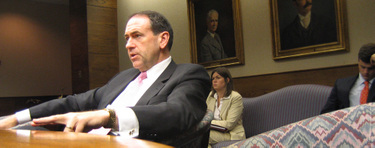
What happened to Mike Huckabee when I wasn’t looking?

Huckabee in 2007.

Huckabee in 2007.

When I interviewed Mike Huckabee in 2007, I was fairly impressed. He stood out among self-styled conservatives of the day by speaking of the obligation to govern when in office, rather than merely rip and tear at the very idea of government:

    Mike Huckabee, who is seeking the Republican nomination for president, made reference to this principle when he met with our editorial board Thursday:
One of the tough jobs of governing is, you actually have to do it.” That may sound so obvious that it’s foolish, like “One thing about water is, it’s wet.” But it can come as a cold shock.
Think of the congressional class of 1994. Newt Gingrich’s bomb-throwers were full of radical notions when they gained power. But once they had it, and used it, however briefly, to shut down the government, they quickly realized that was not what they were elected to do.
Or some of them realized it. More about that in a moment. Back to Mr. Huckabee.
Mr. Huckabee is a conservative — the old-fashioned kind that believes in traditional values, and wants strong, effective institutions in our society to support and promote those values.
Many newfangled “conservatives” seem just as likely to want to tear down as build up.
If Mr. Huckabee was ever that way, being the governor of Arkansas made him less so. “As a governor, I’ve seen a different level of human life, maybe, than the folks who live in the protected bubble of Washington see,” he said. And as a governor who believed he must govern, he was appalled when he saw government fail to do its job. He points to the aftermath of Katrina: “It was one of the more, to me, disgusting moments of American history…. It made my blood boil….

Of course, I was comparing him to Mark Sanford. Among other things, the Club for Growth — which has always adored Mark Sanford — hated Huckabee. And he wore that as a badge of honor.

He said he was “a conservative that’s not mad at anybody over it.” (Here’s video in which he said that.) And his demeanor, and the way he spoke about issues bore that out.

So it is that I was surprised at this statement from him, which Jennifer Rubin, the duty conservative blogger at the WashPost, passed on:

On the other side of the religious debate, Mike Huckabee opined: “Everything he does is against what Christians stand for, and he’s against the Jews in Israel. The one group of people that can know they have his undying, unfailing support would be the Muslim community. It doesn’t matter whether it’s the radical Muslim community or the more moderate Muslim community.” Yikes. Not helpful and only designed to provoke Christians and Jews….

Now, the president deserves criticism for what he said, and I plan to get into that in a separate post when I get my head above water for an hour or so. But this was really over the top, and off the mark.

I was sort of vaguely aware, in the background somewhere, that Huckabee had changed somewhat. I don’t know what caused that. Maybe it happened while he had that TV show, which I never saw because I have a TV for watching movies and “West Wing” and “Better Call Saul,” and not much else (and don’t tell me what happened in last night’s episode, because I haven’t seen it!).

But this really brought it home. What happened to not being mad at anybody about it?

Peggy Noonan’s right: Recrimination is not a plan. It never was…

Meant to post this over the weekend, from Peggy Noonan’s latest column:

Everything’s frozen. When you ask, “What is the appropriate U.S. response to ISIS?” half the people in Washington answer: “ George W. Bush broke Iraq and ISIS was born in the rubble. There would be no ISIS if it weren’t for him.” The other half answer: “WhenBarack Obama withdrew from Iraq, ISIS was born in the vacuum. There would be no ISIS without him.”

These are charges, not answers, and they are getting us nowhere. Bitterness and begging the question are keeping us from focusing on what is. We’re frozen in what was….

Of course, that’s SOP in Washington in this generation.

Be sure to follow the link, and see King Abdullah all dressed up like a combat soldier, to let you know he’s serious


Prediction: The president AFTER Obama will also be the most polarizing ever

So I saw this Tweet over the weekend:

… and I really didn’t need to follow the link.

Of course it’s not entirely his fault. Just as it wasn’t entirely George W. Bush’s fault that he was the most polarizing president before Obama was.

Basically, we’re on a downward trajectory in terms of unreasoning partisan polarization that first started showing up in the early ’80s (a spate of unusually negative ads across the country in the ’82 campaign, the rise of Lee Atwater), and really blossomed with the election of Bill Clinton 10 years later — the first sign, for me, was the “Don’t Blame Me; I voted Republican” bumper stickers that showed up after Election Day 1992 and before Clinton even took office.

From the start, from before the start, Republicans abandoned the “loyal opposition” stance and treated Clinton as illegitimate.

Things got worse all through the Clinton years. They got nastier through the Bush years (and were nasty, again, from the start, with a brief hiatus right after 9/11). And as Obama took office, they just kept getting nastier.

Which to meet argues that it’s something about the rest of the country and our dysfunctional politics, and the president is just an incidental target of the vitriol.

If present trends continue — which they will, barring some horrific event that pulls us back together as a country, or some other cause for a drastic change in our political attitudes — then the next president, regardless of who it is, will be the “most polarizing in history.”

I hope I’m wrong about that, but I doubt it.

The play’s the thing: Help enrich the lives of Thai youth

10426156_1036075383087448_9165832125826871956_n

I mentioned yesterday about our plans to go visit our youngest daughter, who is in the Peace Corps in Thailand.

Today, I offer you the opportunity to help in one of the Peace Corps projects: The Thai Youth Theater Festival, a chance for kids in that country to attend “a three day festival of learning educational theater activities, developing their personal potential, and performing a performance for their audience in English.” The operative concepts being both cultural enrichment and becoming more conversant in English — which is helpful wherever you live in this world today.

I’ve chipped in, and if someone as tight-fisted as I am can do so, perhaps you will, too.

Anyway, here’s where you go to do so, if you’re willing to help out.

Incoherently overheated headline of the day

guardian

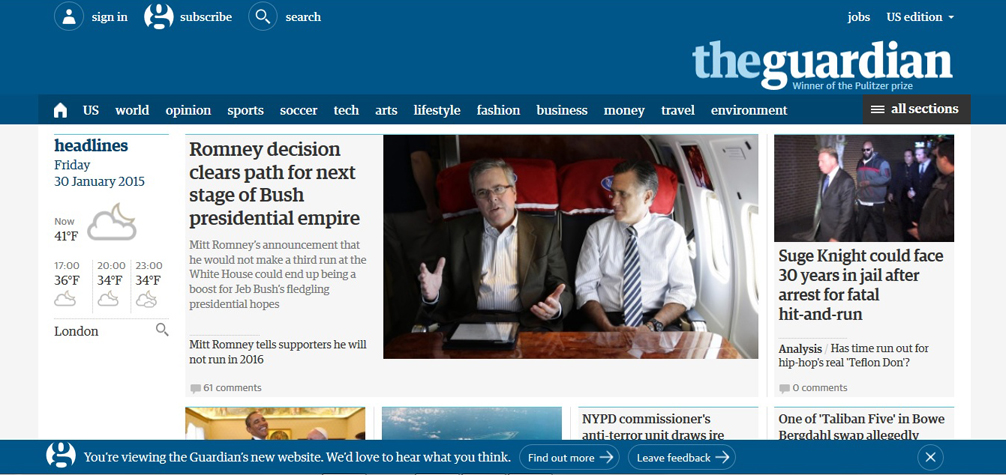
And the award goes to… The Guardian, for “Romney decision clears path for next stage of Bush presidential empire.”

I’m not even sure what it means, beyond communicating the vague idea that The Guardian really has a thing about the Bushes, doesn’t it?

The hed would almost make sense if you substituted “dynasty” for “empire.” But I think somewhere in the lower reaches of some copyeditor’s brain was the mostly-suppressed, unacknowledged thought that “empire” had a more sinister ring to it.

The story itself doesn’t have quite the ring that the hed does. It’s fairly matter-of-fact. I am a little puzzled that the paper is going with such a limited, second-day approach on the breaking story. Romney’s bowing-out has farther-reaching impact than elevating Bush, if it even does that.

Romney himself seemed to be urging Republicans to look beyond Bush to “the next generation.” Bush at 61 is more or less in the usual age range for a presidential contender, so the implication is that Romney is thinking of someone else, someone with a name less well-known.

I found the way Romney put that sort of interesting:

“I believe that one of our next generation of Republican leaders, one who may not be as well known as I am today, one who has not yet taken their message across the country, one who is just getting started, may well emerge as being better able to defeat the Democrat nominee,” Romney wrote. “In fact, I expect and hope that to be the case.”

I heard in that a hint of, You REALLY oughta be going with me, a guy who is well known and has taken his message across the country, someone who isn’t just getting started… but NOOOO, everybody said “Don’t run, Mitt,” so you’re on your own now, losers.

Hey, I’m holding out for a GOP nominee with a sufficient grasp of the English language that he knows “Democrat” is a noun, and the adjective is “Democratic.” That would be something (he said wistfully)…

I thought this headline, saying ‘people could die. That’s okay,’ was meant ironically. It wasn’t…

I got a bit of whiplash reading the opinion section on my Washington Post app over the weekend.

I saw this headline, “End Obamacare, and people could die. That’s okay.” Beyond that, all I could see without clicking on the link was part of this opening sentence: “Say conservatives have their way with Obamacare, and the Supreme Courtdeals it a death blow or a Republican president repeals it in 2017.”

And I thought, Oh boy, some liberal is engaging in standard partisan hyperbole, trying to make us think that those horrible Republicans think it’s OK that people would die if Obamacare were repealed. Sheesh.

And then, I clicked on the link, and the first thing I saw was that the author of the column, Michael R. Strain, “is a resident scholar at the American Enterprise Institute.” And I thought, Wow, that’s counterintuitive, for someone from AEI to be castigating Republicans for wanting to end Obamacare. AEI must represent a broader spectrum of viewpoints than I had thought. I wonder if this guy gets ostracized by the OTHER “resident scholars,” or do they respect his take on things? If such a piece is coming from AEI, it must really be interesting…

And then, I started reading. And quickly realized there was no irony or hyperbole involved here. This guy was serious. He really was saying that people will die if Obamacare goes away, and that that’s OK. What’s left of Jonathan Swift must be rolling over about now.

Here is the operative passage:

During the health-care debates of 2009, Rep. Alan Grayson (D-Fla.) brought a poster on the House floor: “The Republican Health Care Plan: Die Quickly.” In the summer of 2012, when Obamacare was threatened by a presidential election, writer Jonathan Alter argued that “repeal equals death. People will die in the United States if Obamacare is repealed.” Columnist Jonathan Chait wrote recently that those who may die are victims of ideology — “collateral damage” incurred in conservatives’ pursuit “of a larger goal.” If these are the stakes, many liberals argue, then ending Obamacare is immoral.

Except, it’s not.

In a world of scarce resources, a slightly higher mortality rate is an acceptable price to pay for certain goals — including more cash for other programs, such as those that help the poor; less government coercion and more individual liberty; more health-care choice for consumers, allowing them to find plans that better fit their needs; more money for taxpayers to spend themselves; and less federal health-care spending. This opinion is not immoral. Such choices are inevitable. They are made all the time.

He goes on, of course, to explain that what he means is that we make decisions that result in people dying all the time. For instance, if we really didn’t want anyone to die in a traffic accident, speed limits would be set at 10 mph. But we make a tradeoff.

And of course, our healthcare payment system makes decisions not to pay for potentially life-saving care all the time. That was what was so ridiculous about the overheated rhetoric from the right about “death panels” — did Sarah Palin et al. not see that insurance companies, in their bids to hold down costs, have long acted as “death panels”?

But still, I was startled. One seldom sees the case for death made so openly…

Lindsey Graham’s proposed presidential campaign

I see some of y’all have already raised the topic of Lindsey Graham forming an exploratory committee for a presidential campaign.

Kathryn asked whether he had a chance of beating Jeb Bush (in a way that indicated she knew the answer).

No, he does not.

But I’m pretty sure this is one of those “running to get free media in order to raise certain issues” campaigns. I think he assumes that none of those running will provide the kind of critique of the Obama administration on international affairs as he will. What I’ve been seeing lately suggests that both parties will be trying to out-populist each other on economic issues. To some extent, anyway. Graham’s probably reading stuff like this:

“You talk to any pollster, on the Democratic side or the Republican side, they’re in complete agreement on the idea that there has to be an economic populist message,” said Matthew Dowd, a top strategist for former president George W. Bush’s 2000 and 2004 campaigns.

And if you’re Graham, or John McCain, or me, that makes you think there’s not going to be nearly enough talk about collective security, or America’s relationships with the rest of the world.

I don’t think the campaign-to-be is about trying to beat anybody. But I could be wrong….

Krauthammer bravely pushes the Energy Party line

Enjoyed this Charles Krauthammer piece over the weekend:

For 32 years I’ve been advocating a major tax on petroleum. I’ve got as much chance this time around as did Don Quixote with windmills. But I shall tilt my lance once more.

The only time you can even think of proposing a gas tax increase is when oil prices are at rock bottom. When I last suggested the idea six years ago, oil was selling at $40 a barrel. It eventually rose back to $110. It’s nowaround $48. Correspondingly, the price at the pump has fallen in the last three months by more than a dollar to about $2.20 per gallon.

As a result, some in Congress are talking about a 10- or 20-cent hike in the federal tax to use for infrastructure spending. Right idea, wrong policy. The hike should not be 10 cents but $1. And the proceeds should not be spent by, or even entrusted to, the government. They should be immediately and entirely returned to the consumer by means of a cut in the Social Security tax….

A $1 gas tax increase would constrain oil consumption in two ways. In the short run, by curbing driving. In the long run, by altering car-buying habits. A return to gas-guzzling land yachts occurs every time gasoline prices plunge. A high gas tax encourages demand for more fuel-efficient vehicles. Constrained U.S. consumption — combined with already huge increases in U.S. production — would continue to apply enormous downward pressure on oil prices….

Quixotic, yes. But I stand up and cheer whenever anyone has the courage to speak sense on the gas tax.

I don’t know whether his FICA rollback is the best thing to do with the money. I’d like to see some serious investment in infrastructure. But it doesn’t matter. Raising the gas tax and using the money unwisely is actually better than not raising it at all, for the reasons Krauthammer cites.

By the way, in praising Krauthammer for being so Energy Party, I don’t mean to claim he got the idea from me. As he says, he’s been pushing this uncommon sense idea for 32 years. The Energy Party has only been around for a fourth as long.

But of course, the odds against us are as great as ever. Too many on both the left and the right hate the idea of gas tax increases. But at least there’s something afoot in Congress…

Mulvaney: House insurgents can’t be trusted

At first, I thought SC’s Mick Mulvaney had had an awakening, and was spurning the Tea Party fervor that put him in office. I thought maybe his views had matured as a result of four years’ exposure to political reality. I was misled by this headline in the WashPost this morning: “House Republican slams anti-Boehner movement hard. Like, really hard.

That sounded as though maybe he was criticizing the thinking, or the goals, of the ineffectual insurgents. But no. He apparently still shares the goals. But he doesn’t trust the insurgents because they’re ineffectual.

Here’s his statement:

“There was an attempt to oust John Boehner as Speaker of the House today.  I didn’t participate in it.  That may make some people back home angry.  I understand that, but I’ve got some experience with coup attempts against the Speaker, and what I learned two years ago factored heavily in my decision today not to join the mutiny.

First, I learned two years ago that people lie about how they are going to vote.  And you cannot go into this kind of fight with people you do not trust. We walked onto the floor two years ago with signed pledges – handwritten promises – from more than enough people to deny Boehner his job.  But when it came time to vote, almost half of those people changed their minds – including some of those who voted against Boehner today.  Fool me once, shame on you… Today was even worse: there were never enough votes to oust Boehner to begin with.   On top of that, some people who had publicly said in the past that they wouldn’t vote for Boehner did just that. This was an effort driven as much by talk radio as by a thoughtful and principled effort to make a change. It was poorly considered and poorly executed, and I learned first-hand that is no way to fight a battle.   This coup today was bound to fail.  And in fact, it failed worse than I expected, falling 11 votes short of deposing the Speaker.  At least two years ago we only failed by six.

I also learned that the Floor of the House is the wrong place to have this battle.  The hard truth is that we had an election for Speaker in November – just among Republicans.  THAT was the time to fight.  But not a single person ran against Boehner.  Not one.  If they had, we could’ve had a secret ballot to find out what the true level of opposition to John Boehner was.  In fact, we could’ve done that as late as Monday night, on a vote of “no confidence” in the Speaker.  But that didn’t happen…and at least one of the supposed challengers to Boehner today didn’t even go to the meeting last night.  That told me a lot.

Some people wrote me encouraging me to vote for Louie Gohmert.  I like Louie, but let’s be clear: Louie Gohmert was – is – never ever going to be Speaker of the House.  I respect his passion, but he isn’t a credible candidate.  That was proved today by the fact that he got three votes, despite all the national media attention he managed to grab.  My colleague who got the most anti-Boehner votes was Daniel Webster of Florida who got 12 votes. I like Daniel.  He is a nice guy, and a good thinker…but his lifetime Heritage Action score is 60% (by comparison, mine is 91%).  And this was supposed to be the savior of the conservative movement?  Would the House really have been more conservative if he had won?

The truth is, there was no conservative who could beat John Boehner. Period.  People can ignore that, or they can wish it away, but that is reality.  

Some people tried to argue that voting against Boehner would give conservatives leverage, or somehow force him to lead in a more conservative fashion, even if the coup attempt failed.  All I can say to that is that the exact opposite happened two years ago:  conservatives were marginalized, and Boehner was even freer to work with moderates and Democrats.  My guess is that the exact same thing will happen again now.  And I fail to see how that helps anything that conservatives know needs to be done in Washington.

I understand people’s frustration and anger over what is happening in Washington.  And I also acknowledge that John Boehner may be partly to blame. But this was a fool’s errand.  I am all for fighting, but I am more interested in fighting and winning than I am fighting an unwinnable battle. 

Finally, the most troubling accusation I have heard regarding the Boehner vote is that I have “sold out” my conservative principles.  All I can say is this: take a look at my voting record.  It is one of the most conservative in Congress.  And I was joined today by the likes of Jim Jordan, Raul Labrador, Trey Gowdy, Mark Sanford, Trent Franks, Tom McClintock, Matt Salmon, Tom Price, Sam Johnson, and Jeb Hensarling.  If I “sold out” then I did so joined by some of the most tried and tested conservative voices in Washington.

I can say with 100% confidence that I have done exactly what I said I would do when I came to Washington: fight to cut spending, stop bad legislation, work to repeal Obamacare, and hold the President accountable for his actions.  That will never change, and neither will I.”

The Post may be right that this statement “is remarkably blunt and the kind of thing that is rarely seen from a member of Congress.” But it in no way reflects a change of heart. Unfortunately, this is still a guy who thinks mainstream Republicans aren’t radical enough.

‘Selma’ controversy brings ‘inspiration vs. results’ debate back into focus. But it’s not either/or; it’s both/and

The new film “Selma” opens in theaters in Columbia Friday. So I haven’t seen it, any more than you have. But I’d like to comment on the controversy regarding the movie’s portrayal of LBJ.

Go read Richard Cohen‘s latest column, headlined “‘Selma’ distorts the truth about LBJ.” A couple of excerpts:

In its need for some dramatic tension, “Selma” asserts that King had to persuade and pressure a recalcitrant Johnson to introduce the Voting Rights Act of 1965. The movie also depicts Johnson authorizing FBI Director J. Edgar Hoover to smear King and — as King himself suspected — try to drive him to suicide. It is a profoundly ugly moment.

But a bevy of historians say it never happened. It was Robert F. Kennedy, the former attorney general, whoauthorized the FBI’s bugging of King’s hotel rooms. Yet, for understandable reasons, Kennedy appears nowhere in the film. By 1965, he was no longer the AG and, anyway, he remains a liberal icon. But LBJ — Southern, obscene and, especially when compared to the lithe Kennedy, gross of speech and physique — was made the heavy. He should get a posthumous SAG card….

[Those defending LBJ] include the historian Mark K. Updegrove, director of the LBJ Presidential Library; Diane McWhorter, author of “Carry Me Home”; David J. Garrow, author of “Bearing the Cross: Martin Luther King, Jr., and the Southern Christian Leadership Conference”; and, when it comes to the atmospherics of the Johnson-King relationship, Andrew Young, once King’s deputy. He told The Post that the contentious meeting between King and LBJ depicted in the film was, in fact, cordial. “He and Martin never had that kind of confrontation.” Young was there.

As for Garrow, he told the New York Times that “if the movie suggests LBJ had anything to do with” Hoover’s attempt to destroy King, “that’s truly vile and a real historical crime against LBJ.” The movie depicts exactly that….

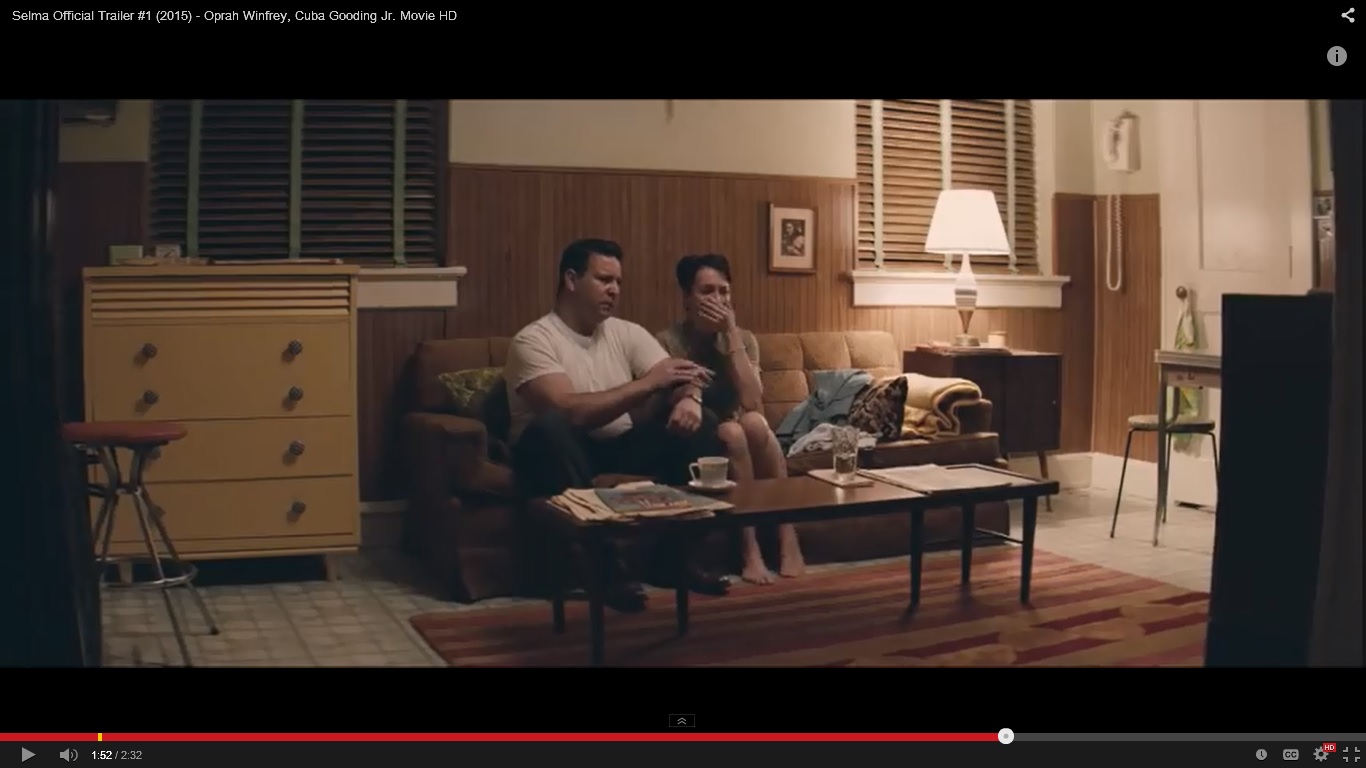
As I say, I haven’t seen the movie, but I’ve seen the above trailer, which hamhandedly drives home the same falsehood that LBJ, and every other authority figure in the country, stood as a barrier that only MLK’s witness, courage, and eloquence could knock down. (If the filmmakers were not trying to make that point in the trailer, they should go back and try again).

We’ve been here before. Back during the 2008 presidential primaries, Hillary Clinton enraged some when she said that the eloquence of an MLK or a JFK — or, by implication, a Barack Obama — only gets you so far. You need an LBJ to effect real change. She, of course, was casting herself as the savvy insider, the latter-day LBJ. Here’s my column at the time on that subject, to refresh you.

But there’s more here than whether you prefer fine words or practical action. There’s also the constant tension between people who believe sincere passion, emotional purity expressed through public demonstrations by ordinary folk is better, more legitimate, and ultimately more effective than working through a system of laws, through elected representatives, to bring about needed reform.

I don’t have to tell you that I believe in the rule of law, in effecting change through the mechanisms of a republic, as opposed to marching in the streets. I had little patience with Occupy Wall Street, as you’ll recall. And as for the protests following the Ferguson fiasco, I think Dave Barry hit the nail on the head with this passage from his satirical look at the year just past:

Domestically, the big story is in Ferguson, Mo., which is rocked by a wave of sometimes-violent protests following the fatal shooting of Michael Brown by police officer Darren Wilson. The shooting ignites a passionate national debate whose participants have basically as much solid information about what actually happened as they do about Malaysia Airlines Flight 370….

So am I discounting the importance of all those civil rights marches, at Selma and elsewhere? Absolutely not. In fact, I believe they represent the one time in my life that such demonstrations were needed, were essential, and made a positive difference in the country. The moral, peaceful witness that Dr. King and the other marchers placed before the eyes of the country led to the development of a political consensus that made LBJ’s efforts possible. They prepared the ground.

But those protests did NOT force concessions from a hostile country, or hostile leadership in Washington. What they did was force the country to face the reality of Jim Crow. They made it impossible to look away. And the country, the great mass of public opinion, white as well as black, decided that we needed the change that the Voting Rights Act and Civil Rights Act represented. And master legislator-turned-president Johnson was the one who led us through that essential process.

It’s not either/or. It’s not black vs. white, or The People vs. The Man. It’s not passion vs. reason.

It’s both/and. We needed MLK and LBJ.

Cohen calls attention to an earlier piece by Joe Califano, vehemently defending his old boss LBJ from the film’s slander. I like this passage from a recording of the conversation:

On Jan. 15, 1965, LBJ talked to King by telephone about his intention to send a voting rights act to Congress: “There is not going to be anything as effective, though, Doctor, as all [blacks] voting.”

Johnson then articulated a strategy for drawing attention to the injustice of using literacy tests and other barriers to stop black Southerners from voting. “We take the position,” he said, “that every person born in this country, when he reaches a certain age, that he have a right to vote . . .whether it’s a Negro, whether it’s a Mexican, or who it is. . . . I think you can contribute a great deal by getting your leaders and you, yourself, taking very simple examples of discrimination; where a [black] man’s got . . . to quote the first 10 Amendments, . . . and some people don’t have to do that, but when a Negro comes in he’s got to do it, and if we can, just repeat and repeat and repeat.

“And if you can find the worst condition that you run into in Alabama, Mississippi or Louisiana or South Carolina . . . and if you just take that one illustration and get it on radio, get it on television, get it in the pulpits, get it in the meetings, get it everyplace you can. Pretty soon the fellow that didn’t do anything but drive a tractor will say, ‘Well, that’s not right, that’s not fair,’ and then that will help us on what we’re going to shove through [Congress] in the end.”…

You have a couple of key points there:

  • First, the president is stating clearly that he not only appreciates what Dr. King is doing, but sees it as essential to educating the public so that it will embrace change. Change will come when that average guy says “that’s not right; that’s not fair.” After that, and not before, you can “shove” reform through Congress.
  • Then, you have his assertion that in the end, however, true change will be effected through the system — by black Americans voting, as well as by raised consciousness among whites. Marching in the streets only gets you so far.

Which is why he pushed so hard for his signature achievement, the Voting Rights Act.

The trailer flits past this image so quickly that I had trouble freezing it on this frame to grab this image. But the reason what happened in Selma was effective was because it caused THIS reaction in mainstream America.

The trailer flits past this image so quickly that I had trouble freezing it on this frame to grab it. But the reason what happened in Selma was effective was because it caused THIS reaction in mainstream America.
How much longer must we shoulder the White Man’s Burden?

Being under the weather yesterday (NOT the flu, and I’m on an antibiotic, so should be myself again soon), I finally got around to watching a couple of DVDs from Netflix that had been collecting dust in front of the tube for months now.

The first was “12 Years a Slave,” which told us of a fortunately long-ago time when we white men — or at least our great-great granddaddies — ran everything. (The other was “Dom Hemingway,” but I have no editorial point to make about that.)

Based on what I saw, it’s a really good thing those days are way, way behind us, gone with the wind, etc. Right? Right?

So today, I read this on The Fix:

The new Congress is 80 percent white, 80 percent male and 92 percent Christian

The 114th Congress, which gets to “work” on Tuesday, is one of the most diverse in American history, comprised of nearly 20 percent women and just over 17 percent of which is non-white. Which means, of course, that four out of five members of Congress are white and four out of five are men. Ergo, given the name of a member of Congress (at random: Oregon GOP Rep. Greg Walden), you can probably guess his or her gender and race. (In case you want to see if you were right about Walden: here.)…

The trend is slow, but it’s clear: Congress is getting a bit less white and a bit less male….

Yeah, uh-huh. Given that this is where things stand a couple of centuries after the time depicted in “12 Years a Slave,” check back with us in another 175 years or so hence and… well, actually, at this rate we white guys are still gonna be running things. Or rather, our great-great grandsons will.

Come on, people! Step it up! How much longer must we bear this, the White Man’s Burden (domestic version)? Help us out!

It’s not like the job is hard. To serve in Congress, all you have to do is pick up on the talking points of the day each morning, recite them loudly, demonizing the other side (which is also made up mostly of white guys), and raising money. (OK, admittedly it’s historically been easier for white guys to raise money, although you couldn’t tell by me.)

Or, you could do it differently if you like. You could actually study issues and think about them, if you want to be such a radical.

But come on, my multicultural friends. Somebody different — and I mean, really different — needs to step in and take over. Soon…

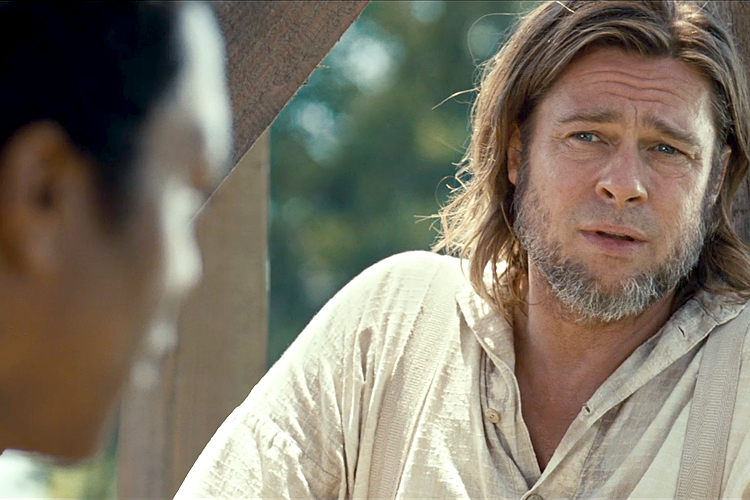
The only really decent white man in the movie was Brad Pitt, which stands to reason, because everyone knows that all really decent white men are named "Brad."

The only really decent white man in the movie was Brad Pitt, which stands to reason, because everyone knows that all really decent white men are named “Brad.”

Obama: Sony ‘made a mistake,’ and N. Korea better watch out

POTUS

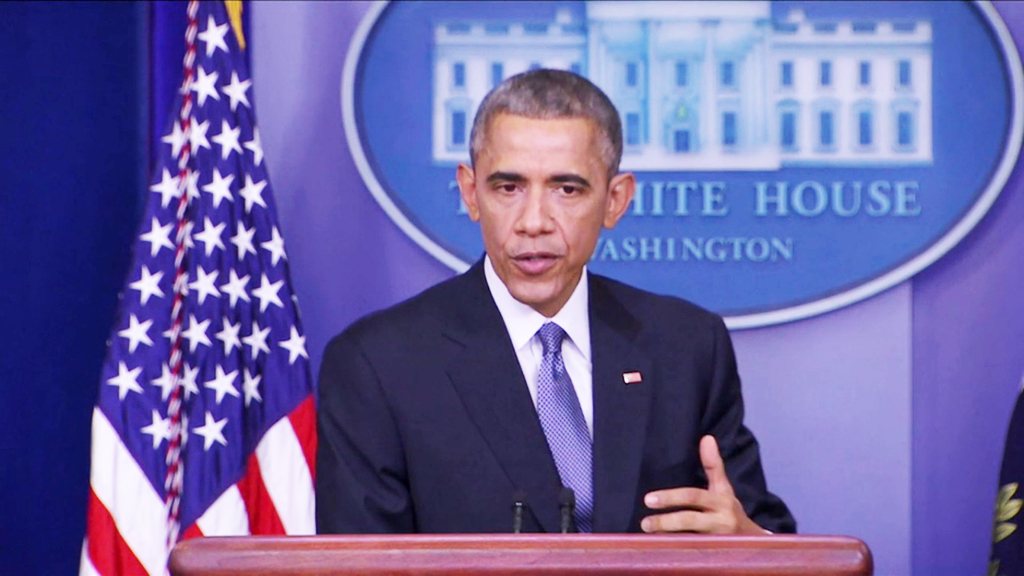
Two things are being reported out of the president’s last scheduled presser of the year this afternoon:

  1. Sony “made a mistake” in canceling “The Interview.”
  2. We’re gonna get even with North Korea.

The first point raises interesting questions, but I find myself focusing on the second one.

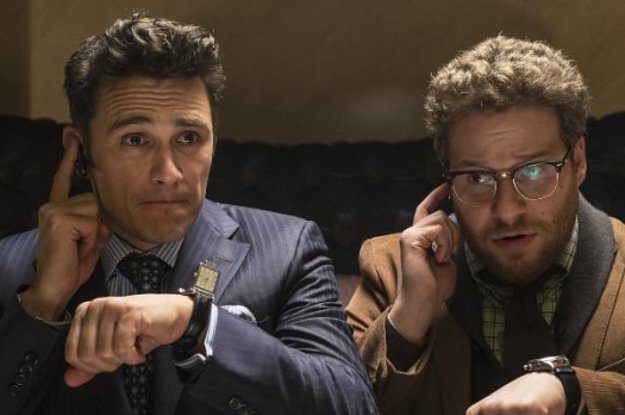
So… exactly how do we retaliate against North Korea for throwing a snit fit over a silly movie, and then creating cyber havoc with a large corporation’s virtual existence?

POTUS promises our response will be “proportional.” What’s proportional in this instance? Do we somehow sabotage Dear Leader’s favorite TV show? His country has no large, successful corporations that we can mess with, so what else is there?

It’s like the opposite of “What do you give the man who has everything?” In this case, it’s what do you do to a country where the people all starve, they lack electric lighting and the absolute ruler is so paranoid he wipes out his own relatives to hold on to power?

The president is headed for vacation in Hawaii, leaving the West Wing to ponder how to get back at the North Koreans. Why do I picture the guys in Animal House planning their big revenge at the homecoming parade?

Previous White Houses had to decide how to respond to Pearl Harbor, or the Berlin Wall. We have this….


Benghazi committee should add Sony hack to its brief

Let’s see…

A foreign terrorist attack wreaks havoc on an American (cultural) outpost, resulting in an untimely death (of a movie — and after all, aren’t all Hollywood films really ambassadors of the American Way?).

The government tries to make us believe it’s all because of a tasteless, ill-advised video that it had nothing to do with. So far, all administration officials seem to be sticking to these talking points.

So maybe Trey Gowdy’s Benghazi committee should take on the big Sony hack of 2014. Seeing as how another GOP-led committee has already said it found no administration wrongdoing at Benghazi…


Obama’s bold move on relations with Cuba

Barack Obama seems determined to avoid irrelevance and have a real impact in his last years in office. Not long after stepping out unilaterally on immigration, he’s braving the potential ire of Cuban émigrés by stepping toward a more reasonable relationship with their homeland:

US President Barack Obama has hailed a “new chapter” in US relations with Cuba, announcing moves to normalise diplomatic and economic ties.

Mr Obama said the US’ current approach was “outdated” and the changes were the “most significant” in US policy towards Cuba in 50 years.

Cuban President Raul Castro said he welcomed the shift in a TV address.

The move includes the release of US contractor Alan Gross and three Cubans held in the US.

Wednesday’s announcement follows more than a year of secret talks in Canada and at the Vatican, directly involving the Pope….

Good for him. And good for the Pope, too. It’s good to have a Pontiff from Latin America, it seems…

Why must our international free speech crises be over such stupid things?

REALLY? These are our free speech heroes?

REALLY? These are our free speech heroes?

When I saw this news this morning

“The Interview’s” premiere, which was to take place at Sunshine Cinema in New York on Thursday, has been canceled, a Landmark Theatres spokesman told the Hollywood Reporter. The news came after a group calling itself Guardians of Peace, or GOP, issued a threat to movie theaters warning of Sept. 11-style attacks against those that show “The Interview,” scheduled to premiere Christmas Day. Now there’s a serious question of whether anyone will screen the movie at all. Guardians of Peace is the same group that claimed responsibility for the Sony Pictures Entertainment hacks. Some investigators believe North Korea is behind the attack.

The Los Angeles Times reported Sony executives attended a meeting of the National Association of Theatre Owners on Thursday, where they told the trade group Sony would be supportive if owners elected not to screen the movie.

The Georgia-headquartered Carmike Cinemas, which operates 276 theaters and 2,904 screens in 41 states, has already taken Sony up on the offer and announced it would not be showing the movie….

… My first reaction was, If you cancel the premiere and hold off from showing the movie, the cyberterrorists win!

So my next thought is that instead of cancelling, Sony and the theaters should…

… should what? Stand up for noble principle by showing a stupid movie about a couple of doofuses trying to kill a real-life foreign leader, played for laughs?

Dang. You know, I wish that when people in the West want to go toe-to-toe with repressive regimes around the world and stand up for freedom of speech, they wouldn’t always do it with such stupid things as this, or that idiotic, offensive cartoon contest deliberately intended to mock the Prophet.

Can’t we step up our game a little bit, fellow Westerners? Let’s try going to the mat for the Magna Carta, or the Declaration of Independence, or something that doesn’t make us feel queasy to defend. This is no way to get people in benighted countries to embrace pluralism or liberal democracy.

Come on, folks. I want to advocate for our way of life. Give me something to work with…