Category Archives: Donald Trump

On the downside, Trump will still be president in October

Had to smile at this news from The Washington Post this morning:

proxy

Will the mysterious shadow planet Nibiru obliterate Earth in October? No.

If all goes according to wild conjecture, planet Earth and the planet Nibiru are set to collide in the autumn, twin cosmic shooters in a game of apocalyptic marbles. Nibiru is playing for keeps, bringing sinkholes, fire storms and the general annihilation of life as we know it. As with many conspiracy theories, though, this one has a fatal factual flaw. The closest thing Nibiru has had to an existence was a cameo in a 2013 Star Trek film. There is not, in reality, a planet called Nibiru boldly zooming through our solar frontier….

Here was this thing I had not worried about a bit, because I had never heard about it. (It’s one of those things like “the world’s gonna end in 2012” — remember that one?) And now they were telling me not to worry about it.

But don’t bother to celebrate our deliverance. Scientists also predict that, on the downside, Donald Trump will be president of the United States in October 2017.

They give with one hand, and take away with the other…

Yo, this is the news we GOT, so quit yer bellyachin’…

Increasingly, folks from various walks of life — but particularly those in various areas of media and communications — feel a need to apologize or at least commiserate with their audiences, to do what they can to soften the pain of living in the post-Nov. 8 world.

So a certain tone has crept into the unlikeliest places. Check this, from an email message seeking entries for a photographic retrospective on 2016:

american-photography

Basically, We acknowledge your trauma (your “trepidation and uncertainty”), but do us a favor and see it you can pull it together long enough to send us some content, however unpleasant the subject matter

But that wasn’t nearly as blunt or to the point as an ad I got on my iPad recently, promoting a Reuters TV app. See below. (Hey, we know this news sucks, but it’s what we got. We wish he had better but we don’t, so quit yer bellyachin’, sit still and watch it…)

Hey, folks, don’t worry. Donald Trump is a really smart guy, and is already telling our intelligence experts things they were clueless about… oh, wait — that wasn’t actual news. That was The Onion

reuters

On this, Trump may be right and Obama may be wrong

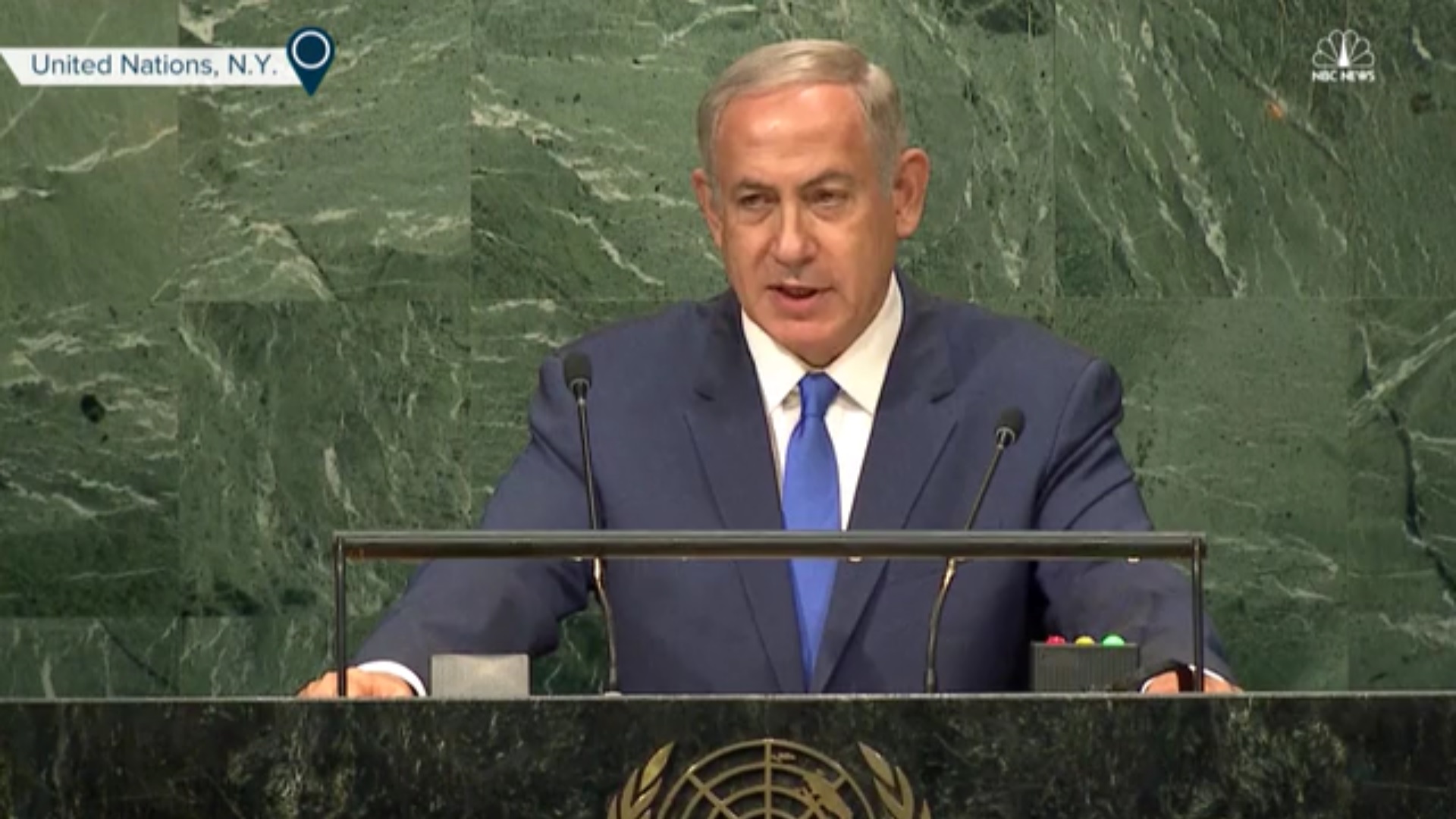
Image from NBC file footage of Netanyahu speaking at the U.N.

Image from NBC file footage of Netanyahu speaking at the U.N.

Like a stopped clock, Donald Trump will sometimes be right — and this might be one of those times.

Today, the outgoing Obama administration got this shot across its bow:

An Israeli official on Friday accused President Barack Obama of colluding with the Palestinians in a “shameful move against Israel at the U.N.” after learning the White House did not intend to veto a Security Council resolution condemning settlement construction in the West Bank and east Jerusalem the day before.

“President Obama and Secretary Kerry are behind this shameful move against Israel at the U.N.,” the official said. “The U.S administration secretly cooked up with the Palestinians an extreme anti-Israeli resolution behind Israel’s back which would be a tail wind for terror and boycotts and effectively make the Western Wall occupied Palestinian territory,” he said calling it “an abandonment of Israel which breaks decades of US policy of protecting Israel at the UN.”

Earlier he said Israel’s prime minister turned to President-elect Donald Trump to help head off the critical U.N. resolution….

And Trump obliged:

JERUSALEM — President­-elect Donald J. Trump thrust himself into one of the world’s most polarizing debates on Thursday by pressuring President Obama to veto a United Nations resolution critical of Israel, the newly elected leader’s most direct intervention in foreign policy during his transition to power. Mr. Trump spoke out after Israeli officials contacted his team for help in blocking the draft resolution condemning settlement construction even as they lobbied its sponsor, Egypt. Within a couple of hours, Egypt withdrew the resolution, at least temporarily, and its president, Abdel Fattah el­Sisi, called Mr. Trump to discuss how “to establish true peace in the Middle East,” according to an aide to the president-­elect….

Of course, if you don’t like Trump’s current position, wait five minutes. But for now, I think he’s calling for the right response.

Look, folks: I think to a great extent those settlements are problematic, a provocation. But this is no way for Israel’s adversaries to try to cram through a resolution on the subject — two days before Christmas and in the midst of a uniquely unsettling presidential transition in this country. Note that I’m talking here about the United States. Why? Because I think a move like this is meant to take advantage of this country as much as it is meant to strike out at Israel.

First the Russians try, and one might even say succeed (if one isn’t too discriminating in discerning causes and effects), in throwing this country into disarray. Now this.

Oh, and while I’m talking foreign interference, let me say that I don’t particularly appreciate our friend Israel reaching out to Trump this way. But President Obama could certainly have avoided that desperation move by assuring Israel that he had its back.

I hope he did, in fact. I certainly hope the Israeli allegation is wrong, and that President Obama intended to veto this resolution at this time.

You know what would be nice? A clear statement from the administration to that effect. That would do much to pour oil on the waters. If anyone’s seen anything like that, let me know. I’ve been hunting for something, ANYTHING from the White House on this, and failing to find it. I’ll keep looking. (I’ve found speculation that maybe Samantha Power is quietly working to solve the problem, and perhaps that’s right. If so, ignore everything I’ve said.)

By the way, before I sign off, here’s what Lindsey Graham has to say about the situation. His release, in fact, is what alerted me to the fact that this matter, which I thought was averted yesterday, may not be over:

Statement by U.S. Senator Lindsey Graham on Resolution Involving Israeli Settlements:

“This provocative action by the United Nations is an outrage and must be dealt with sternly and forcefully.

“As the Chairman of the Subcommittee on Foreign Operations of the Senate Appropriations Committee, I oversee the United States assistance to the United Nations.  The United States is currently responsible for approximately 22 percent of the United Nations total budget.

“If the United Nations moves forward with the ill-conceived resolution, I will work to form a bipartisan coalition to suspend or significantly reduce United States assistance to the United Nations.

“In addition, any nation which backs this resolution and receives assistance from the United States will put that assistance in jeopardy.

“There is a reason the United States has long opposed these type efforts directed at Israel — the only way to achieve a lasting peace by the parties negotiating directly and not using the United Nations as a blunt instrument against Israel.  This was President Obama’s position in 2011 and it should be his position today.”

#####

Graham wants Tillerson to answer questions on Russia

Tillerson and Putin

Tillerson and Putin

Lindsey Graham has had politely positive things to say about most of Trump’s Cabinet picks so far. But he wants some answers from Rex Tillerson about his buddy-buddy relationship with Putin:

Graham on Tillerson Nomination to Serve as Secretary of State

WASHINGTON – U.S. Senator Lindsey Graham (R-South Carolina) today made this statement on Rex Tillerson, being nominated to serve as Secretary of State.

“Mr. Tillerson is a talented businessman with a great deal of international business experience.

“I look forward to meeting Mr. Tillerson and discussing his world view – especially his views of the US-Russian relationship. Based upon his extensive business dealings with the Putin government and his previous opposition of efforts to impose sanctions on the Russian government, there are many questions which must be answered.  I expect the US-Russian relationship to be front and center in his confirmation process.”

####

Is this where the GOP Congress stands up to Trump?

Will their checks and balances be enough?

Will their checks and balances be enough?

Remember all those assurances that, thanks to our system of checks and balances, Trump wouldn’t be able to harm the country all that much?

Well, as much confidence as I place in Hamilton, Madison et al., I’ve thought that was too phlegmatic by half — a modern president can do a great deal of harm, even unto the destruction of the planet, before Congress can get its thumb out of its, um, ear.

And, over the weekend, some observers — including The Washington Post‘s duty conservative, Jennifer Rubin — were beginning to wonder whether the GOP Congress would ever develop the guts or inclination even to try to contain him.

As it happens, there were encouraging signs yesterday and this morning.

First, my two fave senators, Graham and McCain, stood up to both Trump and Putin:

Two Senate Republicans joined demands for a bipartisan probe into Russia’s suspected election interference allegedly designed to bolster Donald Trump as questions continue to mount about the president-elect’s expected decision to nominate a secretary of state candidate with close ties to Russia.

Sens. Lindsey O. Graham (R-S.C.) and John McCain (R-Ariz.) — the chairman of the Senate Armed Services Committee — joined calls by incoming Senate Democratic leader Charles E. Schumer (N.Y.) and Armed Services ranking Democrat Jack Reed (R.I.) for a thorough, bipartisan investigation of Russian influence in the U.S. elections. Their statement came two days after The Washington Post reported the CIA’s private conclusion that Russia’s activities were intended to tip the scales to help Trump.

“Recent reports of Russian interference in our election should alarm every American,” the four senators said in a statement on Sunday morning. “Democrats and Republicans must work together, and across the jurisdictional lines of the Congress, to examine these recent incidents thoroughly and devise comprehensive solutions to deter and defend against further cyberattacks.”…

Of course, the headline on that story noted that the GOP leadership remained “mum” on that point.

I’m happy to note that Sen. McConnell has now been heard from:

Senate Majority Leader Mitch McConnell (R-Ky.) on Monday strongly condemned any foreign interference with U.S. elections and announced that the Senate intelligence panel will investigate Russia’s suspected election interference.

“The Russian are not our friends,” McConnell told reporters at a scheduled year-end news conference….

This is encouraging. It doesn’t make me think things are hunky-dory, but it’s encouraging…

Apparently, intelligence would cramp Trump’s style

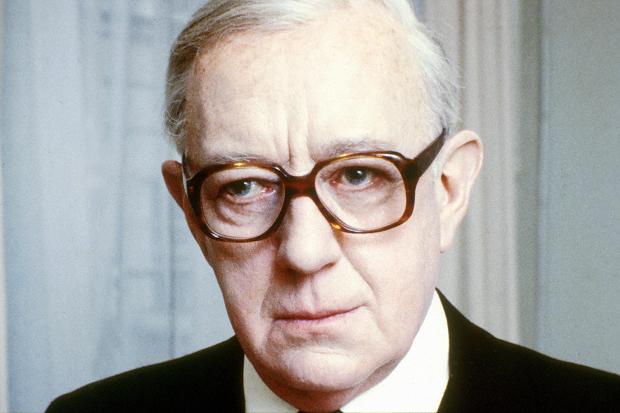
If only George Smiley were available to brief him. And if only he'd listen...

If only George Smiley were available to brief him. And if only he’d listen…

Just to start off the week, which is worse?

  1. Trump deciding he doesn’t need the daily intelligence briefing — even though, you know, there’s never been a president-elect in our history more painfully in need of one. I have to admit I cringed right after the election when it was reported he would start getting these — the very idea of the least discreet man in America being briefed on the nation’s secrets — but Trump not getting such briefings is actually much more disturbing. I mean, if he gets enough of them, maybe, just maybe, he’d start to get a clue. And perhaps that’s why he doesn’t want to get them. Having a clue would cramp his style.
  2. Trump waving off the assessment by intelligence professionals that the Russians tried to hack our election to benefit him.

My immediate reaction, of course, is that absurdity No. 2 is the worse one, because what could be more dangerous than a president who says “No, they didn’t” to evidence that Russia was trying to do such a thing to this country, striking at the very core of our democracy? And of course, we know why he dismisses it: It suggests he is less awesome than he thinks he is, and that he needed help to win. Which makes his stubborn refusal to accept facts even more alarming — because what has concerned us most about Trump, if not his penchant for placing the stroking of his own fragile, unstable ego ahead of every other consideration?cia

If only someone could tell him the bad news in a good way — pointing out that no one is saying the Russians won the election for him (at least I haven’t heard that yet); we’re just saying that Putin may have committed an extraordinarily hostile act against this country, just by trying. Of course, even then, we’d run up against a key goal of the incoming Trump administration, which is to favor Russia — something of which we got another reminder via the nomination of the ExxonMobil guy for secretary of state. And once again, Trump is utterly uninterested in, and hostile to, any information that might contradict what he wants to believe. (He’s like his supporters in that regard, the ones who choose their own alternative-reality “news” sources.)

(A digression: On the radio this morning, someone was wondering why, if you want to cozy up to one superpower wannabe and tick off another, why choose moribund Russia to be your pal instead of the dynamic, growing China? Good question.)

But the more I think about it, the more I think absurdity No. 1 may be the bigger problem.

If I were president, or president-elect, I would consider the intelligence briefing the most important part of my day, most days. My temptation would be to let it take up more of my day, rather than less. On the days that the briefing was boring — just same-old, same-old — I would count my blessings. The worst briefings would tend to be the extremely interesting ones.

Because I have a better grasp of international affairs than Trump does (here we go — comments are on the way telling me he’s smarter than I am because he has more money — but this is one thing where I’m pretty confident, because a guy doesn’t need to know much about foreign policy to know more than Trump), I know how much I don’t know, and I would want to do everything I could to know more.

And as I said, our country has never had an incoming leader who needed these briefings more than this guy. If he had these steady, daily tutorials, he may even begin to develop something we might loosely term perspective.

But he doesn’t want that. He thinks he knows everything, when he actually knows less than Jon Snow — if he knew nothing, he’d be better off than he is “knowing” all the things he “knows” that aren’t true.

Bottom line — while within days I fear we’ll hear something worse and this will be toppled from it’s place of honor, these developments over the weekend I think are the most disturbing signs we’ve seen since the election of just how bad this is going to be…

Tony thinks we’ll be OK. Let’s hope he’s right, as usual

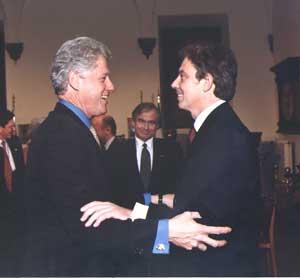
Tony has always been one to feel our pain.

Our pal Tony has always been one to feel our pain.

Bryan calls my attention to the fact that while my main man Tony Blair is very concerned about the state of liberal democracy in Europe, he thinks his American friends will weather the Trump crisis:

WASHINGTON — Former British prime minister Tony Blair warns that political upheaval from Great Britain’s Brexit vote in June to the collapse of the Italian government on Sunday signals the most dangerous time for Western democracies in decades….

It has been a year of unexpected victories by populist and nationalistic forces that are challenging the establishment: passage of the referendum pulling Britain from the European Union, the election of Donald Trump as president in the United States, defeat of a measure in Italy that prompted the prime minister to announce his resignation.

And in the Austrian election Sunday, the candidate representing the party founded by former Nazis lost — but after commanding 46% of the vote….

“I’m less worried about America than I am about Europe; I’ll be very frank with you,” he said. “America is such a strong country and you’ve got so many checks-and-balances and you’ve got such resilience in your economy and so on; you guys will do fine, I’m sure. In Europe, we have systems that are at a point of fragility that troubles me.”…

Tony’s almost always right. Here’s hoping he is this time. Although for once, I doubt him. Rome thought it was big enough and strong enough and had checks and balances, too…

Will Mattis cross the Rubicon? Or did Trump already do that?

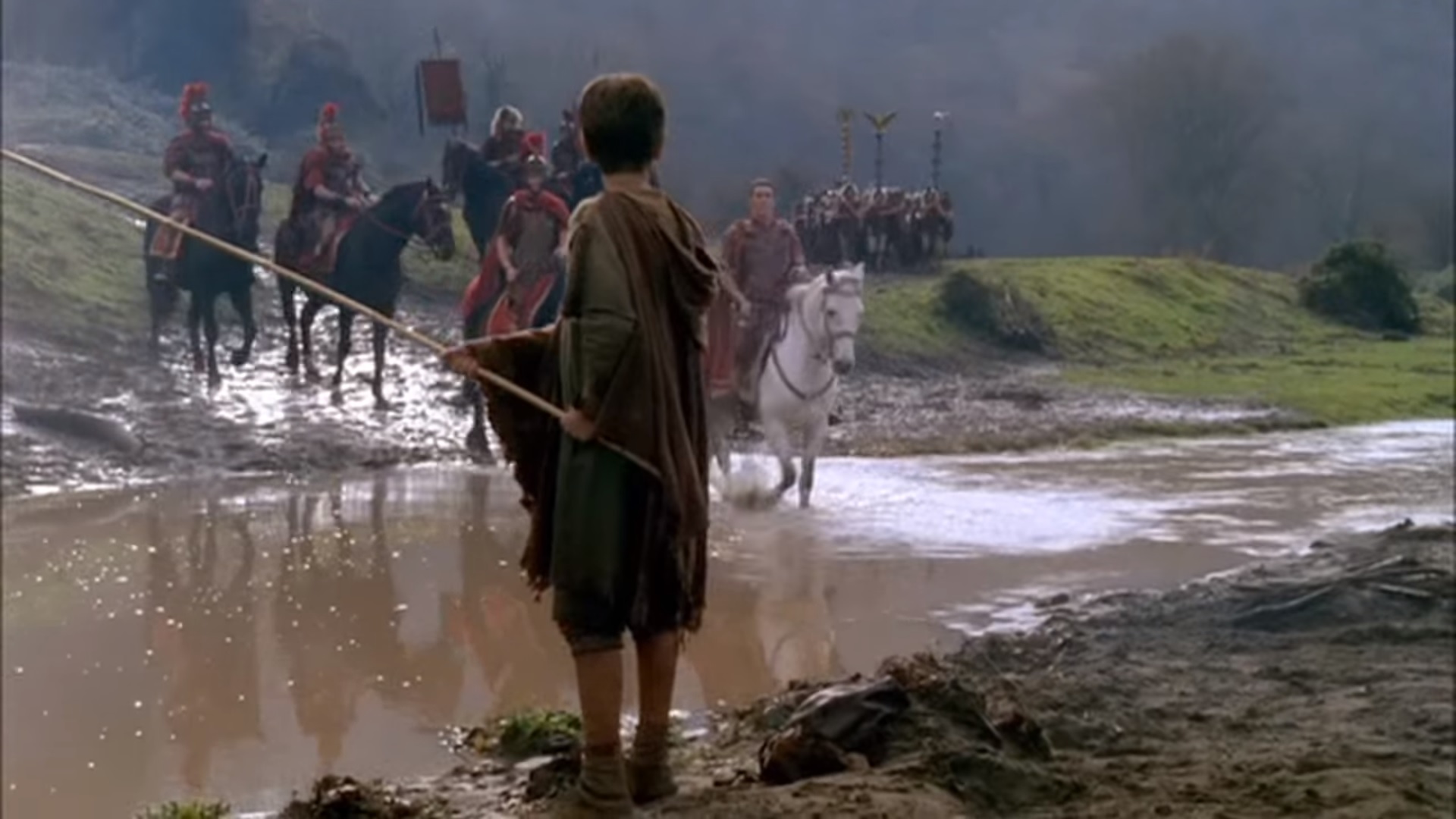
Caesar pauses at the Rubicon, before casting the die.

Caesar pauses at the Rubicon, before casting the die.

It’s been pointed out many times now that the issue of whether to grant a waiver to allow Gen. James Mattis to become Defense secretary goes back to 1950, when Congress granted a one-time exemption to George C. Marshall.

Actually, the issue goes back much, MUCH farther than that, to Julius Caesar crossing the Rubicon, which signaled the pending demise of the Roman Republic.

In those days — and through much of history — generals tended to have more or less personal armies, filled with soldiers who felt they owed their fealty to the generals themselves at least as much as they did to the larger political entity that the army supposedly served. That proposed a threat to the stability of the Roman Republic, so they had a law — generals had to keep their armies out of Italy.

Julius Caesar broke that rule by taking his legion south of the Rubicon, and sure enough, republicans’ fears were realized.

I’ve always assumed that the reason I had to move around so much growing up as a Navy brat was that the U.S. military wisely keeps its officers from staying with the same unit or in the same community long enough to form those kinds of dangerous relationships — either with their troops or with local political leadership. My exposure early on to the dynamics of military coups in Latin America persuaded me of this.

(Weirdly, if you Google “why do people move so much in the military,” you don’t get that explanation. Which seems weird to me. Can anyone out there confirm whether MY understanding of the reason is correct?)

Anyway, the ironic thing here is that a lot of folks (including me to a certain extent) are painting Trump’s election as a harbinger of the demise of our own republic, as Americans turn to a strongman who promises to solve all our problems, and who has little grounding in the foundational principles of our society.

Some have drawn the comparison to Julius Caesar’s big move on Rome. Over the weekend, I enjoyed reading this piece by a historian, who wrote in The Washington Post to debunk such comparisons:

These comparisons are common. Former Supreme Court justice David Souter has said that embracing an all-powerful figure who promises to solve the nation’s problems is “how the Roman republic fell.” Augustus, Rome’s first emperor, ended democracy “because he promised that he would solve problems that were not being solved,” Souter said in the 2012 quote, which resurfaced during this fall’s campaign. Along those same lines, a Huffington Post headline claimed: “Rome Had Caesar. America Has Trump. The People Were and Are Desperate.”

But such comparisons are light on scholarship. Simply put, most experts believe there is little to compare. Yes, the United States has seen a rise in populism, but it hasn’t experienced a microgram of the violence that accompanied the fall of the Roman republic. The end came only after numerous civil wars over offices and honor , decades of gang violence in the capital, and waves of sanctioned political murder. By that measure, Trump is no Caesar…

That is somewhat reassuring. The historian is saying, I knew Caesar, and you, Mr. Trump, are no Caesar… And perhaps it’s a good thing to debunk such notions. The Secret Service would not want to see a latter-day Brutus and the rest getting ideas. Nor would I, let me say…

The reason the Trump-as-Caesar analogy strikes me as ironic is that the situation with Gen. Mattis offers the closer parallel to the actual principle involved in requiring the legion to stay in Gaul. And frankly, as I expressed earlier, I find the prospect of someone as qualified as Mattis to be a good and promising thing, by comparison with most aspects of the coming administration.

In other words, Mattis crossing the Rubicon might be a small salvation for our republic, or at least might mitigate some of the damage done by Consul Trump, who recently caused the plebeians to rise up…

rubicon2

… and then he goes ahead and crosses it, with the Legio XIII Gemina.

NO! The problem is NOT that the election was ‘divisive’

I’m getting sick of people saying this, so I need to speak up.

A story today in The Washington Post by the eminent Dan Balz, headlined “Raw emotions persist as Donald Trump prepares for his presidency,” repeats a fallacy that needs to be countered:

But everyone knew or should have known that the wounds from an election that was as raw and divisive and negative as campaign 2016 would not be quickly healed…

No, no, NO!

The problem is not that the election was “divisive,” or even “negative.” Those factors have been givens in American politics in recent decades. We’ve had negative campaigns across the country since the early 1980s, when the old guideline that a candidate would damage himself if he “went negative” died and was buried. Lee Atwater rose during those days, but the rule was being broken by others, such as Robin Beard, who used creative, negative ads against Jim Sasser in the 1982 Senate race in Tennessee (where I was at the time), gaining national attention but failing to win the election (which briefly seemed to confirm the old commandment against negativity).

As for divisive — well, it’s been pretty awful ever since the election of 1992, when bumper stickers that said “Don’t Blame Me — I Voted Republican” appeared on cars even before Clinton was inaugurated in January 1993. Since then, the parties have not been satisfied merely to disagree, but have increasingly regarded leaders of the opposite party to be illegitimate and utterly beyond the pale.

So it is that the terms “divisive” and “negative” say nothing about the recent election; they do not in any way distinguish the presidential election of 2016 from any contest that preceded it.

And yet we all know that this election was different from every one that preceded it in American history, right? So how do we describe that difference?
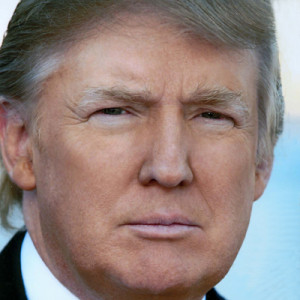
THIS is the difference, folks.

THIS is the difference, folks.

Well, it’s really not all that hard — although describing the underlying causes is more difficult. The difference is Donald Trump.

This was an election between a relatively normal, reasonably qualified candidate, and a grotesquely unfit one — a crude, rude, petty, childish, ignorant, unstable man who had done nothing in his life that in any way prepared him for the job.

You can complicate it if you wish. Feminists want to characterize Hillary Clinton as a groundbreaking candidate of historic proportions — which is silly. She was as conventional as can be: As a former senator and secretary of state, you don’t even have to mention her time as first lady to describe her qualifications. She was Establishment; she was a centrist (center-left if you prefer); she was someone completely at home in the consensus about the role of the United States in the world that has prevailed since Harry Truman. The main thing is, she was qualified.

Yes, she was the second most-hated major party nominee (second to the man who beat her) in the history of keeping track of such things, which is an important reason she lost. Some people who should have known better hated her so much that they were able to rationalize voting for the astonishingly unfit Trump in order to stop her, so that was definitely a factor. But aside from that, she was a normal candidate, from the usual mold, a person who people who knew what they were about — such as Republican foreign-policy experts — were comfortable voting for, knowing the nation would be in reasonably safe hands.

She was business-as-usual (which also helped sink her, as we know), while Trump was a complete departure from anything that had ever before risen its ugly, bizarrely-coiffed head to this level in American politics. It wasn’t just a matter of resume. This man got up very early every morning to start making statements — by Twitter before others rose, out loud later in the day — that absolutely screamed of his unfitness. A rational employer would not hire someone that unstable to do anything, much less to become the most powerful man in the world.

I need not provide a list of his outrages, right? You all remember the election we just went through, right?

TRUMP is what distinguishes this election from all others. TRUMP is what people are trying to get over — which we can’t, of course, because he’s now with us for the next four years. I ran into a former Republican lawmaker yesterday — a member of the revolutionary class of 1994, the original Angry White Male revolt — who expressed his utter bewilderment and sense of unreality that has been with him daily since the election. To him, as to me, the fact that Trump won the election can’t possibly BE a fact. Nothing in our lives prior to this prepared us for such a bizarre eventuality.

Yes, there are complicating factors — the populist impulse that has swept the West recently, which sometimes seemed would prevent Hillary Clinton from winning her own party’s nomination, despite her socialist opponent’s clear unsuitability and the fact that it was understood in her party that it was Her Turn. The roots of that are difficult to plumb. As is the fact that the GOP was bound and determined to reject all qualified candidates and nominate someone completely unsuitable — if not Trump, it would have been Ted Cruz, whom tout le monde despised. Both factors can be attributed to the populist obsession, but contain important differences.

So yes, there was a force abroad in the land (and in the lands of our chief allies) that was determined to sweep aside qualifications, good sense and known quantities in favor of the outlandish. And that helped produce Trump.

But still, particularly if you look directly at what happened on Nov. 8, the difference is Trump himself.

And that MUST be faced by anyone attempting to explain what has happened.

Ever since he started closing in on the nomination, I’ve been begging everyone in the commentariat and beyond to resist the lazy temptation to normalize Trump, to write or speak as though this were just another quadrennial contest between Democrat and Republican, to be spoken of in the usual terms. I was hardly alone. Plenty of others wrote in similar terms about the danger of pretending this election was in any way like any other.

And now, we still have that battle to fight, as veteran (and novice) scribes seek to describe the transition to a (shudder) Trump administration in the usual terms, even though some have admirably noted the stark difference. (I particularly appreciated the Post piece yesterday accurately explaining the similarities between this unique transition and Reality TV. — which is another new thing, folks, as we slouch toward Idiocracy.)

It’s a battle that must be fought every day, until — four years from now, or eight, or however many years it takes (assuming our nation even can recover from this fall, which is in doubt) — a normal, qualified person is elected president.


Is this really where the light of liberal democracy grows dim?

In a comment earlier I wrote about how concerned I am about the course of my country — and of the world. More so than I’ve ever been in my more than six decades on this planet.

It’s not just Trump — he’s just a glaring, ugly sign of it. Take a step back, and reflect: Who came in second in the GOP primaries? The only guy who gave Trump any kind of a run for his money as the worst candidate ever — Ted Cruz. All the better-suited candidates were stuck in single digits. And the Democrats have nothing to brag about — they put forward the second-most (second to Trump) despised candidate in the history of such things being measured. And she had trouble putting away a cranky old socialist to get that far.

How can I blame Trump when the real problem is that millions of people voted for him? I actually almost feel sorry for this bizarre figure, because he truly had zero reason to expect that he’d actually end up in this position.

I mean seriously: If you don’t even go deeper than his hair, you can tell at a glance that the country’s really, really in trouble. This is what will lead us?krauthammer

And the rest of the world, too. As Charles Krauthammer wrote today, “After a mere 25 years, the triumph of the West is over.” The promise of 1991, with the Soviet Union finally collapsing and the U.S. leading a broad coalition against Saddam in Kuwait — the New World Order in which Civilization, led by the City on a Hill, would enforce its values against aggressors — is behind us.

The United States is pulling back, and the bad guys just can’t wait to flow into the vacuum. In fact, they haven’t been waiting — in Syria, Iraq, Ukraine or the South China Sea. Or even in our own backyard.

He sums it up this way, blaming BOTH Obama and Trump:

Donald Trump wants to continue the pullback, though for entirely different reasons. Obama ordered retreat because he’s always felt the U.S. was not good enough for the world, too flawed to have earned the moral right to be the world hegemon. Trump would follow suit, disdaining allies and avoiding conflict, because the world is not good enough for us — undeserving, ungrateful, parasitic foreigners living safely under our protection and off our sacrifices. Time to look after our own American interests.

I think he’s trying a little too hard at false equivalence there, but at the same time, while Obama’s a smart guy who knows how to say the right things (unlike, you know, the other guy), there has been a noticeable tinge of “Oh, this country isn’t all that special” in his stance toward the world. A tinge that some of you agree with, and with which I couldn’t disagree more. But if you’re right, if the United States isn’t all that special — if it can’t be relied upon as the chief champion of liberal democracy — then the world doesn’t stand much of a chance. Because there’s always somebody wanting to be the hegemon, and the leading candidates running to take our place are pretty much a nightmare.

ISIS is a wannabe and never-was on that score. Russia wants to be a contender again, instead of bum, Charlie. But my money has long been on the oppressive authoritarians of the world’s largest country, China.

One of the first editorials I wrote for The State — maybe the first — when I joined the editorial board in 1994 was about the disturbing signs I saw of the Chinese buying friends and influencing people right here in our hemisphere, the long-forgotten Monroe Doctrine notwithstanding. I was worried that nobody else in this country seemed to see it, thanks to the fact that few of my fellow Americans ever took a moment to think about what happens to the south of us. (Side note: We wrote a lot about international affairs when I joined the editorial board; when I became editor, we would focus far more closely on South Carolina, which needed the scrutiny.)

Well, more people have noticed it since then. But not enough people. And not enough of the ones who have noticed care. President Obama, to his credit, started his “pivot” to focus on the Pacific Rim. That was the smart thing to do for this country’s long-term interests, and those of liberal democracy in general. China needs to be countered, with both soft power and, when necessary, hard.

Probably the most chilling paragraph in Krauthammer’s column is this one:

As for China, the other great challenger to the post-Cold War order, the administration’s “pivot” has turned into an abject failure. The Philippines openly defected to the Chinese side. Malaysia then followed. And the rest of our Asian allies are beginning to hedge their bets. When the president of China addressed the Pacific Rim countries in Peru last month, he suggested that China was prepared to pick up the pieces of the Trans-Pacific Partnership, now abandoned by both political parties in the United States….

TPP was smart policy, encouraging our allies in the region to join with us in confidence, tying themselves more closely with U.S. interests in the face of the Chinese challenge. And this year, neither party was willing to stand up for it — even though one of the nominees (the one who lost, of course) knew better. If she’d been elected, at least we’d have had the chance of her breaking that bad campaign promise.

We painstakingly fashioned that strategic instrument, then dropped it like a hot potato when the populists began howling. And China is preparing to pick it up. And maybe you don’t, but I feel the Earth’s center of gravity shifting in the wrong direction.

Oh, but hey, Carrier’s not moving a plant to Mexico — at least, not completely. So everything’s OK, right? We’ve entered the era of short-term, inwardly focused international goals. Or something…

A post in which you can talk about Gen. Mattis

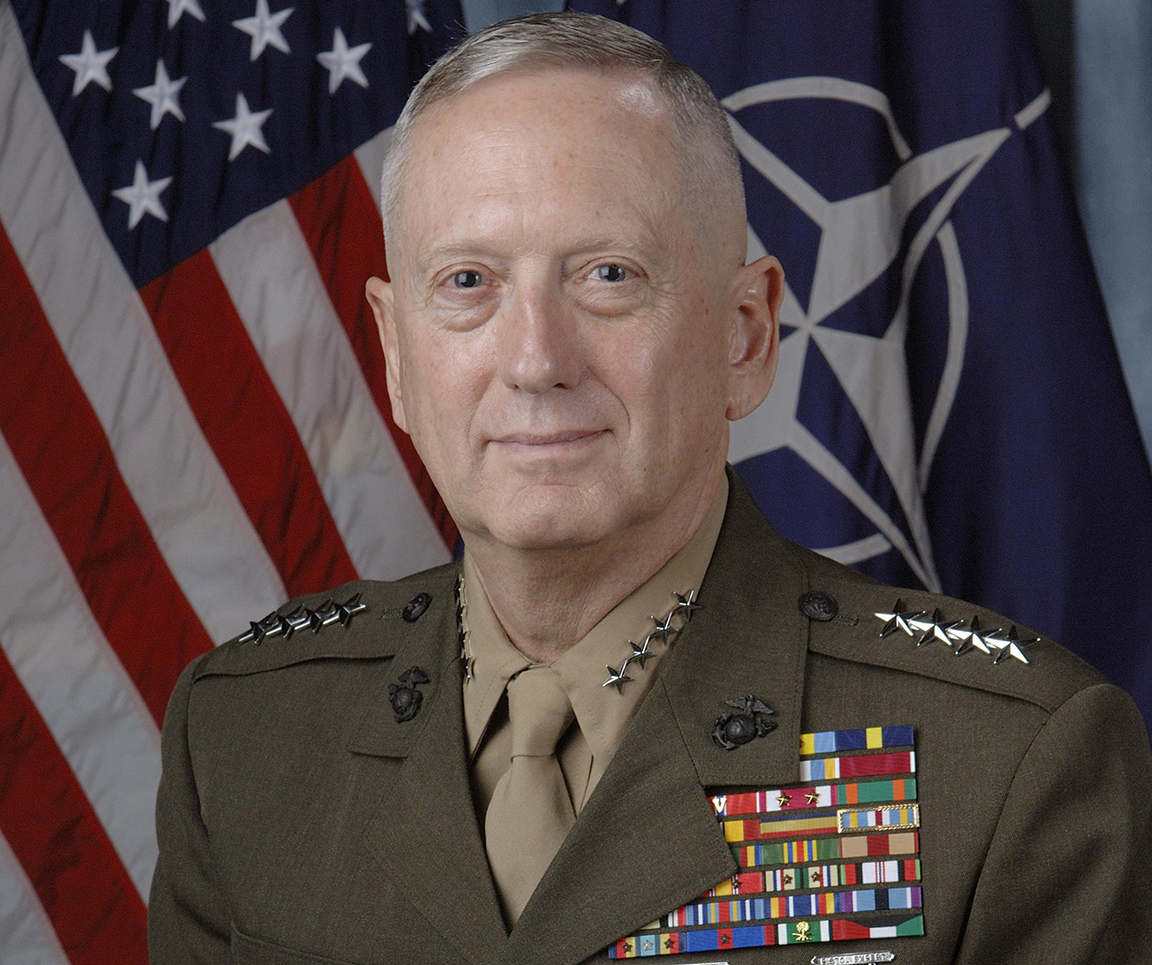
gen_james_n_mattis

Bryan Caskey complains via email, “We gonna talk foreign policy and military stuff on your blog about Mattis, or what?”

Alright, alright, already! Here’s a post about that. And here’s a story about Mattis.

Frankly, I don’t have a strong opinion on this nomination, but here are some thoughts:

  • With a complete ignoramus as commander in chief, it’s more important than ever that there be competent Cabinet members, who can keep the ship of state on some kind of rational course, at least when the White House leaves them alone to do so. This is particularly true on the national security team. And Trump’s decision to make Gen. Michael “Lock Her Up!” Flynn his national security adviser already has us in the hole on that score.
  • Mattis would seem to fit that bill. He’s a guy whose resume demonstrates that he would fully understand the missions of the Defense Department and act accordingly.
  • Then there’s the problem that Congress would have to grant an exemption that it has not granted until it did so for George C. Marshall. The law they’d have to waive arises from concerns about maintaining civilian control of the military. As y’all know, I’m not one of these post-Vietnam liberals who hyperventilate at the sight of a military uniform, fearing a real-life “Seven Days in May.” The Constitution sets the president as commander in chief, and that would seem sufficient. Well, it would under normal circumstances. Having a SecDef who is a recent general and is able to think rings around the president on military matters and foreign affairs could be a cause of concern on the fussy point of civilian control — but I personally would sleep better if I knew Mattis was calling the shots rather than the president-elect.
  • Mattis is far less trusting of Iran than President Obama. I think that is probably a healthy thing, but as Bryan would say, and this post is after all for Bryan, your mileage may vary.
  • I think it’s a very good thing that he has differed in the past from Trump on the idea of our allies getting a “free ride” on the back of U.S. power. He argued with a similar comment from President Obama once.
  • My guys John McCain and Lindsey Graham are on board, which makes me like him better. Graham finds him “an outstanding choice,” and McCain says “He is without a doubt of one of finest military officers of his generation and an extraordinary leader who inspires a rare and special admiration of his troops.”

Your thoughts?

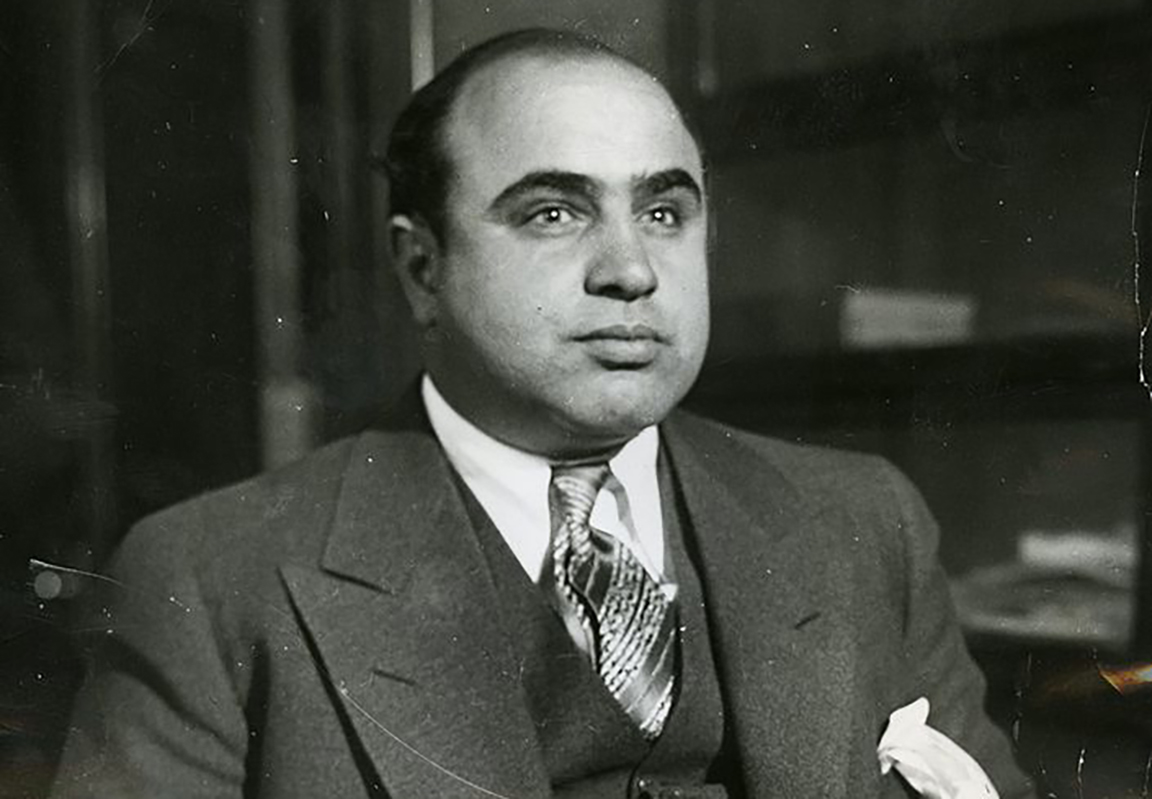
On Al Capone and you-know-who: What’s the appeal?

Capone following his arrest on a vagrancy charge in 1930.

Capone following his arrest on a vagrancy charge in 1930.

Yesterday, Bryan Burrough reviewed a new book about Al Capone in The Wall Street Journal.

The writer, himself an author of a popular book on criminals of that era, confessed he was somewhat at a loss to explain why Capone remains such a favorite subject of readers: “I’ve read my share of books devoted to his life and legend, and I must admit, his appeal eludes me.”

The best bit of the review was this paragraph:

The portrait that invariably emerges is of a rank outsider, a Brooklynite making his way as a “businessman” in Chicago, a grandiose bloviator handed much of his empire in his 20s by his mentor, the retiring Johnny Torrio. When Capone encounters difficulties, he whines about his persecution by the press and a legal system “rigged” against him. Half the country thinks him a monster; others view him as the common man’s champion. Wait: This is beginning to sound familiar. I guess this isn’t the first time I’ve underestimated the appeal of such a man….

Yeah, I know the feeling.

No doubt there are a lot of voters out there — a lot more than most people had supposed — who would be interested in reading about such a man…

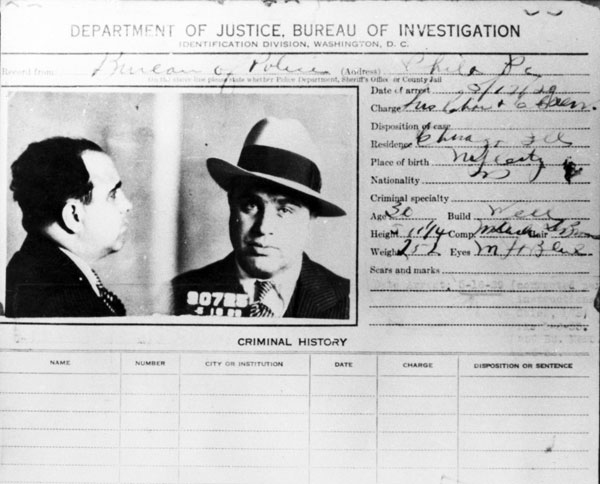
Capone's FBI rap sheet -- which seems oddly blank.

Capone’s FBI rap sheet — which seems oddly blank.

‘Idiocracy’ arrived 500 years early

President Dwayne Elizondo Mountain Dew Herbert Camacho, in a scene reminiscent of Ted Cruz's "Machine-Gun Bacon" video.

President Dwayne Elizondo Mountain Dew Herbert Camacho, in a scene reminiscent of Ted Cruz’s “Machine-Gun Bacon” video.

In reaction to a previous post, Bryan Caskey wrote:

What a stupid time to be alive.

Yep. None stupider, in U.S. history.

I’m just so embarrassed for my country. And every day for the next few years, I’ll wake up and have to be embarrassed again. And who knows how long it will last? Our political system is now in such disarray — neither the Democrats nor the Republicans have any idea how to get back to electing rational people, and there are no other entities on the horizon prepared to do so — that I can’t see the end of this epidemic of stupidity.

I’ve always despised H.L. Mencken for his contempt toward most of America, but now it seems we’re every bit as stupid as he thought we were.

The people who made “Idiocracy” lacked imagination. It’s arrived 500 years earlier than they supposed. In that fictional world, President Dwayne Elizondo Mountain Dew Herbert Camacho is a former professional wrestler. (As you see above, he shared a certain penchant with Ted “Machine-Gun Bacon” Cruz.) In our real world — and every day, I struggle to persuade myself that this actually is the real world — our president-elect is an inductee of the World Wrestling Entertainment Hall of Fame.

This, of course, is not an original thought. Quite a few people have said it in recent weeks. (My only defense is that I did THINK it Election Night, but didn’t feel like getting into it.)  Joel Stein explored it in TIME magazine as early as May in this piece. Excerpts:

Eight years ago, with the publication of Susan Jacoby’s The Age of American Unreason, our country had a debate about whether its citizens were becoming less intelligent. This year, we had a debate about how big Donald Trump’s penis is. While we have not resolved the latter, we have answered the former. Former means first, and latter means second….

In the Idiocracy-est moment of the whole 2016 campaign, a Trump supporter who shoved a black protester in the face explained his candidate-selection process to a reporter on MSNBC, Ali Vitali, thusly: “He’s no-bullsh-t. All balls. F-ck you, all balls. That’s what I’m about.” Though George Washington never said those exact words, he would have certainly killed a man for saying them.

I called the people who made Idiocracy to see how they so accurately predicted the future. “I’m no prophet,” Judge told me. “I was off by 490 years.” He too is shocked at how eerily similar the world has become to the one his movie depicted. He and Idiocracy co-writer Etan Cohen have been working on fake campaign ads for Camacho to be used as anti-Trump web videos, but they’re having a hard time. “Our jokes would be like, ‘I’m going to build a wall around the earth.’ They were only incrementally stupider,” says Cohen. “Writing Idiocracy was just following your id. Now unfortunately our id has become our candidate for President.” The danger here is clear: we will no longer be able to have comedies with hilarious dumb characters….

And why is that? Because all of a sudden, it’s not funny.

Come to think of it, “Idiocracy” wasn’t all that funny to start with. The opening credits, explaining how intelligent people in the present day failed to reproduce, while idiots did so like rabbits — basically, the explanation of the premise — was the best part. The rest quickly grew old. Because it’s just not much fun to contemplate living in a world governed by stupidity.

And now, here we are…

Another of the many basic things Trump has never thought about

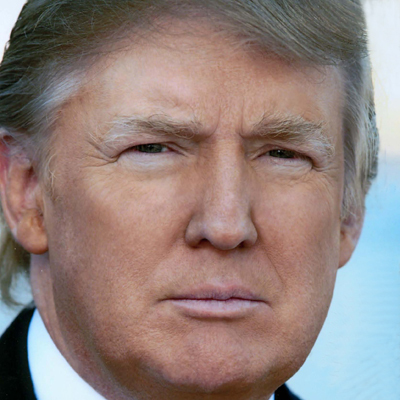
realdonald

Trump voters wanted an outsider, but I doubt that they, or I, or anyone yet fully grasps just how out-of-the-loop this guy is.

I think I have a pretty good idea, based on the last year and a half. I’ve long known enough to see that — if you see the same things — you’d have to be stark, raving mad to want to put this guy anywhere near the Oval Office. But look what’s happened.

So, each day will bring us face-to-face with yet another thing that demonstrate that Donald Trump has never spent a moment of his garish life thinking about things that are second nature to people who — regardless of party or philosophy — possess the most basic qualifications to be president.

Sometimes it’s something small — but telling — such as this:

Now here’s a place where my own gut feelings are the same as those of our president-elect. The idea of someone showing such hatred and contempt toward the flag that our bravest Americans have given their lives to defend, and to raise over such places as, say, Iwo Jima — a flag that symbolizes the noble ideas upon which our nation was founded — is profoundly offensive, even obscene. I have utter contempt for anyone who would even consider such a thing.

But I wouldn’t use the power of the state to punish someone for it, certainly not to the extent of loss of citizenship, or a year of imprisonment. You might have me going for a moment on something such as writing the protester a ticket, but ultimately I’d even have to reject that. Why? Because of those very ideas that the flag stands for. If burning the flag causes a person to be burned or causes some other harm, then you have a crime. But if the expression itself is punishable, then it doesn’t matter whether the flag is burned because it doesn’t stand for anything.

(This is related to my opposition to “hate crimes,” one of the few areas where I agree with libertarians. Punish the crime — the assault, the murder, the arson, whatever the criminal did — not the political ideas behind it, however offensive.)

People who have their being in the realm of political expression have usually thought this through. And true, even people who have thought about it may disagree with my conclusion, wrong as they may be. Still others cynically manipulate the feelings of millions of well-meaning voters who haven’t thought the issue through themselves.

But I don’t think that’s the case with Trump. I think he’s just never really wrestled with this or thousands of other questions that bear upon civic life, so he goes with his gut, which as I admitted above is much the same as my own on this question. He engages it on the level of the loudmouth at the end of the bar: I’ll tell ya ONE damn’ thing… 

In a time not at all long ago — remember, Twitter didn’t exist before 2006 — we wouldn’t know this as readily as we do now. Sure, a political leader might go rogue during a speech, or get tripped up on an unexpected question during a press conference. But normally, the smart people surrounding a president would take something the president wanted to say and massage and process and shape it before handing it to a press secretary to drop into the daily briefing.

Now, the president-elect — or Joe Blow down the street — can have a gut feeling and without even fully processing the thought himself, immediately share it with the entire planet. As this president-elect does, often.

That’s a separate problem, of course, from the basic cluelessness of this president-elect. Not only does he not know a lot that he should, he has the impulse and the means to share that lack of knowledge and reflection with the world, instantly.

Quite a few people in public life haven’t figured out social media. They don’t understand something that editors know from long experience — that you have to be very careful about what you publish. (And yes, posting a random thought on Twitter does constitute publication.) Our governor, soon to be our U.N. ambassador, had a terrible time learning that, although to her credit she hasn’t done anything notably foolish on Facebook in a while.

As Aaron Blake writes on The Fix, it might be nice to think we could ignore these outbursts:

For the second time in two weekends, President-elect Donald Trump stirred controversy, bigly, using only his thumbs.

With a trio of tweets Sunday alleging millions of fraudulent votes and “serious” fraud in three states, Trump effectively hijacked the news cycle for the next 24 hours with baseless conspiracy theories. A week prior, it was Trump’s tweets demanding an apology from the cast of “Hamilton” for disrespecting Vice President-elect Mike Pence, who was in the audience the previous night.

It can all feel pretty small and sideshow-y at times. Some have a prescription: The media should resist the urge to cover Trump’s tweets as big news. Others even say we should ignore them altogether….

But we can’t. In the months and years to some — assuming no one gets control of him, and I doubt anyone will — we must treat them as seriously as if the president strode into the White House Press Room and made a formal announcement.

This is what we’ve come to. Our window into the mind of the most powerful man in the world will to a great extent be these spasmodic eruptions onto a tiny keyboard.

We might as well brace ourselves…

Nikki Haley, ambassador to the United Nations

haley-waving

Late on election night, the folks on PBS (Judy Woodruff, David Brooks, Mark Shields, and others), utterly flabbergasted and in desperate search for something to say, somehow got on the subject of “Whither the Republican Party?” Or something like that. I forget exactly how they got on the topic, but they got to talking about who might be waiting in the wings in the party — which is odd; it seems more like they’d have been asking that about the Democrats.

And maybe they did. My memory is cloudy because I was in shock, too. But here’s my point: Somehow the name that came up — and I think it was the first name, perhaps the only one — was that of Nikki Haley.

Which was… surprising. But national media have long thought a lot of her. As a young, presentable, female, nonwhite Republican, she plays well nationally, certainly in the Identity Politics sense. And she is very personable. She makes a great first, second and third impression. And her time in office has brought her greater poise, while she has moved somewhat away from the Tea Party fringe that elected her. And she truly became the leader of this state when she stepped out on the flag last year.

So now, after she had the good sense to distance herself from him during the primaries, she is Donald Trump’s choice to be U.N. ambassador. And it’s playing as a good decision in national coverage.

First let me say, I’m far happier with her as U.N. ambassador than I am with Donald Trump as president — no question. But let’s just say that’s not a high bar.

And… we can discuss this more later… I feel pretty good about Henry McMaster as governor. He was the best candidate for that office in the GOP primary in 2010, and the only thing I can think of to say against him is that he backed Trump in the primary.

But let’s discuss that later. Back to Nikki Haley…

I just have to say this, as a guy who cares deeply about this country’s dealings with the rest of the world: What qualifications does she have for the position? Aside from being as I said personable, which can be helpful in diplomacy, I cannot think of any at all.

Today, The Washington Post is saying:

Haley, a former Trump rival, is generally considered a mainstream Republican, with views on military and national security matters that fall within the GOP’s hawkish mainstream. She has little foreign policy experience.

First, let’s correct the second sentence — to my knowledge, she does not have ANY foreign policy experience. (And no, a few industrial recruitment trips selling South Carolina abroad do not count as foreign policy experience of the U.N. Security Council sort.)

As for the first experience — where are they getting that? Yeah, she has gravitated from a Tea Party candidate who couldn’t wait to make the Establishment miserable to a more neutral position (where I frankly think she is more comfortable). And bless her, she went with Rubio on the primary. But what “views on military and national security matters” are they referring to? Aside from being proud of her husband’s service in the National Guard, I cannot think of any that she has expressed. Not that she needed to; she’s never had a job that called upon her to do so.

(And is the GOP mainstream still hawkish? Are Lindsey Graham and John McCain, who well represent where the party has mostly been since 1945, still the gravitational center? We can discuss that another time, too.)

As U.N. ambassador, Nikki Haley is a tabula rasa, as she was when she first ran for the House. The best thing that can be said is that she has no bad foreign policy habits to unlearn. If everyone in the GOP who knows anything about geopolitics had not run screaming from Donald Trump and all who sail in him, I suppose we could hope for her to be strenuously tutored — but who’s going to do it now? Trump?

And is U.N. ambassador actually the place where you go to get your feet wet in international relations? No. It does not come with training wheels, to the best of my knowledge. Of course, I’m a child of the Cold War, and grew up on such cultural references as “Failsafe” (and now, with Trump as president-elect, feel like I’m living in “Dr. Strangelove”). I see the U.N. Security Council as a deadly serious, high-stakes kind of thing, to say the least. Growing up with those references, I took what comfort I could from the notion that the people representing us around those conference tables in a crisis knew a lot more about this stuff than I did. And I wonder — back when Trump was asked about the nuclear triad and found wanting, how would our governor have answered the same question?

As y’all know, I’ve had frequent occasions to praise Gov. Haley in the last year or so; I’ve really felt that she was growing in the job, and I will always praise her to the skies for her leadership on getting the Confederate flag down. That was amazing, and wonderful, and stunning. It made her a heroine in my eyes.

But does any of that, or her calm, visible leadership during weather crises — for which I also honor her — qualify her for this?

Please tell me it does, and explain why, because I really want to feel better about this…

‘Heil Victory,’ say some members of the alt-right at gathering

This is from a report in The New York Times today:

WASHINGTON — By the time Richard B. Spencer, the leading ideologue of the altright movement and the final speaker of the night, rose to address a gathering of his followers on Saturday, the crowd was restless.

In 11 hours of speeches and panel discussions in a federal building named after Ronald Reagan a few blocks from the White House, a succession of speakers had laid out a harsh vision for the future, but had denounced violence and said that Hispanic citizens and black Americans had nothing to fear. Earlier in the day, Mr. Spencer himself had urged the group to start acting less like an underground organization and more like the establishment.

But now his tone changed as he began to tell the audience of more than 200 people, mostly young men, what they had been waiting to hear. He railed against Jews and, with a smile, quoted Nazi propaganda in the original German. America, he said, belonged to white people, whom he called the “children of the sun,” a race of conquerors and creators who had been marginalized but now, in the era of President­elect Donald J. Trump, were “awakening to their own identity.”

As he finished, several audience members had their arms outstretched in a Nazi salute. When Mr. Spencer, or perhaps another person standing near him at the front of the room — it was not clear who — shouted, “Heil the people! Heil victory,” the room shouted it back…

I won’t comment except to remind you of my frequent previous mentions of fascism, which were not exaggerations. Note that this occurred in Washington, D.C., not Nuremberg.

Politico passed on this nugget from the same event:

The meeting attendees — an overwhelmingly white and male audience, with many sporting closely cropped faux hawk-like haircuts, though one was spotted wearing a yarmulke — gathered in the atrium were an engaged group, often booing journalists asking questions. Outside, the scene was more rambunctious: protests raged off of Pennsylvania Ave., and one man with a bloody face was seen seeking police assistance, though the circumstances of his injury were unclear. Tila Tequila, a reality TV personality who was listed by event organizers as a guest, posted a picture of herself on Twitter engaged in a Nazi-style salute.

“Seig [sic] heil!” the tweet read….

Yeah, it’s hilarious — Nazi wannabes who can’t spell “Sieg.” Well, there was a time when good Germans thought the Nazis were a joke, too.

All the bad guys in the world are THRILLED at prospect of a diminished United States under Trump

On a previous post, our own Phillip Bush said he’s concerned about the Trump administration being “Bush/Cheney redux.”

We’re not going to be so lucky. There’s little chance of having an administration that is anything like Bush’s — or Obama’s, or Clinton’s, or Reagan’s, or Carter’s, or Nixon’s, or Johnson’s, or Kennedy’s, or Eisenhower’s, or Truman’s.

Yeah, I get why Phillip said that — John Bolton is a hard case, and some call him a “neocon,” although he really doesn’t fit the description. Neocons are liberals who deserted the left after Vietnam. Bolton has always been a conservative — he backed Goldwater in 1964.

But forget Bolton — in fact, I am little interested in who will hold this or that position. None of these appointments are as bad, or as consequential, as what has already happened — the election of Donald Trump, a man who just by being president will diminish the influence of the United States in the world.

You’ve probably read that most world leaders — particularly our friends — are deeply dismayed by what happened last week, and very worried about what happens next. They’re perhaps as upset as I am, and for some of the same reasons — my greatest worry about a Trump victory was its effect on international relations. You probably also know that this is exactly what Russia and China wanted — a clueless goofball at the helm of the United States, leaving the vacuum that they are eager to fill.

But others were cheering last week, too. And still are. The Guardian bothered to chronicle some of the reactions from a rogue’s gallery of extremists — mostly right-wing, populist nationalists: Marine Le Pen’s far-right Front National in France; Viktor Orbán, the hardline nationalist leader of Hungary; Frauke Petry, the lead of Germany’s rightwing populist Alternative für Deutschland; Greece’s Golden Dawn, the party seen as Europe’s most virulent far-right force; Heinz-Christian Strache, the leader of Austria’s rightwing populist Freedom party; the Dutch far-right leader and MP Geert Wilders; Beppe Grillo, the former comedian and the leader of the anti-establishment Five Star Movement in Italy; and of course Nigel Farage in Britain.

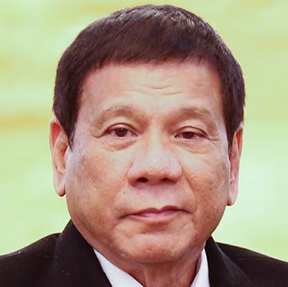
Fareed Zakaria looked beyond Europe, at some of the other bullies, tyrants and loonies who are happy that a man who neither understands or believes in America’s role in the postwar order will be in charge:

Duterte

Duterte

Syrian dictator Bashar al-Assad called Trump a “natural ally.” Rodrigo Duterte, the authoritarian leader of the Philippines, said of him, “We both like to swear . . . we’re the same.” Duterte has been hostile to the United States because Washington has criticized the extrajudicial killings and human rights abuses that have marked his tenure. Robert Mugabe, who has clung to power in Zimbabwe for 36 years while destroying that nation’s economy and liberties, has been similarly hopeful. A full-page editorial in a state-run paper there hailed the election of “the mighty Trump,” and the 92-year-old dictator has reportedly described Trump as a “friend.” No doubt Duterte and Mugabe hope that a Trump administration will go easy on them….

All over the world, separatists and nationalists, thugs and bullies of all stripes are ecstatic over Trump’s victory. Why? Because they see this as the end of the internationalist consensus that we’ve had since Truman, an unprecedented era of peace among major powers, largely led and guaranteed by an engaged United States.

Zakaria explains what’s at stake, in a simple, Geopolitics 101 manner:

But what is this globalism to which these people are so opposed? After 1945, after the Great Depression and two world wars, Western nations established an international system characterized by rules that honored national sovereignty, allowed for the flourishing of global commerce, and encouraged respect for human rights and liberties. This order resulted in the longest period of peace among the world’s major powers, marked by broad-based economic growth that created large middle classes in the West, the revival of Europe, growth in poor countries that lifted hundreds of millions of people out of poverty and the spread of freedom across the globe.

The U.S. role in all this was pivotal. It set the agenda and provided security, which was about more than just deterring the Soviet Union and other aggressive powers. Radek Sikorski, Poland’s former foreign minister, said, “America’s influence and its commitments have been our security blanket. They have allowed Europe’s national rivalries to stay dormant. If you take away those guarantees, Europe could get very unstable.” And remember, the European Union is the world’s biggest market and the United States’ largest trading partner.

For the United States, “globalism” has produced enormous advantages. With 5 percent of the world’s population, the United States dominates the global economy, in technology, education, finance and clean energy. One in five U.S. jobsis a result of trade, and that number is growing fast. The United States maintains the world’s reserve currency, giving it a huge economic advantage.

The benefits of growth and globalization have not been shared equally, and the pace of change causes anxiety everywhere. But these are reasons to invest in people, upgrade their skills and better integrate communities. They are not reasons to destroy the most peaceful and productive international system ever devised in human history….

Of course, some of my friends — Doug and others — would like to see the United States be a smaller, humbler country confined to its own borders. But my libertarian and my post-Vietnam liberal friends will find themselves in some ugly company in cheering a diminished United States.

This is a very bad moment for liberal democracy around the world.

Lindsey Graham on possible Trump nominations

Since I haven’t had time to write a real post today, I’ll share this from Lindsey Graham. It might prompt some discussion:

Graham Statements on Possible Trump Cabinet Appointments and Supreme Court

WASHINGTON – U.S. Senator Lindsey Graham (R-South Carolina) made these statements today about former New York City Mayor Rudy Giuliani, former Ambassador to the United Nations John Bolton, South Carolina Governor Nikki Haley, Senator Rand Paul (R-Kentucky) and Senator Ted Cruz (R-Texas).

Ø  On Rudy Giuliani or John Bolton as Possible Nominees for Secretary of State:

“The overwhelming majority of Republican senators have the utmost respect for Rudy Giuliani.  He led the nation and New York through 9/11.  He’s a citizen of the world who is eminently qualified to serve as Secretary of State.

“As for John Bolton, he was United Nations Ambassador under President Bush.  He is a reformer who would turn the State Department upside down and make it work better.  He understands who our friends and enemies are.  We see the world in very similar ways.   

“I believe an overwhelming majority of Republican senators would support either candidate and some Democrats would too.  You will never convince me that Giuliani and Bolton are not qualified to serve at this level.”  

Ø  On Senator Rand Paul’s Threat to Filibuster Giuliani or Bolton:

“You could put the number of Republicans who will follow Rand Paul’s advice on national security in a very small car.  Rand is my friend but he’s a libertarian and an outlier in the party on these issues.  The fact that Senator Paul opposes Bolton and Giuliani will not keep them from serving.” 

Ø  On South Carolina Governor Nikki Haley as Possible Secretary of State:

“She’s done a good job as Governor of South Carolina.  She’s talented, capable and would do a good job in any assignment given to her.  I think Nikki is a traditional Republican when it comes to foreign policy – more like Ronald Reagan than Rand Paul.  I like her a lot.  I would certainly support her.”   

Ø  On Ted Cruz for the Supreme Court:

“We are replacing Justice Scalia, who was probably the most conservative justice on the Supreme Court.  Ted Cruz is a constitutional conservative in the mold of Justice Scalia.  If you are looking for a Scalia-type figure, Ted Cruz fits the bill.  We have had our differences, but even his worst critics cannot say Ted Cruz is not one of the smartest, most gifted lawyers in the country.  If you are looking for someone like Justice Scalia to serve on the Supreme Court, take a look at Ted Cruz.”

#####

Graham and McCain won’t stand idly by while Trump cozies up to Putin

Who might step out of the crowd to stand up to Russia?

Who might step out of the crowd to stand up to Russia?

One of the seemingly less alarming headlines in the days right after the election was this one:

Trump, Putin agree in phone call to improve ‘unsatisfactory’ relations between their countries, Kremlin says

And what’s wrong with that? We might even applaud it, were Trump a normal POTUS-elect. Of course one chats with foreign leaders after winning the election, and of course one expresses hope for good international relations, even “resets.” Kumbaya, and all that.

But since we had ample evidence during the election that Trump is putty in Putin’s hands, and since Putin’s international goals include expanding his territory toward more Evil-Empirelike boundaries and propping up Bashar al-Assad in Syria, it’s quite natural to be creeped out by such an otherwise vanilla headline, because it tells you that it’s already begun.

Fortunately, people who know better than Trump are serving notice they won’t stand idly by while this bromance develops.

First there was this:

Sen. John McCain, the chairman of the Senate Armed Services Committee, sent his first shot across the bow of President-elect Donald Trump’s national security plans Tuesday, saying that any attempt to “reset” relations with Russia is unacceptable.

“With the U.S. presidential transition underway, Vladi­mir Putin has said in recent days that he wants to improve relations with the United States,” McCain (R-Ariz.) said in a statement released by his office.

“We should place as much faith in such statements as any other made by a former KGB agent who has plunged his country into tyranny, murdered his political opponents, invaded his neighbors, threatened America’s allies and attempted to undermine America’s elections,” he said….

Then, McCain’s pal Lindsey Graham weighed in:

Sen. Lindsey Graham (R-S.C.) on Tuesday said he wants Senate hearings to investigate whether Russian President Vladimir Putin interfered in the U.S. election, casting doubts on President-elect Donald Trump’s desire to improve relations with Russia.

“Assuming for a moment that we do believe that the Russian government was controlling outside organizations that hacked into our election, they should be punished,” Graham told reporters on Capitol Hill. “Putin should be punished.”…

They are hardly alone, as the House demonstrated yesterday:

On Tuesday, the House passed a bill imposing mandatory sanctions on anyone that financially, economically, or technologically supports Syria’s government in the civil war there – a category that chiefly includes Russia and Iran. Trump’s supporters didn’t stand in the way, and the measure was passed unanimously.

“Regardless of perspectives on Syria, there’s some unanimity of opinion in sending a message on this kind of conduct,” House Foreign Affairs Committee Chairman Ed Royce (R-Calif.) said prior to the vote….

Here’s the part where we find out whether we should have believed all those reassurances we heard from Republicans about how our checks and balances would rein in the inevitable foolishness of a Trump administration…

Let an expert ‘splain the Electoral College to ya

Some of my friends here see the late election as further proof that we need to reform, or do away entirely with, the Electoral College.

Well, they just haven’t had it explained to them right. Here, let me get an expert to tell you why you’re wrong:

Don’t think for a moment, though, that Mr. Trump needed the Electoral College to win! No, no, no. He’s a Karate Man, and he would just have changed his whole strategy around:

I share these with you because they are the only two Tweets today by the man who was just elected to head our nation.

I share them because… yeah… this is just the way we expect a president of the United States to spend his time and communicate with the world — like an insecure 10-year-old boy whose chief concern is that people don’t think he’s as awesome as he really is….