Category Archives: Popular culture

Funniest SNL skit ever… to me… at least on paper…


I say “to me” because it was inside humor; it could not possibly have been as funny to someone who has not sat through thousands of news meetings just like the one portrayed, and suffered just the way Phil Hartman’s character suffers in the skit. (I’d love to know who wrote it. It had to be a fellow sufferer, because only someone who has been there and listened to such nonsense could possibly have come up with some of the touches in the dialogue.)ATT_b1_Bradwarthen_233x233_011515_d2

And I say “at least on paper” because, to my disappointment in going back and watching it again, I see that the actors were a bit off. There were stumbles by Rob Schneider, and even Phil Hartman, who otherwise is brilliant as the one sane man in the room. I wish in retrospect that they’d shot it as a short film in advance, as SNL sometimes does, to iron out those little problems with timing. I find myself wondering whether the actors just lacked energy because, having never been newspaper editors, they just did not understand how hilarious this was.

Unfortunately, the live audience hardly laughed at all, which probably persuaded Lorne Michaels that insider newspaper humor doesn’t sell.

Anyway, I’m sharing this because of a Twitter exchange I had Saturday night:


Perhaps so. I forget what the show did right after 9/11. But that reminded me that, ironically, one of the funniest things SNL ever did was about Pearl Harbor. Fortunately, the skit ran 50 years to the day after the attacks, and that amount of time having passed gave the show license to make fun.

And it was just so, so real. How many times have I been in such meetings, trying to sell something important as the lede story, while my fellow editors oohed and aahed over minor crime news, or the fact that “the lady bulldogs have a chance of going to the state finals this year.” And as one who has always had little patience with other editors’ overreaction to the weather (my general guiding principle on that is that if I want to know what the weather is, I’ll step outside) this is a battle cry that resonates in my heart:

“I’ll tell you what’s happenin’ in the weather: IT’S RAININ’ BOMBS IN HAWAII; that’s what’s happening…”

There’s just one brilliant line after another, such as “Do we have one Japanese person in Turrell?” and “Now Bill, that is something that affects our readers — they’re going to have to pay for those typewriters!” Someone had to have been taking notes during real newsroom budget meetings to come up with dialogue such as that.

But the very best touch of all is when you see the paper roll off the press, and the Pearl Harbor story is played at the bottom of page 7, under the news that Phil Hartman’s character has, understandably, shot himself. It appears under this savagely brilliant, one-column headline:

Asians
Attack
“Base”

… because, you know, you can’t be too careful. Do we KNOW that they were Japanese? And we’d better put “base” in quotes rather than step out on a limb…

McCartney’s enthusiasm for Guy Fawkes Day creeps me out a bit

I say that on account of my being Catholic and all.

I reTweeted this from Paul McCartney yesterday, which included a picture of him that appears to be from his “Maybe I’m Amazed” period:

But this was a classic case of a reTweet not constituting an endorsement.

Now, y’all know that I’m an Anglophile from way back. I generally love English traditions, including some of those involving fire.

But I’m a bit squeamish about the one that involves burning in effigy a Catholic-rights activist who in reality was tortured by English authorities before being drawn, hung and quartered.

OK, granted, we’re not talking Pope Francis here: Guy Fawkes was a terrorist who intended to blow up the king and Parliament and had the explosives to do it.

But still. The English had already been oppressing Catholics for Fawkes’ entire life and then some, and they used the Gunpowder Plot as an excuse to step that persecution up and continue it for most of the next 400 years. The celebration, unless I mistake, was of a victory over the Pope and papists as much as over a terrorist cell.

Which I kind of resent, because, you know, we’re not all terrorists.

So excuse me if I’m not too thrilled about your bonfire there, Paul…


Another way for cops to deal with unruly kids

This happened in Washington Monday:

On Monday afternoon, D.C. police officers broke up two groups of fighting teenagers. A few minutes later, a female officer approached the lingering crowd and told the teens to disperse.

That’s when Aaliyah Taylor, a 17-year-old senior at Ballou High School, walked up to the officer and started playing “Watch Me (Whip/Nae Nae)” on her phone. Then she did the Nae Nae dance.

The officer, according to Taylor, laughed and said she had far better dance moves than that.

What happened from there on the 200 block of K Street SW was a rather impressive dance-off between the police officer and the teen, and an example of positive community policing at a time when national attention is focused on discriminatory and abusive police tactics. The onlooking teens caught the dance battle on their cell phones while a song by rapper Dlow played in the background….

Did Lindsey Graham steal the JV show last night?

That seems to be the consensus of what I’ve read about the undercard debate.

I wouldn’t know, of course, because CNBC wanted to charge me to watch, and the World Series was free, so guess what I watched? (This blog would have to pay a lot more than it does for me to buy cable just for blogging purposes.)

As for the big-table debate, from what I’ve gathered from various sources, the main points were:

  • Big night for Rubio and Cruz.
  • Bad night for Jeb Bush.
  • The candidates and other GOP types went on a Spiro Agnew media-bashing spree.
  • Trump and Carson were relatively quiet, except for Trump bashing Kasich.

Here’s a transcript if you want it. I don’t have time to read it right now.

Among those of you who saw it: Thoughts?

It’s time to listen to the world’s most autumnal band

the_band_huge

Which would be, of course, The, um… Band.

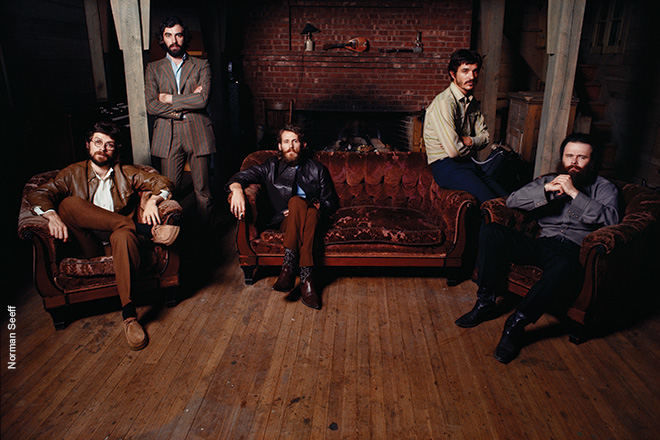
Yeah, I know, I know — according to Brad, every season is the right season to listen to The Band. That’s true, and evidently I’m not the only one to think so. See the banner image that you can find on Peter Hamby’s Twitter feed, season after season:

hamby

Well played, Mr. Hamby.

Back to my point, I ask you: Doesn’t that photo look like autumn? And doesn’t this one and this one and this one? And not just because they always look like that’s the season they’re dressed for — which I consider the ultimate cool look, possibly because fall is my favorite season. (Broke out my rumpled vaguely dusty-green corduroy jacket last week, because it’s finally the season to dress like you’re in The Band!)

It’s supremely fitting that their greatest item, the eponymous one, is brown, with black-and-white photos. When I listen to their music, I picture brown, gray, black, and muted orange. They are far more like an old, scuffed brown shoe than, say, George Harrison was.

Because it’s not just a look — it’s a sound. Starting with their most autumnal song of all…

ARRGGGHHH! The whole point of writing this post was to share this awesome video I found, and long ago favorited, of The Band playing “King Harvest” in the studio, a version I liked even better than the one on the album, and now when I click on it it says, “This video contains content from Eagle Rock. It is not available in your country,” and then adds, in much smaller type, “Sorry about that..”

Ya know, there’s just one thing I expect from the internet… OK, there are a lot of things that I expect from the internet, but this one is very near the top of this list… and it is that stuff doesn’t go away! It’s always there to look at whenever you want it. It’s handy! It’s convenient! It’s at your fingertips! Always!

So I really, really hate it when something like this happens.

Sigh.

OK, well, the album version will have to do.

Anyway, here are the top five most autumnal songs by the most autumnal of bands, to give you a nice, crunchy, brown, orange and black soundtrack for the season:

  1. King Harvest — Yeah, partly because of the title, but listen to it! “Dry summer, then comes fall/ Which I depend on most of all…” And not just the words, but the tone… If Richard Manuel doesn’t sound like a man who’s reached the autumn of his life, I don’t know who does. He’s a man defined by the seasons who is adjusting to new realities and trying to put the best face on it he can. And Garth Hudson on the Lowrey organ — doesn’t it sound like the perfect accompaniment to the words, “Scarecrow and a yellow moon/ And pretty soon a carnival on the edge of town?”
  2. The Unfaithful Servant — After that servant has said goodbye to that country home, the lady he has left looks out on a landscape that is dominated by a gray sky with low clouds. Most of the leaves are on the ground now and it’s recently rained, dampening the carpet of leaves that’s turning from brown to black as they decompose. Or maybe I’m reading too much into it.
  3. Long Black Veil — OK, this one is late fall, bordering on winter, but still just barely autumn. Say, late November. I’m fairly certain there are few leaves on the trees as “she walks  these hills” and “the cold wind moans.”
  4. The Weight — I’ll admit this is less autumnal than the others. I picture it being sort of hot and dusty as our humble narrator pulls into Nazareth, feeling about half-past dead. But I wanted an excuse to link you to the great live version at Woodstock in 1969. At least that one hasn’t gone away… “Crazy Chester followed me, and he caught me in the fog…”
  5. The Rumor — OK, the truth is, I could have picked almost any five songs by The Band and they would all have fit the category. I can’t even think of any reason to tell you why this one makes the list; it just does. It evokes fall for me. I listen to it, and it’s October.


I loved this music when I was 17, but now that I’m at a more autumnal age they’re an even better fit for how I’m likely to feel when I hear them.

I hope you enjoy them as well, if you click on the links.

Even Darth Stewie was more fiscally responsible than Richland County Council

OK, follow me here; I’m going to bounce around a little…

Remember how we were talking about the new Star Wars movie earlier this week? Well, Alexandra Petri was riffing on that a bit, or rather on the stupid campaign by some racists to get a boycott of the new film going (yeah, good luck with that, Jim Bob), and she noted facetiously that there were far more defensible reasons to object to the franchise, including this:

Death Stars are the ultimate wasteful government spending project. At best, the constant construction of Death Stars is Keynesian economics at its very worst, trying to keep people employed by pouring money into giant holes in space. Does the Imperial military even want these? Given their obvious defects, it seems unlikely. Probably what it wants are helmets you can see out of or armor that works, and the Empire has not given it that yet.

Ah, but Ms. Petri missed the one most wasteful thing about the Death Star, which was that it was designed to be doomed, as “Family Guy” pointed out so effectively:

You’ll note that in this version, the Death Star didn’t get the glaring flaw addressed in a timely fashion because Darth Stewie insisted on getting some cost estimates.

Well, good for him. Even though he’s supposed to be an embodiment of evil, he’s more fiscally responsible than Richland County Council:

Richland County Council voted this week to hold its annual retreat in downtown Charleston early next year, despite having multiple local options presented to them and without having cost estimates to judge their decision by.

The retreat, at which council members and staff discuss plans for major policy items for the coming year, will be held Jan. 27-29, 2016, at Embassy Suites on Meeting Street. Council voted 8-3 to hold the retreat in Charleston, with council members Julie-Ann Dixon, Bill Malinowski and Seth Rose dissenting.

Dixon, Malinowski and Rose voted to hold the retreat at the Richland County Administration Building in Columbia.

Embassy Suites in Columbia and the YMCA in Lexington were both offered as options for Jan. 27-29.

Malinowski said his rationale for holding the retreat locally was threefold: to save money, to spend the money within the community and to give citizens an easy opportunity to attend the meeting if they wish.

“I think the people should have easy access to the government, and we’re not doing that,” Malinowski said….

I told you I was going to jump around a bit. But I got there in the end, didn’t I?

Everyone but me knows who Lauryn Hill is

Hill (2)

I’m up on the latest technology, even as I resist moving up to the larger, more unwieldy iPhone 6 (and yes, I know that the latest is 6s — I don’t want that, either).

I know all about the multitude of people running for president this year, even though I continue to get Kasich and Pataki confused. I think Kasich’s the one I kinda like. Or is it Pataki?…

I’m up-to-date on most of the hot shows in this new Golden Age of television (which occurs as Television As We Knew It passes away).

But recent pop music can escape me, largely because with only rare exceptions (Adele, LMFAO), none of it cuts through the clutter enough to impress me. I’m pretty current right up to the late MTV period, which is to say the early ’90s (Nirvana, Soundgarden, Green Day, Radiohead, etc.), which is pretty good considering that’s just before I turned 40. I really think that was the last sizable explosion of real creativity in pop — and really kind of the last gasp of rock.

So it was that when this news broke today…

Lauryn Hill will headline Columbia’s Famously Hot New Year on Dec. 31, city officials announced Thursday….

… I went up and down the hall asking the other folks here at ADCO whether they knew who Lauryn Hill was. And they all did. I did not.

They said if I heard some of her hits, I’d know who she was.

I did not, at least initially. I DID recognize her cover of “Killing Me Softly,” and she did some good things with it, but that was always a good song, dating back to Roberta Flack. And she did that not as a solo act, but with the Fugees. And she did it in the mid-90s, at the end of what I refer to as the last creative period in pop music.

All the rest of her stuff hits me in a blank space. And none of it sounds as good, as soulful, as deep, as her version of “Killing Me Softly.”

Dang… If Championship Vinyl were a real place, and it was still in business, Barry, Rob and even the mild-mannered Dick would be giving me a really hard time now. I comfort myself that those snobs would know who she was, but probably not put her in the same league with, say, Solomon Burke or the Beta Band…

Will the new ‘Star Wars’ offer anything beyond the brief delight of seeing old friends again?

OK, I’ve seen the new trailer, and I’ve been delighted, again, to see Harrison Ford appear as Han Solo. And I’ve been disappointed to see no sign at all of Luke Skywalker. (But hey, Han was always more fun, right?) Which makes me wonder, is it that they’re saving him, or is it that his part is no more than a cameo?

And then, it occurs to me to reflect for a moment on the rest of what we see on the trailer…. storm troopers… the Millennium Falcon!… an apparent Darth Vader impersonator… various familiar small flying craft, X-wings and tie fighters… good guys distinguished by the fact that their uniforms are more casual and earth-toned than the bad guys’… a young woman, more conventionally pretty than Carrie Fisher but not as hot… a young black guy, proving that Lando Calrissian was not alone in that galaxy, who may, given the context and the voiceover and his various facial expressions of deep concern, be our protagonist…

And it dawns on me that I’m almost certainly going to be subjected to a bait-and-switch when I go to see this film, which I inevitably will do. I’m being teased with Han Solo and Princess Leia, and made to wonder about Luke Skywalker, but will the film really be about them at all?

Probably not. At most, at most, they will play a role like that of Obi Wan Kenobi — if we’re lucky. Sure, Obi Wan was hugely important, but was the film about him? No. He was important as a guide to the main characters, cluing them in to what had been and could be again. (And, as is the case in this situation, he was the only “name” actor in the production.)

No, the filmmakers’ likely goal is to use Han and Leia and Luke to get me interested in people I’ve never heard of, so that I’ll care enough about them to buy tickets to the two films to follow. The central conflicts and action and development will likely center around these young strangers.

Which makes me a little sad, and even sadder when I think how likely all this effort is to fail.

“Star Wars” — the original one, the true phenomenon, seems to me a one-time, magical thing. It had enough magic to keep us interested in the next two films, and even to, many years later, dupe people into going to see the decidedly unmagical “prequels.” The amazingly, stunningly unmagical prequels.

But no matter how much money is spent, no matter how dazzling the new technology may be, how can you duplicate the experience that we felt when we went into theaters in 1977 completely unaware of what we would see and hear and feel, and then were so delighted? There had been no way to predict it. If someone had told you the premise — essentially a cornball evocation of old movie serials from the 1930s brought to a new generation — it would have sounded no more promising than the completely bogus “Argo.” (I refer, of course, to the fake sci-fi film within the film, not to the Ben Affleck vehicle itself.)

But it worked. Lightning struck. And now, people are laboring to make it strike again, in the same way.

Is that possible? I don’t know, but I’m afraid it’s unlikely…

Larry David as Bernie Sanders

We’ve noted before how much Bernie Sanders sounds like Larry David — or at least, like Larry David doing George Steinbrenner.

So now, thanks to SNL, we’re able to see just how uncanny the similarity is.

David is definitely the star of this skit from the weekend. I think Kate McKinnon is hilarious, but as Hillary Clinton, she’s no Amy Poehler.

And Alec Baldwin’s Jim Webb was… passable.

Is this THE stupidest premise you ever heard of or what?

Just a very brief one here, while most of us are dealing with more serious stuff…

I got an email last night from Netflix urging me to watch a new series called “iZombie,” and here is the premise:

A medical student-turned-zombie tries to retain her humanity by eating brains at the morgue and finds she has an uncanny new gift for solving crimes. More Info

Yeah… I’m gonna skip that, because I’m afraid that watching something that stupid would eat my brain…

“Six feet of water in the streets of Evangeline…”

We were talking about good songs for this rainy, flooded weekend on the last post, and no one mentioned the most appropriate song of all, Randy Newman’s magnificent “Louisiana 1927.”

This one’s got it all — Newman’s irony mixed with pathos and sympathy for the common man, his orchestral sensibility, history, and his inimitable touch with lyrics. This is, of course, from his wonderful “Good Old Boys” album, which kicks off with the one truly brilliant Newman song that you will never, ever hear on the radio in this country — “Rednecks.” (If anyone overhears you listening to that one, and that person lacks a sense of irony, watch out. But I do recommend it, long as you’re not one a them college boys from LSU who went in dumb, come out dumb too.)

I prefer the original album version, which is below, but I used the one above for the pictures.

The song, of course, is about the Great Mississippi Flood of 1927, which Wikipedia calls “the most destructive river flood in the history of the United States” — although we seem to be trying to give it a run for its money this weekend.

That’s not a real Beatles album, you morons

Every once in awhile, I click on one of those quizzes that social media is always offering as clickbait, and occasionally I find them rewarding — such as when it was scientifically confirmed that I am, of course, Leo McGarry.fan

But boy, was this one stupid.

I clicked on this Beatles quiz (“How big a Beatles fan are you?“) because I figured I’d get 100 percent and have a small ego boost from it on my birthday, and the first question was so ridiculously easy that I almost didn’t go on. It said something like, “The Beatles were started in…” And at first, thinking they wanted a date, I was worried. Are they counting the Silver Beatles, or the Quarrymen, and didn’t John have a skiffle group that I can’t remember the name of, and when was that?

But the options were: “Liverpool,” “London,” and so forth. I snorted in contempt. Is there anyone on the planet who could not answer that?

But then, the third question was this:

stupid question

Oh, come on! That’s completely illegitimate to any self-respecting fan! That’s not a Beatles album! That’s some stupid repackaging of old songs concocted LONG after the Beatles ceased to be, aimed at people who didn’t already own all those songs on the real albums. Why not offer compilations from K-Tel while you’re at it?

So I stopped right there. Stupid, stupid quiz…

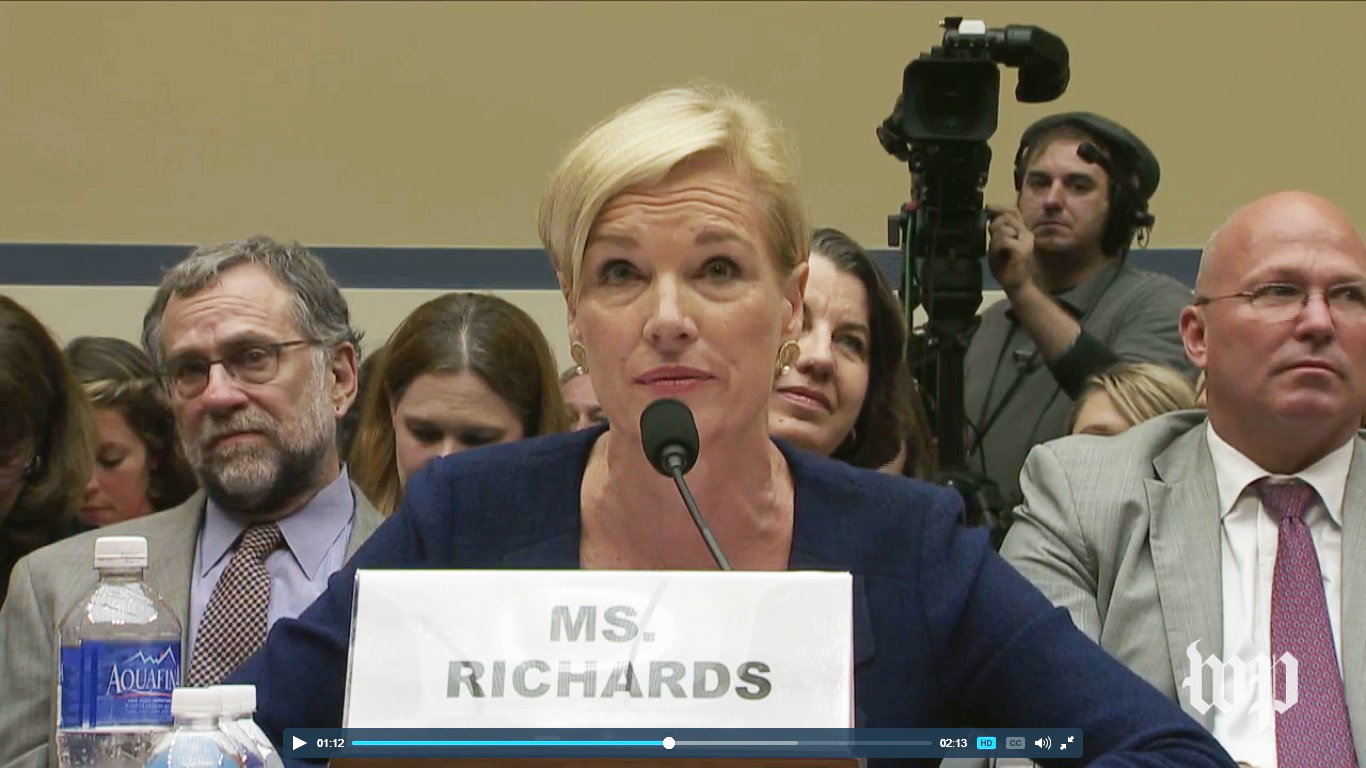
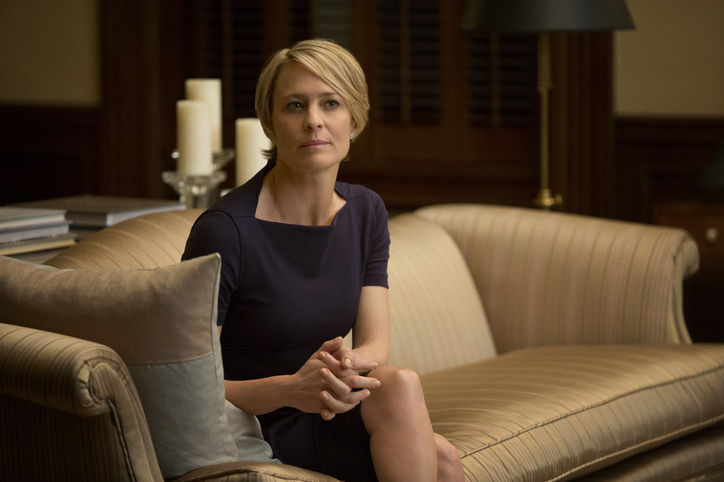
Planned Parenthood chief is already wearing her Halloween costume: Claire Underwood

Richards

One of the frustrating things about these danged Interwebs is that it’s now impossible to fool yourself into thinking you’re having an original insight. Especially insights of the more superficial kind.Claire

For instance, lately I’ve been on a roll with seeing people on TV and realizing that they look just like some other person, and thinking I want to do a blog post to share this recognition, and when I check I find that everybody else has noticed the same thing.

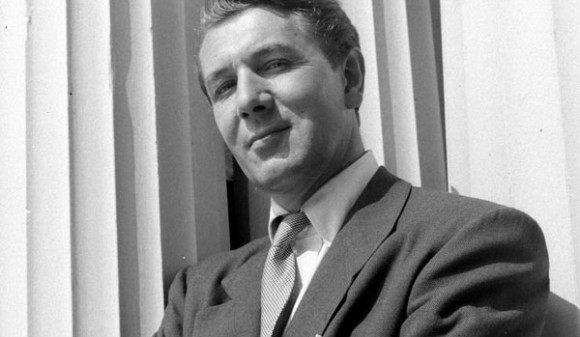
For instance… I recently saw Hitchcock’s “The Lady Vanishes,” and for most of the movie I tried to think who it was that Michael Redgrave looked exactly like. I knew it was another actor, but not a marquee idol by any means. Yet it was someone I had seen a lot of recently. I refused to let myself Google, “Michael Redgrave looks like…,” forcing my brain to work a little, if only on a silly pop culture problem.

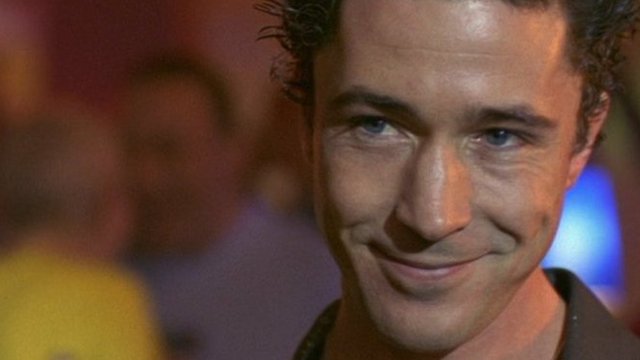
Finally, I came up with it: It’s that guy who plays “Littlefinger” on “Game of Thrones,” and Councilman Tommy Carcetti on “The Wire!” That is to say, Irish actor Aiden Gillen. Congratulating myself, I went ahead and did the internet search, and… every other sentient being on the planet had already noticed it.

Dang.

So it was that when I saw a picture of Cecile Richards of Planned Parenthood on my Washington Post app this morning, and thought, “Claire Underwood!,” I thought I was just being perceptive as all get-out. Of course, the vast majority of people, who saw her on TV yesterday, had beaten me all hollow.

Dang yet again. I was all ready to say it looks like somebody already has her Halloween costume on, and other facile manifestations of a feeble wit, and I was too late.

Frustrating…

Michael Redgrave

Michael Redgrave

Aiden Gillen

Aiden Gillen


‘Blue Bloods,’ a show that stands up for traditional values, such as… respecting each other

reagans

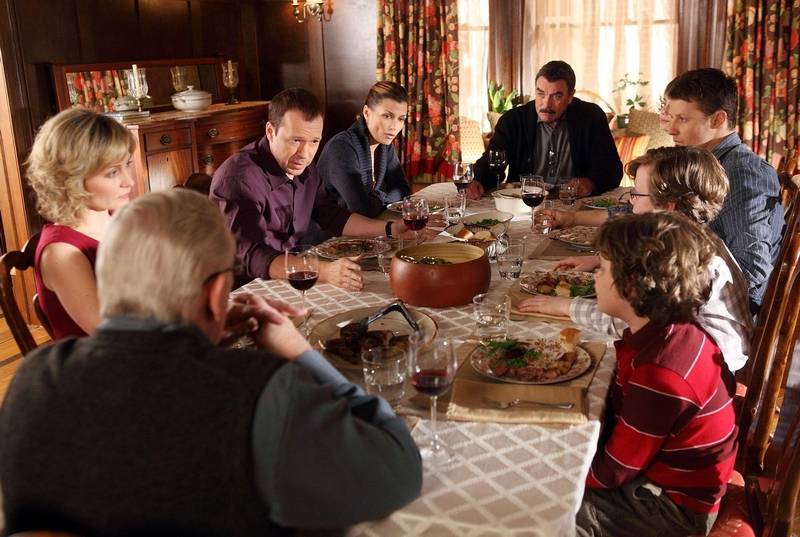
The Reagans, having another civil debate over Sunday dinner.

For years, my parents would ask me if I’d ever seen the cop drama “Blue Bloods,” and when I said I hadn’t, they urged me to check it out. They love it.

Eventually, in casting about this year for a new series to get hooked on after running out of “The West Wing,” I tried it. And I loved it, too, probably for a lot of the same reasons they do. And I’m kind of sad that this morning during my workout, I ran out, watching the last episode that is available so far on Netflix.

Maybe I had to get to be old enough to become a fan. At least back in 2010, “Blue Bloods” had the oldest audience on traditional broadcast television. And when you consider that traditional broadcast TV skews older anyway, that’s really saying something.

Part of it is probably that it bucks the trend, set by shows as varied as “Mad Men,” “Breaking Bad” and “Game of Thrones” — all of which lack so much as a single admirable character to root for. While every recurring character on “Blue Bloods” is human and fallible, each of them has enough to like and respect and even admire that you just want to spend more time with them. I mean, I loved “Breaking Bad,” but sometimes you want to see some people who might inspire you to break good for a change.

Another likely reason for the older audience is that everything about the show, from the central characters to the plots to the dialogue, fosters and celebrates traditional values such as family, loyalty, honor and duty. To some extent, these are the kinds of things I was talking about in 2008 in a column headlined “Give me that old-time conservatism” (as opposed to the kind that people like Mark Sanford and Rand Paul promote).

Oh, and there’s another traditional value the show celebrates: Respect for others, including those who don’t necessarily look at things the way you do.

That observation may be jarring to a lot of the people whose teeth are set on edge when you say “traditional values,” people who would define that as meaning some throwback to the bad old days (many seem to regard old days as bad by definition) when people who didn’t adhere to some norm were despised and put down.

But I don’t see it that way. I see a political environment today that has almost zero tolerance for varying opinions. Today, if you don’t agree with me, you are beyond the pale, a person without value, or worse, a person with negative value, one to be despised and condemned and reviled.

And I can remember when our politics weren’t quite that bad, when Democrats and Republicans were committed opponents, but more in the way fans of different football teams are, rather than as participants in a morality play in which there are only Good People and Bad People.

(Those earlier times had their own problems, of course. As I said on a previous post today, I don’t believe any previous generation was any better, or worse, than this one. People are always people, and each individual has his or her capacities for good and evil. We don’t have a moral advantage based on the time in which we are born.)

One of the ways “Blue Bloods” promotes this value is through the trope of the Sunday family dinner, as traditional an institution as one might find.

To back off and explain briefly — the show centers around the Reagan family. Not Ronald’s, but Frank’s. Frank Reagan, played by Tom Selleck, is the New York city police commissioner. His father, who lives with him (both of their wives are deceased), is the former police commissioner. Frank’s two sons are both cops — Danny a veteran detective, younger Jamie a graduate of Harvard Law School who gave it up to become a beat cop. Another brother was also a cop, but was killed in the line of duty before the show began. Sister Erin is an assistant district attorney.

So, when this clan gathers for Sunday dinner at Frank’s house, with Erin’s daughter and Danny’s wife and two sons, there’s a lot of shop talk, and it tends to center around some ripped-from-the-headlines issues such as police use of force and the like. And there is always a fairly wide array of perspectives, from the cops and Erin, and from Erin’s daughter and Danny’s wife. Danny is the hard case; Jamie is more the bleeding heart and rights-of-the-accused guy and so forth.

And while it gets contentious — in fact, there are dinners when one or another member of the family is giving one or all the cold shoulder over some current issue (say, Erin is at odds with the cops on whether a certain suspect should be prosecuted) — ultimately everyone loves and respects everybody else, and at least gives them the benefit of the doubt enough to listen. Even Danny, the hothead — usually.

But the respect-other-views thing runs through the whole show. Paterfamilias Frank, the commissioner who models himself on predecessor Teddy Roosevelt (right down to the mustache) might have one firm opinion, but the views of others are fairly represented.

I’m far from the only person to notice this. I like the way Mark Blankenship, a blogger at HuffPost, wrote about it when the series was young in 2010. I found this by searching on “Blue Bloods conservative,” to see how others reacted to the series’ traditionalism:

And although it’s never been stated, I’d wager that Danny would identify himself as a political and social conservative. Almost every episode of the show features a dinner table debate among the extended Reagan clan, and Danny always comes down on the ostensibly Republican side. He gets heated when someone suggests that drugs should be legal or that criminals should have inclusive rights, and he often chastises his brother Jamie, who left Harvard Law School to become a beat cop, for being an elite, Ivy League softie who doesn’t know how the real world works. In moments like this, I almost expect Danny to quote Sarah Palin.

But here’s the thing: Unlike the people who bloviate on cable news about their so-called conservative values, I’m actually willing to listen to Danny. His character is written and played with nuance, with flaws, and with admirable traits… so even though I might disagree with some of the things he says or does, I can’t dismiss him as a jerk, a lunatic, or a man who would like to see my rights as a gay man obliterated in the name of what’s good for America.

Meanwhile, that’s almost always how I see conservative candidates and pundits. They play to their base by underlining their most radical views, and their opponents play to me by underlining them, too. I’m left inside a system that boils everyone down, asking me to make quick decisions about right, wrong, good, evil.

And the truth is, it works. I try my damndest to live a thoughtful life, but after years of exposure to Tea Party vitriol, Red State vitriol, and Evangelist vitriol, I almost always assume that Tea Partiers, Red Staters, and Evangelicals wish me harm.

I know this is unfair. I also know that other people jump the same unfair conclusions about me. But I’m a person, you know? I can be influenced.

That’s why I find it almost spiritually refreshing to be presented with a character like Danny Regan, who is so different from me, but who still seems human. I see Danny sit at dinner with his family — some of whom are his political opposites — and I see him, I see all of them, talk to each other and listen to each other. Thus far, no one has changed anyone’s mind, but no one has been shamed away from the table, either.

Blue Bloods, then, has created a world where different points of view can coexist in the same family. How nice to imagine that metaphor spun outward, to imagine different Americans allowing each other space at the table. How nice to imagine people with wildly different views still finding ways to care for each other….

Yes, it is a nice thing to imagine, and I thank “Blue Bloods” for helping us imagine it. I’m sorry I’m out of episodes, and look forward to the most recent season being posted on Netflix as well…

Traditional values: The Reagans, in keeping with the cop stereotype, are Irish Catholic. Interestingly, in early episodes they got the words to the Catholic grace wrong. It was corrected in later episodes.

Traditional values: The Reagans, in keeping with the cop stereotype, are Irish Catholic. Oddly, in early episodes they got the words to the Catholic grace slightly wrong. It was corrected in later episodes.

Tweets from the debate (Kathryn, look away)

debate stage

I know Kathryn hates it when I do this, and most of the rest of y’all just ignore it. But I’m going to post it anyway, because this is how I commented on the debate, and I’m not going to type all this stuff all over again (copying the embed codes over is tedious enough).

Some people liked my comments — I got 13 replies, 17 reTweets, two new follows and 37 favorites. (A little disappointed on the follows — usually I get closer to 10 during such an event with so much interaction.) I didn’t bother to count the Facebook responses (my Tweets automatically post there as well), but it was at least a couple of score.

If running these prompts no discussion, so be it. But at least I made it available to those who don’t indulge in Twitter:

In defense of “The Great Escape”

About a decade or so ago, I persuaded one of my daughters to sit and watch “The Great Escape” with me. My motivation was that I wanted to share something that had been, without a doubt, my favorite movie when I was a kid.

Early on — I think it might have been the scene in which Steve McQueen’s character, Hilts, and his new Scottish friend Ives, are sent to the “cooler” for the first time — my daughter raised an objection: What’s with the light, sprightly music in the background? This is about men at war being held prisoner of the Nazis and risking their lives to escape. They’re being put in solitary confinement, a harsh punishment that can cause lasting psychological damage (and as we soon find out, has pushed Ives to the edge of cracking up). Why the cute music? Why does it seem the actors are playing it for laughs?

She knew that her grandfather had spent the rest of the war in such a camp after being captured in the Ardennes, and it was a sufficiently horrible experience that he never, ever wanted to visit Europe again.

I had never noticed that incongruity, because, well, I had first seen the film at the age of 10, and I thought it was awesome in every way, and had never questioned the out-of-place comical touches that, after all, made watching the film all that much more fun.

I tried to explain that films were different in the ’50s and ’60s — Hollywood tended to sugarcoat everything — and war films especially. The country had this hugely positive feeling about the Second World War, and over the past couple of decades had sanitized it to the point that, to kids of my generation, it looked at times like one great lark. I knew at least in theory of the cost of war — I used to look at those pictures of American bodies in the surf at Normandy and Saipan in the big Time-Life picture books about the war. Still, the fact that the war was something we all felt good about was something I didn’t question. For instance, I watched the film starring Audie Murphy in which he re-enacted the deeds that made him a hero, and nothing that I saw in the film prepared me for what I learned years later — that Murphy had a terrible time with PTSD after the war.

And I knew, by the time my daughter pointed out that problem, that the true story of The Great Escape had definitely received the Hollywood treatment. To begin with, Hilts was complete fiction, and although there were some Americans in the camp, their roles in this escape were fairly marginal. (I think. I’m finding some contradictory info about American David M. Jones.)

Still, even though I know all that, and even though the film doesn’t hold the exalted position that it did in my personal list of favorites, I got a little defensive this morning when I read about the death at 101 of the next-to-last survivor of the escape, Australian Paul Royle. This was the part that got me:

Paul Royle revealed last year on the 70th anniversary of the tunnel escape in March 1944 that he was no fan of the Hollywood interpretation of the story.

“The movie I disliked intensely because there were no motorbikes … and the Americans weren’t there,” he told Australian Broadcasting Corp., referring to McQueen’s dramatic bid to outrun the Germans on a motorbike.

Gordon Royle said his father was angry that Hollywood would create an adventure out of soldiers doing their often tedious and dangerous duty of attempting to escape.

“He felt the movie was a glamorization of the tedium and the drabness of the actuality,” Gordon Royle said.

“The idea that they got on a motorbike and soared over a barbed wire fence is far from the reality, which was darkness and cold and terror,” he said….

First, Mr. Royle had a million times greater entitlement to an opinion on the film than I ever will have. That said, allow me to raise some objections to his criticism:

  • True, no Americans were involved in the escape, as they were moved to another part of the camp before the tunnel was ready. However, one author who wrote about the escape notes that earlier, “US airmen watched out for patrolling Germans during the tunnel’s construction.” Marginal, but participation nonetheless.
  • I accept service completely on the fact that Hilts was entirely a fabrication, from his cowboy insouciance to his baseball and glove. But I should point out that if you paid close attention to the film, you’d see that the three Americans depicted as being in the camp were not central to the escape effort, except for Hendley — and he had the fig leaf of technically being in the Canadian air force and therefore not officially an “American.” The fictional Hilts was a complete outsider, playing no part in the X organization. The essentially true story of the escape planned and executed by British officers with a few allied pilots thrown in was clearly told.
  • While the entire story was fictionalized, there was at least some verisimilitude between the central character, Squadron Leader Roger Bartlett, and his real-life counterpart, Squadron Leader Roger Bushell. Their stories are a fairly close match. Bushell had been captured and tortured by the Gestapo after a previous escape, and had developed an intense hatred of the Nazis by the time he became Big X in Stalag Luft III.
  • The central facts of the plan — the simultaneous digging of three tunnels, named Tom, Dick and Harry, and the discovery of Tom by the Germans — are accurately depicted.
  • The grimness of the experience was there, despite the veneer of jazzed-up adventure. There was Danny’s terror in the tunnel, Ives’ eventually suicidal despair, and the central fact of the murder of the 50 — the men to whom the film is dedicated — by the Gestapo. No reasonable person watching this would conclude that being a POW was fun.

    Ashley-Pitt demonstrates how they'll get rid of the dirt.

    Ashley-Pitt demonstrates how they’ll get rid of the dirt.

  • The film showed only three men making it all the way to freedom, and that’s how many did — even though in the film one of them was Australian, like Mr. Royle, and that was not accurate. (Two were Norwegian and one was Dutch, although all three had flown for the RAF.)
  • The role that Mr. Royle played — distributing dirt from the tunnels by releasing it from bags within his trousers and mixing it into the compound dirt with his feet — was clearly depicted. Although in the film that is most closely associated with naval officer Ashley-Pitt, played by David McCallum (whom our generation would later know as Illya Kuryakin), you see that a large number of men participated in that part of the operation. (And frankly, that’s always been one of the most amazing aspects of the escape to me. It’s astounding that they got away with it. How did the guards not notice something on that scale?)
As a kid, I had this poster on the wall in my room.

As a kid, I had this poster on the wall in my room.

In the end, it’s hard to defend the role Steve McQueen played in the film — except in this convoluted way: His jump over that fence at the Swiss border on that German motorcycle was the most exciting thing I had ever seen in a film to that point in my life, and the one thing that solidified it as my favorite. Yes, it was a complete lie. But it engaged my lifelong interest in the escape, and caused me to read books about the true story later in life.

So in that regard it served a purpose. Although I can easily see how a man who suffered through the actual experience would find it irritating in the extreme, and I’m sorry for that. He certainly has the facts, and all the moral weight, on his side. I just thought I’d speak up for something that meant a lot to me as a kid.

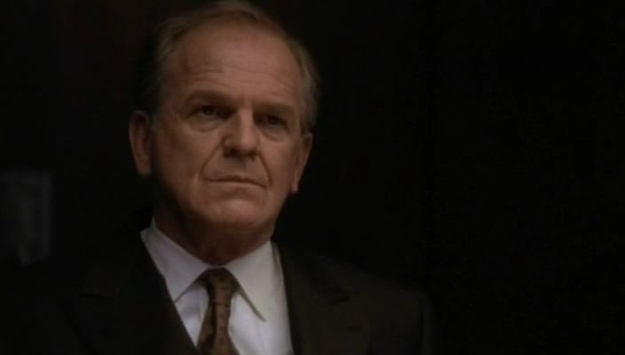
Governor, you should have hired ME to be your chief of staff. I am, after all, Leo McGarry

No, really, I am. I’ve been tested and everything.

I could have been the perfect chief of staff for our governor — the gruff, avuncular, no-nonsense guy who could look at the big picture and speak truth to power.

I suppose this Patel woman will do a fine job and all, but if only the governor had thought of me and known of my impeccable credentials, surely she’d have asked me to do it.

Don’t you think?

LM1

All the President’s Songs

Obama playlist

Another pop culture post to get us through the Dog Days…

At first, when I heard President Obama had a personal Summer Playlist on Spotify, I was concerned: Surely they don’t mean this summer — because even if you apply no standards at all, it would seem impossible to glean from current releases enough songs for a playlist that a grown man could stand to listen to. (Unless that grown man is Doug, who claims to have the tastes of a teenage girl — not that there’s anything wrong with that.)

But 2015? I mean, if the summer were 1965, or 1969, or 1971, or 1985, maybe, but not a European swallow (oops, got my pop culture wires crossed there).

That would constitute a painfully obvious, and unconvincing, stab at pandering to the youth vote. And hey, young people today listen to old stuff in a way that would have been inconceivable when I was young. So it would be doubly stupid.

But as it turns out, it’s more of an All Time list (which to us chauvinistic moderns means “last few decades), like the Top Five lists in Nick Hornby’s High Fidelity. Now that’s more like…

Here’s the playlist.

It starts strong, with The Temptations’ “Ain’t Too Proud to Beg,” but I’m going to have to take off points for its unfortunate associations with “The Big Chill.” Sorry.

No. 3, “Memories Live” by Reflection Eternal is a fine, non-obvious, more recent track that helps restore some of the cred lost to the Big Chill faux pas.

Then we are rewarded by Dylan’s “Tombstone Blues.” Can’t beat that. Perhaps the clincher for POTUS was this passage:

The Commander-in-Chief answers him while chasing a fly
Saying, “Death to all those who would whimper and cry”
And dropping a barbell he points to the sky
Saying, “The sun’s not yellow it’s chicken”…

… which of course is a thinly veiled reference to the president’s drone program, exactly 50 years ahead of time. Dylan, the prophet…

That’s followed by some Marley, for those of you who like that sort of thing — and the president, who used to regularly get more than one toke over the line, does — followed by Coldplay, which means little to me beyond its association with a politically incorrect joke in “The 40-Year-Old Virgin.”

Some of the songs are too obvious, such as the Temptations tune. But POTUS redeems himself by choosing “Another Star” to represent Stevie Wonder, instead of, you know, something like “I Just Called to Say I Love You.” Although I would have preferred “I Believe (When I Fall In Love It Will Be Forever)” (admittedly, because of its association with the film version of “High Fidelity.”

The Stones are represented, and not, say, The Beatles. Which is cool. But “Gimme Shelter?” No (although I confess that as I hear the guitar intro I feel elevated far above what has preceded it on the list). Completely off-base for a summer playlist. That was on the “Let it Bleed” album, which was released in December 1969, which is why everybody was listening to it that Christmas. Duh. The proper Stones song for a summer list is “Honky-Tonk Women,” which was released in July of the same year, and which I distinctly remember listening to while driving on Hwy 17 between Myrtle Beach and Surfside that summer and thinking, “This is the perfect driving song.” (Since I wasn’t yet 16 and just learning to drive, anything that could be associated with operating a motor vehicle was cool.)

But overall, not a bad effort. If there’s a flaw, it may be that there is too little from recent summers. He could have thrown in a “Call Me Maybe” or “Rolling in the Deep” or “Party Rock Anthem.” But he may have stayed away from them because of their prominent inclusion in another well-promoted summer playlist.

I don’t know. But it’s worth a listen, if only as an alternative way to get into the president’s head. Or, if you want to be cynical, the head of whoever put this together for him…