Category Archives: Television

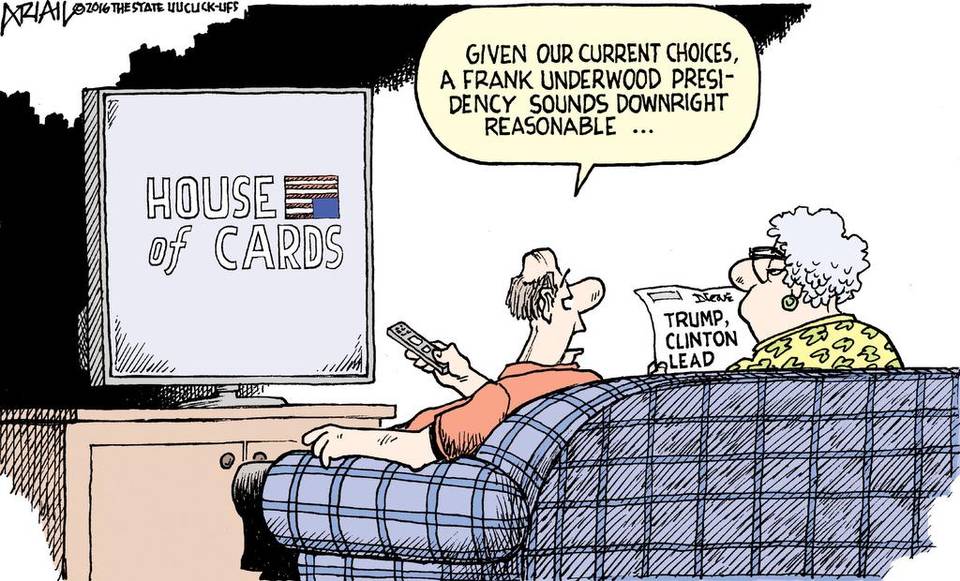
Which would you prefer as president: Trump or Underwood?

PrezHouseOfCardsAriailW

Robert Ariail has proposed it in a cartoon, as a joke.

But as an alternative to, say, Donald Trump, would you accept the devious scoundrel Frank Underwood as president?

Robert also posed the question with regard to Hillary Clinton, and go ahead and address that if you choose.

But I’m more interested with the conundrum on the GOP side, where the dynamic is entirely different. Whatever you think of her, Hillary is pretty middle-of-the-road among Democrats — members of that party won’t have an identity crisis if she is their nominee. “Anybody but Hillary” isn’t really a thing on that side.

It’s over on the Republican side that we see serious people considering deals with the devil.

We’ve already seen Lindsey Graham, who like everyone else in the Senate utterly despises Ted Cruz, say that it might be necessary to embrace the Texan in a last-ditch effort to stop the disaster of Trump. Even though he has described Cruz, accurately, as “toxic.”

So why not Underwood? Think about it: Does he advocate any horrible policies? Not so I can recall (although y’all might remind me of some dealbreakers.) Basically, he’s a thoroughly rotten, ruthless individual when it comes to seizing and keeping power. But as long as the policies were relatively benign, would that not make him preferable to someone who is both personally and in policy terms unthinkable?

Saying that runs against my own inclinations. Over the years I’ve increasingly come to care less about people’s specific policy proposals and more about their character. That’s because no one can predict what will really arise once the person’s in office — the candidate’s promises may become impractical, or ill-advised, based on unforeseen circumstances. I look for someone who I trust to make good decisions in the face of the unanticipated.

And it occurs to me that maybe, maybe we could expect ol’ F.U. — who is a pretty smart guy, aside from all his character defects — to act wisely and responsibly, if only because he does love power so much, and therefore would not want to screw up and lose political support.

Whereas we know that Donald Trump doesn’t know wise policy from a hole in the ground. Even if he were trying to do the right thing just to look good, he wouldn’t know how.

Thoughts?

Frank Underwood

Hey, Hollywood could use more imagination, period

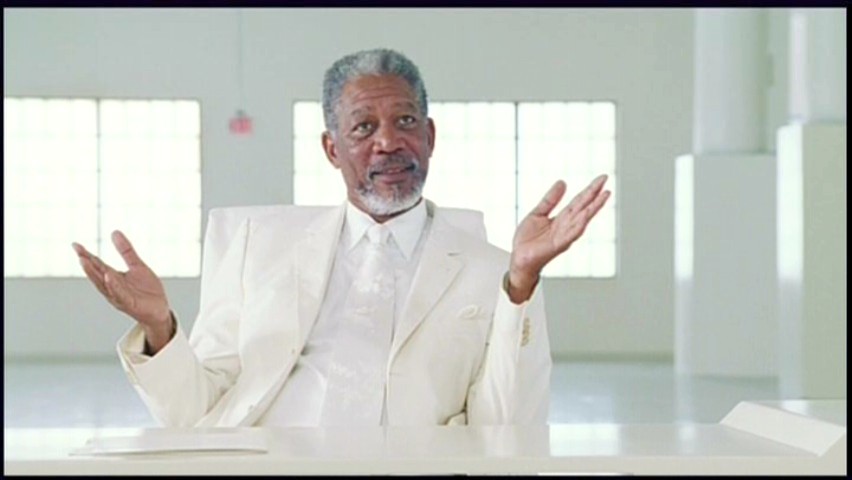
Even when Morgan Freeman played God, it fit into one of the type categories...

Even when Morgan Freeman played God, it fit into one of the type categories…

The Guardian ran a piece earlier this week that I enjoyed. It addressed the phenomenon of Hollywood not writing good roles for nonwhite actors, which it portrayed as a problem that goes far beyond this year’s all-white Oscars.

But wait! you say. There are lots of great roles for minorities in the movies! Well, yes and no. The part of the piece I enjoyed was its list of Top 10 current stereotypes for “people of colour” (leave it to the Brits to take an already stilted-sounding phrase and make it more that way by adding a “U” to it).

Whether you think opportunities for minority actors are limited or not, you’ll have to smile in recognition at some of the categories, such as No. 1, the “Magical Negro:”

One of the most popular cliches for black characters, a wise, folksy black character with some connection to magical forces or spiritual insight. They only exist to enable a white character to grow as a person and/or reach their goal. Examples include Will Smith in Bagger Vance, Michael Clarke Duncan in The Green Mile, Whoopi Goldberg in Ghost, and most of the roles that Morgan Freeman has ever played.

Or No. 5, “Awkward desexualised Asian:”

A man who is unlucky in love, though often played by extraordinarily good-looking actors. The character can never get a girlfriend, and if they do, it’s down to the intervention of the white protagonist. Generally nerds for good measure. Examples: Kal Penn in Van Wilder, Steve Park in Fargo, and special mention to Jet Li in Romeo Must Die who is in no way awkward but still can’t get a kiss from Aaliyah.

They forgot to mention Raj on “Big Bang Theory.” He exemplifies that type perfectly. (Maybe they were deliberately avoiding TV.)

And let’s not leave out one of my personal faves, No. “7. Jaded older police officer:”

Acts as a counterpoint to a younger, more energetic white police officer. Provides advice based on his own wealth of experience but is often ignored in favour of the white police officer’s instincts. Danny Glover in Lethal Weapon, Reginald VelJohnson in Die Hard, Morgan Freeman in Se7en.

Or Wendell Pierce, Lance Reddick or Clarke Peters in “The Wire.” Especially Clarke Peters, shown here with the requisite younger, brasher white officer. But Danny Glover is definitely the much-lampooned archetype of the category. Now in a way, I’m thinking that role may originally have been conceived by writers as a way of going contrary to type — with the black character representing the Establishment for a change. But yeah, it’s become a type of its own.

So there’s reason to believe this stereotyping thing is real, right?

But you know, in the spirit of “All Lives Matter,” we must acknowledge that Hollywood could stand to have more imagination when it comes to creating characters of all pigments and nationalities.

Here are a couple of types we can see out there for white men:

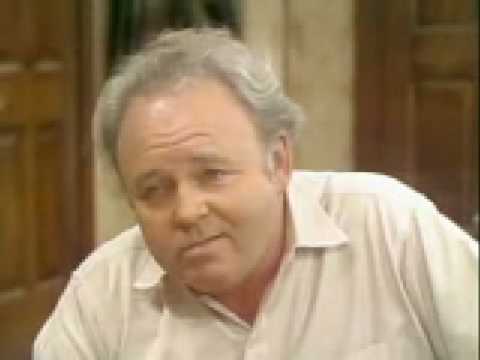
Idiot father and husband: The opposite of “Father Knows Best,” this guy is always wrong, and thank God he’s got a wife and kids to keep him straight. Think Archie Bunker in “All in the Family,” Doug Heffernan in “The King of Queens” (see the video below for the perfect example of the type), Homer Simpson, Peter Griffin in “The Family Guy,” Ed O’Neill as a dad in almost anything.

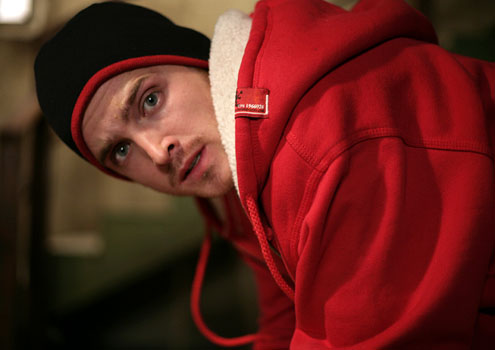
Feckless man-child — This guy is lost in time, lost in the culture, lives in a confused fog and has only the vaguest notion of himself as a man — either according to traditional or modern standards. Jesse Pinkman in “Breaking Bad,” Edward Norton’s character before he and Tyler Durden started the “Fight Club,” almost any character portrayed by Breckin Meyer (I’m thinking particularly of “Clueless” and “Kate and Leopold”), Seth Rogen in almost anything (but especially “Knocked Up”), Wayne and Garth of “Wayne’s World,” Bill and Ted of “Excellent Adventure” fame.

But of course, the roles for white guys don’t always belittle them, not by a long shot. At the opposite end of the spectrum, we have:

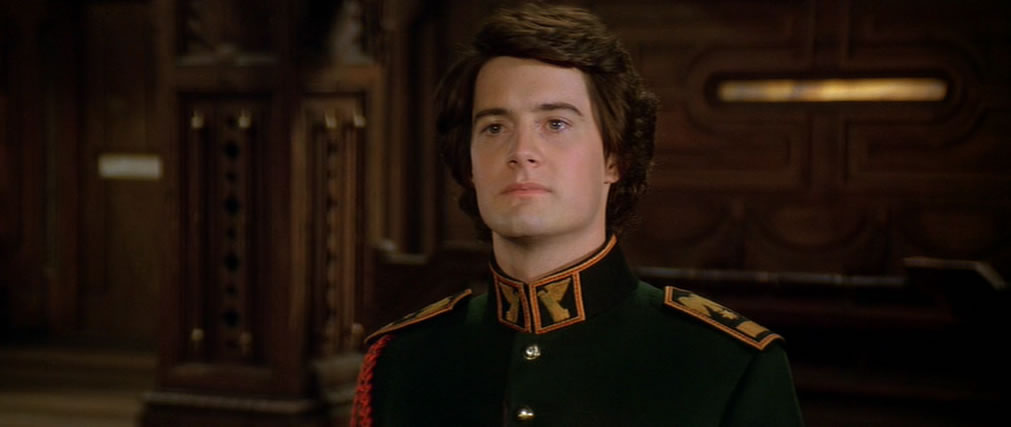
Secular Messiah — Ordinary young man discovers, to his wonder and often his delight, that he is not ordinary at all, but The One — a completely unique and necessary hero with special, mystical qualities who is destined to deliver his people from evil. This is an old role dating back in our literature quite a ways, but the movies have enthusiastically embraced it. Think: Arthur in every story from Le Morte d’Arthur to Disney’s “The Sword in the Stone,” Paul Atreides in “Dune,” Neo in “The Matrix,” Harry Potter in all the books and films of that universe, Luke Skywalker in “Star Wars.”

The One doesn’t have to be a white guy, you understand, but somehow, in the movies, he always is.

Of course, Morgan Freeman got to play God… but that’s covered in the “Magical Negro” category…

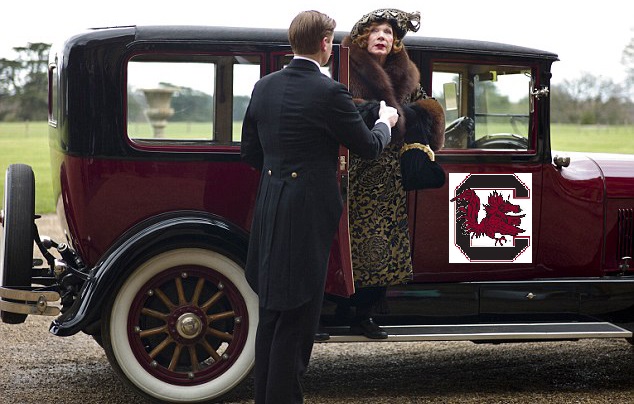
Yes, if ‘Downton Abbey’ were set in the US, it would be in SC

downton

Soon after I moved back to S.C., I was struck by how much my home state was like the England of a couple of generations back — or at least, how its ruling class was like that of the older England. I’d read in books how when one member of the public school set met another, they could usually find a personal connection in one of three ways — family, school or military unit.

On one of my first visits to the State House, I either participated in or overheard conversations in which connections were made in each of those three ways. The Citadel or Wofford may not be Oxford, but the interpersonal dynamics were the same.

(Before I came home to SC, I had never in my work life — in Tennessee and Kansas — met strangers who could make personal connections to me, which gave me a comforting sense of professional distance from sources that I took for granted. Then, one of the first people I met at the State House — Joe Wilson, as it happened — heard my name and said, “Yes, I’ve met your father; he’s doing a great job.” It was bit of a shock. My father at the time was running the junior ROTC program at Brookland-Cayce High School after retiring from the Navy.)

All that was brought back to mind when I was reading a feature in The Washington Post this morning about the origins of the surnames of presidential candidates, and I got to this:

Graham

Possible national origins: Scottish or English
Meaning: Have you ever seen the show “Downton Abbey”? It’s a good show (or, at least, has had its good moments). It centers on an expansive British estate at which there are strict social norms and a reliance on maintaining the boundaries of proper manners. If it were in America, it would be set in South Carolina.

“Graham,” as it turns out, is a name identifying residents of Grantham in Lincolnshire. And Lord Grantham is the main character in “Downton Abbey.”

As for “Grantham,” it’s apparently a combination of “homestead” — -ham — and either the Old English word for gravel — grand — or a reference to the name “Granta,” which means “snarler.” Making Lindsey Graham actually Lindsey Guy-who-lives-near-a-gravelly-home-or-near-where-the-snarler-lives….

Yes. An American Downton would likely be in South Carolina. In the Lowcountry, I would expect. Think Hobcaw Barony or something like that…

Bennettsville boy makes good

And no, I’m not talking about Hugh McColl, or even yours truly, who was considered to have done fairly well in the wider world until I got laid off. (You doubt my celebrity in the place of my birth? Consider that I was once invited to address the Rotary at Bennettsville’s now-defunct Farron’s Restaurant — which was not defunct at the time. Of course, the invitation did come from my uncle.)

No, I’m talking about Aziz Ansari, whose celebrity now exceeds Hugh’s, and even mine.

The above moment in the pilot of “Parks and Recreation” was a sort of milestone for our hometown. It was, I believe, the first time a recurring character on a prime-time network show said to the world, “I am from Bennettsville, South Carolina.” The fact that he followed it up with “I am what you might call a redneck” hardly takes away from that proud declaration. We Marlboro Countians have a great appreciation for irony.

The irony goes deeper, however, than the assertion that the Indian-American is from Bennettsville and not, as Amy Poehler’s character had guessed, a Libyan.

The fact is that Aziz — since he’s a homeboy, I feel free to call him “Aziz” — has greater claim to Bennettsville than I do. Sure, I was born there (while he was born in faraway Columbia), but only because my mother went home to have me while my father, a newly minted Naval officer, was attending a school in San Diego. I grew up thinking of it as home because it was the place I returned to each summer to visit my uncle and grandparents between new postings to places where I would live for a year or so and never return to.

The one time I lived in Bennettsville almost year-round was the 1967-68 school year, when I was in the 9th grade at (also now defunct) Bennettsville High School. So if you walk down Main Street, you may not be able to find anyone who knows me, although you may run into an older person who will remember me as the boy who yelled right out at the preacher in church, completely cracking up the congregation, in the middle of an otherwise stultifyingly boring sermon in 1957. No, I’m not making this up. I have it on good authority that when my name comes up in B’ville, if it does come up, the conversation inevitably moves to the yelling-in-church incident. I’m quite the local legend for that. It probably surprised no one that I became a writer of opinion; I am after all The Boy Who Didn’t Know When to Shut Up.

But Aziz actually grew up there, and attended Marlboro Academy, which (irony again) is where most of the white kids went after BHS was finally completely integrated at the start of the 1970s. (When I was there I had black classmates in homeroom and P.E., but we were then under the “Freedom of Choice” system in which everyone declared which school they wanted to go to each year, and only the very bravest African-Americans dared to say that they wanted to go to the “white” school — something I didn’t really appreciate at the time; I actually thought the school was integrated.)

So his Bennettsville credentials may be more solid than mine, but at least I can say I was a Green Gremlin (possibly the quirkiest, coolest school mascot ever), and he was not.

So there.

Anyway, have any of y’all seen his new show on Netflix, “Master of None?” It’s pretty funny. Not something you want to turn on until after the kids have gone to bed, but funny. Check it out and we’ll discuss it here…

Funniest SNL skit ever… to me… at least on paper…


I say “to me” because it was inside humor; it could not possibly have been as funny to someone who has not sat through thousands of news meetings just like the one portrayed, and suffered just the way Phil Hartman’s character suffers in the skit. (I’d love to know who wrote it. It had to be a fellow sufferer, because only someone who has been there and listened to such nonsense could possibly have come up with some of the touches in the dialogue.)ATT_b1_Bradwarthen_233x233_011515_d2

And I say “at least on paper” because, to my disappointment in going back and watching it again, I see that the actors were a bit off. There were stumbles by Rob Schneider, and even Phil Hartman, who otherwise is brilliant as the one sane man in the room. I wish in retrospect that they’d shot it as a short film in advance, as SNL sometimes does, to iron out those little problems with timing. I find myself wondering whether the actors just lacked energy because, having never been newspaper editors, they just did not understand how hilarious this was.

Unfortunately, the live audience hardly laughed at all, which probably persuaded Lorne Michaels that insider newspaper humor doesn’t sell.

Anyway, I’m sharing this because of a Twitter exchange I had Saturday night:


Perhaps so. I forget what the show did right after 9/11. But that reminded me that, ironically, one of the funniest things SNL ever did was about Pearl Harbor. Fortunately, the skit ran 50 years to the day after the attacks, and that amount of time having passed gave the show license to make fun.

And it was just so, so real. How many times have I been in such meetings, trying to sell something important as the lede story, while my fellow editors oohed and aahed over minor crime news, or the fact that “the lady bulldogs have a chance of going to the state finals this year.” And as one who has always had little patience with other editors’ overreaction to the weather (my general guiding principle on that is that if I want to know what the weather is, I’ll step outside) this is a battle cry that resonates in my heart:

“I’ll tell you what’s happenin’ in the weather: IT’S RAININ’ BOMBS IN HAWAII; that’s what’s happening…”

There’s just one brilliant line after another, such as “Do we have one Japanese person in Turrell?” and “Now Bill, that is something that affects our readers — they’re going to have to pay for those typewriters!” Someone had to have been taking notes during real newsroom budget meetings to come up with dialogue such as that.

But the very best touch of all is when you see the paper roll off the press, and the Pearl Harbor story is played at the bottom of page 7, under the news that Phil Hartman’s character has, understandably, shot himself. It appears under this savagely brilliant, one-column headline:

Asians
Attack
“Base”

… because, you know, you can’t be too careful. Do we KNOW that they were Japanese? And we’d better put “base” in quotes rather than step out on a limb…

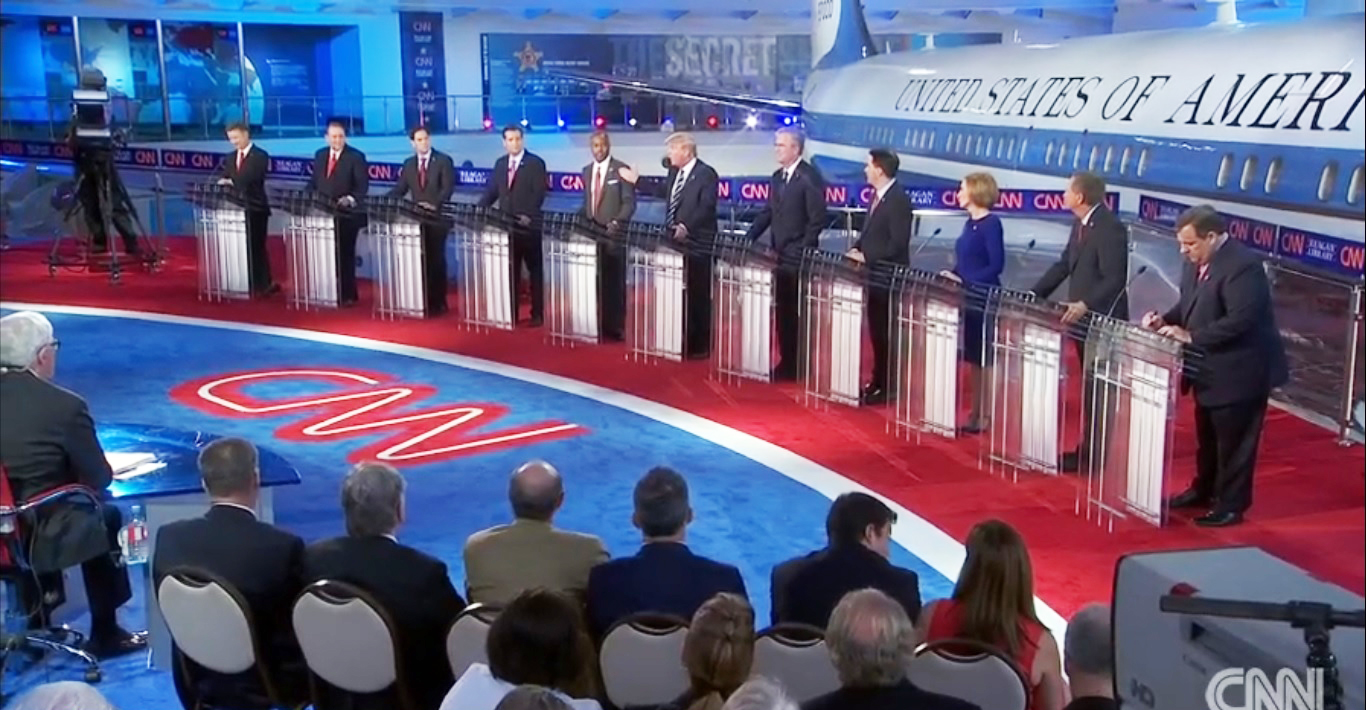
Did Lindsey Graham steal the JV show last night?

That seems to be the consensus of what I’ve read about the undercard debate.

I wouldn’t know, of course, because CNBC wanted to charge me to watch, and the World Series was free, so guess what I watched? (This blog would have to pay a lot more than it does for me to buy cable just for blogging purposes.)

As for the big-table debate, from what I’ve gathered from various sources, the main points were:

  • Big night for Rubio and Cruz.
  • Bad night for Jeb Bush.
  • The candidates and other GOP types went on a Spiro Agnew media-bashing spree.
  • Trump and Carson were relatively quiet, except for Trump bashing Kasich.

Here’s a transcript if you want it. I don’t have time to read it right now.

Among those of you who saw it: Thoughts?

Larry David as Bernie Sanders

We’ve noted before how much Bernie Sanders sounds like Larry David — or at least, like Larry David doing George Steinbrenner.

So now, thanks to SNL, we’re able to see just how uncanny the similarity is.

David is definitely the star of this skit from the weekend. I think Kate McKinnon is hilarious, but as Hillary Clinton, she’s no Amy Poehler.

And Alec Baldwin’s Jim Webb was… passable.

Is this THE stupidest premise you ever heard of or what?

Just a very brief one here, while most of us are dealing with more serious stuff…

I got an email last night from Netflix urging me to watch a new series called “iZombie,” and here is the premise:

A medical student-turned-zombie tries to retain her humanity by eating brains at the morgue and finds she has an uncanny new gift for solving crimes. More Info

Yeah… I’m gonna skip that, because I’m afraid that watching something that stupid would eat my brain…

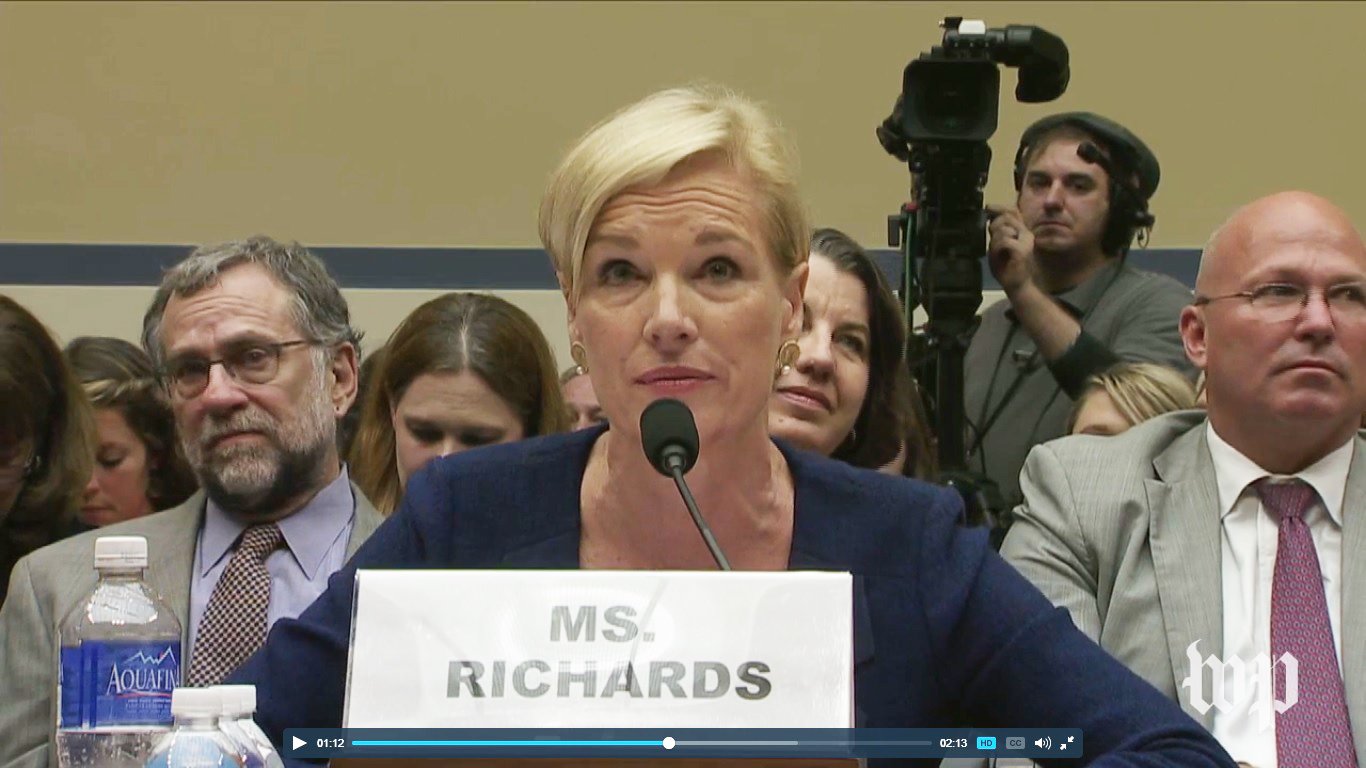
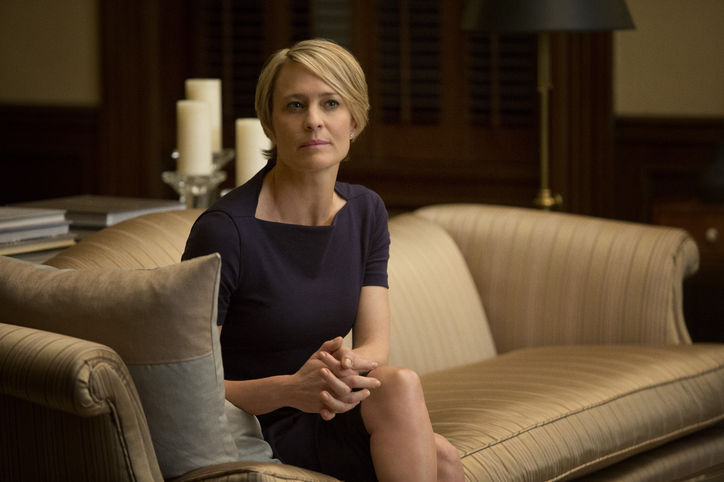
Planned Parenthood chief is already wearing her Halloween costume: Claire Underwood

Richards

One of the frustrating things about these danged Interwebs is that it’s now impossible to fool yourself into thinking you’re having an original insight. Especially insights of the more superficial kind.Claire

For instance, lately I’ve been on a roll with seeing people on TV and realizing that they look just like some other person, and thinking I want to do a blog post to share this recognition, and when I check I find that everybody else has noticed the same thing.

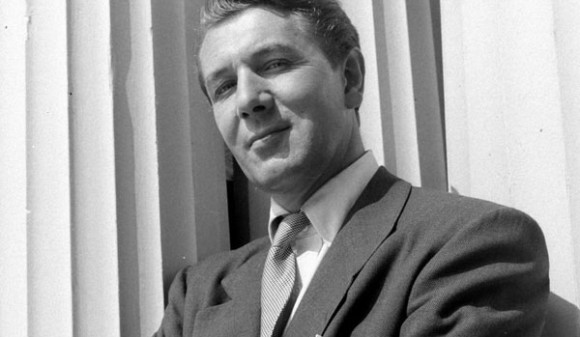
For instance… I recently saw Hitchcock’s “The Lady Vanishes,” and for most of the movie I tried to think who it was that Michael Redgrave looked exactly like. I knew it was another actor, but not a marquee idol by any means. Yet it was someone I had seen a lot of recently. I refused to let myself Google, “Michael Redgrave looks like…,” forcing my brain to work a little, if only on a silly pop culture problem.

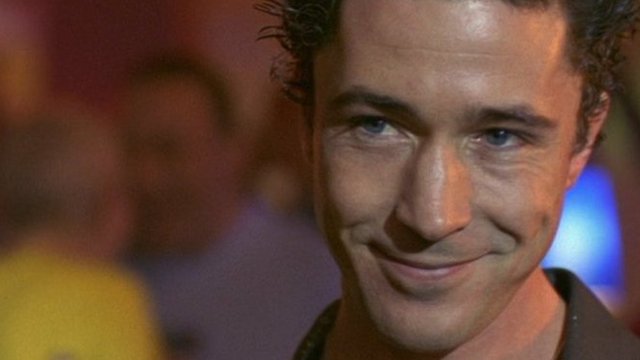
Finally, I came up with it: It’s that guy who plays “Littlefinger” on “Game of Thrones,” and Councilman Tommy Carcetti on “The Wire!” That is to say, Irish actor Aiden Gillen. Congratulating myself, I went ahead and did the internet search, and… every other sentient being on the planet had already noticed it.

Dang.

So it was that when I saw a picture of Cecile Richards of Planned Parenthood on my Washington Post app this morning, and thought, “Claire Underwood!,” I thought I was just being perceptive as all get-out. Of course, the vast majority of people, who saw her on TV yesterday, had beaten me all hollow.

Dang yet again. I was all ready to say it looks like somebody already has her Halloween costume on, and other facile manifestations of a feeble wit, and I was too late.

Frustrating…

Michael Redgrave

Michael Redgrave

Aiden Gillen

Aiden Gillen


‘Blue Bloods,’ a show that stands up for traditional values, such as… respecting each other

reagans

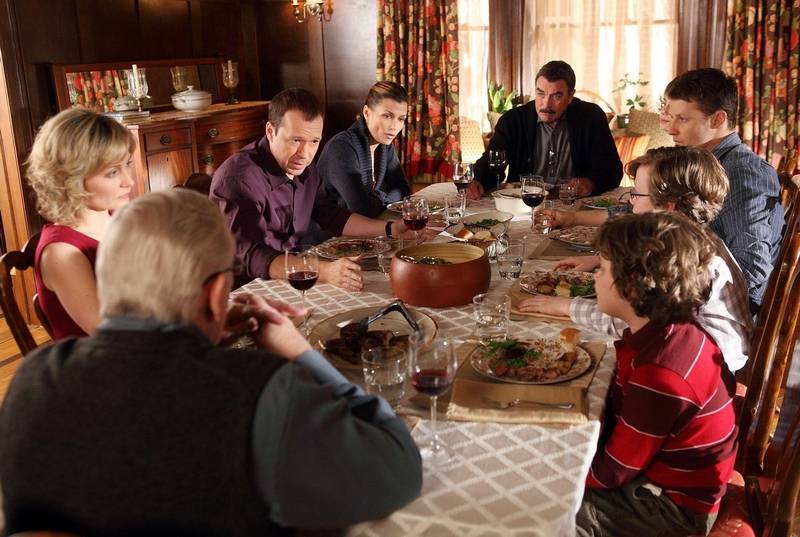
The Reagans, having another civil debate over Sunday dinner.

For years, my parents would ask me if I’d ever seen the cop drama “Blue Bloods,” and when I said I hadn’t, they urged me to check it out. They love it.

Eventually, in casting about this year for a new series to get hooked on after running out of “The West Wing,” I tried it. And I loved it, too, probably for a lot of the same reasons they do. And I’m kind of sad that this morning during my workout, I ran out, watching the last episode that is available so far on Netflix.

Maybe I had to get to be old enough to become a fan. At least back in 2010, “Blue Bloods” had the oldest audience on traditional broadcast television. And when you consider that traditional broadcast TV skews older anyway, that’s really saying something.

Part of it is probably that it bucks the trend, set by shows as varied as “Mad Men,” “Breaking Bad” and “Game of Thrones” — all of which lack so much as a single admirable character to root for. While every recurring character on “Blue Bloods” is human and fallible, each of them has enough to like and respect and even admire that you just want to spend more time with them. I mean, I loved “Breaking Bad,” but sometimes you want to see some people who might inspire you to break good for a change.

Another likely reason for the older audience is that everything about the show, from the central characters to the plots to the dialogue, fosters and celebrates traditional values such as family, loyalty, honor and duty. To some extent, these are the kinds of things I was talking about in 2008 in a column headlined “Give me that old-time conservatism” (as opposed to the kind that people like Mark Sanford and Rand Paul promote).

Oh, and there’s another traditional value the show celebrates: Respect for others, including those who don’t necessarily look at things the way you do.

That observation may be jarring to a lot of the people whose teeth are set on edge when you say “traditional values,” people who would define that as meaning some throwback to the bad old days (many seem to regard old days as bad by definition) when people who didn’t adhere to some norm were despised and put down.

But I don’t see it that way. I see a political environment today that has almost zero tolerance for varying opinions. Today, if you don’t agree with me, you are beyond the pale, a person without value, or worse, a person with negative value, one to be despised and condemned and reviled.

And I can remember when our politics weren’t quite that bad, when Democrats and Republicans were committed opponents, but more in the way fans of different football teams are, rather than as participants in a morality play in which there are only Good People and Bad People.

(Those earlier times had their own problems, of course. As I said on a previous post today, I don’t believe any previous generation was any better, or worse, than this one. People are always people, and each individual has his or her capacities for good and evil. We don’t have a moral advantage based on the time in which we are born.)

One of the ways “Blue Bloods” promotes this value is through the trope of the Sunday family dinner, as traditional an institution as one might find.

To back off and explain briefly — the show centers around the Reagan family. Not Ronald’s, but Frank’s. Frank Reagan, played by Tom Selleck, is the New York city police commissioner. His father, who lives with him (both of their wives are deceased), is the former police commissioner. Frank’s two sons are both cops — Danny a veteran detective, younger Jamie a graduate of Harvard Law School who gave it up to become a beat cop. Another brother was also a cop, but was killed in the line of duty before the show began. Sister Erin is an assistant district attorney.

So, when this clan gathers for Sunday dinner at Frank’s house, with Erin’s daughter and Danny’s wife and two sons, there’s a lot of shop talk, and it tends to center around some ripped-from-the-headlines issues such as police use of force and the like. And there is always a fairly wide array of perspectives, from the cops and Erin, and from Erin’s daughter and Danny’s wife. Danny is the hard case; Jamie is more the bleeding heart and rights-of-the-accused guy and so forth.

And while it gets contentious — in fact, there are dinners when one or another member of the family is giving one or all the cold shoulder over some current issue (say, Erin is at odds with the cops on whether a certain suspect should be prosecuted) — ultimately everyone loves and respects everybody else, and at least gives them the benefit of the doubt enough to listen. Even Danny, the hothead — usually.

But the respect-other-views thing runs through the whole show. Paterfamilias Frank, the commissioner who models himself on predecessor Teddy Roosevelt (right down to the mustache) might have one firm opinion, but the views of others are fairly represented.

I’m far from the only person to notice this. I like the way Mark Blankenship, a blogger at HuffPost, wrote about it when the series was young in 2010. I found this by searching on “Blue Bloods conservative,” to see how others reacted to the series’ traditionalism:

And although it’s never been stated, I’d wager that Danny would identify himself as a political and social conservative. Almost every episode of the show features a dinner table debate among the extended Reagan clan, and Danny always comes down on the ostensibly Republican side. He gets heated when someone suggests that drugs should be legal or that criminals should have inclusive rights, and he often chastises his brother Jamie, who left Harvard Law School to become a beat cop, for being an elite, Ivy League softie who doesn’t know how the real world works. In moments like this, I almost expect Danny to quote Sarah Palin.

But here’s the thing: Unlike the people who bloviate on cable news about their so-called conservative values, I’m actually willing to listen to Danny. His character is written and played with nuance, with flaws, and with admirable traits… so even though I might disagree with some of the things he says or does, I can’t dismiss him as a jerk, a lunatic, or a man who would like to see my rights as a gay man obliterated in the name of what’s good for America.

Meanwhile, that’s almost always how I see conservative candidates and pundits. They play to their base by underlining their most radical views, and their opponents play to me by underlining them, too. I’m left inside a system that boils everyone down, asking me to make quick decisions about right, wrong, good, evil.

And the truth is, it works. I try my damndest to live a thoughtful life, but after years of exposure to Tea Party vitriol, Red State vitriol, and Evangelist vitriol, I almost always assume that Tea Partiers, Red Staters, and Evangelicals wish me harm.

I know this is unfair. I also know that other people jump the same unfair conclusions about me. But I’m a person, you know? I can be influenced.

That’s why I find it almost spiritually refreshing to be presented with a character like Danny Regan, who is so different from me, but who still seems human. I see Danny sit at dinner with his family — some of whom are his political opposites — and I see him, I see all of them, talk to each other and listen to each other. Thus far, no one has changed anyone’s mind, but no one has been shamed away from the table, either.

Blue Bloods, then, has created a world where different points of view can coexist in the same family. How nice to imagine that metaphor spun outward, to imagine different Americans allowing each other space at the table. How nice to imagine people with wildly different views still finding ways to care for each other….

Yes, it is a nice thing to imagine, and I thank “Blue Bloods” for helping us imagine it. I’m sorry I’m out of episodes, and look forward to the most recent season being posted on Netflix as well…

Traditional values: The Reagans, in keeping with the cop stereotype, are Irish Catholic. Interestingly, in early episodes they got the words to the Catholic grace wrong. It was corrected in later episodes.

Traditional values: The Reagans, in keeping with the cop stereotype, are Irish Catholic. Oddly, in early episodes they got the words to the Catholic grace slightly wrong. It was corrected in later episodes.

Tweets from the debate (Kathryn, look away)

debate stage

I know Kathryn hates it when I do this, and most of the rest of y’all just ignore it. But I’m going to post it anyway, because this is how I commented on the debate, and I’m not going to type all this stuff all over again (copying the embed codes over is tedious enough).

Some people liked my comments — I got 13 replies, 17 reTweets, two new follows and 37 favorites. (A little disappointed on the follows — usually I get closer to 10 during such an event with so much interaction.) I didn’t bother to count the Facebook responses (my Tweets automatically post there as well), but it was at least a couple of score.

If running these prompts no discussion, so be it. But at least I made it available to those who don’t indulge in Twitter:

Governor, you should have hired ME to be your chief of staff. I am, after all, Leo McGarry

No, really, I am. I’ve been tested and everything.

I could have been the perfect chief of staff for our governor — the gruff, avuncular, no-nonsense guy who could look at the big picture and speak truth to power.

I suppose this Patel woman will do a fine job and all, but if only the governor had thought of me and known of my impeccable credentials, surely she’d have asked me to do it.

Don’t you think?

LM1

Nostalgia interrupta: A brief Boomer rant about sampling

I really have nothing to add beyond what I said on Twitter, reflecting a Boomer’s disappointment at almost, but not quite, hearing and seeing things that bring back fond memories — repeatedly:


Here is the first sampling abomination I spoke of, and here is the second.

OK, I will add one thing: To keep my contemporaries from also experiencing nostalgia interrupta, here are the far-more-satisfying originals, including the theme from “The Man from U.N.C.L.E”…

Explaining Donald Trump by looking at Donald Draper — and other fictional ‘mad men’

On this slow news day, The Guardian is giving big play to a fun piece that attempts to explain the appeal of Donald Trump by way of various popular fictional antiheroes:

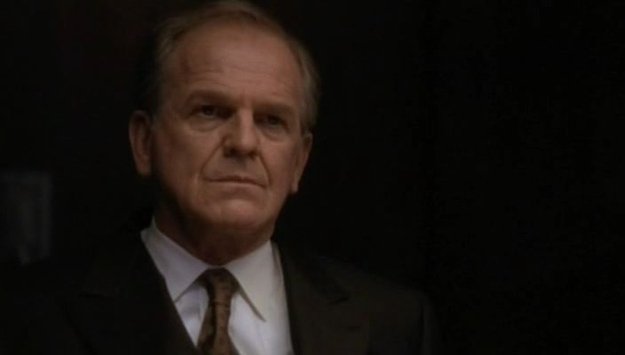
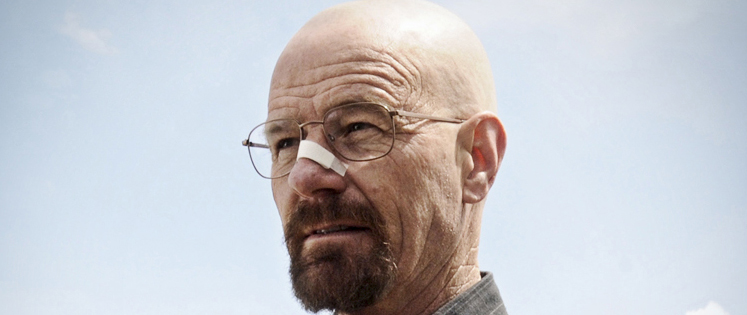
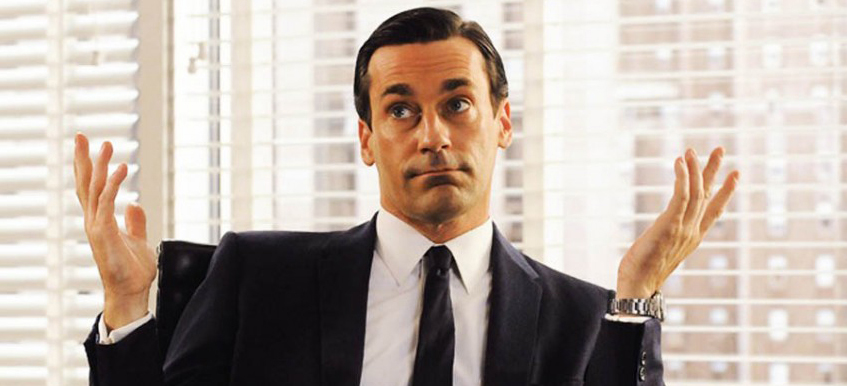
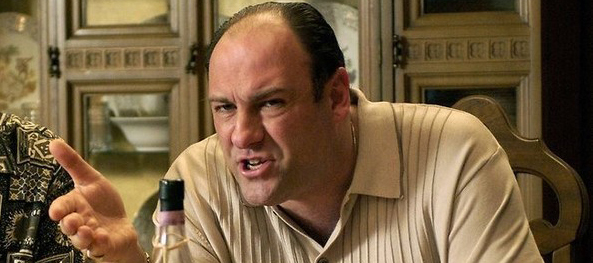
Last week millions of Americans tuned into a cable program featuring a wealthy white male narcissist with anger management issues, a history of viciousness towards women, and a pervading sense that there’s something amiss in his homeland. But this time the character in question wasn’t Walter White, Don Draper, Tyrion Lannister or Tony Soprano, but instead a real – if strangely orange – human man named Donald Trump. The program Americans so eagerly watched him plow through wasn’t an acclaimed drama, but a presidential debate….

Think about all they have in common – Tyrion’s cynicism and cunning, Don’s scorn for weakness, Tony’s rage, Walter White’s limitless ego. They’re all scoundrels who move through the world with an inordinate amount of swagger, and Americans, going back to 1773, love scoundrels with swagger. We love people who challenge authority and convention and get away with it. Thursday night, when Chris Wallace asked Trump if he thought a man who has declared bankruptcy multiple times was well suited to running the economy of an entire country, Trump’s response was to basically blow a raspberry and brag that he simply exploited the law….

No, I didn’t understand the 1773 reference, either (why not ’75, or ’76?). But never mind.

Interesting. And fun, since I have really, really enjoyed most of those shows.

But here’s the flaw in the idea… I respect all of those fictional characters more than I do Donald Trump. Unlike him, they all have appealing characteristics (WARNING! MULTIPLE-SPOILER ALERT):

"Say my name. And no, it's not Trump!"

“Trump is not the One Who Knocks.”

Walter White at least started out wanting to take care of his family after he was diagnosed with cancer. And he truly, honestly grieved when Hank was killed. So he had some actual human qualities. And he was, you know, smart — his ego was based in something.


I have NO idea why people like Trump.

I have NO idea why people like the guy.

Don Draper has that characteristic that Trump seems to value, although it completely eludes him: class. At least, class as style if not as a moral quality. And occasionally, he is moved to do the right thing, if it doesn’t inconvenience him. He can be virtuous — not all over, but in spots.


Trump on the Iron Throne? Not even I would drink to that.

Trump on the Iron Throne? I need a drink.

Tyrion may be the most virtuous, admirable continuing character on “Game of Thrones,” with the possible exception of Lady Brienne. Admittedly, that’s not a high bar, but he was born into a singularly seamy fictional universe. He is even capable of wit, which distinguishes him rather dramatically from The Donald.


You're comparing me to WHO?

You’re comparing me to WHO?

Tony Soprano, being a brutal, blustering bully, comes closest to Trump. In fact, I wouldn’t be surprised if he demanded that Trump cough up some tribute money for running gambling operations in New Jersey. But Tony is a family man, who cares about his kids and sometimes his wife. He has a human, likable quality — think about it: Would you want to sit and watch Trump’s visits with his shrink (even if she was Dr. Melfi)? I hope not.

No, if you want to find a fictional character who is as thoroughly off-putting as Donald Trump, you have to think Frank Underwood. No, wait: Frank at least is clever, and occasionally borders on being amusing.

I’m afraid the theory doesn’t hold up…

My second favorite moment on ‘The Wire’

I loved the look on Terry D'Agostino's face as McNulty explains that he couldn't be bothered to vote in the presidential election between Bush and what's-his-name. ("Kerry," she says helpfully.)

I love the look on Terry D’Agostino’s face as McNulty explains that he couldn’t be bothered to vote in the presidential election between Bush and what’s-his-name. (“Kerry,” she says helpfully.)

Sorry, but I couldn’t find video to embed of this one.

Previously, I shared my delight at the scene from the first season in which Rawls tries to comfort McNulty, whom he hates, while cussing him out. Wonderful device for deepening the viewer’s sense of these characters. (Later, there is further cause to be sympathetic to Rawls’ dislike of McNulty, as the latter repeatedly shows his disregard for the opinions and prerogatives of other bosses and colleagues.)

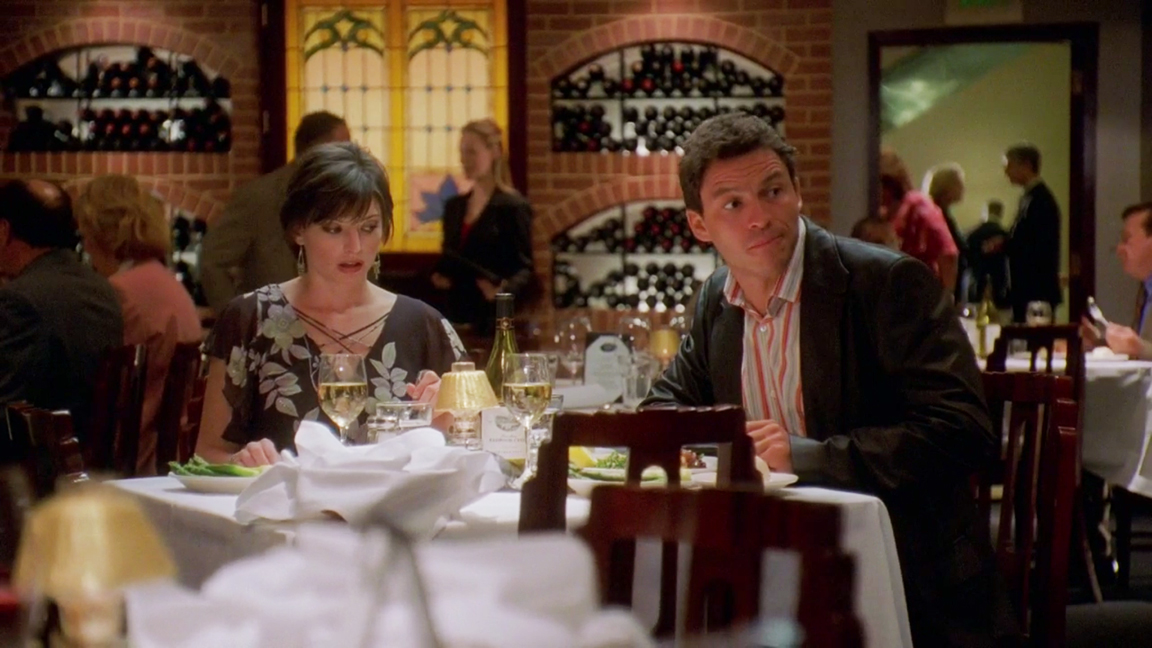
I’m in the third season now, and my fave so far is the one in which McNulty and Terry D’Agostino are for once having dinner together before jumping into the sack, and she learns how apathetic he is about politics — which means there will be no jumping into sacks tonight.

As the scene was summarized by HBO:

McNulty, slightly intimidated, has dinner with Theresa D’Agostino in a fancy D.C. restaurant. The more she learns about him — that he only has a year of college under his belt, that he is essentially an apolitical being who doesn’t know the difference between a red state and a blue state and who didn’t even bother to vote in the presidential election — the less interested she is in him. When McNulty takes her home, she doesn’t invite him in…

Yeah, there was some class stuff going on there. But I think she liked his rough edges. The deal-killer, the anti-aphrodisiac for her seemed to be the moment he said he couldn’t be bothered to vote.

I was watching her face, and that was when he lost her. Up to that point, he thought he had a really hot borderline nymphomaniac eating from his hand. As from that instant, I knew Jimmy was out of luck.

I’ve heard SO many people say the dismissive things McNulty was saying about politics. It was refreshing and fun to see such a person pay for his apathy, in terms he could appreciate…


What in the world got into Ben Affleck?

As we wrestle with our own demons and angels here in South Carolina, let’s pause a moment to look away, look away, look away toward Tinsel Town and ponder this puzzling situation:

When Ben Affleck volunteered to be featured on the PBS genealogy program “Finding Your Roots” last year, he was hoping to find “the roots of his family’s interest in social justice.”

Researchers did turn up plenty for the actor-cum-activist to be pleased about: a mother who was a member of the Freedom Riders, an ancestor who fought in the Revolutionary War.

But they also found Benjamin Cole, a great-great-great grandparent on his mother’s side. Cole was a sheriff in Chatham County, Ga., in the 1850s and ’60s, according to historical documents uncovered by Family History Insider. And he was the “trustee” of seven slaves.

An attempt to cover up that unwanted detail has led PBS to suspend the show, citing Affleck’s “improper influence” on programming…

OK, it looks like the Ben Affleck we all respected for making “Argo” has disappeared, and been replaced by the old Ben Affleck whom everyone made fun of. To paraphrase “Good Will Hunting,” judging by this, our boy is wicked dumb.

This is Hollywood narcissism carried out to the Nth power, the ultimate example of movie star shallowness: He actually expected to be able to congratulate himself with a family tree full of people who held only 21st-century-approved ideas, and led perfect, ideologically correct lives.

Where does this kind of thinking come from? If he volunteered for this self-stroking show (I’ve seen a few minutes of it a couple of times, and come away wondering why anyone but the celebrity himself would care about some celebrity’s great-grandparents), why would he not want his actual ancestry to be revealed? What would be the point?

Folks, I had at least five great-great grandfathers who fought for the Confederacy. One of them owned slaves — possibly others as well, but I only know about this one. Whatever he was like as an individual — and I have no way of really knowing — there is no question that he was of the class that brought us the Civil War. He was a member of the South Carolina General Assembly both before and after the war.

Over the years, I’ve heard all these SCV types, in the midst of their making excuses for the flag, say that their ancestors didn’t own slaves, so don’t blame them. Sometimes I want to say to them, Well, my ancestors did, so why don’t you just hush up and let those of us with standing in this matter try to address the problem?

But I don’t, of course, for fear that that would sound, you know, kinda like I’m looking down on these folks for being from the slaveless classes. Which is more than a little uncool on a number of levels… It’s bad enough that I catch myself looking down on them for being so WRONG. As the Pope says, Who am I to judge?

Here’s the thing: I am in no way complicit in anything that people I never even knew did. You have to be pretty confused to think otherwise. But let’s just say that knowing my ancestry makes the horrendous sin of starting the bloodiest war in our history and committing treason against the nation I love just a bit more real to me.

Are we not put on this Earth to recognize and correct the sins and mistakes of our forebears? Aren’t we supposed to learn from the past, not just bow down to it?

Apparently not, if you’re Ben Affleck.

Why does his silliness bother me? Because he’s doing exactly what these people who defend the flag say that those of us who want it down are doing: Trying to erase the past, to deny it. When applied to those of us who’ve been working to get the flag down all these years, that’s absurd.

But then, some movie star has to go and act exactly the way the neo-Confederates claim the rest of us are acting.

So needless to say, I’m more than a little disgusted…

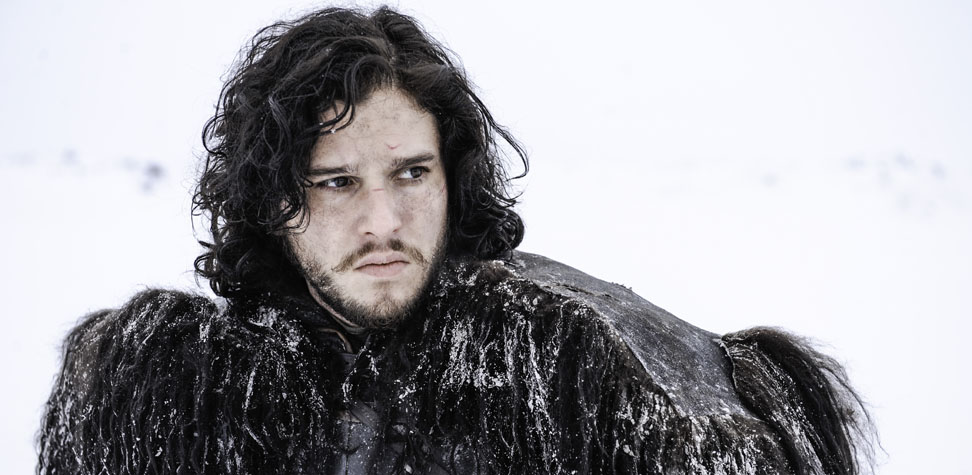
I know nothing, Jon Snow, about why people think this show is so awesome

I was directed to the above fun video by The New York Times‘ recap of the “Game of Thrones” season finale, which I watched almost in real time, having binge-watched, off and on, all the way from the first season, starting when HBO NOW came available in April.

Here’s that recap, and here’s the one from The Washington Post. Between the two, the NYT one is better, if “better” is defined as “more obsessive and exhaustive.” Although you may be interested that the Post also provides a second recap by someone who has actually read the books. (Must be nice to work at a paper that can afford to pay two writers to watch a TV show and go on and on about it. For that matter, it must be nice to still work at a paper.)

Now, SPOILER ALERT, in case any of y’all still haven’t gotten to that episode.

Some observations based on the latest, and for that matter the whole series:

  • As the NYT observes, no more awkward dinner parties for Jon Snow. Which brings me to the key point about all this to me: From Ned Stark to his bastard son, this is not a series that I can ever love, because it will capriciously and sadistically kill anyone I am capable of having any admiration for at all. Although Brienne is still around. I think.
  • And speaking of Brienne, why didn’t we get to see her kill Stannis, who so richly deserves it? This series now ranks in my mind as the most obscene in history. The very fact that anyone could even conceive of what happened to Stannis’ precious daughter, and then go ahead and depict it, sends my mind careening off into the darkness. Why, when we are “treated” to all kinds of graphic violence committed against far more admirable characters, are we cheated of the satisfaction of knowing for sure that this pretentious monster is dead?
  • And speaking of pretension: Where are we supposed to grab ahold of this series politically (seeing as how what it is about is people maneuvering for political power)? Where are we supposed to stand? We know that, under the monarchical rules of succession, Stannis was indeed the rightful heir — but who ever rooted for him for even a moment in the course of this series? So who are we supposed to want to win the game?
  • This season was at least a tad less adolescent than others, with fewer shots of gorgeous young female nudity. As though to make up for that, in the final episode Cersei is stripped naked and made to walk through the streets of King’s Landing for about a week and a half of screen time — although it’s fake, because they used a body double. And sorry, Beavis and Butthead, but there’s really nothing sexual about the scene. You remember when Jerry Seinfeld explained the difference between “good naked” and “bad naked”? Well, this was bad naked.
  • Whatever happened to Bran Stark? You know, the kid we thought we were supposed to care so much about ever since the Kingslayer tossed him from the battlements in the very first episode of the series? I mean, he reached the end of his quest, had a mind-expanding experience (I think, but it’s been awhile), and then, nothing. He was last seen north of the Wall, where a good bit of this season’s action takes place, but no Bran. I looked it up and got an explanation, but it’s still weird.
  • When, pray tell, does winter get here? For five seasons, we’ve been told it’s coming; it’s coming. Characters in the vicinity of The Wall always make like their running just half a step ahead of it. And we’re also led to believe that in this alternative universe, when it comes it will last for years. Well, it’s been five years since we were told to bundle up; where is it?
  • How long does it take a Khaleesi to gather up her dragons, cross over to Westeros and start sorting these clowns out? Hasn’t that been the plan since the first season? She seemed to be doing well there for awhile, gathering up resources and gaining power on her way to the sea, but then she takes yet another city, and stops there and gets all bogged down in local politics. Here she had this awesome fighting force, advancing with Tarquin’s ravishing strides, and then… she takes up residence in a pyramid and lets the Unsullied wear themselves out rumbling with the local hoodlums. What’s the plan here, Mother of Dragons? What does policing Meereen have to do with taking back the Seven Kingdoms? Talk about mission creep…

That’s enough for now; I’m sure y’all have plenty of other stuff to say.

Bottom line: I watched this to find out what everybody was on about, and it was intriguing enough to keep me going to the present point. But it’s not as compelling as many people seem to think it is, and in many ways is quite flawed. It’s no “Breaking Bad,” or even a “Mad Men” or “Walking Dead.” It doesn’t come close to “The Wire,” and no way does it measure up to “The Sopranos,” HBO’s proudest achievement in fictional drama to date.

That’s my verdict, anyway.