Category Archives: The Nation

When it comes to propaganda, give me humor every time (if it’s done well)

A few days ago I had an e-mail exchange with Kathryn about that anti-bullying video that Cindy McCain did, which caused Kathryn to think Cindy was GREAT.

But I just found it stilted and stiff and painful to watch. Which I guess was the intent. But that painfully earnest message couched in politically correct clichés really made me not want to hear any more about the subject, however serious it is.

But then, a couple of days later, a colleague — Lora Prill at ADCO — brought to my attention the companion videos above and below.

Now — without getting into the merits of the issue either way — to me, THIS is the way to make the point. Whether I go away agreeing or disagreeing with the political point, at least I go away with a smile. And I’m therefore more predisposed to listen to these folks in the future.

Way to communicate there, guys.

Far more useful than a phrase book…

Next month I’ll be traveling to England, so this video, which Kathryn brought to my attention, might come in handy. If I can only master these, I should be able to pass as a local wherever.

Excuse the language. Or as the young man says, ignore the words. Just listen to the accents.

I used to be good at accents when I was his age (although not so much now; I think our speech patterns get less elastic as time goes on). But I was never this good.

Another failure to communicate

Mitch McConnell has something in common with Barack Obama. Actually, two things: First, he now agrees with the president that we need to do away with earmarks. (Oh, you didn’t know that? Yes. That’s something Jim DeMint and Barack Obama agree on. This isn’t a debate between Democrats and Republicans. It’s a debate between entrenched legislative leaders of both parties, and just about everybody else.)

But he also believes that this is more of a communication problem than a question of there being anything wrong with the practice.

Oh, he says he’s been listening to the people, and I suppose that’s true as far as it goes:

I have thought about these things long and hard over the past few weeks. I’ve talked with my members. I’ve listened to them. Above all, I have listened to my constituents.  And what I’ve concluded is that on the issue of congressional earmarks, as the leader of my party in the Senate, I have to lead first by example. Nearly every day that the Senate’s been in session for the past two years, I have come down to this spot and said that Democrats are ignoring the wishes of the American people. When it comes to earmarks, I won’t be guilty of the same thing.

But this is the thing that jumped out at me when I heard it on the radio this morning (the bold-faced emphasis is mine):

Make no mistake. I know the good that has come from the projects I have helped support throughout my state. I don’t apologize for them. But there is simply no doubt that the abuse of this practice has caused Americans to view it as a symbol of the waste and the out-of-control spending that every Republican in Washington is determined to fight. And unless people like me show the American people that we’re willing to follow through on small or even symbolic things, we risk losing them on our broader efforts to cut spending and rein in government.

Did you get that? Essentially, the way he sees it is, the problem is that YOU, the people, don’t understand how wonderful earmarks (at least, HIS earmarks) are, even though HE knows better, and has always known better, which is why he’s not going to apologize. But against his vastly superior judgment, he’s going to have to act on this purely SYMBOLIC concern that YOU, the uninformed people, have, or else he’s going to lose the ability to do all the wonderful things that only he and his brethren can possibly provide to you, the people.

Got that? I certainly did.

It’s later than you think — 2012 is upon us

Doug Ross observed today, back here:

Let’s not forget that the actual campaigning for 2012 will begin in approximately 10-12 months. The election may be two years away but the jockeying for position will begin much sooner…

To which I responded:

Actually, Doug, it’s a lot worse than you say. The SC primary itself is only 14 months away. The campaigning has begun already, but it will become fairly obvious and public starting early in the New Year.

Almost immediately after the 2002 election (when Mark Sanford was elected) — I mean, like a week or two later — Howard Dean contacted us wanting to come in and talk about his candidacy in the 2004 Democratic primary. I was like “Howard Who?” and “He wants to talk to us about WHAT?” But I agreed to the meeting. (I used to say yes to a lot of meetings I would have said no to later, as our staff shrank.)

If you go back on my old blog, you’ll see that we started getting into full swing on the 2008 presidential election in late spring of 2007, about the time of the GOP debate here on May 15.

My first interview with Barack Obama was conducted via cell phone in June 2007 (we didn’t get far, as we had connection trouble). As the summer wore on, I wrotemore and more about the campaign. The John Edwards column that everyone remembers appeared in early August 2007 — and it really only appeared that late because I had put off writing it for months. It had started with something I hadwritten on the blog on Feb. 8, 2007.

Bottom line, we’re about to get full-tilt into the 2012 election here in SC…

Sorry to break the news to y’all. But as I told Rotary today 2012 is upon us…

How about “Whip in Waiting”?

Oh, come on, Nancy Pelosi! Surely you can come up with a better name for Jim Clyburn’s new made-up consolation “job” than “assistant leader.”

How about “Once and Future Whip?” Or “Whip Wannabe?” Or “Mister Congeniality?”

Come on, readers! Y’all can suggest something better. Give it a try.

I especially like the naked Machiavellianism in this statement from her soon-to-be-ex-speakership:

“Should I receive the privilege of serving as House Democratic leader, I will be very honored to nominate our outstanding colleague, Congressman Jim Clyburn of South Carolina, to serve in the number three House Democratic position,” Pelosi said, adding that the new post would be called assistant leader…

“Should I receive the privilege of…” In other words, Jim, if you want this nice consolation prize, or if you ever want any real power in the future, we know whom you’re going to support for minority leader, don’t we? That is, on the off chance that anyone will dare to oppose me…

And if there’s anybody else whose loyalty she really needs to buy, she can promise to back them for the “number four,” “number five” and “number six House Democratic positions.” All of which are as ephemeral as the one she’s promising Clyburn. What an unlimited resource!

My, my, the silly, self-centered, utterly meaningless little ego games these people play. One “veteran House Democrat” was quoted as describing the situation this way on Politico: “You have a bunch of senior citizens at the buffet at closing time, fighting over the last piece of meat….” Indeed.

I’m embarrassed for Jim Clyburn, since he’s from SC. I wonder if he’s embarrassed for himself?

Read more: http://www.politico.com/news/stories/1110/45111.html#ixzz15MwVVcOv

Oh, it’s satire? For a second, I couldn’t tell

Initially, only the use of profanity in this hilarious Tweet tipped me off that it was from The Onion. For a split-second, before the four-letter word fully registered, I had thought it was yet another post from the full-time trashers of public education right here in SC:

The Onion

@TheOnionThe Onion

Department Of Education Study Finds Teaching These Little Shits No Longer Worth It http://onion.com/aBvjLR

Except for that one word, this Tweet (and the Onion piece it links to) was indistinguishable from the unrelenting rain of abuse that our governor’s allies, such as SCRG, send down upon public education — against the very notion of public education — on a regular basis. Seriously, compare that to some of the actual, serious-as-a-crutch Tweets we get from SCRG:

SCRG

@SCRGSCRG

Pickens County School District Saddling Students with Debt: http://bit.ly/aBnTzg
1 hour ago via TweetDeck

Is Your Kid’s Tuition Unconstitutional?http://on.wsj.com/clKY0K (via @WSJ)
12 Nov via TweetDeck

Williamsburg Public Schools: Costly Failure Factories – http://bit.ly/crYvyb#education #sctweets #fb
12 Nov via TweetDeck

Academic Achievement for Black Males a “National Catastrophe”:http://bit.ly/bF0Btw
11 Nov via TweetDeck

Election Results: Parents Excited, Bureaucrats Scared: http://bit.ly/dkhfgF
5 Nov via TweetDeck

More and More Grade Inflation:http://bit.ly/awKzWs
5 Nov via TweetDeck

Waste Rises in Pickens County Schools:http://bit.ly/9EmpDH
27 Oct via TweetDeck

See? All that’s missing is the naughty words.

“On Armistice Day, the philharmonic will play…”

… but I won’t have a lot to say, even though I should.

I’ve always been terrible about these annual observances. I feel like I shouldn’t say anything unless I have something really new, really interesting, to say.

And I don’t have anything really impressive to say about Veterans Day, formerly Armistice Day, the 11th day of the 11th month, etc.

It’s not that I don’t think it’s important. Bud would accuse me (and frequently does) of making a sort of fetish of veteran worship. I am profoundly bowled over by the sacrifices of anyone who has served in combat for this country. Or served at all, even in rear areas. Interrupting one’s life to don the uniform and go where you are sent, perhaps for years on end, is a profound thing to do. Something we could use a lot more of. This is something that I think about, and read about, a LOT, and sometimes write about.

Unfortunately, except for the very few, too few, who have served in Iraq and Afghanistan — or Kuwait or Somalia or Bosnia or wherever — Veterans Day is about honoring previous generations. I mean, it’s great that we honor them, but it’s a shame that we associate “veteran” with old age as much as we do. The draft ended when I turned 19, the year I would have been called if I had been, and far too few people my age and younger have the experience of uniformed service. And that’s a loss — to our politics, to our civic life, to anything that depends upon a large portion of our society having the experience of having contributed to something larger than themselves. So our society, and our politics, have gotten meaner, pettier, more inward.

But this isn’t the day for that kind of talk. Earlier today, my son-in-law called to ask whether I was at the parade. I wasn’t. I was at work, where I’m trying to get my head above water on some ADCO projects now that the election is over. Which is why I haven’t posted much the last few days. And why I haven’t said anything, until now, about Veterans Day. Or the Marine Corps birthday yesterday.

The big, gigantic, huge ideological shift of 2010: About 4.76 percent of voters changed their minds

Sometime over the last couple of days I was talking to a Republican friend who insisted that the American people decided to reject Obama and all his works on Tuesday, that the ideological message was clear and unequivocal.

His view was similar to the one express in this Tweet posted by @SCHotline today:

SC Politics 11/5: America to Democrats: Stop what you’re doi…http://conta.cc/cz79tE viahttp://SCHotline.us #scgop #sctweets#scdem

I, of course, disagreed. I believe that elections seldom express clear messages, for one thing. People have many reasons for voting as they do, and it’s almost impossible to classify or quantify them with any degree of certainty, even with exit polls — which necessarily boil motivations down to explanations that can be quantified. Voters could vote against a guy because, deep down, they don’t like the tie he wears — something a pollster is unlikely to capture.

What happened was that a small proportion of the electorate — a minority of us independents in the middle — voted Democratic in 2006 and 2008, but Republican in 2010. And they are just as likely to vote the other way in two or four years. Believe me; these are my people. I’m one of them. It’s a swing voter thing; someone who calls himself a Republican, or a Democrat — something who really believes all that junk they spout — couldn’t possibly understand.

My friend saw the election, for instance, as a clear, unambiguous rejection of Obamacare. Please. The word may poll well (for Republicans), but most voters couldn’t explain to you what the recent health care legislation actually DOES. Neither can I, unless you give me a couple of days to refresh my memory on it. I don’t even understand how it’s going to affect me, much less the country. If you don’t know what it is, how can you possibly know, clearly and unambiguously, that you are against it?

As a measure of how the country FEELS about the president, sure. But as a measure of a clearly defined ideology, no way. Which is good, since I don’t like ideologies.

Anyway, today my friend sent me this piece from The New Republic (hoping I would consider the source favorably, no doubt), headlined “It’s the Ideology, Stupid.” Well, I was offended at the original version of that phrase when the Clinton people used it; I am no more persuaded by this one.

What I DID like about the piece were the stats provided from exit polls. To begin with, they told me that in 2006, “those who voted were 38 percent Democratic, 36 percent Republican, and 28 percent Independent,” and this year the self-identification was 36/36/28. Well, right there I’m not seeing a big ideological shift. But my favorite stats were here:

We get more significant results when we examine the choices Independents made. Although their share of the electorate was virtually unchanged from 2006, their behavior was very different. In 2006, Democrats received 57 percent of the Independent vote, versus only 39 percent for Republicans. In 2010 this margin was reversed: 55 percent Republican, 39 percent Democratic. If Independents had split their vote between the parties this year the way they did in 2006, the Republicans share would have been 4.7 percent lower—a huge difference.

OK, let’s parse that. Independents are 28 percent of the electorate. In 2006, Dems got 57 percent of that segment, while the GOP got 39 percent. This year, they went 55 percent Republican and 39 percent Democratic. So that means roughly 17 percent of independents switched their preference from Democratic to Republican.

Seventeen percent of 28 percent (the percentage of the electorate that is independent) is 4.76 percent. I make no claims to be a statistician, so y’all check my math there. But I think I’m right.

So… instead of “America” sending a clear message to Democrats, or to anyone for that matter, what we have is 4.76 percent of the electorate voting differently from the way it voted in 2006 — for whatever reason.

“America” doesn’t change that much from election to election, folks. A few people in the middle slosh back and forth. And I think my explanation for why they do is as valid as the grand, oversimplified ideological one: People were dissatisfied in 2006 and 2008, so they elected Democrats to fix the things that were making them dissatisfied. Nothing has yet been fixed (even, for instance, if Obamacare will do the trick — which I doubt — it hasn’t accomplished anything yet), so they’re still dissatisfied, so they’re taking their custom to the other shop.

And that’s what happened.

Oh, by the way — the writer in TNR went on to explain his grand theory that it’s all about ideology in the subsequent paragraphs. I found them unpersuasive. At the very most, he quantifies an “ideological shift” of 11 percent — and I don’t think it’s ideological, I think it’s semantics. I think the word “conservative” feels more comfortable to more people this year. But even if he’s right, that’s an ideological shift of 11 percent. And 11 percent ain’t “America.”

Go read it and see what you think.

When have I had this feeling of dread before?

I’ve been reading for what — a year or thereabouts? — about this huge Republican victory that’s coming tomorrow, in terms of the GOP taking over Congress.

And now, it’s everywhere I turn, as though most news outlets have just discovered that, duh, the party that doesn’t hold the White House always has big gains in the midterm election.

And the more I read it, the more of a feeling of dread I feel. It’s a very familiar feeling. When have I felt it before?…

… Oh, yeah — four years ago, when the Democrats took over the House…

I just wish everyone would stop pretending that it matters which of these two extremely destructive forces has control of our government.

Prediction: A year from now, the approval rating of Congress will still be below freezing.

Next election, I really need to consider running for something on the UnParty ticket. The UnParty’s time is coming, as more and more people realize how futile this back-and-forth is.

Sheheen not getting help from national party? Good.

The first thing I saw on this topic was that Dick Harpootlian was apoplectic about it:

Nu Wexler wexler Nu Wexler

God bless Harpo. RT @jmartpolitico: Harpootlian sounds off on $ sc dems are getting for gov race: “I’m pissed.” http://bit.ly/atJd10

Well, Dick gets worked up.

For my part, I’m glad Vincent Sheheen isn’t getting any real help from the national party. Who the governor of South Carolina is is no business of the national Democratic Party. Or, for that matter, of all those national donors Nikki Haley keeps leaving the state to court.

All of those people should stay out of our business.

Anyway, it doesn’t sound like Vincent’s hurting. Today he touted having raised $3.5 million:

Camden, SC–Today, the Vincent Sheheen for Governor campaign will file its pre-election campaign finance report with contributions totaling over $1.8 million for the period. Ninety-four percent of the contributions came from South Carolina.  The Sheheen campaign has raised a total of over $3.5 million in the race for governor.

Maybe that’s not enough to pay for the kind of inside-the-Beltway partisan campaign that Nikki’s running (going on about Obamacare and immigration in Arizona, rather than about South Carolina), but that, too, is a good thing.

Um, TIME… mind if we have an election first?

This was brought to my attention via a release from the SC Democrats yesterday, as follows:

Haley Makes Time’s 40 Under 40, But Why?

COLUMBIA- Republican gubernatorial candidate Nikki Haley made national headlines again today for being named one of Time magazine’s 40 Under 40. The scandal-plagued candidate was named alongside young civic leaders who are actually making a difference in American politics by working to fix a broken system – and to restore faith in the process.

South Carolina Democrats said today that Haley fit the age requirement for Time’s list but hasn’t really met the list’s other requirements.

“Nikki Haley may have national notoriety for her ties to Sarah Palin, but she hasn’t done much to alleviate South Carolina’s problems.  With her only legislative victory a law that says who can shampoo hair, she’s shown herself to be completely ineffective as a legislator.  It’s going to be hard for Ms. Haley to restore faith in the political process when it’s obvious she’s been less than truthful about so many things. Something new is revealed about her every week,” said South Carolina Democratic Party Chair Carol Fowler.

And here’s the abomination to which they refer. And it gets worse. The headline is “40 Under 40: A New Generation of Leaders.” (You can see a video about it. And if you let the video keep running, you get to see one on “Naughty Lingerie in Conservative Syria.” Nope, I’m not making it up.)

Really? You’re serious — a backbencher whose only passed bill had to do with washing hair, and she is a “leader?”

Huh.

Tell you what, TIME. I’d greatly appreciate it if you’d wait until we have an election before you find out who will be the new leader out of South Carolina who is under 40.

Yeah, I know that the national media, particularly the “news”magazines that are a sort of parody of journalism, just practically collapse with excitement that there’s an Indian-American woman running for governor in SC. Because that’s just the sort of superficial, meaningless trivia that hits you where you live. Here’s the mag’s entire in-depth analysis of the situation (step back so it doesn’t gush all over you):

Haley, the daughter of Indian immigrants, may seem an unlikely figure to lead the rebirth of South Carolina’s Republican Party. But when the stiletto-heeled 38-year-old bested three white men to win its gubernatorial nomination in June, she proved that the good-ol’-boy culture of Southern politics is no match for a charismatic conservative newcomer who promises to shake up the Palmetto State.

But we may have a surprise for all of you alleged journalists out there — the first Lebanese-American Catholic ever elected governor in South Carolina. Oooohhh — exciting, huh? Personally, I couldn’t care one way or the other about the winner’s demographics. I just want to have an actual leader, one who has demonstrated some capacity to lead.

So how about getting all worked up later, huh?

How much do YOU text? And why?

There was a fascinating piece in The Wall Street Journal today, headlined, “Y U Luv Texts, H8 Calls.” Cute, huh? Anyway, the short answer to the implied question was, “We Want to Reach Others But Not to Be Interrupted.” But there was more to it than that.

There were some pretty incredible numbers in there:

For anyone who doubts that the texting revolution is upon us, consider this: The average 13- to 17-year-old sends and receives 3,339 texts a month—more than 100 per day, according to the Nielsen Co., the media research firm. Adults are catching up. People from ages 45 to 54 sent and received 323 texts a month in the second quarter of 2010, up 75% from a year ago, Nielsen says.

100 texts a day? Yeah, kids are pretty nuts about these things, but 100 texts a day? And that’s the average, rather than a pathological extreme? Come on.

Still, its undeniable that for the younger generations, texting is far more important than using the phone as a, well, phone.

That’s true even for an alter cocker like me — although “texts” aren’t my preferred medium. I’m far more likely to use my Blackberry to send an e-mail, or post a Tweet, or send a DM, or respond to a blog comment, than I am to use it to talk to anyone. Enough so that I’ve crippled my thumbs. (The pain is still considerable; I see a doctor next week.)

In total, I’ve sent out 2,702 Tweets since I started a little more than a year ago. That’s a lot, but hardly 100 a day.

Texting is undeniably useful, particularly for communicating under certain circumstances with people who have cell phones that are not “smart.” Last night, for instance, I went to a reception at Rosewood’s at the fairgrounds. When I was leaving that, I planned to connect with my daughter, who had brought her kids to the fair. I tried calling her, and couldn’t hear her over the fair noise. So I texted, “Where are you? I couldn’t hear…” She replied, “We’re @ the picnic tables under a tent right outside entrance to grandstand,” and I answered, “OK, stay there…”

Undeniably useful. But as a substitute for other forms of communication, no, I don’t think so. And how on Earth is it appealing for people who don’t have full QWERTY keyboards on their devices? Talk about tedious…

Kids don’t seem to mind, though. Which provokes a thought: Back in the ’60s, many of us thought we were SO different from our parents. And outwardly, perhaps we were. But this latest development suggests that kids today are actually, cognitively different from us. They’re wired entirely different, and technology has done the wiring.

And what are the social, cultural, political and personal consequences of that?

Tucker Eskew remembers when governors governed

Tucker Eskew at the Summit Club Tuesday.

Yesterday at the Summit Club, Tucker Eskew spoke to a luncheon meeting of the local chapter of the International Association of Business Communicators. (And OMG, I just committed one of the cardinal sins of Newswriting 101. I just wrote what is termed a “The Ladies Auxiliary met on Wednesday” lede! Which is to say, a lede that tells you a scheduled event occurred, but doesn’t tell you what happened, or why you should care. Well, so what? I don’t have an editor or anyone else to get on me about it. Perhaps you’ve noticed.)

The first thing that interested me about this was how many former staffers from The State were there — Michael Sponhour, Jan Easterling, Jeff Stensland, Preston McLaurin and others, all there to represent their various clients. It was Old Home Week. And I think I was a bit of a curiosity at the gathering, because it was the first time many of them had seen me NOT as an editor at the paper. But perhaps I’m just thinking of myself as the center of the universe again. My wife says I do that.

Anyway, the interesting thing was hearing Tucker ramble about his experiences with the politicos he’s worked for. Some of it was familiar ground — stuff I lived through as well, but experiencing it from a different vantage point — but other parts told me something new. In case you don’t know Tucker, here’s the promo the IABC put out before the event:

High-stakes strategist and high-visibility spokesman Tucker Eskew will share some stories and lessons from his time in the South Carolina State House, the White House, No. 10 Downing Street and his consulting firm, Vianovo. Tucker is a spokesman and strategist whose career began with Ronald Reagan, Lee Atwater and Carroll Campbell. It then continued with George W. Bush and Sarah Palin. Drawing on these experiences, Tucker will reflect on the statecraft and stagecraft he’s witnessed and practiced over 25 years as a communicator. Register now for this inside look into the politics of media and communications from a man who’s been there and done that.

Tucker has come a long way since he was that punk kid we had to joust with when I headed the governmental affairs staff (10 reporters, back in the day) at The State and he was Carroll Campbell’s press secretary. He’s been behind the scenes at a number of interesting moments in history, and I enjoyed hearing his stories about:

His biggest mistake ever. This one made me smile, because it had nothing to do with handling Sarah Palin or anything you might expect. It was when we caught him, the governor’s press secretary, parking in a handicapped space in front of the Capitol Newsstand on Sunday mornings to pick up the papers. As he noted, the item ran in the “Earsay” column, a feature I started as a place to put all those interesting tidbits that reporters always avidly told their colleagues when they got back to the newsroom, but seldom got around to writing for the paper.

The BMW announcement. Probably the high point of the Campbell administration. Tucker sort of lost his temper at the time with reporters who reported cautiously on the announcement rather than playing it as being as big as it would eventually be — reporting just the initial employment, for instance, instead of the likely (and the predictions were borne out over time) economic impact over the long run. Of course, the reporters were just being the kind of healthy skeptics they were trained to be, in keeping with the rule, “If your mother says she loves you, check it out.” I mean, you certainly don’t give her any points from promising to love you at some point in the misty future. I got the sense Tucker understands that now. But he also takes satisfaction in knowing that BMW was as big a BFD as he maintained at the time.

Then and now. The hardest part of his job in the days before the BMW announcement was keeping the lid on the deal until it could be completed. He said he learned to say “no comment” 150 ways. When it was all done and he met the head guy from BWM, the German said, “So you’re the man who says nothing so much.” He urged us to remember that “This was an era when newspapers were large, well-staffed and aggressive.” That was indeed a long time ago.

The 2000 South Carolina Presidential Primary. This is the one part of his speech I had a real beef with. At some point — I didn’t write down the exact quote — he said something about being proud of the Bush victory. McCain supporter that I was, I would have found such pride distinctly out of place. Tucker had been on the Bush team so long — Campbell had been instrumental in getting Bush pere elected in 1988 — that he could see it no other way, I suppose.

The Long Count in Florida. At the point at which the campaign should have been done, he was asked to pack his bags to spend two or three days in Palm Beach. A week later, his wife mailed him a full suitcase. This was shortly after they had had a baby, and as he and an expectant world stood on one side of a glass wall looking into a room where the chads were being counted and obsessed over, it struck him how like standing outside the hospital nursery the experience was. And all he could think was, “That was one ugly baby” he was looking at in Palm Beach.

September 11, 2001. He was working in the White House press office. As everyone was still reeling from the impact of the first three planes, Whit Ayres called to ask him if he was all right. Sure I am, he said. Ayres said that on TV it looked like his building (the Eisenhower Office Building) was on fire. That was an optical illusion caused by the angle from which a network camera located downtown was shooting the smoke rising from the Pentagon. At around that time, some staffers asked whether they were supposed to be evacuating the building. No sooner had he said “no” than alarms went off. Everyone had been trained to walk, not run, to the exits in an emergency. So they were particularly alarmed to see and hear Secret Service agents yelling at women — including nice, soft-spoken women from South Carolina — to “Take off your shoes and RUN!” That’s because the agents had heard there was another plane headed toward them. Later in the day, he would advocate for the president to come back to the House and be seen leading. And he would write some of the first words released publicly from the administration, by Karen Hughes.

The great missed opportunity. He spoke of how writers right after 9/11 were hailing “the end of irony and cynicism.” Of course, it was just a pause before intensifying, as the partisan bitterness from both sides later exceeded our worst imaginings.

London during the media blitz. It was decided that in the War on Terror, London was the world media center, particularly for the Arabic press. So Tucker was sent there to represent the administration in liaison with Tony Blair’s staff at No. 10. He said it was “the most corrosive, cynical media environment that I’d ever been exposed to.” And he had thought we were bad back in Columbia. At least we didn’t Photoshop pictures of his boss with blood dripping from his fangs. (Tucker urged us to read Tony Blair’s new book. I certainly will, since I just asked for and got it for my birthday.)

Sarah Palin on SNL — In 2008, he was sent from the McCain campaign to become one of the handlers of someone he had known nothing about — the surprise running mate. A high point of that experience was accompanying her backstage when she went on “Saturday Night Live” — something Tucker had urged her to do. He actually had fun for once. But there was work to do as well. He had a role in nixing some bits of the script, such as a line that rhymed “filth” with “MILF.” And the bit that had McCain being “hot for teacher.”

South Carolina’s national image. “We were a shiny piece of trash on the side of the road for awhile,” he said of our time in the “Daily Show” limelight, but he thinks our image is better now. Nevertheless, he knows that South Carolina business people and others who have to travel outside the state pick up on a distinct impression of South Carolina, and “it’s not a good impression.” Someone had asked him whether we just had too many “characters.” He suggested that “it’s not about the characters, but it is about character.” After all, Thurmond and Hollings managed to be characters without reflecting too badly on our state’s character. That is less the case today.

Back in the day, Tucker used to get on my nerves, mostly because he advocated so tenaciously for his boss, whom at the time I saw as more of a partisan warrior than a guy interested in governing. (This was due in part to the fact that he was building his party, and doing so quite successfully. I kept comparing him unfavorably to Lamar Alexander, whom I had covered in Tennessee. Alexander had worked with Democratic lawmakers as full partners and accomplished a lot as a result. Campbell had more of an in-your-face style, doing such things as holding press conferences to rub it in when a Democratic lawmaker switched parties.) Now, I look back on the Campbell administration as halcyon days, a time when a real governor got things done, a state of affairs we haven’t been so fortunate to experience since.

Time matures our perspective. And it’s certainly matured Tucker. My Democratic friends will no doubt see him as anathema because of the names with which he has been associated. But I see him as that brash kid who has grown into a Man of Respect among people who do communications from that side of the wall — the side I’m now on, by the way.

And why is it so easy for me to see him that way now? Because he harks back to a time when we had a governor more interested in governing than posturing. A couple of times he proudly quoted someone — I missed who — calling Campbell an “exemplar of governing conservatism,” with emphasis on the “governing.” Campbell believed in it.

Tucker is too professional to put it this way, but he was obviously appalled at having to work for someone as insubstantial as Sarah Palin — the exemplar of the sort of Republican politician that dominates the scene today. He was at pains to explain her appeal in positive terms, describing her as an unaffected person who causes crowds to think approvingly, “She doesn’t talk down to me.”

He was asked whether he was the one who said Ms. Palin had “gone rogue.” No. But he marveled at being charged with promoting a candidate who was so startling unprepared to run for such a high office. He spoke of the kinds of experience and knowledge that one took for granted in a candidate at that level, and said, “We had never worked with someone who had never done those things.” As far as seasoning experiences were concerned, “Almost none of that had ever transpired.” But he didn’t call her a rogue. “I didn’t say it, but I observed it and was charged with dealing with it.”

And deal with it he must, because, as he realized after a time on the campaign, “She doesn’t have a lot of people who have been around her a long time.”

It was interesting, in light of these observations, to think back on what he had said a few minutes before, in a different context, about how amazing it is to see Nikki Haley “rise, in relative terms, from nowhere…” He had meant it in a good way. But the comparison to Palin is rather unavoidable.

Asked what he thought of the state’s two U.S. senators, he diplomatically spoke of his respect for both, but emphasized that they are very different. DeMint is about the “principle,” and Graham “stands on principle, but still gets things done” — making him another “exemplar of governing conservatism.” With distinct understatement, he noted that “DeMint has made himself a lot of friends around the country, and probably some opponents within” the Senate — the place where one has to work with people to get anything one believes in done.

A longtime Republican operative in the audience asked whether President Reagan could even get elected in today’s political environment. She — Christy Cox, longtime aide to David Wilkins — seemed to doubt it. Tucker said he would hope Ronald “Morning in America” Reagan could “change the climate.”

But the point was made. The climate would indeed have to be changed for the Great Communicator to be successful today.

So that’s why I can appreciate Tucker better today. Once, I saw him as a sort of partisan guerrilla warrior, part of the problem. Now, he joins me in harking back to a time when those who called themselves conservatives ran for, and served as, governor because they believed in governing. And as I said earlier, that was a long time ago…

I’d much rather hear talk of DeMint than of Palin

A friend, obviously seeking to appall me, sent an e-mail saying, “Oh, you’ll enjoy this…” and linking to this blog post, which I quote in part:

And speaking of factions, and again I’m not a reporter, just a consumer of news, it sure seems to me that Jim DeMint is the current leader of the hard-core conservative faction of the Republican Party.  He’s far more consistent with his endorsements than any other conservative leader, and unlike Palin he can claim that he’s actually been doing something effective for the cause.  For the conservative/Tea Party faction, presumably the trick is to be as far to the right as possible without actually sounding crazy to those outside the faction (and thus perhaps drawing vetoes from more pragmatic conservatives, and possibly some GOP-aligned interest groups).  At least as I read the reporting, DeMint seems to be pretty good at keeping to that line, and he certainly must be more reliable both for that crowd and for more pragmatic types than Palin.

To know more, we need more solid reporting.  Hey, reporters!  We know activists hate TARP; is it a make or break issue for them?  What about other important groups within the GOP?  And, while of course Tea Partiers and conservatives generally are fond of the Sage of Wasilla, do leaders of those groups seem more likely to turn to her or to DeMint (or perhaps to another candidate) for leadership?  How much good will did DeMint buy with his endorsements and support in primary season 2010?

And yeah, I groaned, but was not shocked or surprised. After all, a guy makes a naked power play like the one DeMint’s made, and one should expect such talk.

And I’ll say this for him: Better DeMint than Palin.

Don’t get me wrong: I would think it horrible to contemplate either of them becoming POTUS. But at least my intelligence, my sense of propriety, is not nearly as offended by talk of DeMint as of Palin. Or for that matter, the absurd idea of Nikki Haley presuming to become governor of South Carolina when she has done nothing in public or private life to indicate any sort of suitability or qualifications for the job.

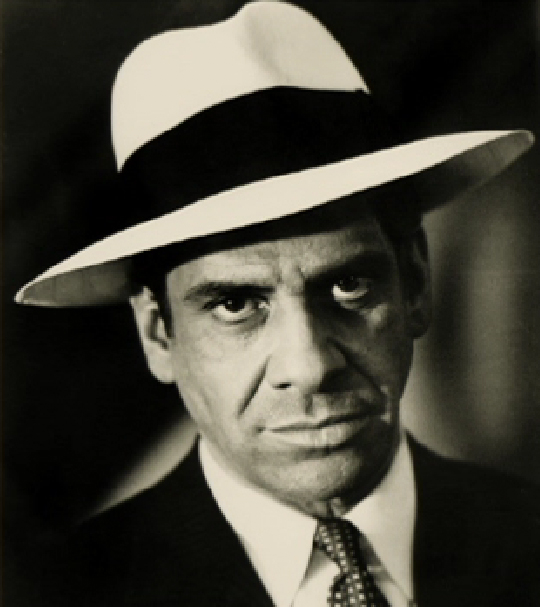
The thing is, Jim DeMint is a uomo di rispetto, a man of respect, in the Godfather sense. Sure, he might be doing some things that I

Al Lettieri as Virgil "The Turk" Sollozzo.

consider to be infamnia, and he might be trying to start a war among the Two Families that rule inside the Beltway, but he is a man to be taken seriously, a United States Senator who has demonstrated considerable political leadership skill. I respect him the way Don Corleone respected Sollozzo when he agreed to meet with him even though he wasn’t interested in his proposal, because drugs is a dirty business, as we all know — but I digress.

Contrast that to the utter lack of accomplishment that Sarah Palin embodies — she’s sort of to politics what Paris Hilton is to fame, or Reality TV is as a testament to a highly evolved species — and you can see why, though I don’t want either of them to become Leader of the Free World, I am less offended by loose talk about him than I am about her.

Talk about Sarah Palin as a presidential contender has become so routine that many have probably become inured to it, and now think nothing of it. But it is bizarre in the extreme. Like Alvin Greene — or Christine O’Donnell — being a major party nominee for the Senate.  Or like Nikki Haley.

Does no one but me notice this? Has Reality TV dumbed down American expectations to the point that we think it’s OK for anybody who’s shown up on the Boob Tube enough to presume to be presidential material?

Apparently so.

DeMint is now officially Too Big For His Britches

Folks, this is really embarrassing. Throughout our history, U.S. senators have not exactly been known for modesty. Fritz Hollings, for instance, was no shrinking violet. Being one of only 100 in the country, with some pretty weighty constitutional responsibility, can go to one’s head. Add in the tradition going back to ancient Rome, and you have a formula for bombast.

But I have never heard or read of any one senator taking upon himself such a megalomaniacal presumption as what Jim DeMint has taken upon himself with this latest move:

U.S. Sen. Jim DeMint, R-S.C., in an extraordinary move, has warned the other 99 U.S. senators that for the rest of the legislative session this year, all bills and nominations slated for unanimous passage must go through his office for review…

Normally, senatorial ego is limited by the understanding that there are 99 others just like you, which is the wellspring of senatorial courtesy. The notion that the world does not revolve around YOU is something that we start teaching our children as we’re trying to get them beyond the Terrible Twos. Most of us pick up on it by the time we reach the age of majority, at least to some extent.

But if Jim DeMint had ever been familiar with this concept, he has forgotten it.

Contrast this obnoxious cry of ego, if you will, to the quiet way that Lindsay Graham has worked behind the scenes to have a salutary effect on foreign policy since the election of Barack Obama. Despite the imperative of satisfying his left wing, I keep seeing Obama do things in Afghanistan and elsewhere that show a marked pragmatism, a reassuring wisdom. And apparently, Sen. Graham is one of the main reasons why:

A new book by The Washington Post’s Bob Woodward describes U.S. Sen. Lindsey Graham as playing a central role in the formation and execution of President Barack Obama’s war policy in Afghanistan through his close ties to Vice President Joe Biden, Gen. David Petraeus and White House Chief of Staff Rahm Emanuel.

The book by the former Watergate reporter, Obama’s Wars, contains vivid and previously undisclosed portrayals of Graham’s closed-door conversations and confrontations with Obama, Afghan President Hamid Karzai and other key figures.

Petraeus, the former commander of U.S. troops in Iraq who now holds the same post in Afghanistan, describes Graham as “a brilliant and skillful chess player” whom the general admires for his ability to navigate the power channels of Washington.

Talk about your polar opposites — the ball hog vs. the guy who just wants to make sure his team wins. And his team (and this might come as a shock to Jim Demint) is the United States of America, NOT the extreme right wing of the Republican Party, which Sen. DeMint seems to think is his country.

And what is Jim DeMint trying to accomplish in all this, aside from self-aggrandizement? Note this in The Washington Post:

Consider the case of Sen. Jim DeMint of South Carolina, the new Republican kingpin and enforcer on Capitol Hill. DeMint claims he was misquoted by Bloomberg Businessweek last week as saying that his goal for the next Senate is “complete gridlock.” But you’d never know it from the way he’s behaving during the Senate’s do-nothing, pre-election legislative session. DeMint makes no apologies for saying that there’s no place for bipartisan compromise or consensus or some “watered-down Republican philosophy,” as he put it. For DeMint, this is war. The only acceptable outcome is total victory, and any Republican who dares to disagree will be treated as a traitor during the next election cycle.

And of course, he’s trying to get in a position to accomplish all this by such moves as supporting such candidates as Christine “Witchy Woman” O’Donnell.

I’ve never been more proud of Lindsey Graham, or more embarrassed by Jim DeMint. This moment has been coming, but I never suspected it would go this far.

No wonder The Washington Post dumped Newsweek

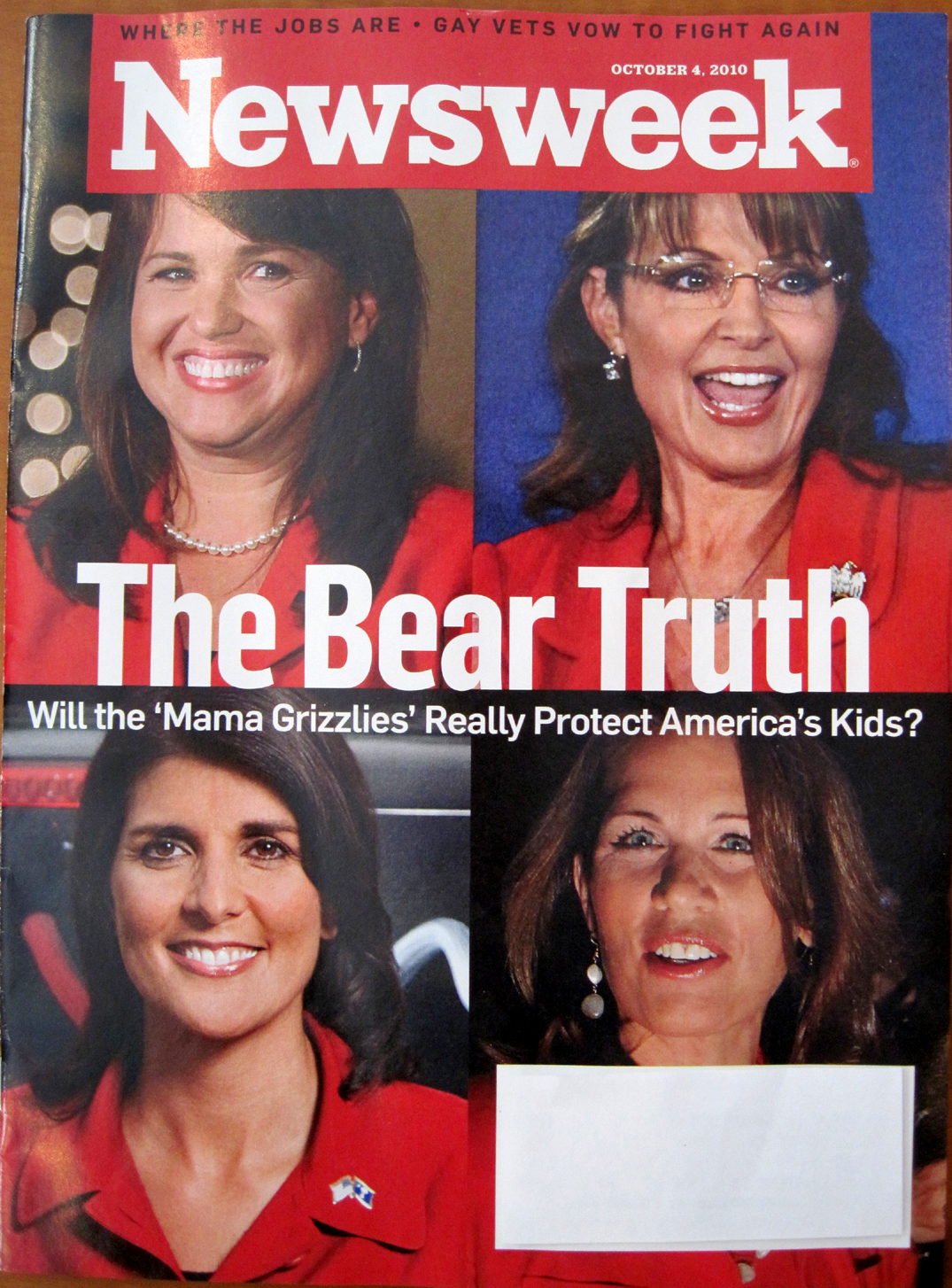
When Newsweek first put Sarah Palin (I mean, Nikki Haley — I know the difference, but the superficial, pandering twits editing Newsweek apparently don’t) on its cover, I wrote about how Vincent Sheheen faces a problem that no other candidate for governor of South Carolina had ever faced — an opponent who gets vast amounts of free national media coverage. It’s a disadvantage that no candidate can raise enough money for paid media to overcome. It distorts everything. (See “The Newsweek endorsement of Nikki Haley,” July 6.) I wrote:

Oh, you say it’s not an endorsement? Don’t bore me with semantics. As I said, the national media — not giving a damn one way or the other about South Carolina, or about who Nikki Haley really is or what she would do in office — is enraptured at the idea that South Carolina will elect a female Indian-American (Bobby Jindal in a skirt, they think, fairly hugging themselves with enthusiasm), which just may be the most extreme example of Identity Politics Gone Mad that I’ve seen.

I told you we would have to expect this. And this is just the beginning…

Hey, am I a prophet or what? Now, in their slavish devotion to all things Sarah (and Sarah surrogates are almost as good, especially if you can create a collage of them WITH Sarah), Newsweek has done it again.

And do they have any serious, substantive reason to do this? Of course not. The putative reason for putting Nikki’s smiling mug on the cover again is to discuss the burning issue of “mama grizzlies.” I am not making this up.

Of course, if you turn inside to one of the few remaining pages in this pamplet — right in there next to the scholarly treatise on “Men Look at Women’s Bodies: Is Evolution at Work?” — you can find some home truths about Nikki. Such as:

Haley, who has two children but has never referred to herself as a grizzly [so why the freak did you put her on this stupid cover? never mind; I realize there’s no rational answer, beyond maybe that you had a picture of her in red], is just the sort of pro–business, low-tax, limited–government conservative Palin loves. Her platform is focused mostly on economic issues: creating jobs and unleashing entrepreneurial energy by slashing taxes. She holds herself out as a paragon of fiscal responsibility (never mind that she and her husband have failed to pay their taxes on time in each of the past five years).

But I must ask you: How many of the undecided voters who might be gullible enough to be razzle-dazzled into voting for Nikki do you think will read that far into the piece? Just being on this cover is all Nikki could possibly ever want or need from Newsweek.

Folks, I gotta tell ya — I never thought a whole lot of Newsweek. Back in the day when I was even in the market for such a publication, I always read TIME — and I haven’t done that in 30 years. Whatever value that format had ceased to be anything you could take seriously so, so long ago. Those publications became pretty much everything I disdain about TV “news.”

Recently, The Washington Post apparently decided the same, selling the mag to a guy who made his fortune selling stereos. And as The Wall Street Journal observed:

Since he agreed to purchase the magazine from Washington Post Co. earlier this month, pundits have called Mr. Harman’s motives—and sanity—into question. He took on more than $50 million in liabilities and agreed to keep most of Newsweek‘s employees—all for a magazine on track to lose at least $20 million this year, according to documents reviewed by The Wall Street Journal.

Good luck with that, pal.

My advice to you readers? You want to read news in a magazine format? Go with The Economist. That is still a serious source of news and commentary. Interestingly, it calls itself a “newspaper,” in spite of its format. It’s certainly better than all but a handful of newspapers on this side of the pond. Yet another reason to love The Economist — so far, no Nikki Haley covers (that I’ve seen, anyway).

Kennedy-Ayers affair holds lesson for Tea Party

I really hope that Nikki Haley, Sarah Palin, Jim DeMint, Joe Wilson and every adherent of the Tea Party reads that last post I shared with you. It contains an important lesson.

These people are fond of equating liberalism with dangerous radicalism. And they’ve pulled previously sensible Republicans along with them into this nasty habit of thought (if you can call it thought).

But the tale of how Bill Ayers honored Sirhan Sirhan for killing liberal icon Robert F. Kennedy, and how Bobby’s son, now a pillar in his community, led a board (likely chock full of liberals, although I don’t know that) to deny an honor to unrepentant terrorist Ayers because of what he did, is instructive.

It shows liberals as mainstream people who uphold fundamental standards of decency in their communities, just as real conservatives — in the traditional sense of the word; not the way Sarah Palin and her ilk use it — would do.

Dangerous radicals are beyond the pale. Sensible liberals, and conservatives, are the people who point out that fact.

Therein lies the difference. So knock it off with the demonization of people who are NOT beyond the pale.

RFK son leads board to settle score with Ayers; good for him

Normally I’m not one to applaud people using positions of trust to settle personal scores, but even if that’s what you call this, in this case I’m all cheers for the Kennedys:

When retiring University of Illinois at Chicago Professor Bill Ayers co-wrote a book in 1973, it was dedicated in part to Sirhan Sirhan, Robert F. Kennedy’s assassin.

That came back to haunt Ayers on Thursday when the U. of I. board, now chaired by Kennedy’s son, considered his request for emeritus status. It was denied in a unanimous vote.

Before the vote, an emotional Chris Kennedy spoke out against granting the status to Ayers.

“I intend to vote against conferring the honorific title of our university to a man whose body of work includes a book dedicated in part to the man who murdered my father,” he said.

“There can be no place in a democracy to celebrate political assassinations or to honor those who do so.”

Later, Kennedy told the Chicago Sun-Times he and the board have not seen any signs of remorse from Ayers in the nearly 40 years since the dedication.

“There’s no evidence in any of his interviews or conversations that he regrets any of those actions — that’s a better question for him,” he told the Sun-Times…

There was a lot of back-and-forth about Ayers back during the 2008 election, you will recall. The thing I like about this personal action by Chris Kennedy is that it serves a public purpose, and of course the public good was what RFK’s memory should be about.

The public good served is that we are made to face clearly what a blackguard Ayers was, and still is (since he’s never expressed regret about what he did back in the day).

So in that sense, this isn’t personal, it’s strictly business. By the way, the “Godfather” reference here is not strictly gratuitous. Mario Puzo wrote another book called The Fourth K, which was about a latter-day member of the Kennedy family who wages unrestricted war on terrorism after his daughter is murdered by terrorists. (The whole “business-vs.-personal” theme was a big one for Puzo. He was fascinated by the idea of powerful men using their power for very personal purposes.)

In this case, Chris Kennedy found a much more gentle way to settle a family account. And good for him. And good for the board, which redeemed this act beyond the realm of personal vengeance by acting unanimously, on principle. This is the way retribution should be conducted, by the full community.