
Category Archives: The Nation

The president’s speech in Arizona

Something else I hadn’t been keeping up with the last few days… I was still out of the country when the Arizona shootings happened, and the couple of days I was stuck at home because of the snow, my newspapers either didn’t come or came after I had quit looking for them.

But I know that others among you were paying rapt attention. I know Samuel Tenenbaum was. I saw him at breakfast this morning, and asked him how he did. Well, he said, he had been in mourning Saturday night, but after the president’s speech last night, he felt a lot better. (When I wondered why the shootings — once I realized that was what he was talking about — affected him so deeply, he explained that he knew “Gabby” Giffords. He said he met her at one of the Laders’ Renaissance Weekends, and that she and Inez had been on a panel together.)

Since that encounter, a couple of other folks have mentioned how awesome the president’s speech was last night. So now, as I type this, I’m listening to it. I’m going to pause now and listen to the rest of it… In the meantime, y’all can start leaving comments…

… the part I’m listening to right now, when he’s just finished his well-researched eulogy for the dead and is applauding the heroes of the day, demonstrates a superb job of connecting emotionally with his audience, with the nation. That’s impressive, and appropriate. But here’s the bit I’m waiting for:

The president directly confronted the political debate that erupted after the rampage, urging people of all beliefs not to use the tragedy to turn on one another. He did not cast blame on Republicans or Democrats, but asked people to “sharpen our instincts for empathy.”

It was one of the more powerful addresses that Mr. Obama has delivered as president, harnessing the emotion generated by the shock and loss from Saturday’s shootings to urge Americans “to expand our moral imaginations, to listen to each other more carefully” and to “remind ourselves of all the ways that our hopes and dreams are bound together.”

“At a time when our discourse has become so sharply polarized, at a time when we are far too eager to lay the blame for all that ails the world at the feet of those who think differently than we do,” he said, “it’s important for us to pause for a moment and make sure that we are talking with each other in a way that heals, not a way that wounds.”…

That, of course, is a topic near and deal to me, and few speak more eloquently about the need for civility than Barack Obama. (It’s one of the reasons we enthusiastically endorsed him in the primary in 2008.)

I’m listening to that part now… as I hear it, I’m a bit lost because I missed the back-and-forth of the last few days that prompted the president to feel like he had to urge us not to claw at each other over this. But I’ve caught snatches of it, and I can extrapolate the rest. I know how the 24/7 spin cycle, and the parties, and Twitter, and all of that work. So without fully knowing the background, I fully appreciate the message…

I particularly like his urging the nation “to rise above ugly political debates and see civic life ‘through the eyes of a child, undimmed by the cynicism or vitriol” of adults,” and his exhortation that any debate engendered by this horror be worthy of the victims. Of 9-year-old Christina Taylor Green, he said:

“I want us to live up to her expectations… I want our democracy to be as good as she imagined it.”

He urged us to make sure “that our nation lives up to our children’s expectations.” Amen to that, Mr. President. Amen to that.
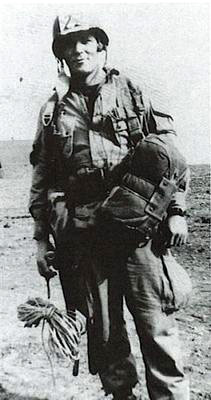
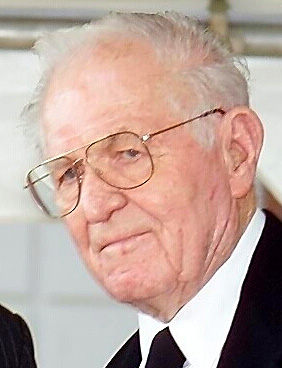
Dick Winters is gone, and I never did shake his hand…

Dick Winters has died. “Captain Winters,” I think of him as, from the time when he commanded Easy Company of the 506th PIR,101st Airborne Division — although on D-Day, the day on which his actions should have earned the Congressional Medal of Honor, he was still a lieutenant, and by the time the company had captured Hitler’s Eagle’s Nest he was a major, and battalion commander.

Yes, the guy who was the main character in “Band of Brothers.”

He was a peaceful, modest man who, when war was thrust upon him and the rest of the world, discovered talents and personal resources that would otherwise likely have gone unsuspected. The video clips above and below, with actor Damien Lewis in the role of Winters, perfectly illustrates the qualities that Stephen Ambrose described in the book that inspired the series: Mainly, an uncanny coolness under fire, and certain, unhesitating knowledge of exactly what to do in a given situation — knowledge which he quickly and effectively communicated to his men in real time, with a minimum of fuss. The video clips show how Winters led a tiny remnant of Easy Company (of which he was only acting commander, since the CO was missing, later found to be dead) to take several well-defended, entrenched guns trained on Utah Beach — saving untold numbers of GIs — with only a couple of casualties among his own men. This was on his very first day in combat. The action is used today at West Point as an illustration of how to take a fixed position.

This guy has long been associated in my mind with the definition of the word, “hero.”

In later years, when he was interviewed in old age about the things that happened in 1944-45, you could still see the manner of man he was. His manner was that of a man you’d be confident to follow, a man you’d want to follow if you had to go to war, while at the same time being perfectly modest and soft-spoken about it. And on this link you’ll see what some of his men thought of him.

As I wrote about him last year:

Over the last few years I had occasion to visit central Pennsylvania multiple times, while my daughter was attending a ballet school up there. Almost every time I went there, I thought about going over to Hershey to try to talk to Dick Winters, the legendary commander of Easy Company of the 506th Parachute Infantry Regiment in the 101st Airborne Division during World War II. He was the leader — one of several leaders, but the one everyone remembers as the best — of the company immortalized in Stephen Ambrose’s book Band of Brothers, and the HBO series of the same name (the best series ever made for television).

But I never did. As much as I wanted just to meet him, to shake his hand once, I never did. And there’s a reason for that. A little while ago, I was reminded of that reason. The History Channel showed a special about D-Day, and one of the narrators was Winters, speaking on camera about 60 years after the events. He spoke in that calm, understated way he’s always had about his heroics that day — he should have received the Medal of Honor for taking out those 105mm pieces aimed at Utah Beach, but an arbitrary cap of one per division had been place on them, so he “only” received the Distinguished Service Cross.

Then, he got a little choked up about what he did that night, having been up for two days, and fighting since midnight. He got down on his knees and thanked God for getting him through that day. Then he promised that, if only he could get home again, he would find a quiet place to live, and live out the rest of his life in peace.

I figure a guy who’s done what he did — that day and during the months after, through the fighting around Bastogne and beyond into Hitler’s Eagle’s Nest itself — deserved to get his wish. He should be left in peace, and not bothered by me or anyone else.

So I’ve never tried to interview him.

Well, I never did impose upon him to get that handshake, even though I’ve been to his general neighborhood again since I wrote that. And that causes me now a mixture of satisfaction and regret.

Actually, Obama just thinks the U.S. is “special”

When Twitter brought this question to my attention — “Poll: Does Obama think U.S. is exceptional?” — I thought it odd: Here’s more:

Washington (CNN) – The vast majority of Americans see the United States as exceptional, according to a new national poll. But a Gallup poll released Wednesday also indicates that nearly four in ten say they believe President Barack Obama doesn’t hold this same view.

Eight out of ten people questioned in the survey say that based on the country’s history and constitution, the U.S. has a unique character that makes it the greatest country in the world. The poll suggests there’s no partisan divide on the question, with 73 percent of Democrats, 77 percent of independents and 91 percent of Republicans in agreement.

According to the poll, 58 percent say Obama believes that the U.S. is exceptional, with 37 percent saying they disagree. But the survey indicates Americans are less likely to believe Obama holds this view than they are to think the same about Ronald Reagan (86 percent), Bill Clinton (77 percent), and George W. Bush (74 percent).

The poll does suggest Democrats and Republicans don’t see eye to eye, with 83 percent of Democrats and 34 percent of Republicans questioned saying Obama believes the country is exceptional….

First of all, why do a poll? If you want to know what Barack Obama thinks about America, ask Obama. He’ll tell you.

But of course, that’s not what this is about. This is about how the American people feel about how Obama feels about America. And you know how I feel about how Gallup feels about how voters feel about how, etc.? Well, I’ll tell ya — I’m getting pretty sick and tired of all politics in America, from the Beltway to the SC election for governor down to county council, being about how people feel about Obama.

This is beyond ridiculous.

Of course, it may be true: Maybe the president doesn’t think we’re exceptional. Maybe he just thinks we’re “special.” And who could blame him?

John Parish, dean of Tennessee journalism

That’s John in the foreground, preparing to take a picture at The Jackson Sun reunion of 2005.

Today, my friend Kevin Dietrich brought this obit to my attention:

Mr. John M. Parish, age 87, retired newsman and former press secretary to Tennessee Gov. Lamar Alexander, died December 10, 2010….

I had not read it, but I must have received a telepathic message of some sort. Because one day this past week, for no reason, I thought of this unfinished blog post from June 28, 2007. I had started writing it after reading that David Broder piece that it mentions at the start. Then after typing away for awhile, I got sidetracked and never finished it.

But for some reason the other day, I got to thinking about John Parish. And I thought, one of these days I’ll finish it. I had no idea as I thought that that “the Bear” was already gone.

Here’s my belated remembrance of John Parish. Tennessee journalism is unlikely to see his like again…

David Broder’s column on today’s op-ed page begins with this thought:

Years ago, Lamar Alexander, the senator from Tennessee, told me of a lesson he had learned as a young man on the White House staff: It is always useful for the president to have at least one aide who has had a successful career already, who does not need the job, and therefore can offer candid advice. When he was governor of Tennessee, Alexander made sure he had such a man on his staff.

That brought back the memories, even more than seeing fellow Memphis State grad Fred Thompson yesterday.

The man on Gov. Lamar Alexander’s staff who best fits that description is John “The Bear” Parish, who became the new governor’s press secretary in January 1979, after having long established himself as the Dean of Tennessee political journalism. It was a very unusual appointment, since new governors seldom turn to such people. (Although Mark Sanford did in picking Fred Carter as his chief of staff. Mr. Carter left the office early in the Sanford administration to return to his job as president of Francis Marion University in Florence. Just as well, since as near as I could tell the governor wouldn’t listen to him anyway.)

Unlike Lee Bandy, John did not work for the state’s largest newspaper. He wrote for The Jackson Sun. The photograph above is from a 2005 reunion of folks who worked at that paper when I was there, from 1975-85. John is stepping forward to take a picture on his own camera. (That’s me in the striped shirt just over his shoulder. To my left is Richard Crowson, now editorial cartoonist with The Wichita Eagle. [But, since I wrote this, laid off like me.] On the other side of Richard is Mark Humphrey, the photographer who took the shot of me at the bottom of this post back when we were covering the Iowa Caucuses in 1980, and who is now with The Associated Press in Nashville. To my right is Bob Lewis, the former center for the Ole Miss football team who is now with the AP in Richmond. Of course, I could tell a story about each person in the picture, but what do you care, right? Well, it’s my blog, so I’ll wax nostalgic if I choose.)

John was a legend, a uniquely gifted, hard-working journalist who made a big impression on me at an early point in my own career. Frankly, I have never seen his like since. A few points from the rich mine of Parish lore:

  • He got his nickname, “The Bear,” from his days as The Sun‘s city editor, which predates me by a year or two. Office scuttlebutt was that John had been a bit too gruff to all the newbies hired right out of the University of Missouri’s excellent journalism program shortly after the Des Moines Register Co. bought the paper in the early ’70s. By the time I was there, he had definitely found his niche as the associate editor at the newspaper, and the paper was making the most of his exhaustive knowledge of state politics.
  • He wrote four or five news stories in the course of a typical day, plus — and this is the amazing thing — a daily political column on the editorial page.
  • Despite that volume of copy, he never made mistakes. I’m not talking about not having to run a correction in the paper. His copy was the cleanest I’ve ever seen. And in those days, nobody had clean copy. We’re talking IBM Selectric typewriters, not word processors. Not one strikeout or correction. After the first couple of times I read (I had joined the paper as a copy editor) raw copy from John, I asked someone whether he wrote rough drafts first. No. And there was no way he could have, producing a volume like that.
  • He couldn’t type, at least not in the way it’s taught at school. He produced all of that copy hunting and pecking, at blinding speed. It sounded like a machine gun coming from his office (John was the only person in the newsroom who had an office other than the executive editor and managing editor).
  • Sen. Thompson made a passing reference Wednesday to the case that launched his screen career — he represented a whistle-blower who helped bring down the fabulously corrupt Gov. Ray Blanton. But before, during and after that incident, the bane of the Blanton administration was John Parish. Day after day, outrage after outrage, John documented the governor’s gross abuse of power.
  • John’s wife worked for a state agency. The governor went after her to get even with John. He didn’t fire her; he transferred her job to the other end of the state. Her new commute would have been a little less than Tennessee’s full 450-mile length, but not by all that much. So she had to resign. But that didn’t stop John. Nothing stopped John.
  • In 1978, I was working in The Sun‘s Gibson County Bureau — quite a responsibility for a kid three years out of school. I covered everything that happened in several counties, including the one where The Sun had its second-highest circulation, by myself. (Well, actually, I had a secretary, which was my first taste of management.) But what I really wanted to do was cover state politics. That year I got my first chance to do that. Because of John and the high standard he set, the paper — small as it was — covered politics in a big way. The last month of the general election, we had a reporter full-time with each of the gubernatorial (and if I’m remembering correctly, U.S. senatorial) candidates. John no doubt would have preferred to be in four places at once, but since he couldn’t, that meant a big opportunity for me and a couple of other junior people. “Full-time” coverage, by the way, means traveling with them on the plane, in the car, eating meals with them — a kind of up-close-and-personal man-to-man coverage that is unimaginable today (papers don’t spend the money, and candidates don’t let the press that close). 20 hour days, because after the candidates were done, we had to write. Calling in stories and updates to stories from the road (in those days before laptops, we dictated). I spent a week each with Alexander and Jake Butcher, and I learned a great deal. The height of the experience came when John praised one of the stories I wrote from that time (and it WAS a good one).
  • Another point that year, I finagled the chance to help John cover the Democratic Mid-Term National Convention in Memphis. A conversation we had during that has stuck with me. I mentioned that some of our colleagues were in Nashville that weekend to pick up their awards at the annual state press association convention. I may have expressed my disappointment that I couldn’t be there (although I definitely preferred being at the Memphis event, working). John harrumphed. I asked what was wrong. He said he had no use for such awards, or the approval of other journalists. He only cared about the approval of the readers, and the best award they could give him was to buy the paper and read what he wrote with interest. It amuses me now to think how shocked I was at the time at this attitude. Readers? What did readers know? They weren’t professional journalists! They didn’t know what made a story good! (Mind you, I was not long out of journalism school, which fosters such silly, insular notions.) This was the first time I ever distrusted John’s judgment. But of course, he was completely and absolutely right.
  • Of course, Lamar Alexander won that gubernatorial election we had been covering. At Christmastime of that year, I brought my family to South Carolina for the holidays. When I got back, I got a call from my editor, who told me the stunning news — John Parish was leaving journalism to be Alexander’s press secretary. It was a really unusual move for someone of his advanced skill, experience and stature. I don’t remember ever hearing John explaining in my hearing why he made this move. But I guess he wanted to make a difference, and actually help run government instead of just writing about it. Whatever the reason, I immediately spoke up — I wanted the job covering Nashville for the paper. My editor said, “I sort of thought you would.” So I took my shot, went through the interviews. But… I didn’t get it. It went to Jeff Wilson instead (who was about the only person at the paper who maybe wanted it more than I did). Fortunately, my stock was high enough with our executive editor that he did an extraordinary thing, rather than lose me: He created a special position for me. He brought me in from the bureau and basically told me to go out and write about whatever I wanted to. I was my own assigning editor, and went covered every special assignment that interested me, from Tennessee to the Iowa Caucuses at the end of 1979. That was during the week. On Saturdays I became the editor in charge of the paper. This led to my giving up reporting for good and becoming the paper’s news editor (what most papers would call a metro editor, the editor supervising all the news reporters) the following year.

That editor gig worked out well, there and at two other papers, until The State decided it didn’t need me any more last year. In the last years, especially after Lee Bandy retired, I got to thinking that I was finally getting there, I was finally on the verge of becoming that gray eminence that would make me to SC politics what John Parish was to Tennessee’s. But that was wishful thinking. I never came close to being John Parish. No one could.

Another shot from the reunion. John, at right, is chatting with Kevin Barnard of The Tampa Tribune and Mark Humphrey. Mary Reed and Joel Wood are in the background.

Lie of the year: “Gummint takeover of health care”

A Tweet from the WashPost brings to my attention this item:

PolitiFact’s Lie of the Year: ‘A government takeover of health care’

By Bill Adair, Angie Drobnic Holan
Published on Thursday, December 16th, 2010 at 11:30 p.m.

In the spring of 2009, a Republican strategist settled on a brilliant and powerful attack line for President Barack Obama’s ambitious plan to overhaul America’s health insurance system. Frank Luntz, a consultant famous for his phraseology, urged GOP leaders to call it a “government takeover.”

“Takeovers are like coups,” Luntz wrote in a 28-page memo. “They both lead to dictators and a loss of freedom.”

The line stuck. By the time the health care bill was headed toward passage in early 2010, Obama and congressional Democrats had sanded down their program, dropping the “public option” concept that was derided as too much government intrusion. The law passed in March, with new regulations, but no government-run plan.

But as Republicans smelled serious opportunity in the midterm elections, they didn’t let facts get in the way of a great punchline. And few in the press challenged their frequent assertion that under Obama, the government was going to take over the health care industry.

PolitiFact editors and reporters have chosen “government takeover of health care” as the 2010 Lie of the Year. Uttered by dozens of politicians and pundits, it played an important role in shaping public opinion about the health care plan and was a significant factor in the Democrats’ shellacking in the November elections….

And indeed, it’s tough to think of a bigger lie recently propagated than the idea of the lame, tepid, timid health care bill that Dems crammed through over Repubs’ kicking and screaming was anything in the same universe as a government takeover of anything.

If only it were. That is, if only it were a takeover, not of “health care,” but of the mechanism for paying for it. A few minutes ago on the radio, I heard ol’ Henry McMaster rumbling in that distinctive old-Columbia drawl of his about that mean awful nasty mandate, and again found myself wondering how he or anyone can even begin to imagine that we could address health care expense in any meaningful way without a mandate of some kind. Not THIS mandate, but a real one — a mandate for all of us to be in the same system, the same risk pool. Nothing else would really work.

I experienced actual gummint-run health care when I was a kid, because my Dad was in the Navy. Navy doctors, Navy hospitals. And let me tell you something: It was great. My Dad devoted his career to his country, frequently (at sea, and in the Rung Sat Special Zone of Vietnam with the river patrol boats) putting his life on the line. And in return, my family’s health care was taken care of. Made all the sense in the world to me. Way I see it, we should all pay into the system one way or another — for most of us, through taxes or premiums or whatever you choose to call them — and then everybody’s in the pool and we achieve maximum economies of scale.

But essentially, even that wouldn’t be a gummint-run health-care system, but a government-run (actually, I don’t care who runs it, as long as we’re all in it and nobody’s adding cost by building profit into the transaction, and the way you usually accomplish that is with a public approach) medical insurance program.

But we never even considered THAT. No one dared, from the beginning of the debate, breathe the two words that should have been nonnegotiable — “single payer.” Which is idiotic. No, we started with a premise far short of that, and negotiated farther and farther away from it until we ended up with something that bore no resemblance to anything even within that universe.

And still, people like Joe Wilson went around saying “government takeover of health care” as if the words coming out of their mouths bore some relationship to reality.

Talk about a big lie. Yeah, you lie, Joe. Whether you understand that you’re doing that or not. Even if you believe it, which you most likely do.

But I find myself wondering — when he said it, did anyone actually believe it? I mean, besides Joe? I find that hard to fathom, if anyone did…

The Congress that wasn’t going to get anything done (until Obama made them do it)

Seems like everything I read over the last few months, before and after the election, was that this lame-duck Congress wouldn’t accomplish squat before its well-deserved demise. And when it DID talk about getting anything done, its sense of priorities was bizarre. For instance, just the other day on the radio I heard some Democratic leader (and I’m totally drawing a blank on who it was, which disappoints me, because it means I don’t get to castigate him or her by name) talking about how the Congress had Two Big Things to act on before quitting — the Obama/GOP tax cut deal, and DADT. Really. I’m serious. A bill with huge, systemic impact on our economy at a moment when we’re desperately trying to climb out of the hole the Great Recession put us in was mentioned in the same breath, and as being equally important to, a Kulturkampf wish list item. Really. This is the way these people think.

Where was I? Oh, yeah, they weren’t going to get anything done.

Well, today they passed this:

Congress passes extension of Bush-era tax cuts

Washington Post Staff Writer
Friday, December 17, 2010; 12:40 AMCongress approved the most significant tax bill in nearly a decade late Thursday, overcoming liberal resistance to continue for two more years tax breaks enacted under president George W. Bush and to provide a fresh boost of federal support to the tepid economic recovery….

How about that?

Of course, it wasn’t actually the Congress that made this happen. President Obama did, by very astutely making a deal with Republicans for something they wanted in order to get something he wanted while he still could.

Which is interesting. I mean, set aside the rather obvious reasons to worry about this bill. This actual effective action by the POTUS could have implications in all sorts of areas. This may be the clearest, most overt case since entering office in which Barack Obama has clearly stepped out and led, without deferring to the ditherers in his own party (as he so wrongly did on health care) or anyone else.

He showed, you know, leadership. The thing we elect presidents to show. This is important. It is perhaps even promising. Basically, what I’m saying here is that what Obama pulled off is quite the opposite of conventional wisdom among some on the left and the right, summarized in this cartoon by my buddy Robert.

Oh, by the way, no word on DADT. At least, I don’t think so. Maybe you’d better check with someone who is actually into following that…

Clyburn and DeMint: Two peas, one pod

Yesterday, after reading about the split between Lindsey Graham and Jim DeMint on the tax cut deal, I Tweeted this:

So I see Jim DeMint is siding with the most liberal Democrats on the tax cut deal. No surprise there: Extremes are extremes…

Today, I get this release from Jim Clyburn:

WASHINGTON, DC – House Majority Whip James E. Clyburn (D-SC) released the following statement on the vote before the House on Obama’s tax cut package.

“While I am pleased that the tax package approved by the House tonight extends important tax cuts to middle-income families and unemployment insurance for millions of Americans,  adding $25 billion to the deficit to give a major tax benefit to the estates of the richest 6,600 families in America made it impossible for me to vote for the final package.   This measure does not create a single job or stimulate the economy in any way.

‘I hope that as we move forward and our economy continues to recover, we will restore some fairness to the tax code and reduce the burden we are putting on future generations.”

As I said…

Lots of people go through life thinking of Republicans as “the other side” if they are Democrats, and vice versa. Me, I tend to think of the ideological True Believers as the “other side,” the folks with whom I tend to have a knee-jerk disagreement.

The fact that DeMint and Clyburn are both against this deal that President Obama made with (some) Republicans makes me predisposed, on a gut level, to like it.

Of course, that is in some ways irrational, akin to a partisan response. Only with me, I’m being reflexively, emotionally UnPartisan. There is much to dislike in this deal. Such as what? Well, take a look at the national debt. How am I supposed to feel great about a “compromise” that means MORE spending and LESS tax revenue (unless, of course, it has a stimulative effect on the economy and leads to MORE revenue, which I sincerely doubt at this point, since we’re mainly talking about simply continuing current practices)? Not that I’m against continuing unemployment benefits, or against continuing the tax cuts (and I truly could not care less that rich people also get the tax cuts — this obsession some people have with what other people “get” is most unseemly). It’s just the sum total effect that concerns me. (To paraphrase something Tom Friedman famously said about George W. Bush, Just because the Tea Party believes it doesn’t mean that it’s not true. The “it” here being the idea that ever-deeper deficit spending is something to worry about.)

But when you have the pragmatic Obama on one side of an issue, and DeMint and Clyburn locking arms on the other side, my gut pushes me to go with Obama. It’s just a little quirk I have.

Scotland Yard always gets its man, but sometimes has to let him go

At least, that was the word earlier today, although the actual release of Julian Assange, the accused sex offender and would-be saboteur of U.S. security, has now been delayed pending a hearing.

From the NYT:

LONDON — After a week in detention facing possible extradition, Julian Assange, the founder of the WikiLeaks antisecrecy group, was ordered released on $310,000 bail by a court on Tuesday as he challenges a Swedish prosecutor’s demand that he return to Stockholm for questioning about alleged sex offenses.

However, Mr. Assange remained in custody pending a hearing on an appeal by the prosecutor, which would take place within the next 48 hours.

In granting bail, Judge Howard Riddle ordered that Mr. Assange appear again in court on Jan. 11. He also said that between then and now he must reside at Ellingham Hall, a Georgian mansion in Bungay, in eastern England, owned by Vaughan Smith, the founder of a club for journalists. Mr. Assange must spend every night at the mansion and will be electronically tagged so the police can track his movements, the judge said…

So even when he DOES walk out, it’s sort of a tag-and-release situation. Which shows the Brits haven’t lost their minds. Good to know, since I’m about to go over there. If I DO run into the guy, though, I’ll let you know.

Oh, and about those sex charges — as muddled a mess as any he-said-she-said (and she said, too) you’re likely to run across. Whatever the facts, Mr. Assange seems to fall somewhat short of a paragon (even if you believe his defense):

Speaking about the case in recent weeks, Mr. Assange has said that he had consensual relations with two young Swedish women. He said he met them during a trip to Sweden in August that he made in a bid to establish a haven for himself and WikiLeaks under Sweden’s broad laws protecting press freedoms.

The charges relate to the question of whether these encounters ceased to be consensual when a condom was no longer being used. Sweden’s request for extradition is designed to enable prosecutors to question Mr. Assange about charges of “rape, sexual molestation and unlawful coercion.”…

In a packed courtroom hearing lasting nearly an hour a week ago, Gemma Lindfield, a lawyer acting for the Swedish government, outlined some of the detailed allegations against Mr. Assange made by the Swedish women, both WikiLeaks volunteers. They involved three incidents, including one in which Mr. Assange was alleged to have had unprotected sex with one of his accusers while she was asleep.

But that’s not why we’re talking about this guy, is it?

Oh, and about the NYT’s blithe assertion that WikiLeaks is an “antisecrecy group”… I read an interesting opinion piece the other day that argued it is pretty much the opposite of being a champion of transparency — and backed up the argument fairly well:

Whatever else WikiLeaks founder Julian Assange has accomplished, he’s ended the era of innocent optimism about the Web. As wiki innovator Larry Sanger put it in a message to WikiLeaks, “Speaking as Wikipedia’s co-founder, I consider you enemies of the U.S.—not just the government, but the people.”

The irony is that WikiLeaks’ use of technology to post confidential U.S. government documents will certainly result in a less free flow of information. The outrage is that this is Mr. Assange’s express intention….

Mr. Assange is misunderstood in the media and among digirati as an advocate of transparency. Instead, this battening down of the information hatches by the U.S. is precisely his goal. The reason he launched WikiLeaks is not that he’s a whistleblower—there’s no wrongdoing inherent in diplomatic cables—but because he hopes to hobble the U.S., which according to his underreported philosophy can best be done if officials lose access to a free flow of information.

In 2006, Mr. Assange wrote a pair of essays, “State and Terrorist Conspiracies” and “Conspiracy as Governance.” He sees the U.S. as an authoritarian conspiracy. “To radically shift regime behavior we must think clearly and boldly for if we have learned anything, it is that regimes do not want to be changed,” he writes. “Conspiracies take information about the world in which they operate,” he writes, and “pass it around the conspirators and then act on the result.”

His central plan is that leaks will restrict the flow of information among officials—”conspirators” in his view—making government less effective. Or, as Mr. Assange puts it, “We can marginalize a conspiracy’s ability to act by decreasing total conspiratorial power until it is no longer able to understand, and hence respond effectively to its environment. . . . An authoritarian conspiracy that cannot think efficiently cannot act to preserve itself.”

As I said earlier today to a friend over on Facebook:

Assange and his crowd are not journalists. They’re not the vaunted Fourth Estate, playing a role in stimulating political debate over a national issue. They are foreign political activists who intend to harm the security of the United States. Their goal is to shut down information-sharing among our agencies, from Defense to State to Homeland Security to CIA and so forth, so that they will be less effective. To return us to a pre-9/11 state — you know, back when one agency knew the 9/11 attackers were in the country, and another agency knew why they were dangerous, but they weren’t talking to each other. (An argument can be made on security grounds for keeping information in such silos, but it’s an argument that you can go around and around on — and Assange is not a legitimate participant in that debate.) The goal of WikiLeaks is not transparency, but the opposite — they want to shut down information-sharing.

So why NOT repeal the 17th Amendment?

So this morning Stan Dubinsky brought my attention to this piece by Christopher Hitchens, which in turn led me to this piece by Ross Douthat, in which he is defending the Tea Party from the charge of being a reincarnation of the John Birch Society thusly:

These parallels are real. But there’s a crucial difference. The Birchers only had a crackpot message; they never found a mainstream one. The Tea Party marries fringe concerns (repeal the 17th Amendment!) to a timely, responsible-seeming message about spending and deficits. Which is why, for now at least, it’s winning over independents in a way that movements like the Birchers rarely did…

I’m with Hitchens in that I grow weary of normal conservatives making excuses for the Tea Party. But that’s not why I bring this up. I bring it up to ask, why would repealing the 17th Amendment be considered a “fringe concern”? I actually consider it one of the more defensible TP positions. (I suspect that the TPers hold this position for reasons different from my own, but why be overcritical of a gift horse?)

The Framers created the House and Senate to be very different institutions, on a fundamental level. Actually, on a number of fundamental levels.

First, they wanted the constituencies to be different. That’s an essential element in making checks and balances work. The president is elected by the electoral college, which in turn is more or less selected by popular vote (although not originally, but hey, one fight at a time), and can only serve four years at a time (let’s also set aside the newfangled term limit). Judges are chosen by the president, with advice and consent of the Senate. The House of Representatives is the People’s House, and consists of directly, popularly elected delegates who have to run for election every five minutes (or two years, which amounts to the same thing), and are therefore particularly attuned to popular whims, ripples and twitches, in real time. Senators, by contrast, are supposed to be somewhat above that fray, and are supposed to represent STATES, not groups of individual voters.

Also, in connection with the idea that senators represent states rather than aggregations of individuals, each state has two, and only two. The idea being that we have the House for the sake of more populous states, and the senate to even things out a bit for the smallest states. At least, thank goodness, in all the “reforms” since the late 18th century, we haven’t done to the U.S. Senate what we’ve done here in South Carolina — utterly destroying the very notion of the senate as a thing apart by imposing single-member districts on it, just as we did to the House.

Nevertheless, what we have done is turn the U.S. Senate into another House, only with longer terms. Which sort of defeats the purpose of a bicameral legislature.

Yeah, I know the reasons why we made the change, and they will be shouted at me in response to this — but they are all arguments more suitable to a democracy than a republic. And the latter is what our founders rightly intended.

And… I also understand by “serious” conservatives would regard this as a “fringe concern,” so perhaps I was being a bit disingenuous above. It’s … esoteric. And for people who have lived their whole lives with the present state of affairs, there seems to be something actually unAmerican about letting legislatures choose senators. And I’m sure that I’ll hear emotional arguments that unfairly conflate the original arrangement with slavery. But what it actually was was an elegant part of a delicate balance, and that balance has been lost, as every member of both of the political branches runs about with his wet finger in the air.

Anyway, I raise the question in case someone has an argument, pro or con, that I haven’t heard yet. And also because, you know, I can’t leave well enough alone…

Graham: Change of mind or change of emphasis?

On the one hand, on the other hand... Lindsey Graham, 2007 file photo. / by Brad Warthen

Seeing the story about Lindsey Graham and immigration in The Stet Peppah today reminded me of this release I got from the senator yesterday:

“Illegal immigration is a nightmare for America.  Giving a pathway to citizenship without first securing the border is an inducement to encourage more illegal immigration.  This is nothing more than a political game by the Democrats to try and drive a wedge between the Hispanic community and Republicans.

“Today’s cynical vote on the DREAM Act, along with a series of other votes, convinces me that the Democratic leadership in the Senate does not get the message from the last election.  They care more about politics than policy in a variety of areas, including illegal immigration.”

Now truth be told, the senator isn’t really being two-faced on this. Only if you believe in the misrepresentation of his critics do you think he’s changed his mind on the overall issue. He ALWAYS wanted to secure the border. To him and John McCain, this was first and foremost a national security issue — you need to know who’s in your country. That’s why you would both secure the borders and regularize the people who have already gotten in. Big Brother (and you know I love Big Brother) doesn’t need folks running around off the grid.

So basically what we have here is a change of emphasis. And that change really started as soon as 2007, when the debate over the previous attempt at serious, comprehensive immigration reform was still going on.

The one thing that Sen. Graham has said lately that really seems a departure for him was when he went out of his way to say that children born here to illegal parents shouldn’t be citizens. If anything indicates that he’s running scared and trying to head off a primary challenge from Mark Sanford or someone four years from now, that would be it. But senators, particularly this one, don’t run that scared that early. There are other explanations. And next time I speak with the senator, I hope to hear it. I doubt I’ll hear it through the MSM between now and then.

I’d like to see Obama COMMIT to something

My friends at The State were right today to praise the fact that President Obama is working with Republicans on a compromise on taxes and unemployment benefits. But they were equally right to be unenthusiastic about the deal itself.

On the one hand, it’s good that we’re not going to see our economy further crippled by untimely tax increases (even if all they are are restorations to pre-Bush levels). And it’s good that the jobless needing those benefits will have them. (At least, that these things will happen if this deal gets through Congress.) On the other, we’re looking at a deal that embodies some of the worst deficit-ballooning values of both parties: tax cuts for the Republicans, more spending for the Democrats.

It’s tragic, and bodes very ill for our country, that this flawed compromise stirs such anger on both partisan extremes: Some Democrats are beside themselves at this “betrayal” by the president. (Which bemuses me — as y’all know, I have trouble understanding how people get so EMOTIONAL about such a dull, gray topic as taxes, whether it’s the rantings of the Tea Partiers who don’t want to pay them, especially if the dough goes to the “undeserving poor,” or the ravings of the liberal class warriors who don’t want “the undeserving rich” to get any breaks. Why not save that passion for something that really matters?) Meanwhile, people on the right — such as Daniel Henninger in the WSJ today — chide Obama for not going far enough on taxes.

In this particular case, I think the folks on the right have a bit of a point (some of them — I have no patience for DeMint demanding the tax cuts and fighting the spending part), but it doesn’t have to do with taxes — it has to do with the president’s overall approach to leadership, and a flaw I see in it. Henninger complains that these tax cut extensions are unlikely to get businesses to go out and invest and create jobs, since the president threatens to eliminate the cuts a year or two down the line.

That actually makes sense (even if it does occur in a column redolent with offensive right-wing attitudes — he sneers at Ma Joad in “The Grapes of Wrath”), and I see in it echoes of the president’s flawed approach in another important arena — Afghanistan.

Here’s the thing: If keeping these tax cuts is the right thing to do to help our economy, then they should be kept in place indefinitely — or “permanently,” as the Republicans say. Of course, there is nothing permanent in government. The next Congress, or the one after that, can raise taxes through the roof if it chooses.

The problem, in other words, isn’t that the cuts won’t be permanent, because nothing is in politics. The problem is that the president is, on the front end, negating whatever beneficial effect might be gained from extending the cuts by coming out and promising that they won’t last.

One of the big reasons why the economy hasn’t improved faster than it has this year is that businesses, small and large, have not known what to expect from the recent election in terms of future tax policy with these tax cuts expiring. People were waiting to see what would happen on taxes before taking investment risks. (Even if the liberal Democrats were to eliminate the cuts, knowing that would be better than the uncertainty.) And even with the election over, the future has remained murky. The best thing about such a deal between the president and the GOP should be that it wipes away those clouds and provides clarity.

But the president negates that by saying yes, we’ll keep the cuts in place, but only for a short time. You may look forward now to a time when there are unspecified increases. And Henninger has a point when he says:

But if an angry, let-me-be-clear Barack Obama just looked into the cameras and said he’s coming to get you in two years, what rational economic choice would you make? Spend the profit or gains 2011 might produce on new workers, or bury any new income in the backyard until the 2012 presidential clouds clear?

Ditto with the Taliban and al Qaeda in Afghanistan and Pakistan. What good is it to say we’re going to stay and fight NOW if at the same time you give a future date when you’re going to leave (or, as the president has said, start leaving)? What are they going to do? They’re going to sit tight and wait for you to leave on schedule.  (And yes, pragmatic people may take comfort from the fact that the president has allowed himself lots of wiggle-room to stay there — but the harm has been done by the announcement of the intention to leave). Every effort should be taken to make one’s adversaries believe you’re willing to fight them forever (even if you aren’t), if you ever hope to achieve anything by fighting.

The problem in both cases is trying to have one’s cake and eat it, too — making a deal with the Republicans without one’s base getting too mad at you, or maintain our security commitment without (here comes that base thing again) freaking out the anti-war faction too much. What this ignores is that out in the REAL world, as opposed to the one where the parties play partisan tit-for-tat games, real people react in ways that matter to your policy moves: Business people continue to sit rather than creating jobs; the Taliban waits you out while your allies move away from you because they know they have to live there when you’re gone.

What would be great would be if Barack Obama should commit for the duration to something. He should have committed to a single-payer approach to health care from the beginning. Going in with a compromise meant that we got this mish-mash that health care “reform” turned into. He should commit to a plan on the economy, and not undermine it by saying he’s only going to do it for a little while. And most of all, he should commit to Afghanistan, and not try to mollify his base with dangerous deadlines.

What the president does, and even says, matters. He needs to recognize that, pick a direction, and stick with it long enough to have a salutary effect. Whatever their ideology, that’s what leaders do. And we could use some leadership.

Green Zone: good flick, if you take it for what it is

Just in case I haven’t provoked my anti-war friends on the blog enough lately…

I saw”Green Zone” over the weekend, and it was a corking good thriller. Just as long as you don’t take the premise seriously.

No, wait — I need to refine that: As long as you don’t take too seriously the one spectacular conceit that does the most to drive the action, which is this… There’s this Iraqi general who is sort of the movie’s Great White Whale, only there’s no one Ahab — EVERY character is frantically pursuing him, with each character having a different motive for doing so. Matt Damon’s character wants him because he thinks he knows where the WMD are, and it’s his (Damon’s) job to find them  (he plays a chief warrant officer named Miller). An idealistic one-legged Iraqi (his other leg is in Iran) wants to find him because of what the general and his ilk have done to his country. A CIA officer wants to find him because he believes the Army is the key to preventing the insurgency. A Wall Street Journal reporter wants to find him because he is the mysterious source Magellan that a Pentagon official has told her has provided intel on where the WMD are — reports that she has passed on uncritically in the paper. The Pentagon official, played by Greg Kinnear, want to find him and kill him before he tells everybody the truth.

What truth? This “truth” (SPOILER ALERT!): We eventually learn that before the war, Poundstone (Kinnear’s character) had secretly met the general in Jordan, where the general told him there WERE no WMD. And Poundstone returned to Washington and told everyone that the general had told him the exact opposite, even telling him where to find the weapons. So we invade Iraq, and Miller’s unit risks their lives going to these supposed WMD sites and coming up empty.

This makes Poundstone the Great White Whale of all those antiwar folks who believe “Bush lied” — the perfect representation of the supposed great misrepresentation. He, Poundstone, KNEW the truth and deliberately lied. No mere wishful thinking. No making a mistake (the mistake made by pretty much the whole world — the debate about the invasion wasn’t over whether the WMD existed, but about the best way to get them out of Saddam’s hands). A big, fat, montrous lie.

Which, of course, didn’t happen. If something like that had happened, someone of the millions of people who would love to find out such a thing and tell the world — from the antiwar Democrats who now control our government and have access to all its secrets, to Julian Assange, to the director of this movie — would have let us know by now.

So…  the bad news is that people will see Green Zone and think that such a thing happened. And that’s bad even if you are deeply opposed to the war and want to avoid such conflicts in the future, because it keeps you from confronting whatever REALLY happened and realistically assessing how to keep it from happening again. Politically attractive fantasies are just dangerous all around — as the antiwar folks would no doubt say about the delusion that there were WMD.

The good news, though, is that it’s a great action flick. And the other questions the movie raises — including some serious ones that deserve answers — are intelligently, provocatively and even realistically portrayed. Where the movie falls down is wherever it touches upon the Poundstone character. And I mean this in an artistic, esthetic sense as well as political: Kinnear’s character is cartoonish, the portayal more suited to low farce than to serious drama. When he’s on screen, the quality drops. NO ONE would believe this guy; if he told you your mother loved you, you’d say “What’s his angle?” He’s just ridiculous. He might as well be wearing a black cape, stovepipe hat and Snidely Whiplash mustache.

Everybody else is credible; everybody else feels real. While comparisons to the Bourne movies are inevitable (with Damon and the director of the second and third films in that trilogy on board), this film is far more believable, in that there are no superheroes like Bourne in it. (The flaw that it shares with those films is the aforementioned fantasy plotline about a vicious government conspiracy — a great plot device, as long as you don’t start thinking stuff like that really happens.) In fact, the closest thing to Jason Bourne is the Special Forces guy who promptly beats the stuffing out of Damon’s character when he fails to give him what he’s after. And that violence is realistic, not balletic.

Other things that are good, and deserve more explication, are such things as the issue of whether we should have worked with the Iraqi army rather than banishing it into insurgency. If the director wanted a political point, that would have been an excellent one to stick with.

Perhaps the most provocative questions raised surround the frantically earnest one-legged Iraqi, “Freddy.” He tries to approach harried soldiers to give them critical information, and gets knocked around for his trouble. He is forced into suicidally dangerous (for a guy who has to live there) situations in order to help the Americans. In the end, (MAJOR SPOILER ALERT) he raises the film’s most provocative question when he takes matters into his own hands with deadly force. Damon’s character, persuaded by the CIA that the general must be found so we can work with him to prevent the insurgency (I REALLY MEAN IT — MAJOR SPOILER ALERT!), manages to get to him before the Special Forces guys who have been sent to kill him. You think Damon has won the day. Then out of nowhere comes Freddy with a pistol and blows the general away. Freddy then says to Damon — and I don’t have it in front of me, so this might not be verbatim — “YOU don’t get to decide what happens here.”

If you want a good antiwar message, one you can chew over productively, that would be it. But the whole Poundstone thing is offensively ridiculous. You want to talk about a Big Lie, suggesting that anything that clearly duplicitous happened qualifies.

That’s particularly insidious since we are told this story is based in nonfiction. Oh, and if you don’t want to believe me, believe Richard “Monty” Gonzales, upon whom Damon’s character Miller was based, and who acted as technical adviser on the film:

“Green Zone” contains several messages, an unavoidable consequence of making a film of this genre. Critical blunders preceding the invasion, chiefly the bad intelligence that led us to war, made certain that no quick victory would be achieved and certainly undermined U.S. credibility around the world. Later, the U.S. directed a de-Bathification policy which disenfranchised a massive section of the population and helped fuel an insurgency. Consequently, any hope of victory in Iraq was made vastly more complicated and costly — as the last 7 years have proven. I believe this is true.
.
However, “Green Zone” also suggests that we were lied into the war in Iraq; a subtext that is unfortunately being twisted by some in order to give credence to a bumper sticker I deplore, the mantra which has become the left’s version of the war — which is well on its way to becoming the Iraq conflict’s official history — “They lied; people died.” As intriguing as that idea may be, it’s simply not true.

Karen had a slightly different reaction

What was your reaction to this headline when it led the paper the other day — “Haley confronts Obama on health care”?

Yeah, me too. Cringe City. Like, Please don’t tell me she identified herself as being from South Carolina. I mean, think about it: The closest thing to a qualification that Nikki possesses on this issue is a stint as fund-raiser for a hospital, which didn’t work out so well. But now the Leader of the Free World is expected to sit still and be lectured by her on the subject.

OK, so the president invited her to. That doesn’t make me feel much better about her wasting the opportunity by going to bat for a national GOP priority.

Yeah, I know she was elected chiefly by pushing these national-issue hot buttons, and not for anything central to being governor. And that’s my problem with this. That’s what produces the cringe factor. The last thing we needed was another governor who was more interested in playing to a national audience than governing South Carolina, and look what we got.

But hey, that’s what we’ve got, so I wasn’t going to say anything. Y’all have heard all that before.

At least, I wasn’t until I got this e-mail from Karen Floyd over the weekend:

Dear Subscriber

Recently, Governor-elect Nikki made a trip up to Washington DC to speak with President Obama about the highly contentious health care legislation. We are so proud to have our next governor aggressively represent the views of so many Americans.
Below is an article about the event that appeared in the Rock Hill Herald [the same McClatchy piece that was in The State, linked above]. Please take the time to read it and let us know what you think by visiting our Facebook page!
Sincerely,
Karen Floyd
SCGOP Chairman

So proud, huh? I’m beginning to suspect that Karen and I look at things somewhat differently…

Oh, and by the way — I realize that this is just business to people like Nikki and Karen, this constant sniping at the president’s attempt (however flawed) to deal with the health care crisis in this country. They just use it to yank the chains of susceptible people, and get them to vote the way they want them to.

But if this foolishness actually leads to the federal government letting South Carolina opt out of health care reform, as Obama reportedly indicated to Nikki, well then I am going to take this personally. It may be just partisan politics business, but I’m going to take it very personally.

OK, now I’m going to switch directions on you… I hope this doesn’t give you whiplash…

Nikki did something else at that meeting that I’m very proud she did: Confront the president on Yucca Mountain. That actually is a very important issue to South Carolina, and one that the president has taken an indefensible position on, thanks to Harry Reid. Anything Nikki does to get the president’s attention on that short of slapping him upside the head is OK with me. You go, girl.

And to change my tune still further… I was just about to post this when I had a phone conversation with a thoughtful friend who said, you’ve got to read The Greenville News version of the Haley/Obama interaction. The tone was a bit different. In fact, it had this bit:

Haley insisted that she is more interested in a “conversation” with the White House over areas of disagreement than “confrontation.”

That’s nice, but not quite enough to make me do an Emily Litella. I still don’t want my governor posturing on national controversies, and Karen Floyd does. Therein lies the difference.

The president in Afghanistan: Where would YOU draw the line on security?

Following our discussion on WikiLeaks, I thought I’d pose this…

Note that President Obama just slipped unannounced into Afghanistan. This, to me, is appropriate and laudable.

But I ask you: Do you think you and I as citizens had a “right” to know in advance that he was going there? And would a Julian Assange, to your thinking, have had the “right” to tell you about it in advance?

And if you think not, then WHERE would you draw the line? I draw it here: It is up to duly constituted authorities to make such decisions about the security of official information, and not up to self-appointed individuals or organizations such as Assange or WikiLeaks. When they presume to take such decisions upon themselves, they should be prosecuted to the fullest extent of national and international law.

Would you draw it somewhere else? And if you would, in what way is that consistent with our being a nation of laws and not of men?

I took care of that deficit thing. Ya got anything else needs doin’?

Thanks to Phillip for bringing our attention to this NYT page, where you, too, can try to eliminate the national deficit.

I managed to do it. And it wasn’t especially hard. It was a little hard, just not especially. I’ll be happy to let the Congress use my plan, for a consideration of a mere half a percent of the amount by which I reduced it.

The only thing I did that I had real qualms about (and yeah, I know that credible arguments can be mounted against everything I did, but the rules of the game, in real life and here, are that you’ve got to do something) was when I decided to cap Medicare growth starting in 2013. That sounds to me suspiciously like the kind of arbitrary limit that Tom Davis et al. want to enact in South Carolina. But I excused myself in the hope that it would exert downward pressure on costs. I’m pretty sure it wouldn’t, though. The only way the federal gummint would really be able to lower costs is if we are ALL in the program — then there wouldn’t be anyone left to raise prices on. Note that I did NOT raise the age of Medicare eligibility. That’s because I think it should be extended to everybody — except that those of us under 65 would pay for it, just the way we do for employer-provided insurance.

I really went back and forth on that one. But if I didn’t do it, I fell short of the goal, and there wasn’t anything else I would consider doing. If I did do it, I exceeded the goal. (As you can see if you check my plan, I have surpluses. Am I good or what?)

And of course, of COURSE, we should raise the age for full Social Security eligibility. Average life expectancy today is 77.9 years. Those born in 1900 only expected to live 50 years. So 70 is like the new, I don’t know, 45.

And yeah, I know states are hurting, but aid to states is just not a core function — and maybe not even a legitimate function at all — of the federal government.

I didn’t touch military spending, particularly not ongoing operations — except for cutting some new weapons programs.

Overall, 33 percent of my deficit reduction came from tax increases, and 67 percent from spending cuts. So take THAT, all of you think I love all tax increases.

Seriously, I charted a middle road on the whole Bush tax cuts issue, because I find both sides of the debate sort of persuasive and sort of not. Democrats’ ranting about Republicans’ “tax cuts for the rich” leave me cold. So does Republicans’ love for tax cuts for the rich. Heh. The issue is what makes sense for both our economy and the proper functions of government. Hence my middle road.

What IF China had a WikiLeaks?

Earlier this week, Tom Friedman had a column in which he “couldn’t help but wonder: What if China had a WikiLeaker…?”

It was a good column as far as it went, because it highlighted the way self-destructive American partisan gridlock prevents us as a nation from facing the future wisely and pragmatically — unlike the Chinese. So it was that he imagined a leaked Chinese diplomatic message that said in part:

Things are going well here for China. America remains a deeply politically polarized country, which is certainly helpful for our goal of overtaking the U.S. as the world’s most powerful economy and nation. But we’re particularly optimistic because the Americans are polarized over all the wrong things.

There is a willful self-destructiveness in the air here as if America has all the time and money in the world for petty politics. They fight over things like — we are not making this up — how and where an airport security officer can touch them….

Americans just had what they call an “election.” Best we could tell it involved one congressman trying to raise more money than the other (all from businesses they are supposed to be regulating) so he could tell bigger lies on TV more often about the other guy before the other guy could do it to him. This leaves us relieved. It means America will do nothing serious to fix its structural problems: a ballooning deficit, declining educational performance, crumbling infrastructure and diminished immigration of new talent.

The ambassador recently took what the Americans call a fast train — the Acela — from Washington to New York City. Our bullet train from Beijing to Tianjin would have made the trip in 90 minutes. His took three hours — and it was on time! Along the way the ambassador used his cellphone to call his embassy office, and in one hour he experienced 12 dropped calls — again, we are not making this up. We have a joke in the embassy: “When someone calls you from China today it sounds like they are next door. And when someone calls you from next door in America, it sounds like they are calling from China!” Those of us who worked in China’s embassy in Zambia often note that Africa’s cellphone service was better than America’s.

But the Americans are oblivious. They travel abroad so rarely that they don’t see how far they are falling behind. Which is why we at the embassy find it funny that Americans are now fighting over how “exceptional” they are. Once again, we are not making this up…

Very good points — the kinds of smart points that you expect Tom Friedman to make, which is why he’s one of my favorite columnists. But I was still disappointed on a gut level, because I had expected the column to answer the rhetorical question with an even blunter, simpler, more obvious truth.

As it happened, WSJ columnist Daniel Henninger today provided the straightforward three-word answer that Friedman did not (the boldfacing is mine):

China’s security solution is to suppress the flow of information, let creativity be damned, and steal from us. (The New York Times’s Thomas Friedman yesterday asked: “What if China had a WikiLeaker?” The three-word answer: They’d execute him.)

Henninger is not usually one of my faves, but this was a pretty decent column about how tough it is, bordering on futility, to prevent such leaks in the Internet age.

And my disappointment aside, Mr. Friedman’s column was excellent as well, because it, too, said things that need to be said over and over.

But it occurred to me that, whether you’re concerned that our nation isn’t pursuing the right priorities for our future competitiveness, or just outraged that the U.S. government hasn’t taken serious action to find, apprehend and lock up that sleazebag Julian Assange for the rest of his life and then some, the roots of the problem are the same.

I’ll put it this simply: The lack of national consensus. Or another way, a perverse refusal to acknowledge that we’re all in this together, and act accordingly.

I try to imagine someone like Julian Assange wandering free anywhere in the world controlled by allies of this country back, say, in the 1940s. And I can’t. There would have been such a powerful sense of a shared national interest, and instantaneous consensus that someone leaking classified military data and confidential diplomatic communications was the enemy of this country that effective action would have been taken to stop him.

Today, a creep like Assange exploits the HUGE division in our country over our role in the world. (We can’t even decide whether we’re fighting one or two wars.) Now before my antiwar friends loudly protest that I’m blaming them for not getting with the program, note that I am NOT. I’m not blaming either doves or hawks. It’s the GAP between us itself that I blame. That’s the No Man’s Land in which Assange walks with impunity. Only after diplomatic communications were compromised this week did we achieve anything like a consensus of outrage between left and right, and thus far even that is too tepid to lead to effective action. (Oh, and by the way, I’m not suggesting we be as ruthless as the Chinese. But somewhere between the harshness of that system and the utterly helpless fecklessness of ours today lies a rational medium, an effective course of action for liberal democracies that hope to survive.)

As for Mr. Friedman’s concerns… go back to that same time — the war years, and just after — and look at the way we formed consensus to do profoundly bold and intelligent things to provide for a better future for our own country and the rest of the world that we suddenly dominated: the GI Bill, the Marshall Plan, the interstate highway system, the policies that boosted homeownership, and on and on.

Today, we find it impossible to come up with a coherent, rational energy policy or keep our infrastructure up to date or deal with the deficit or accomplish anything else requiring bold action because ANY bold action envisioned by the right or the left will be fought, vilified, trashed and frustrated to the utmost of the opposition’s ability (and they’ll do so not because of any merit or lack of merit in the idea, but because the other side came up with it). And again, I’m not blaming either the right or the left, but the GAP, and the insane tit-for-tat game that BOTH sides think is more important than the real needs of the nation.

So whatever you think about the implications of a hypothetical Chinese WikiLeaker, the problem is the same.

It’s a problem that has so integrated itself into our public life that it’s hard even to think of a way out. It’s like a tumor with tentacles slithering to wrap themselves around every fold of the victim’s brain — very tough to remove. I don’t really know how to get to where we need to be. Except, of course, to vote UnParty (if ever given the chance).

Whew! McConnell owes Democrats a favor

After Senate Minority Leader Mitch McConnell, R-Ky., oh-so-reluctantly gave in to Tea Party demands to swear off on the earmarks he so dearly loves, the Senate Democrats came to his rescue today:

Senate shuns push for elimination of pet projects

By ANDREW TAYLOR

The Associated Press
Tuesday, November 30, 2010; 11:41 AM

WASHINGTON — The Senate Tuesday rejected a GOP bid to ban the practice of larding spending bills with earmarks – those pet projects that lawmakers love to send home to their states.
Most Democrats and a handful of Republicans combined to defeat the effort, which would have effectively forbidden the Senate from considering legislation containing earmarks like road and bridge projects, community development funding, grants to local police departments and special-interest tax breaks.
The 39-56 tally, however, was a better showing for earmark opponents, who lost a 29-68 vote earlier this year. Any votes next year should be closer because a band of anti-earmark Republicans is joining the Senate…

He owes them one. But will he repay? Is there honor among earmarkers?

McCain has a point comparing Palin, Reagan

Since I don’t watch those Sunday talk shows, I’m always reading the reactions, and reactions to reactions, on Monday (which is quite soon enough to suit me). Today I’m reading what Chris Cillizza has to say about what John McCain said on Sunday:

The Arizona Republican, responding to a question from CNN’s Candy Crowley about Palin being “divisive,” noted that Ronald Reagan was often seen as divisive as well.

It wasn’t a direct comparison to Reagan (McCain never said Palin is similar to Reagan), but it was a comparison nonetheless. And the reaction was swift, as it often is when it comes to Palin.

So the big question follows: Is it a valid comparison? The answer: In many ways, yes.

The fact is that Reagan has benefited tremendously from the years since his presidency, and people look back on him in a much favorable light than they did during his presidency.

According to Gallup polling data, Reagan’s average approval rating during his presidency was 53 percent — lower than John F. Kennedy,Lyndon Johnson, Dwight Eisenhower and George H.W. Bush andBill Clinton.

As for the operative word here — “divisiveness” — Reagan had a claim to it. Many more Republicans approved of him than Democrats, and even at his peak, just 68 percent of Americans approved of him, a number lower than everyone but Richard Nixon over the last 65 years.

The reason Reagan couldn’t get higher than that was because there was a segment of the population, about one-third, that was dead-set against him. Reagan is often listed in polls of people’s favorite presidents, but because of that one-third, he’s also among the leaders for people’s least favorite presidents. His detractors often feel just as strongly as his supporters about Reagan’s legacy.

Recent polling shows Palin is on par with all of that…

Hey, it works for me. I, for the record, was among that one-third. And probably one of the more adamant members of that segment. My attitude has softened somewhat over the years, but that may be due to the 1984-style revisionism to which I’ve been subjected in media for more than two decades. You know, Ronald Reagan was a great president; he was always a great president — and we have always been at war with Eastasia. (Or would a better analogy be the sleep-teaching in Brave New World? Discuss.)

To the extent that I can clearly recall the past, I remember seeing Reagan — when he emerged on the national scene in 1976, then again in 1980 — as a destructive, negative, insurgent, dumbing-down force in the GOP. So yeah, a comparison to Sarah Palin is valid on those grounds.

Of course, after all these years of hearing what a great job he did, it seems a disservice to him to compare him to Mrs. Palin. One thing’s for sure, though — as a thoroughly professional actor, Reagan played the role of president with far greater dignity than I can imagine the ex-governor of Alaska managing to project.

November 22nd in Dallas, 47 years on

Elections oracle Larry Sabato Tweeted this morning:

Eerie to be in Dallas on a November 22. Weather (early rain, clearing,sunny 70s) similar to 47 yrs ago. No formal commemoration.

So consider this your opportunity to share your memories of the day. And if you’re too young to have memories of day, well then who cares what you think? (Aw, now don’t go crying to your mommies about how mean the old man was to you…)

My favorite “Where were you?” story was the experience of Richard Nixon, which I read about once in a book about the 60s compiled by Rolling Stone. On this day 47 years ago, he was being driven through a residential neighborhood in an unfamiliar city, when suddenly a woman ran out of her house and looked around her desperately. She had just heard the news. Nixon, who had NOT heard the news, told his driver to stop. He got out of the car and walked toward the woman, asking whether he could be of any assistance.

The woman took one look at him, and then she really freaked out.

My own experience was atypical. I was out of the country, my Dad being stationed in Ecuador on U.S. Navy business.

We didn’t learn about it until later in the day. I was in the 5th grade at the Colegio Americano, which was way the other side of town. My bus ride home on Don Enrique (buses had names, and personalities) took about an hour. I was one of the last ones on the route. My best buddy Tony Wessler was dropped off six blocks before I was.

When I got home, I rang the doorbell at the security door at the foot of the stairs (we lived in the upstairs of a large duplex). My mom hit the buzzer, and as I started up the stairs I was startled to see Tony standing at the head of the stairs with Mom. What’s up? I asked. “The president’s been shot!” I kept walking up, and asked, “The president of what?” Mind you, I had already lived through one coup in Ecuador that year. So maybe there had been another, more violent, overthrow in a neighboring country.

“The president of the United States,” came the answer. So that was what had caused Tony to outrun the bus…

That hit hard. It was particularly strange to be in another country, as the dependent of a representative of the United States, and know that back home our president had just been killed, and we didn’t know why or by whom or what might happen next. (And mind you, since I was personally familiar with the potential instability of governments in a way that few Americans were, the feeling was intensified. “Seven Days in May” didn’t seem like such wild fiction to me.) It felt like being abandoned to fend for oneself. Wild thoughts went through my head. I thought of the .38-cal. revolver that my Dad kept on a shelf in my parents’ bedroom closet, which had been issued to him just in case. (I don’t think my Dad knew I knew it was there, but you can’t hide anything from kids.)

Then there was Kennedy himself, who personified the youthful strength, the can-do attitude, of my home country. If he could die, just like that… I had not been a big Kennedy supporter initially. For reasons I’ve written about elsewhere, I had been for Nixon in 1960, at the age of 7. But after that I had been fully co-opted into the whole P.T. 109/Camelot mystique, and was proud that JFK had various initiatives going on (to counter Castro, but I didn’t know that) to help Latin America, such as Alliance for Progress.

But not just expatriate Americans were shaken. I witnessed a generous mourning from Ecuadoreans, who identified with this Catholic president as they had no other. Our school yearbook for that year would have a dedicated page with the headline, “Kennedy Ha Muerto,” and a picture of the president and his bride and kids outside a church before or after Mass — Jackie wearing the obligatory veil on her head.

That was reassuring.

Anyway, that was my experience 47 years ago today.

And probably fewer than that even CARE (I hope)

Catching up on stuff that grabbed my attention the last few days. For instance, there was this item about a Pew poll:

Poll: Less than half know GOP won the House

(CNN) – The Republican Party won decisive control of the House in this year’s midterm elections, but it appears less than half the country is aware of it.

According to a new Pew poll, only 46 percent of those surveyed correctly identified that the Republican Party won the House as a result of the November 2 elections. But it’s not all bad – 75 percent did know the Republicans performed better than the Democrats, it’s just that many aren’t aware exactly what the party won.

Fourteen percent thought the GOP won control of both the chambers, 8 percent thought Republicans won just the Senate, and 27 percent didn’t know one way or the other. Five percent meanwhile thought Democrats maintained control of both the House and Senate….

I raise this NOT to make the average guy sound like an idiot. I raise it to say that the average guy probably doesn’t care. And he’s right.

No matter how much the oversimplified media — which do their best to reduce everything in politics to a binary choice, like sports (if one team is up, the other team is down), and to naitonalize EVERYTHING — voters still, to some extent, vote for individuals, not parties.

At least I do, and it’s all about what I think, right?

But seriously — if you’re trying to choose between Candidate A and Candidate B, then that’s the choice you’re making. How many people outside the Beltway do you think actually think, “Golly, will Jim Clyburn still be able to be called Majority Whip if I chose this guy?” And if they do, well, they should lose their franchise…