Category Archives: The Nation

There should not BE public-employee unions

At Rotary today, I had grabbed my food (kielbasa today, with peppers and onions, which I love) and was looking for a seat and Jack Van Loan waved me over to his table. He wanted to get my thoughts on this Wisconsin situation.

I sort of had to disappoint him. I explained about my person idiosyncrasy, about how little stock I put in Other People’s Politics (Down With O.P.P., indeed), which in this national-media saturation era (in which partisans across the country see every local controversy as another battle in the titanic war between Good and Evil — with their end of the spectrum being good, of course), we hear WAY too much about. Except that I hear less than others, because I block it out.

That is, I block out all but what I can’t help picking up through osmosis. And on this, the only thing I had picked up was that it had to do with public employee unions.

So all I could offer Jack was this:

I don’t think there should be public-employee unions. So I guess, on this issue, that sort of puts me on the side of that Walker guy. But that’s about all I know.

To me, working for the government — local, state or federal — is PUBLIC SERVICE, and you should have no loyalties except to the public. You know, like those “permanent government” civil servants in Britain, who serve as well as they can the elected officials of whichever party happens to hold power. Or, come to think of it, every employee below the political appointments in this country.

Private sector unions are one thing. I’m not crazy about them, and never wanted to belong to one. I never wanted a third party between me and my employer. (And yep, I still feel that way after being laid off — so much for those of you who think political positions inevitably arise from personal experience. Although, of course, as a vice president of the company I wouldn’t have been in the bargaining unit anyway.)

But at least in the private sector, we’re talking about people being out for themselves and trying to gain some leg up in a disproportionate power arrangement.

With public service, there should be no being out for yourself and whatever advantage that you, or people like you, can gain. It should be about the public service. It shouldn’t be about serving oneself, or a political party, or a union. It should be about serving your community, state or nation — which means serving the people, who ARE the community, state or nation, properly understood.

And to me, unionization gets in the way of that, big-time. It’s kind of an alien concept to me, as a South Carolinian. I was really taken aback when I ran across the historical plaque pictured below in Pennsylvania. Wow. A state that celebrates that. It surprised me. (I was about to make the categorical statement that we don’t HAVE public employee unions in SC, but it seems like I ran into some exceptions to that recently. I just can’t remember where. It was someplace really obvious… Dang it, I’m ALMOST sure there are no such unions here, but…)

And that’s all I’ve got to say about that. (Unless y’all provoke me into saying more.)

They may be right proud of public-sector unions in Pennsylvania, where I shot this, but we don't hold with 'em down heah.

They may be right proud of public-sector unions in Pennsylvania, where I shot this, but we don’t hold with ’em down heah.

Who are your Top Five Presidents?

Salon is SO predictable. For President’s Day, they post a piece posing the question, “Who’s the worst president of them all?” And of course, since that site is totally in the grip of Bush Derangement Syndrome (still), it boils down to a choice between George W. Bush and someone else. In this case, Buchanan.

Of course, being Salon, that’s why they ran it. But you know where they would go before you clicked on the link, right? So partisan. So parochial. So lacking in historical perspective.

Yawn.

Me, I’m not interested in a worst, or a worst list, because that just doesn’t seem in the spirit of Presidents’ Day, which is about celebrating rather than tearing down. So, who are your Top Five, All Time, Desert-Island presidents?

Oh, and if you include Barack Obama, which to me would be the flip side of picking W. as the worst, as if you can’t think outside your own 21st century chauvinism, I’ll just quote Barry at you:

Couldn’t you make it any more obvious than that? What about the Beatles? What about the Rolling Stones? What about…Beethoven? Track one side one of the Fifth Symphony?…

(You sort of have to know Barry to get that. And if you don’t, I definitely recommend that you read High Fidelity, which is where I got this mania for Top Five Lists. The movie’s fine, but read the book.)

My own list is a little shaky, but I’ll just throw some out there to get this started:

  1. Abraham Lincoln — The guy who held us together at the fulcrum of our history, and did it with heroic force of will and epic strength of character while at the same time maintaining his own instinctive humility. He seemed at times to stand alone, politically, in his insistence on holding the nation together (and thank God he did). No one outdoes him in rising above finger-in-the-wind politics to embody leadership; only Washington and FDR come close. That brooding statue at the memorial is the visual evocation of what I’m talking about, which is what makes it so iconic. Of course, if you’re of pacifist tendencies, you have to note that no one person in our history was more singlehandedly responsible for the shedding of more American blood — without his force of will, the nation likely wouldn’t have stayed the course that long. But then, you have to ask yourself, was it worth it? Unfortunately, we’re still fighting over that in SC.
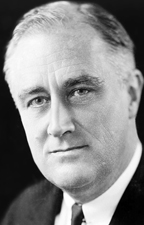
  2. Franklin Delano Roosevelt — Again, almost superhuman leadership through crises of such scope and sweep that they stagger the mind. Argue all you want about the effectiveness of the New Deal, I think it was this cripple’s ebullient refusal to be a cripple, or let his country wallow in its troubles, that pulled us through the Depression more than anything. As for the Second World War — the nation was right to feel panicky when he died just before we’d finished winning it; his leadership was that critical on an abstract, spiritual level. The fact that we went ahead and won it quickly is a testament to what he’d already done, but also, it should be said, proof that the nation’s greatness and strength exceeds that of one man, however great the man. You could say that anybody who was president through those crises would be deemed great after they ended successfully. But I would say the nation was very fortunate to have this particular man at that time. And the people of this country knew it, which is why they elected him four times.
  3. John Adams — OK, he’s not necessarily the greatest AS president (in fact, that was one of the low points of his career), and sure, there’s that business where he let the more partisan Federalists maneuver him into the Alien and Sedition Acts. It’s just that, if you take his whole life — and his whole adult life pretty much was devoted to getting this country started, being the most eloquent advocate for independence, getting backing from abroad (the French, the Dutch) for the revolution, suggesting Washington to head the Continental Army, (and suggesting Jefferson do the final writing on the Declaration), and on and on — it’s hard to imagine one guy contributing so much to a new country. But he did. I guess I’m putting him on here as a sort of Lifetime Achievement Award.
  4. George Washington — Back when I was in college, it wasn’t fashionable to emphasize Washington as much as some of the other Founders. You know, because he was so obvious, it was uncool. (We were like Barry, in other words.) I tended to focus on the idea guys — Adams, Madison, Jefferson, Franklin, Hamilton. But over time, I’ve come to understand better the importance of his leadership — both in terms of being an inspirational leader that the country could rally around (something he cultivated consciously, which would make some dismiss him, but I think he saw what the country needed and provided it), and in terms of his self-effacing refusal to become a king or a facsimile of one. In other words, my understanding and appreciation has progressed beyond the cherry-tree myth.
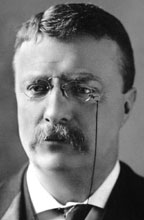
  5. Theodore Roosevelt — I used to think that Teddy was on Mount Rushmore for the same reason that people tend to put W. and Obama on their best and worst lists (depending on their inclinations): He was the president at the time, so they put him up there. But having read the first book in Edmund Morris’ trilogy (I need to get to the second; it’s sitting on my bookshelf waiting), I’m far more convinced of the role he played in transitioning the nation from what had been since 1776 and taking it to what it would be in the 20th century. His building up of the Navy would have been enough to get him on a Top Ten list. But then you look at his Progressive initiatives, his passion for reform, and that takes you much further. A lot of detractors would dismiss his imperialism, but I think that’s another sort of temporal chauvinism — applying today’s standards to a man of another time. I would look at the positive side of that — he saw the importance of the United States taking its place alongside the “Great Nations of Europe,” and saw aggressive posture as essential to that. In other words, you can take his “Bully!” a couple of ways. But in my book, as you know, I think the world is better off with the United States in the leading role, rather than some of those “Great Nations,” as they were then. And I worry about a future time when a nation that would never, ever produce a TR is in that role. Roosevelt personified American vigor, optimism, innovation and industry, making him a sort of archetype, an embodiment of the nation at that point in history — much the way JFK did later.

Wow. Barry would really be dismissive of MY list. It’s like, Mount Rushmore minus Jefferson, plus two. But I can’t help it; the “name” presidents do tend to be among the best, if you’re honest about it. (And I was going to put Jefferson on there, crediting him for the Louisiana Purchase and dealing with the Barbary Pirates — both flying in the face of his own ideology, and I love it when politicians rise above their party lines — but I wanted the other five on there more.

Go ahead, argue with me.

Who would do that, who was not being PAID to do it?

I guess the answer to my question is, Nick McLaughlin would:

COMMITTEE TO DRAFT DONALD TRUMP IN 2012 FORMED

National and New Hampshire Leaders Named
ST. CHARLES, MO. — Decorated Iraq War veteran Nick McLaughlin of St. Charles, Missouri, has announced the formation of a grass-roots, all volunteer organization to draft New York developer Donald J. Trump for the 2012 Republican Presidential Nomination.
McLaughlin saw combat in three tours in Iraq in the US Marine Corp and was hit by shrapnel from a car bomb in Ubush, Iraq. He was awarded a Purple Heart and nine other medals including a Presidential citation.

“Under Barak Obama, America has become a laughingstock around the world,” said McLaughlin. “America needs a strong leader like Donald Trump to restore America’s economic strength and respect around the world.”

McLaughlin, who has never been active in politics before, said he had filed the committee with the Federal Election Commission and that the organization was not directed, authorized or funded by Trump. “I have never met Mr. Trump,” said McLaughlin, “But I am certain he is the man America needs.”…

Volunteer? Really? Who would actually want Donald Trump to be president of the United States, and want it bad enough to spend time and energy trying to make it happen, except for someone who was being paid to do it?

This is a question to which I do not have an answer.

I’m not doubting the guy’s word; I just don’t understand his motivations.

If SC “opts out” of Obamacare, you will definitely have stepped over the line

I say that because, between the two of them — him and Nikki Haley — I figure he’s the one more likely to listen to reason. At least, I would normally think that, although his recent behavior on this subject injects a large measure of doubt.

Here’s what I’m on about:

U.S. Sen. Lindsey Graham and Gov. Nikki Haley on Monday opened the S.C. front in the Republican Party’s battle to roll back health care legislation signed into law by President Barack Obama last year.

At a State House news conference, Graham and Haley took turns blasting the law as an expensive federal takeover of the nation’s health care system. Graham said the law, which won 60 votes in the 100-member U.S. Senate, was passed through a “sleazy” process that offered no opportunity for GOP input.

Graham also said he has introduced legislation to allow South Carolina and other states to “opt out” of the law, which is being challenged in federal courts.

“I’m confident that, if given the chance, a large number of states would opt out of the provisions regarding the individual mandate, employer mandate and expansion of Medicaid,” Graham said, referring to requirements in the law that individuals buy insurance, companies offer it and Medicaid be expanded to cover those without insurance. “As more states opt out, it will have the effect of repealing and replacing Obamacare.”

Last time, I was sort of seriocomic in warning Sen. Graham that he was goin’ to messin’, with my “Lindsey, fill yer hands; I’m a callin’ you out” post.

It’s not funny any more.

In fact, this is the one thing that leading Republicans (or anyone else who got such a notion) could do that would be totally beyond the pale, truly unforgivable.

Look, I get it: You don’t like Obama. No, scratch that: What I get is that your constituents don’t like Obama (in some cases for reasons that don’t bear a lot of scrutiny), so you’re playing to that. I doubt Nikki has any strong feelings toward the president one way or the other (she never even had occasion to think about him until she decided to become the Tea Party’s Dream Girl last year) and for his part Lindsey is perfectly happy to work with him in a collegial manner. But they’re trying to stay in the game with Jim “Waterloo” DeMint, and this leads to trying to fake the symptoms of Obama Derangement Syndrome.

I fully get the fact that since the defeat of November 2008 (when, it you’ll recall, I endorsed both John McCain and Lindsey Graham), the Republican Party has gone stark, raving mad, having concluded that its problem in ’08 was that it wasn’t extreme enough, not wacky enough, causing it, as it wandered lost in the post-apocalyptic landscape, to embrace the Tea Party in its lonely desperation. I get all that.

But that is a disgusting, absurd, inexcusable, disgustingly irresponsible reason to try to prevent the people of South Carolina — who have perhaps more need for health care reform than people in any other state — from deriving any benefit that might accrue from the federal health care legislation.

No, the thing dubbed “Obamacare” doesn’t accomplish much; it’s a bit of a Frankenstein of a bill. But it actually would do SOME people SOME good. And it at least has the one essential element that one would have to have in any attempt to address the crisis in paying for health care in this country, the national mandate — which, absurdly, is the ONE thing you object to most vehemently. (We’ve discussed in the past how there’s no point in talking about “reform” unless you start with the premise that everybody has to be in the game for it to work, so I won’t go on and on about it now.)

Yep, Obamacare is pretty inadequate. But you have NOTHING to replace it with, nothing in the wings (with any chance of passing, or any chance of doing any good if it DID pass) to do what little good Obamacare will do.

So trying to tear it down is nothing but an act of pure destruction. And the thing you’re destroying is the ONE thing that’s been done lately to address the one greatest domestic need in this country.

I expect this kind of nonsense from Nikki Haley (the Tea Party Nikki Haley that is, not the promising young House member I used to know). But Lindsey Graham is fully smart enough to know better.

Fine, have your little press conferences and make your symbolic gestures. But if you actually start to make this “opt-out” thing a reality, that will be unforgivable.

Uh-oh — I posted THIS on Facebook. Will I have to resign from the blog now?

Foster Village, overlooking Pearl Harbor, circa 1970-71

Well, this is ominous:

Rep. Christopher Lee of western New York abruptly resigned with only a vague explanation of regret after a gossip website reported that the married congressman had sent a shirtless photo of himself flexing his muscles to a woman whose Craigslist ad he answered.

“I regret the harm that my actions have caused my family, my staff and my constituents,” Lee posted in a surprise announcement Wednesday night on his congressional website. “I deeply and sincerely apologize to them all. I have made profound mistakes and I promise to work as hard as I can to seek their forgiveness.”

A woman described as a 34-year-old Maryland resident and government employee provided the Gawker website with e-mails she said were an exchange between her and Lee in response to an ad she placed last month in the “Women Seeking Men” section of Craigslist.

This guy Lee sent a shirtless picture of himself to one woman, and he’s ruined. I posted the picture above on Facebook last night — that’s me with my board in late 1970 or early 1971 (we were vague about time in Hawaii), back when Burl and I were in school together — for that woman and every other woman in the world to see (so far, only one of them has made a saucy remark). Burl, by the way, had nothing to do with this photograph (I can prove it: this was obviously taken on a Kodak Instamatic, and Burl had a way better camera than that). These scandals have a way of pulling people in like black holes, and I don’t want him getting in trouble, too.

Oh, yeah, let me hasten to add: Barack Obama was on the island at the time, too, but he had nothing to do with it, either. I promise. I never even spoke to the guy until 2007.

My uncomfortable “yeah, but…” about Nikki’s (apparently) illegal meeting

I started my career in a state with a real Sunshine Law… Tennessee.

The expectation was clear there, back in the heady post-Watergate 1970s, that the people’s business would be done in public, and that government documents belonged to the people as well.

This led to a lot of awkwardness. For instance… I well remember a school board meeting I attended in Humboldt when I was covering several rural counties for The Jackson Sun. Humboldt was the closest sizable town to Jackson, and I knew my predecessor (who was now my editor) had regularly covered that body’s meetings. Trouble was, they were regularly scheduled on the same night as several other important public bodies’ meetings in my coverage area, and for the first few months I was on that beat, they always had something going on that demanded my attention.

Mondays were brutal. There were regularly several meetings I needed to go to across two or three counties, plus other breaking news. It was not unusual for me to start work early Monday morning, work through regular day hours, cover two or three meetings that night, spend the whole night writing five or six or more stories, get some final questions answered in the morning, make calls on another breaking story or two, and then file my copy at midmorning. Actually, I had a secretary in my Trenton office who laboriously transmitted each of my stories, a character at a time, on an ancient teletype machine while I finished the next story. If I was lucky, I could grab a nap in the afternoon. But Tuesdays were often busy as well.

I think the Humboldt school board meetings were on a Monday, but perhaps my memory fails me.

Anyway, I finally managed to make it to one of their meetings — and almost felt apologetic for not having been before. I sort of hated for the good folks of Humboldt to think the Gibson County Bureau Chief didn’t think them important. I didn’t know what was on the agenda; I had just been meaning to come, and finally, here I was.

Often, when I’d show up to cover meetings in these small towns, the chair would recognize me in a gracious manner, which tended to embarrass me. I mean, I wasn’t their house guest, I was a hard-bitten newspaper reporter there to keep a jaded eye on them. Of course, this graciousness was also a handy way of the chair warning all present that there was a reporter in the room.

But at this one, it would have been nicer to be formally welcomed than to experience what happened.

It was a singularly boring meeting — I kept wanting to kick myself for having chosen THIS one to finally make an appearance. They were approving annual contracts for teachers (you know, the kind of thing reporters would be excluded from in SC, as a “personnel matter”), one at a time, and it went on and on and on. There was NOTHING at the meeting worth reporting, and as I rose to leave I was regretting the waste of time.

Then this one member comes up to me with a swagger, and I smiled and started to introduce myself, and with a tone dripping vitriol, he sneered, “Bet you’re sorry you came to this meeting. We didn’t give you any controversy for you to splash all over the paper.” I mean, I’d never met this guy, and he frickin’ HATED me for some reason I could not imagine. What the hell? I thought: I come to your stupid boring meeting, sit all the way through it, and this is the reward I get? I didn’t know what to say to the guy.

It took me a day or so to figure out that the year before, my predecessor had covered a nasty fight over a teacher’s contract — one I had either not focused on or forgotten, since that wasn’t my turf then. It had been a HUGE deal in that town, and left a lot of raw feelings — many of them caused by board members’ deep resentment of having to have personnel discussions in public. This bitter guy assumed that the only reason I had come to the meeting, when I usually didn’t, was because teacher contracts were being discussed. When, in actuality, if I’d known it, I’d have found something to do that night in another county.

But I digress.

All that is to say, I came up with certain expectations of openness in government. Which means I was in for a shock when I came home to South Carolina to lead the governmental affairs team at The State. Barriers everywhere. An FOI law full of exceptions. A Legislature that cherished its right to go into executive session at will. Anything but a culture of openness.

I’m afraid I was rather insufferable toward Jay Bender — the newspaper’s lawyer and advocate for press issues before the Legislature — the first time he met me back in 1987. He had come to brief editors on the improvements he had helped get in state law in the recent session. My reaction to his presentation was “WHAT? You call that an Open Meetings law? You settled for THAT?” I was like that.

And I saw it as my job to fight all that, and crack things open at every opportunity. I was sometimes a bit insufferable about it. One day, I went to the State House (I was an unusual sort of assigning editor in that I escaped from my desk into the field as often as possible) to check on things, and learned that there was a committee meeting going on somewhere that wasn’t being covered (there are a LOT of those these days). I thought it was behind a closed door leading off the lobby. I charged, ostentatiously (I was going to show these complacent folks how a real newspaper ripped aside the veil of secrecy), with a photographer in tow, and reached resolutely for the doorknob.

One of the many folks loitering in the lobby — many of whom had turned to watch my bold assault on that door — said, “There’s a meeting going on in there,” in an admonitory tone. I said, right out loud for all to hear, “I know there is. That’s why I’m going in there.”

And I threw open the door, and there were two people sitting having a quiet conversation, suddenly staring at me in considerable surprise. No meeting. No quorum of anything. I murmured something like “excuse me; I thought this was something else” and backed out — to the considerable enjoyment of the small crowd outside.

Anyway, I take a backseat to no one when it comes to championing open government, and so it is that I say that Nikki Haley should not have met with two fellow members of the Budget and Control Board without the participation or knowledge of the other two officials. Curtis Loftis was right to protest, and Nikki’s chief of staff was entirely out of line to scoff at his protest.

That said, I had to nod my head when my colleagues at The State said this about the breach:

But here’s the thing: This was a meeting, and a conversation, that we want Ms. Haley to have with Senate Finance Chairman Hugh Leatherman and House Ways and Means Chairman Dan Cooper. After what we’ve been through for the past eight years, having these three officials even on speaking terms, much less meeting to talk through our budget problems, is a breath of fresh air.

Amen. That was indeed my first reaction: Nikki’s having a heart-to-heart with some key lawmakers? Good. At least, it offers me hope.

Maybe it wasn’t kosher. OK, it wasn’t, period. Totally against the rules as I understand them. And yeah, it’s easy to characterize it as hypocritical for Ms. Transparency to do something like this. But hey, Nikki persuaded me some time ago that she wasn’t serious about transparency when applied to her. That was a huge part of my discomfort with her as a candidate, and no shock now. But… at least MAYBE she made some progress toward overcoming another serious deficit in her qualifications to lead our state — her penchant for going out of her way not to get along with the leadership.

Maybe. I don’t know; I wasn’t in the room — which brings us back to the problem with closed meetings. Which is why I oppose them. But you know, the older I get, the more certain I am that stuff like that is way more complicated than it seemed when I was a young reporter.

You’re failing to excite me, Arianna

Just got this from HuffPost:

We are writing with some very exciting news.  As you will see if you click on the HuffPost home page, The Huffington Post has been acquired by AOL, instantly creating one of the biggest media companies in the world, with global, national, and local reach — combining original reporting, opinion, video, social engagement and community, and leveraged across every platform, including the web, mobile, and tablets.

Central to all of this will be the kind of fresh, insightful, and influential takes on the issues of the day that you and the rest of our bloggers regularly deliver.  Our bloggers have always been a very big part of HuffPost’s identity – and will continue to be a very big part of who we are.

When the Huffington Post launched in May 2005, we had high hopes.  But we would have been hard pressed to predict that less than six years later we would be able to announce a deal that now makes it possible for us to execute our vision at light speed.

The HuffPost blog team will continue to operate as it always has. Arianna will become editor-in-chief not only of HuffPost but of the newly formed Huffington Post Media Group, which will include all of AOL’s content sites, including Patch, Engadget, TechCrunch, Moviefone, PopEater, MapQuest, Black Voices, and Moviefone.

Together, our companies will have a combined base of 117 million unique U.S. visitors a month — and 250 million around the world — so your posts will have an even bigger impact on the national and global conversation.  That’s the only real change you’ll notice — more people reading what you wrote.

Far from changing the Huffington Post’s editorial approach, our culture, or our mission, it will be like stepping off a fast-moving train and onto a supersonic jet.  We’re still traveling toward the same destination, with the same people at the wheel, and with the same goals, but we’re now going to get there much, much faster.

Thank you for being such a vital part of the HuffPost family – which has suddenly gotten a whole lot bigger.

All the best,

Arianna, Roy, David, and the HuffPost Blog Team

Forgive me, Arianna, but I’m failing to get excited. That’s like saying your site is being sponsored by Geritol (that’s a Boomer reference, youngsters), or you’ve formed a strategic alliance with “The Lawrence Welk Show” (ditto, kiddies — this was the very essence of grandparents’ entertainment in the ’60s).

AOL? The Aztecs had AOL. Any edgy cred the HuffPost once had, if it had any, has now evaporated.

Folks, help me remember this memo to self: When I sell out, it will be to somebody cool… unless, of course, the money is just offensively ridiculous.

Free-associating on "AOL"...

Lindsey, fill yer hands; I’m a-callin’ you out

Did you get the “True Grit” reference? I do try to be topical (although I have no idea whether that line is in the remake)…

Back on this post, Doug Ross said, “So will Brad call out Lindsey for wasting resources?”

That kind of stuff makes me tired. You know why bloggers and sure-enough journalists avoid ever saying anything nice about anybody in public life? Because they never hear the end of it. They’re constantly getting this Well I hope now you see what a jerk your buddy is, and see the error of your ways stuff.

Let’s be clear. There is no one I respect in the U.S. Senate more than Lindsey Graham, so stuff that in your pipe and smoke it, you cynics. There are good men in public life, and Graham is highly intelligent, principled and hard-working. He has proved this time and time again. He is good for South Carolina, and good for the country. I am proud that he is our senior senator. Now that John Spratt is gone, I think Lindsey is clearly the best member of the SC congressional delegation.

But you know what? Sometimes, even on an important issue, he’s dead wrong. That happens. It happens with the best of men. (Women, too, probably, but far be it from me as a gentleman to reflect negatively upon the ladies.) And there’s one that he and two of my other favorites in the Senate, John McCain and Joe Lieberman, and that’s the one Doug and I were talking about — national health care policy.

He’s really, really wrong on it. I mean, Jim DeMint just wants it to be Obama’s Waterloo, but I get the feeling that Lindsey Graham really means it. He really wants to gut Obamacare. And he doesn’t just want to vote on a purely symbolic “repeal;” he want to hang it, draw it and quarter it, slice and dice it, by passing legislation that deprives it of its central elements, the only things that give it any chance of having a good effect on the health care crisis in this country.

Here’s the release he put out today:

Barrasso, Graham Introduce Legislation Allowing States to ‘Opt-Out’ of Obamacare

WASHINGTON – U.S. Senators Lindsey Graham (R-South Carolina) and John Barrasso (R-Wyoming) today introduced S.244, The State Health Care Choice Act, to repeal and replace Obamacare by allowing states to ‘Opt-Out’ of its major provisions.  Under the legislation, states could choose to ‘Opt-Out’ of:

  • Individual mandate – the requirement to buy government-approved health insurance coupled with a financial penalty for not doing so.
  • Employer mandate – the requirement for businesses to provide government-approved health insurance coupled with financial penalties for not doing so.
  • Medicaid mandate – the forced expansion of state Medicaid programs.
  • Benefit mandates – defines what qualifies as a health plan as well as new federal requirements for regulating health insurance.

“As a doctor in Wyoming, I witnessed regularly how Washington simply didn’t understand the needs of the people of our state,” said Barrasso.  “After Obamacare, Washington is more out of touch than ever.  Instead of requiring states to follow Obamacare’s one-size-fits-all health care policy, our bill lets states decide what works best for them.  We will fight to repeal the President’s bad health spending law and provide states with flexibility, freedom and choice.”
“Our legislation opens up a third front in the fight against Obama health care,” said Graham, noting the other ‘fronts’ include legal challenges moving through the courts and the House-passed repeal.  “Our bill takes the fight out of Washington and puts it back in the states.  I would hope every Senator, regardless of party, would give the people of their home state a chance to be heard.  I’m confident that if given the chance, a large number of states would opt-out of the provisions regarding the individual mandate, employer mandate, and expansion of Medicaid.  As more states opt-out, it will have the effect of repealing and replacing Obamacare.”

“Medicaid expansion under Obama health care will be devastating to many states, including South Carolina,” continued Graham.  “We are already facing a severe budget shortfall this year.  The future expansion of Medicaid – which adds an additional one billion dollars of state matching funding requirements and will result in nearly 30 percent of South Carolinians being eligible for Medicaid – only adds to our budget problems.  This combination of Medicaid expansion and increased state funding makes it virtually impossible for South Carolina to pull out of her economic woes.”

The Senators noted the Obama Administration has already issued 733 waivers to businesses allowing them to continue offering insurance to their employees and questioned why states should not have the same ability to obtain relief.

#####

To read the text of the bill, click here.

Note that this masquerades as a substitute for Obama care — not mere repeal, but replacement. What a mockery. It is most certainly nothing of the kind.

The absolute worst thing you could do to last year’s health-care bill — which is deeply flawed, but would at least take a step or two in the direction of real reform — would be to let anyone opt out of it, much less entire states.

Either we’re all in it, or it will not work. It may not work anyway. I still firmly believe that simple, straightforward single-payer is the way to go. But hey, critics of Obamacare say it’s a back-door way to get us there, and maybe they’re right. One thing I know for sure is that there isn’t a plan in the wings to replace it. I mean, if this is the best that a smart guy like Lindsey Graham can come up with, we’d better cling to Obamacare as though it were our last chance to avoid drowning.

And this fantasy that states can in any way affect this mega-economic hole that we are in — or that they would (especially if they are South Carolina). Again, either we come up with a national solution and we’re all in it — a risk pool of 300-plus million people — or there’s not much use talking, because you really don’t get the problem. Sen. Barrasso says Washington doesn’t get it. He may be right; I can certainly point to one guy in Washington who doesn’t get it. No, make that two. (And for that matter, the Dems don’t either, or they’d have gone for single-payer. So I guess he’s right; it’s a majority.)

This is just sad. So sad, that I marvel at it.

I’m going to issue another invitation to Sen. Graham to join me on “The Brad Show” and explain this. He always has good explanations for what he does, and I’d love to hear this one.

In the meantime, satisfy yourselves with this video of him and Barrasso talking about this abomination…

Trying to muster enthusiasm about Dems gathering just up the road

Phil Noble found an unusual way to celebrate the fact that the Democratic National Convention will be in Charlotte next year:

“This is the best news for South Carolina Democrats since our native son Andy Jackson was elected President in 1828. With tens of thousands of Democrats, and the global media converging just a stone’s throw away from President Jackson’s birthplace, South Carolina Democrats will have their voices heard on the national and international stage.”

“The Convention will be the rallying point we need to strengthen and build our party throughout the state. It will give us our first real opportunity in a generation to launch the kind of root-and-branch reform movement that could make South Carolina a truly competitive two-party state again. This is just the first of many ‘big things’ ahead for Democrats in our state.”

I’ve just got to say, what does that have to do Andrew Jackson? Personally, I think the fewer reminders that Jackson came from here, the better, but I’m kind of an unreconstructed Federalist. And I don’t even mind a Democratic Republican now and then, if he’s qualified, like Jefferson and Madison. But Jackson? Shudder… And the suggestion that we’ve had no news better than Jackson’s election in 183 years. Well, that’s just depressing. I mean, I know it’s been a long good news drought for SC Democrats, but come on — y’all were pretty happy when Obama was elected, weren’t you? And personally, I’d count that as WAY better than Ol’ Hickory.

Anyway, in the second graf Phil got to the main business, which was to try to get SC Dems pumped about a city that’s almost in our red state hosting the convention. Nice try, there, Phil.

Me, when I heard it, my first thought was “Maybe the paper will let me go there and cover the frickin’ thing THIS time, since the travel cost would be minimal.” But then I remembered. Oh, yeah…

Maybe I’ll find an excuse to wander up that way sometime during that week. Although I gotta tell ya, it can’t possibly be as much fun as the one I went to in New York in 2004 — the last time I managed to con a publisher into paying for it. There’s nothing like closely observing SC politicos partying in unfamiliar surroundings. Charlotte… well, how much fun can you have in Charlotte, really? I mean, what’s it known for? Banking?

Then, of course, there’s the fact that with an incumbent president, there won’t be a heckuva a lot of news to cover. So, no party. No news. I don’t know. I might have to think long and hard about whether to take time away from my real job for this…

So much energy devoted to tearing down, to no good end

Speaking of stuff I’m seeing on Twitter today, this just came in from Jim DeMint:

Jim DeMint

@JimDeMintJim DeMint

All Republican Senators have now joined to cosponsor the bill to repeal ObamaCare, S.192

And this reminds me…

Today at the Columbia Rotary Club, our speaker was George Zara from Providence Hospital. He started off by asking the 300 or so Rotarians whether they thought Obamacare was going to be repealed.

Let’s just say that there wasn’t exactly a sea of eager hands reaching for the Seawell’s ceiling. I saw a few, very hesitant, hands half-raised — as in, not above shoulder height. Most people knew better.

I wonder why Jim DeMint et al. don’t.

What a lot of energy spent just to make a make a point. What destructive energy. Personally, I don’ t have great hopes for Obamacare solving our problems, but I know that the solution’s not coming from people who don’t WANT a solution.

And it really ticks me off that they are trying to do everything they can to tear this effort down before it even takes effect. What else would be the point of making such a huge political gesture, when you KNOW you’re not actually going to repeal it?

Couldn’t they spend some of this energy trying to accomplish something, rather than trying to make sure no one else accomplishes anything?

I hope the Tea Party, for whom this is being done, appreciates this. Because I don’t.

Schumer was just testing us

I knew that following Adam Baldwin on Twitter (no, not one of those Baldwins — we’re talking Jayne Cobb from “Firefly”) would pay off eventually. Today, he brought my attention to this:

Adam Baldwin @adamsbaldwinAdam Baldwin

QFE: “We have 3 branches of government. We have a House. We have a Senate. We have a President.”- Sen. Schumer (D-NY) ~ http://bit.ly/eqwbNq

Hey, we all misspeak. And maybe the good senator was just checking to see whether the viewers were paying attention.

Here’s a question: Would Jayne Cobb have known about the three branches of government? Probably not. Of course, in his ‘verse, all you need to know is that there’s the ruttin’ Alliance, and there’s the freedom-loving Browncoats.

Guess I should start paying attention. Sigh.

Just got this from Politico:

ARLINGTON, Va. – POLITICO announced today the launch of 2012 LIVE, a new section of its website designed to provide moment-by-moment coverage of the race for the Republican nomination for the presidency, as well as President Barack Obama’s campaign for a second term.

2012 LIVE offers a huge volume of information on the likely candidates with continuous updates on where the candidates are on the campaign trail, who they’re recruiting as advisers and staff, where their money is being raised and what is being said about them in the media.

The section dives deep into the four states crucial to winning the GOP nomination. With ‘Early State Insider’ subpages dedicated to Iowa, New Hampshire, Nevada and South Carolina, POLITICO brings readers straight to where the candidates are making their key moves. Robust partnerships with leading newspapers in these states – The Des Moines Register, New Hampshire Union Leader, Las Vegas Sun and the (Charleston, S.C.) Post and Courier – provide added insight and analysis for POLITICO readers.

“2012 LIVE is based on our belief that political junkies cannot get enough news and analysis on the election.” said POLITICO Executive Editor Jim VandeHei. “We think there needs to be more velocity and information – not less. No other news organization will be able to match our early and sustained commitment to covering the 2012 campaign.”…

Sigh. Guess I should start paying attention.

At this stage before 2008, I was pumped about it. We had W. exiting the stage, and the prospect of putting all that strife behind us, and fairly exciting fields of candidates on both sides coming through SC — Obama, McCain, Clinton, Giuliani, Edwards, Romney, Biden, Huckabee… note that I’m not saying I like all those candidates (y’all know better); I’m just saying that at the time, the nation’s prospects seemed interesting, and those candidacies made politics worth following…

Now, of course, there’s zilch going on the Democratic side, and I’m already getting sort of jaded on the GOP field.

Maybe it’ll get better. Must give it a chance. And the first step will be paying attention…

Shut that door, Jim! Slam it! Then nail it shut…

This is strange. This is the angriest picture I've ever seen of Jim. Normally, he's so mild-mannered looking. Where did I get it? His campaign website, of all places...

I was more than a bit alarmed when the HuffPost reported, somewhat confusingly, that “Jim DeMint advisers say he’s not the shutting door on a presidential run.”

Well, I certainly wish he would “the shut door.” Slamming it would be better. Nailing the sucker shut would help me sleep at night.

Then our good friend Peter Hamby had to threaten my future slumbers with this:

Washington (CNN) – News that South Carolina Sen. Jim DeMint will travel to Iowa on March 26 to address a conservative forum organized by Rep. Steve King is sparking another round of chatter that DeMint might launch a dark horse bid for the White House in 2012.

The Republican gadfly has been adamant in denying such intentions for more than a year – just Wednesday, he gave CNN’s Wolf Blitzer a flat “No” when asked if he plans to seek his party’s presidential nomination.

But the ground may be shifting in DeMint-world, and several of his closest advisers and political confidantes are now telling CNN that he is at least open to a presidential bid if a suitably conservative candidate fails to emerge from the early and wide-open GOP field.

“I think that you can read into it that he sees he has a role in the process and he hasn’t completely shut the door,” said one DeMint adviser asked about the Iowa foray.

Perhaps a beer would help calm me down as bedtime approaches. But they say I shouldn’t have a beer after giving blood. I’ll just have to tough this out…

Joe’s alternative to the alternative to the GOP response

I got bushed and went to bed last night before getting this video, which is Joe Wilson’s response to the State of the Union.

So… since some guy named Paul Ryan gave the “official” Republican response, and Michele Bachman (another nonentity to me, but I’ve vaguely aware she’s one of those fringe people the shouting heads on TV go on and on about, like Sarah Palin) delivered a sort of self-appointed alternative response as a way of playing directly to the Tea Party, that means Joe’s clip is sort of the alternative to the alternative. Or maybe, since the “official” GOP response is in itself offered as an alternative to the actual State of the Union, Joe’s is an alternative-alternative-alternative. Which sounds way more avant-garde than the way I think of Joe Wilson.

Speaking of Joe… I ran into his guy Butch Wallace this morning at breakfast and told him — sort of joshing, sort of serious — that I appreciated that Joe had behaved himself last night, adding that I suppose it was hard to do otherwise sitting with those Democratic ladies. Butch smiled politely. Then I added, quite seriously, that I appreciated that Joe had wanted to make that gesture — which others in our delegation refused to do, even though it would have taken them so little trouble. Butch said Joe wanted to work with all kinds of people, regardless of party, and I said that’s good — because the more folks you’re willing to work with, the more you’re likely to get done.

As for Joe’s message — it sure beats “You Lie!” (which, if you’ll recall, was NOT during a SOTU), although in his hurry, he sort of flubbed a couple of the lines. And the overall message is rather thin and lacking in substance. But these things always tend to be that way. There’s a formula: 1.) Due respect to the president (no name-calling); 2) A brief reference to something that was in the president’s speech, a cursory effort to give the impression that the responder actually read or heard it and thought about it before responding; 3) A rather trite and general statement of ideological difference with the president that may or may not bear relevance to the president’s points; 4) Some sort of statement of civic piety such as asking the deity to bless the troops, or America, or the taxpayers, or whatever.

So much for Joe and his message. Now to the larger issue: This nonsense of opposition-party “responses” to the State of the Union, which I have always found offensive. I thought this writer put it well: “The very idea of a rebuttal is asinine.”

Or at least, the idea of some sort of formal response with an “official” status is asinine. Of course, we’re all entitled and encouraged in this free country to share what we think of the president’s speech. But over the years, something really weird and insidious has happened, and like so many other media/political phenomena in the modern age, it has done much to solidify in the average voter’s mind the nasty notion that there is something good and right and natural about everything in our politics being couched in partisan terms.

First, just to give the broadest possible perspective, the State of the Union is a constitutional responsibility of the president of the United States — not of a party, or of an individual, but of the chief executive. It’s right there in black and white in Article II, Section 3:

He shall from time to time give to Congress information of the State of the Union and recommend to their Consideration such measures as he shall judge necessary and expedient.

Note that it doesn’t say he has to do it every year, much less in January just before the Super Bowl. Nor is he even required to give a speech of any kind: Before Woodrow Wilson, presidents took care of this requirement in writing.

So, no one has to give a speech. But the president is required to make a report (including recommendations, if he judges such to be necessary and expedient, which you know he always will). It’s his job. It’s not a campaign speech (even though no politician yet born would pass up such an intro once it’s handed to him). It’s not something that he does on behalf of his execrable party. It’s something he is required to do.

In other words, the “equal time” requirement placed on purely political TV face time doesn’t apply. No member of the opposite party is in any way obliged to offer a “response,” and no broadcast outlet is obliged to run it — not by law, and not by any sense of journalistic obligation. Sure, you might cover it — you ought to cover it, and any other politically relevant response. (Just as you ought to cover the SOTU itself, if you know what’s news.) But the idea of a formal, ritualistic response is completely unnecessary.

And harmful. Because it instills in the public’s mind the notion that this is just some guy giving a political speech, rather than the president of the United States fulfilling the requirements of his job. And it inflates the ceremonial, institutional importance of parties to our system of government, putting the prerogatives of a party on the same level as the most fundamental requirements of our Constitution.

My reaction to the GOP response last night — that is to say, my reaction to the idea of a GOP response, because as usual, I didn’t watch it (when the pres was done, I ran upstairs to plug in my laptop because the battery was nearly dead and giving me warning messages) — was exactly the same as to Democratic responses to a Republican president: You want to give a free-media speech to the whole nation on this particular night, you go out and get elected president. We don’t have a president of one party and a “shadow” president as in a parliamentary system — we have one person elected to that position, and in delivering the SOTU (whether aloud or in writing), he’s fulfilling a specific responsibility that we elected HIM (and not some eager up-and-comer in the opposition party) to perform.

So share your thoughts all you want, folks. But spare me the “official” responses.

SC still tops WSJ list of “Monuments to Me”

Lately we’ve had occasion to discuss and debate the wisdom of naming yet another public work for a living and kicking politician — specifically, the extremely awkwardly named “Lt. Governor-Senator André Bauer Interchange.”

The tendency — for me, at least — is to think of this as a South Carolina phenomenon. I’ve generally had the impression that folks in other parts of the country generally wait for politicos to die, or at least retire, before naming stuff after them — if only to avoid the embarrassment after said politician does something that makes “The Daily Show.”

I learned today, though, that at least to The Wall Street Journal‘s William McGurn, this is enough of a problem on the federal level to write about it within a national context.

Still… when he offered a list of some of more egregious — or at least, funny sounding — such monuments, a South Carolina example topped it:

Few would begrudge, say, the naming of a ship after a former president, or a park after a retired legislator known for a lifetime of exemplary service. Our modern representatives in Washington, however, are disinclined to wait for retirement or risk the judgment of history. So from sea to shining sea, they clutter our nation with such landmarks as the James E. Clyburn Pedestrian Overpass, the Thad Cochran U.S. Bankruptcy Courthouse, the Tom Harkin Global Communications Center, the C.W. Bill Young Marine Science Complex, John D. Dingell Drive—all named for current members of Congress.

Maybe he only started out with it because “James E. Clyburn Pedestrian Overpass” sounded goofier than the others, but I like to think he was acknowledging how hard we try to distinguish ourselves in this field in the Palmetto State. It would be such a shame for us to be upstaged by some other state in a national forum such as this. We don’t get credit for much, so don’t take this away from us.

A little ditty you can sing to take your mind off being groped

That is, if you mind being groped.

Personally, I was struck by how nonintrusive security was on my recent flights across the ocean and back. You’d think that on an international flight to and from a country that’s as involved (as target, and as combatant) in the War on Terror as the UK, you’d see security as tough as anywhere (with the possible exception of Israel).

The only sign I saw of really heightened security during the whole trip was when we went to see Downing Street, which is totally barred off and heavily guarded, with at least one submachine gun being wielded up close and personal so that the tourists can’t miss seeing it. But at least we could see something — I couldn’t quite make out the famous door of No. 10, although I could see the famous railings in front of it (which is how I could tell that was it, and not another black door that was at a slightly more advantageous angle for viewing — perhaps the chancellor of the exchequer’s abode; I don’t know).

But, after all the talk about invasive, intrusive new TSA procedures in recent months, what we experienced was not noticeably different from any other trip I’ve taken over the last decade or so. The only hassle I remember at all was the rigmarole of having to reclaim our bags in Atlanta after getting back, and then having to recheck them for the flight to Columbia. That was highly irritating at the end of a day (actually, the worst thing was that it WASN’T yet the end of the day) when we’d already been up for 18 hours, and had just stepped off a 9-hour flight. Without that drill, we might have made our connection in spite of our flight from Heathrow having been delayed. Delta quickly got us onto another one — although our bags didn’t follow us until the next day.

But all that stuff about futuristic x-ray machines and being groped by the TSA? We didn’t encounter any of that. I was ready for it, and all prepared to shrug it off (why people get so worked up about such things I still don’t understand), but then it just … didn’t happen.

Still I can enjoy a joke as well as the next guy. So when a friend who closely follows such issues showed me the above video, I just had to share it with y’all…

Near as I can tell, this video comes courtesy of buckhowdy.com.

The only obviously stepped-up security I saw the whole trip was at the end of Downing Street, where it runs into Whitehall.

Rotten, stinking attitudes in the SC delegation

Here’s what Mick Mulvaney had to say about the laudable decision of Joe Wilson and others to sit with members of the opposite party during the State of the State:

“If you’re looking for empty symbolism, where one sits at the State of the Union (address) might be at the top of the list.”

Translation:

If you’re looking for obvious examples of giving the people of this country the finger, the refusal to do such a simple thing as sit without regard to party might be at the top of the list.

Of course it’s a small thing. Just like, say, taking down the Confederate Flag from the Statehouse grounds — which you will also hear state lawmakers dismissed because they have so many more important things to do and think about.

And of course, they DO have many more important (or at least, less embarrassing) things to deal with. The problem is that they’ll never make progress on the things that really matter when they have such a powerful mental block against doing something so small as taking the flag down. Or, in the case of Congress, ending the egregious practice of sitting by party during the presidential address.

Simple, yes. But there is no one thing lawmakers could do that would be as easy, but say so much, as taking this action.

I’ll get back to the flag, but about this seating arrangements thing: The problem is that these guys are to entirely stuck in the rut of this abominable practice of sitting by party that it doesn’t occur to them, ever, that it is an abomination. You and I may think they were elected to represent us and to serve the nation. But THEY obviously think that they are there to serve their respective parties. They say this in the most obvious of ways — by only sitting with members of their party, by only caring what their party wants them to do or say, by thinking party first, last and always. Serving the party is SO automatic with them, that it doesn’t even occur to them that it’s a problem. They are even offended by the suggestion that it might be. Which tells you an awful lot about these guys.

This is, as I say, an abomination, and inexcusable. And so easy to address.

Which brings me back to the flag. What do these two issues have in common? The fact that they would be so easy to accomplish. Yes, I know state lawmakers think it would be really hard. But all that is needed to accomplish it is the same, simple thing it would take to end the execrable practice of sitting by party in Congress (and not only on the night of the State of the Union, but every day): All that have to do is GROW UP, and gain a sense of perspective. And then it’s easy.

Joe Wilson’s bipartisan seatmates: Davis, Bordallo

Sort of facetiously, I asked yesterday on Twitter:

Who sits with Joe Wilson? RT @PoliticalTicker: Legislators pairing off for bipartisan seating at Obama speech – http://bit.ly/eHQkvc

It didn’t occur to me until today to ask the questions seriously, which I did after I read this at The Fix:

When the Democratic centrist group Third Way proposed the idea of members of different parties sitting next to one another at tomorrow’s State of the Union speech, there was considerable skepticism that it would happen.

Senate Minority Leader Mitch McConnell (R-Ky.), for one, said that people are “more interested in actual accomplishments on a bipartisan basis here in the next six to nine months than they are with the seating arrangement at the State of the Union.”

And yet a number of members have signed up — including Rep. Joe Wilson (R-S.C.), whose “You lie!” outburst during a speech by President Obama last fall is frequently cited as a sign of partisan incivility in Congress.

So without reading further in that piece (which would have given me my answer), I e-mailed Neal Patel of Joe’s staff to ask who his bipartisan buddies would be, and immediately got this response:

Susan Davis from California and Madeleine Bordallo from Guam. Both are HASC members.

Rep. Bordallo

Rep. Davis

Then I saw that Joe had Tweeted earlier that he was “Honored to be sitting” with those two ladies. Presumably, they are, too. And they’ve already worked together on some stuff, according to The Fix: “Davis and Wilson teamed up last year on a military pay raise bill. In 2007, Bordallo and Wilson traveled to Afghanistan together.”

This will be interesting. But whatever happens — and I’m thinking it all goes well, with no new outbursts (partly because the first one was uncharacteristic of Joe, but also because, well, we Southern boys tend to act better in the presence of ladies) — I appreciate that Joe was up for this. As I heard someone saying on the radio over the weekend, this sitting-together thing won’t likely change the world, but it couldn’t hurt.

There's just so much more temptation to get rowdy when you're sitting with your boys.

A few thoughts on the State of the State

Watch the full episode. See more SCETV Specials.

EDITOR’S NOTE: THERE IS A SERIOUS ERROR BELOW, WHICH I HAVE NOW CORRECTED. PLEASE SEE THE CORRECTION POST.

Been trying all day to get to Nikki Haley’s speech last night. Here are a few quick observations:

  • First, the style: Nikki is a WAY better speaker than Mark Sanford. She, at least, can read a speech that’s right in front of her (and do it in a fairly engaging way). Her predecessor could not, or would not. Every year, I’d get my copy of the speech over lunch on the day of. I’d read it, mark it up, and ask questions about it. I would have completely digested it by the time of the speech itself. Then came speech time, which I generally watched from the comfort of my office on the tube. And then I had to suffer through his hems and haws, and “I would says” and “at the end of the days,” and flat-out off-script digressions, all of them awkward, pausing to search for words, ignoring the speech in front of him. Nikki, with her teleprompter, was MUCH better. But I expected no less.
  • This is not to say that her style is without its irritating characteristics. There’s her prim, smug, I’m-the-girl-with-the-most-gold-stars-in-the-class tone that she too often affects. Watch, for instance, when she extols the blessings of having “a chief executive willing to lead the charge and make the tough decisions” — speaking, of course, of herself. I guess someone who came from the back bench to governor in a year is bound to be a bit self-congratulatory. Human nature. But she could tone it down a bit. And often, she does.
  • Do you know why she can only suggest $120 million worth of cuts toward the $719 million shortfall? Because she hasn’t suggested anything that her political base might object to. And it’s hard to come up with cuts that deep and still do that. She hit programs for those worthless, lazy poor people, of course. And when she got to the middle class, she only went after the stuff that those wicked, decadent liberals like — such as ETV. But the truth is, everybody will have reason to gripe when all the cuts are in. Because believe me, this state’s leaders will never pull an Illinois. Not that they should; I’m just assuring you that they won’t. It’s going to be cuts all the way. And that has nothing to do with Nikki Haley; that’s just the way our State House does things.
  • The ETV thing, of course, is nothing new. Back during the GOP runoff last year, I went over to tape an interview at ETV. They had already talked with Gresham Barrett for the same show. But Nikki wasn’t even calling them back. Scuttlebutt in the ETV corridors was that she didn’t want to talk to them because she was going to back Mark Sanford’s veto of their entire budget. Don’t know whether they were right, but I could see how they’d get that impression.
  • Don’t you love the way she blithely suggests that if you kill ETV (excuse me, “When you release government from the things it should not be responsible for…”), it has this miraculous effect: “you allow the private sector to be more creative and cost efficient.” Remarkable, the things these ideologues will say as though they believed them. Love or hate ETV — and I see it as what it is, one of those few things that South Carolina can point to as something it has done as well as, or better than, other parts of the country (at least in past years) — the notion that the private sector will fill the gap is laughable. You know, this private sector… (Remember when Bravo was known for high-quality arts programming. Not anymore, baby.)
  • I’m definitely with her on asking for quick confirmation of her appointees. She’s made some good picks, and they deserve the opportunity to get to work. Advise, consent, but let’s do it quickly.
  • That little nonsensical (to all but Tea Party ideologues) lecture about how federal funding is inherently a BAD thing was painful to listen to. See, the trouble with the feds sending us money to fund services is that “federal money comes strings, and with those strings come limitations.” The alternative, of course, in South Carolina is that those needs don’t get funded at all. But they’re not really needs, are they? Say that often enough, and you start to believe it. Apparently. In my book, it’s offensive nonsense to say “my cabinet will stop the practice of working the system to get increases in federal funding simply for the sake of expanding our budgets” — as if agencies have sought such funding for any other reason that to fund important services — services they are charged with providing — that the state won’t fund. But yeah, I get it: Her base believes government shouldn’t do such things anyway.
  • I love, love, love that she’s starting out asking for ending the separate election of constitutional officers. Of course, I’m disappointed that she’s only pushing to do two of them — Gov Lite and superintendent of education. But it’s a start, and maybe that’s the smart way: Isolate a couple, so lawmakers can’t hide their votes to kill them. Then do the others later. Remember what they did last time there were votes on the whole shebang? The senators swapped votes, with just enough voting against putting each constitutional change on the ballot to kill it, but each senator being able to say he voted for some (or most) of them. So in this case, maybe piecemeal is smart. And, we hope, a substantive move toward the greater accountability Nikki says she wants to foster.
  • NOTE: THIS BULLET POINT IS COMPLETELY WRONG. I MISREAD WHAT THE GOVERNOR SAID. IN FACT, I THINK WHAT SHE SAID WAS PRAISEWORTHY. I’VE WRITTEN A SEPARATE POST TO SAY SO, IN NO UNCERTAIN TERMS. How’d you like this part? “The state of South Carolina pays more than $16,000 annually to incarcerate a single prisoner. We spend more each year on a prisoner than we do on a student. Think of the savings we’ll realize if we aren’t constantly welcoming back behind bars those prisoners who finish out their initial terms.” Usually, when a politician says that, he or she is suggesting that we need to do more to make sure kids get a good education so they don’t end up in prison, which IS more expensive. Nikki says it to justify spending less than our current lowest-in-the-nation amount per prisoner. One way she’d do this? Well, we’re already spending rock-bottom per meal, so we’ll just serve fewer meals. If you think this is a great idea, there’s nothing I can say to you. Except that there is a danger to all of us in running undermanned, underguarded prisons full of starved prisoners. But let’s move on.
  • I very much like that she’s started off her tenure on the Budget and Control Board by helping it work well together. She’s right to be smug about that. I like even better that she sound MORE determined last night than she has to insisting that the board be replaced with something more answerable to the governor. For years, lawmakers were able to shrug off this reform (and cling illegitimately to executive power) by saying you just couldn’t work with that Mark Sanford (which was true, but it was still just an excuse). Now, with the cooperative tone she’s set, they can’t say that. Let’s see some action. Stay on them on this, and keep pouring on the honey — since vinegar didn’t work.
  • This morning, I saw tweets from SCRG touting her speech. But there was no getting around the fact that she did not mention their signature issue — diverting funding from public education to private schools. Good for her. That was a welcome relief from the distracting nonsense of recent years.

Finally, a bit of a digression of my own: On the day that the U.S. House engaged in one of the most offensive partisan gestures I’ve seen in many a year — their farcical “repeal” of health care reform, demonstrating yet again that these yahoos who have taken over the GOP don’t give a damn about health care in America, they just want to cock a snook at Barack Obama at every opportunity — it was just as offensive to see the governor of our state take ANY time in a 34-minute speech to say that HER Cabinet will do all it can to opt out of that same reform. Because, you know, we don’t want South Carolina reaping any benefits that might accrue. If she hadn’t done that, I might have been able to take the fact that she wants to make the lion’s share of her cuts to Medicaid. But paired with that ideological statement, there was no way to put a positive spin on the cuts to care for the poor. Together, those gestures said, “We’re not going to help these people get health care, and we won’t let anyone else do it, either.”

There was good and bad in this brief, brisk, well-delivered speech. But that one thing kind of cast a pall over it all for me. Maybe it wouldn’t have bothered me so much if not for what the House had done that day. After all, while she couched it in ideological language (which is the only way to say the things she was saying, since pragmatism doesn’t enter into such an equation), and while her 1860-flavored digression about the rights of states to resist federal initiatives was kinda creepy amid the celebrations (as opposed to mere observances) we’re seeing related to that period, was downright creepy… still, I was pleased with the respectful, nonpartisan way she described her interaction with the president. But in the end creepy is creepy. And playing ideological games with the lives of sick people is inexcusable. No, we can’t pay for everything we’d like. And no, that federal legislation is far, FAR from perfect. But it’s the only live preserver that’s been thrown, and our governor has no business trying to yank it away.

It just seems to me that we have enough challenges here in South Carolina, more than enough for the governor to say grace over. I can see NO good reason to use any of our limited time, energy or resources mixing into these national partisan fights — especially if we don’t have a better plan for accomplishing what the feds are trying to accomplish.

Good news for Obama in 2012 poll

Politico brought this to my attention this morning:

Washington (CNN) – Two new polls, but as of now the same old story: Mike Huckabee, Mitt Romney, and Sarah Palin remain the leaders of the pack in hypothetical 2012 GOP presidential nomination matchups.

According to an ABC News-Washington Post survey, 21 percent of Republican or independent leading Republicans say that as of now, Huckabee, the former Arkansas governor and 2008 Republican presidential candidate, is their choice for their party’s presidential nomination, with 19 percent supporting Palin, the former Alaska governor and Sen. John McCain’s runningmate in the last presidential election, and 17 percent backing Romney, the former Massachusetts governor who also ran for the White House in 2008.

Former House Speaker Newt Gingrich was a distant fourth, at nine percent, followed at eight percent by New Jersey Gov. Chris Christie, who has repeatedly said he is not going to make a bid for the White House in 2012. Everyone else was in the low single digits.

That’s very good news for Barack Obama. I like Huckabee, but his viability remains to be seen. Romney SHOULD be viable, but the GOP has embraced, as though it were gospel, the idiotic doctrine that insurance mandates are bad, so bye-bye, Mitt. Sarah Palin is severely hampered by the fact that she is Sarah Palin.

Of course, these early polls mean little, they just show how little people have thought about whom they will actually vote for. The contest is not yet engaged. As Spencer Whetstone wrote on Facebook this morning when I mentioned this poll, “Of course at this point in the last cycle the punditry were telling us that a Giuliani – Clinton match-up was inevitable.”

Yep.