Category Archives: The Nation

Whom we elect in SC is none of your business, Gov. Pawlenty

As you know, few things tick me off more than the nationalization of local politics. I even get on the case of politicians I like when they start acting like they want to influence the residents of OTHER states as to whom they should elect — especially since they almost always do so in behalf of those abominations, the two major political parties.

So it is that we are not amused at this latest small outrage:

I’m Gov. Pawlenty’s communications director… Watned to let you know
that today, Gov. Pawlenty’s Freedom First PAC will formally endorsing
and contributing to several South Carolina candidates in this fall’s
elections:

Governor – Haley – $3500
Senator – DeMint – $3000
SC-01 – Scott – $2000
SC-02 – Wilson – $2000
SC-03 – Duncan – $2000
SC-04 – Gowdy – $2000

As you probably know, Governor Pawlenty is currently in South
Carolina. Last night, he attended a fundraiser for the state GOP at
the home of GOP chairman Karen Floyd in Spartanburg with Nikki Haley.
(We posted a photo of the two of them on Gov. Pawlenty’s facebook
page.) This morning, he attended a fundraiser for Mick Mulvaney’s
congressional campaign in Rock Hill.

Please let me know if you have any questions or need an on-the-record
quote from me.
Thanks,
Alex

As I’m typing this, I can’t remember who the frick “Gov. Pawlenty” is, but let me guess before I Google it: He’s yet another Republican who thinks he’s got what it takes to be president, cozying up to South Carolina Republicans because of our early primary.

And the answer is… Yes, I was right! Of course, it’s not much of a guess. Even Mark Sanford was once in that fraternity, which shows you, anybody can get in.

At least he’s got a motive. But that doesn’t excuse it.

Before long, they’ll have traffic lights and moving picture shows

Had to smile at this headline from The Chicago Sun Times:

“City’s second Wal-Mart approved”

It’s hard to remember, after all these years, that back in the early ’80s Wal-Mart was a totally small-town phenomenon. But then, after it wiped out small-town Main Streets it got hungrier, and they moved to bigger and bigger markets, and eventually became ubiquitous….

… except in some of the nation’s densest urban centers.

Yeah, if you read the story you find there’s more at work here than that simple explanation, such as organized labor flexing its considerable muscle in Chicago politics.

But it still makes me smile. Despites its warts (such as the wiping out Main Streets thing), Wal-Mart is so much a part of modern life that it’s astounding that it is a novelty for some of the nation’s hippest city slickers.

There’s a Wal-Mart in Chicago? Do tell. What will they think of next….

Finally. Finally! The whole nation knows that SOUTH CAROLINA IS THE BEST!

Finally, something not just positive, but SUPERLATIVE for South Carolina on the national stage.

Tonight, America sees us as the BEST!

For so long, we’ve been last where we want to be first, and first where we want to be last, the punch line of far too many national jokes. I’ve grown so weary of typing it.

Not any more. Not after tonight. The Gamecocks just changed all that. We can do anything now. We’re not only the best in the country at something, but at the National Pastime, no less!

It would be sweet to see this happen with any major sport, but having it happen with baseball makes it SO much more awesome.

Congratulations, Ray Tanner! Glad we built that new ballpark for you — you’ve made good use of it. (You know, the ballpark in the Innovista.)

Congratulations, Harris Pastides, and Eric Hyman, and all the coaches.

But congratulations most of all to the kids who won it, the Gamecock nine, South Carolina’s finest!

You’ve made us all proud…

Cameras in Supreme Court? That worries me

When I was a reporter, I used to wear an old Navy leather flight jacket of my Dad’s that was a little roomy on me (I’m a 40, it’s a 42), which was convenient. It had a map pocket on the inside, where I kept my notebook. And I slung my old Nikkormat SLR on my shoulder under the jacket. I could quickly swing it forward and use it, without removing the jacket.

This arrangement allowed me to hold back from displaying the notebook or the camera until needed.

As a journalist, I’ve always been of the fly-on-the-wall school. I didn’t like to interact with the subject until it was unavoidable. I wanted to see what was really going on first. If I could keep the people in the room from noticing that a reporter was present — or at least from being entirely sure about it — all the better. It minimized the Observer Effect, wherein observer and observed interact through the process of observation.

I wanted them to be honest. I didn’t want them holding back or grandstanding for me.

I didn’t misrepresent myself. At some point, I would need to step forward and ask someone a question, and of course I identified myself. But the longer I could observe the meeting, or event, or whatever, in its unspoiled state, the better. Or so I believed, and still do. So I avoided taking the notebook out until the last possible moment.

Of course, most of the time the main participants — the newsmakers, the people I’d be quoting — knew who I was. But even in a situation in which you know the subject knows who you are and what you’re there for, the moment when you take out the notebook changes everything. Most journalists can tell you of the tension of chatting with a source who’s being very natural and open and giving you stuff that’s truly golden, and you want to pull out the notebook so you can get it down — but you don’t want to break the spell.

And cameras have their own unique effect. Especially TV cameras. A lot of “news” is staged completely for television cameras rather than occurring spontaneously. Wherever there’s a video camera, frankness and candid expression are diminished, and an element of the pervasive falsity that characterizes “reality” TV creeps in.

So the journalist with a camera (or a notebook) is faced with a Catch-22 sort of situation. We want the things we cover to be open and transparent — to be fully available to us so we can inform our readers. And yet by pulling out the notebook or camera, by displaying the implements of coverage so that we can get it down accurately, we alter the thing. And TV adds another dimension. When a TV camera is trained upon a subject, he begins to act, to some degree. (The difference between being on TV and being on radio is very marked, at least for me when I’m the subject. Radio is pure expression. Put me on radio and I can just flow, and am not distracted by looking at the person I’m talking to, or anything else. But on TV you’re conscious of being watched, and everything changes.)

In our desire to break down barriers between the people at their government, we’ve opened most proceedings to the public — which means opening them to us, and our notebooks and cameras, and eventually TV cameras. And mostly, that’s all to the good — although it really creeps me out when I watch a video of a member of Congress delivering an impassioned speech… to an empty chamber. Talk about phony. Of course, in Congress there’s not much honest debate anymore. Just vote counting. The Democrats have this many, and the Republicans have that many? Then the bill will pass. Who needs speeches? Who needs listening to each other? It’s tragic.

But courtrooms… courtrooms are the final frontier, and they should be. When I covered trials back in the day, I knew I couldn’t bring the camera out until I left the courtroom. Once, I thought I had a good deal with the judge, who had told me (when I was covering a particularly sensational murder case) that I could take pictures of the main participants during recesses. But I nearly got thrown into jail for contempt when I whipped out the camera immediately after the guilty verdict to get the reaction of the accused. Hey, the gavel had come down, so we were adjourned, right? Didn’t matter; the judge didn’t approve, and jumped down my throat.

But I respected that. While I was trying to do my job, the judge was doing his, trying to maintain decorum (not to mention a little respect for human dignity, something reporters sometimes forget when they’re in the throes of getting a story). And Lord knows, if we can’t have some of that in our courts of law, then we really have gone to the dogs.

What ill could come from cameras in the courtroom? Look no further than the O.J. Simpson trial, in which everyone from the high-priced defense lawyers to the judge himself were playing to the cameras, and the result was a travesty, a theater of sensationalism rather than a place for rational discernment.

So it is that I read with some reservation that Elena Kagan thinks cameras in our most hallowed court would be “a terrific thing:”

The Elena Kagan confirmation hearings continue today with hard questions from lawmakers, about her decision as dean of Harvard Law School to briefly bar military recruiters from the school’s career services office because of the military’s “don’t ask, don’t tell” policy and about her White House years.

But The Federal Eye’s ears (!!) perked up when Sen. Herb Kohl (D-Wis.) asked about allowing television cameras into the high court:

“I recognize that some members of the court have a different view, and certainly when and if I get to the court I will talk with them about that questions, but I have said that I think it would be a terrific thing to have cameras in the courtroom,” Kagan said at C-SPAN cameras rolled (see above). “And the reason I think, is when you see what happens there, it’s an inspiring sight. … I basically attend every Supreme Court argument. … It’s an incredible sight, because all nine justices, they’re so prepared, they’re so smart, they’re so thorough, they’re so engaged, the questioning is rapid fire. You’re really seeing an institution of government at work really in an admirable way.”

“The issues are important ones … I mean, some of them will put you to sleep,” she said later to laughs. “But a lot of them, the American people should be concerned about and interested in.”

If she gets confirmed, Kagan is certainly in the minority on this issue. But still, hear, hear.

Yes, it’s an inspiring sight — if it isn’t changed by the cameras.

I’m a journalist. I’m about openness. I’m about there being no barriers between the people and the functions of their government. But the different branches have different roles, and are accountable to the people in different ways. And when we talk about something that could interfere with the effective functioning by causing Supreme Court justices to act like … well, like members of the political branches … it gives me pause.

Next thing you know, they’ll be rapping their opening statements.

Graham’s opening statement on Kagan

I enjoyed listening to Lindsey Graham’s opening remarks at the Elena Kagan nomination hearings.

Folks, this is how an honest, good-faith member of the opposition — charter member of the Gang of 14 — approaches something of this importance.

And if you don’t feel like watching the video, here’s a transcript:

Senate Judiciary Committee Hearings on Elena Kagan
Opening Statement from U.S. Senator Lindsey Graham (R-South Carolina)
June 28, 2010
Thank you, Mr. Chairman.
Congratulations. I think it will be a good couple of days. I hope you somewhat enjoy it, and I think you will.
Like everyone else, I would like to acknowledge the passing of Senator Byrd. He was a worthy ally and a very good opponent when it came to the Senate. My association with Senator Byrd — during the Gang of 14, I learned a lot about the Constitution from him.
And as all of our colleagues remember, just a few years ago, we had a real — real conflict in the Senate about filibustering judicial nominees. And it was Senator Byrd and a few other senators who came up with the “extraordinary circumstances” test that would say that filibusters should only be used in extraordinary circumstances because elections have consequences. And Senator Byrd was one of the chief authors of the language defining what an “extraordinary circumstance” was.
I just want to acknowledge his passing is going to be loss to the Senate. And the thing that we all need to remember about Senator Byrd is that all of us are choosing to judge him by his complete career. And history will judge him by his complete career, not one moment in time, and that’s probably a good example for all of us to follow when it comes to each other and to nominees.
Now, you are the best example I can think of why hearings should be probative and meaningful. You come with no judicial record, but you’re not the first person to come before the committee without having been a judge. But it does, I think, require us and you to provide us a little insight as to what kind of judge you would be. You have very little private practice, one year as solicitor general, and a lot of my colleagues on this side have talked about some of the positions you’ve taken that I think are a bit disturbing.
But I’d like to acknowledge some of the things you have done as Solicitor General that I thought were very good. You opposed applying habeas rights to Bagram detainees. You supported the idea that a terror suspect could be charged with material support of terrorism under the statute and that was consistent with the law of wars history.
So there are things you have done as solicitor general that I think will merit praise and I will certainly, from my point of view, give you a chance to discuss those.
As dean of Harvard Law School, did you two things. You hired some conservatives, which is a good thing, and you opposed military recruitment, which I thought was inappropriate, but we will have a discussion about what all that really does mean. It’s a good example of what you bring to this hearing — a little of this and a little of that.
Now what do we know? We know you are very smart. You have a strong academic background. You got bipartisan support. The letter from Miguel Estrada is a humbling letter and I’m sure it will be mentioned throughout the hearings, but it says a lot about him. It says a lot about you that he would write that letter.
Ken Starr and Ted Olson have suggested to the committee that you are a qualified nominee. There’s no to doubt in my mind that you are a liberal person. That applies to most of the people on the other side, and I respect them and I respect you. I’m a conservative person. And you would expect a conservative president to nominate a conservative person who did not work in the Clinton Administration.
So the fact that you’ve embraced liberal causes and you have grown up in a liberal household is something we need to talk about, but that’s just America. It’s OK to be liberal. It’s OK to be conservative. But when it comes time to be a judge, you’ve got to make sure you understand the limits that that position places on any agenda, liberal or conservative.
Your judicial hero is an interesting guy. You’re going to have a lot of explaining to do to me about why you picked Judge Barak as your hero because when I read his writings, it’s a bit disturbing about his view of what a judge is supposed to do for society as a whole, but I’m sure you’ll have good answers and I look forward to that discussion.
On the war on terror, you could, in my view, if confirmed, provide the court with some real-world experience about what this country’s facing; about how the law needs to be drafted and crafted in such a way as to recognize the difference between fighting crime and fighting war. So you, in my view, have a potential teaching opportunity, even though you have never been a judge, because you have represented this country as Solicitor General at a time of war.
The one thing I can say without (sic) certainty is I don’t expect your nomination to change the balance of power. After this hearing’s over, I hope American — the American people will understand that elections do matter. What did I expect from President Obama? Just about what I’m getting. And there are a lot of people who are surprised. Well, you shouldn’t have been, if you were listening.
So I look forward to trying to better understand how you will be able to take political activism, association with liberal causes, and park it when it becomes time to be a judge. That, to me, is your challenge. I think most people would consider you qualified because you’ve done a lot in your life worthy of praise.
But it will be incumbent upon you to convince me and others, particularly your fellow citizens, that whatever activities you’ve engaged in politically and whatever advice you’ve given to President Clinton or Justice Marshall, that you understand that you will be your own person, that you will be standing in different shoes, where it will be your decision to make, not trying to channel what they thought. And if at the end of the day, you think more like Justice Marshall than Justice Rehnquist, so be it.
The question is: Can you make sure that you’re not channeling your political agenda, your political leanings when it comes time to render decisions?
At the end of the day, I think the qualification test will be met. Whether or not activism can be parked is up to you. And I look at this confirmation process as a way to recognize that elections have consequences and the Senate has an independent obligation on behalf of the people of this country to put you under scrutiny, firm and fair, respectful and sometimes contentious.
Good luck. Be as candid as possible. And it’s OK to disagree with us up here. Thank you.

Wilson, The Onion stand up for 2nd Amendment

I enjoyed this little bit of serendipity today, but then we ex-newspapermen have a twisted sense of humor. We call it a defense mechanism, but calling it that is also a defense mechanism. Anyway, on with the post…

A few minutes ago I got a release from Joe Wilson saying:

Wilson:  No More Inconsistencies with 2nd Amendment Rights

(Washington, DC) –  The Supreme Court rightfully extended the reach of the Constitutional right to keep and bear arms to all 50 states by a vote of 5-4. The case, McDonald v. City of Chicago, is the second ruling on gun rights in three years, and substantially expounds on the 2008 Supreme Court decision in D.C. v. Heller that nullified the handgun ban in our nation’s capital.

Congressman Joe Wilson (SC-02) applauded the decision, saying, “This ruling from the highest court in the land is a momentous change in the fight to restore gun rights in America.  For too long, our Constitutional right to bear arms has been inconsistently applied across the United States, and I am confident this ruling will change that.”

Coincidentally, this ruling comes on the same day as Elena Kagan’s confirmation hearings, raising the profile for debate on the Supreme Court nominee.

###

A little earlier this morning, I had received this headline from The Onion: “8-Year-Old Accidentally Exercises Second Amendment Rights.” After that, you don’t really need (or want) an excerpt elaborating, but here’s one anyway:

NORFOLK, VA—Gun owners nationwide are applauding the patriotic, though accidental, exercise of Second Amendment rights by 8-year-old Timothy Cummings Tuesday.
“Timothy is a symbol of American heroism,” said NRA executive vice president Wayne LaPierre from Cummings’ bedside at Norfolk General Hospital, where the boy is in serious but stable condition from a self-inflicted gunshot wound. “While praying for his recovery, we should all thank God that his inalienable right to keep and bear arms has not been infringed.”
The incident occurred shortly after Cummings returned from school and found that his parents were absent from the house. Displaying what Second Amendment-rights groups are calling “good old-fashioned American ingenuity,” Cummings placed a pair of phone books on a stool to retrieve his father’s loaded .38-caliber revolver from its hiding place on a closet shelf. After a preliminary backyard investigation of his constitutional rights claimed the life of Pepper, the family’s cocker spaniel, Cummings fell on the weapon, causing it to discharge into his left thigh.
“The framers of the Constitution would be so proud of what my boy did yesterday,” said Cummings’ father Randall, 44, who originally purchased the handgun for home defense. “If 8-year-old boys discharging loaded firearms into their own legs isn’t necessary to the maintenance of a well-regulated militia, I don’t know what is.”…

Yeah, I know. As humor goes, that’s pretty brutal. But so is the reality that it lampoons. Of course, all too often in reality, a human being is killed when kids play with guns. But even The Onion flinched at that.

How can the “Queen City” be manlier than us?

Yeah, I know that some of you pantywaist grammar-merchants out there will say that should be “manlier than we,” but it just doesn’t sound manly enough that way.

Anyway, you’ve probably heard the shocking news by now:

CHARLOTTE, NC (WIS) – Columbia is one of America’s manliest cities, according to the maker of Combos snacks, but our neighbors to the north are apparently even brawnier — “The Queen City” may be Charlotte’s nickname, but the city now wears a new crown as America’s Manliest City.

Charlotte took the top spot in the 2010 rankings released by Mars, Inc., improving one spot from the 2009 second place finish. Columbia came in at number 13, no change from last year’s rating.

The ranking process uses criteria like the number of home improvement stores, steak houses, pickup trucks and motorcycles per capita. There was also a new category this year which tracked “manly” occupations like firefighters, police officers, construction workers and EMT personnel.

Last year’s rankings were based on criteria such as number of professional sports teams, popularity of power tools, and frequency of monster truck rallies.

There’s just no justice in the world. Just makes you want to punch somebody’s lights out, doesn’t it? And if it doesn’t, well… maybe you’re part of the problem here.

Let’s work on this, people. All together now, “I’m a lumberjack and I’m OK…“

Good news is, Petraeus knows how to do the job

On the one hand, it’s a great shame for someone who by many accounts is a fine officer to lose his job. Insubordination is insubordination, but it’s not a happy day for America when the president has to bust the top guy in a war zone where things haven’t been going well.

On the other hand, at least we know Gen. Petraeus knows how to get the job done if anyone can. He is literally the man who wrote the book on counterinsurgency, and he showed he could put his theories into effective practice by saving the mission in Iraq.

Frankly, I sort of hated to seem him bumped upstairs to MacDill, leaving implementation of his plans to subordinates. As hairy as things are in Afghanistan, it’s good to know it will be run, on the scene, by the guy who knows how to turn things around.

Other thoughts?

Want to see a REAL cigarette tax increase?

Just so you know what a real, honest-to-goodness, serious cigarette tax increase looks like, check this out:

Cigarette taxes in New York would jump by $1.60 a pack under a tentative deal reached between Gov. David A. Paterson and legislative leaders, which would give New York the nation’s highest state cigarette taxes.

The proposal, which officials said Mr. Paterson would include in an emergency budget bill due for a vote on Monday, would also raise wholesale taxes on other tobacco products like chewing tobacco, bringing the tax on those products closer in line with those of cigarettes.

In New York City, which levies steep taxes of its own on tobacco products, a pack of cigarettes would come with a tax of $5.85, making it the nation’s first city to break $5, antismoking advocates said. That would bring the overall cost of a pack of premium cigarettes above $10 in many stores in the city.

And we’ve been patting ourselves on the backs about the one big achievement of the 2010 legislative session — a whopping 50-cent increase from our lowest-in-the-nation 7-cent tax, which we had to wait about a decade for.

That means our TOTAL state cigarette tax, after our increase, is just over ONE-THIRD of the INCREASE that New York just did in one little hop. And the tax on a pack of cigarettes in New York City is MORE THAN TEN TIMES the new tax here in SC.

Yeah, I know; you have to crawl before you can walk. But still.

Mind you, I can’t really point to anything else our lawmakers tried to do this year to catch us up to the rest of the country in any regard. We just have this one tiny bit of progress. I was suitably proud of us for it. At least it meant we had done ONE of the things that was on my list of “South Carolina’s unfinished business” I wrote about when I left the paper. Sure, it was one of the two really easy ones I tacked onto the end of the column, as suggestions for something to warm up on before we really got down to work. But it was the first actual, measurable progress I had seen on anything in years — probably since Mark Sanford became governor.

So New York goes and makes our accomplishment look ridiculous. This is humiliating.

You suppose they did it on purpose? Those Yankees do like to mock us…

The big BP coffee spill

Since a couple of you have brought this video to my attention, and since it is funny, and since a couple of others have pointed out in person to me that I’m really being a grouch today, I thought I’d share it with you in the interests of lightening the mood.

At the very least, it’s more entertaining than the show that Congress put on yesterday with the actual head of BP. Unfortunately, neither this nor that solves our huge problem…

But no, I’m NOT going to be all negative. Let’s enjoy this…

“Stupid bloody cabaret”

That headline comes from John le Carre’s Tinker, Tailor, Soldier, Spy. Bill Haydon, a character given to dry sarcasm among other vices, utters the words upon leaving a meeting in which there had been much posing and preening for show, but little point:

“Stupid bloody cabaret,” Bill remarked, waving vaguely at the mothers. “Percy’s getting more insufferable every day.”

That phrase entered my mind as I read in The Wall Street Journal about the ritual conducted in Congress yesterday when the boss of BP was called on the carpet:

Mr. Hayward stuck to his plan. He sat for hours on Thursday, alone at a witness table, parrying questions from indignant members of the House Energy and Commerce Committee in a deliberate monotone.

Over and over, he said he wasn’t involved in the decisions preceding the accident and declined to speculate on causes until investigations were complete.

Summoning executives of companies caught up in financial or legal trouble to receive televised scoldings is a ritual of U.S. politics. Detroit auto titans, Wall Street bankers, and the head of Japanese auto giant Toyota Motor Corp. have all done time in Congress’s dock as lawmakers looked for someone to blame for the calamities of the past two years.

Such proceedings are not designed to accomplish anything, beyond the public embarrassment of the guest of honor. Never mind that those subjected to such treatment so often richly deserve the treatment. The whole thing strikes me as inappropriate in a country devoted to the rule of law.

If we wish to prosecute, haul the guy into court. If we wish to make BP pay, make them cough up a huge amount of money. Which we had already done, and appropriately so. If we need to obtain information from them, this is hardly the forum for doing so. Quite the opposite, in fact. A fact-finding gathering would have the people there who could actually answer the question, and investigators better equipped to ask them than these politicoes.

This is about lawmakers preening before the cameras, exhibiting their righteous indignation to the folks back home. This is the modern equivalent of the public stocks, and the congressmen are the ones in the crowd who want to be seen as the first to heave a rotten tomato, or a dead cat, or a stone at the person thus restrained.

Mind you, I feel no pity for Mr. Howard. This is what he gets paid the big bucks for. What disturbs me is, what an inadequate way this is to deal with the problem. It makes my country’s system of addressing problems look tawdry and empty.

I’m probably going to displease my Democratic friends with this one, because as I read further down in the story, I see they were the main ones showing off their indignation. But that was just today. Some other day, with some other subject, it would be all about Republicans trying to humiliate someone they were angry with.

It’s the process that seems inconsistent with a rational way of dealing with this horrendous problem. And like so many things that I find objectionable in our society, this is about television. Remove the cameras, and this event wouldn’t be happening — or would be very different. Actually, I take that back. It’s not television per se. In an earlier era, they’d have been showing off for the newsreel cameras. It’s just that with television, constituents with nothing better to do can watch it in real time.

You doubt that it was pointless, beyond venting emotions? Then tell me — what effective action did the session lead to? What WAS the point? What has been done, as a result of that show?

You want me to tell you what the real-world consequence of that grilling was? BP’s stock went up, because its CEO “survived” the process. Really.

You know what I’d like to see? All these members of Congress in their chamber, seriously debating a real, sensible Energy Policy, one that helps us move beyond dependence on the BPs of the world. That would be useful. But I guess that’s just too hard.

Senate wasting time on voter ID

While we all wait for the Senate to act on the Sanford vetoes overridden by the House (an override doesn’t stick unless both chambers do it), Mike Fitts reports that they are busy squabbling over a partisan litmus-test issue:

With dozens of vetoes overturned by the House headed to the Senate for consideration, that legislative body was entangled this morning in a Democrat-led filibuster over voter I.D. legislation. Democrats fear the bill would disenfranchise thousands of people, especially the poor, who often do not have drivers’ licenses or easy access to their birth certificates.

Yeah, I know that many people of goodwill on both sides — people I respect — think there is a huge principle involved here, and that the consequences of their losing the fight would be dire. But I remain unpersuaded.

As I’ve written in the past, including one of my very last columns at the paper, I am unpersuaded by both sides. The GOP claims they must stop widespread voter fraud. The Dems claim they are trying to prevent wholesale disenfranchisement. I frankly think any fraud that actually occurs, or people who would even be inconvenienced by voter ID, are few and far between, and not enough to determine the outcome of elections.

But you say, isn’t ONE case of voter fraud an outrage? Isn’t a single person denied the right to vote a sin against democracy?

Look, call me heartless or apathetic, but I take the 30,000-foot view on this. I’m looking at the forest. To me, the staggering numbers of people who vote with NO idea who they are voting for or why is a MUCH greater threat  to democracy than these rare phenomena the two parties are obsessing over.

Doubt me? Well, then, I have two words for you: Alvin Greene.

CREW wants Henry to probe Greene candidacy

“CREW?” Yeah, I had to look it up, too. I learned that it is “Citizens for Responsibility and Ethics in Washington,” which rang a bell, and sure enough, they’re the crowd that not only listed Mark Sanford as one of the worst governors in America, they used his picture to illustrate the concept.

For what that’s worth.

Anyway, now they’re all worked up about Responsibility and Ethics right here in SC, and demanding that Henry McMaster, among others, investigate how in the heck that Alvin Greene guy became the Democrat’s champion against Jim DeMint. Here’s what they say, in part:

Washington, D.C. – Today, Citizens for Responsibility and Ethics in Washington (CREW), took two significant actions against the questionable Democratic candidate for South Carolina Senate, Alvin Greene.  In a letter to South Carolina Attorney General Henry McMaster, CREW asked for an investigation into whether Mr. Greene was induced to run for the Senate in violation of South Carolina law.
CREW also filed a complaint with the Federal Election Commission (FEC) alleging that primary-winner Greene and three other candidates in the June 8, 2010 Democratic primary in South Carolina: Gregory Brown, Ben Frasier and Brian Doyle and their campaign committees, violated the Federal Election Campaign Act (FECA) and FEC regulations by failing to file mandatory disclosure reports prior to the election.
Melanie Sloan, CREW’s Executive Director, said “The people of South Carolina have a right to fair, transparent and fraud-free elections.  Paying candidates to run for office and concealing the sources of campaign funds undermines the integrity of the electoral process and threatens our democracy.”…

Seems kind of overly optimistic to me that Henry would be interested. He’s kind of busy these days knuckling under to the Nikki Haley tidal wave that’s washing the state GOP far, far out into right field (bradwarthen.com, never afraid to mix two overworked metaphors). After the whuppin’ he got last week, he’s now dutifully following in her footsteps.

So that leaves the FEC on its hands and knees looking for that elephant poop Jim Clyburn’s talking about.

Fun Post III: Drummer shows up at wrong gig

This bit of fun comes to you courtesy of our pal Burl Burlingame out in Hawaii.

You have to watch it long enough for the music to start before it gets good, but it’s worth the wait. Nothing like a bit of musician humor.

And Burl should know from musician humor, being a talented purveyor of melodies himself. Rather than having spent the last 40 years talking about starting a band the way I have (still working on the name, and the playlist), he has played in a number of them.

Very little-known bit of music trivia here, sort of on the order of Moonlight Graham‘s half-inning in the bigs, only much more small-time: Burl and I were in a band together VERY briefly back in the summer of 1971, right after we graduated from Radford High School. The band was together for the length of one rehearsal, over at Steve Clark’s house. Burl played harp (harmonica for you non-musical squares out there), and I was the front man. Thought I was Mick Jagger.

And what does all this have to do with politics, which is what you usually come to this blog for? Well, a few years back Steve Clark ran for one of those congressional seats in Texas that the Republicans caused such a stir by gerrymandering into existence. But he dropped out before the actual primary.

And — wonder of wonders! — I just discovered (looking for a link) that he’s running AGAIN, as a “Tea Party conservative.” At least, I think he’s still running. His campaign Facebook page hasn’t been updated since February.

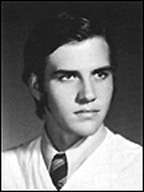
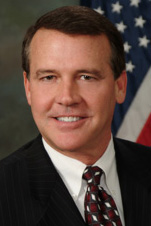
To get a sense of just how wildly absurd it is to me to think of Steve this way, check out the picture of him

in 1971, and compare it to his campaign picture. And no; I’m not telling you which one’s which. DANG! I thought there’d be more of a contrast (I had not yet looked when I typed that last sentence) — I forgot that Steve, who even then spoke of a career in politics, used to always tuck his shoulder-length (or at least Prince Valiant-length; somewhere in that range) hair back behind his ears before being photographed. Crafty, eh?

Maybe if this campaign also goes belly-up, we can get into some serious negotiations about getting the band back together.

The Question of the Year

… was posed in this piece, “Republicans’ Tack to the Right: With or Beyond the Mainstream?,” in The Wall Street Journal today:

There now seems little doubt that Republican primary voters have shifted to the right. The question is whether that reflects a move by the country more broadly in that direction—or a shift by GOP candidates outside the mainstream, which could benefit Democrats in November.

I suppose we’ll find out in a few months.

We could blow it up — blow it up REAL GOOD!

Shades of the “Farm Film Report” on SCTV…

Have you seen the latest wacky idea floated for sealing the oil spew in the Gulf? They say nah, they wouldn’t really do it, but it IS leading the NYT site at the moment:

The chatter began weeks ago as armchair engineers brainstormed for ways to stop the torrent of oil  spilling into the Gulf of Mexico: What about nuking the well?

Decades ago, the Soviet Union reportedly used nuclear blasts to successfully seal off runaway gas wells, inserting a bomb deep underground and letting its fiery heat melt the surrounding rock to shut off the flow. Why not try it here?

The idea has gained fans with each failed attempt to stem the leak and each new setback — on Wednesday, the latest rescue effort stalled when a wire saw being used to slice through the riser pipe got stuck.

“Probably the only thing we can do is create a weapon system and send it down 18,000 feet and detonate it, hopefully encasing the oil,” Matt Simmons, a Houston energy expert and investment banker, told Bloomberg News on Friday, attributing the nuclear idea to “all the best scientists.”

Or as the CNN reporter John Roberts suggested last week, “Drill a hole, drop a nuke in and seal up the well.”

This week, with the failure of the “top kill” attempt, the buzz had grown loud enough that federal officials felt compelled to respond…

If we cain’t burn it off, ‘n’ we cain’t top kill it off, ‘n’ if the blamed SAW ain’t gettin’ ‘er done, le’s NUKE the sumbitch. Why, if the Rooskies kin do, so b’God kin we!

That’s the first time I’ve had the sense I was reading The Onion when I wasn’t since… well, since that Monday when our governor went missing.

Tea Partiers onto something: Repeal the 17th!

Put this in the category of stuff that looks like I’m just trying to be provocative to get a rise out of y’all, but I thought I’d share my surprise at learning that the Tea Party has a controversial position that I share.

The  New York Times says the idea should be “unthinkable:”

A modern appreciation of democracy — not to mention a clear-eyed appraisal of today’s dysfunctional state legislatures — should make the idea unthinkable. But many Tea Party members and their political candidates are thinking it anyway, convinced that returning to the pre-17th Amendment system would reduce the power of the federal government and enhance state rights.

… which I take as a challenge. Let’s think about it anyway.

So some Tea Partiers want to do away with popular election of Senators — an idea that is doomed to go nowhere, of course, because once you let the people elect an office, even if it’s an official they can’t name (walk down the street and ask everyone you meet to name the state agriculture commissioner, or the secretary of state, and then tell me they need to be popularly elected), that privilege will never be revoked. Try, and someone will demagogue you on it, and that’s the end of that.

But that doesn’t mean it’s not a good idea. The Framers constructed a system of checks and balances that was based in part in the fact that each branch — or in this case, each branch of a branch — was elected via a different process. Politicians tend to dance with the one that brung ’em, and this ensured that each one was brung by someone else.

No, wait, that analogy doesn’t work, because ultimately the source of these elections was the people. Rather, each official was chosen by a different method, which was bound to make them look upon their constituency in a different way. The House of Representatives was always to be the People’s House, in that it was the one body most directly (and most often) responsive to the public whim of the moment. The president was supposed to be somewhat insulated from those same political winds by being chosen by the Electoral College — a method that required him to get wider support, as opposed to merely winning a few population centers.

Judges were to be nominated by the executive, with advice and consent from the Senate — which is about as much as you can insulate them from politics while still having their selection rooted in the public will over time.

And the Senate — well, the purpose of the Senate was to represent states. The House represented aggregations of individuals, and to keep the more populous states from running roughshod over the less crowded ones, each state got exactly two senators. And since the idea was that they represented states, of course they were chosen by the bodies that made decisions for the states as states — the legislators who make the state’s laws.

The balance of differently formed constituencies making their decisions through different processes was a thing of beauty. Not that all the decisions thus made were beautiful, but that’s the thing: The Framers expected human beings to be fallible, and that included the almighty People themselves. So you constitute different constituencies and play them off against each other. Checks and balances.

Of course, the NYT thinks it settles the matter when it appeals to everyone’s contempt for their state legislatures. Well, if you really think the legislatures would make worse decisions than the electorate at large, you haven’t really paid attention to some of the warts who get elected by the all-knowing People. Let’s give it a try; it couldn’t get worse.

Instead of what the Framers envisioned, now we have the representatives and senators chosen in the same way (OK, it’s statewide vs. district, which is something, but not as different as the old way), going after the same money sources to finance their campaigns, and consulting the same polls, their fingers ever in the wind to make sure they’re doing the popular thing at every moment. And no tough decisions get made.

No, it’s never going to happen because no one today is about to do the unpopular thing, and this would be very unpopular. (And hey, maybe if the Tea Party endorsed more unpopular, politically counterintuitive ideas such as this, we wouldn’t hear about the Tea Party any more, so I want to encourage them in this.) But that doesn’t mean it’s not a good idea.

CNN’s birthday: And a dark day it was, too

Kathryn brings my attention to a piece headlined, “The Day 24-Hour TV News Was Born.” To which I can only reply, and a dark day it was, too:

At first, it seemed an odd experiment, the sort of thing that a quirky gazillionaire could afford to blow his money on just to see what had happened. Who, after all, wanted TV news 24 hours a day? Well, Ted had the last laugh on that. And this piece concentrates rightly on CNN’s dominance of such huge, breaking news events as the Challenger explosion and the Gulf War in 1991.

But when you say “24-hour TV news” to me, I think of the harm that CNN and its imitators have done — and did pretty much alone before folks started getting their news via Twitter and the like.

Once upon a time, boys and girls, news organizations — even TV news organizations, which were always sort of on the fringes of journalism — had what was called a “news cycle.” What this meant was that a given medium would report to you, the reader or viewer, at given times each day. The rest of the day was spent reporting. And while it was all pretty rushed, there was time in the day before deadline to do at least some modicum of making sure you knew what the hell you were talking about.

Not any more. Now, something happens, and the 24-hour cable outfits start “covering” it, and what you see is a bizarre mix of raw legwork tarted up as reporting, and commentary based on pathetically insufficient information. The commentary comes in, not to put things in perspective for you, the viewer, not to foster an informed conversation in the society, but to fill dead air while we wait for the latest half-baked “fact” to come in.

How does one provide commentary under such circumstances? There are a number of techniques that work. One is to further blur the line between news and entertainment. Another — and this is the one that concerns me the most — is to embrace the most mindless kind of reflexive partisanship. You have a “liberal” and a “conservative” on and let them shout prefab opinions at each other — opinions that are in no way dependent upon the facts of the unfolding story; the talkers bought them off the shelf and brought them along to the studio. This is called being fair and well-rounded.

Gradually, all political discourse in America has taken on this kind of mindless, prefab, artificial conflict approach — talking not to reach some sort of conclusion, or synthesis, or consensus, but each participant playing a rigidly predefined role depending on which pigeonhole he allows himself to be identified with.

This approach became refined and concentrated in the blogosphere, which joined the 24-hour TV “news” crowd and the interest groups and the parties themselves in constantly spinning the wheel, oversimplifying everything as left or right, black or white, up or down, and so forth.

Daily journalism was never overly burdened with sober reflection. But now, what little thought went into the news has been subordinated to these pre-fab conflict dialectics.

And we are worse off.

We do NOT have the nation’s dumbest drivers

Actual SC car, seen parked behind a Lizard's Thicket near my home. You may recognize this as a former header image.

Seems like everywhere I’ve lived in this country, I’ve heard the complaint that that place, wherever it was, had the dumbest, worst drivers anywhere.

You’ve no doubt heard that about South Carolina drivers. Perhaps you’ve said it. (For that matter, maybe it’s been said about you.)

But finally, I see, someone (GMAC Insurance) has decided to quantify it, and we are NOT the dumbest. Not even close. In fact, we come in 30th out of 51. Where are the dumbest drivers (measured by a written test of the sort they give to applicants for a learner’s permit)? New York.

And the smartest are in Kansas. This is probably due to the fact that their written test is one of the hardest. I’ve taken drivers’ tests in several states, but Kansas was the only place where I had to retake the test after flunking it once. (And no, it wasn’t stupid stuff. It was stuff like, do your headlights need to illuminate the road for 400 feet or 600 feet. Esoteric stuff. But it sure made me study the book before going back.)

Sad news about the Gores

Well, this is sad news to read:

After forty years of marriage, Aland Tipper Gore are separating, the couple announced in an e-mail to friends Tuesday morning.

“This is very much a mutual and mutually supportive decision that we have made together following a process of long and careful consideration,” the former vice president and his wife said in the email first reported by Politico. “We ask for respect for our privacy and that of our family, and we do not intend to comment further.” Gore’s spokeswoman later confirmed the validity of the e-mail.

The news stunned many political watchers — the duo’s mutually affectionate manner on the campaign trail did much to enliven Al Gore’s stuffy image — but also good friends.

“I’m shocked — beyond shocked,” said Chris Downey, a close friend for many years who said she spoke to Tipper last week. “This is the least likely course of events I could imagine.”

I certainly can’t say I was close to them — I never met Tipper, even though I got to know her husband fairly well covering him for years back in Tennessee. But knowing Al, and watching her from afar, she always seemed like the more approachable, open and personable of the pair. I always respected Al’s intellect and command of issues, and was glad when my paper endorsed him for the Senate in 1984, but he wasn’t exactly a guy to light up a room. Which suggests that the big loser in this split is Al.

And of course, their family and all those who care about them.