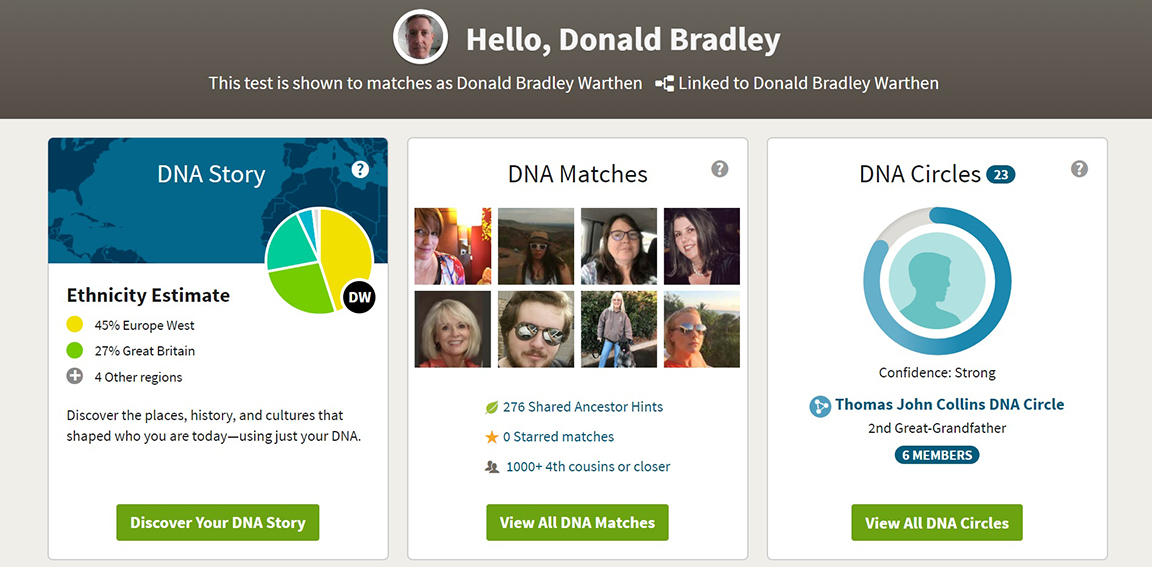
My DNA results overview page. I do not “shudder” to share this, with you or the cops.
This morning while working out on the elliptical, I started watching a movie on Netflix called “Anon.” It imagines a near-future in which there is no privacy. Apparently, everyone’s brain is wired to record video of every single second of his or her life — sort of like Google Glass without the glasses. And that data is easily shared wirelessly with other people, and is completely available to the police. The police can even access the last experiences of a dead person, which makes finding murderers ridiculously easy.
Also, you can watch TV or movies without a TV — they just stream in your head — and talk to anyone anywhere without a phone. Which, if an accurate prediction of the future, is really bad news for Best Buy. (First showrooming, now this…)
So since the main character (played by Clive Owen) is a homicide cop, a plot twist is needed to make his job interesting. In this case, the plot twist is that he’s on the trail of a serial killer who has managed to hack people’s digital memories, so that everything in the victim’s last moments is seen from the killer’s POV — so you see the victim being shot, but you don’t see the shooter.
I lost interest in it after 39 minutes, and switched over to “Babylon Berlin” for the rest of my workout. It may have been low-tech, but Germany between the wars was never boring.
But it reminded me of something I meant to blog about a week or so ago.
You’ve probably read about how the Golden State Killer was caught more than 40 years after his crimes when investigators tracked him genetically through a consumer DNA service like Ancestry. Basically, they found links to some of his relatives who had voluntarily shared their DNA info on such databases. Then they found him, and made a positive DNA match to something he’d discarded.
Which I thought was awesome.
But of course, this development immediately led to such headlines as:
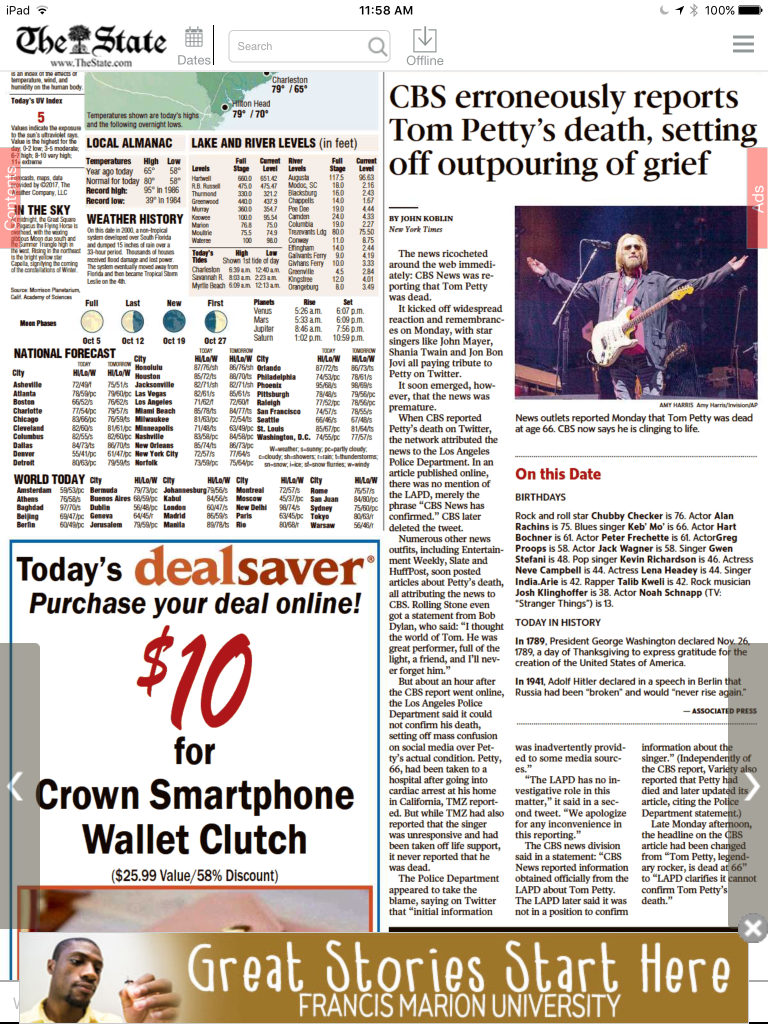
The Golden State Killer Is Tracked Through a Thicket of DNA, and Experts Shudder
Data on a genealogy site led police to the ‘Golden State Killer’ suspect. Now others worry about a ‘treasure trove of data’
Really? Experts “shudder?” People worry about a “treasure trove of data” that not only can connect you to a 4th cousin, but help cops determine whether he’s a serial killer? Which would be a cool thing to know before you reach out to meet him or trade family information?
Why? That’s utterly absurd.
Sharing DNA info can lead to some pretty painful results for a lot of people. For instance, you can find out that your “Dad” isn’t really your Dad. This can lead to a great deal of family trauma and upend lives.
I’ve been lucky in that regard. My results have been boring. I am related to the people I thought I was related to in precisely the way I thought I was. There could be surprises in results from folks who have not yet been tested, but so far it’s been pretty vanilla. (Extremely vanilla, in terms of ethnicity — so much for those Ancestry ads that tell of all the exciting, exotic backgrounds people have found in their DNA.)
Not that there haven’t been surprises elsewhere on the tree. Some months ago, my daughter was contacted by a guy who was trying to find his birth parents, who thought a cousin of mine might be his father. Sure enough, he shows up on Ancestry as being right behind a couple of my first cousins in terms of his closeness to me. He narrowed it down to one of my cousins. I don’t know whether that cousin knows about it, because I haven’t wanted to pry.
Something like that can be upsetting to those involved, and I’m very sympathetic to that. But that’s just the DNA service working as advertised.
What these “experts” out there are “worrying” and “shuddering” about is the police being able to use these connections to solve crimes.
This does not worry me. If one of my cousins is a serial killer, I’d kind of like the duly constituted authorities to know that, and act upon it.
And I have trouble imagining a scenario in which that is a bad thing — although I’m sure we’ll see a movie soon that shows it to be a frightening thing…