Category Archives: Popular culture

The HISTORIC part is the national media factor

Just got a call from NPR; they want me on the radio this afternoon at 2:20 to talk SC politics, even though I told them I wasn’t really paying that much attention yesterday to the stuff THEY were watching, but was following runoffs that were actually in doubt.

Which gets me to my point. As I said this morning over breakfast to Rep. Dynamite (a.k.a. Anton Gunn), we are about to see something we have NEVER before seen in South Carolina, and I’m not talking about an Indian woman or a black man having the GOP nomination.

For the first time ever, national media coverage is going to be a significant factor in who becomes governor of South Carolina.

If you’re Vincent Sheheen, this has got to worry you even more than the usually-decisive advantage that Republicans tend to enjoy in statewide elections. That can be overcome, as Jim Hodges demonstrated at the peak of the GOP ascension, before the party started falling apart squabbling.

But the national media factor is likely to be insurmountable.

Nikki Haley does not have to spend one thin dime on TV ads. She really doesn’t. She’s going to be on national TV, on the 24/7 cable channels, day in and day out. That means she will be on every TV in the state, every market, to a saturation point. And the tone will be gushing, breathless, wondering, hagiographic. The tone will be one of delight, and grotesquely simplistic: Look, she’s a woman! Look, she’s ethnic! She’s Sarah Palin! She’s Bobby Jindal.

Never mind that Sarah Palin is as vapid and empty a political celebrity as any to come along in a generation if not longer, the political equivalent of Charro — the celebrity who is famous for being famous. Never mind that when Bobby Jindal finally got up to bat in the bigs after all kinds of buildup about what an exciting new player he was — giving the Republican “response” live — he went down swinging at bad pitches.

One thing about national media is that they are ubiquitous. They saturate our lives. We don’t have to take action to consume them; they consume us. Every citizen in this country who is not directly involved in state or local government knows vastly more about national politics than about local and state — or at least thinks he does. Unfortunately, the coverage is so superficial and thin that the consumer’s level of understanding is unlikely to be impressive. But there’s just so MUCH of it.

And that is made for Nikki. Nikki is a telegenic young woman who SHINES as long as nothing goes deeper than her being a woman, being a minority, being fresh, being engaging, having a great smile. Of course, she says she wants to talk issues, such as her biggie, transparency. And no one wants to break the spell of her being just so darned exciting to ask, “Transparency? OK, how about that $40k you pulled down for having connections? And (whisper this) how about those public-account e-mails you won’t release?” But national media coverage doesn’t dig down even that far, much less far enough to challenge her understanding of, say, education policy. Or economic development. Or anything else that matters in one who would be the governor who replaces the most disengaged, apathetic governor in our history. You know, her political mentor.

And if you’re Vincent Sheheen, what can you do to overcome that wide, thin, wall-to-wall, breathless coverage of your opponent? Frankly, I can’t think of anything he CAN do. But I hope he knows of something.

The big BP coffee spill

Since a couple of you have brought this video to my attention, and since it is funny, and since a couple of others have pointed out in person to me that I’m really being a grouch today, I thought I’d share it with you in the interests of lightening the mood.

At the very least, it’s more entertaining than the show that Congress put on yesterday with the actual head of BP. Unfortunately, neither this nor that solves our huge problem…

But no, I’m NOT going to be all negative. Let’s enjoy this…

Fun Post IV: Jon Stewart’s latest on SC

The Daily Show With Jon Stewart Mon – Thurs 11p / 10c
Alvin Greene Wins South Carolina Primary
www.thedailyshow.com
Daily Show Full Episodes Political Humor Tea Party

I say it’s a “Fun Post,” but you know what — the fun of being mocked by “The Daily Show” is starting to wear thin. Even Jon Stewart, so charmed by us last week, seems to be getting sick of all the absurdity here in what he terms “America’s whoopie cushion, South Carolina.” There was an edge to his delivery last night — as when he said, “Only South Carolina can take a silk purse and turn it into a sow’s anus” — that seemed to say, “Enough already with you people!”

Fun Post III: Drummer shows up at wrong gig

This bit of fun comes to you courtesy of our pal Burl Burlingame out in Hawaii.

You have to watch it long enough for the music to start before it gets good, but it’s worth the wait. Nothing like a bit of musician humor.

And Burl should know from musician humor, being a talented purveyor of melodies himself. Rather than having spent the last 40 years talking about starting a band the way I have (still working on the name, and the playlist), he has played in a number of them.

Very little-known bit of music trivia here, sort of on the order of Moonlight Graham‘s half-inning in the bigs, only much more small-time: Burl and I were in a band together VERY briefly back in the summer of 1971, right after we graduated from Radford High School. The band was together for the length of one rehearsal, over at Steve Clark’s house. Burl played harp (harmonica for you non-musical squares out there), and I was the front man. Thought I was Mick Jagger.

And what does all this have to do with politics, which is what you usually come to this blog for? Well, a few years back Steve Clark ran for one of those congressional seats in Texas that the Republicans caused such a stir by gerrymandering into existence. But he dropped out before the actual primary.

And — wonder of wonders! — I just discovered (looking for a link) that he’s running AGAIN, as a “Tea Party conservative.” At least, I think he’s still running. His campaign Facebook page hasn’t been updated since February.

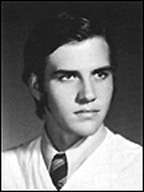
To get a sense of just how wildly absurd it is to me to think of Steve this way, check out the picture of him

in 1971, and compare it to his campaign picture. And no; I’m not telling you which one’s which. DANG! I thought there’d be more of a contrast (I had not yet looked when I typed that last sentence) — I forgot that Steve, who even then spoke of a career in politics, used to always tuck his shoulder-length (or at least Prince Valiant-length; somewhere in that range) hair back behind his ears before being photographed. Crafty, eh?

Maybe if this campaign also goes belly-up, we can get into some serious negotiations about getting the band back together.

Fun Post I: Abe Froman tribute

This promises to be a long and hairy day, with GOP lawmakers in the House poised to knuckle under to a discredited governor’s indefensible vetoes.

So I thought I’d start it with some fun, to give us the strength to bear it all.

I’ll start with this really awesome tribute video I found on YouTube last night. How did I find it? Well, I was posting that item about the death of Jimmy Dean, and I said something about him being the Sausage King of America, which of course was a play on Abe Froman, the Sausage King of Chicago, and I went looking for a link to explain that for those of you who are not well schooled in Ferris Bueller, and I ran across this. (And yes, I linked to it yesterday, but y’all don’t always follow links.)

Enjoy.

Why ETV Matters, by Mark Quinn

Trying to catch up on my e-mail, I ran across this item which also bears upon the Sanford vetoes:

Why ETV matters

For nearly 3 years, my job in public television has forced me to explore many of the crushing effects America’s Great Recession has had on our state. Now, it appears, the economic tsunami which began to wash over the land in 2008, may wipe away 50 years historic and pioneering television produced by ETV. The Great Recession has arrived on ETV’s doorstep, and I am forced to report on what may be the demise in vitality of a treasured state institution.
I work as the host of a weekly radio and television program entitled, The Big Picture. The premise is fairly simple, and almost ancient in its origins. Barry Lopez, the prolific novelist and essayist, summed up my job thusly: “it means to go out there and look and come back and tell us, and say what it is that you saw.” For millennia, this has been an integral part of the human experience. The earliest cave drawings were nothing more than one person’s reporting of the world that existed over the mountain or across the river. And it has always been so.
And while it’s deeply gratifying to travel our state to find the stories that give expression to the lives we lead today, there’s equal satisfaction in being a conduit to help serve another timeless need that we all have, the need to be heard. There is immense power in the connection with ordinary, everyday people and the dignity they claim when they are allowed to tell their story. The brilliance of ETV hasn’t been its coverage of the powerful or the popular, as essential as that may be. It’s been thousands of collective glimpses into the lives of everyday people doing extraordinary things. Or peeks at places you never knew existed. It’s the story of South Carolina.
For me, public television is taking you somewhere you will never go you’re your local newspaper. Nor will you ever go there with your local television station.
For me ETV is sitting in the Sullivan’s Island living room of best-selling author Dorthea Benton Frank, laughing riotously at the random acts of calamity life will throw at you… knowing if you don’t laugh, you will likely cry.
It’s thumbing through a scrapbook and shedding a tear with Dale and Ann Hampton in their Easley home, remembering their daughter Kimberly who was killed in the war in Iraq. This is where divine grace lives.
It’s being completely captivated by the force of nature known as Darla Moore. Her bank account is impressive, but her resolve, wit and determination are much more so. The first woman to conquer Wall Street still lives in Lake City.
It’s sitting down with 5 former first ladies of South Carolina, and hearing what we all assume; that life inside the Governor’s mansion is for most, a pretty grand affair.
It’s Mrs. Iris Campbell, recounting the thick fog of cigar smoke that surrounded the pool of the Governor’s mansion, as her husband hosted a group of German businessmen and wrote out the plan for BMW’s move to South Carolina on a series of cocktail napkins.
It’s the terrible misfortune of Mike Burgess, staggering as best he can through a life that includes a wife who contracted Alzheimer’s disease at the age of 46. Another day when it’s tough not to cry.
It’s spending a day with the resolute Mayor of Marion, Rodney Berry. The city has been in an economic funk for 20 years. It’s on the rebound now thanks to a fierce pride and stubborn resolve to remake its image in the absence of textiles and tobacco.
It’s hiking to see the rare rocky shoals spider lilies on the Catawba River, knowing the river itself has been named America’s most endangered. I’m not a naturalist, but the lilies are regal and captivating.
It might be a boat ride down the Pee Dee River with a group of unlikely activists. They are hunters and fisherman who opposed the building a coal-fired power plant on the river’s banks. They won.
It’s standing in Arlington National Cemetery on a gray, cold November day with Colonel Charles Murray, recipient of the Medal of Honor. He’s a World War II veteran who calls today’s soldiers America’s Greatest Generation.
It’s a long walk through the Harvest Hope Food bank in Columbia with Denise Holland. She saw the Great Recession first. The number of people they serve is up 250%. Denise Holland is scared, but grateful to tell the story of the down and out, and the dispossessed.
It’s 82 year old Laura Spong, now a best-selling artist. Her paintings fetch as much as $10,000. She took up serious art at the age of 62. Anything is possible.
It’s Charleston Mayor Joe Riley, trembling in anger when he produces a small picture of a teen-age boy, shot dead. Mayor Joe wants better supervision of people on probation and parole. Some of his pleas are now being heeded.
It is the absolute decency of former Governor Richard Riley, and his pleas for civil political discourse as we talk about leadership in the 21st century. This one will take some work.
It’s conversations with Dr. Walter Edgar about the complex history of the south, and why it’s meaningful traditions are an endless source of fascination for people all around the world.
And it’s the passion of Charleston chef Sean Brock. His seed-saving campaign to bring back South Carolina grains and vegetables that are almost extinct, is the biggest revolution in lowcountry cooking in a half century.
Chances are, unless you watch ETV, you probably haven’t heard much about any of these stories. And let me be clear, these stories will not be told, will never see the light of day if our institution is starved of its support.
Think about this: the average story on your local television news station is 75 seconds. Imagine that. I worked in that world for many years and can tell you that most all of these stations are truly committed to their communities. But how effectively can they tell you about our collective condition in 75 seconds?
I represent a very small part of the overall efforts of ETV, and its deep connection to the many thousands of people in South Carolina. And yet, I know that my enthusiasm is matched and even exceeded by many of my co-workers. What we do, everyday, is collect the patchwork pieces of stories that make up the fabric of our life here in this state. Public media is an incredibly important resource in a noisy and sometimes polluted information environment.
Bill Moyers, dean of public broadcasters said, “the most important thing that we do is to treat audience as citizens, not just consumers of information. If you look out and see an audience of consumers, you want to sell them something. If you look out and see an audience of citizens, you want to share something with them, and there is a difference.”
More than 50 year ago, in the advent of a ground-breaking experiment that came to be known as ETV, the mission of public broadcasting was to create an alternative channel that would be free not only of commercials, but free of commercial values, a broadcasting system that would serve the life of the mind, that would encourage the imagination, that would sponsor the performing arts, documentaries, travel. It was to be an alternative to the commercial broadcasting at that time. And guess what, it worked… and it still works today.
Can South Carolina survive without ETV? Absolutely. Will she be as rich? Not a chance.
What will you do to keep the story going? What will you do to help save ETV?
.
Mark Quinn
Host, The Big Picture
www.scetv.org

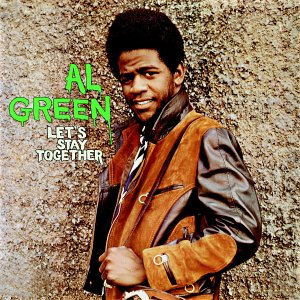
Maybe they thought they were voting for the Rev. Al Green

That’s my latest theory to explain the victory of Alvin Greene in the Democratic primary for U.S. Senate.  They thought he was Al Green. (Never mind that this is South Carolina and Al’s from Memphis; just indulge me for a moment — I’m on a roll here.)

And if that’s what those voters were thinking, well then, who can blame them? Certainly not I.

A few days ago, I was listening to Pandora while blogging, and had to stop what I was doing to listen fully to an awesome track by the Rev. Al. It was an unlikely song to be so awesome. It was “How Can You Mend A Broken Heart?” Yep, the Bee Gees tune.

Now, I feel about the Bee Gees sort of the way Rob in High Fidelity (my very favorite book of the last 15 years, which I know I mention all the frickin’ time)  felt about Peter Frampton. (In fact, I feel more that way about Peter Frampton than I do about the Bee Gees, because some of their pre-disco stuff was good. But their disco sins are difficult to forgive.) If you haven’t read the book, you may remember the scene in the movie. Rob and Dick and Barry go to hear this new singer in a club, and as Rob enters, he hears the strains of “Baby I Love Your Way,” and grimaces, “Is that Peter F___ing Frampton?” and almost leaves. But he listens, and is so enchanted with what the singer does with the song, that he says to Dick and Barry, “I always hated this song,” and they moan a sympathetic, “Yeahhhh…” and then he confesses, “Now I kind of like it…” and they moan, “Yeahhhh…” (Here’s the scene, by the way.)

OK, so sexual attraction was also involved there. But I know that with Rob’s highly refined pop music sensibilities, he would also have been blown away by Al Green doing that Bee Gees tune. It was amazing.

Where was I? Oh, yes… so if that was why folks voted for Alvin Greene, all is forgiven.

The Fix lists Top Five nastiest SC races ever

We are truly legendary, to the point that political junkies sit around up in Washington dreaming up Top Five lists about us, a laHigh Fidelity, such as “The five nastiest South Carolina races ever.”

At least, Chris Cillizza at the WashPost‘s The Fix does.

And it’s a pretty good list even though it’s awfully heavy on stuff that happened during my own career. He does, to give him credit, give a mention to the legendary Preston Brooks, but the Top Five are all 1978 or later.

Given that limitation, it’s a good list. He counts them down thusly:

5. 2002 Republican governors runoff: This is the one I wrote about yesterday (at least, I wrote about the GOP effort to come together AFTER this nasty battle), between Mark Sanford and Bob Peeler. Peeler’s campaign, run by party regulars, was inexcusable, as Cillizza correctly recalls: “In one particularly memorable Peeler ad, a Sanford look-alike is shown stripping a soldier down to his underwear to illustrate Sanford’s alleged attitude toward military funding.” Yep. I remember it well.
4. 1978 4th district race: The abominable campaign against Max Heller, featuring anti-Semitic push-polling by Carroll Campbell’s pollster. I was in Tennessee at the time covering Lamar Alexander and Jake Butcher, but I’ve heard plenty about this from my good friend Samuel Tenenbaum over the years.
3. 1980 2nd district race: Also before I came home to SC, but I knew the players later: Lee Atwater, on behalf of Floyd Spence, told the press that Tom Turnipseed had been hooked up to “jumper cables” — a reference to shock treatments he had received for depression as a teenager.
2. 2010 Republican governors primary: That’s the one we just lived through. Or rather, are still living through. If we live.
1. 2000 Republican presidential primary: The filthy tricks that George W. Bush’s campaign used against John McCain to stop his candidacy and give Bush the momentum to go on and win the presidency. Not sure this was necessarily the nastiest by SC standards, but it certainly had the most profound impact on the world. I firmly believe that otherwise John McCain would have been our president on 9/11 and thereafter, which would have been better for us all. That knowledge of how South Carolina let the world down was very much on my mind when we pushed for McCain’s victory in the 2008 primary. (I also felt responsible because the newspaper — over my strong objections — endorsed Bush over McCain in 2000.)
They keep talking about us. And they will continue to do so, until we turn our backs on all this stuff. Which is why I’m rooting for Vincent Sheheen.

Watch me tonight on SC ETV with Mark Quinn — but WITHOUT Nikki Haley

Just taped a segment over at ETV with Mark Quinn for tonight’s installment of “The Big Picture.”

Watch it at 7:30 p.m. on WRLK, as well as on ETV-HD. The show will also air on the radio Friday at 1 p.m.

My understanding is that Gresham Barrett will be on the show as well, although he wasn’t on with me. My part was just Mark and me shooting the … stuff… about Tuesday’s results. We talked Nikki Haley, Vincent Sheheen, Alvin Greene, and other stuff.

However… Nikki Haley, last I heard, will NOT be on the show. In fact, I was told that her campaign had not even responded to any of ETV’s invitations. I asked “What did you try?” and the answer was, “Everything.” Multiple times, in case an e-mail or something got lost.

Could it be … and I’m just speculating here… could it be that Nikki doesn’t want to face the folks at ETV because she plans to vote to sustain the governor’s veto of their funding next Tuesday?

Nahhhh. Probably just a miscommunication. When somebody with her campaign sees this (and apparently someone over there is watching, since it took no time for them to set me straight last week — which I appreciate), no doubt they’ll call ETV back, and you’ll see her on the show tonight.

Maybe.

Just for fun, a bit of philosophy football

Well, I have a front page, but if I’m ever going to have a full virtual newspaper, it must have a sports page, right?

Right.

So it is that I thought I’d share this wonderful Monte Python skit. Maybe you’ve seen it, but I never had. At the end of a long day, I looked it up tonight, having read about it this morning in a book review in the WSJ, to wit:

In a blissfully funny, vintage Monty Python sketch, there is a soccer game between Germany and Greece in which the players are leading philosophers. The always formidable Germany, captained by “Nobby” Hegel, boasts the world-class attackers Nietzsche, Heidegger and Wittgenstein, while the wily Greeks, captained by Socrates, field a dream team with Plato in goal, Aristotle on defense and—a surprise inclusion—the mathematician Archimedes.

Toward the end of the keenly fought game, during which nothing much appears to happen except a lot of thinking, the canny Socrates scores a bitterly disputed match winner. Mayhem ensues! The enraged Hegel argues in vain with the referee, Confucius, that the reality of Socrates’ goal is merely an a priori adjunct of non-naturalistic ethics, while Kant holds that, ontologically, the goal existed only in the imagination via the categorical imperative, and Karl Marx—who otherwise had a quiet game—protests that Socrates was offside.

What, you were expecting Gamecock football? Perish the thought. You want that, go elsewhere…

South Carolina continues to entertain — which is why I voted for Vincent

The Daily Show With Jon Stewart Mon – Thurs 11p / 10c
Thank You, South Carolina – The Race to Replace Disgrace
www.thedailyshow.com
Daily Show Full Episodes Political Humor Tea Party

Some alert readers brought my attention to Jon Stewart’s latest (well-deserved) mockery of South Carolina. Punch line, as in previous celebrations of our state (such as this one, and this one): “With all the terrible things going on in the world… Thank you, South Carolina! We really needed this!”

Entertaining, yes. But I’m tired of my state being a national joke, which is why I voted for change today.

This campaign’s theme song: ‘Dirty Laundry’

Heard Don Henley’s “Dirty Laundry” on the radio this morning, for the first time in awhile, and it just seemed such a perfect accompaniment for the closing hours of the GOP primary.

This recent (May 20) video is low-quality — bootleg, I suppose — but you can sort of hear the lyrics:

Dirty little secrets, dirty little lies
We got our dirty little fingers in everybody’s pie
Love to cut you down to size, we love dirty laundry

We can do the innuendo, we can dance and sing
When it’s said and done, we haven’t told you a thing
We all know that crap is king, give us dirty laundry…

Can celebrity culture GET any weirder?

Noting this People headline (brought to my attention by Slate):

Elton John Sings at Rush Limbaugh’s 4th Wedding

… I find myself wondering, can celebrity culture get any weirder than this?

And the answer is, yes it can. Just read the rest of the piece, such as the guest list (ranging from Karl Rove to James Carville, thereby supporting my thesis that uberpartisans are all the same), or the fact that Limbaugh’s new wife is a descendant of John Adams, my favorite founder. What would John and Abigail have thought?

A Memorial Day truce, and other reflections

As I was firing up the grill about midday, between rainstorms, I glanced at Twitter and was pleased to find this:

RT @AntonJGunn: Remembering my brother Cherone Gunn and his ship mates this Memorial Day.http://twitpic.com/1srfpw

For those of you not yet addicted to Twitter, what’s going on there is that Joe Wilson was reTweeting — that is, sharing with all of his 14,000 followers, Anton Gunn’s sharing of his memory of his brother, Cherone L. Gunn, who was one of the sailors killed on the USS Cole when it was attacked by al Qaeda the year before the 9/11 attacks.

Yes, that was Joe “You Lie” Wilson honoring the brother of the same Anton Gunn whom GOP candidate Sheri Few attacks as a dangerous socialist.

So it is that we set aside our pettier conflicts in the memory of something higher and better.

We all marked the day in our own ways. Burl went by Punchbowl to honor his parents and Ernie Pyle. For my part, I cooked out burgers and hot dogs for as many members of my family as could make it (only three of my kids, but all four granddaughters). Then I made another run with the truck to help one of my daughters get moved out of an apartment. Then I took a nap.

When I woke up, just a little while ago, I watched the end of Clint Eastwood’s “Flags of Our Fathers.”

It ended a little differently from the book, which I just finished reading last week. It ended with the scene of young “Doc” Bradley and some of the other boys splashing in the surf at Iwo Jima. After they had raised the flag over Mt. Suribachi, in a brief interlude in the fighting, some officer had the quirky idea of letting the guys go for a swim. There were weeks of nightmarish fighting against an unseen enemy yet to come, and three of the six flagraisers would be killed before it was over.

The point the narrator was making as we watched them was that they would probably rather be remembered that way, rather than as heroes. Yes, they were heroes, although not for raising a flag. They were heroes for all the other things they did on Iwo Jima, before and after that. Doc Bradley won the Navy Cross for exposing himself to withering enemy fire to treat a wounded Marine (he was a Navy corpsman). He never told his family about the medal; they learned about it after he died in 1994. He didn’t want to be known for that. He just wanted to live his life, build a business and raise his family.

The narrator closes with some words about how they didn’t perform their acts of heroism for flags, or their country, or for abstractions. They did it for each other. Which is what researchers who have studied the way men act in combat have discovered over and over. It’s all about the guy next to you. It’s about your buddies. Nothing profound about that, except that most people who’ve never been in combat probably don’t know it. The implication in this case is that once you’re separated from those buddies, by death or distance, the “heroism” doesn’t mean so much. And it’s just plain bizarre to be celebrated as heroes in the midst of the hoopla of the 7th Bond Drive, the way Bradley and Rene Gagnon and Ira Hayes were. Ira never could handle it, and ended up drinking himself to death. Rene never could get over the fact that his fame didn’t lead to fortune, and was disappointed. Only Doc Bradley seemed to get it together and live a normal, full, satisfying life after the war. Even though he would whimper and cry in the night, and never tell his wife why.

When forced to speak before crowds in the years after the battle, Bradley and the others would tell the people that they weren’t the heroes; the heroes were the ones who didn’t make it. Guys like Mike Strank — or, to go beyond the six, the most famous hero to die on that cinder: John Basilone, who had received the Medal of Honor for his actions on Guadalcanal and never had to fight again, but insisted on going back, and died on the first day of the battle for Iwo (earning the Navy Cross in the process). But that’s the conventional notion of a hero, and not necessarily what they meant.

Talk about messages… The instant I turned off the DVD player from watching “Flags of Our Fathers,” the TV switched to Henry’s “Vultures” ad, just to remind us of the nonsense facing us in the coming week.

What a bringdown, from heroism and the finest selflessness our nation is capable of, to that, which is if anything an appeal to the opposite…

Punchbowl National Cemetery in Punchbowl crater on Oahu.

I’m in an elevated state…

… listening to Elvis Costello’s brilliant demo version of “Green Shirt,” which would definitely make my Elvis Top Five list. Nothing behind him but that great acoustic guitar rhythm:

Better cut off all identifying labels
Before they put you on the torture table

‘Cause somewhere in the “Quizling Clinic”
There’s a shorthand typist taking seconds over minutes
She’s listening in to the Venus line
She’s picking out names
I hope none of them are mine

Truly, truly awesome. I am re-energized; I can now get through the rest of the day.

I’ll say this for ‘Avatar 3D’: It’s better than ‘Inglourious Basterds’

At the very last moment, as the DVD was being released, I went to see “Avatar” in 3D last Thursday night.

It certainly wasn’t as good as its besotted admirers would have it. Nor was it as bad as Jeff Vrabel claimed, although I enjoyed his iconoclastic take on it.

On the plus side, I’ve never seen anything like it, in terms of the visuals. It was richly beautiful, in spite of the Viewmaster distraction of 3D. Which is better than it used to be, but still not convincing — yeah, it looks like things exist in more than one plane, but the items that pop out in front seem themselves to be flat, 2D, like figures in a pop-up book, not realistic at all. You are conscious of the artifice of it at all times (not to mention the fact that anything I’m not looking straight at is out of focus — although maybe that was the effect of wearing 3D glasses OVER my prescription specs). If you want to make something seem real, give me the chiaroscuro cinematography of “The Godfather,” which went much further toward making me feel I was there than these cheap tricks.

I’ll also say the premise, the central plot conceit, is also intriguing — the idea of a character projecting his avatar into a reality (as opposed to a computer-generated virtual reality) that he can’t otherwise enter. Although I have to say that it SOUNDED better, when I read it in advance, than it worked in the film.

On the other hand, there’s the plot. As my son said as we left the theater, he thought it was better done in “Dances With Wolves.” I wouldn’t condemn it quite that strongly, since I regard “Dances With Wolves” as one of the worst films ever made (although nowhere near as bad as the David Lynch abomination, “Dune”). The problem with “Wolves” was it’s triteness, exacerbated by the fact that Hollywood acted as though it was profound and original. (Folks, Mark Twain thought the whole “Noble Red Man” theme had been done to death by James Fenimore Cooper in the first half of the 19th century, and I’m inclined to agree.) At least “Avatar” gives it a new twist, and the dazzling visuals help you forget that you’re watching yet another screed on how wicked white men are — especially corporate white men and military white men. Got it. People in positions of power do bad things sometimes. Noted.

It was particularly interesting for me that I saw this in the middle of reading Flags of Our Fathers, a thoughtful examination of a time in which this country actually celebrated its military and its core culture, to the point of exaggeration that was painful to the subjects of adulation — especially the real-life Noble Red Man Ira Hayes, who ended up drinking himself to death back in the days before we invented the diagnosis of Post-Traumatic Stress. (Fascinating anecdote illustrating the complexity of actual heroism: When fellow flag-raiser Rene Gagnon was identified and was about to be whisked from the troop ship to Washington to be celebrated, Hayes warned him that if Gagnon told the brass that he, Hayes, was also one of the flag-raisers, he would kill him. When Gagnon ratted him out anyway, Hayes didn’t kill him, but never spoke to him as he gradually killed himself.)

But if you set all that aside, “Avatar” was quite enjoyable. I wouldn’t mind seeing it again, without the distraction of 3D. I’m leaving it in my Netflix queue.

Speaking of Netflix, I’ll say this for “Avatar”: It’s far better than the execrable “Inglourious Basterds.” I’ve never liked Tarantino, but this took my dislike to a new level. Even as satire, even as self-indulgence, this was badly done, as Tarantino went out of his way to trample on any chance that the film had to redeem itself on even the lowest levels. The title, complete with deliberate misspelling, does capture the film perfectly. I’d far rather see a trite re-imagining of the Noble Red Man theme than this desecration of everything in sight, including the Holocaust. That’s all I’m going to say about it.

On the other hand, to end on a high note, the wife and I (thank goodness I wasted my time on “Basterds” while she was out of town) watched “Fever Pitch” — the original with Colin Firth, not the American remake — Saturday night, and it was wonderful. It made me wonder how much better “High Fidelity” might have been had it adhered to the original setting of Nick Hornby’s masterpiece. But then there would have been no Jack Black as Barry, and pop culture would have been poorer…

Did you see “The Hurt Locker”? What did you think? (I gave it 3 stars)

Watched “The Hurt Locker” last night. It was good. I’m going to give it three stars on Netflix.

But you know, I would think that a “Best Picture” winner would be a four-star, if not five. So I was disappointed on that count. Among movies I’ve seen recently, it was better than “Men Who Stare At Goats,” “Public Enemies” and “The Invention of Lying,” but not as good as “Up In The Air” (which was awesome) or “Lars and the Real Girl.”

Not that I expect much from the recommendation of Oscar. I’ve pretty much discounted the judgment of the “Academy” ever since it chose “Shakespeare In Love” as Best Picture over “Saving Private Ryan” and “Life is Beautiful.”

SPOILER ALERT: While the makers of this film worked hard to avoid conventions and surprise you, I saw the surprises coming, and saw how the director was working unsuccessfully to prevent me from seeing it. For instance, in the first scene, as you’re being introduced to this bomb-disposal unit, the viewer is manipulated into seeing a certain character as the protagonist: The camera lingers more on his face, he does and says more to reveal character, his words and actions drive the action forward. Also, he’s the only actor I’ve seen before, although I couldn’t quite place him (turns out it’s Guy Pearce, who starred in the very impressive “Memento”). And of course HE is the one killed, which hits you with more impact than if he were a faceless extra, and brings home to you from the very start that any of these guys could be blown to bits at any moment through the rest of the show. Well done, but I saw it coming.

Other things are done well: David Morse in a bit part as the overbearingly enthusiastic, ubermacho colonel who is deeply impressed at an exhibition of bravado by one of the main characters. (That guy always impresses me, from the bad cop on “House” to understated dignity he brought to George Washington in “John Adams.”)

It’s arty — which might be what appealed to the Academy. And thankfully, it’s free of antiwar preachiness, which I have to admit I sort of expected, given Hollywood’s enthusiasm. (Yeah, some might see the violence and the constant tension not knowing which of the civilians around you is really an insurgent as being an argument against our being there, but it’s exactly what I expect war to be like. Antiwar folks probably expect folks like me to think war is like a John Wayne movie, but I probably have an uglier picture of it in my mind than they do, because I read and think about it more. I’m reading Flags of Our Fathers at the moment, and rewatching “The Pacific.”)

But in the end — and yeah, I saw the ending coming, too (you knew what that guy was going to do) — I’m just not going “Wow.”

Have you seen it? Thoughts?

Hey, I KNOW that idiot. Don’t you?

A friend forwarded to me one of those things that make their rounds on the Internet, a serious of anecdotes labeled “Idiot sightings.” They were funny, but they made me feel bad because, well, they were mostly aimed a working-class people who may NOT be as smart as the average person, and it felt creepy to me to see them made fun of… even if their existence is apocryphal (for some reason, a lot of them were in Kanas — maybe that’s where the e-mail originated).

But I will share this one, since it was about an empowered management type, presumably a college graduate. Since I spent most of my worklife in management (until being laid off), I figured it was OK to laugh — you know, like black rappers being allowed to use the N word. Sort of. Anyway, it went like this:

At a good-bye luncheon for an old and dear coworker. She was leaving the company due to ‘downsizing.’
Our manager commented cheerfully, ‘This is fun. We  should do this more often.’
Not another word was spoken. We all just looked at each other with that deer-in-the-headlights stare.

The thing that got me about this story is, I KNOW that guy.

Don’t you?

Top Five Sports Movies Ever

This post was inspired by my having inadvertently run across someone else’s list of best sports movies. There are several others out there — such as this and this and this — if you want to go look. My own may be incomplete, because I have yet to watch “Raging Bull” all the way through (I’ve got the DVD, I just need to block out the time), and I really need to go back and see “Body and Soul,” which I may have seen once when I was too young to appreciate. Those are the two that crop up on other people’s lists that I haven’t adequately vetted.

But unless one’s life is over, one’s Top Five list is always incomplete, right? So here’s mine:

  1. Hoosiers (1986) – This just has it all – the more or less obligatory underdog storyline, the nostalgia, Gene Hackman (in his best role ever), Dennis Hopper (ditto, and then some – he’s the best thing in it), Barbara Hershey (and not a seagull in sight), and a team of non-actors who succeed as no actors could in making the action more real than real. You may surmise I have a particular affinity for a story about a fiftyish coach in need of professional and personal redemption (starting with a job). And yet, I was first impressed with that theme 24 years ago, and even then there was a personal identification. And I suppose we could have a long discussion about the difference between White Ball and Black Ball, and the nostalgic pleasure that a gray-haired White Guy might get from watching some basketball from back in the days when traveling was still against the rules, and everybody wore black Chuck Taylors. But beyond all that, just an awesome flick. And don’t forget, it’s based (loosely) on a true story.
  2. Rocky (1976) – When this came out, it was the first new film I could remember as plain and simple and sincere as this. And there’s been little to touch it since. This is like a plain granite block of a movie – the basic, unadorned stuff from which all good movies that touch the heart are made.
  3. The Natural (1984) – Thank goodness they went all Hollywood on this one, and slathered on the gauzy sentimentality, because it was exactly what this story needed. In Malamud’s novel Roy Hobbes was a brutish antihero, a case of natural talent invested in an unworthy creature, not a guy you particularly wanted to see succeed (and he didn’t, by the way; the ending leaves you feeling dead and empty inside). Redford’s frayed farmboy stoicism, modified only by a tendency to get misty-eyed and lyrical on the subject of baseball, worked perfectly. The ultimate baseball movie, when you’re feeling reverential about the game (when you’re feeling less so, go with “Major League”). Favorite little slice of life: Pop and Red in the dugout during practice, trying to stump each other with “Name that Tune.”
  4. Vision Quest (1985) – As a former high school wrestler myself, I can attest this is THE definitive high school wrestling movie. OK, there isn’t a lot of competition, but that just makes me grateful that when Hollywood made this one attempt, they got it right. Matthew Modine perfectly expresses the awkwardness of being an intelligent, introspective young guy trying to figure out life (favorite example: – he’s trying to impress the girl by complimenting her musical taste and when she says it’s Vivaldi, he says, “Yeah, Vivaldi – he’s great” in a way that utterly fails to convince that he’s ever heard of the guy. Another: He confides to his teacher that he thinks he’s suffering from priapism. Also, before I let you out of this parenthetical, the scenes shooting the bull with Elmo the dishwasher are gems.), and while “coming of age movies” constitute one of Hollywood’s most overworked genres, this is possibly the best such attempt ever. While there was never any danger of my becoming state champ and I never had a hot 21-year-old semi-bohemian chick come to live with me when I was in high school, this feels like what life was like at that age.
  5. Chariots of Fire (1981) – Just thought I’d throw in a posh, arty, nonAmerican film to round out the five. Not that this one doesn’t deserve the honor. Like all good sports flicks, it displays what is best about sport, in terms of its capacity to lift the human spirit (as Elmo explained to Loudon in the clip linked above). Favorite scene – the quiet little homily Eric Liddel offers in the rain after a race, which is as powerful an expression of faith as you’re likely to find in a major Hollywood movie.

That’s my Top Five, and I’m sticking to it — for the moment. But a couple of those choices were a little arbitrary in light of the competition. And as much as I want to preserve the unities of Nick Hornby’s Top Five concept, here’s what I would include also in the second five of a Top Ten:

  1. Breaking Away (1979) – Almost made the Top Five, but it seemed that it was only marginally a sports movie. Wonderfully goofy film about a young guy trying to find his place in the world and meet chicks, and the lengths he’ll go to. Kathryn may be offended by what the kid’s Dad says about “all them “eenie” foods… zucchini… and linguini… and fettuccine. I want some American food, dammit! I want French fries!”
  2. The Endless Summer (1966) – The classic surfing quest movie. The documentary travels the globe in search of the perfect wave. Which is what all of us surfers (and I’m really stretching the definition of “surfer” when I say “us”) would do given the time and money.
  3. Major League (1989) – Also almost made the Top Five, but I only wanted one baseball movie there, and this one wasn’t reverential enough. But this one captures how much FUN the game is, both for players and fans. Favorite line: Bob Uecker’s gloriously goofy hometown-announcer’s understatement when he describes a pitch that goes about six feet astray as “JUUUUST a bit outside…”.
  4. Tin Cup – (1996) Throw me out for including a Kevin Costner flick, but this is WAY more apropos than “Caddyshack” as an evocation of what golf is about. And it’s got Cheech in it, advising Cup that he can win the bar bet with “a hooded four-iron.”
  5. Eight Men Out (1988) – Nice treatment of a key chapter in real-life baseball mythology, helping you understand how the Black Sox scandal could have happened, and how Shoeless Joe could have gotten caught up in it. D.B. Sweeney’s Jackson is a thousand times better than Ray Liotta’s generic effort in the overrated “Field of Dreams.” A great cast, including John Cusack and Charlie Sheen, and a great baseball movie. Say it ain’t so, Joe.

You’ll note that all of my Top Five are from the 80s except for “Rocky,” which just missed that decade by four years. And if you drop out “Endless Summer” and “Tin Cup” (which would stretch the span to 30 years), my whole Top Ten covers a 13-year period, from 1976 to 1989. I don’t know what it is about that period. Maybe it’s me. Maybe I was particularly impressionable. Or maybe it’s that film-making reached just the right pitch during that era. “Rocky” came along when irony had taken such a hold that such a simple, sincere film seemed a throwback, although with modern grittiness — and to some extent that describes something all of the best ones had in common. It’s hard to imagine a character as layered and conflicted as Norman Dale in a movie made in the 30s or 40s (and absolutely impossible in the 50s). Hollywood didn’t think enough of its audiences then. Movies were less frank, less realistic. There’s no way, for instance, a character would have been as obsessed with his sexuality (in a healthy way) as Loudon Swain in an film made before “The Graduate.” Not that that’s everything; it’s just an example. Except for wonderful quirky films like “Here Comes Mr. Jordan” (far better than the remake “Heaven Can Wait,” by the way), sports figures were just a little too monolithic, and their treatment too hagiographic, for my latter-day tastes.

Or maybe there’s some other explanation. In any case, these are the ones I see as best. What would be your picks?