Category Archives: Television

Congratulations to Stephen Colbert!

Well, it’s official — South Carolina’s own Stephen Colbert will replace David Letterman. From the CBS release:

     The CBS Television Network today announced that Stephen Colbert, the host, writer and executive producer of the Emmy and Peabody Award-winning “The Colbert Report,” will succeed David Letterman as the host of THE LATE SHOW, effective when Mr. Letterman retires from the broadcast. The five-year agreement between CBS and Colbert was announced by Leslie Moonves, President and CEO, CBS Corporation, and Nina Tassler, Chairman of CBS Entertainment.

Letterman, the legendary, critically acclaimed host of the CBS late night series for 21 years, announced his retirement on his April 3 broadcast. Colbert’s premiere date as host of THE LATE SHOW will be announced after Mr. Letterman determines a timetable for his final broadcasts in 2015.

Specific creative elements, as well as the producers and the location for the Colbert-hosted LATE SHOW, will be determined and announced at a later date….

Colbert has released a statement:

“Simply being a guest on David Letterman’s show has been a highlight of my career. I never dreamed that I would follow in his footsteps, though everyone in late night follows Dave’s lead. … I’m thrilled and grateful that CBS chose me. Now, if you’ll excuse me, I have to go grind a gap in my front teeth.”

Does it seem to anyone else like this decision was made awfully quickly? Seems to me that when generational changes have occurred at The Tonight Show, for instance, the selection process has taken months.

Will this more-or-less snap decision pay off? I hope Colbert succeeds in this job. I wouldn’t have pictured him in it before the rumors started last week, so I’m a little concerned on that point. But he’s a smart and talented guy who thinks well on his feet, and I’m optimistic.

Could a South Carolinian replace Letterman?

One of these South Carolinians could replace Letterman. It's not the one with the Van Gogh tie...

One of these South Carolinians could replace Letterman. It’s not the one with the Van Gogh tie…

I guess I could have put Colbert’s name in the headline, but I just wanted to relish for a moment the counterintuitive notion of one of us replacing the man who was described in one of my favorite books, Gene Sculatti’s Catalog of Cool, as “Jack Paar on mescaline.” (Or was it “Johnny Carson on mescaline?” I’ll have to look it up when I get home, as Google Books has no preview.)

How did I miss this news the end of last week?

According the Mashable, Stephen Colbert is indeed at the front of the line:

Stephen Colbert is CBS’ top choice to replace the retiring David Letterman, and has indicated that he’s willing to take over the Late Show when the time comes, people familiar with both sides of the discussions tell Mashable.

Colbert has not had any formal contract discussions with CBS, and no agreement is in place, but sources tell Mashable that he first engaged with network executives while Letterman was still mulling the timing of his retirement. Though CBS has had conversations with other candidates, including Colbert’s Comedy Central counterpart Jon Stewart, individuals with knowledge of the situation say Colbert is currently the front-and-center candidate….

Colbert is the one at left in the photo above…

I think Ainsley may become my favorite ‘West Wing’ character

I never saw “The West Wing” when it was on the air, for a number of reasons, not the least of which the fact that I wasn’t watching all that much television in those days. I basically had a TV for watching movies, and didn’t get into watching actual TV programming regularly until AMC started its string of must-watch shows (“Mad Men,” the first few episodes of “Rubicon,” “Breaking Bad,” “The Walking Dead”…).

There was one reason, though, that I particularly avoided “The West Wing.” I had heard, I suppose from a Republican, that it was a fantasy show for liberal Democrats, a picture of the way they would want the world to be. I was finding Democrats particularly tiresome — that is to say, more tiresome than usual — when the show went on the air in 1999. Most of the angry readers I was dealing with in that period were Democrats, between admirers of Bill Clinton (we were tied, I think, for being the first newspaper in the country to urge him to resign) and of Jim Hodges (the show premiered at a moment right in between his election, which we opposed, and our all-out fight against his signature issue, the lottery).

I just didn’t need to hear any more about how members of that party thought the world ought to be.

But I started watching it on Netlflix during my nightly workouts on the elliptical trainer (they’re almost the perfect length for a 40-minute workout), and the first thing I have to tell you is that what I had heard was a most unfair description of the show. Sure, there will occasionally be an instance in which the liberal position is treated briefly as the only one that’s right and true. For instance, as I mentioned the other day, I was pretty irritated when all the main characters acted like a potential judicial nominee who said there is no blanket right to privacy in the Constitution (there is none, whatever the Supremes may say) had said the Earth was flat.

But you’re just as likely to hear characters ably represent other points of view — such as the early episode in which several staffers point out why “hate-crime” laws are inconsistent with liberal democracy. For every red-meat moment such as the one in which President Bartlet humiliates a thinly disguised Dr. Laura using a rather trite liberal device (asking whether she was for literally applying everything in Leviticus), there’s one in which a conservative view wins out, or is at least fairly considered.

The best example of that so far was the episode I watched last night, the fourth in the second season, titled “In This White House.”

It started with an obnoxiously overconfident Sam Seaborn (Rob Lowe) going on a political talk show to push an education bill. He is demolished on the air by a little blonde girl with a deferential Southern manner who looks to be about 16.

This causes a sensation in the White House. A delighted Josh runs to tell Toby, “Sam’s getting his ass kicked by a girl!” Toby — the Eeyore of the executive branch, a guy who is thrilled by nothing — comes running, saying breathlessly, “Ginger, get the popcorn!” (The good part of the above clip starts at about 2:20.)

But things really get interesting when the president — and Jed Bartlet really is everyone’s idea of a perfect president: wise, fatherly, kind, thoughtful, fair, idealistic, practical and always human — decides to hire Ainsley Hayes.

Enjoying Sam discomfiture at being humiliated by Ms. Hayes is one thing. Bringing the conservative Republican on board is another, and the idea causes much consternation on the staff.

But I think she’s going to be a great addition. As she goes through the throes of deciding whether to take the job, she becomes, if not exactly the voice of the UnParty, a lens for focusing on everything that is wrong in modern partisanship. She reprimands both sides for their destructive habit of demonizing their opponents. When Sam (his ego still bruised from his first encounter with her — he keeps thinking women on the staff are mocking him when they’re not) says defenders of the Second Amendment aren’t about freedom and protection; they’re just people who like guns… she settles his hash yet again by saying:

Yes, they do. But you know what’s more insidious than that? Your gun control position doesn’t have anything to do with public safety, and it’s certainly not about personal freedom. It’s about you don’t like people who do like guns. You don’t like the people. Think about that, the next time you make a joke about the South.

(I remembered what she said when I saw this predictable Tweet from Slate today saying “This is what gun ownership looks like in America.” Be sure to check the picture.)

Then, in the episode’s penultimate scene, Ainsley meets two of her GOP friends in a restaurant. They think she has turned the job down, and they can’t wait to hear about the look on Chief of Staff Leo McGarry’s face. As she sits there looking thoughtful, her friends engage in the sort of rant that we hear too often from both sides.

“I hate these people,” says her friend Harriet.

“Did you meet anyone there who isn’t worthless?” adds Bruce.

“Don’t say that,” Ainsley says softly.

Bruce continues, “Did you meet anyone there who has any-?”

Ainsley lights into him:

I said don’t say that. Say they’re smug and superior, say their approach to public policy makes you want to tear your hair out. Say they like high taxes and spending your money. Say they want to take your guns and open your borders, but don’t call them worthless. At least don’t do it in front of me.

Her friends look stunned. She chokes up as she continues:

The people that I have met have been extraordinarily qualified, their intent is good.
Their commitment is true, they are righteous, and they are patriots.

And I’m their lawyer.

And she walks out.

Wow. If she didn’t look so extremely young, I’d be in love at this point. I think I’m really going to enjoy this character….

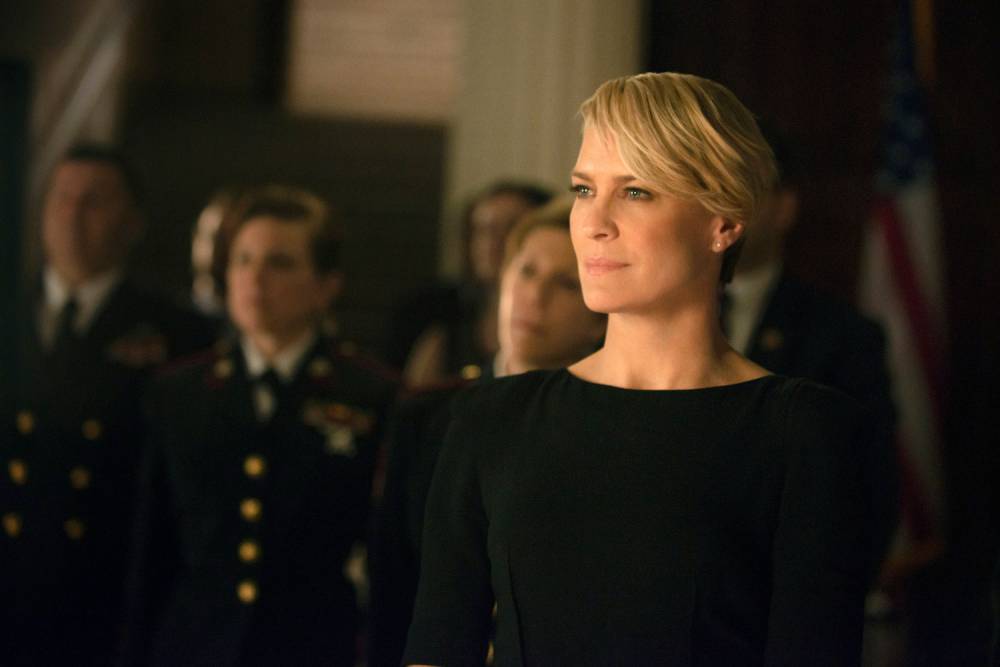
Claire Underwood’s proposal fails in real-life Senate

Sen. Gillibrand

Sen. Gillibrand

OK, technically, it wasn’t the fictional Mrs. Underwood’s plan. It was pushed instead by the real-life Sen. Kirsten Gillibrand — who, as tacky as it may be in the context of talking about sexual crimes (but it’s true), is also a rather striking blonde.

A more relevant coincidence is that her proposal was the very same one that caused the majority whip to stop the Underwood bill on “House of Cards.” To wit, according to The Washington Post:

The Senate rejected a controversial proposal Thursday to remove military commanders from decisions on whether to prosecute major crimes in the ranks as the concerns of Pentagon leaders trumped calls from veterans groups to dramatically overhaul how the Defense Department handles assault and rape cases.

Congress has already voted to revamp the military’s legal system by ending the statute of limitations on assault and rape cases, making it a crime to retaliate against victims who report assaults and requiring the dishonorable discharge or dismissal of anyone convicted of sexual assault or rape.

But on Thursday senators rejected a plan by Sen. Kirsten Gillibrand (D-N.Y.) that would go further by taking away from military commanders the power to refer serious crimes to courts-martial. The decision would shift instead to professional military trial lawyers operating outside the chain of command.

The proposal fell five votes short of the 60 votes necessary to clear a procedural hurdle and proceed to a final vote. In a reflection of the complexity of the issue, 10 Democrats voted against Gillibrand’s plan, while 11 Republicans — including Senate Minority Leader Mitch McConnell (Ky.), Ted Cruz (R-Tex.) and Rand Paul (R-Ky.) — joined her in voting to proceed….

I think the Senate acted wisely. It moved to toughen the law without undermining the military system of justice. I realize the Underwood/Gillibrand approach has attracted growing support — witness how close it came today. But while I’d like to throw military rapists under the treads of an Abrams tank, I don’t think it’s right to take commanders out of the equation. In other words, I agree with the position taken by the fictional Jackie Sharp, and I really identified with her discomfort when she broke the news to Claire. Although it might have been easier for her, as a woman, to take that position than it would for a man.

I know I, for one, hesitate to voice it. But I thought it would be a copout to mention the issue without doing so….

ad_126949220

The fictional Claire Underwood.

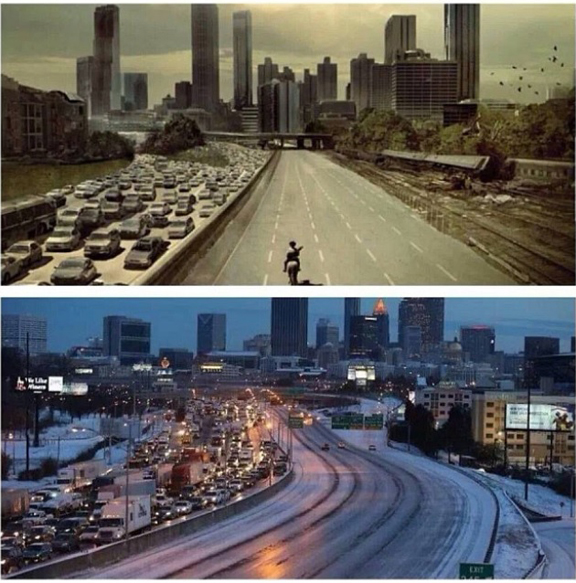
Another ‘Walking Dead’ kind of day in the Southland

atlanta

I had already made the comparison between the recent weather-related apocalypse in Atlanta and “Walking Dead,” but I had somehow missed this post providing photographic evidence.

Whoa. It even includes “survivors” shuffling through the wreckage, in images very like those from everyone’s fave zombie TV show. Check it out. The main visual difference is that in the real-life shots, everything is icy, while it seems like it’s always sweltering summer on “Walking Dead.”

And today, I look out around me, and except for the presence of shuffling undead, this could indeed be the end of all we knew. My iPad just chimed to tell me that “Nearly 52,000 SCE&G customers [are] without power.”

Right now, I’m listening to Nikki Haley’s live briefing. She says T-Rav’s Daddy’s bridge is closed again…

Days such as this remind me of a dream I used to have, decades ago. All you Freudians, prepare to take notes…

I would dream that I was in a house that was seemingly miles from any road or sign of life, with deep, deep snow covering everything. Nothing but whiteness could be seen, for miles and miles of softly undulating, hilly landscape. There were no tracks in the snow. Most of all, there was no sound whatsoever. I was seeing all this not so much from inside the house, as I was seeing the completely snow-bound house set in an all-white background.

The memorable thing about the dream, the thing I wanted to go back to after I awoke, was the utter peacefulness of it. There was nothing to do, and nothing to worry about. Worry and stress was a thing of other times and other places. There was just the snow, and the quiet.

All the Freudians are now going “death wish!” But keep in mind this was in the context of me being a newspaperman. I had to go to work no matter what the weather, and go to great trouble to generate boring weather stories. Sitting tight in a warm house looking at the pretty snow was just not a part of my life.

I think maybe the dream just had to do with wanting a day off like other people. Even though I always scorned those wimps who stayed at home because it was a bit slippery outside, on some level I think I envied them. A perfectly pedestrian impulse. Although I’ll admit there was something mystical, something unearthly, about the peacefulness of that dream.

But I digress…

BfKCdFoCYAAoh-u


Here’s an idea for Ravenel’s new reality show

This was pretty funny — at least, the parts that I could make out through that thick, awful, fake “Gone With the Wind” accent.

Yes, I can see how folks up north — in places “like Vermont, and South Carolina” — might laugh at Southerners’ overreaction to a couple of inches of snow.

But this gives me an idea for an episode of Thomas Ravenel’s new reality TV show, “Southern Charm,” which as I gather is about what happens to scions of old Charleston families in a time of general cultural decline and decadence.

There could be an entire episode in which T-Rav is trapped in his vehicle (possibly a white Escalade, as in this skit) because… wait for it… someone (possibly Yankees) have closed down his Daddy’s bridge on account of snow.

It could work… Hey, maybe it even happened…

Top Five Commercials from Super Bowl 2014

Dylan

According to the buzz, this was a kinder, gentler year for Super Bowl commercials.

The buzz is right. The ads were less sexy, less edgy, more warm and mushy.

Also according to the buzz, the best of the lot (or one of the best) was the Budweiser ad with the horse and the puppy.

There, the buzz is wrong. Talk about belaboring a good thing. The one last year with the horse and the trainer was cute. This was cute with a candy coating. Too much.

Here, for your edification, are the Top Five Super Bowl Commercials of 2014:

  1. Radio Shack — “The ’80s called. They want their store back.” When’s the last time you saw an advertiser accurately and honestly describe its own greatest weakness, and have this much fun with it? Never, that’s when.
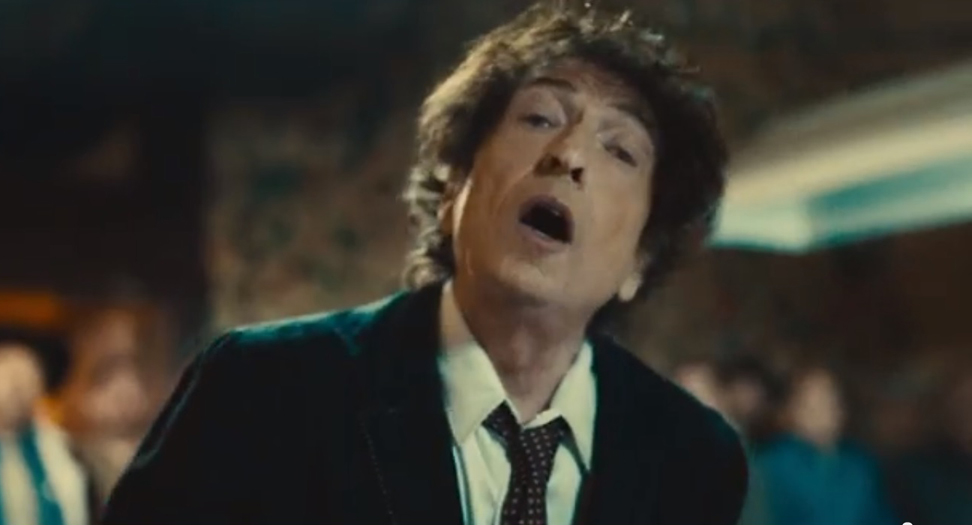
  2. Chrysler — “America’s Import.” They got Bob Dylan to do a car commercial. Bob. Dylan. And he did it with a pseudo-profound tone that mocked his own music and his reputation as some sort of American cultural prophet. I wonder how much they paid him. And I suspect it’s not enough.
  3. Budweiser — “A Hero’s Welcome.” The kind of warmth that Bud was going for with the puppy one actually works in this one. And yes, every soldier does deserve this kind of hero’s welcome. It’s been done, but this was done well.
  4. Turbo Tax — “Love Hurts.” Deals honestly, though in a twisted, ironic way, with the fact that most of America probably didn’t want these two teams in the Super Bowl. Kind of makes you wonder why all of those people watch the game, when you think about it.
  5. Pepsi — “Halftime Intro.” I don’t know why, I just really enjoyed the giant hands playing the Brooklyn Bridge like a giant electric bass, and the traffic circle like a turntable. Not all that complicated, but well executed.

I thought about including the Doritos/Time Machine one. But my colleagues at ADCO were mad at Doritos for not picking the one with the ostrich, which they loved. So I left it off…

radio shack


The end of civilization as we know it: The lifestyle of Thomas Ravenel, as entertainment for the masses

This is so low, so base, so degrading to all of us who belong to the same species, that I’m just going to make you aware of it, and comment no further. This is from an item about the new Bravo reality show “Southern Charm,” which stars Thomas Ravenel and several other decadent slackers:

Paternity drama, lots of sleeping around and black tie functions? How scandalous! Bravo describes the cast as “Southern bachelors who suffer from ‘Peter Pan Syndrome’ by refusing to settle down; and the women in their lives who challenge them to grow up.”

Look for the series to chronicle political careers, businesses, and of course love lives while trying to protect their family names “Because in Charleston, you’re only as good as your last garden party and one social screw-up can taint generations to come.”

Southern Charm debuts Monday, March 3 at 10 p.m. on Bravo.  A half-hour preview special airs Monday, Feb. 3 at 11:30 p.m….

Maybe when they were casting this thing, they saw this picture from Ravenel’s Facebook page.

And yeah, we elected this guy treasurer once. My newspaper even endorsed him.

There’s still no Downton spoof as good as P. Diddy’s

The Colbert Report
Get More: Colbert Report Full Episodes,Video Archive


I got kinda excited when I saw that Stephen Colbert had done a spoof melding “Breaking Bad” with “Downton Abbey” (apparently about a year old, going by the references). Because you know, I’m not done talking about “Breaking Bad.”

And it really had possibilities, considering that actual Downton cast members appear in it, and speak the lines. (Quoth Lord Grantham: “I promised the buyer product, and a gentleman keeps his word, or one has a cap popped in one’s arse.”)

But neither it nor “Downton Arby’s” comes anywhere near the excellence of P. Diddy’s “Downtown Abbey.” But I told you about that before

Neither did this rise to the level of Jimmy Fallon’s “Breaking Bad” spoof several months ago.

So, since it’s old, and not very good, why do I post about it? Why, to bring up “Breaking Bad” again, of course. This was the first time I had seen anybody mention it in like, days, yo…

Beam me up NOW: Lt. Uhura gets the drop on Burl

1450204_10201268123008786_1700883367_n

Burl Burlingame had a lot more foresight that I did. He took the trouble to document some of the more, um, interesting moments in his long newspaper career.

Here we have Lt. Uhura of “Star Trek” getting the drop on him with her phaser. What a great shot — so effectively and dramatically lit.

All I can say beyond that is, I hope that thing is set on “stun”…

Yeah, but do we really need to talk more about sports and reality TV?

David Brooks makes an argument for having a sensible perspective on politics:

… Then there are those who look to politics for identity. They treat their partisan affiliation as a form of ethnicity. These people drive a lot of talk radio and television. Not long ago, most intelligent television talk was not about politics. Shows would put interesting people together, like Woody Allen with Billy Graham (check it out on YouTube), and they’d discuss anything under the sun.

Now most TV and radio talk is minute political analysis, while talk of culture has shriveled. This change is driven by people who, absent other attachments, have fallen upon partisanship to give them a sense of righteousness and belonging….

I figure that unless you are in the business of politics, covering it or columnizing about it, politics should take up maybe a tenth corner of a good citizen’s mind. The rest should be philosophy, friendship, romance, family, culture and fun. I wish our talk-show culture reflected that balance, and that the emotional register around politics were more in keeping with its low but steady nature.

That sounds good. Do watch that Woody Allen/Billy Graham clip. It would be great to see more stuff like that.

And Lord knows I’ve had enough of the tribal types who define themselves in terms of their partisan affiliations.

But… as I look around me today, when people aren’t talking about politics, it seems they’re talking about reality TV, sports or what some celebrity wore to some self-congratulatory entertainement awards ceremony. Mostly sports. (There were two stories on the front page of The State today. Two. Most of the rest of the space was taken up by sports promos and a picture of a Christmas tree.)

If we pull back on the politics, we can’t really expect the vacuum to be filled by Dick Cavett-type conversation.

Not from what I’ve seen.

‘Breaking Bad’ alternative ending (look quickly)

Yesterday, I reTweeted Salon’s link to the “‘Official’ Breaking Bad alternate ending,” which is said to have been made for the DVD box set, which is to be released Nov. 26.

But I didn’t have time to view the video clip right then. By the time I tried this morning, I got a message saying Sony Pictures Television had had it taken down.

No worries, thought I. I had paid for the entire last season, via iTunes, which was supposed to include all supplementary clips, so I figured it wouldn’t be closed to me. But then I saw there was no such clip awaiting me at iTunes.

But then, this morning, my favorite chap-hop artist, Professor Elemental, tweeted out a link that worked.

It says at the end, “provided courtesy of Sony,” so for the moment, I guess it’s OK.

Enjoy it, while it lasts — before the content powers-that-be change their minds. (And doesn’t it seem far more logical that they would want the video out there, to create buzz for the DVD set?) For “Breaking Bad” fans, it’s fun.

And just to remind you how the show really ended, here’s some mood music from Badfinger…

An Armistice Day reflection

Doughboys of the 64th Regiment celebrate the news of the Armistice, November 11, 1918

Doughboys of the 64th Regiment celebrate the news of the Armistice, November 11, 1918

I originally posted the below material as a comment on the “Top Ten War Movies” post from over the weekend. Bryan suggested that today, it should be a separate post. I suppose he’s right.

The context is that I was responding to two previous comments — one by Rose praising the TV series “Band of Brothers,” and the other from Phillip about “anti-war” messages. This lies in the larger context of a long debate of several years’ standing, in which Phillip takes the position that all sane people oppose war, and I take the armchair-warrior position of “not always”…

“Band of Brothers” was the best thing ever made for television.

And it had the kind of anti-war message in it that I appreciate [as opposed to the kind of anti-war message I hate, which I had described earlier as “one that beats you about the head and shoulders with the idea that war is futile and stupid and anyone who decides to involve a nation in war is evil and unjustified, and we should never, ever engage in it”]. It’s very similar to a powerful one in “Saving Private Ryan.”

There’s this great scene in which the actor portraying David Kenyon Webster — the writer, from Harvard — is riding past thousands of surrendering Germans being marched toward the rear (the opposite direction from which he and Easy Company are traveling) and he spots some senior German officers. He starts shouting at them (excuse the language):

Hey, you! That’s right, you stupid Kraut bastards! That’s right! Say hello to Ford, and General fuckin’ Motors! You stupid fascist pigs! Look at you! You have horses! What were you thinking? Dragging our asses half way around the world, interrupting our lives… For what, you ignorant, servile scum! What the fuck are we doing here?

To explain what I mean by this… I grew up with shows like “Combat,” which gave a sort of timeless sense of the war. Sgt. Saunders and his men were soldiers, had always been soldiers, and would always be soldiers. And they would always be making their way across France in a picaresque manner, doing what they were born to do.

Well, what Webster is shouting at those Germans is that NO, we were NOT born to do this. This is a huge interruption in the way life is supposed to be.

That lies at the core of Tom Hanks’ character in “Saving Private Ryan.” His men think HE was born to be a soldier, and can’t imagine him in any other role (as Reuben says, “Cap’n didn’t go to school, they assembled him at OCS outta spare body parts of dead GIs.”) — hence their intense curiosity about what he did before the war. And their stunned silence when they learn the reality:

I’m a schoolteacher. I teach English composition… in this little town called Adley, Pennsylvania. The last eleven years, I’ve been at Thomas Alva Edison High School. I was a coach of the baseball team in the springtime. Back home, I tell people what I do for a living and they think well, now that figures. But over here, it’s a big, a big mystery. So, I guess I’ve changed some. Sometimes I wonder if I’ve changed so much my wife is even going to recognize me, whenever it is that I get back to her. And how I’ll ever be able to tell her about days like today. Ah, Ryan. I don’t know anything about Ryan. I don’t care. The man means nothing to me. It’s just a name. But if… You know if going to Rumelle and finding him so that he can go home. If that earns me the right to get back to my wife, then that’s my mission.

There, you learn this this is NOT supposed to be where he is. This was not the way his life was supposed to go.

Now… on the other hand…

Dick Winters was a real-life guy who had no desire to be a warrior. After surviving D-Day (having led his men in an action that should have gotten him the Medal of Honor, but he “only” received a Distinguished Service Cross for it), he took a quiet moment to pray that “I would make it through D plus 1. I also promised that if some way I could get home again, I would find a nice peaceful town and spend the rest of my life in peace.”

That’s all he wanted.

And yet, by having been forced to be a soldier, he and everyone around him found that he was superbly suited to it. He was one of those rare men who thought quickly and clearly under fire, and communicated his calm and his self-assuredness to his men. He knew what to do, and how to give orders so that it got done. He had a gift.

And that gift actually was a thing of value — to his society, and to the world. And here’s where we separate. Here’s where we draw a line between being “anti-war” as an absolutist position — that war is always wrong and evil and has no redeeming qualities — and my position, which is that sometimes nations need people like Dick Winters to step forward and exercise those abilities that they have. In other words, the warrior is a valuable member of society like the butcher, the baker and the candlestick-maker (actually, nowadays, perhaps more valuable than the candlestick-maker).

Which seems like a good place to stop, a little more than an hour before 11 o’clock on Nov. 11.


You learn something new (about history) every day…

Lincoln

AT&T U-verse offered free Showtime this past weekend, which means I got to see the first episode of the new season of “Homeland.” (SPOILER ALERT: Carrie’s off her meds again. But that probably won’t come as a shock to anyone.)

Anyway, it also meant I got to see “Lincoln” for the second time, and it was just as great as when I saw it in the theater.

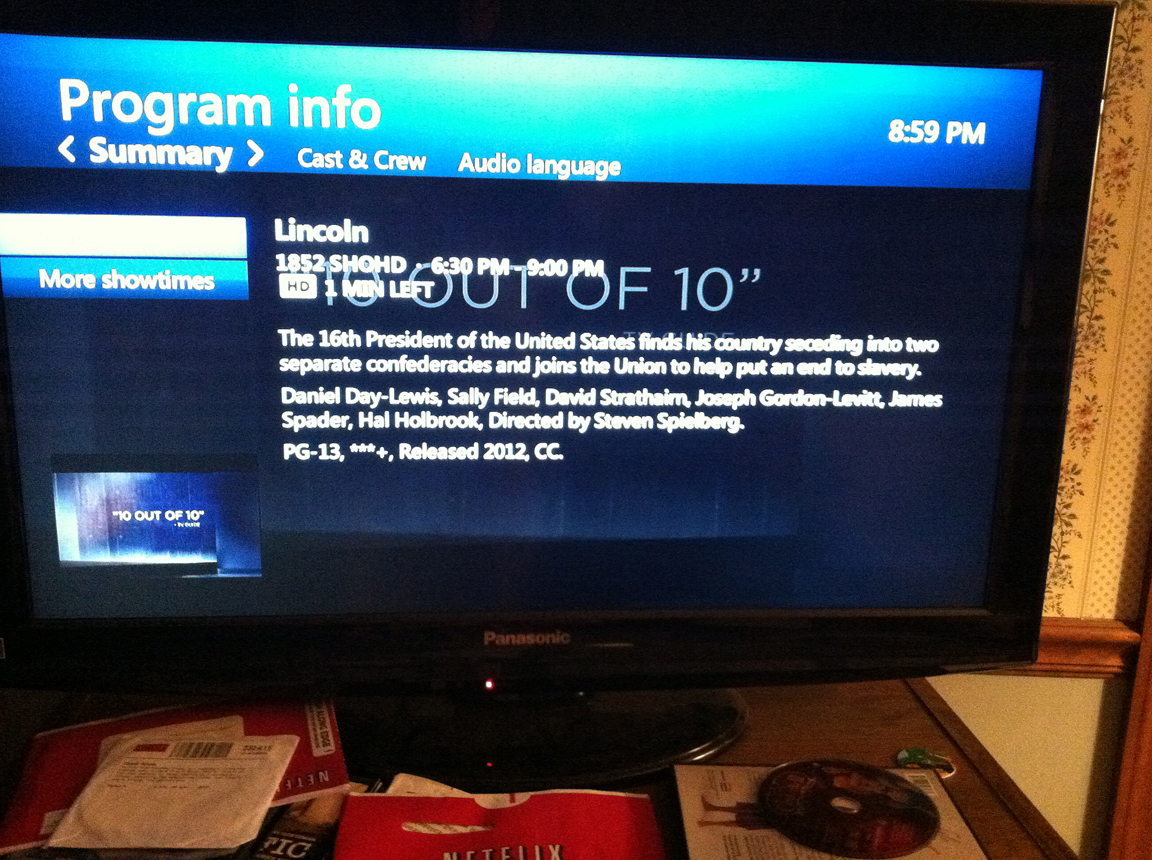
But I was a bit puzzled by the synopsis, pictured above, that was provided on my guide.

Fascinating. The whole country seceded? And there were two confederacies, not just one? (Two separate confederacies, just in case you missed the “two” part.) And he “joined the Union” in order to deal with it? What, was he not a part of it before?

You just learn something new every day.

Is ‘Breaking Bad’ the best medical drama ever?

This doctor thinks so, and makes a pretty compelling case. An excerpt:

While most medical shows—much like the health system at large—focus on acute presentations, hospitalizations, and procedures, Breaking Bad follows its patients far beyond the walls of the hospital. When Hank, the DEA agent brother-in-law of the show’s meth-cooking protagonist, Walter White, is shot by the cartel, he is immediately rushed to a hospital where he gets the usual TV doctoring: wailing sirens, complex jargon, rickety stretchers and tense surgeons. But while most shows would either move on to the next thrilling emergency or end with the patient disappearing into the credits, Breaking Bad did neither. After initially being scared witless by the thought of being discharged, Hank spent almost an entire season in bed, obsessing over minerals and pornography. He became depressed, despondent, and angry. He vacillated between motivation and apathy. In short, he didn’t stop being sick as soon as the bullets were pulled out of his chest or when he was discharged from the hospital. If anything, that’s when his journey started. While most shows focus on the heroics of EMTs, surgeons, and doctors, Breaking Bad shows that the heroism of patients and their caregivers goes on long after they have moved on from an acute care facility. And importantly, Hank walks with a limp to this day, dispelling the notion of magical cures.

Another telling scene that somehow escapes the attention of most medical shows is the look on the faces of Skyler and Marie, Walt’s and Hank’s respective wives, when they receive their spouses’ medical bills. Not only do the bills make no sense to them, the doctors appear as bamboozled and helpless as the patients. In fact, a popular Internet memesuggests that Breaking Bad would not have been possible in a system which provides universal free health care, such as Canada’s, because Walt would never have been desperate to collect the money for his treatment.  …

Good points, I thought.

If “Breaking Bad” has appeal in Britain, it’s probably for the same reason that westerns were once popular abroad. A depiction of a health care system so wild, primitive and uncivilized, where every man is on his own, is probably particularly fascinating for people who don’t have to fret about such things. It’s even set in the wild West. (Hmmm. According to this, it’s NOT popular over there, so forget my theorizing. I guess it’s just too far-fetched for them.)

But aside from health-care politics, it’s true that “Breaking Bad” is more like real life. There’s no brilliant cure within 43 minutes. Hank still walks with a limp…

What’s on Hank and Marie Schrader’s bookshelf?

Hank

Last week, I thought I had finally found an aspect of “Breaking Bad” that no one else had delved into.

I should have known better. As into the series as I am, I knew that there were people out there who apparently have no lives whatsoever, and they’re always going to be several steps ahead of me.

But here’s my post on the subject anyway…

Volumes have been written (although probably not yet actually assembled into physical volumes) about the main characters, such as this one last week wondering if Hank Schrader was turning into Walt White. Or rather, into another Heisenberg.

But how do you really get to know somebody? Well, you go to his house, and you look at what he’s got on his bookshelf. (Or, if you’re Rob Fleming in “High Fidelity,” you look at his records, and then judge him unmercifully.)

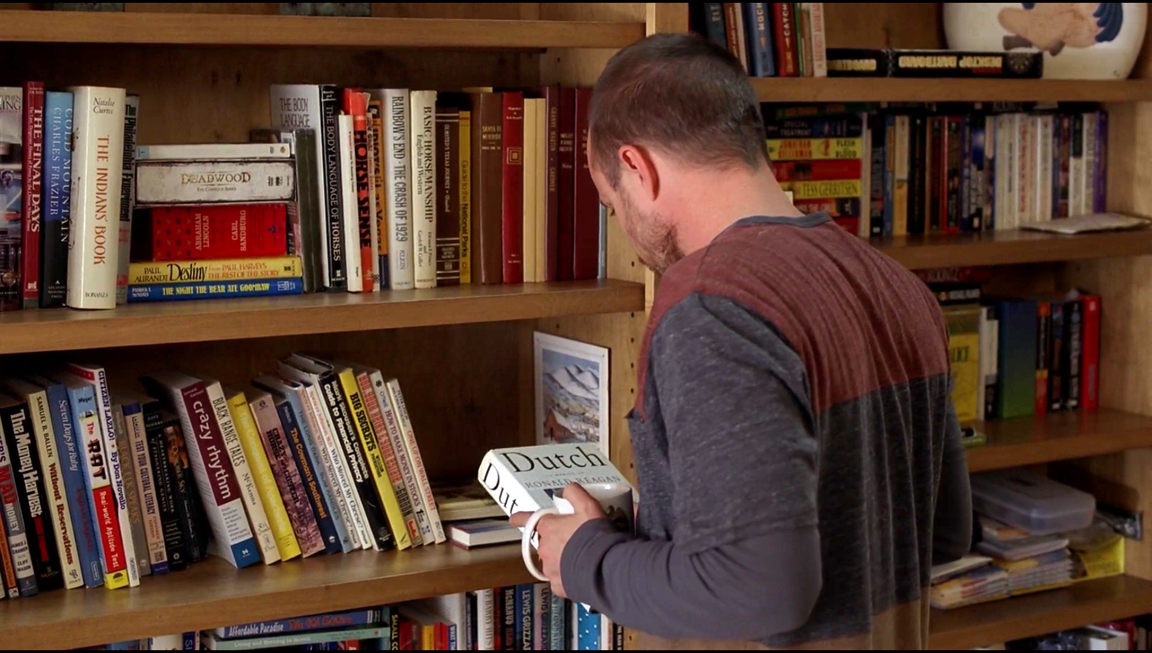
Last week (the episode before last night’s, that is), we got a look at Hank’s and Marie’s bookshelf. Jesse Pinkman walked over and idly picked up a copy of Edmund Morris’ Dutch: A Memoir of Ronald Reagan. I half-expected Jesse to remark on it, but he didn’t. (If he had, what would have had said, yo?)

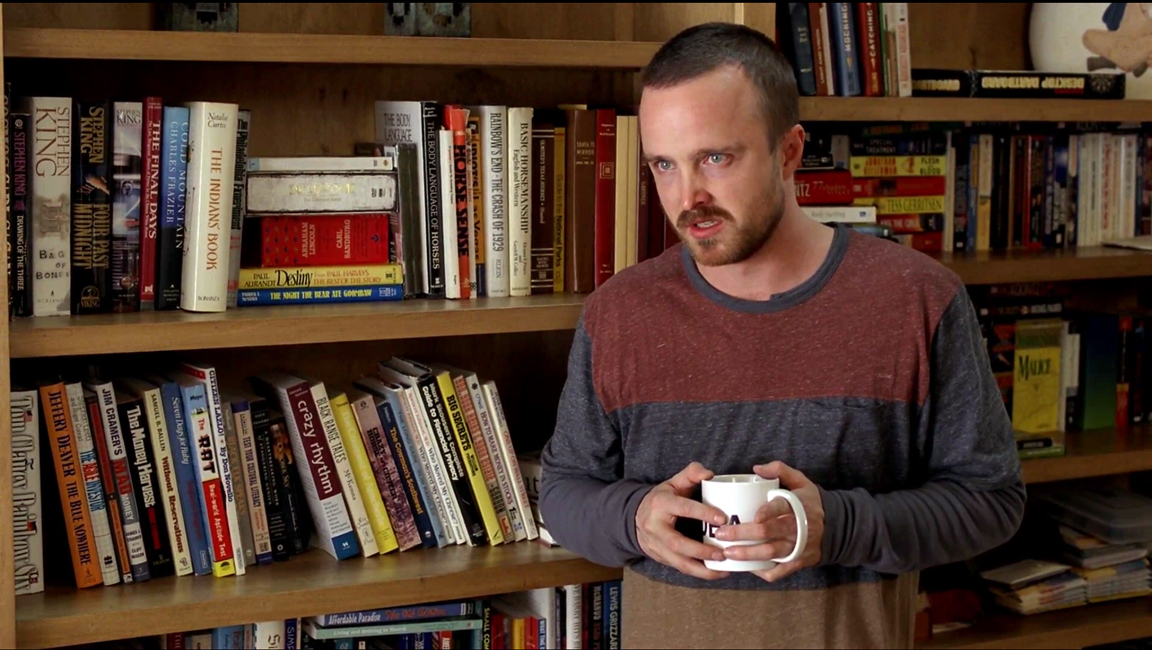
Since Jesse said nothing about it, I froze the screen and looked at what else was there. A sampling:

  • They’re into Stephen King; I see four books by him.
  • There’s The Final Days, except it doesn’t look right. That WoodStein classic should be thicker, and have a white background rather than a maroon one. Turns out it’s actually this later book, which has the subtitle, “The Last, Desperate Abuses of Power by the Clinton White House.” Which gives us a different impression, but one more suited to what we know of Hank and Marie.
  • Western themes are amply represented — Horse Sense, The Body Language of Horses, Crazy Horse and Custer, The Indians’ Book, Black Range Tales, and so forth. We Easterners suppose Westerners spend their time thinking about such things. There’s also a DVD set of “Deadwood.”
  • Tom Clancy makes an obligatory appearance with Rainbow Six, which you would also find on my bookshelf. One of his lesser-known works, centering around John Clark rather than Jack Ryan, but the one that launched a family of first-person shooter games. Which, I like to speculate, is how Hank got into it. After all, the game was released before the book.
  • One is not surprised to find books based on, or collecting, works of Paul Harvey and Lewis Grizzard.
  • There are various business self-help books, including not one, but two copies of Who Moved My Cheese?
  • I’m intrigued by Citizen Lazlo, by Don Novello. (You know, Father Guido Sarducci.) I’m even more intrigued that Amazon says that people who viewed that also viewed Cold Mountain, which can also be found on Hank’s and Marie’s shelves. I don’t know what the connection might be.

Anything else jump out at y’all as revelatory?

I love details such as this. I’ve always thought I’d love to work in movies (or good television). I’m fascinated by the people who come up with these little obsessive details to put in the background, details that reveal character subtly, or which reflect an era accurately — when done right.

books

Uninformed observations about unrelated pieces of music

Of all the things I like to write about in spite of knowing nothing about them, music is one of my favorites.

Lately, I’ve been boring members of my family by making them listen to the opening of Leon Russell’s “I Put a Spell on You” from his eponymous album (the one before the Shelter People one). No, not a Screamin’ Jay Hawkins cover. Totally different song.

It has one of those “you are in the studio” false starts at the beginning. Actually, two or three of them. I’ve always thought those things were a little obnoxious, because they seem to play on fans thinking it’s cool to hear their rock ‘n’ roll heroes being informal, making mistakes, and it seems self-conscious, as in “We know y’all will enjoying feeling like you’re rubbing shoulders with wonderful us in the studio, so we’ll throw you a bone.”

Or maybe I read too much into it.

Anyway, I like this one because of what Leon does with it. There’s one false start. Then another. Then he, and a guitarist, play a sort of winding, downward pattern. And then suddenly, Leon does that thing where you run your finger down the keys in one long flow, from right to left (what’s that called?), and then the rollicking song actually begins.

It feels, to me, like the musical version of jump-starting a car with manual transmission by letting it roll down the hill and letting out the clutch with the gearshift in first. If you’ve ever done that (I’ve had to do it a couple of times with my Ford Ranger), see if listening to this kind of feels that way to you.

Or maybe I’m just crazy.

Here’s the other musical thing I wanted to bring up. This is probably a question for Phillip Bush, like when I asked why awesome songs such as Leonard Cohen’s “Hallelujah” are so awesome. What musical tricks make the endorphins flow?

I’m thinking that about the theme song to “Orange is the New Black,” which we’ve touched on here previously.

The magic seems to occur in two places. One is when Regina Spektor gets to the line, “And you’ve… got… ti-i-IME!” What is she doing there? It’s unusual, and very appealing. The other cool part is the bridge (I think), where she shifts gears and goes:

Think of all the roads.
Think of all their crossings…

Anyway, it’s very appealing, whatever she’s doing. I wish I could put it into words. But if I could, I guess we wouldn’t need music, which would be a shame…

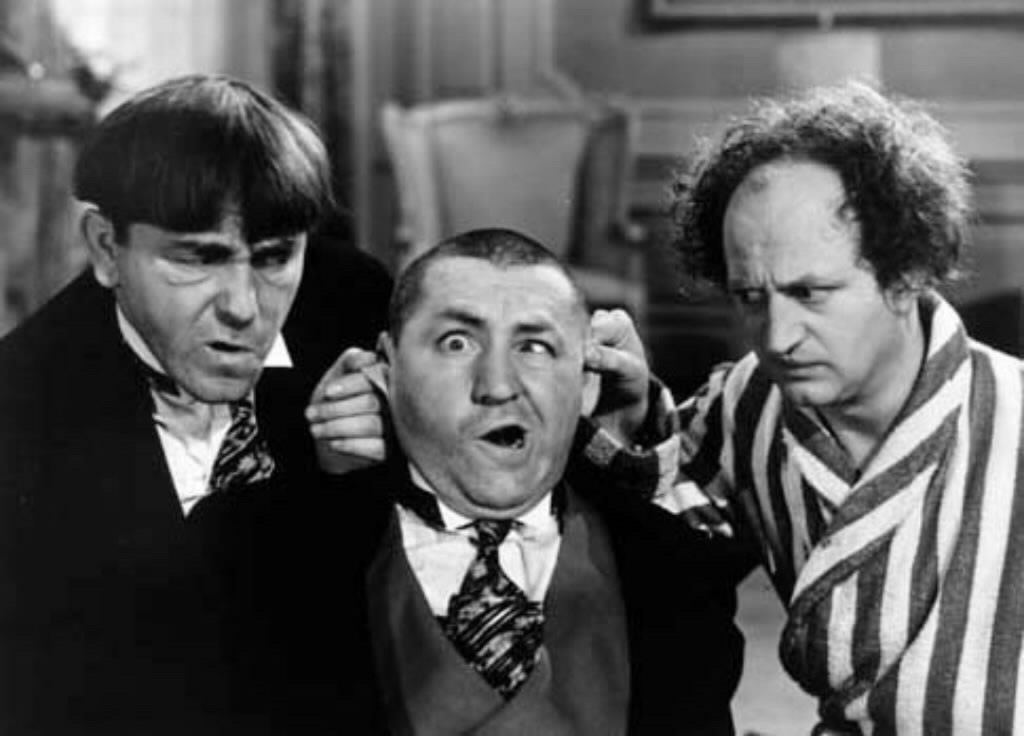
Since he’s opposed by Moe and Larry, mayor should change his name to ‘Curly’

stooges

Just passing that on. I didn’t come up with it; it was mentioned to me by a local attorney.

It arises from the fact that Mayor Steve Benjamin is being opposed for re-election by Councilman Moe Baddourah and former FBI analyst Larry Sypolt.

If the mayor would only make this one little change, think of all the great national coverage the campaign would get.

It’s meant to be. There’s already a major heading in the Wikipedia page about Larry, Moe and Curly headlined, “The Columbia Years.” I am not making this up…

What if I’d come back in 2013? Would I have been impressed? I think not…

The-Man-from-UNCLE-007

Some seemed to doubt the premise of the preceding post about how static and dull and lifeless popular culture has become (or at least, to discount the importance of it). But to someone who was young in the ’60s, there’s something very weird about living in a time when a photograph of people 20 years ago would look no different from a photo today (assuming you could get them to look up from their smartphones for a second during the “today” picture).

As I said in a comment on that post

I’ve written in the past about how enormously exciting I found American pop culture when I returned here in 1965 after two-and-a-half years in South America without television. My words in describing it are probably inadequate. It was so amazingly stimulating, as though all my neurons were on fire. It was like mainlining some drug that is so far unknown to pharmacology, one that fully engages all of your brain.

If I had returned at that same age in 2013 rather than ’65 — meaning I had left the country in March 2011 — I doubt it would have been such a huge rush. It would be like, “Oh, look: The latest iPhone does some minor stuff that the old one didn’t. And now we have 4G instead of 3G. Whoopee.”

Most of the big movies would be sequels of the big movies when I left — or “reimaginings” of Superman or Spiderman. The best things on TV would still be “Mad Men” and “Breaking Bad.” “Firefly” would still be canceled. I’d be disappointed that “Rubicon” had only lasted one season. And I’d marvel at the fact that, with hundreds of channels out there, everything good was on one: AMC. (HBO hasn’t impressed me since “The Sopranos,” and that would have been over years before I left the country.) “The Walking Dead” would be new to me. Again, whoopee.

I just can’t imagine what I’d grab hold of and say, “Wow, THIS is different and exciting…”

But consider this list of things that I saw and heard for the first time in 1965, either immediately when I got back into the country, or over the next few months:

  • James Bond – who was enormously important to my friends and me, and who did a lot toward defining the decade (just ask Austin Powers), and who embodied much of what “Mad Men” recaptures about the decade. Yes, Bond had been around earlier, but I had never heard of him before the film “Dr. No,” which I actually saw on the ship on my way down to Ecuador. Which I did not enjoy. I didn’t really get Bond, as something that interested me, until “Goldfinger.”
  • Really exciting new cars that changed dramatically from model year to model year. I had seen ONE Mustang, parked outside the Tennis Club in Guayaquil, and I thought it was awesome. I’d never seen a Sting Ray, and the ’65 model was particularly cool…
  • Not just the Beatles, but the entire British Invasion – the Stones, Herman’s Hermits, The Dave Clark Five, Freddie and the Dreamers, the Animals, Tom Jones, Petula Clark. Just those few names illustrate the tremendous diversity of styles just within that one category we describe as the “Invasion.”
  • Folk rock – The Byrds, Chad & Jeremy, Simon and Garfunkel, and so on.
  • Beach music, West coast – The Beach Boys, Jan & Dean, the Surfaris
  • Gimmick bands – Paul Revere and the Raiders, Sam the Sham and the Pharoahs, etc.
  • One-hit wonders – Much of the vitality of the era was personified by such groups as ? and the Mysterians, the Standells and the Troggs (OK, all three of their hits were technically in ’66. But consider such one-time hits of 1964 and 65 as “The Girl from Ipanema,” “Eve of Destruction,” “Keep on Dancing,” “Land of 1,000 Dances”…)
  • Ordinary guys wearing (relatively) long hair. Yes, we’d heard of The Beatles by this time in South America, but the fashion had not caught on.
  • Beach music, East coast – Yeah, this music had been around, and white kids had been listening to this “black” music, but it didn’t have the kind of profile where I could hear it until this point. I think Wikipedia rightly cites the heyday as being “mid-1960s to early 1970s.”
  • Color TV – It had existed, but I hadn’t seen it.

OK, taking off on that last one, let’s just take a quick run-through of the TV shows, icons of the era, that were either new in 1965, or new to me because I’d been out of the country:

  • Gilligan’s Island
  • Green Acres
  • I Spy
  • Hogan’s Heroes
  • The Wild, Wild West
  • The Smothers Brothers Show
  • Lost in Space
  • Bewitched
  • Daniel Boone
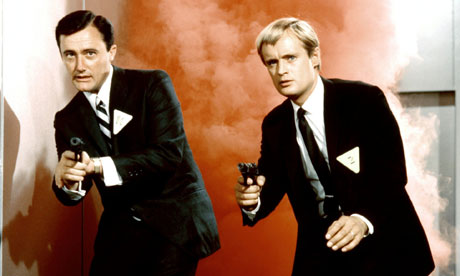
  • The Man from U.N.C.L.E.
  • Get Smart
  • The Munsters/The Addams Family
  • Shindig!

I want you to especially note the variety in those shows — they weren’t all manifestations of the same cultural phenomenon, the way, say, “reality TV” shows are today. (A phenomenon that would not be new to me at all from a two-year absence.)

I’d like to include “The Beverly Hillbillies,” but it actually premiered shortly before I left the country, and I’d seen it once or twice. And I won’t cite the ground-breaking “Batman” because it premiered in January of 1966 – which was still within my first year back in the country. Also, I never saw “The Andy Griffith Show” before my return, but that was my fault — it had been out there for a year or so before I left.

This may all seem silly and superficial to y’all, but I think it’s actually significant that our popular culture is so static and unchanging today. Someone, trying to dismiss this, said on the previous post that I was ignoring the fact that the dynamism of popular culture in previous decades was just a First World, affluent-society phenomenon.

No, I wasn’t. In fact, that is sort of my point. I had come from an unchanging, static culture in the Third World into one of the most exciting cultural moments in the life of the most affluent country in human history. I would even go so far as to suggest that the dynamism of the popular culture is related somehow to economic dynamism.

And maybe the economic stagnation that is the New Normal today is related to cultural stagnation. We could feel our economic horizons expanding in past decades. No longer…


The Rolling Stones – Live in Shindig! (1965) by Vilosophe