Category Archives: The Nation

What are we to think about the nuclear deal with Iran?

First, I don’t know enough about this to have an opinion yet, if I ever will. The closest I can come right now is to survey the views of other informed, critical observers, and see if I can begin to discern an impression.

Before this past weekend, I was very worried about the kinds of deals that were being discussed because France, Saudi Arabia and Israel were all giving them a big thumbs-down, and expressing a significant loss of faith in the United States’ willingness to push for a deal that actually would halt the Iranian nuke program.

So I do a quick check to see how those parties are reacting to this:

So… a mixed bag.

Meanwhile, back home, the Obama administration has trouble on this among two key groups:

  1. Republicans in Congress.
  2. Democrats in Congress.

The WSJ reports:

The leaders of both the Democratic and Republican parties are threatening to break with President Barack Obama‘s policy and enact new punitive sanctions on Iran, arguing that the interim deal reached in Geneva on Sunday yields too much to the Islamist regime while asking too little.

“The disproportionality of this agreement makes it more likely that Democrats and Republicans will join together and pass additional sanctions when we return in December,” said Sen. Charles Schumer (D., N.Y.), an influential member of the Senate Democratic leadership.

So maybe the deal is moot at this end. I don’t know.

Thoughts?

Now that’s what I call diplomacy, Mr. Wilkins!

wilkins

Facebook drew me to this chatty newsletter called the “Carolina-Canada Connection,” which lets his various contacts know what former speaker and ambassador to Canada David Wilkins is up to — along with mentions of what’s happening in Washington, Canada and SC.

For instance he touches upon Harry Reid getting set to exercise the nuclear option over Obama appointees, and works in Rep. Trey Radel‘s leave of absence after pleading guilty on cocaine charges.

And yet, somehow, he manages to avoid mentioning the one continuing story out of Canada that all of the folks in this country are talking about — the misadventures of Toronto Mayor Rob Ford.

Now that’s what I call diplomacy

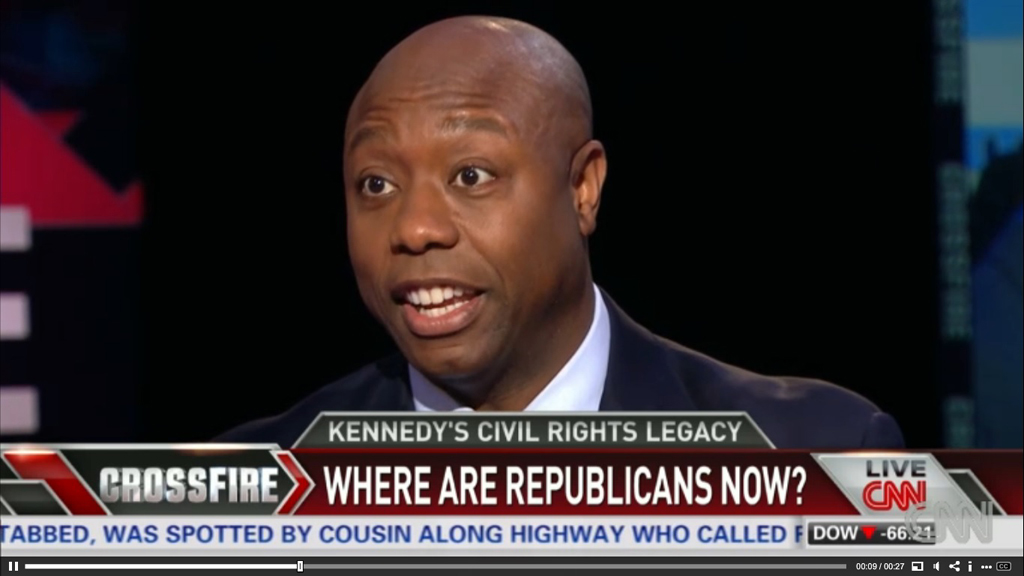
Tim Scott, twice refusing to endorse senior colleague Graham

The State‘s new Buzz blog (I’m trying to remember whether this is the paper’s first serious attempt at a state and national political blog since I got laid off, but perhaps such reflections are ignoble of me) brought my attention to the above clip. Their account (like I’m gonna retype if it I don’t have to) of it:

U.S. Sen. Tim Scott passed twice on saying whether he would endorse his fellow S.C. senator, Republican Lindsey Graham, in an interview on CNN’s Crossfire Wednesday.

When CNN’s Van Jones asked Scott whether he would support Graham, Scott said, “You know, as you three have heard recently, I am up for re — up for reelection myself. I’m going to make sure that Tim Scott gets out…I’m going to allow for all the other folks on the ballot to represent themselves very well, and I’m going to continue to work hard for my re-election.”

“No endorsement for Lindsey Graham tonight?” Jones asked again.

Scott replied, “I’m certainly going to work really hard for Tim Scott re-election — gotta win first.”…

I sort of doubt that Sen. Graham’s going to be sitting up nights trying to think of favors he can do for Sen. Scott in the foreseeable future.

I was particularly struck by the way he stopped himself from saying “re-election,” then went ahead and said it anyway. The question seems to have had him pretty flustered…

tim scott

How one Brit sees the way we see Canada

800px-Mayor_Ford_at_levee_2011

In a piece extolling the supposed political brilliance of “crack-smoking and alleged sexual harasser Toronto mayor Rob Ford,” Hadley Freeman of The Guardian wrote the following explanation of international relations:

Heretofore, Canada was to America what Sweden is to the rest of Europe, but commanding less respect. Just as Sweden is always held up as the bastion of feminism, childcare and good mental health, so Canada is a paradise of ruddy-cheeked health and socialised healthcare, while Americans pay $8,000 daily to get their gunshot wounds treated…

That’s all. I just enjoyed the way she said it.

Less respect, eh? Take off, you hoser

JFK would be appalled at lack of fitness among today’s youth

I find it highly ironic that this story comes out of Dallas this week:

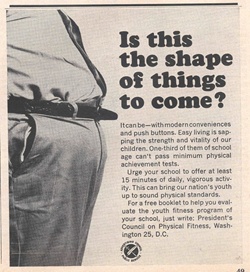
DALLAS — Today’s kids can’t keep up with their parents. An analysis of studies on millions of children around the world finds they don’t run as fast or as far as their parents did when they were young.ShapeofThingstoComejpg

On average, it takes children 90 seconds longer to run a mile than their parents did 30 years ago. Heart-related fitness has declined 5 percent per decade since 1975 for children ages 9 to 17.

The American Heart Association, whose conference featured the research on Tuesday, says it’s the first to show that children’s fitness has declined worldwide over the last three decades….

“Ironic” because I identify concern over the fitness of American youth with John F. Kennedy. He’s the one who made such a big deal about it in my own youth:

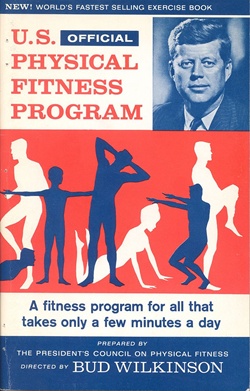
John F. Kennedy showed his commitment to improving the nation’s fitness even before he took the oath of office. After the election, he published “The Soft American” in Sports Illustrated. The article established four points as the basis of his proposed program, including a “White House Committee on Health and Fitness”; direct oversight by the Department of Health, Education, and Welfare; an annual Youth Fitness Congress to be attended by state governors; and the assertion that physical fitness was very much the business of the federal government…

We heard a lot about the President’s Council on Physical Fitness back in JFK’s day, and even years after his death. I always had a vague belief that JFK, for good or ill, was the reason I was dressing out every day for P.E. in school. I was doing my bit for a national strategic priority.Programfrontcoverjpg

I’ve also, my entire life, associated the word “vigor” with Kennedy — possibly because I first heard it used (or at least, first heard it used frequently) in reference to him, and to his ambitions for the country.

It’s not a word we associate with American youth today. Or with the rest of us, for that matter. I don’t know about you, but I haven’t worked out in weeks. And I’m the worse for it…

Graham, McCain, et al.: Say ‘no’ to any Iran deal that eases sanctions, lets nuke program continue

This just in from Lindsey Graham:

GRAHAM, SCHUMER, MENENDEZ, MCCAIN, CASEY, COLLINS URGE ADMINISTRATION NOT TO ACCEPT IRAN DEAL THAT CUTS BACK SANCTIONS BUT ALLOWS IRANIAN NUCLEAR PROGRAM TO CONTINUE


With Geneva Negotiations Set to Resume, Senators Express Concern with Reported Deal Administration Currently Weighing – Plan Would Provide Relief from Sanctions without Significantly Rolling Back Iranian Progress towards Nuclear Weapon


Group of Senators Praise Administration’s Use of Sanctions Thus Far, Urges Negotiators to ensure that Concessions and Gains are Proportionate


Senators: Focus Should Be on Achieving a Balanced Deal That Rolls Back Iran’s Progress towards a Nuclear Weapon


WASHINGTON, D.C. — Today, U.S. Senators Lindsey Graham, Charles E. Schumer, Robert Menendez, John McCain, Bob Casey and Susan Collins wrote to Secretary of State John Kerry, expressing their support for negotiations but cautioning the Administration against accepting a deal with Iran that would roll back economic sanctions without also rolling back progress towards nuclear weapons capability. According to media reports, Administration negotiators have considered accepting an agreement that would provide relief for the Iranian regime from the debilitating economic sanctions while only requiring the Iranians to halt their work towards a nuclear weapon, rather than undoing the progress they have already made.


The senators wrote, “We feel strongly that any easing of sanctions along the lines that the P5+1 is reportedly considering should require Iran to roll back its nuclear program more significantly than now envisioned.


“It is our belief that any interim agreement with the Iranians should bring us closer to our ultimate goal which is Iran without a nuclear weapons capability.  We must ensure that the steps we take in the coming weeks and months move us towards a resolution that ultimately brings Iran in compliance with all relevant United Nations Security Council Resolutions, seeks to prevent Tehran from possessing any enrichment or reprocessing capability, and resolves any and all fears that Iran will develop a nuclear weapons capability.”


Under the reported agreement, the P5+1 is prepared to permit Iran to continue enriching uranium at 3.5% for civilian use, to cap but not reduce the number of centrifuges, and to continue work near the Arak heavy water nuclear reactor. The senators argue that these steps may suggest Iran is willing to temporarily slow its pursuit of a nuclear weapon, but they would allow Iran to continue making some progress towards obtaining a nuclear weapon under the cover of further negotiations.


In return, Iran would receive relief from economic sanctions, including access to previously-frozen assets. The senators said the reported agreement, “does not give us confidence that Iran is prepared to abandon unambiguously its nuclear weapons pursuit altogether, as it must.”


The full text of the letter appears below:


Dear Secretary Kerry:

We appreciate your continued efforts, in concert with our friends and allies, to negotiate with the Iranian regime. We also commend the efforts of your negotiating team to prevent Iran from developing a nuclear weapons capability.  Our negotiators have benefited from the effects of tough economic sanctions in bringing Iran to the table.  Without the Administration, Congress, and our allies working together, we would not have arrived at this crucial point.

Indeed, we support the concept of an interim agreement with Iran that would roll back its nuclear program as a first step to seeking a final settlement that prevents Iran from ever developing a nuclear weapons capability. At the same time, we are concerned that the interim agreement would require us to make significant concessions before we see Iran demonstrably commit to moving away from developing a nuclear weapons capability.

It is our understanding that the interim agreement now under consideration would not require Iran to even meet the terms of prior United Nations Security Council resolutions which require Iran to suspend its reprocessing, heavy water-related and enrichment-related activities and halt ongoing construction of any uranium-enrichment, reprocessing, or heavy water-related facilities. For example, we understand that the P5+1 is prepared to permit Iran to continue enriching uranium at 3.5 percent albeit for civilian use, to cap but not reduce its number of centrifuges, and to continue work around or near the Arak heavy water nuclear reactor. While the interim agreement may suggest that Iran could be willing temporarily to slow its pursuit of a nuclear weapons capability, it could also allow Iran to continue making some progress toward that end under the cover of negotiations. This does not give us confidence that Iran is prepared to abandon unambiguously its nuclear weapons pursuit altogether, as it must.

Furthermore, it is our understanding that in return for certain Iranian actions, the P5+1 would allow Iran to gain access to considerable amounts of capital that have been frozen by our international sanctions. Some have estimated the value of this capital for Iran as much as $10 billion. We regard this as a major concession on our part that would not be justified by the concessions the Iranian regime would be required to make in return. If we are reducing sanctions, Iran should be reducing its nuclear capabilities.

As you know, it is not just the sanctions themselves but the threat that they would continue to tighten that has brought the Iranians to the negotiating table. Easing sanctions now without real, tangible actions by Iran to roll back its nuclear program would not only diminish this threat of future pressure, it could make it more difficult to maintain the current sanctions regime at a time when many international actors are already eager to lessen their implementation of sanctions. We feel strongly that any easing of sanctions along the lines that the P5+1 is reportedly considering should require Iran to roll back its nuclear program more significantly than now envisioned.

It is our belief that any interim agreement with the Iranians should bring us closer to our ultimate goal which is Iran without a nuclear weapons capability.  We must ensure that the steps we take in the coming weeks and months move us towards a resolution that ultimately brings Iran in compliance with all relevant United Nations Security Council Resolutions, seeks to prevent Tehran from possessing any enrichment or reprocessing capability, and resolves any and all fears that Iran will develop a nuclear weapons capability.

The upcoming round of negotiations could hardly be more important and we must be ever mindful of with whom we are negotiating. Iran has been the largest state sponsor of terrorism for over thirty years; its leaders routinely call for the destruction of Israel; and it arms and finances terrorist groups around the globe. We urge you and your negotiating team to fight for an interim agreement that demands as much or more of Iran as it does of the United States and our allies. We hope in the next few weeks we and our partners will redouble our efforts to gain greater proportionality and to finalize an agreement that demonstrates that Iran is moving away from the nuclear weapons path.

###

Just your friendly neighborhood superpower, ma’am

Every once in awhile, Slate decides to surprise me with an editorial point that I agree with.

While this piece doesn’t go terribly deeply into things (something I am not surprised to see on Slate, which often entices me with headlines for pieces that don’t deliver), at least it states some obvious points that apparently are not obvious to all my friends out there.

Excerpts from the piece headlined, “Why America’s Critics Will Miss the U.S. Superpower: For all of its faults, no one comes to the world’s aid like the United States:”

American foreign policy isn’t popular at the moment either, especially among our allies. The Germans are angry because we pointlessly tapped Angela Merkel’s telephoneThe Saudis are angry because we won’t join the war in Syria. President Obama’s failure to become the world savior that the Norwegian Nobel Committee so fervently expected him to be has caused widespread disappointment.

And yet, when a disaster unfolds and resources have to be rapidly mobilized, it’s as if nothing has changed. One of the largest typhoons on record hit the Philippines last week. The extent of the damage isn’t yet known. But the American response is already larger—by a factor of hundreds—than that of the largest economy in East Asia. The United States is sending an aircraft carrier to the worst-hit regions and has promised $20 million in emergency aid. Millions more will be raised by U.S. charities. The British are sending a warship and $16 million. Even the Vatican has promised $4 million. And the government of China, the new land of opportunity? $100,000….

The Chinese do give development aid, but differently: not in response to tragedies, not to counter disaster, but to facilitate the export of raw materials to China. There is merit to some of China’s efforts, especially in Africa. But the Chinese state is not, for the most part, interested in generosity for its own sake. Nor do many Chinese billionaires believe that new wealth brings new obligations. Several of them refused even to meet Bill Gates a few years ago, apparently because they were afraid he might ask them to give away some of their money.

All of which is not an elaborate excuse for messy America foreign policy, or the still-weak American economy, or the indecisive American president. It’s just a little reminder: U.S. strength may be waning, U.S. status may be fading, and U.S. attraction for talented foreigners may soon taper off. But there will be reasons to be sorry if America isn’t a superpower anymore, perhaps more than America’s critics think.

So, you know, it kinda does matter who the hegemonic superpower is.

Yo! I wanna tap me some a that Bro-surance!

18

Just what President Obama and Sec. Sebelius needed to overcome their PR disaster…

Here’s what some folks in Colorado have come up with to try to help Obamacare along:

The ads, which all live on the DoYouGotInsurance.com website, are a collaboration between Colorado Consumer Health Initiative and ProgressNow Colorado Education, and reference the famous “Got Milk?” ads.

In one ad — called “Let’s Get Physical” — characters named “Susie” and “Nate” are described as “hot to trot.” Susie gives a thumbs up while holding a back of birth control pills.

“OMG, he’s hot!” the ad reads. “Let’s hope he’s as easy to get as this birth control. My health insurance covers the pill, which means all I have to worry about is getting him between the covers. I got insurance.”

Somebody was Rocky Mountain high when they came up with this. And while they carried it out, too.

You know, if Wayne and Garth from “Wayne’s World” (“Party on, Garth!”) had come up with this, even they would have been doing it ironically. (And yeah, I know they’re trying to use irony here, but very, very badly.)

Set aside how offensive this is to constituencies who don’t much like Obamacare to begin with. If were a member of the target audience, I would be especially offended. Because even when I was a college student attending actual keggers, I was more rational, and more articulate, than this:

Not sure how I ended up here perched on top of this keg. I could totally fall, but that’s OK. My budget will stay balanced even if I don’t, because I got insurance.

The language reads like some old fogy’s notion of the way tweens think and speak. (Are kids really saying “gnarly” again?)

My personal nomination for the worst bit in the whole campaign — the text in the “keg stand” ad that says:

“Don’t tap into your beer money to cover those medical bills.”

Oh, no. Wouldn’t want to do that. Heaven forfend.

63


67

Do you really think it’s not a war if Americans aren’t there?

As the kōan goes, “If a tree falls in the woods and no one’s around to hear it, does it make a sound?”

Here’s a tougher one to contemplate on this Veteran’s Day: If there’s a war and no Americans are participating in it, is there still a war?

Many Americans, based on rhetoric I’ve heard in recent years regarding Iraq and Afghanistan, would apparently answer, “no.”

Sorry. “Rhetoric” isn’t quite the word. It suggests overtly political speech. I’m talking about plain ol’ everyday newswriting at the moment.

From an AP story today about the president’s remarks on Veteran’s Day:

Obama used his remarks to remind the nation that thousands of service members are still at war in Afghanistan. The war is expected to formally conclude at the end of next year, though the U.S. may keep a small footprint in the country.

Soon, “the longest war in America’s history will end,” Obama declared.

The boldfaced emphasis is mine.

I think sometimes that my years on the editorial pages made me more sensitive, not less so, to creeping editorializing in news copy. I know it, and I recognize it when I see it. And I saw it there — the representation of a worldview rather than straight reporting.

In the president’s partial defense, he didn’t exactly say the first of those boldfaced statements, although he did say the second one, the one that was a direct quote (I mean, one would certainly hope so, AP):

Our work is more urgent than ever, because this chapter of war is coming to an end.  Soon, one of the first Marines to arrive in Afghanistan 12 years ago — Brigadier General Daniel Yoo — will lead his Camp Pendleton Marines as they become one of the last major groups of Marines to deploy in this war.  And over the coming months, more of our troops will come home.  This winter, our troop levels in Afghanistan will be down to 34,000.  And by this time next year, the transition to Afghan-led security will be nearly complete.  The longest war in American history will end.

He was right when he said “this chapter… is coming to an end.” That doesn’t overstate the case the way the AP version did.

And on the second statement, I suppose you can defend the president on a technicality, saying that it would then end as “our war” — but only in that sense. And such a statement still represents a rather startling indifference toward what happens after we’re gone. It suggests that after we’re no longer in a position to hear them, we don’t care how many trees fall.

Hmm… Does Graham WANT Christie to campaign for him?

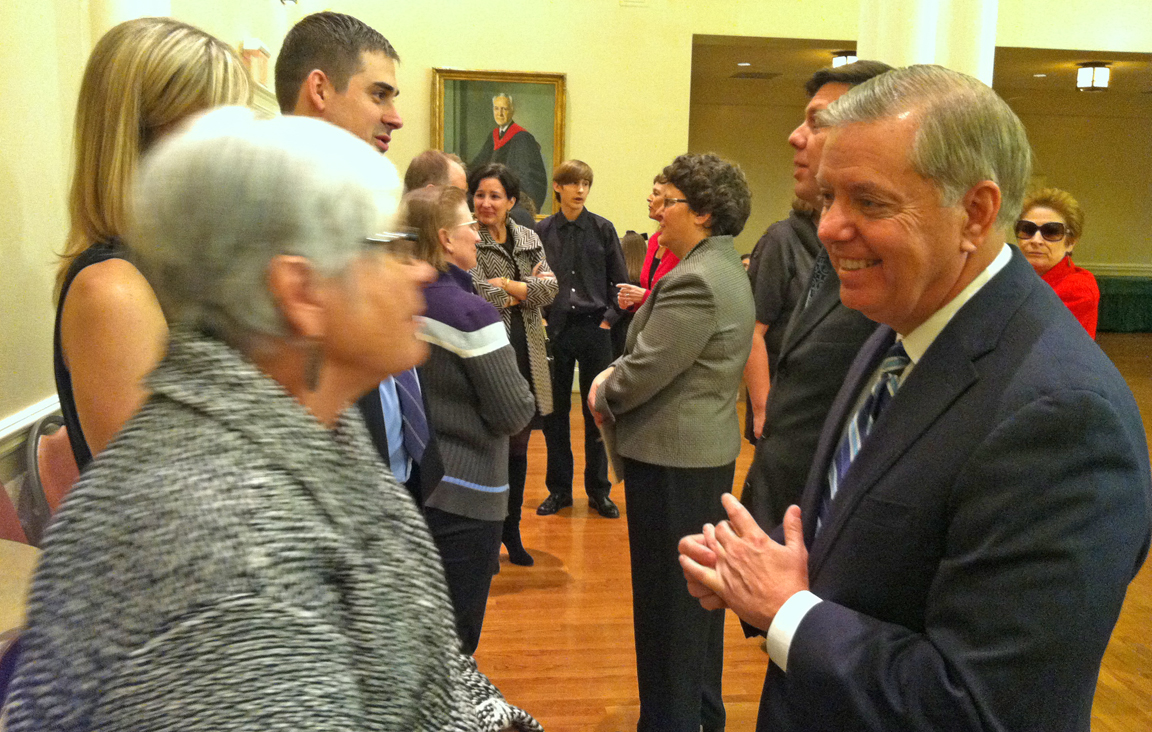
Graham, consoling the family after Lee Bandy's funeral.

Graham, consoling the family after Lee Bandy’s funeral.

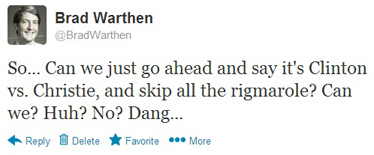
This morning, the national buzz is all about Chris Christie having positioned himself so well for the presidency in 2016. The talk is so far along that I couldn’t resist joking:

rigmarole

But the very qualities that make Christie attractive as a general-election candidate (Republicans are fairly swooning over his getting 51 percent of the Latino vote) get him in trouble with the national GOP base. Most of it is silly, symbolic stuff, such as his making nice with President Obama (you know, the guy who was rushing billions in aid toward his state) after the hurricane. But you know how the base (in each of the parties) can be about the silly, symbolic stuff.

In fact, the reservations harbored by many of the people who, had they been in Virginia, would have voted for Ken Cuccinelli are such that I find myself wondering about this:

Sen. Lindsey Graham’s (R-SC) re-election bid will evidently get a lift from one of the most popular governors in the country and a top 2016 contender….

According to the Times, Christie informed Republicans in South Carolina he intends to go to bat for Graham, who is facing a GOP primary next year.

poll released last week showed Graham’s approval rating taking a big hit in South Carolina, including a steep drop among GOP voters. …

Yeahhh… that’s the thing. The GOP voters who are mad at Graham are likely to be the ones least charmed by Christie.

So, I ask — is Christie coming here a plus or a minus for Graham? Thoughts?

U.S.-Iran relations confusing to “a simple man.” Who can blame him?

I liked this brief anecdote in an interview on NPR this morning with New York Times Tehran Bureau Chief Thomas Erdbrink.

Erdbrink was talking about covering the big demonstration Iranian hardliners had organized to celebrate this, the 34th anniversary of the takeover of the U.S. embassy in Tehran.

Then, he told this anecdote:

As I was driving to the demonstration this morning, the taxi driver who I’ve known for quite a while as being a very quiet man who never debates politics, he was very upset this morning. He said I don’t understand our country anymore. On one hand, we are talking to the United States. On the other hand we are shouting death to America. To me as a simple man, he said of himself, it is clear that this will not lead to anything. He kind of said that he was very quickly losing his faith in President Rouhani and his ability to make the real big changes that he wanted, at least…

Hey, you don’t have to be “a simple man” to be perplexed by the madness of the situation.

The awful Social Security and Medicare rollouts

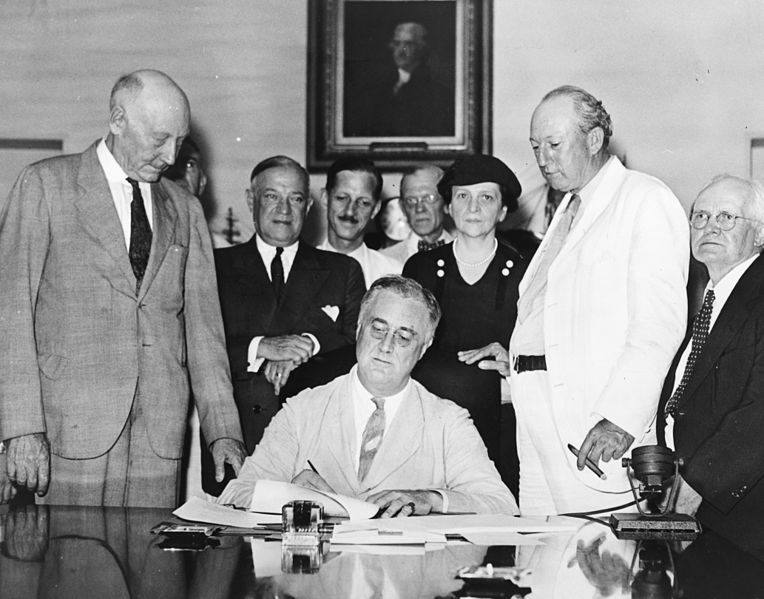
FDR signs the Social Security Act in 1935.

FDR signs the Social Security Act in 1935.

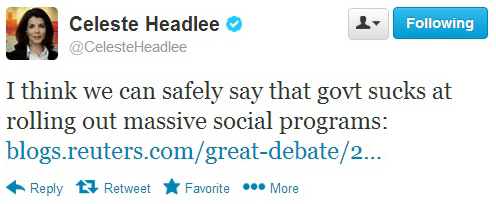
This morning, Celeste Headlee Tweeted:

Headlee

She was referring to this Reuters story about what a mess Social Security and Medicare were at first:

Social Security, that now beloved centerpiece of the nation’s social safety net, offers a case in point. Created in 1935, the program took 40 years just to include all working Americans in its basic coverage. When the old-age insurance program launched in 1937, barely more than half the labor force participated….

Social Security’s first baby steps proved especially uncertain. Of course, opponents denounced the pension plan as the leading wedge of a socialist revolution….

But it was not just dissident conservatives who issued ideological censure. Even friendly critics disparaged the program for its incompetent personnel, confusing procedures and widespread abuses. One watchdog group particularly disapproved the rapid hiring of thousands of untrained, ill-qualified workers to staff the program….

Similar uncertainty marred the introduction of Medicare. When the health insurance program went on the books in 1965, the federal government already possessed a Social Security administration to run it with three decades of experience in the business of social insurance.

Still, the complexity of the new program made its rollout a lengthy, contentious process. Federal officials had to negotiate with a wide variety of providers (nursing homes, hospitals, insurance companies), deal with a largely uncooperative American Medical Association, and coordinate with 50 state governments….

And so forth. Yet somehow, the nation survived it all…

Graham to block all Obama nominees over Benghazi

This morning, Lindsey Graham Tweeted:

We now know #Benghazi was the result of a pre-planned terrorist attack by high-level al-Qaeda operatives. It was never a protest of a video.

And I responded:

But haven’t we known that for a year — like, from the first week….?

I still don’t get the intensity and duration of Sen. Graham’s umbrage toward the administration over the horrible events at Benghazi 13 months ago. Particularly since I don’t recall the cover-up; I distinctly remember reading that administration officials were saying it was a terrorist attack within hours after first reports came in.

And now — this indiscriminate use of the Senate’s advice-and-consent power, and of one senator’s ability to gum up the works, seems contrary to Graham’s own principles:

Sen. Lindsey Graham said Monday he will hold up “every appointment” in the Senate until more questions are answered on Benghazi.

“I’m going to block every appointment in the United States Senate until the survivors [of the attack in Benghazi] are being made available to the Congress,” Graham said on Fox News’s “Fox and Friends.” “I’m tired of hearing from people on TV and reading about stuff in books.”…

Is he not the guy who goes around saying that elections have consequences, and that the president’s wishes regarding nominees should be respected, barring strong, specific reasons to the contrary? So how can he block all nominations, regardless of the respective merits in each case, in order to try to force the administration to do something unrelated? Whatever happened to the spirit of the Gang of 14?

This escalation is said to have been brought on by a “60 Minutes” segment last night. I can see how the senator might be incensed to see CBS reporting things that the administration refuses to provide to Congress.

But this blanket blocking of nominees seems disproportionate to me…

John McCain didn’t like the heat in Lee Bandy’s kitchen

On a previous post, I quoted Aaron Sheinin telling a story about how, after “Brad and Cindi and Mike and Warren finished their wonk nerd questions” in editorial board interviews, Lee Bandy would weigh in with something that made the guest politico squirm.

Today, fellow alumnus Bill Castronuovo reminded me, over on Facebook, of video I shot of Lee making John McCain very uncomfortable in our boardroom in August 2007.

You don’t see Lee (hey, I had enough trouble keeping a camera trained on the candidate while taking notes and presiding over the meeting; two cameras were impossible), but that’s his voice you hear asking the question that brings out McCain’s dark side. Since the mike is facing away from Lee, you might have trouble hearing the question. I can’t make out parts of it myself, what with McCain talking over Lee before he could get it all out. But here’s the audible part:

What went wrong with your campaign? You were sailing along… you had a wide lead over everybody else… now you have to fight for your political life.

As you see, the senator did not like the question a bit.

To set the stage: McCain was considered practically down and out in this stage of the campaign for the GOP nomination. A few months before, he had been the unquestioned front-runner. But things seemed to have fallen apart for him. A few weeks earlier, I had posted this report (also with video), headlined “McCain goes to the mattresses.” In the video, McCain staffer B.J. Boling (one of his few remaining at this low point) said they were going from a huge production to “an insurgency-type campaign.”

In the end, it worked. McCain managed to win in SC, and go on to win the nomination. But at this point in the campaign, the candidate was in no mood to take questions about how badly he was doing from that pesky Lee Bandy…

We’ve lost Lee Bandy, the dean of SC political journalists

1373873_10151941475040428_85340057_n

The word went out Thursday afternoon that our old and dear friend Lee Bandy was on life support in intensive care at Palmetto Health Baptist. His family was gathering.

Within an hour or two, his other family — the one that had had the privilege of working with him during his long career as South Carolina’s pre-eminent political writer — had started gathering in a message thread on Facebook.

By the time the inevitable word came this afternoon that Lee had passed away, that exchange of memories had turned into a virtual wake among 248 people who treasured his acquaintance. It included current and former alumni of The State, veterans of the Knight Ridder Washington Bureau, family members, and many others he had touched along the way.

For those of you who didn’t know him, let me try briefly to explain…

Leland Bandy first went to Washington during the Kennedy administration. Early in his career, he did some radio reporting — he had the voice for it — but he was primarily known for his 40 years with The State, most of it as the newspaper’s Washington correspondent.

After Knight Ridder bought The State in the late 80s, Lee officially became part of the KR Washington Bureau, but he never gave up his prestigious desk in the Senate gallery. He was a rare asset for the bureau, and not just because he was one of the only two or three people in the bureau who got tickets to the Gridiron show (he was a regular performer in the shows, as well as a loyal member of his church choir). Lee Bandy had access to people that no one else had. I remember in particular the way editors in the bureau hung on every word he had to share, after he and I had been over to Lee Atwater’s office at the RNC on one of my trips to Washington.

When Atwater was dying, Lee was the only journalist he or his family would have anything to do with. It was a pattern we’d see repeated when Carroll Campbell was diagnosed with Alzheimer’s, and when when Strom Thurmond died.

Everybody, including the politicos who despised all other journalists, loved and trusted Lee Bandy. Why? For the simplest of reasons. He was a good man. He treated everyone not only with fairness, but with kindness and generosity. It was quite a potent formula. More journalists should try it.

As his editor for a brief portion of his career — 1987-1991 — I have my own Lee Bandy stories to tell. But I was deeply impressed by some of those told in the outpouring of love on Facebook.

Here’s a sampling…

From Aaron Gould Sheinin, formerly of The State, now with the Atlanta Journal-Constitution (and here’s something Aaron wrote about Lee for The State):

I’ll go then. During the 2004 presidential campaign John Kerry came for an Ed board meeting. After Brad and Cindi and Mike and Warren finished their wonk nerd questions there was a pause. And Bandy pipes up, “So, John did you get Botox?” Kerry, his face devoid of emotion, says, “No, Lee, I didn’t.”…

Same year. Lee and I are at Crawford Cooks house to meet Bill Richardson, then governor of New Mexico who is thinking of running for president. Just the four of us. Richardson gives his opening spiel. Bandy clears his throat and says “So, I hear you got a bimbo problem.” Richardson, his face impassive, says “No, Lee, I don’t.”

Neither became president….

Oh man. So Bandy is at the Gridiron in 2001. Bush’s first year. Lee Makes his way up to the head table. Bush sees him and says Bandy! Like everyone does. Bush says I want your speaker of the house to be my ambassador to Chile.

bandy says ok. And comes back and tells the editors

He calls David Wilkins the speaker who denies all knowledge. We decide that since the gridiron is supposed to be off the record that Lee needs to call the White House press office

Lee calls and tells them what he’s writing. They get all indignant. No way. Who’s your source?

Bandy: Your boss.

The press aide: Ari Fleishcer?

Bandy: No the president.

Press aide: oh.

Long story: Wilkins turned down the job an later took the canada job.

Angelia Herrin, who represented the Wichita Eagle (which was where I first worked with her, before I knew Lee) in the KR bureau:

We are so sad, reading this and yet, George turned to me and said, can’t you hear just lee bandy laugh? And we both laughed and cried a little. Because my god, Lee Bandy could make you laugh when you were just in the middle of the worst stupid day in Washington. Because really– that’s just the right reaction on the worst stupid day on Capitol Hill.

Jeff Miller, formerly of The State and now with an advocacy group in Washington:

I cut my teeth covering politics during the 1988 GOP presidential primary, the first to come right before Super Tuesday, and Poppy Bush needed to win. I was so far out of my comfort zone that crazy month. In hindsight, I needn’t have worried. I had… Bandy, who knew everything and everybody, to coach me through it. Greatest professional experience of my life. Bless you Lee. A legion of young, impressionable reporters owe you so much.

Megan Sexton, formerly of The State, now working at USC:

My favorite: Bandy interviewing Strom Thurmond Bandy: “Strom, have you tried that Viagra yet?” Strom: “Bandy, I don’t need it.”

Wayne Washington, formerly of The State, now of the AJC:

Lee, who was a reporting giant when I was in elementary school, was the first person to call me and tell me how much he was looking forward to working with me when I was hired by The State. I was speechless. Great sense of humor. Great generosity. Class.

Kay Packett, a sometime commenter on this blog, who explains in her stories how she knew Lee:

I am heartbroken. I met Lee when I was a brand-new press secretary in Washington and I avoided him assiduously because my previous boss — Mont Morton at the SC Department of Education for you old-timers — had told me Lee would have me for lunch. Then he called one day at the end of a very bad day and suggested a Bloody Mary, and I have loved him every minute since. He taught me everything I know about working with a real reporter, and he made me learn it the hard way! But we had a lot of fun along the way. My thoughts are with his family and I am so sad for all is us who loved him….

That truly was Lee’s gift — doing his job well and fairly and keeping his friends at the same time. I remember once when Carroll Campbell had instructed me to yell at Lee over an unflattering column, and I called to tell him I had to yell at him, and he said, “Good. Meet me at Yolanda’s.” So we had a couple of scotches and laughed. I wonder what questions he’s asking Campbell now.

There is a hole in my heart. Thanks, everyone, for sharing your memories.

Doug Pardue, formerly of The State, now with the Charleston Post and Courier:

A true journalist’s journalist, hard-hitting, and a truly nice guy. I remember when one young reporter from The State went to Washington and got in a cab. The driver asked him where he was from and he replied South Carolina. The cabbie then asked him, “Do you know Lee Bandy?”

Valerie Bauerlein Jackson, who used to sit next to Lee in The State‘s newsroom and went on to work for The Wall Street Journal:

I could not guess how many stories Bandy wrote about Carroll Campbell and Strom Thurmond–hundreds, maybe, and many, many of them critical. I think Bandy was the first to question whether Thurmond was still fit to hold office, and he certainly broke the story that Strom was living at Walter Reed. But when the Campbells were ready to let the world know that the governor had early-onset Alzheimer’s, they called Bandy. And when Strom died, the Thurmonds called Bandy….

… he also said, “In many of our newsrooms today, we have too many people living a life of journalism for journalism. There’s nothing else. Well, I would like to suggest there is something else. That there is something more to life than being a journalist. And that is being a human being.”

Bandy was one of the best human beings I’ve ever known.

Michelle Davis, formerly of The State:

He was the only person from The State to ever come visit me in the far-flung Camden bureau when I was 23 years old. He treated me to lunch at The Paddock and actually took me seriously when I said I wanted to go to Washington someday like he did. And then he helped me get there.

Danny Flanders, formerly of The State:

I’ve been reading this all day, and it didn’t hit me until tonight when I first truly encountered Lee. As a new night editor at The State in 1990ish, one of my Friday night duties was helping with weekend copy. (Unless, of course, someone set fire to Rockaways) On my first Friday night on the job, I was told to “keep an eye out” for Lee’s Sunday column when it came in. Oh, God, no. I would be charged (in my early 30s) with editing Bandy, whom I read for years? So when he called me to tell me he’d filed (Remember all of that?) he introduced himself and we chatted for an hour about life, not the business, before he said, “Change anything you like, Danny.” I thought, Was he buttering me up to protect his copy, was he calling from a phone booth at happy hour, or is this guy really that nice? Yikes!. So I made a few nips and tucks, then held my breath as I called him to read it back to him, and he thanked me profusely for, he said, making him “look better”. Whew!…

thanks for the vote of confidence, Lee. Godspeed.

Brigid Schulte, whom I hired to “replace” Lee when he moved from Washington to the Columbia office in the early 90s. She is now with The Washington Post:

Lee Bandy. You can’t say the name without a smile. And perhaps a bit of a chuckle, remembering something he said, or did, hearing his own frequent chuckle after saying something a tad irreverent but always spot on. I had the great, wondrous and intimidating privilege to follow Lee Bandy as the State’s reporter in Washington after his long, illustrious stint when he’d decided it was time to go home. Bandy ferried me around the Capitol, expertly ducking in and out of offices, secret passageways, waving to just about everybody along the way. He was gracious, generous, supportive, hilarious, kind and just great fun to be with. He even snuck me into a Grid Iron rehearsal after we’d had a long, breezy, gossipy lunch that stretched into the late afternoon. We both giggled at the thought of Strom Thurmond referring to me as “that nice little girl from the State Newspaper.” My heart goes out to his family. I wish him not just peace, but dearly hope he’s sitting somewhere with his feet up, celestial newspaper open, a tinkling glass by his side, regaling fellow angels with irreverent, and spot on commentary on the doings in the world below. He was a peach of a man. He’ll, no doubt, make one hell of an angel.

Joseph Scott Stroud, formerly of The State, now political editor with The Tennessean:

Thanks to all for the sustaining thoughts through all this. Lee’s life showed us, and has reminded me this weekend, that you can be a constructive critic and observer of public life and still have a generous heart. Mary, I hope you and the family are blessed with a sense of why Lee is so loved by the rest of us — because of his good, kind heart and buoyant spirit. He won’t be replaced, but we all carry him with us in our hearts

And finally, one more from Valerie Bauerlein:

I love you, Lee Bandy.

She is far from alone in that.

The historical anomaly of postwar bipartisan cooperation

I just posted something bemoaning the fact that the concept of a “loyal opposition” is fading away, reminiscing about how things were different in the Good Old Days.

Which, I know, irritates some of y’all.

So, as compensation, I’ll write about a good piece I read this morning by Michael Barone that points out that the era of “we’re all Americans and we’re all in this together” that I recall was largely a historical anomaly, a product of the shared experiences of Depression, world war and postwar expansion, combined with a very unified, common (as opposed to fragmented) mass media culture.

Which I realize is true.

The headline — “Washington Is Partisan — Get Used to It” — is a little misleading. The actual text doesn’t shout “Get over it!” at us UnPartisans the way the hed does.

But it does effectively make the point that there’s nothing new about American’s being bitterly divided.

Excerpts:

Politicians in Washington during the Midcentury Moment actually did gather at five o’clock to sip bourbon and branch water in Capitol hideaways and then roll out bipartisan compromises on the floor the next day. Genuine friendships and constant communication were established across party lines, despite great enmities—remember that this was also the era of Joe McCarthy….

America’s Midcentury Moment was just that—and American politics has returned to its combative, partisan, divisive default mode. In the 1790s, Americans were divided over a world-wide war between commercial Britain and revolutionary France. Political strife was bitter. In the antebellum years, Americans were deeply split over issues from the Bank of the United States to slavery in the territories. For three generations after the Civil War, Americans North and South lived almost entirely apart from each other.

The Midcentury Moment emerged as the result of three unexpected developments, two of them unwelcome—depression, war, postwar prosperity—and was communicated through the language of an unusually vivid and unusually universal popular culture. Absent these things—and it’s hard to see how they could return—our politicians aren’t likely to all get along.

I urge you to go read the whole thing, if you can get past the paywall (they allow some pieces to be free; I can’t tell whether this is one, since I subscribe).

I’ve always known that growing up under the leadership of the WWII generation gave me a view of the possibilities of consensus government that would have seemed unlikely to an American in, say, the 1850s. (And given my communitarian proclivities, I’ve always felt deprived that I didn’t get to live through the time of the purest manifestation of that national consensus, in the 1940s.)

But allow me to argue that the kind of politics we experienced in the 1950s through, to some extent, the early ’90s (after which that generation gave way to the far more bitterly divided youngsters who didn’t remember WWII) should be the norm, not the exception. Even if it isn’t.

To begin with, we’re not living in a time defined by such conflicts as those Barone describes in those earlier period. We’re not batted about by two other superpowers as during the Napoleonic wars (and the conflict of that period was also sectional, with the commercial interests of the north aligning more with commercial Britain, and the Jeffersonians in the South leaning toward France — just to oversimplify).

We are not torn apart by slavery, or by the deep bitterness of Reconstruction.

Our differences are rather tame by comparison. What is the great national trauma that should be dividing us so? I suppose some would say it’s overspending. Which, I’m sorry, is kind of… disappointing… as a cause for Americans to refuse to play well with others.

Others would say (if they’re not afraid of being hooted out of the room as was Jimmy Carter) that it’s our national economic malaise. Which is real enough; I can certainly attest to that. But again, it seems inadequate as a reason for us to be at each other’s throats politically.

I say that because it’s not in any of our interests to be this dysfunctional. OK, so people hold certain political ideologies passionately (which makes no sense to me, as the dominant ideologies make no sense to me, but I accept that other people feel differently, just as I have to accept that most of my neighbors love football to an alarming degree).

But no matter your ideology, it’s not in your interests to have a political system in which nothing can get done. Whether you want to balance the budget or enlarge the welfare state or project American influence or withdraw to within our borders, you can’t get anything done in a system that can’t, for instance, pass a continuing budget resolution without the government shutting down.

It’s just, frankly, crazy to prefer to achieve none of your goals if you can’t have things completely your way.

Maybe Barone’s right to suggest that there are natural forces that drive us apart that are as much part of the natural political order as entropy is of the physical. Under that theory, only powerful unifying forces such as the three he cites (Depression, WWII followed by expansion, a commonly shared mass media culture) can overcome that tendency, and then only temporarily.

But we are supposed to be thinking creatures. We should be able to overcome that, if only to serve our common and individual self-interests.

It should embarrass us if we can’t.

Cindi Scoppe on the now-rare ‘loyal opposition’

Cindi Scoppe had a good column in the paper today — one I might have written myself (ironic, self-mocking smiley face).

She was praising Leona Plaugh for attitudes that used to be fairly common among elected officials, but now are alarmingly rare — and practically nonexistent within the District of Columbia.

An excerpt:

Ms. Plaugh, you might recall, helped lead the opposition to Mayor Steve Benjamin’s rush job on the contract the city signed this summer promising tens of millions of dollars in incentives to Bob Hughes in return for his developing the old State Hospital property on Bull Street in accordance with city desires. She criticized the way the deal was rammed through so quickly that people didn’t know what was in it and she criticized what she did know about its contents. And she was happy to repeat those criticisms when she met with us.

But when my colleague Warren Bolton asked her what happens next, she said, essentially, we make it work.

“Once you vote for something and it’s done, it’s done,” she said. “We all need to get on the bandwagon now and hope it’s the best it can be.”

A few minutes later, when she was talking about her surprise at ending up on the losing end of a 2010 vote to turn control of the Columbia Police Department over to the Richland County Sheriff Leon Lott, and we asked why she hadn’t brought that idea back up as the department’s woes have mounted, she recalled all the debate and public hearings that had preceded that vote.

“I don’t think you continually go back and harp on things that this council has already voted on,” she explained, “unless someone on the other side is ready to change their position on it.”

Well.

Then we got to the city’s decision this spring to purchase the Palmetto Compress warehouse over her objections, and the news in that morning’s paper that a local development group had tentatively agreed to buy the property, at a small profit to the city. And there wasn’t even a hint of sour grapes when she told us, “I hope I lose my bet with the mayor and that that will be a roaring success.”

What put an exclamation point on all of this was the timing. Our conversation with Ms. Plaugh took place at the very moment that what passes for grownups in Washington were racing the clock to reach a can-kicking agreement to keep the federal government out of an elective default. An agreement that we weren’t at all certain they’d be able to sell to their colleagues.

Which is just mind-boggling….

As Cindi went on to say, Leona was expressing the attitude of a member of the loyal opposition, “a concept that no longer exists in Washington, outside the occasional Senate gang, and is falling out of favor at the State House, replaced with open disdain for the idea of even talking with people in the other party, much less accepting defeat and moving on.”

And our republic is much, much worse off for that quality being so rare.

Joe Wilson couldn’t bring himself to be part of the solution

Lindsey Graham was pictured on the front of the WSJ this morning (at least, the iPad version), presumably because he was part of the solution. Joe Wilson was not.

Lindsey Graham was pictured on the front of the WSJ this morning (at least, the iPad version), presumably because he was part of the solution. Joe Wilson was not.

This release came in last night from Joe Wilson:

16169_200233014414_5107578_nPrior to and during the government shutdown, I voted in favor of multiple pieces of legislation to keep the government functioning and protect our fragile economy from default. I am disappointed that I could not support tonight’s legislation because it did not reflect my core beliefs of limited government and expanded freedom.  Congress has a long road ahead of us in the coming months and I remain committed to fighting for a better future for all of the constituents I have the privilege of representing in South Carolina’s Second Congressional District.

In other words, he happily voted for a number of purely symbolic pieces of legislation that had zero chance of becoming law, and which helped to precipitate this crisis which nearly threw the global economy down the stairs. But when he had the chance to vote for something that would end the crisis and move forward, he “could not support” it.

He just wanted to make sure you knew that…

Have you heard the one about the Redskins changing their name?

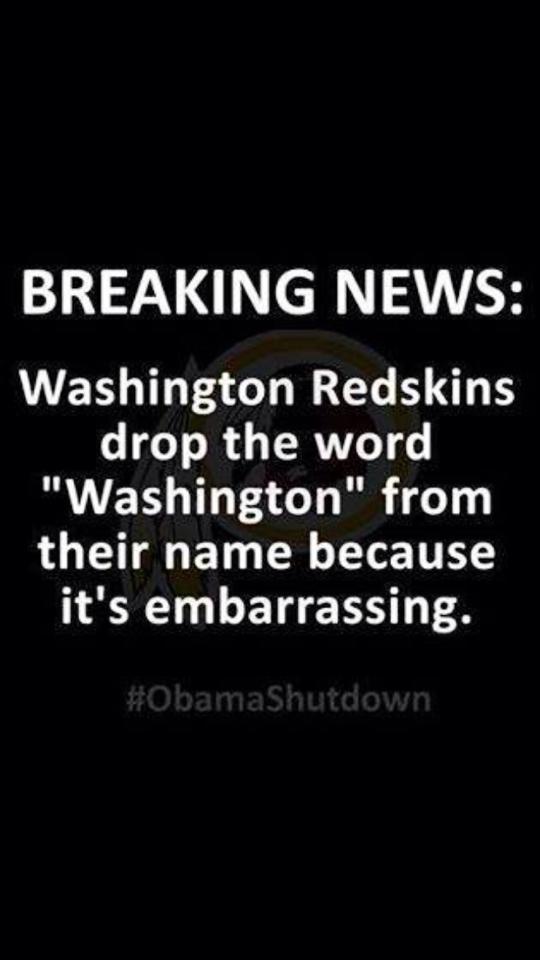
They’re dropping “Washington,” because it’s embarrassing…

Full disclosure — I didn’t come up with that one. I got it from my son’s father-in-law (and my fellow grandfather) Hunter Herring. He posted the graphic below on Facebook a couple of days back.

I don’t know where he got it. But I thought the #ObamaShutdown tag at the bottom was kind of weird, seeing that the joke seems to be more at the expense of Republicans, since they’re the ones being blamed by most people.

But either way seems overparsing it. It’s really a joke on Washington. We’re pretty much embarrassed by everyone within the Beltway.

Actually, I think the way I tell it works better than the graphic — the “Have you heard…” version. I’ve been trying it on people all day. The great thing is, they get all serious in response to the question, and start saying something like, “Yeah, as I understand it, it’s about…,” and they’re all wondering how I expect them to react… and then I say the punchline, and it relieves the tension. That’s why it works…

washington

Small example of how the parties distort our politics

There’s nothing particularly remarkable about this come-on I received from the DCCC:

838,936 of you signed our petition standing with President Obama to end Boehner’s shutdown. That’s great!

BUT — Brad…your name is missing.

Stand with us against the Republican government shutdown, and call out Ted Cruz and John Boehner for their radical obstructionism.

Click here to automatically add your name >>

Thanks,

DCCC Rapid Response

But I thought I’d use it to illustrate how routinely, casually and systematically the major parties distort reality in their bids to keep the money flowing in.

“Boehner’s shutdown”? No, it’s the House radicals’ shutdown. Boehner is pretty much helpless in all this.

“call out Ted Cruz and John Boehner for their radical obstructionism?” Seriously? You expect me to see Cruz, who is actually, majorly culpable in all this, with that poor Tea Party piñata Boehner?

Yes, they do expect that. Because in their worldview, all Democrats are equally good, and all Republicans are equally bad, and equally to blame for all the world’s evils. And the Republicans’ worldview is this one’s mirror-image.

It is staggering to me that even one person would be sucker enough to buy into this claptrap. And yet, they claim, 838,936 people have done so. (By the way, my name is going to continue to be “missing.” But you knew that, right? I hope so…)

There is no way we are going to be able to engage real-world challenges effectively in this country as long as political discourse, and the perception of reality itself, are warped by these parties.

Vote UnParty.