Category Archives: Popular culture

My (successful) Quest for George Smiley

Outside Smiley's house on Bywater Street. No need to knock. George knows I'm here. And where's he going to go? It's a cul de sac. It's over, old friend.

I’d been holding this back for when the movie comes out, but now that it’s passed me by (although I look forward to its being at the Nickelodeon next month), I am much embittered and have decided to go public with the whole story — the Official Secrets Act be damned. See how they like it when it’s all laid out in the papers. Perhaps I’ll go with The Guardian; that should sting. Let Parliament launch an inquiry. Let them connect me to the notorious Rebekah Brooks, for all I care. (After all, I’ve done a freelance job for that same outfit, in the time since they cast me out.) I’ve been a good soldier, put in my time, watched and waited. All for naught. Here’s my story…

As you know, I went to the UK a year ago, ostensibly as a tourist. That wouldn’t fool a real professional, of course, but one keeps as low a profile as one can. I have my own tradecraft for this sort of thing — I make a big splash, publicize my whereabouts… what spy would do that?

It’s worked so far.

My mission — to find the Circus, and more importantly, George Smiley himself.

It was quite a challenge. George hasn’t been seen since 1982. And the original location of the Circus, now that MI6 has the River House (all mod cons, as Bill Haydon would say), is shrouded in service legend. It’s not something you’d assign to some probationer straight out of Sarratt.

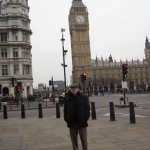
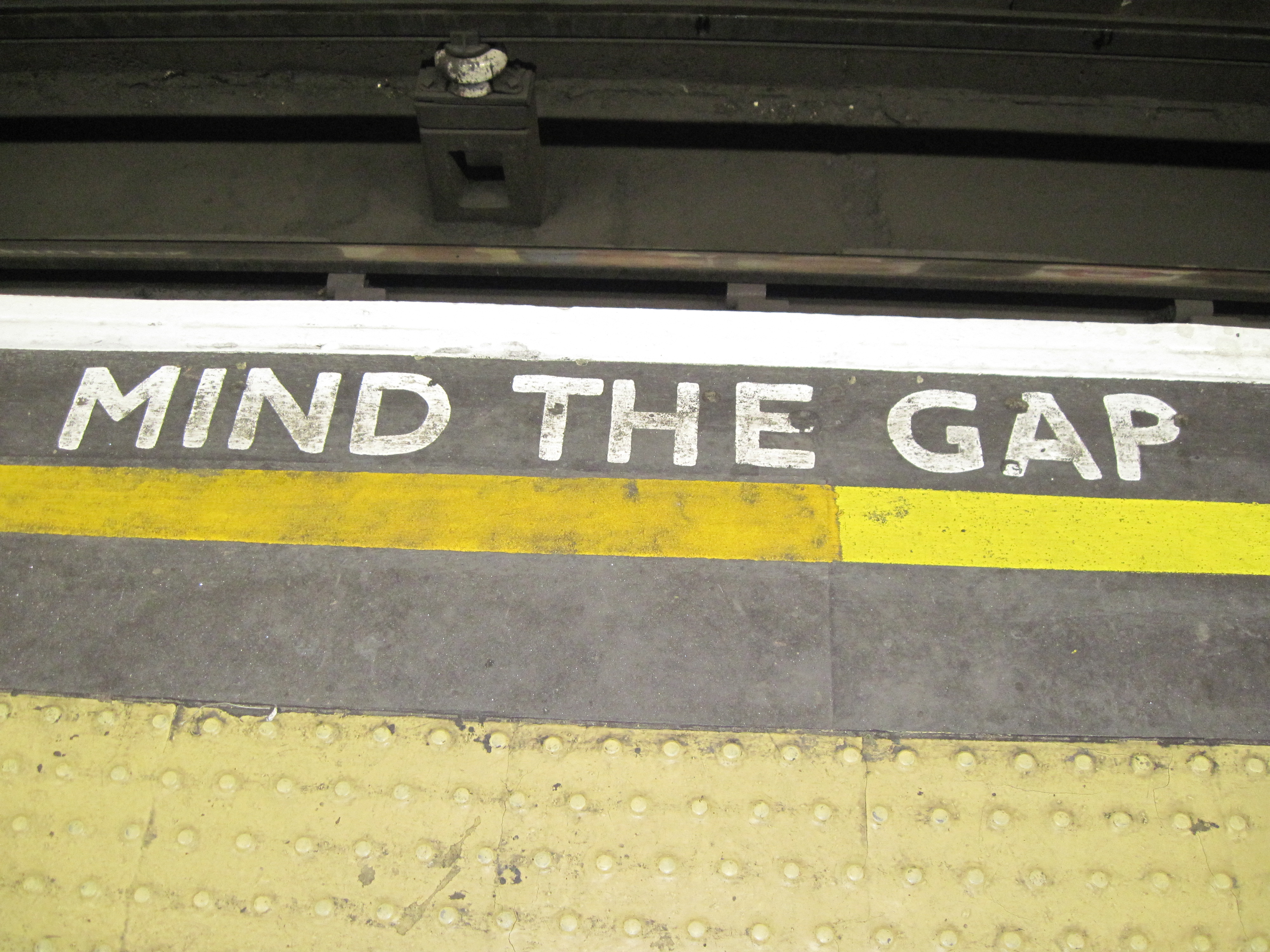
First, we spent a couple of days settling in, establishing patterns. One assumes that tiny Toby Esterhase‘s lamplighters are everywhere, so you need to paint them a picture, let them get complacent. This we did — from Heathrow to Swiss Cottage (the very spot where General Vladimir would have been picked up as a fallback, had he not been killed on Hampstead Heath), then all over the city on the Tube, aimlessly. Trafalgar Square, St. James’s, Fortnum’s, Buckingham, the Globe, the Tate, the Cabinet War Rooms, the Tower, hither and yon in the City.

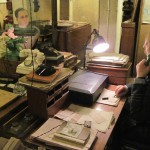
Finally, at the end of our third full day, after night had fallen, we ambled up Charing Cross Road, affecting to be interested in bookshops. We almost missed it, but then there it was — the Circus itself. There was the Fifth Floor, and even Haydon’s little hexagonal pepperpot office overlooking New Compton Street and Charing Cross. Quick, I said, get the picture. It took a couple of tries, the way these things do when you need to hurry. Thank heavens for our “tourist” cover; it excuses all sorts of odd behavior. Then on up the street, and an hour or so of browsing at Foyles to check our backs. Found a couple of decent-looking biographies of Lord Cochrane, but didn’t buy one. (They had shelf after shelf of naval history; it went on and on.) Then we wandered about in the West End, to clean our backs as much as possible, before heading back to Swiss Cottage.

One thing down. Hardest part to come.

By this time, I had decided not to risk the actual modern HQ of the SIS. Mix fact with fiction like that, and it’s like mixing matter and antimatter. Could blow you clear across the universe, or at least to Brixton, and who wants to go there, really? That’s why they put Scalphunters there.

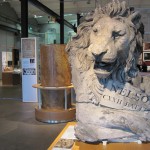
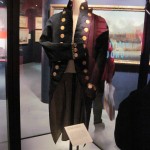
We played tourist for another day. Then another. The Sherlock Holmes museum. A side trip to Greenwich, to stand astride the Meridian, and see the coat Nelson wore at the Nile. Back into town for the British Museum.

Then, it was our last day in London. Had to go to Oxford the next day, and check on Connie. Connie is high-maintenance. So it was do-or-die time. We opted to do.

We thought that twilight would be the best time to descend on George. Vigilance is low. Everyone’s tired then; time for tea and meet the wife. So we went to that general part of town. Spent several hours at the Victoria and Albert. Loads of statues and the like.

We took the Tube to Sloan Square, a good half-kilometer from Bywater Street, and went the rest of the way on foot. We entered the cul de sac as night descended (which it does before 4 p.m. at that time of year). There wasn’t a soul on the narrow street. Everything went smoothly. When we got to the part where Smiley lives, I tried to throw the watchers off by shooting pictures of houses other than his. In a way, though, they were all relevant. George lives at No. 9, of course. But the 1979 TV series was shot at No. 10. And No. 11 has a Banham security system, which the book describes as being on George’s house. No. 9 has an ADT system.

Anyway, after doing what I could to distract any lamplighters in the vicinity, I had J (her workname — best watcher in the outfit, is J) quickly shoot a happy snap of me in front of No. 9. She was a bit nervous, because there were lights in the basement-level windows. She said people who lived there would wonder what we were doing. I muttered no, they wouldn’t: “They know exactly what we’re doing.” The thing was to get it over with quickly, so we did. Given the hurry we were in, I’m struck, as I look at the image, by how placid and dispassionate and, well, Smileyesque I look in the image. Like I was channeling him in that moment.

Then, it was back out to King’s Road and back to the Underground as fast as our legs would carry us, trying not to show that our hearts were pounding like Peter Guillam’s when he stole the Testify file from Registry that time. I was getting too old for this, I knew. As I looked up at the Christmas lights in the trees on Sloane Square, they were as blurry as the stars in a Van Gogh.

I can hardly remember the next couple of hours, but I can’t forget the stroke of luck that befell us later. Nothing short of a miracle, it was.

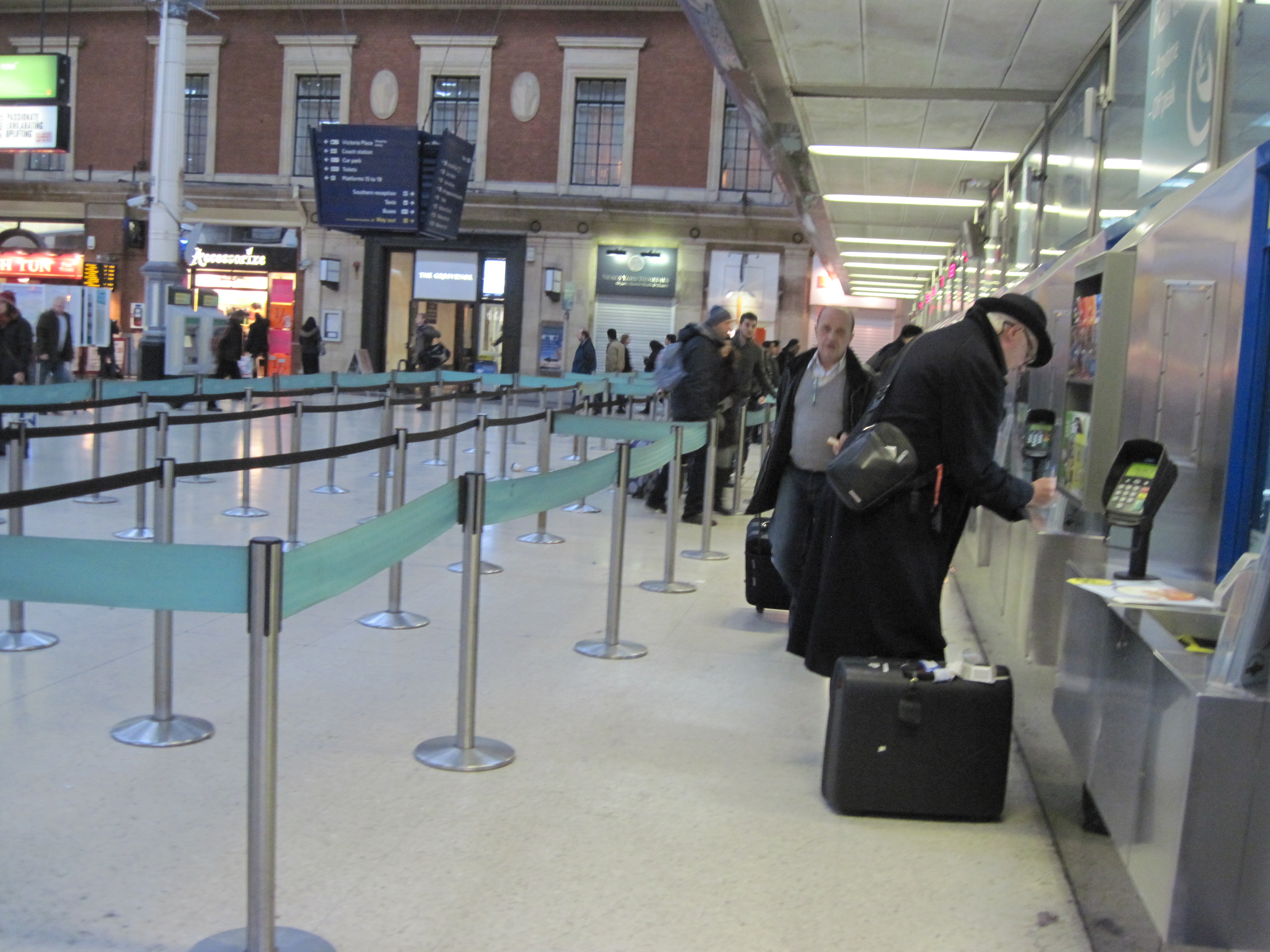
We had decided to case Victoria Station and its environs, because we knew we had to catch a coach there for the trip to Oxford next morning, and it’s good tradecraft to reconnoiter these things ahead of time. We got a bit turned-around there, and ended up touring the whole station before we discovered that the coach station was on the next block. On one aimless pass through the vicinity of the ticket windows, I looked up and there he was. George himself. Right out of the first paragraph of this passage:

He returned to the railway station… There were two ticket counters and two short queues. At the first, an intelligent girl attended him and he bought a second-class single ticket to Hamburg. But it was a deliberately laboured purchase, full of indecision and nervousness, and when he had made it he insisted on writing down times of departure and arrival: also on borrowing her ball-point and a pad of paper.

In the men’s room, having first transferred the contents of his pockets, beginning with the treasured piece of postcard from Leipzig’s boat, he changed into the linen jacket and straw hat, then went to the second ticket counter where, with a minimum of fuss, he bought a ticket on the stopping train to Kretzchmar’s town. To do this, he avoided looking at the attendant at all, concentrating instead on the ticket and his change, from under the brim of his loud straw hat…

Apparently, our appearance at Bywater Street had sent him on the run, but we had stumbled into him anyway. I left him alone, except for grabbing this picture. You doubt that’s George Smiley? Look at this picture, and this one and this one, and then tell me that. ‘Course it was him. Stuck out a mile.

But now that I’d found him, what was the point? He was just my old friend George. I could hear Toby’s triumphant voice in my ear: “Brad! All your life! Fantastic!” But I ignored him. I got the picture, and moved on. I didn’t even look to see whether he had left Ann’s lighter on the floor.

My mission had been accomplished, and then some… Why did I not exult? All I felt was the urge to polish my glasses with the lining of my tie. But I wasn’t wearing a tie…

Gimme my Tinker, Tailor! Right now!

To my considerable outrage, I just realized that Tinker, Tailor, Soldier, Spy will NOT be opening tonight at a theater near me.

I’ve been waiting for this thing for a year — it’s the only movie I’ve been eager to see in much longer than that — and the release date has been put off again and again, and I was all ready for it to finally come out on Dec. 9… and it can’t be found.

I read that it was released in the UK three months ago. This is insane. I mean, I’d love to go back to England and see it, but that’s not really an option for me at the moment. I don’t hop the pond that often. It’s sort of a once-in-a-lifetime thing. So far. (I saw “The King’s Speech” at a theater in Oxford the night it opened in England — which, weirdly, was a week or so after it opened back in the States.)

Oh, well… in lieu of that, I’ll share with you this note I wrote today to my friend Hal Stevenson, before I realized the movie wasn’t being released here. Hal recently told me that he had read The Spy Who Came in From the Cold recently, and wanted to know more about le Carre and his work. Since I’m a huge fan (of his early work, anyway), I promised to share some thoughts on what else he might want to read. It’s not brilliant, original literary criticism (I call le Carre’s most acclaimed novel “awesome,” dude), but it gives you an idea to what extent I have been thinking about and eagerly anticipating this non-event.

So I share this now with you as well, as I contemplate going home and watching the original BBC series of “Tinker, Tailor,” which I own on DVD. So there, Hollywood…

Hal,

I haven’t forgotten to write to you about John le Carre..

It’s fitting that I do so today, since the new movie, “Tinker Tailor Soldier Spy” comes out tonight.

I believe you said you had read The Spy Who Came In From the Cold. Well, that was an awesome book. As literature, it’s pure and clean and complete. If you’ve read that, you’ve read THE quintessential Cold War novel. You could stop there, if you wanted to. But who would want to?

I don’t think le Carre has written anything technically better than that novel. But he’s written stuff I enjoyed more.

The Alec Leamas novel is cold, and hard. It’s like a diamond. I can find no fault with it. But while I think it speaks profoundly to the human condition, some of his other novels are… warmer. They let you care about the characters more, get into them more.

For instance, George Smiley appears in The Spy Who Came In From the Cold, but as a peripheral character. And he comes across as a sort of reluctant agent of the cold pragmatism of Control, who duplicitously sent Leamas on this suicidal errand.

After that, le Carre decided to be more generous to Smiley. He had already been the protagonist of le Carre’s two books before The Spy Who Came In From the Cold — Call for the Dead and A Murder of Quality. Those were short murder mysteries in the Agatha Christie mold. That Smiley worked in intelligence was almost incidental.

But Smiley comes to full-blown life in the trilogy that begins with Tinker, Tailor. That’s the start of what has come to be known as “The Quest for Karla.” Here are some brief thoughts on the three books:

  1. Tinker, Tailor, Soldier, Spy – At the outset of this novel, George is already in retirement, against his will. He and the head of “the Circus” (le Carre’s euphemism for MI6, based in its supposed location near Cambridge Circus in London), known only as Control, were both canned after an operation blew up disastrously. But a Foreign Office official comes to George with evidence that Control was done in by a mole (this novel is responsible for that term entering the language) who had insinuated himself to the very top of the Circus, and was actually running the whole show now on behalf of Moscow. Smiley begins a process of backtracking through his own life and career and former colleagues as he sets a trap for the mole, unofficially, from the outside. The mole, it is known, is the agent of Karla, a mysterious figure who sort of runs his own show deep within the KGB. Karla is Smiley’s lifelong nemesis, sort of his Moby Dick. Smiley doesn’t know who the traitor is until the end – beyond the fact that it will be one of his closest associates, someone he’s known and trusted his whole adult life. The novel is about these relationships, and what they mean to Smiley, as much as it is about spies. That’s a hallmark of le Carre’s work.
  2. The Honourable Schoolboy – This second novel in the trilogy is very different from the other two. It’s sweeping, and adventurous and cinematic. The ironic thing about it is that it’s the only one that hasn’t been made into a movie (or, more accurately, TV series), even though it reads most like a movie script. It takes place after Smiley has exposed the mole, and turned the Circus inside out. George has been brought back officially into service to head the new, demoralized Circus. Trying to build the agency back up and get some decent intelligence coming in, Smiley pursues a trail of money that should lead to a top Soviet agent – another of Karla’s hand-picked people – in Hong Kong. Lacking professionals on staff he can trust, he sends an old freelance hand – a journalist named Jerry Westerby, who is sort of a half-amateur gentleman spy – to track down this second Karla agent. Westerby does so against the background of exotic locales. You get the sense that le Carre was trying to be a sort of Hollywood version of Joseph Conrad here. There is action, to an extent that is unlike le Carre, who tends to be more cerebral. On the whole, the novel isn’t as satisfying, since it’s more about Westerby and his conflicts than it is about Smiley and the characters you’ve come to care about in Tinker, Tailor.
  3. Smiley’s People – This one is everything The Honourable Schoolboy wasn’t. It’s like a reunion from the first book, and is the climactic act in Smiley’s lifelong contest with Karla. At the outset, George is in exile again from the service after the fiasco in Hong Kong. But an old Russian general, who had spied for Britain in Moscow, has been murdered in London. The Circus doesn’t want to be caught within miles of the general or his old émigré friends, and asks George to come in quietly, unofficially, and lay the general’s affairs to rest – tie up loose ends, pour oil on the waters. George discovers that the general was killed because he had possessed a secret that could be Karla’s undoing. And he spends the rest of the novel making the rounds of old friends, pulling together the strands of a noose around Karla’s neck. But as he gets closer, he comes to doubt whether that’s even what he wants to do.

Moral ambiguity is Smiley’s constant companion. He’s a good and decent man who finds himself doing abhorrent things in the service of his ideals. That is a theme in everything le Carre writes, even when Smiley doesn’t appear.

And he does NOT appear in subsequent novels, except in retrospect in The Secret Pilgrim. That was OK (as were A Perfect Spy and The Constant Gardener), but here are what I think are the best of le Carre’s post-Smiley novels:

  • The Russia House – The protagonist is so much like Jerry Westerby that it’s like le Carre saw this novel as a do-over, an attempt to get that character right this time. An amateur is recruited to act on behalf of British intelligence to make contact with a source at the heart of the Soviet nuclear weapons program – a source that insists upon dealing with no one else. But can the agent himself be trusted? And is the source for real?
  • The Night Manager – This is one you can read and enjoy without having read any other le Carre novel. It stands alone, like “The Spy Who Came In From the Cold,” but its tone is the opposite. There’s nothing cold about it. It’s very human. The protagonist is an ex-commando who, for very personal reasons, offers his services to the government to get close to, and bring down, “the worst man in the world” – a billionaire British arms dealer who sells to anyone with the right price. Not to be a plot spoiler, but it’s more of a feel-good book than almost anything else le Carre has written – sort of the opposite of The Spy Who Came In from the Cold in that regard.

I probably like those because I have pedestrian tastes. They’re not as dark as some of le Carre’s critically acclaimed work — certainly not as dark as The Spy Who Came In From The Cold. By comparison, these are sentimental, but I like them.

Well, that’s an overview. I hope you’ll read some of these; I’d enjoy discussing them with you…

Alec Guinness as George Smiley. Is Gary Oldman as good? WHO KNOWS? YOU CAN'T TELL BY ME!!!!

In the spirit of the season, a little Hanukkah music

In an earlier comment, Phillip Bush posted a link to a rabbi’s spoof of the Perry ad that got me so outraged yesterday. It was… OK. I give it points for quick turnaround, but as comedy goes, it was lacking.

Kathryn responded with a link to an old Stephen Colbert/Jon Stewart skit, which I said wasn’t nearly as good as SNL’s classic “Hanukkah Harry” bit.

And now, continuing the meme, Stan Dubinsky brings to my attention the latest Hanukkah video by the Maccabeats. It’s a cover of a Matisyahu number. (Watch to the end — Barack Obama makes an appearance! No sign of Rick Perry, though…)

You may or may not remember the Maccabeats  for their breakout hit, “Candlelight.” Also about Hanukkah. And also very light-hearted.

The Maccabeats — yet another a cappella hip-hop bubble-gum Yeshiva group. When is the recording industry going to come up with something original, I ask you?

Did Colbert actually BUY a piece of the GOP primary, even provisionally?

That seems to be what I read earlier in the week, and shook my head in disbelief and moved on, before reading it again.

The State said Stephen Colbert failed to buy “naming rights” to the presidential primary, as one would expect, but then matter-of-factly drops this bombshell:

But the GOP did agree to place a question on its Jan. 21 primary ballot after Colbert, a South Carolina native, in return pledged a “significant contribution” from his super PAC to the S.C. Republican Party. (A GOP spokesman declined to say how big that pledge was.)…

Officials with the S.C. Republican Party met with Colbert a few times and reached an agreement to place a question about “corporate personhood” on the primary ballot. But they said no to the naming rights and debate co-sponsorship offers…

Really? Can that be? Nah, I said, and moved on…

Then I read this in The Free Times:

The Comedy Central satirist — and South Carolina native — approached state Republican Party officials a few months ago about making a significant contribution to the party through his Americans for a Better Tomorrow, Tomorrowsuper PAC.

In return, Colbert requested the party place a ballot question on the state’s first-in-the-South GOP presidential primary set for Jan. 21, that dealt with corporate personhood. The party agreed and on Nov. 11 asked state election officials to add a ballot referendum that asked voters to decide whether “corporations are people” or “only people are people.”…

But then, it apparently didn’t actually happen, because the party’s Matt Moore said “that the party never received a contribution from Colbert’s PAC.” And in any case the Supreme Court recently struck all such questions from the ballot (nice going there, justices!)

So basically, I guess if I had enough money, I could at least in theory go to the GOP and get it to place on the ballot a “referendum” question asking voters, say, whether they think The constitutional ban on cruel and unusual punishment should be waived in the case of the network hammerheads who cancelled “Firefly” in its first season.

Or maybe something else. Something actually controversial.

Folks, I like comedy as much as the next guy. And you know how little I think of political parties. But I hate to see one degrade itself to this extent. I mean, Hello! This guy makes his living MAKING FUN of y’all…

He’s not the kind you have to wind up on Sundays

Just to cleanse the spiritual palate, brethren, I invoke Brother Tull to share with us a musical interlude.

This song has been running through my head a good bit lately. (Seeing “all the bishops” — or at least, all the Anglican clergy — lined up and harmonizing at Jason’s ordination the other day was but one instance in which it has come to mind.) You may find that interesting, in connection with my outrage at the tawdry way Rick Perry is trying to wind God up and make him toddle across the room, beating a toy drum that says “Perry for President.”

Perry’s message, considered most charitably, is after all that God has a place in the public square. He’s not supposed to be kept in a steepled ghetto. God is for every day, not an hour on Sunday.

I agree with that with all my heart and soul. God, properly considered, is for every day, every moment. (For that matter, it’s not for us to say what God’s for; it’s up to us to figure out what WE’RE intended for.) That’s one reason I like this song.

But I would submit that that includes the moments in which you try to exploit God to your own ends. You don’t wind him up then, either. Rather, you endeavor to alter yourself to fit His expectations.

This is a tough thing to talk about because we’re not supposed to judge, either — are we? So people get away with some really horrific stuff, because who are we to say? If another man testifies that this is how he experiences God, who are we to condemn?

And so people get away with all sorts of stuff, and if we protest, we are painted as being one of those who wants to keep God in a box.

And there are such people. Good, well-meaning people, quite often — although they are confused. They confuse the First Amendment with Jefferson’s views (when he wasn’t involved with it), and then go the further step of assuming that a ban on establishment of religion by Congress implies that we individual citizens (and that includes officeholders) are not supposed to talk about religion in the public sphere.

They are wrong. And their wrongness is all the more wrong because they create a space in which someone like Perry can construct a lie about a “war on religion.” And everything just gets worse. They are wrong, and he is wrong, and I suppose I’m wrong, too, for judging both.

But I feel better when I listen to the music. Don’t think you have to turn up your speakers when it starts out so soft. It builds.

Liberals like to laugh; conservatives dig cars (but here’s the kicker: both are big fans of PBS)

That, at least, is one conclusion to be drawn from research that supposedly delineates the TV preferences of “liberal Democrats” and “conservative Republicans.” You can see the top 25 of each here, but I’m more of a Top Five guy. Here are the Top Five for Democrats:

1. The Daily Show with Jon Stewart (Comedy Central)
2. The Colbert Report (Comedy Central)
3. Masterpiece (PBS)
4. 30 Rock (NBC)
5. Parks and Recreation (NBC)

And here are the Top Five for Republicans:

1. Barrett-Jackson Collector Car Auction(Speed)
2. This Old House (PBS)
3. The 700 Club (syndicated)
4. Swamp Loggers (Discovery)
5. Top Shot (History)

“Swamp Loggers?” So now we see who is watching all that “Redneck TV,” huh? And on the other side, I know whom to blame for the fact that it’s increasingly hard to tell news from satire.

But if there is anything of significance here, anything with policy implications, it’s that both left and right depend on PBS for some of their favorites shows. (Meanwhile, the liberals are so busy pursuing laughs that they have time for only two PBS faves, “Masterpiece” and “American Masters.” Apparently, as long as it’s got “Master” in it, they like it.)

How about that?

Maybe next time Republican lawmakers go to reflexively deep-six public broadcasting, they’ll stop and think how they’re go to explain to their base what they’re doing to “This Old House,” “New Yankee Workshop,” and “Antiques Roadshow.”

A sober harrumph about Redneck TV

It is a comment upon the state of journalism, of the South, of popular culture, of the Zeitgeist, and all sorts of other things that bore me to mention that this morning, The State ran a well-promoted piece on the phenomenon of “Redneck TV.”

No, I’m not saying a South Carolina journalist took it upon himself or herself to comment on this trend. The paper ran a canned piece from The Los Angeles Times. And it didn’t say much, beyond placing “Ice Road Truckers” (which, to me, still ranks as the show least likely, of all shows in the history of television, to interest anyone on the planet Earth as a recurring series) within a certain context of genre.

At least NPR, also reporting on this phenomenon (there must have been a free feed for entertainment journos sometime in the last few days out on the Left Coast), bothered to say something about it. Didn’t say much, just a harrumph, but that’s better than nothing:

These shows give you a South with no people of color, and they weirdly lack contact with sophisticated southern cities like Atlanta or Dallas; I guess it’s tough to play the bumpkin card when you’re looking at skyscrapers and a booming technology corridor.

It helps to think of reality TV shows as situation comedies for a new generation. And every TV fan knows sitcoms depend on stereotypes to fuel their best jokes. On these shows, decades of stereotypes about the South have risen again, ready to make a new generation laugh at the expense of real understanding.

Despite reality TV’s tendency to stupefy everything it touches, perhaps it’s time for these programs to actually get real, and give us a vision of Southern culture that reaches beyond the fun loving redneck.

Yes, as commentary goes, that’s pretty formulaic and trite, grumbling about stereotypes. But at least NPR took time to disapprove of such goings-on. And I appreciate that.

Colbert attempts to intervene in SC primary

Y’all will probably be confused as much as I am, but I’ll just pass this on without trying to understand it first:

FOR EVENTUAL RELEASE

Stephen Colbert Works with Democrats, Makes them Briefly Patriotic
NEW YORK CITY, SOUTH CAROLINA – Award-eligible pundit and 2012 Kingmaker Stephen Colbert has reached out to the South Carolina Democratic Party to help restore the non-binding referenda to the 2012 South Carolina primary. The South Carolina Supreme Court ruled in November that all referenda be removed from the primary ballot.

“Trust me, this was a measure of last resort,” said Colbert, Colbert Super PAC’s Chairman and Gangwar Consigliere. “I’ve always thought Democrats had only one skill: simultaneously being atheists and holier-than-thou. But apparently they also have legal standing in this case.”

Colbert has asked Chairman of the South Carolina Democratic Party Richard Harpootlian to petition his state’s Supreme Court for a rehearing of their ruling in Buford County v. S.C. Election Commission. He has also asked him if it’s alright to call him “Harpootie.” Harpootlian has agreed to the first request.

At issue is the court’s decision to remove advisory questions from the upcoming Presidential Preference Primary Ballots. Of particular interest to Colbert Super PAC is Question 4. The question, which has already been approved by the South Carolina Commission and included on sample ballots and some military absentee ballots , asks the people of South Carolina to choose between two options: “Corporations are people” and “Only people are people.” (For the sample ballot click here or see below).

“After the citizens of South Carolina declare once and for all that corporations are people, we can move on to other urgent issues facing our great nation,” said Colbert, “In 2016 I hope to include a question on whether Democrats are people.”

Colbert Super PAC, also known as Americans For A Better Tomorrow, Tomorrow, is an independent expenditure-only committee dedicated to following the Letter of the Law, and letting the Spirit of the Law find its own way home. It was founded by Stephen Colbert, who currently holds the rank of World’s Most Famous Living South Carolinian, and who will host the Colbert Super PAC South Carolina Debate to be held in January. It’s going to be a classy affair. Shrimp cocktail, the works.

###

For Press Inquiries Contact:
Alberto Rèalnamè
Communications Director, Colbert Super PAC
alberto.realname@colbertsuperpac.com

Yeah, I get that it’s a joke. But I got confused that Harpootlian was involved. But then, Colbert always works with the Democrats when he comes to SC, possibly because he can’t get SC Republicans to laugh at him. Or with him. I don’t know.

In any case, here is a link to Colbert’s proposed ballot.

Finally, my important discovery is recognized

For a second there, I almost deleted the comment and reported it as spam. Usually, when someone comments on a really old post, that’s what it is.

But I hesitated, and followed the link provided, and was happy to find that finally, an authoritative source had confirmed the validity of my important discovery of the actual site of the fictional Championship Vinyl.

You have to read High Fidelity to fully understand the importance of my discovery. Watching the movie is OK, but since it transports the shop to Chicago, no serious Hornbyologist would give it the time of day as a source of valid information.

I’m the one who crossed the ocean, left my wife asleep at our hotel in Swiss Cottage, crossed London in the Underground and searched the vast reaches of Islington alone, without a guide beyond the cryptic words of the novel itself, and found the hallowed spot.

And no one has fully recognized me until now, as DellaMirandola writes:

Thank you for this important discovery. I’ve just written about it here:http://thehornseyroad.blogspot.com/2011/11/championship-vinyl.html

Yes, there’s a bit of tail-chasing solipsism or some other fancy word going on here, in that the site in question is citing me as the source of truth without reference to the external world, and I’m citing him in return as the confirmation, but let’s leave that to the nitpickers. The bottom line is, what could be more expert on the validity of a find on the Hornsey Road than a website called The Hornsey Road? I ask you…

And that worthy author could hardly have been more definite:

In High Fidelity, Rob Fleming’s record shop is just off the Seven Sisters Road
This proves conclusively that it’s on the southern stretch of the Hornsey Road.

I am covered in glory. I don’t even care if there’s any money attached.

So now, I have another thing to be thankful for today.

Ring the Salvation Army bell…

I just figured out why I’ve had one line from an old Simon and Garfunkel song running through my head all day:

Hear the Sal-va-tion Ar-my band…

It’s because, in a few minutes, I have to go

Ring the Sal-va-tion Ar-my bell…

This is a major service project of the Columbia Rotary Club. Fellow Rotarian Boyd Summers and I have signed up for the noon-2 p.m. slot today in front of Green’s liquor store over on Assembly. Come on by and see us on your way in to obtain your favorite adult beverages. Or on the way out. Either way, leave money in the bucket.

And while you think about whether you want to do that, listen to The Bangles’ relatively decent cover of the song in question, so that you can have the frightening experience of having your mind on the same wavelength as mine. Or listen to the original. I actually prefer the original, but since it’s a video, I figured The Bangles were easier to look at.

Ironic lyrics to hear on a day like today. But you can pretend there’s a hazy shade of winter out there, to get yourself in the mood for the holidays. Yeah, I know it’s not easy when you’re sweating…

Don’t you dare trash my Uncle Sam!

This sort of thing has become routine, but I never cease to be disgusted by it.

To begin with, there is one thing that makes America special — “exceptional,” if you will — and that is our system of governing ourselves. It’s not our amber waves of grain or purple mountain majesties, as fine as those are. And it’s not that we are some master race — if anything, our glory is that we are a mongrel people. “We’re mutts” as Bill Murray said in “Stripes.”

What we are, what makes us special is that we are the country that made freedom work, on a grand scale. Over the course of two centuries, we steadily worked to perfect that, and we’re still working on it, to our great credit.

Therefore I cannot abide this constant, incessant, dripping, vituperative hatred hurled at American government by alleged “conservatives” — or for that matter by “progressives” who want us to believe that the system is stacked against the little man. But the attitude that government itself, the very notion of government, is an evil to be fought, overwhelmingly belongs to what we describe as the right these days.

Is there plenty wrong with the way our government functions? You bet. But a huge amount of the blame for that belongs to the extremists who want to possess Washington, and have no use for what anyone who disagrees with them wants. Each side jockeys constantly for absolute control of a system that was designed to accommodate the views of all. And no faction has been as vehement as those who hate government qua government.

That’s our fault, you know. We, the people. We keep voting for that garbage. Which is our right.

And the garbage will continue if we don’t stand against it. Which is not only our right, but our duty.

Today, I stand against something I saw in The Wall Street Journal.

The piece that it went with was unremarkable, the usual stuff you read on the opinion pages of the WSJ, containing such passages as this:

So why is our economy barely growing and unemployment stuck at over 9%? I believe the answer is very simple: Economic freedom is declining in the U.S. In 2000, the U.S. was ranked third in the world behind only Hong Kong and Singapore in the Index of Economic Freedom, published annually by this newspaper and the Heritage Foundation. In 2011, we fell to ninth behind such countries as Australia, New Zealand, Canada and Ireland.

That didn’t bother me. Such assertions have become background noise. And while I object to the piece blaming government for everything (yawn!), I agree with the belief it is rooted in: That what America urgently needs right now is strong growth in the private sector. All for it.

No, what got me was the illustration that went with the piece. You can see it above: The shadow of Uncle Sam looming menacingly over ordinary citizens.

My Uncle Sam. Our Uncle Sam. The figure that inspired millions of us to take up arms, literally, against tyranny the world over. The greatest symbolic representation of the blessings of liberal democracy the world has known, with the possible exception of Lady Liberty. Being used to symbolize the “evils” of government. Being used the way cartoonists in this country used to use the shadow of the swastika, the Russian bear, or the hammer and sickle.

Once, Uncle Sam personified the very thing this writer advocates — America rolling up its sleeves, getting to work, exhibiting determined economic vitality in the service of us all.

Utterly disgusting. And yet, something that has become so routine that most won’t even take note of it. Which is why I just did.

They lack lust, they’re so lacklustre…

“… is that all the strength you can muster?”

(Elvis Costello reference.)

Anyway, that was my reaction to this list from the WashPost’s The Fix of 11 best and worst political lines of the year. As zingers or pithy observations go, they leave much to be desired. But I think it’s been that sort of political year so far:

11. “I don’t even know who this woman is.” — Businessman Herman Cain on Sharon Bialek, the woman accusing him of sexual harassment.

10. “To be clear. I believe in evolution and trust scientists on global warming. Call me crazy.” — Former Utah governor Jon Huntsman via Twitter on the debate over climate change within the GOP presidential primary field.

9. “I am the government.” — New York Gov. Andrew Cuomo on being the government.

8. “Journalists and pundits should not manufacture a blood libel that serves only to incite the very hatred and violence they purport to condemn.” — Former Alaska governor Sarah Palin responding via Facebook to the attempted assassination of Arizona Rep. Gabrielle Giffords.

7. “When they ask me who is the president of Ubeki-beki-beki-beki-stan-stan I’m going to say, you know, I don’t know. Do you know?” — Herman Cain on foreign policy.

6. “You’re the state where the shot was heard around the world in Lexington and Concord.” — Minnesota Rep. Michele Bachmann…..in New Hampshire.

5. “Corporations are people, my friend.” — Former Massachusetts governor Mitt Romney in response to hecklers at the Iowa State Fair.

4. “Get the hell off the beach…you’ve maximized your tan.” — New Jersey Gov. Chris Christie (R) warning sunbathers to flee Hurricane Irene.

3. “His remark was not intended to be a factual statement.” — Spokesman for Sen. Jon Kyl(R-Ariz.) regarding the senator’s claim that abortions accounted for more than 90 percent of what Planned Parenthood does.

2. “I can’t say with certitude.” — Then Rep. Anthony Weiner (D-N.Y.) on whether a lewd picture was, in fact, him.

1. “Oops”. — Texas Governor Rick Perry at the end of a 50-plus second (unsuccessful) attempt to remember the third federal agency he would eliminate if elected president.

See what I mean? When “Oops” is No. 1, the quality of political rhetoric, even of gaffes, has gone down…

You want to see something good? Here’s the song my headline came from:

A little music for this very moment

Something about this moment, as I write this — the still-hot coffee I’m drinking, the slight remaining chill from the night in my office, contrasting with the crisp mid-morning light coming in the window — brought this song to mind.

So I thought I’d share it, a few minutes before the 11th hour on the 11th day of the 11th month in the 11th year.

A luminous slice of peace on this Armistice Day.

Rick Perry has my sympathy, but he’ll never have my vote

Yep, he stepped in it, all right — as he acknowledged.

But Rick Perry has my sympathy on this one. I do this kind of thing all the time. Last night, I was talking with someone about city politics, and mentioned Belinda Gergel‘s successful bid for the District 3 seat, which set records for spending. And I not only drew a blank on the name of her opponent, Brian Boyer, but more to the point could not recall the name of his boss, brother-in-law and key supporter, Don Tomlin.

And if I’d done that on television, while running for city office, I suppose I’d be dismissed as a dope. But that would be unfair. Because I’m not an idiot… No, I’m not… Am NOT!… Cut it out, y’all!

And this brings us once again to the inadequacy of these “debates” as an instrument for choosing the most powerful person in the world.

The job is not about thinking on your feet on a stage with people throwing gotcha questions at you. It’s about what you do in the Oval Office, frequently when no one is watching (and no, I did not intend that as a Bill Clinton reference).

These “debates” would be a good way to pick a stand-up comedian or Shakespearean actor, if that’s what you were hiring. But it continues to disturb me that we attach so much importance to momentary memory lapses. They don’t mean much. The presidency is NOT reality TV.

What Perry did last night does not, in and of itself, establish that he is an idiot. It doesn’t indicate he’s a genius either, but I certainly hope readers make their decisions based on more substantial criteria than this.

You mean, he got PAID for that?

Mark Sanford made his first paid appearance on Fox today.

Wow. It’s exactly like every other Mark Sanford appearance I’ve ever seen. That same lollygaggin’ manner, the same predictable nostrums, the same feeling of being slightly out of sync with the conversation. You might think that last point was because he was doing it remotely, but real conversations with our ex-gov feel  like that.

Not to mention the professional on the other end coaching him and helping him through it.

I can see why they didn’t put this on prime time.

I’ve gotta get me a gig like that.

Sometimes, change has much to recommend it

I sympathize with Roger Ebert in not wanting to see the end of celluloid. But the truth is, I didn’t even realize it was gone to this extent in the movie world — which I suppose argues that it’s not all that great a loss.

Here’s an excerpt from what he wrote on the subject yesterday:

The sudden death of film

By Roger Ebert on November 2, 2011 8:49 PM | 79 Comments

Who would have dreamed film would die so quickly? The victory of video was quick and merciless. Was it only a few years ago that I was patiently explaining how video would never win over the ancient and familiar method of light projected through celluloid? And now Eastman Kodak, which seemed invulnerable, is in financial difficulties.

Many of the nation’s remaining mail-order company that processing film from still cameras has closed, even though stills are having a resurgence in serious market. New 35mm movie projectors are no longer manufactured, for the simple reason that used projectors, some not very old, are flooding the market…

Until fairly late in the game, however, I was a holdout. I persisted in preferring the look, the feel, the vibe of celluloid. Film had a wider range–whiter whites, blacker blacks, richer colors. Besides, I explained, satellite projection of theater-quality digital would involve a footprint containing every hacker and pirate in the world. Studios would never risk it, I promised. Yes, but why did I assume studios would use satellites to distribute first-run films?

And on and on. I insisted, like many other critics, that I always knew when I was not being shown a true celluloid print. The day came when I didn’t. The day is here when most of the new movies I see are in digital. You and I both know how they look, and the fact is, they look pretty good. We’ve shown a lot of restored 70mm prints at Ebertfest, and they look breathtaking. But 70mm is no longer a viable format. (When any industry says a format is “no longer viable,” that means “it may be better, but it costs too much.”)

We live in a time few people could have foreseen on that day in Hawaii. I now view movies on Netflix and Fandor over the internet on my big-screen high-def set, or with an overhead projector on a wall-sized screen, and the picture quality pleases me. The celluloid dream may lives on in my hopes, but digital commands the field…

I have a wonderful SLR — a Nikon 8008 — in like-new condition, and it just sits in a drawer, and has for about six years now. It’s a vastly better instrument than the little point-and-shoots that I’ve used since 2005. It gave me much truer focus, and much greater control over exposures. But now, I put up with random focus and over- and under-exposed images, mainly by the strategy of shooting so many shots of everything that I usually get one or two that are pretty decent. Because it doesn’t cost me a dime, and I have the images immediately (so that I can keep trying until I get a good one).

I used to be a very serious film photographer. I had my own enlarger and tanks and trays and chemical bottles and dryers and print-cutters, the whole nine yards, for doing it all at home. But I haven’t broken that stuff out in years. I might sometime, just for old times- sake. But it won’t be a regular thing.

Someday I’ll get a good digital SLR. But I don’t foresee ever going back to film. I find that kind of sad, but hey, the new stuff looks good.